Home Tags Logging

Tag: logging

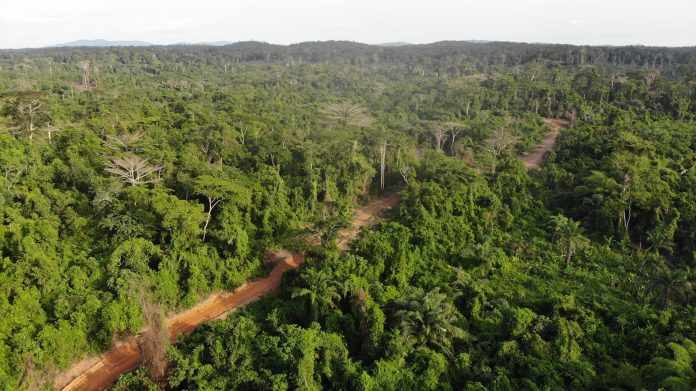
Locals Consider Conservation After Loggers Vanish

Loggers
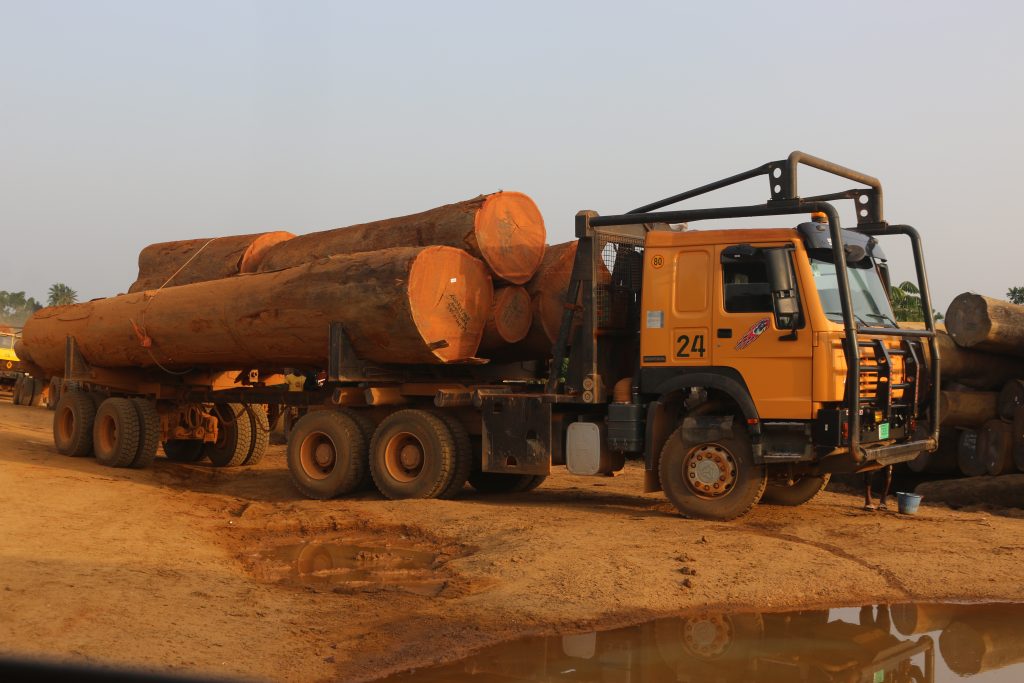
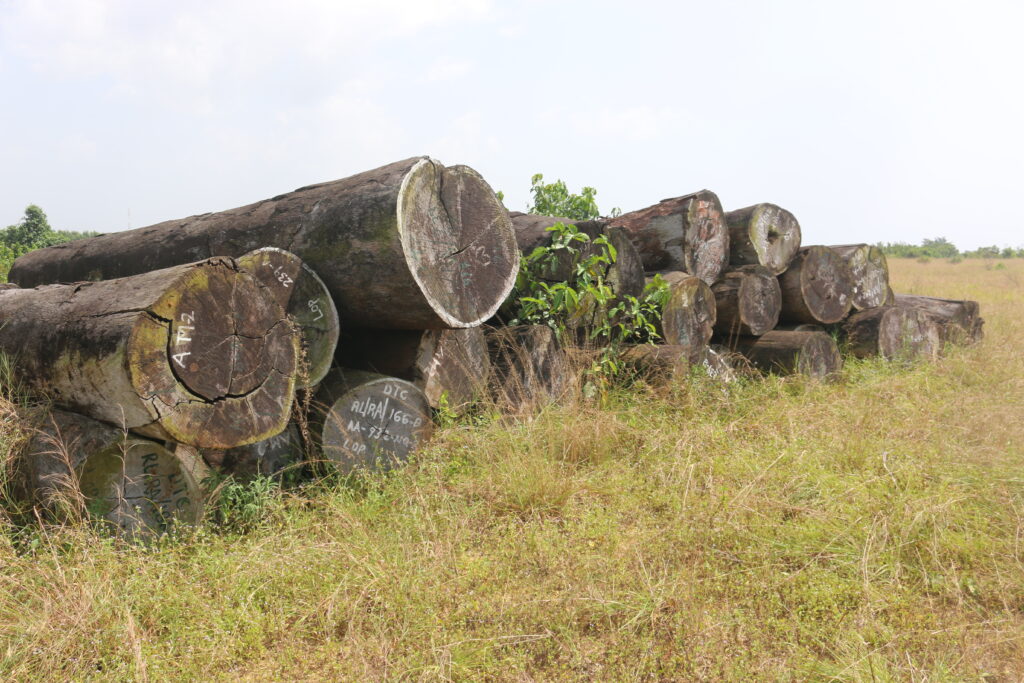
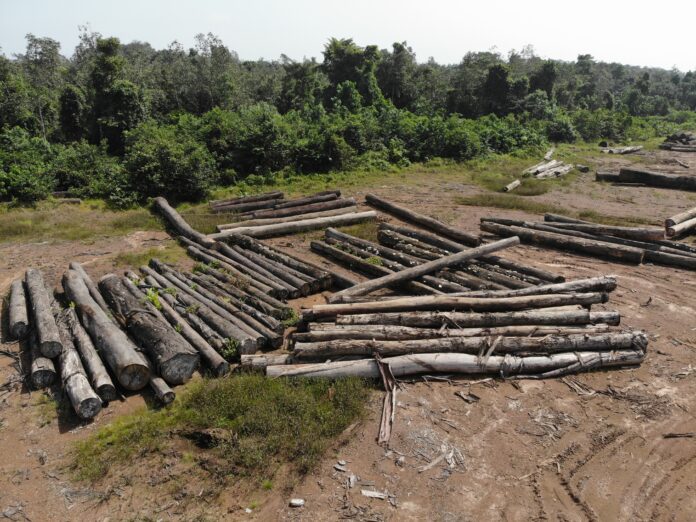
Depleted logs lying anandoned in the Tonglay forest

Top: Keshav abandoned logs in the Tonglay Community Forest, Gbarpolu County, The DayLight/Varney Kamara


By Emmanuel Sherman


TONGLAY; NORMON, Gbarpolu County – Villagers in the Tonglay Clan, Kongba District, celebrated after signing a logging contract with a new company in 2022.

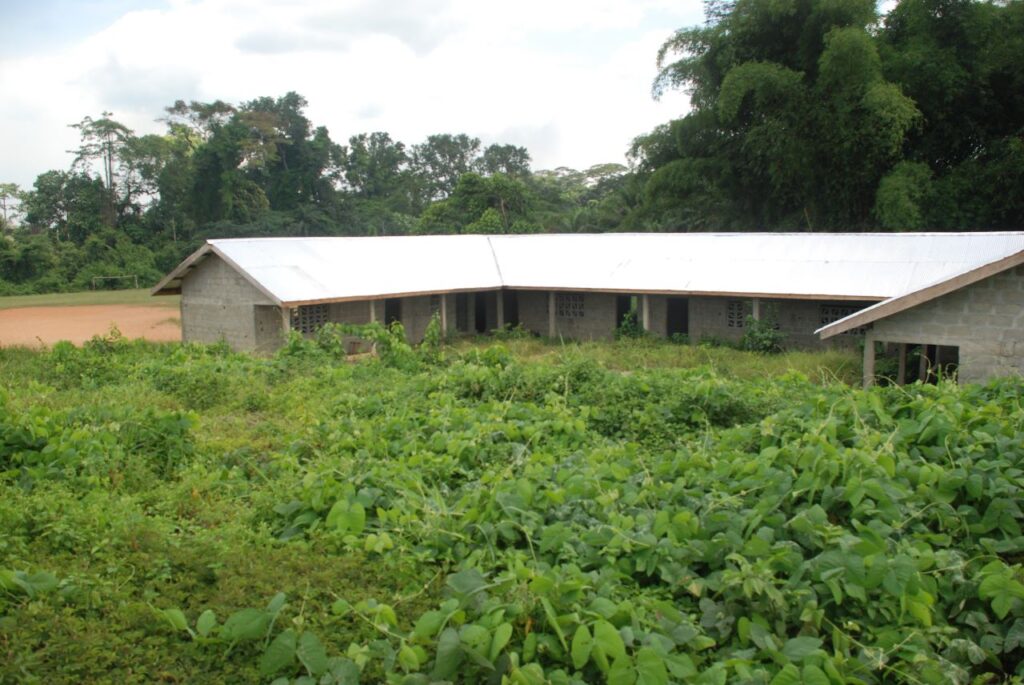
Keshav Global Industries Limited promised to build roads, bridges, schools, scholarships, and healthcare assistance in exchange for Tonglay’s 18,611-hectare forest.

At about the same time, Tonglay’s neighbor, the Normon Clan, also signed a similar contract with Keshav for 12,483 hectares.

But both communities’ hopes were dashed because the agreements were short-lived, leaving behind debts, unfulfilled promises, and logs. That experience has shifted local people’s attention to conservation, a familiar recourse in that area.

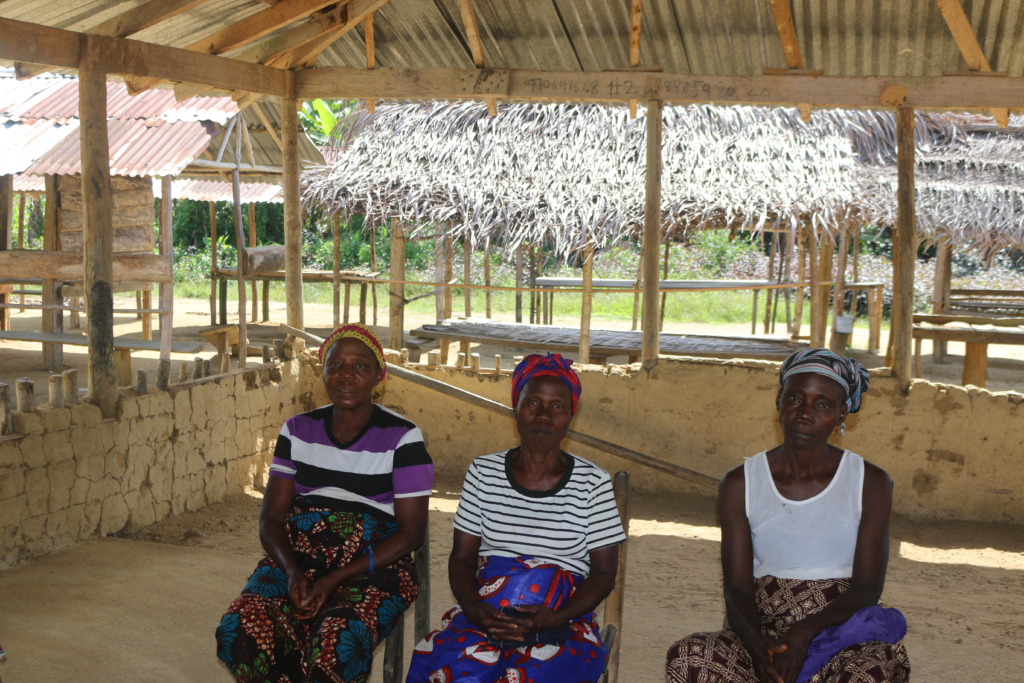
“This left us disappointed because the community did not benefit anything from the contract,” said Karimu Fofana, Tonglay Community Forest’s chief officer. “There is similar disappointment in Normon.”

Keshav owes Tonglay US$79,000 for land rental, cubic meters, scholarships, healthcare, and forest guard fees, according to The DayLight’s analysis of the contract and financial records. The company failed to build two major roads in the clan between January 2023 and March 2024. It also failed to construct six concrete bridges it was required to complete by this year, among other things.

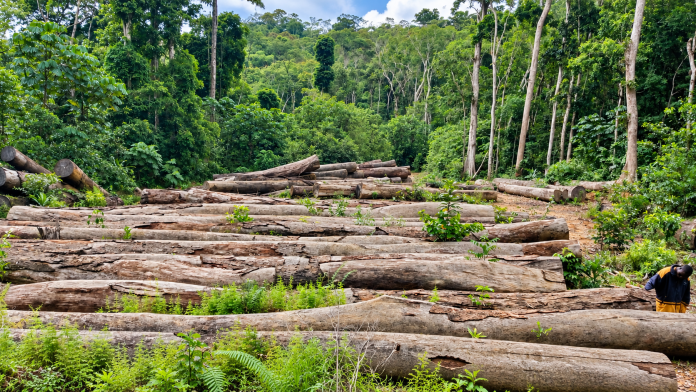
Apart from the unpaid fees, Keshav also abandoned several logs. The community puts the number at 565 logs left in the forest and by the roadside. The DayLight counted 300 logs in one location.

Things are the same in Normon. Keshav owes the community an undisclosed amount and failed to build community roads, provide scholarships, healthcare assistance, and forest guardian fees.

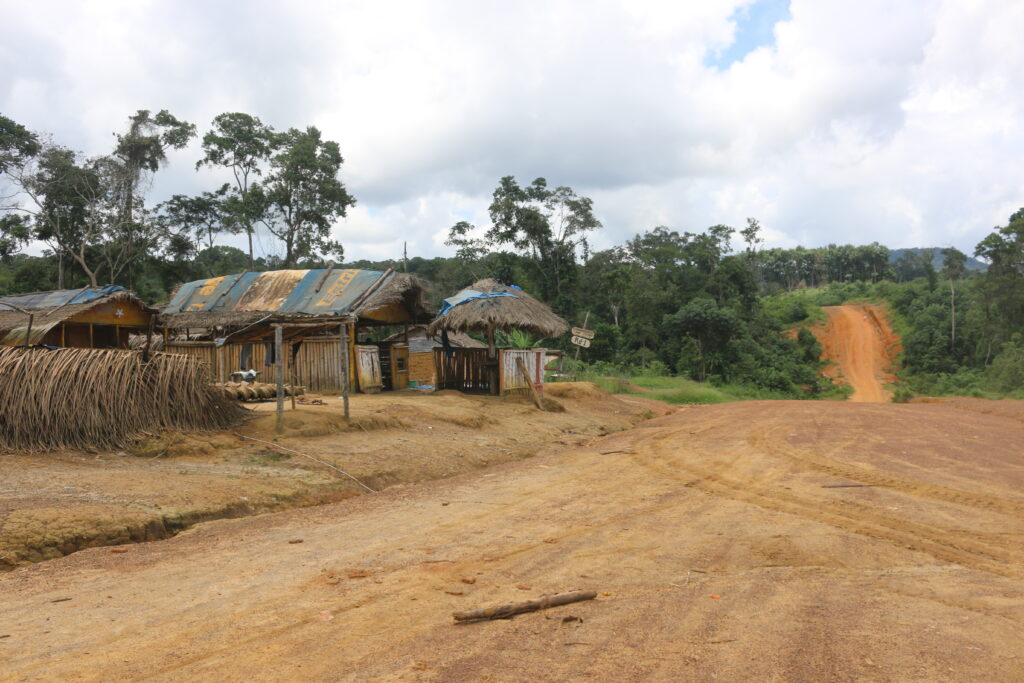
The roads in the region are among the most deplorable in Liberia, cutting the region off from the rest of the country. Motorcycles cannot even ply some areas.

“It hurts us a lot because the main thing we signed the contract for was to ensure the company builds our roads,” said Boakai Kanneh, head of Normon’s community leadership.
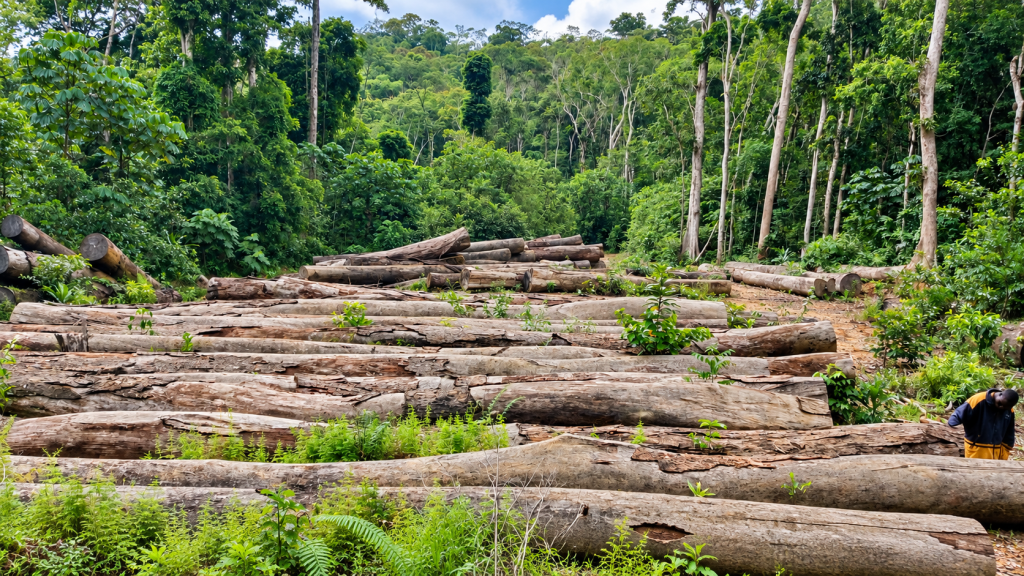
Loggers
Depleted logs lying abandoned in the Tonglay forest

“We want cars to come into the community with goods in our towns and villages. Our people are suffering.”

Keshav felled 110 logs and left them in the forest in Normon, according to Kanneh. The DayLight could not independently verify the information because of the distance to access them. The Regulation on Abandoned Logs, Timber and Timber Products prohibits leaving logs unattended in a forest for three weeks.

Concerned about its abrupt closure, the two clans visited Keshav’s headquarters in Congo Town, outside Monrovia, but did not meet a representative there. Tonglay then wrote a letter to Vyom Garg, Keshav’s owner and CEO.

On April 9, 2025, Garg replied to Tonglay, blaming his company’s abrupt closure on the global financial crisis, which “significantly” impacted its operations.

“We are committed to beginning the payment of all the outstanding liabilities to the community no later than April 30, 2025,” read Garg’s letter.  However, the payment has not happened.

The failure of Kehsav’s contracts dashed the hopes of people in Tonglay and Normon.

“We were carrying out some development, and we could not complete that development because we were financially depressed,” Fofana said. “Based on their failure, we could not go further with those things.”

Contract terminated

Last year, Tonglay filed a lawsuit in the 16th Judicial Circuit Court in Gbarpolu County to terminate its contract with Keshav, according to court records. The court sided with the community against the company, which was not represented in the two-month trial.

The court said it found no reason to deny Tonglay’s petition to cancel the third-party agreement.

“The third-party agreement between Tonglay and Keshav is hereby cancelled and terminated,” the court ruled.

With the contract terminated, Tonglay has held elections for a new corps of officers to strengthen its forest governance.

Normon, on the other hand, has not terminated its contract. To do so, the community must officially inform the FDA before heading to court.

If Normon terminates its contract, Keshav, whose vision is to work with certified forests in Africa and South America, would have no forestry contract in Liberia. Garg did not respond to queries for comment.

Keshav Global Industries Limited, an Indian-owned company, is a subsidiary of Keshav Global Trading LLC, based in Dubai, United Arab Emirates, and Keshav Global Private Ltd, based in Singapore. The conglomerate trades timber and agricultural commodities.

Conservation

Both Tongaly and Normon are weighing options on whether to pursue conservation or stick to logging. Back in 2021, Montserrado-based NGO the Society for the Conservation of Nature Liberia (SCNL) helped the clans obtain community forest status from the Forestry Development Authority (FDA). This allows locals to co-manage the woodlands alongside the FDA and share in forest resources.

The clans are part of the Gola communities adjacent to Gola National Park, a forest between Liberia and Sierra Leone, home to forest elephants, chimpanzees, and rare birds. Moreover, Normon shares a boundary with the Foya Proposed Protected Area between Gbarpolu and Lofa, which covers 168,628 hectares.
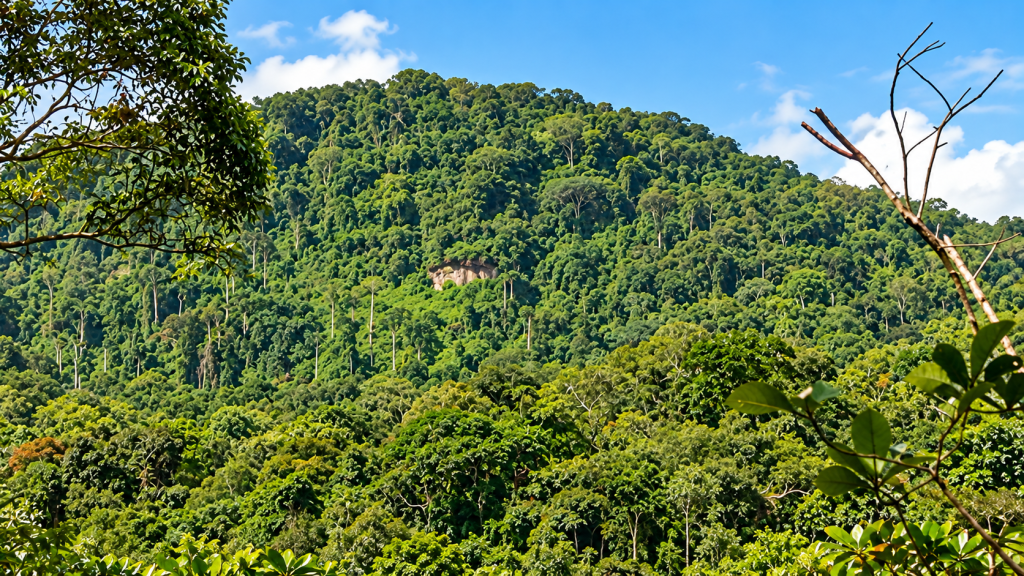
The Normon Community Forest. The DayLight/Varney Kamara

Tonglay is about to sign a conservation agreement as part of a three-year project that seeks to empower forest-dependent communities.

Normon, on the other hand, wants to do the same.

“We are in the process of terminating the contract just as the Tonglay Community Forest did. If we terminate Keshav’s contract, we will be able to sign the community conservation agreement with SCNL,” said Varney Kabba, the secretary to Normon’s leadership.

James Mulbah, forest landscape manager with SCNL, reveled in the clans’ potential switch to conservation.  

Mulbah said: “Conservation is taking root, but getting communities on board a hundred percent takes time.”


This story was produced with support from Internews’ Earth Journalism Network.
FDA Boss Allegedly Pushes Locals to Contract His Friend’s Firm

IMG 0543 scaled
IMG 0543 scaled

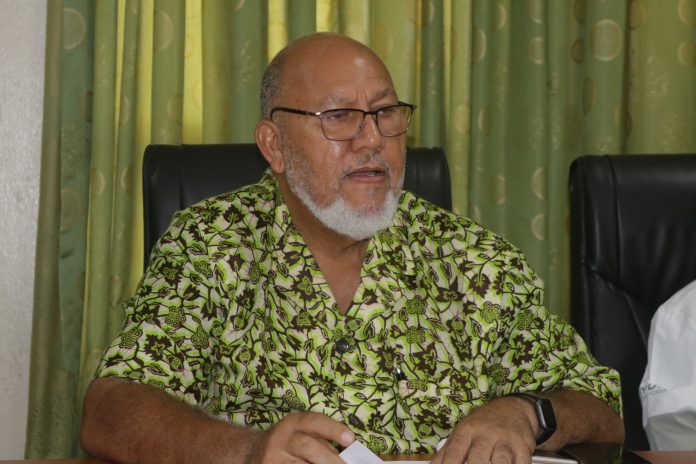
Top: The Managing Director of the Forestry Development Authority, Rudolph Merab. The DayLight/Harry Browne


By Varney Kamara and Esau Farr


SEEKON-PELLOKON – The Managing Director of the Forestry Development Authority (FDA), Rudolph Merab, is allegedly pushing a community forest to sign a logging contract with a dormant company owned by his friend.

Leaders of the Seekon Pellokon Community Forest in Sinoe’s Seekon District said the FDA was on their backs to enter a contract with the Liberia Hardwood Corporation. The company is now scouting the 44,989-hectare forest, with the parties reportedly close to a deal.

“When they finish looking in the bush, we will all come back to the table to discuss the contract,” Junior Kumah, a Seekon Pellokon leader, told The DayLight.

“Our interest is to take our people from years of poverty. They need development, roads, schools, and clinics.”

Earlier this year, the FDA disapproved a deal between Seekon Pellokon and Universe Forest Group, a new logging company, because it lacked the capacity to operate two contracts simultaneously.  Universe Forest has a contract with the Tarsue Community Forest in the Sanquin District.

Instead, locals said, the FDA welcomed a deal with the Liberia Hardwood Corporation, co-owned and run by Jihad Akkari. He holds 15 percent of the company’s share, while Khalil Zein Baalbaki and Giuliano Dassi hold 42.5 percent shares apiece.

Akkari’s relationship with Merab dates back to the 1990s, when both men operated logging companies. Akkari served as the vice president when Merab was president of the Liberia Timber Association (LibTA) for nearly 20 years. Multiple sources said their friendship was playing out for Akkari in Seekon Pellokon.  

“FDA is the one that is negotiating,” said Kumah in a phone interview. “The FDA has all those documents in its possession.”

Stanley Kreejarly, a member of Seekon Pellekon’s leadership, corroborated the claim, adding another layer.    

“FDA said it would not do business with us unless the community signed a contract with Liberian Hardwood,” said Kreejarly. Like Kumah, he presented no evidence.

“FDA recommended that we should do business with the Liberian Hardwood, and we agreed because it is the one overseeing the sector.”

Tarpeh Wluh-Sam, Seekon Pellokon’s leader, would not speak on the matter but said they needed development.

Judu Town, one of the landowning communities of Seekon Pellokon Community Forest. The DayLight/Esau J. Farr

The claim that Merab is negotiating or pressuring locals for Liberian Hardwood is grave. Per the Community Rights Law…, the FDA does not negotiate contracts. Rather, it approves them. Negotiating for a company would violate the  Code of Conduct for Public Officials, which prohibits the violation of any law and using official positions for personal benefit.

Merab did not respond to queries for comments on the allegation, but Akkari did, defending his company and the FDA’s boss. He denied that Merab favored Liberian Hardwood and that the people who made the claim were likely unaware of the matter.

“[Liberian Hardwood] reiterates that Hon. Merab never made any such intervention on its behalf vis-a-vis the people of Seekon-Pellokon for the management of their community forest(s),” said Akkari.

“[Liberian Hardwood] does not entertain any sliver of thought that Honorable Merab… would engage in flouting the law… and stoop to meddling in the award of Community [forest contract].” 

‘Not a rocket scientist’  

The FDA might have disapproved of Universe Forest Group. However, Liberian Hardwood may not have the capacity to handle Seekon Pellokon either.

Liberian Hardwood’s previous contract in the Bloquia and Neezonnie Community Forests ended disastrously. It left the Grand Gedeh communities with debts, broken promises, and hundreds of logs that are now rotting.

In 2016, the FDA halted Liberian Hardwood’s operations until it could export timber it had abandoned in the forest.  Three years later, the company’s account was disabled in LiberTrace, the timber-tracking computer system.

Samuel Kreejarlay, a Seekon Pelloken leader, speaks in an interview. The DayLight/Esau Farr

Sampson Zammie, the secretary general of the community forests union, said he warned Wluh-Sam against contracting  Liberian Hardwood. “I told him that he should not do it and if he does it, he will be doing it at his own risk,” said Zammie. Tarpeh confirmed having that conversation with Zammie, who is also Bloquia’s leader, promising to review Liberian Hardwood’s records.

Junior Kumah, another Seekon Pellokon leader, dismisses Zimmie’s warning. Kumah said that Seekon Pellokon had put in place a mechanism to avoid the Bloquia-Neezonnie experience. They would sign a five-year contract, the company would pay after production, and they would terminate the contract if Liberian Hardwood breached it, common safeguards in community forestry.

“I am not a rocket scientist to know whether Hardwood will fail or not. All I am telling you is that what happened in Bloquia will not be repeated here. What happened to John doesn’t mean the same thing will happen to Paul,” Kumah said.

Akkari denies any wrongdoing in Grand Gedeh, claiming he lost US$4 million there. He referenced a 2021 Supreme Court ruling that cleared Liberian Hardwood of US$90,325.15 in damages to Bloquia and US$123,332 to Neezonnie in a contract-termination lawsuit.

In the ruling, the Supreme Court said that a Grand Gedeh judge had “improperly” executed its initial verdict. “This was a petition for cancellation, which proceedings do not give awards, as is done in an action of damages,” read the ruling.

But the high court ordered that local people were free to sue Liberian Hardwood for damages, which they would never do. The ruling concluded by ordering the 7th Judicial Circuit Court to allow Liberian Hardwood to remove its equipment from the forest. The case was filed by A&M Enterprise Inc., which had subcontracted Liberian Hardwood for its contract with Bloquia and Nezonnie.

Logging amid controversies

There are other capacity concerns, as Liberian Hardwood is not the only company Akkari manages. The Lebanese is also the manager of Euro Liberia Logging Company.   

Euro Logging operates the second-largest forestry concession in Liberia, covering Grand Gedeh and River Gee Counties, 254,670 hectares. Combined with Seekon Pellokon’s 44,989 hectares, that would be nearly  300,000 hectares, and one of the largest managed by a single individual in Liberia’s postwar forestry.

Obtaining community forest contracts has proved counterproductive in several cases for managers of large logging concessions. One example is Cesare Colombo, then manager of International Consultant Capital, which holds 266,910 hectares across Grand Gedeh, River Cess and Nimba and is the largest forestry concession in Liberia. Colombo acquired two community forestry contracts with Marblee & Karblee, and Gbarsaw & Dorbor in Grand Bassa and River Cess, but failed.

A screenshot that shows Liberian Hardwood Corporation’s account is one of 12 disabled in the FDA’s log-tracking system, or LiberTrace

Campaigners said loggers were exploiting rural communities.

“My understanding is that some of these companies are taking advantage of the limited capacity of community members who are awarding these concessions to them,” said Andrew Zelemen, a campaigner for Euro Logging-affected and other communities, in 2022.

“Something is wrong somewhere…, and these companies need to tell us what they are doing with the Liberian people’s forests,” added Zelemen.

Akkari said he was unaware of the failure of individuals who run large concessions and community forests. Yet, he did not doubt handling the second-largest concession and Seekon Pellokon at once.

“[Liberian Hardwood] can affirmatively state that it has the capacity to operate such forest area(s),” Akkari said.

“In any case, however, the FDA does not give its [approval] to any arrangement unless it is satisfied that the prospective operator has the capacity…,” he added, though the evidence disproves this claim. The FDA has awarded several individuals multiple contracts, including four to a Singaporean family, after they failed their previous contract.

That aside, a review of the forestry sector last year found that it was unclear whether Euro Logging’s US$250,000 performance bond was sufficient.  However, the review identified it as the company with, perhaps, the fewest issues in forestry.

Also,  Akkari is disqualified from engaging in logging activities in Liberia, according to the Regulation on Bidder Qualifications. The regulation bars individuals who were involved in the logging industry before January 2006. They can only participate unless they confess their wartime wrongdoings to the Truth and Reconciliation Commission and repay embezzled or unpaid funds.

There is no record that Akkari, who ran the Akkari Timber Inc. during the Second Liberian Civil War (1999-2003), whose contract was cancelled for noncompliance, met those requirements. He did not respond to queries regarding his wartime activities and Euro Logging’s capacity.


[Additional reporting from Oniel Philips from the Temple of Justice in Monrovia]

This story was a Community of Forest and Environmental Journalists (CoFEJ) production.

Government Owes Logging Communities US$9M, Report Finds

District 3BC scaled
District 3BC scaled

Top: The Liberian government delays paying communities their benefits from logging concessions, covering a million hectares of forests. The DayLight/Derick Snyder   


By Emmanuel Sherman


MONROVIA – The Liberian government owes large-scale Logging-affected communities approximately US$9 million in land rental for hot, dark forests, covering a million hectares, a new report has found.  

Since 2009, the government collected US$12.9 million in land rental payments from logging companies for the communities, according to the report, published by US-based NGO Forest Trend. However, it has only transferred US$4 million to a watchdog, which disburses the fund to locals.

“A failure to share land rental payments risks undermining not just the forestry sector, and the rule of law in Liberia, but the development of communities across the country,” said Dr. Arthur Blundell, its author.

Per the National Forestry Reform Law, land rentals are calculated at US$2.50 per hectare for large-scale contracts and US$1.25 for small-scale contracts. The law requires the government to remit 30 percent of the fees to the communities.   

Then the National Benefit Sharing Trust Board supervises locals’ expenditure of funds through their governance structures, known as a community forest development committee or CFDC.

The process is a breakaway from prewar and wartime logging practices, where forest resources did not benefit communities.

In 2021 and 2022 logging-affected communities staged protests over the government’s failure to pay their share of land rentals. 

So, in 2023 a transitory account was set up at the United Bank of Africa to ensure timely remittance of the fees to communities. Unlike a previous arrangement, the account allows communities’ benefits to be directly transferred to the Trust’s account, instead of the government’s consolidated account.

Yet, only one payment of US$83,663.84 has been made since its establishment last year, according to the Trust.

“For this to work, the [government], should ensure that invoiced land rental (and any arrears) are paid by the logging companies,” says the report. It recommends that the government fast-track the payment process, beginning with the US$9 million already collected.

Trucks offloading logs outside Greenville, Sinoe County in 2023. The DayLight/James Harding Giahyue

“The Board wants a more robust money transfer from the transitory account to the Trust. Timely transfer of payment avoids the government’s diversion,” said Roberto Kollie, head of the Trust’s secretariat.

The delayed payments have dealt a blow to logging communities, with dozens of projects—schools, clinics, and town halls—stalled.

Shortly after the report’s publication, the government paid US$300,000, representing 40 percent of the US$746,294 allocated in the 2024 National Budget.

Blundell welcomed the payment but urged the government to pay the remaining 60 percent of the budgetary allocation and the unpaid one from the previous fiscal year.

“President [Joseph] Boakai should demonstrate real leadership, right historic wrongs, and help further the development of Liberia’s rural people most affected by industrial logging,” Blundell said.

The Forestry Development Authority did not immediately respond to The DayLight’s queries.


This story was a production of the Community of Forest and Environmental Journalists of Liberia (CoFEJ).

Court Says CARI Timber Smuggling Case Goes On

IMG 0069 scaled
IMG 0069 scaled

Top: The Sixth Judicial Circuit Court in Gbarnga, Bong County. The DayLight/James Harding Giahyue


By Wilmot Konah


GBARNGA, Bong County – A court said it will hear the case against four suspected timber smugglers who operated at the Central Agriculture Research Institute (CARI).

Last week, Judge George S. Wiles Jr. denied a dismissal motion filed by a lawyer representing two Chinese Chaolong and Guoping Zang, a Turkish national Mehmet Onder Erem and their Liberian partner Terrentius Tidiboh Collins also known as Terrence Collins.

Defense lawyer Nathaniel Innis, Sr. had argued Forestry Development Authority’s board did not approve the lawsuit.  

But Judge Wiles of the Ninth Judicial Circuit Court in Gbarnga, Bong County said the petition was unlawful.  “For a party asserting claim not to have legal capacity to sue, it must be done in accordance with our law and practice,” read the ruling.

The FDA is suing the men for a 12-month prison term, US$25,000 and the forfeiture of their equipment. The court has seized the equipment and thousands of timber the men left at CARI.

The suspects deny any wrongdoing, saying they operated legally.

The case is likely the first since the Regulation on Confiscated Logs, Timber and Timber Products was formulated six years ago.

The trial starts this Thursday at 2 pm.


This story was a production of the Community of Forest and Environmental Journalists of Liberia (CoFEJ).

Women Want to Continue Roles in Troublesome Community Forest

IMG 1896 scaled
IMG 1896 scaled

Top: Dugbormar Kwekeh, a member of Gheegbarn #1 Community Forest tells European envoys about challenges with commercial logging in that part of Liberia in a March meeting. The DayLight/James Harding Giahyue


By Emmanuel Sherman


JIMMY DIGGS TOWN – A logging contract between a community forest and a Chinese-owned company in Compound Number Two, Grand Bassa County is perhaps forestry’s most troublesome agreement today.

But women on the leadership of Gheegbarn #1 Community Forest, which has a contract with West African Forest Development Incorporated (WAFDI), desire to continue their roles as elections draw near.

“We will be willing to work again if elected because we want to develop our place,” says Dugbormai kwekeh a member of Gheegbarn’s community assembly (CA). She and other women spoke in the Bassa language through an interpreter.

“We want our children to go to school, we don’t want them to be like us,” Kwekeh added.

Elections for a new corps of officers for the community’s forestry leadership are slated later this year.

Every five years, a forest community elects new members to its community assembly, which represents towns and villages that own the forest. Members of the new assembly then elect officers of its executive committee, the highest decision-making body in community forest governance. The assembly also elects members of the community forest management body (CFMB), which runs the affairs of the community forest. The CFMB tenure ranges from two to five years. The Community Rights Law of 2009 with Respect to Forest Lands requires at least a slot for a woman on the CFMB.

Oretha Toway, a member of the CFMB  hopes to serve another term. “If appointed again, I will help the new leadership to build the community,” says Toway. “We don’t have any school, hospital.”

Illegal Logging

Gheegbarn’s trouble began from the very beginning in 2018. The FDA illegally approved the community’s Forest agreement with WAFDI with a lifespan of seven years, not 15 as required by law.

After that, the FDA authorized WAFDI harvest of more than three times the size of the forest as the law mandates. It took over three years for the Ministry of Justice to discover the scandal in an investigation.

The ministry later reprimanded FDA, SGS, the firm that created Liberia’s timber-tracking system, and WAFDI for breaking forestry laws and regulations.

The scandal tore off the roof of the FDA and the towns and villages of Gheegbarn. Logging activities in Gheegbarn were halted for nearly a year.  FDA board of directors asked President George Weah to dismiss several senior managers of the agency. That did not happen but a major reshuffle took place. Gheegbarn and WAFDI have retroactively signed a new contract for 15 years.

The women-member of Gheegbarn are aware of the impacts of the scandal on the community, including the over-exploitation of the forest in the last three years. (WAFDI exported 29,104 cubic meters of round logs during that time, according to the Liberia Extractive Industries Transparency Initiative, citing FDA figures). However, it motivates them more.

(L-R) Dubormai Kwekeh, Oretha Toway and Markoni Geezee, members of Gheegbarn Community Forest leadership. The DayLight/Emmanuel Sherman

“I will agree to serve as a member of the assembly, provided there will still be logs in the forest,” says Etta Diggs an assembly member.

The women want to cancel the agreement with WAFDI because it has not lived up to the agreement.

By now, WAFDI should have constructed two schools, connected four farm-to-market roads, and 10 handpumps by now and employed 60 percent of its workforce from Gheegbarn.

“We don’t want the company anymore. They brought poverty on us,” Kwekeh adds.   She had made the same point when EU ambassadors visited the community back in March. Kwekeh’s comments are backed by the law, as villagers can choose to cancel contracts with companies.

But amid the rigmarole with WAFDI, Gheegbarn also has an internal wrangle, which the women also want to address. The executive committee chair Robert Zeogar and the secretary to the CFMB Larry Tuning are at loggerheads with the chief officer of the CFMB Junior Wesseh, according to Wesseh and the women. Efforts to speak to Tuning and Zeogar on the issue did not materialize. Both men were not present during this reporter’s two-day stay in the area and their phones were off.

Wesseh, Zeogar and Tuning are signatories to the account, contrary to the community rights regulation. The regulation mandates the chief officer, the treasurer another authorized community member approved by the assembly.

“The EC chair [Zeogar] and CFMB secretary [Tuning] have been making unauthorized withdrawals with alerts coming to the CFMB chief officer [Wesseh],” says  Jonathan Yiah. Yiah’s NGO, the Sustainable Development Institute (SDI), works with Gheegbarn’s leadership.  

Markoni Geezee, a member of the assembly would only serve another term given that Tuning and Zeogar are replaced.  She accuses the duo of enriching themselves at the expense of the community.

“We walked till our slippers cut along the way for the company to come but now we are the losers,” says Geezee.  “You only have a few people getting rich from the forest.”

Gheegbarn #1 Community Forest has been a scene of forestry’s biggest scandals in a decade. The DayLight/James Harding Giahyue

Funding for this story was provided by the Foundation for Community Initiatives (FCI). The DayLight maintained complete editorial independence over its content.

Early Signs Logging Contract Is Failing

WhatsApp Image 2023 06 27 at 12.44.54

Top: Grass-covered culverts meant to construct handpumps for communities adjacent to the Central Morweh Community Forest. The DayLight/Gabriel M. Dixon


By Gabriel M. Dixon


BOEGEEZAY TOWN, River Cess – Cracks have started to emerge in this new logging agreement in southcentral Liberia.

Central Morweh Community Forest signed a contract with the Kisvan Timber Corporation In March 2021. To harvest logs in a 19,091-hectare forest, The company promised the villagers safe drinking water, roads, support for healthcare, and a school. It also promised to pay fees for harvesting and the use of the community’s land.

Now three years after the contract, Kisvan has yet to complete the handpumps, and schools and provide fees for clinics. It has outstanding payments for land rental and harvesting, according to the villagers.  

“The time should have been last year December with the company for the completion of the hand pumps and the school,” said Clinton Cephus, head of the community’s forest leadership.    

“From 2022 to this year we have not received scholarship benefits, [and]… this year we have yet to receive payment for land rental fees,” he said.

As part of their February 2021 agreement,     the company agreed to construct a road from Boegeezay Town to Sameria Town, and three metal or concrete bridges over the Duahn, Guahn, and Nepu creeks.

The road from Boegeezay to Sameria should have been completed in December 2022, and the construction of the three bridges next year.

Kisvan also agreed to complete 16 handpumps and a 10-classroom  school and offices in the first year of the contract from February 2021 to December 2022.

Apart from infrastructure, the company agreed to provide an annual scholarship fund of US$6,000 and healthcare services support of US$5,000.

The contract also requires the company to pay another US$6,000 per quarter for the services of community forest guards. 

Van Ngo, the CEO of Kisvan, admits the projects are yet to be completed.

“This season, we started very late (middle of February) due to the very down market. We are doing our best to keep up with the social commitments and our operations,” Mr. Ngo tells The DayLight via email.

That was the exact opposite of what he claimed back in March in an interview in Kisvan’s log yard in Buchanan, Grand Bassa. Except for the school, claimed then every project. “We are always committed and we are always on top of it to ensure that we working well with them,” Mr. Ngo said at the time.  

Amid his admittance, Mr. Ngo claims the company has done better than what Cephus and the villagers allege. He says Kisvan has completed 75 percent of a school project in Kporkon. This reporter saw the unfinished school building in Kporkon but could not independently verify Mr. Ngo’s claim.

A youth struggles to pump water out of a handpump well built by Kisvan in Kporkon. The DayLight/Gabriel M. Dixon

Mr. Ngo denies his company had outstanding payments to villagers. He claimed he paid all the fees as of last year without showing any evidence of the payments.

Mr. Ngo also claims the company has completed 50 percent of the handpumps and the community “appreciates” a 35-meter log bridge there. The villagers we interviewed did not give that impression.

Villagers say the school is substandard for a US$40,000 project. They say the project has no blueprint, there was no bidding process for the contractor and Cephus did not consult them.

Cephus concedes to those claims. “It (selection of company) was done through the [community forest leadership’s] office, which needed not to have been so,”  he says.

Kisvan also owes the community one year in land rental and scholarship fees, according to Cephus, and has not paid any money for harvesting.

A US$40,000 uncompleted school in Kporkon Town,  which has been rejected by  the community people: The DayLight/Gabriel M. Dixon

The Forestry Development Authority (FDA) did not grant The DayLight access to Kisvan’s exports. The company also did not provide that information upon our request. Their denial violates a number of forestry laws and regulations.  

Cephus claims the company has shipped some 5,700 cubic meters of logs but did not provide any proof.  

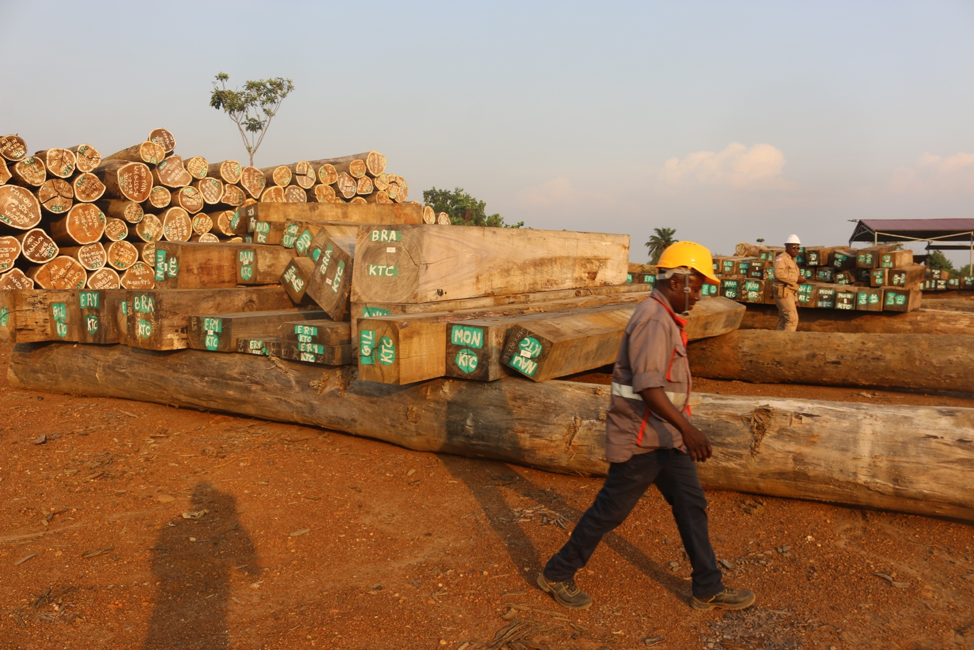
Mr. Ngo said back in March that “We have 2,000 cubic meters of logs” at Kisvan’s log yard. The DayLight photographed several of the logs, marked with “KTC,” the company’s industry-recognized abbreviation. Some were in squared form.

Mr. Ngo’s comments in that March interview indicate Kisvan exported logs. At one point, he complained that it was expensive to export timber in containers through the Freeport of Monrovia.

The Forestry Development Authority breaks its regulation by permitting Kisvan to export logs while it remains indebted to Central Morweh. The Regulation on Forest Fees prohibits the FDA from granting companies with debt export permits. The agency did not respond to questions on the matter.

Roadblocks and ‘Devil’

In forestry, communities sign a forest management agreement with the FDA for 15 years, subject to a five-year review.  Thereafter, they can enter logging agreements with third parties. The scheme is meant to share forest benefits with locals.

But the signs of the failure two years into their agreement with Kisvan, villagers in Central Morweh are concerned whether they would benefit from their forest.  

“The community [is] vexed now and asked the… the leadership to call the company to tell them what they’re doing is not going down well with us,” says Sarah Neegar,  a member of the community assembly from  Kporkon Town. The community assembly comprises representatives of towns and villages that own the forest and is the highest decision-making body in community forestry.

Some of the logs Kisvan Timber Corporation Harvested from the Central Morweh Community Forest in River Cess County. The DayLight/James Harding Giahyue

“We told the [leadership] to call the company so we can discuss with them but since that time they can’t come,” adds Neegar. 

“If the company [doesn’t] come, we will put a roadblock, to put our Bassa devil and be dancing. Then now somebody will come in.” Devil is the Liberian parlance for a traditional mask dancer whose outing could connote celebration or chaos.  

Neegar’s comments are echoed by Junior Gbatea,  the youth chairman of Kporkon Town.

Cephus shrugged off any threat of a protest. “Well, I don’t know their thinking because every individual has his/her own understanding or doing things,” he tells The DayLight.

His comments align with the Community Rights Law of 2009 with Respect to Forest Land. The law lays down specific ways forest communities can seek redress, and none has to do with protest or violence.

Court Files: FDA Deputy Dodged Police Illegal Logging Probe

Benjamin Plewon 2
Benjamin Plewon 2

Top: FDA’s Deputy Managing Director for Administration and Finance Benjamin Tennessee Plewon III did not turn out for questioning over his alleged involvement with an illegal logging operation in 2022. Facebook/Benjamin Plewon


By O`Neill Philips for The DayLight


MONROVIA – The Deputy Managing Director for Administration and Finance Benjamin Tennessee Plewon III Forestry Development Authority refused to cooperate with a police investigation into an illegal logging operation, court documents reveal.    

The Liberian National Police invited Plewon over his alleged connection to men suspected of illegally harvesting logs in Gbarpolu County last year, according to the documents. The police filed the documents last year but The DayLight only obtained them last week.

The suspects, including Korean nationals, FDA rangers, a then-police commander and a customs officer, are accused of trying to smuggle timber valued at US$60,000, the documents say.

“The investigation notes that Benjamin Tennessee Plewon… failed to honor the invitation, which constitutes hindering law enforcement…,” reads a police report filed with Criminal Court A. No charges were filed against Plewon.

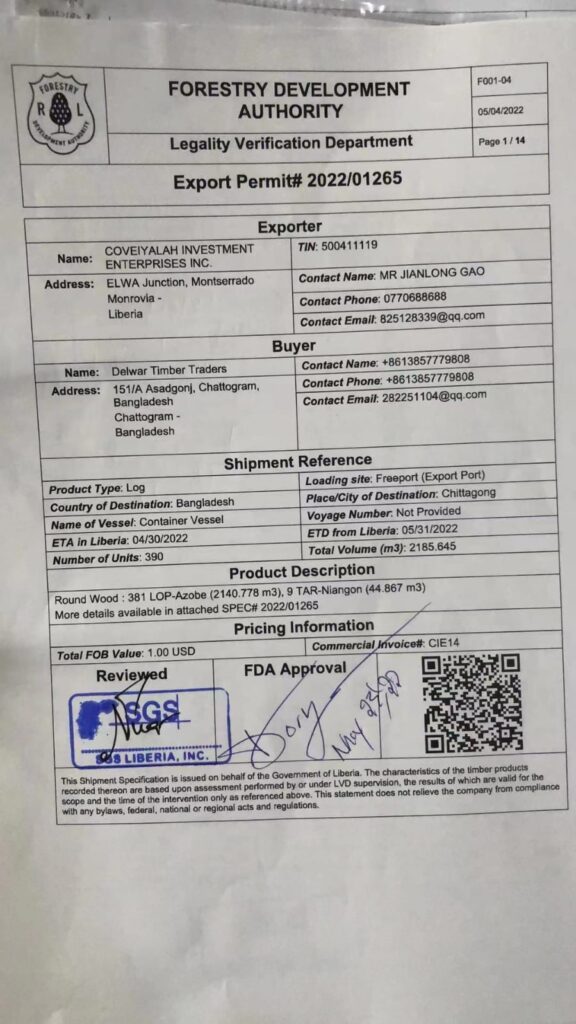
A copy of an export permit issued to Coveiyallah, which the Deputy Managing Director of the Forestry Development Authority (FDA) Benjamin Tennessee Plewon III allegedly provided to an illegal logging syndicate. Members of the syndicates have been charged with various offenses, ranging from economic sabotage to bribery.

Plewon is accused of providing the export permit of Coveiyallah, according to the documents. Coveiyellah, which operates in Gbarpolu, owns the permit.

Plewon allegedly gave the permit to Isaac Railey, the head of the FDA law enforcement department. Railey then presented the permit to Dawoda Sesay, then a police commander in the Paynesville area, according to the filings. Sesay has since been disrobed and Railey suspended.

Plewon did not respond to WhatsApp questions or pick up calls for comments on the allegation. 

The DayLight exposed the illegal operation in August last year after the FDA seized three trucks transporting the illicit timber. An alleged disagreement over the payment of a bribe had exposed the syndicate, according to court filings.   

The police charged Railey, Sesay and several other suspects with economic sabotage and other crimes.  

The men deny the charges. They have not been indicted, about six months after their arrest and release on bail by the Monrovia City Court.


This story was a production of the Community of Forest and Environmental Journalists of Liberia (CoFEJ).

Logs Left at Sinoe Port and Forest Rot

IMG 1505 scaled
IMG 1505 scaled

Top: Several logs Delta Timber Company left at the Port of Greenville, Sinoe County that have now decayed. The DayLight/James Harding Giahyue


By Emmanuel Sherman


GREENVILLE, Sinoe County – Scores of logs at the port of Greenville and a community forest belonging to a logging company have decayed in the southeastern county, despite the company producing perhaps the least number of timber in the industry.  

Delta Timber Corporation produced the timber in the last five years, based on the company’s official harvesting records. It is believed the company took the logs to the port between 2017 and 2018.  

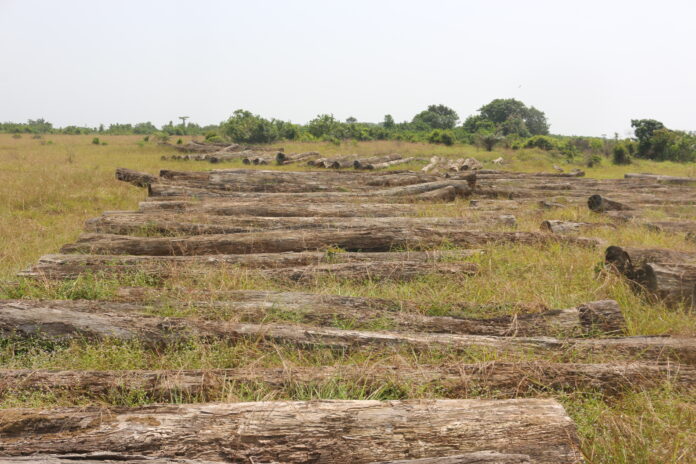
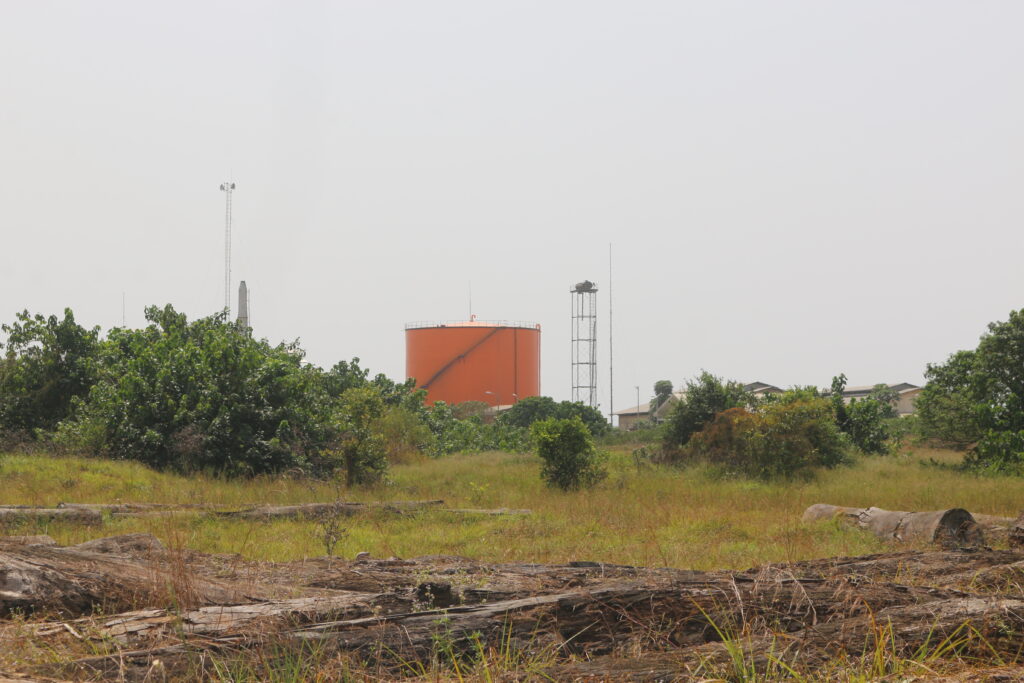
The DayLight reporters saw a grassy field of decayed logs at the port in January, some still showcasing “DTC,” the company’s industry-recognized abbreviation. A few lay in piles, while others spread across the bushy, open field.

Apart from the decayed logs at the port, there are others left unattended in the Numopoh Community Forest, where Delta operates.

“They are many in the forest all over, some in the landing,” said Sam Kandie, head of the community forest leadership.  Landing is the place the logs are gathered and sorted. Kandie said the company last felled a tree in September 2021.

Official records show that Delta produced a total of 1,624.521 cubic meters of logs in the last five years.

But the company exported just 237.178 cubic meters or  41 logs, according to the Forestry Development Authority (FDA).  

Delta Timber Company left scores of logs at the Port of Greenville in Sinoe County that have now rotted. The DayLight/James Harding Giahyue

That means between 2016 and 2021, Delta abandoned 1,387.343 cubic meters of logs. Logs are abandoned when companies leave them unattended for between three weeks and six months, depending on the locations, according to the Regulation on Abandoned Logs, Timber and Timber Products.

But Delta’s abandoned logs are likely more than the ones The DayLight calculated. A 2018 report by Volunteers to Support International Efforts in Developing Africa (VOSIEDA) found the company abandoned over 500 logs it harvested outside Numopoh.  Harvesting timber outside a contract area is a violation of the National Forestry Reform Law, and such logs are not captured in FDA’s tracking system.

FDA did not respond to queries on Delta’s abandoned logs. However, recently, it said in a statement it punished companies with abandoned logs without showing any evidence. It said in the statement that it had punished three other companies also operating in the Sinoe area for the same reason.

A pile of Delta Timber Company’s logs at the yard of the Port of Greenville, Sinoe County. The DayLight/James Harding Giahyue

Under the abandoned logs regulation, the FDA must petition a court to confiscate and auction logs it deems abandoned. The government loses revenue when logs rot.

Delta Timber Corporation and Numopoh Community Forest signed a five-year logging agreement in May 2016.

The story was a production of the Community of Forest and Environmental Journalists (CoFEJ).

Logging Company In Sinoe Abandons Likely 7,000 Logs

DJI 0069 scaled
DJI 0069 scaled

Top: A drone shot of Mandra`s log yard where hundreds of abandoned logs lay bare in Greenville, Sinoe County. The DayLight/ Derrick Snyder


By Mark B. Newa


GREENVILLE, Sinoe County – Mandra Forestry Liberia, Limited, an Asian company, abandoned an estimated 7,000 logs it harvested between 2019 and 2021,  according to The DayLight’s analysis of official records.

During the period, Mandra produced 6,944 logs but exported none, our analysis of records of the Forestry Development Authority (FDA) shows. Mandra harvested the logs in the Sewacajua Community Forest in Sinoe County, where it has operated since 2017.

During the 2019-2020 harvesting season, when the global timber market dipped due to the coronavirus pandemic and the U.S.-China trade war, Mandra harvested over 4,500 logs.

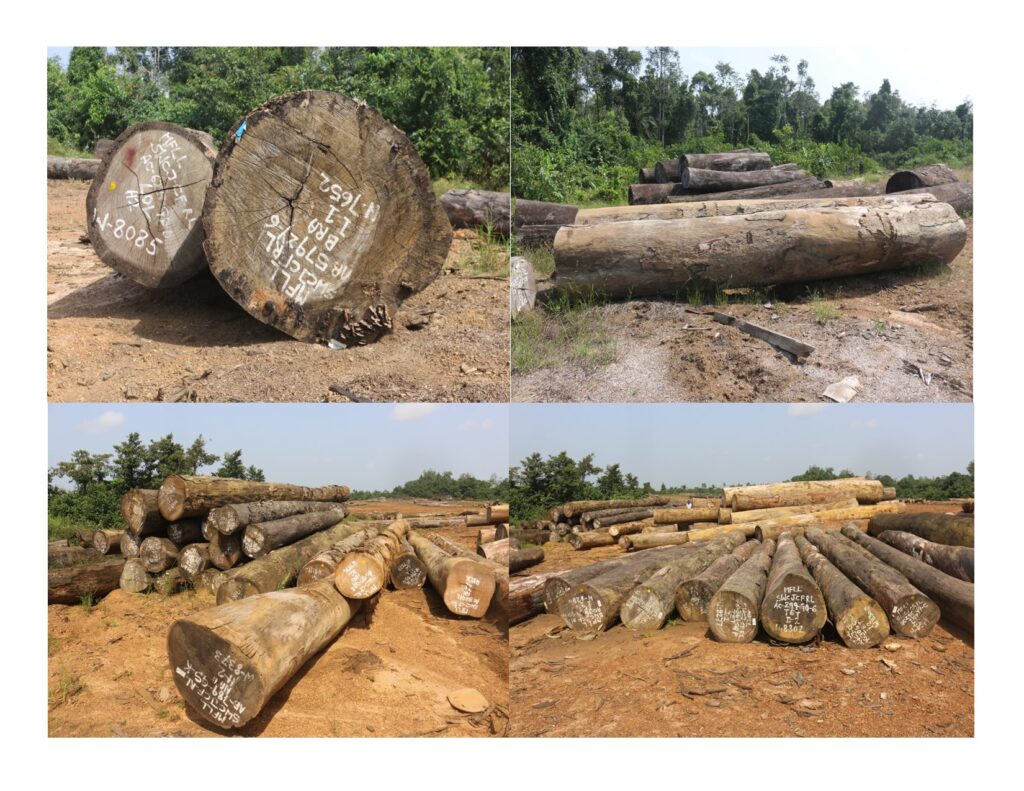
This journalist saw huge heaps of logs at Mandra’s log yard in Greenville in January. A good number of the wood brandishing “Sewacajua,” spread across the quiet field had already decayed. Earthmovers and timber jacks were at different positions.

Under  Regulation on Abandoned Logs, Timber and Timber Products, logs should be declared abandoned when they remain at a location between 15 (three weeks) and 180 working days (about six months). By this definition, Mandra abandoned all the logs in question latest June last year.

Our calculation did not include trees Mandra cut in 2018, some parts of 2019 and last year. The Liberia Extractive Industries Transparency Initiative (LEITI) was unclear on Mandra’s production and export figures covering the period. Moreover, the FDA does not publish these records and did not grant The DayLight’s request for the information, a violation of several provisions of forestry legal frameworks. Subsequently, we obtained the information for this story from elsewhere.

Mandra’s abandoned logs are likely to be higher than 6,944. The company co-operates in two large-scale logging concessions in River Cess and Nimba Counties. The LEITI did not separate Mandra’s Sewacajua figures from the two other concessions. A 2020 investigation report by the FDA found that Mandra and its partner EJ &J Investment Corporation abandoned 65 first-class logs in River Cess.

Mandra Plantations Liberia Limited of the Virgin Islands owns Mandra’s largest shares (99.7 percent), according to its article of incorporation. Sio Kai Sing, a Malaysian, holds 0.1 percent of the shares;  Tea Sin Sing, also a Malaysian, has 0.1 percent; and Tang Kwok Ben, a Hong Konger, holds the remaining 0.1 percent. It signed a 15-year agreement with the Secawajua Community Forest, covering 31,986 hectares in Sinoe’s Seekon, Pyne, Wedjah and Juarzon  Districts.  

A collage of logs Mandra abandoned at its log yard in Greenville, Sinoe County. The DayLight/ James Harding Giahyue
Mandra`s campsite in Secawajua, Sinoe County in 2018. The DayLight/ James Harding Giahyue

Abandoned Logs Regulation

Augustine Johnson, a Liberian who serves as Mandra`s general manager, wrongly claimed that the logs in Greenville were not abandoned because they had a long lifespan and that he had already paid taxes for them.

“Before you talk about abandonment. I am expecting a ship to come to Greenville by the second week in next month to get the logs out,” Johnson told The DayLight in a phone interview.

“Apart from logs that are to be shipped, I can take logs for my own domestic use, I can take logs to saw into pieces and even bring it to Monrovia to…build my campsite. The ones that rot are used for domestic purposes,” Johnson added.  

A former FDA geographic information system (GIS) technician, Johnson’s comments are not backed by facts. Payment of taxes is a requirement to obtain a log-export permit. However, taxes have nothing to do with the abandonment of logs. Rather, abandonment largely depends on the time logs stay at a particular location, according to the regulation. For instance, the woods in Mandra’s log yard in Greenville should have only stayed there for 180 days, the same as the ones Johnson said were at the Port of Greenville. Also, the FDA would have to reenter the logs in question into the FDA log-tracking system called LiberTrace.

Johnson is adamant about his wrong understanding or lack of awareness of the regulation. “The logs been there for over 30 working days doesn`t matter, or been there for I80 days it doesn`t matter. They are all Ekki logs with a huge lifespan,” Johnson said and hung up the phone. He had insisted on educating this reporter, not the other way around.

The FDA did not answer questions The DayLight sent to the agency for comment on this story. This journalist sent the email on March 30 to Managing Director Mike Doryen, copying Joseph Tally, his deputy for operations.

The regulation mandates the FDA to investigate the alleged abandonment of the logs in seven days after notification. Thereafter, it must declare the logs abandoned, petition a court to auction the wood and fine the company involved. If the company claims, it must pay administrative fees and redeem them.  The FDA established the regulation in 2017 after provisions of another regulation proved not enough to prevent the waste of forest resources.

But despite years of notifications, including one from within the agency, the FDA has failed to take any legal, public actions. Last year, it said it would begin the process to auction abandoned logs during the dry season but has not done that. The situation has led to a loss of revenue for the Liberian government—and the media.  

A 2020 FDA investigation found companies were abandoning logs because they were harvesting logs without first finding buyers. It also blamed irregular monitoring, lack of logistics for field officers and poor road networks for the problem.

“Logging contract holders are not doing much to minimize the incidence of abandoned logs,” the report said. “Much needed revenue… has been lost due to the unprecedented abandonment of the assorted round logs…”  

The story was a production of the Community of Forest and Environmental Journalists of Liberia (CoFEJ).

New Contract for Rogue Company’s Owner

Iroko Collage
Iroko Collage

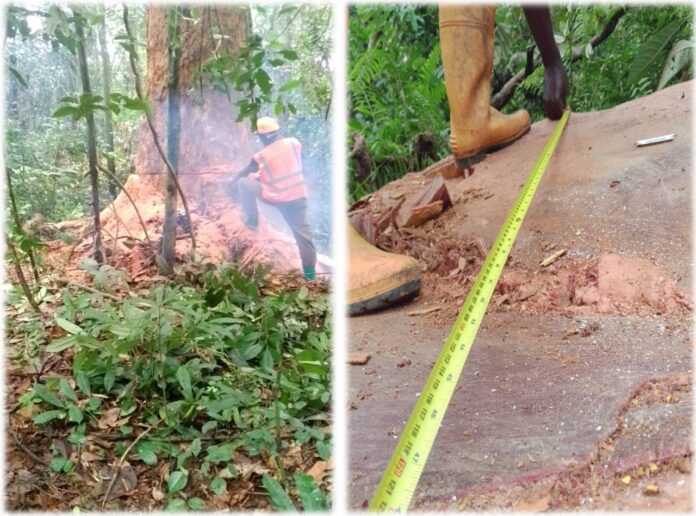
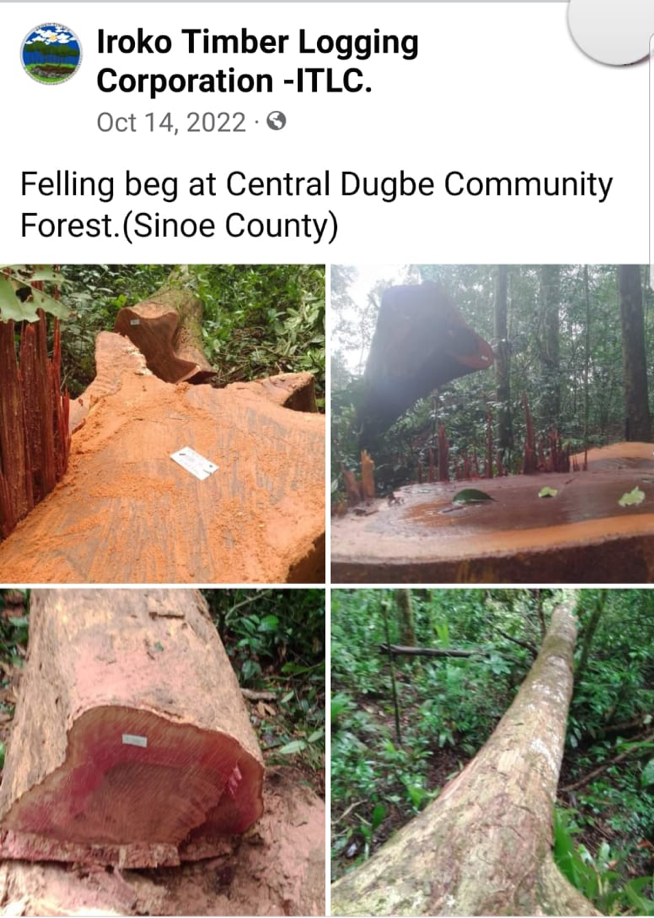
Top: A collage showing Iroko harvesting activities in October 2022. Picture credit: Iroko Timber and Logging Corporation


By Emmanuel Sherman


KARQUEKPO, Sinoe County – The Forestry Development Authority (FDA) has approved a contract for Iroko Timber and Logging Corporation, a new Nigerian-owned company, to operate the Central Dugbe River Community Forest. The company began logging in the fourth quarter of last year, according to its website and Facebook page.  

But there is a problem with Iroko’s Dugbe River deal and operations in the 13,193-hectare forest. Timothy Odebunmi, Iroko’s majority shareholder, is not eligible to conduct logging activities in Liberia over the dishonesty of another company he co-owns.

That firm, Akewa Group of Companies, falsified the tax clearance of a mining company called Tiger Quarry to bid for the Gola Konneh Community Forest in Grand Cape Mount County in 2019. At the time, Akewa paid US$1,000 as a fine for the forgery, a violation of the Revenue Code. Odebunmi holds 50 percent of Iroko’s shares and 20 percent of Akewa’s, according to the articles of incorporation of both firms at the Liberia Business Registry. Iroko’s other shareholders are Samson Odebunmi (45 percent) and Akinsiku Arinkan (5 percent).  Abigail Funke Odebunmi (60 percent) and Kenneth Amazeika (20 percent) complete the list of Akewa’s shareholders.

Odebunmi’s co-ownership of Akewa, Iroko, which he co-founded in 2021, should have disqualified the Iroko’s bid for Central Dugbe River. The Regulation on Bidders Qualifications bars individuals whose companies have been convicted or penalized for theft, embezzlement, bribery, tax evasion, false swearing, or forgery. With Akewa having paid a fine for forgery, Odebunmi should not have gotten another logging contract until 2024, according to the regulation.

Akewa with Odebunmi as a shareholder has violated a horde of provisions of forestry laws and regulations. One of the oldest active logging companies, Akewa long line of violations includes its involvement in forestry’s worst post-conflict scandal, in which the FDA criminally awarded 2.5 million hectares of forests to it and other companies. It has a track record of prolonged indebtedness to communities. Currently, it is in an out-of-court settlement with the Beyan Poye Community Forest regarding benefits.

Iroko’s Woes Amid FDA’s Failure

Iroko’s agreement with Central Dugbe River adds to the FDA’s records of failure to enforce forestry legal frameworks. Before then, the FDA had failed to disqualify Akewa over fake tax clearance, which also constitutes perjury under the regulation. It remains Akewa’s only active logging operation, with the Beyan Poye legal issues and the cancelation of a logging contract the company illegally held in Grand Bassa County.

“We prevented Akewa from doing further business until they could provide [their] tax clearance,” said Managing Director Mike Doryen in an interview with The DayLight in June last year. “They rectified it and they paid a fine and that’s how we resumed business with them.” The Bidders Qualification Regulation requires the FDA to disqualify companies that commit forgery and perjury. It did not respond to emailed inquiries for comments.  

A screenshot of Iroko’s website page showing logs the company harvested in October 2022 and only transported to another location in February

Assessing the qualification of companies is an important provision of forest management in Liberia. It mandates the FDA to investigate the character of companies and individuals, their financial capacities, and their record of legal compliance.

Iroko’s ineligibility has started to show in its operation. It has abandoned an unspecified number of logs it harvested in October last year. Photographs and a video posted to the company’s website and Facebook page show some of the logs in the forest. Akin George, a representative of the company, confirmed the harvesting in a mobile interview in March.

Logs do not remain where they were harvested for more than one month and two weeks upon harvest, according to the Regulation on Abandoned Logs, Timber and Timber Products. The logs in question have remained in the forest far beyond that statutory period.

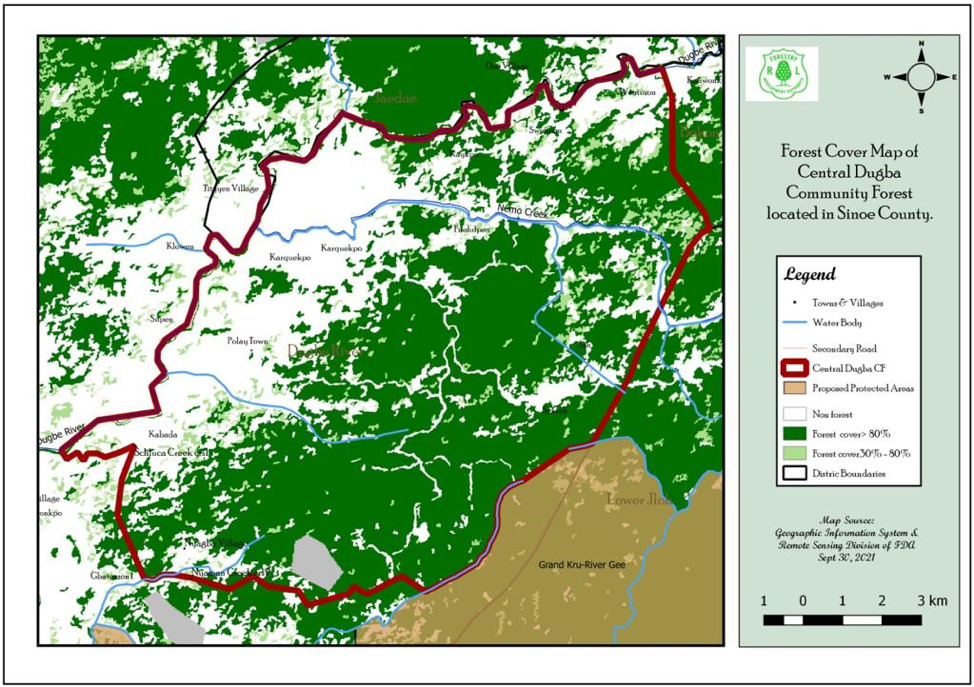
George said the company was taking the logs from where they were harvested to another location in the forest. Bartee Togba, the head of the Central Dugbe River’s leadership, said the same. Togba said Iroko began to transfer the logs in late February, some four months after it felled the trees.  The forest is a portion of 39,000 hectares and includes a proposed protected area between Grand Kru and Sinoe.  

The Dugbe River Community Forest map. Credit: Forestry Development Authority (FDA)

Iroko’s logs add to thousands of abandoned logs across the country, with the FDA taking no known public actions. The abandoned logs regulation mandates the agency to investigate, seize the logs and petition a court to auction them. Penalties for the offense include fines and forfeiture of the contract.  

The total volume of the logs,  in question, is essential for Iroko to pay the community’s benefits. Last year April, the community signed a 15-year commercial use contract with Iroko Timber Logging Corporation. It promised to build two elementary schools, handpumps, guesthouses and a clinic.

Efforts to establish contact with Timothy Odebunmi did not materialize. There is no trace of his phone number, email address or WhatsApp. In January, George promised to get Timothy Odebunmi to speak to the issue but failed to do so.

George evaded several attempts for an interview on the situation on behalf of the company. The DayLight reached out to George through phone calls and Facebook messages and WhatsApp text messages but to no avail.


The story was a production of the Community of Forest and Environmental Journalists of Liberia (CoFEJ).