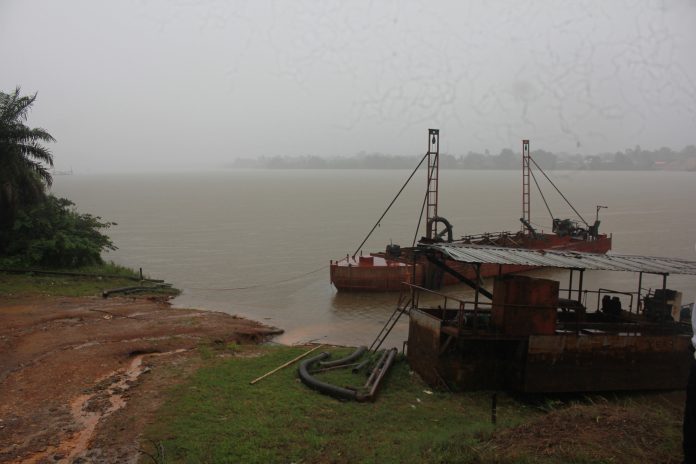
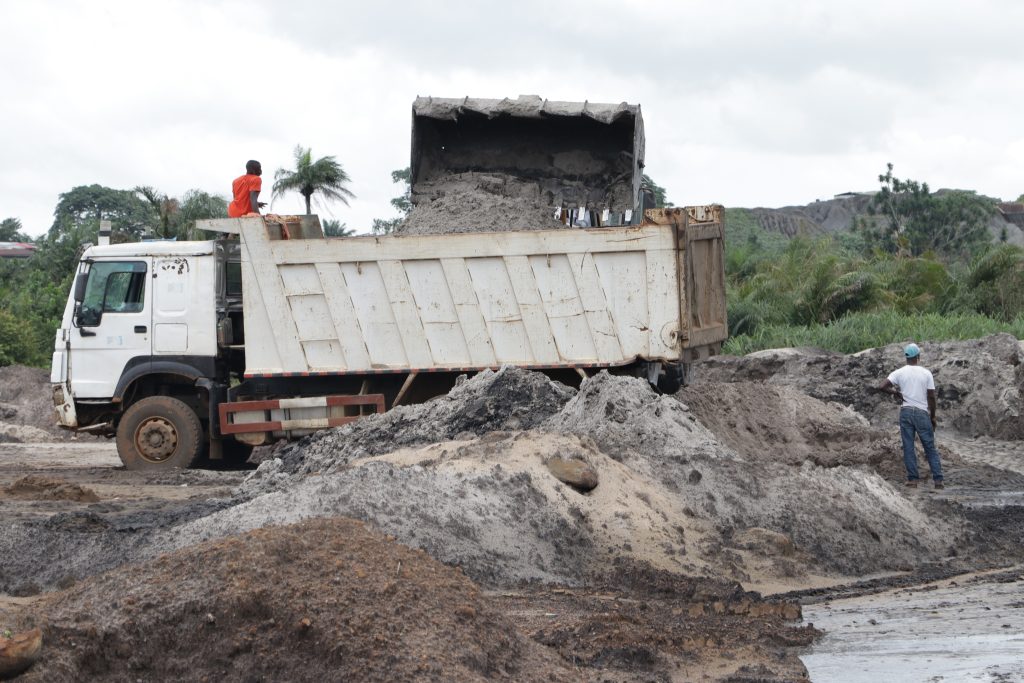
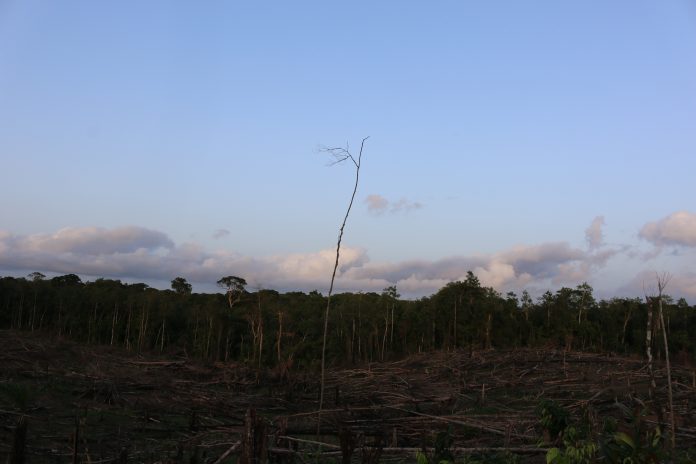
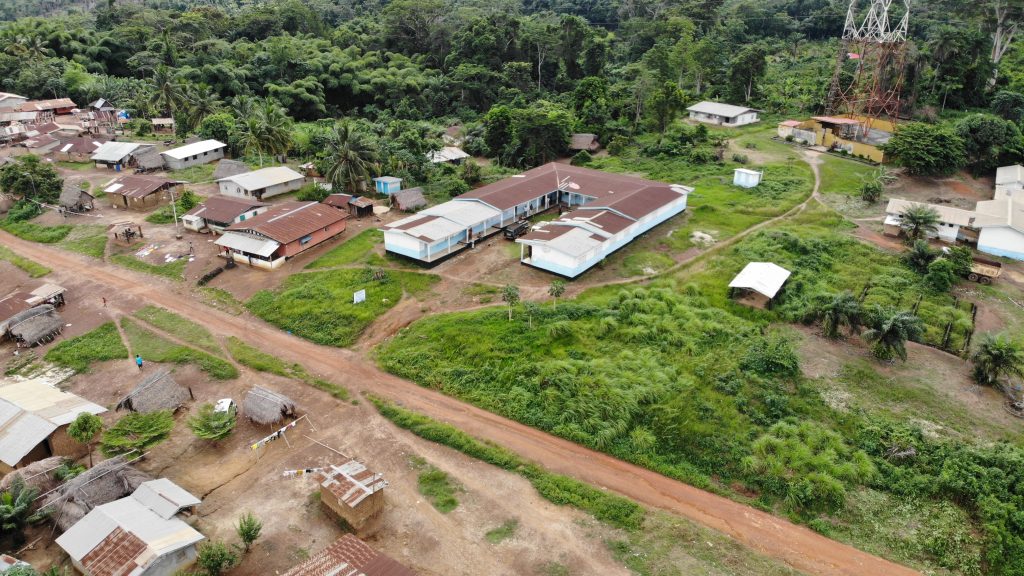
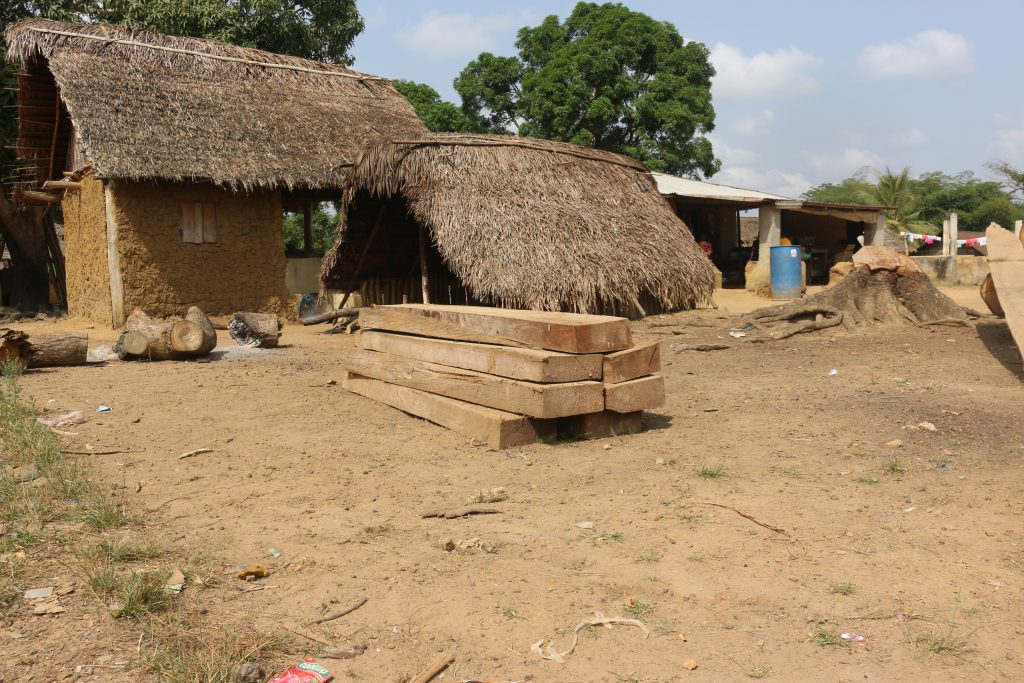
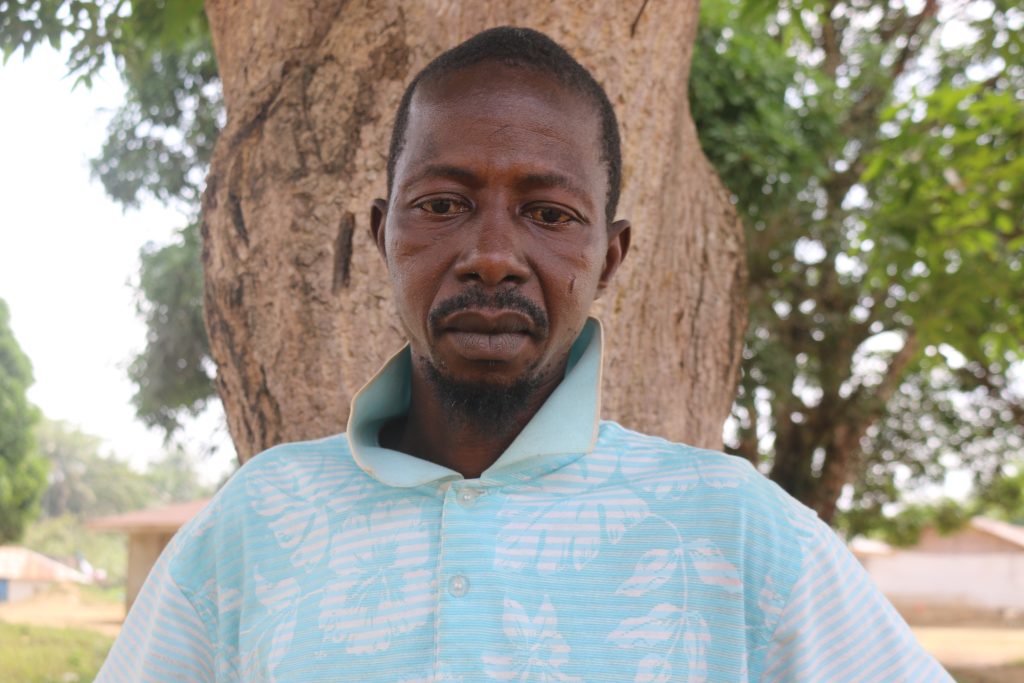
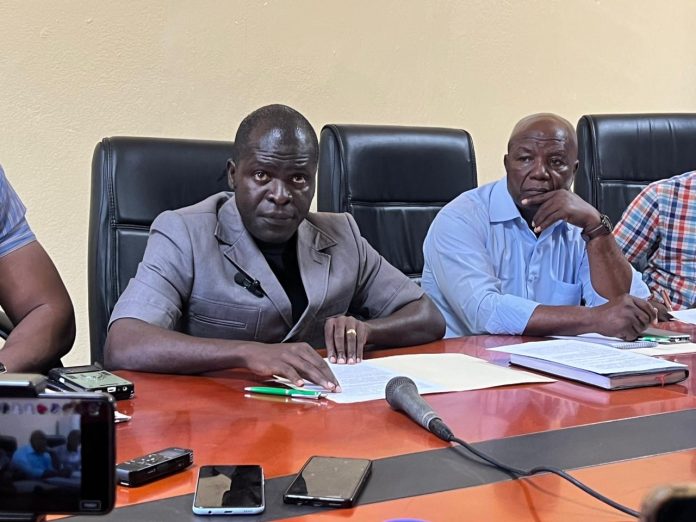
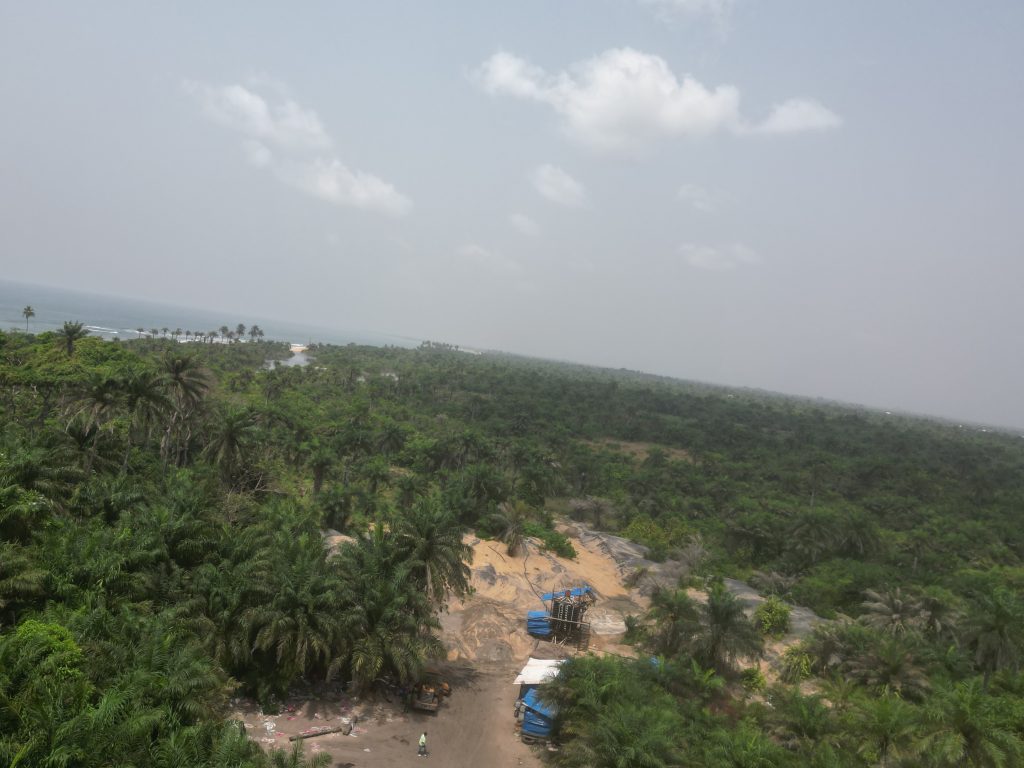
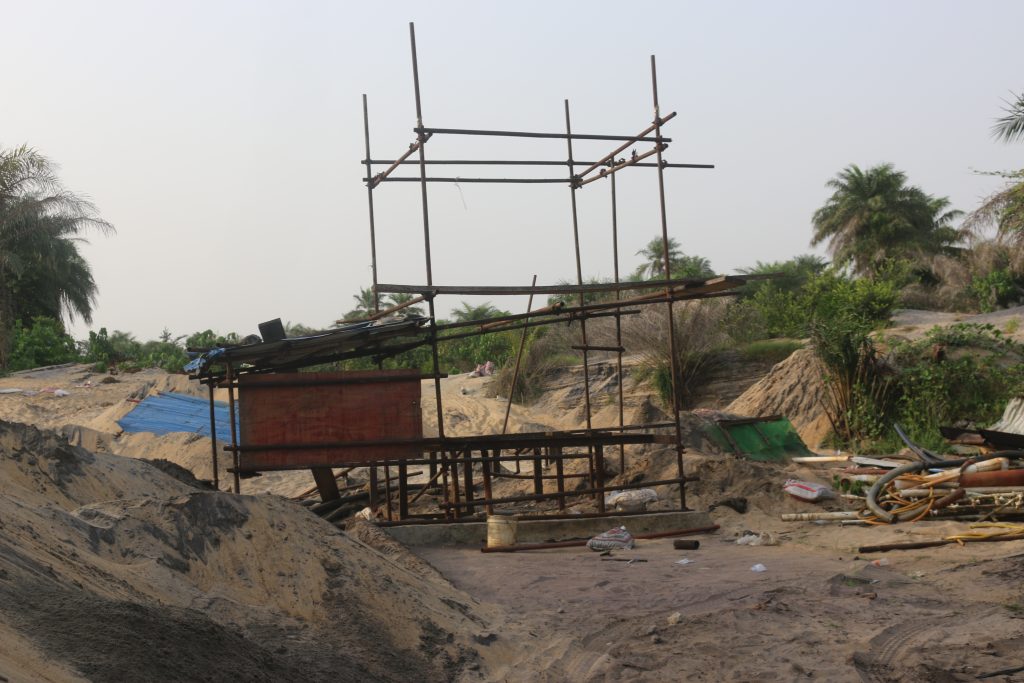
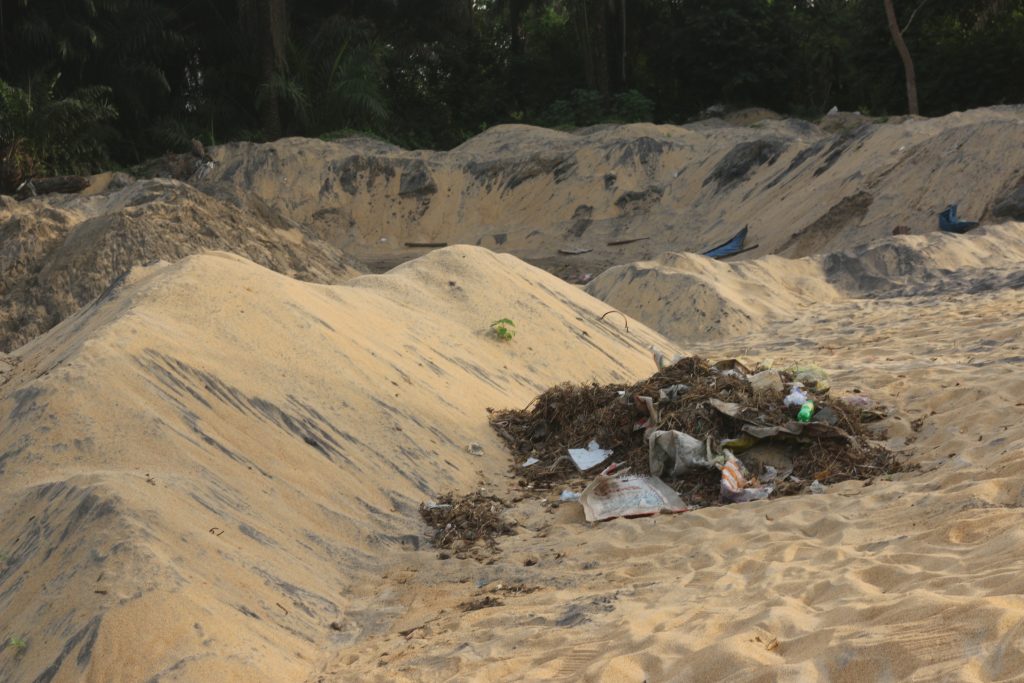
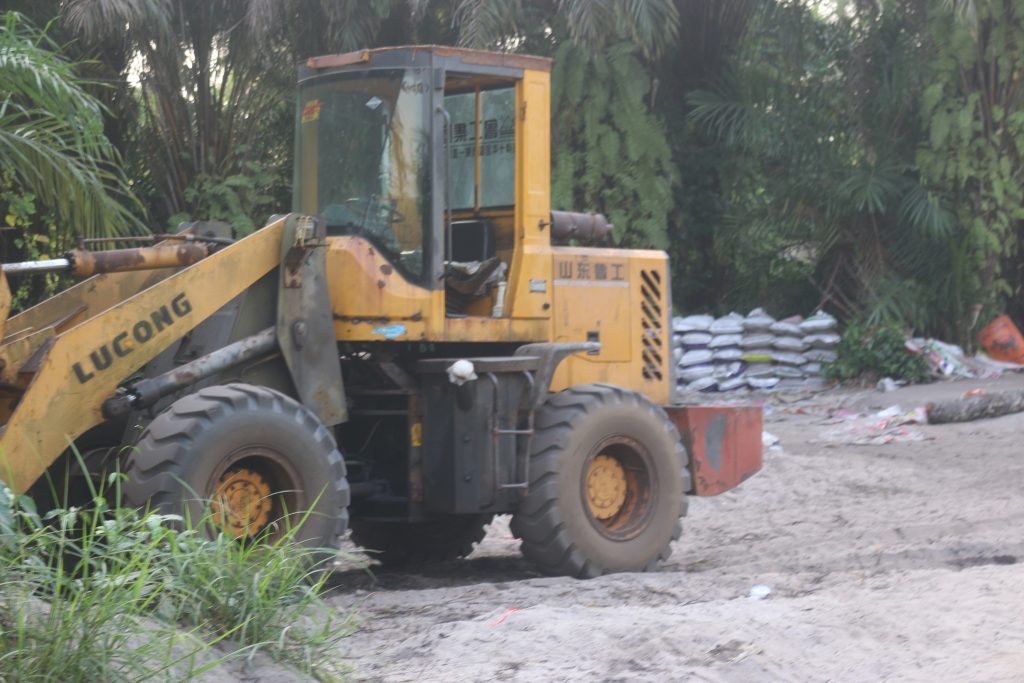
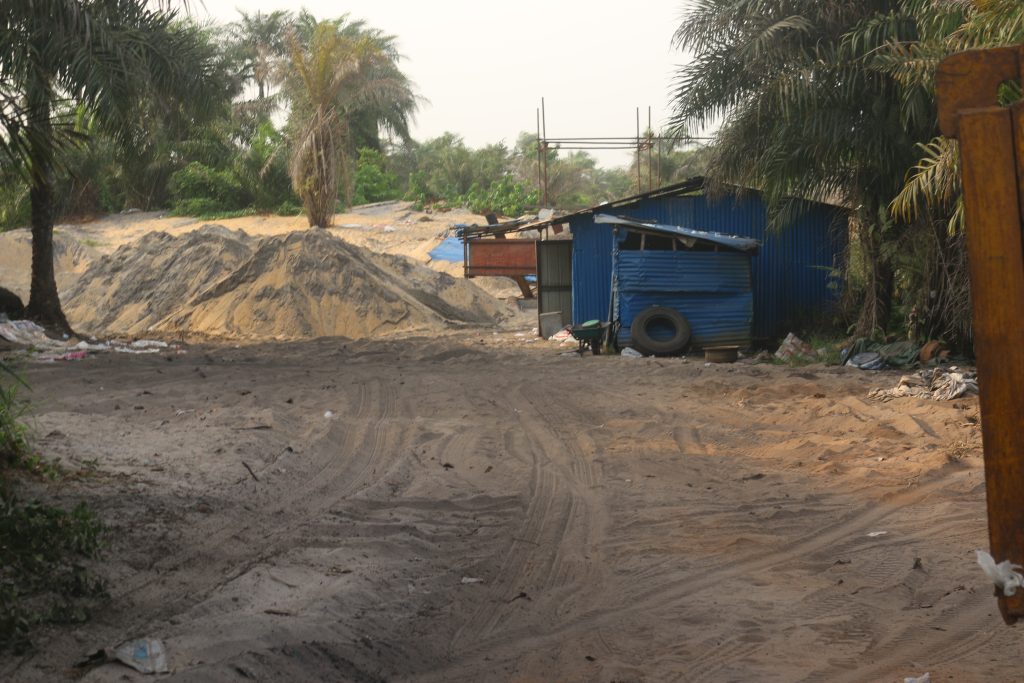
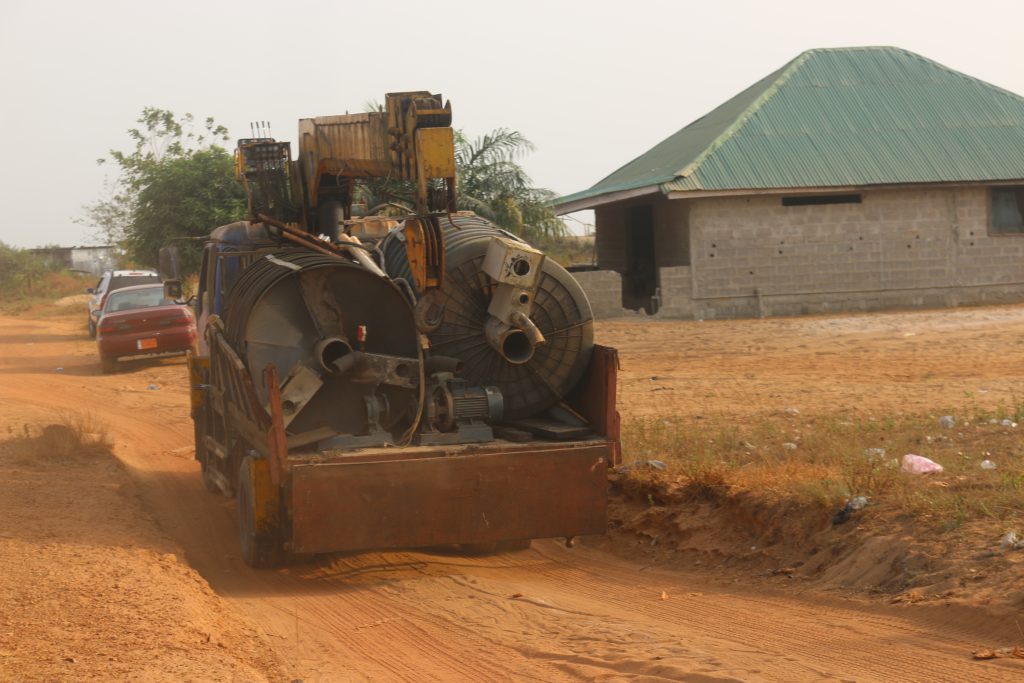
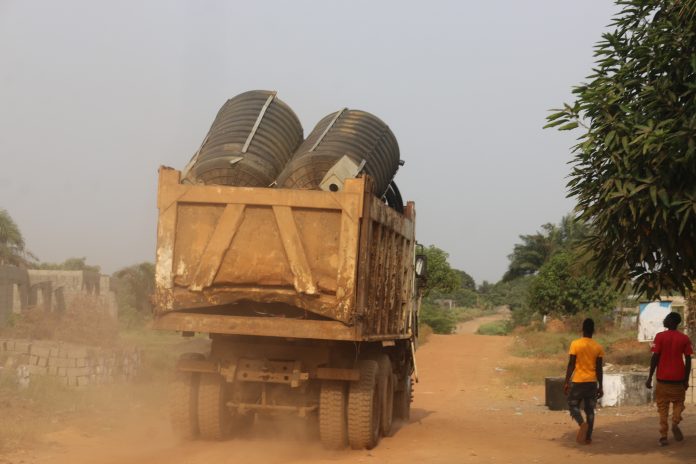
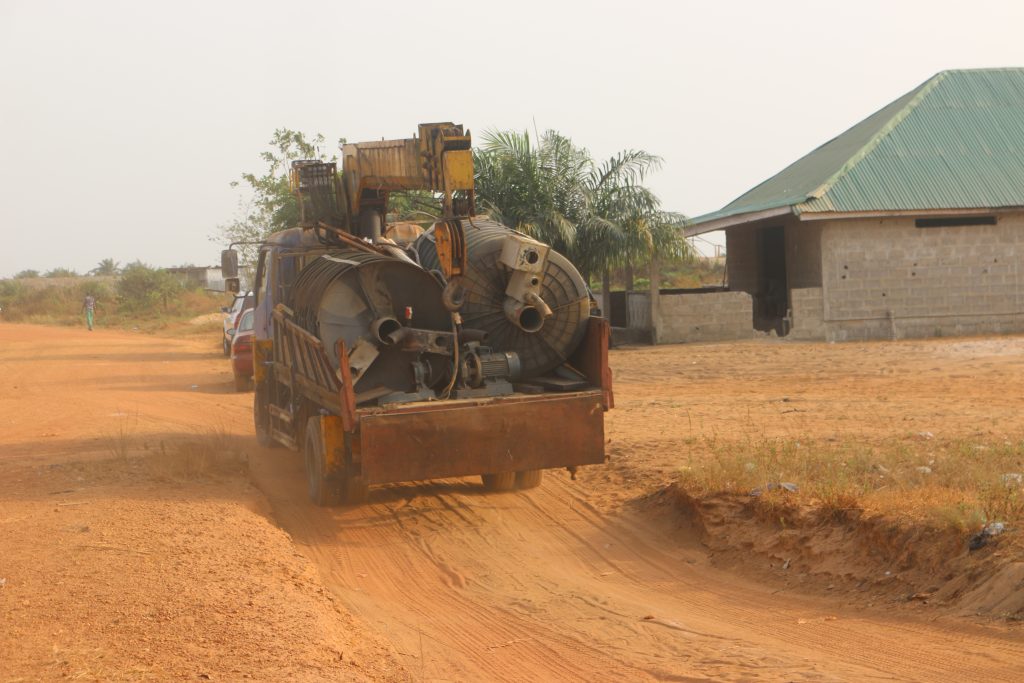
Top: Lichi has operated in Virginia for more than a decade. Its license expired in June 2023 but is still operating in the area. The DayLight/James Harding Giahyue
VIRGINIA – Sailing over the St. Paul River, the dredging machine moves slowly from one point of the water to another in Waterside, Virginia.
Residents here are worried that the continuous dredging of sand from the river would cause erosion and affect their homes. But for Lichi Inc., sales are important so the dredging continues.
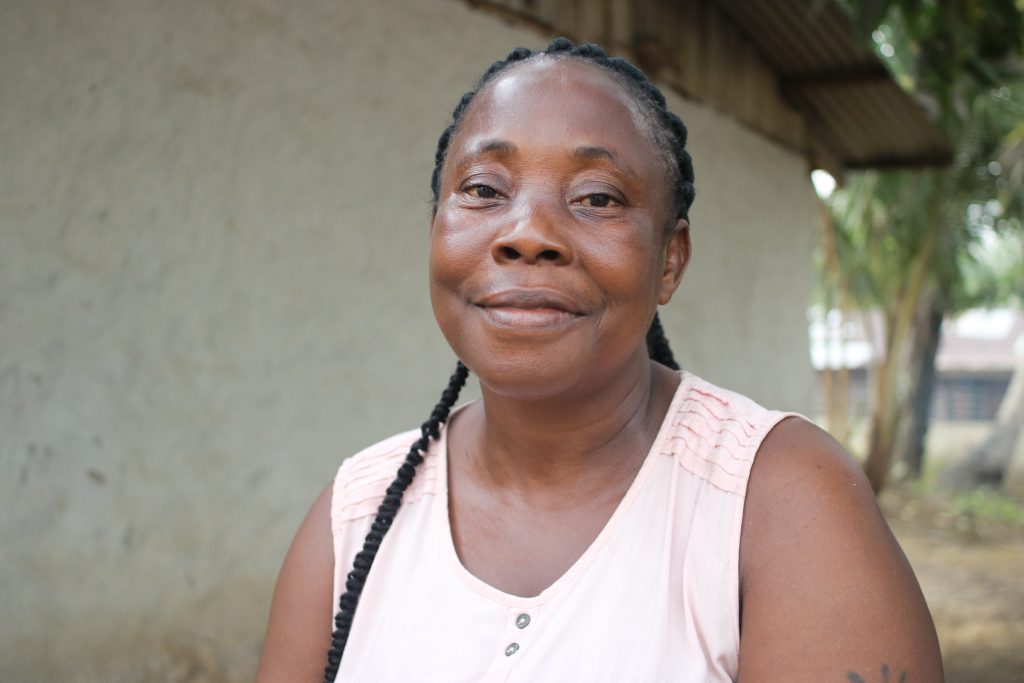
“We are suffering here bad way,” said Yamah Washington, who lives along the river. “The dust, no respect for us. The trucks are running 24\7.”
But Lichi should not have been in Virginia in the first place, at least not for the last 10 months. The Ministry Mines and Energy records show that its class B license expired on June 29 last year, it has not been renewed. All Class B licenses must be renewed every five years, according to Liberia’s Minerals and Mining Law. The company had been awarded the sand-mining license in 2012.
The Daily Observer visited the company’s site, excavators were seen hauling sand from the dredging machines at the bank of the river.
The failure of Lichi to renew its lesson while still operating defrauds the government of Liberia of U$10,000—the fees for a medium-scale mining license.
Lichi was established in 2011 and is owned by Ikechukwu Godwin Ejideaku (40 percent), Francis Iyke Nwosu (30 percent) and Aruna Lahah (30 percent), according to the company’s article of incorporation. However, it has several employed Chinese miners.
Allegation of bribery
Lahah, also Lichi’s financial and tax consultant, admitted that the company has an expired license. “Last year we did not pay, we are owing for last year and this year,” Lahah told the Daily Observer.
Lahah blamed former Assistant Minister for Mines, Emmanuel Swen, for Lichi not renewing its license. He accused Swen of soliciting a bribe from the company to approve its renewal but presented no evidence.
“Minister Swen was collecting huge money from companies before he gave you a payment form to pay government tax, and we were not in the position to give him money for 2023.”
A Lichi truck collects sand on the Roberts International Airport Highway. The DayLight/Harry Browne
Swen denies that accusation, saying that he requested Lichi to present a memorandum of understanding (MoU) between it and the community, which Lichi failed to provide.
“When we took over I didn’t know they didn’t have MOU so I noticed it in the second year. I asked them to produce it they appealed that it would require negotiation with the community. So, I signed their license that year with the understanding that they shall negotiate with the community,” Swen said.
“That year ended when they came for renewal so I insisted that I could not authorize the renewal of that license until they came with the MoU. At that point, I had to travel for studies I didn’t process the document. Since I came back, I [don’t] remember them coming to the office to meet up with me for processing of the license until we transitioned,” Swen added.
Daily Observer obtained a copy of the MoU in question, which shows the document was drafted in June and finalized in October 2021, the same month Swen traveled to London for studies.
CORRECTION: This version of the story corrects the details on Lichi’s shareholders from Vaanii Baker and Peter Scot in the previous version to Ikechukwu Godwin Ejideaku, Francis Iyke Nwosu and Aruna Lahah.
The story was a collaboration between The DayLight and Daily Observer. The United States Embassy in Monrovia provided funding for this story. Daily Observer and The DayLight maintained editorial independence over the story’s content.
Top: An elevated view of a portion of Teekpeh Clan’s 65,224.61 hectares of land. The DayLight/Derick Snyder
By Harry N. Browne
TEEKPEH – Liberia Land Authority has conducted surveys in four clans in River Cess County, the last stage for the communities to get customary land deeds.
The Land Authority conducted the surveys recently for Teekpeh, Ziadue, Dorbor and Gbarsaw, bringing to an end four years of quest for their ancestral land rights.
“I feel so glad because, for the time Liberia existed, we were [squatters]. For us to be the legitimate owners of our land, we really appreciate that,” said Fredrick James, the chairman of Teekpeh’s Community Land Development and Management Committee.
“If you do not have a deed for [your land] in Liberia, then … the land is not for you,” said Blessing Nagba, Town Chief of Zammie Town, one of Teekpeh’s largest communities.
Before the official survey, Teekpeh, Ziadue, Dorbor and Gbarsaw declared their intention to get title deeds for their lands. Later, they formed land governing bodies and conducted open mapping of their areas, requirements in the Land Rights Act of 2018 for a customary land deed.
The confirmatory surveys were conducted in a peaceful and orderly manner with all of the parties represented. Representatives of the four clans, the Liberia Land Authority, and civil society gathered at the various boundary points to witness the process.
Blessing Nagba, Town Chief of Zammie Town in Teekpeh Clan
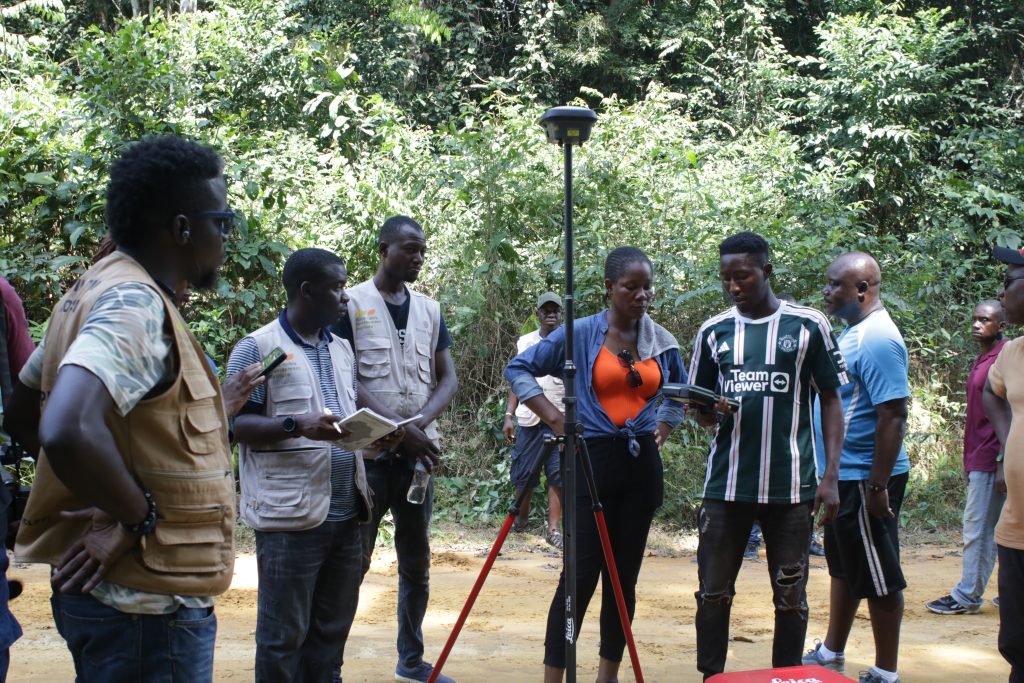
Before that, the surveyors asked the representatives to walk them to the actual spot that all parties agreed to. Then they took points from each location and planted trees at those points. There are 39 border points among the four clans.
Representatives for the clans posed for a picture at each boundary point for evidence, using special equipment that processes and stores data on a memory card and to a satellite. The pictures will remain there as long as the satellite is in space.
Surveyors of the Land Authority survey Teekpeh and Ziadue in River Cess. The DayLight/Harry Browne
The advanced GPS equipment works directly with the satellite for accuracy. It had been recommended as part of a US$3.45 million project to assist communities get their customary deeds, funded by the International Land and Forest Tenure Facility of Sweden.
Before the survey, the Land Authority conducted a two-day workshop on how the instrument works for transparency’s sake.
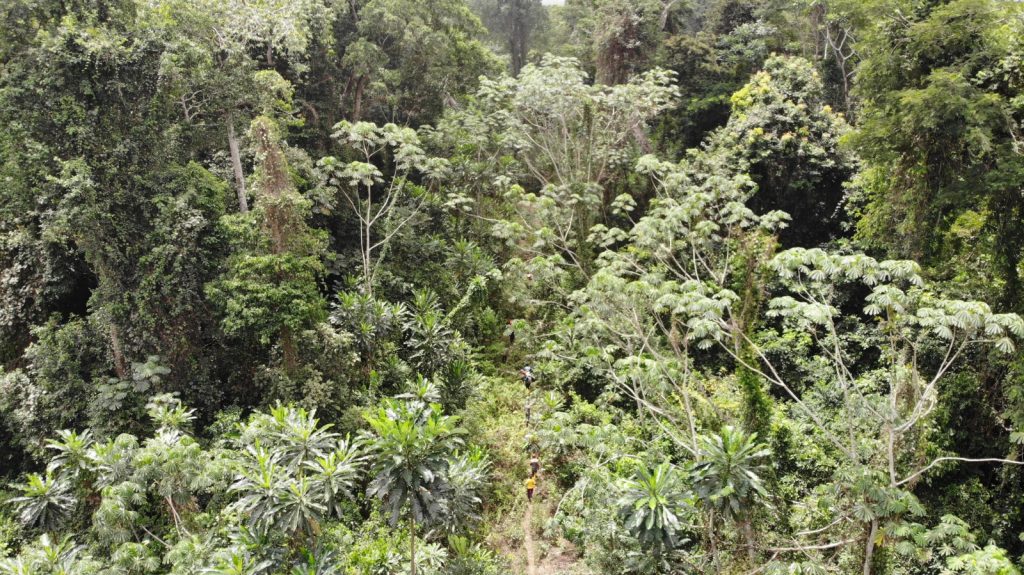
The survey had lots of challenges. The teams traveled hours between clans to cut boundaries in hard-to-reach areas. The Thick, green forest features creeks, valleys, mountains, and wildlife. Townspeople, who knew the route well, helped carry the equipment on their heads under the forest’s shade.
The survey team walked for hours in the forest to confirm the land areas of Teekpeh, Ziadue Gbarsaw and Dorbor Clans in River Cess County. The DayLight/Derick Snyder
“I am here for land, for us to cut our land boundary between, Ziadue and Teekpeh. [This] is the reason we came in the bush,” said Rebecca Miller, town chief of Zeegar Town in Teekpeh.
The four clans cover a combined 152,937.57 hectares of land. Of that total, Teekpeh is the largest with 65,224.61 hectares, followed by Dorbor with 34,276.06 hectares, Ziadue with 32,718.45 hectares and Gbarsaw with 20,000 hectares.
‘Give and take’
But the clans’ success did not come without challenges. They had to resolve several land crises.
Ziadue and Teekpeh fought for Yarvoe, a village that has a potential for gold, according to a survey by the Ministry of Mines and Energy. Teekpeh claimed the Yarvoe because it holds the clan’s ancestral graveyard. Ziadue’s contention was it (a 45-minute walk) is closer to the village than Teekpeh ( a two-hour-45-minute walk). In the end Teekpeh prevailed following six years of heightening tension.
“All we needed to do was to convince them that land business is give and take,” recalled James. “That was the only way we were able to convince our people and the exercise went on.”
Ziadue and Teekpeh also squared off with Dorbor over a place named Sand Beach Junction for two years. Once more the three clans agreed to turn over the land to Teekpeh following two years of standoff.
Dorbor had another conflict with Gbarsaw over a parcel of farmland across a creek. Dorbor surrendered the land to Gbarsaw
“We protected the communities until we went to all those boundaries. We did give-and-take,” said Tito Davis, the chairman of the Dobor Community Land Development Committee. We felt that we wanted deed so, Dorbor gave most of the land out.”
At times, the Land Authority and civil society were caught up in the conflicts.
Arthur Cassell, the geographic information system (GIS) specialist with the Sustainable Development Institute (SDI), which works with the communities, experienced some of them. In one incident, townsmen, unhappy with a borderline they had drawn, chased Cassell and his team into a bush.
“You know the small creek in the bush have their names and sometimes through oral history. Somebody might miss the name or somebody might miss the location of the creek. That was the hold situation,” Cassell said.
“To see the four of them Ziadue Teekpeh, Dorbor and Gbarsaw get their confirmatory survey in one go, it is a plus for us,” Cassell added.
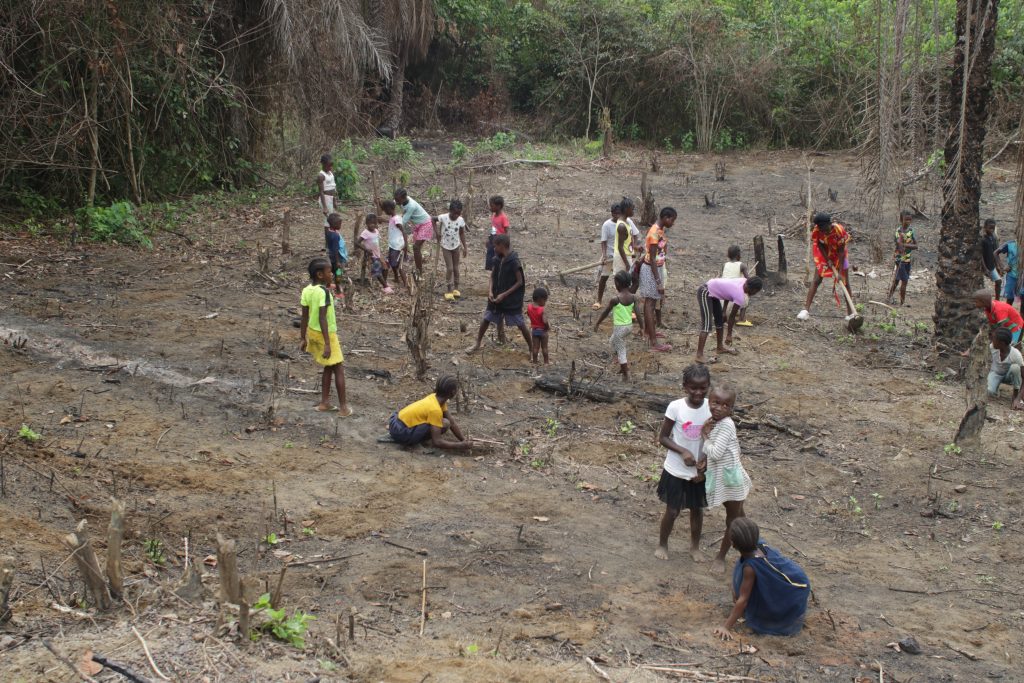
Children work on a farmland in Dorbor Clan, River Cess County. The DayLight/Harry Browne
The Land Authority is expected to grant the four clans their customary deed soon. They make it 11 communities in River Cess and 20 across the country whose lands have been surveyed. Eight communities have already been granted customary deeds, with Fessibu in Lofa the latest.
We are quite assured that in the next few weeks or so their deeds will be prepared,” said Jerome Vanjah Kollie, the National Coordinator for Customary Boundary and Harmonization at the Land Authority. “We have concluded the work.”
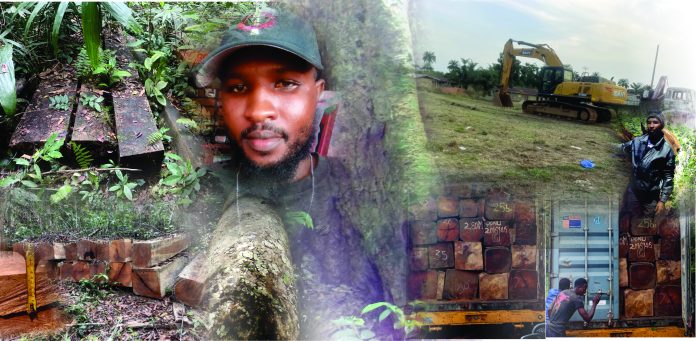
Top: A poster showing the illegal logging activities by Michael Feika in Totoquelleh, Gbarpolu County. The DayLight/Rebazar Forte
By James Harding Giahyue
TOTOQUELLEH, Gbarpolu County – “If [it is a] container, I give you my price. You buy it from me in the bush,” Michael Feika, an illegal logger, told his new client.
Feika is a broker of kpokolo, squared, compact timber whose trade the government “banned” just over a year ago but has reemerged, with authorities yet to act.
Feika shared several of his past and present operations with Joemue Wortee when they met in Paynesville on March 8. The pictures were equally revealing as Feika’s verbal pitch to Wortee, the assumed client.
“I will bring [the kpokolo] to town. It is only left with you to pay me because I got the document,” Feika said as he tried to convince Wortee of a deal.
“This thing [is] my business from day one.”
In his late 30s and with a Sierra Leonean accent, Feika sent Wortee to his network in Totoquelleh in the Bopolu District of Gbarpolu County. There, Wortee saw Feika’s setup—production sites, an earthmover, timber and a gang of chainsaw millers and haulers.
But Wortee was no businessman. He was an undercover reporter whose mission was to uncover Feika’s illegal logging activities. The reporter’s mission set off as evidence of fresh kpokolo activities began in the western countryside.
The DayLight used undercover techniques because it appeared impossible that Feika would submit to an open probe, particularly after our previous report on the return of kpokolo. Also, such investigation in a forest best guaranteed the reporter’s safety.
‘Mikelo’
The DayLight’s undercover reporter under his assumed name traveled to Totoquelleh, some 62 miles north of Monrovia.
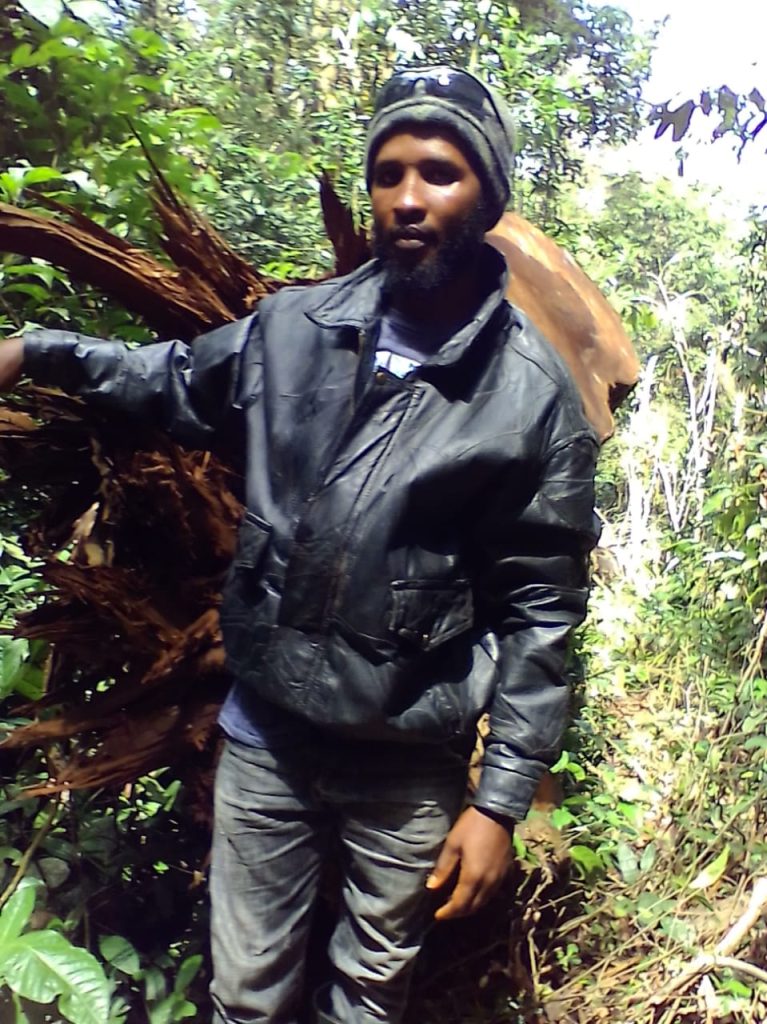
Michael Feika, aliased Mikelo, a prolific kpokolo logger, poses near a tree he just felled. Photo credit Michael Feika
When the reporter arrived at the destination, Feika had already informed a member of his network about the assumed businessman’s mission. The undercover reporter did not know this so, he went asking the townspeople for the teenage member named only as Morris.
Just as Feika had said, everyone the reporter asked in Totoquelleh said they knew Feika and his operations. The people call him Mikelo, a play on the words “Michael” and “Kpokolo.”
Feika and Morris live in a mud hut from where the former serves as the ringleader for their wood trafficking network of over 20 operators. At times he hosts Sierra Leonean illegal loggers for months in Totoquelleh. Feika claims that he hails from Margibi County but his Facebook account lists Freetown as his home city. Other Feikas listed as his friends on Facebook also come from Sierra Leone. This means Feika is not even qualified to conduct small-scale logging activities in Liberia, set aside for only Liberians.
The undercover reporter went to Feika’s house in search of Morris. That search took him to the home of Abadulai Fofana, another kpokolo producer in the forest-enveloped community. It was here the reporter met Morris.
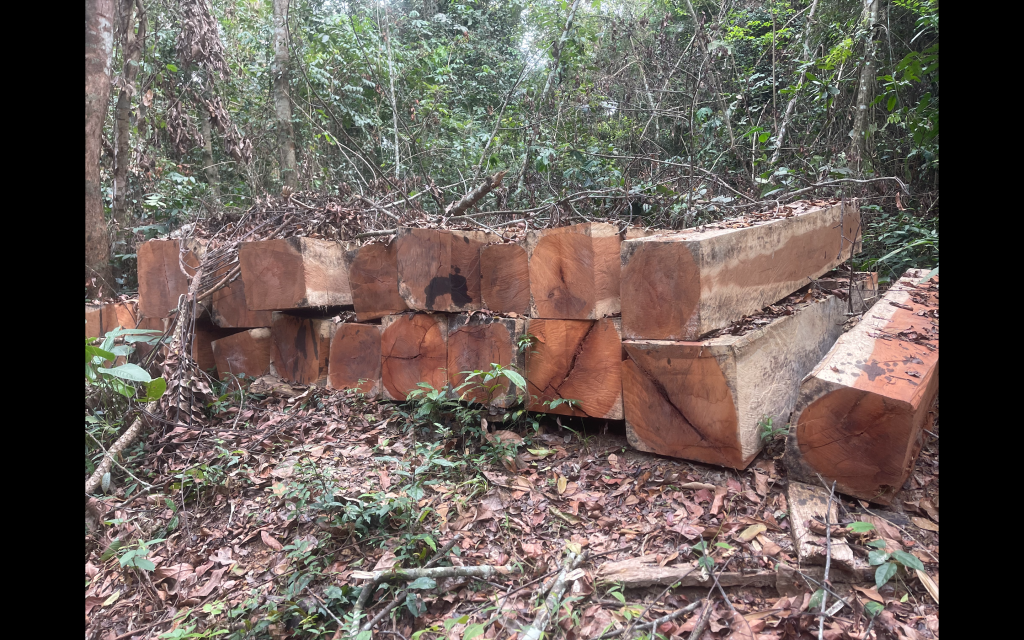
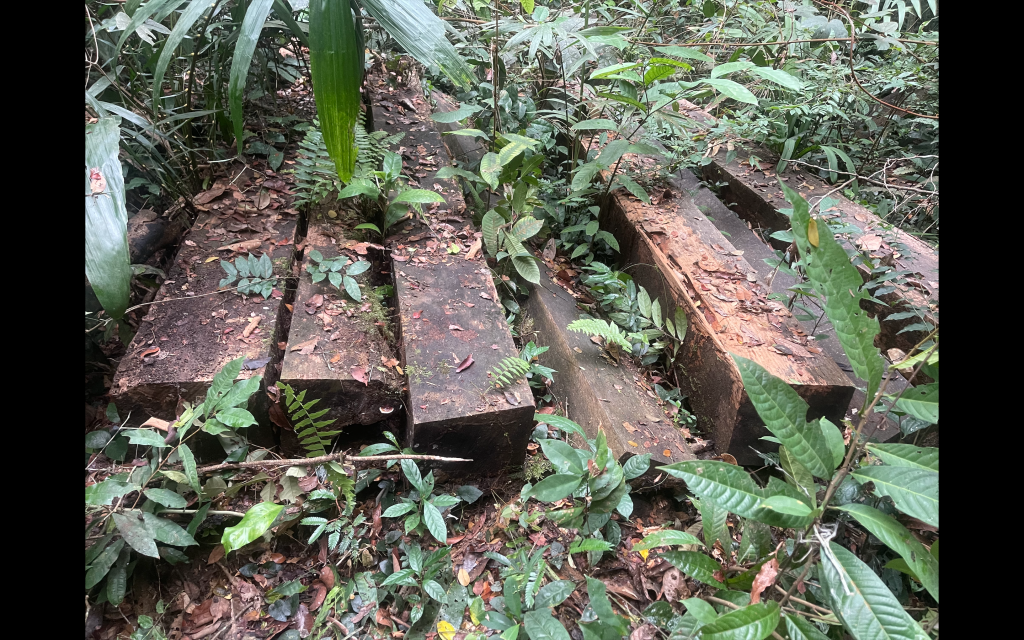
Up: Fresh kpokolo Michael Feika harvested in few months ago. Here: Old kpokolo Feika harvested in 2022. The DayLight/Esau Farr
The short, black teenager, who is also a motorcycle taxi driver, then took the undercover reporter on a guided tour of Feika’s kpokolo world.
As they took a footpath leading to a farm, Morris told the undercover reporter that they produced a lot of kpokolo in 2022. Their production has slowed down in the last two years and they only produce when a customer approaches them.
As they walked deeper, the undercover reporter saw some abandoned kpokolo on the floor of the dried, dim wooded area. Morris disclosed that it was one of the many locations where Feika worked.
Morris’ comments corroborated Feika’s account and that of the picture he shared with the reporter in Paynesville. Feika had said that he harvested the wood in 2022 but backed off after the supposed ban.
Feika’s new worksites in the pictures were too far for the reporter to venture even for a client. The reporter and Morris decided to head back to the town.
Nevertheless, the pictures already took the undercover reporter to Feika’s new locations. They show piles of kpokolo in the forest, felled logs waiting to be milled, targeted trees for harvesting and timber at a portable sawmill. One particular picture showed Feika posing for a picture next to another felled tree.
Logs cut by Michael Feika. Photo credit: Michael Feika
“The ones standing there, I [cut] one down before I could come to Monrovia,” Feika said back in Paynesville, referring to a gigantic tree. “This one is Iroko the white one,” he added, citing a first-class tree species scientifically known as Milicia excelsa, which kpokolo traffickers prefer.
‘It is easy’
About a 10-minute into their journey back to Totoquelleh, the reporter and Morris saw a score of 12-inch kpokolo that Fofana, Feika’s competitor, harvested.
Not far, lay five others in the middle of a dirt road close to the K.J. Village. The kpokolo appeared to have fallen off the vehicle transferring them from the forest. Tire impressions show clearly in the sunbaked mud.
Fofana had disclosed he kept more kpokolo in their conversation before the undercover reporter met Morris.
“The sizes are 50X50, 40X40 and 30X30,” Fofana said at the time. He meant the timber’s dimensions range from 30 to 50 inches in thickness, up to 25 times the authorized size.
“It was produced last month,” Fofana added.
“When somebody [has a] contract for me, I can do it. That business is a contract. It can come and we discuss it before we do it.” Fofana’s comments had confirmed Feika’s suspicion that other kpokolo operators in Totoquelleh would try to snatch the assumed businessman.
The leftover of a tree harvested by illegal loggers somewhere in Liberia. Photo credit: Michael Feika
Upon his return to Totoquelleh from his Morris-guided tour, the undercover reporter photographed an excavator parked near a truck in an open field.
“You see that car over there,” Fofana said, pointing to the excavator. “It is the one that can hook [the kpokolo and put them in the container].”
‘Not small money’
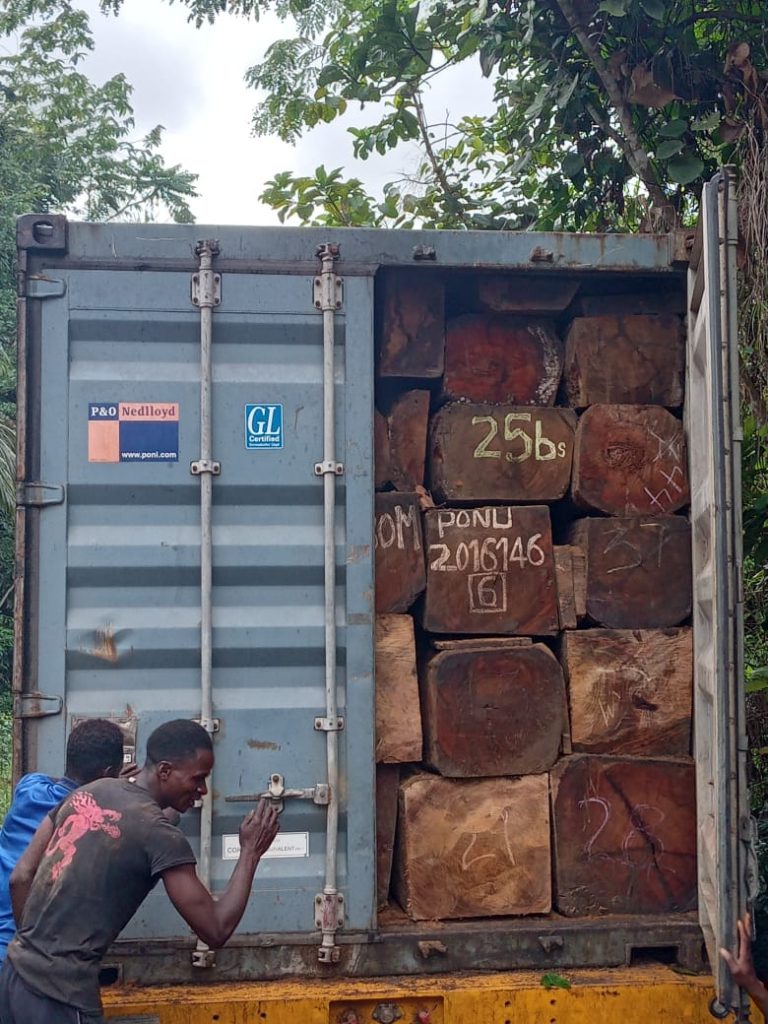
Thankfully, the pictures Feika shared with the undercover reporter show the entire container-packaging process. Several pictures show the wood being measured with a tape rule. One shows a crane shoving kpokolo into a container, while another reveals two men sealing it up.
“Some of the containers allow eight, 14, 16 and 20 pieces of wood to go in, depending on the sizes of the wood,” Feika said back in Paynesville. He revealed the kpokolo measuring three inches and four-and-a-half inches were the ones now in demand.
Feika said he had stopped producing larger kpokolo due to the ban but was open to cutting them once he got the right offer. “If you want [them]…, it is not small money you will spend,” he said.
The prices for a container filled with kpokolo are based on the class of the wood. Prices range from US$7,000 to US$12,000, including transportation to Monrovia, according to Feika. Feika’s favorite first-class species apart from Iroko are Afzelia (Afzelia spp), Ekki (Lophira alata), Lovoa (Lovoa trichilioides) and Niangon ( Heritiera utilis). These species are expensive and produce hardwood used for shipbuilding, railroad ties and outdoor construction.
If a client wants just one container, they must pay Feika at least half of their negotiated amount. If the client wants multiple containers, they pay for at least one container upfront. However, the client must pay the FDA US1,200 for an annual export permit, US$1,000 for the paper and the balance for paperwork, Feika said. Those figures are the same as the ones on the kpokolo permit the FDA issued before the so-called ban.
Once the container is filled and sealed, Feika makes phone calls to FDA rangers posted on the Bopolu-Monrovia highway via Klay. Feika would not share the rangers’ contact or say their names.
“When I reach the checkpoint, I will say, ‘Yes, I am the one [who has] the wood. Everybody knows me because I have a document from the FDA with a license number assigned to me. I will give them my container serial number and they check it and we pass.”
But Feika warned against double-crossing him to deal with rangers directly. He recounted the story of two Korean illegal loggers, the police commander and other accomplices who were arrested in Klay, Bomi County.
“If the [authorities arrest] you, you are finished because some FDA [agents] will tell you, ‘Come, I will carry [them] for you.’ If you depend on them, you will lose,” Feika said.
Ironically, Feika did not know he was speaking to a reporter of the newspaper that exposed the syndicate. The DayLight would go on to assist a police investigation that led to the men’s arrest and the dismissal of the police commander and an FDA ranger.
Feika’s contacts and influence do not extend to the Freeport of Monrovia but he offered some valuable information. Smugglers must acquire an export permit and find a customs broker at the Freeport of Monrovia to help export the timber. It costs US$1,200 to obtain the export permit certificate from the FDA—US$1,000 for the permit and the balance to secure the document.
Two illegal loggers closing a container. Photo credit: Michael Feika
Once they obtain the permit, they will have to pay the container’s owner US$200 per container and US$100 for each truck to transport them.
“Forget the shipment of the wood,” Feika reassured. “Once you get money, it is easy.”
His disclosure was not news to the undercover reporter. After all, The DayLight has published illegal permits, receipts and claims by kpokolo exporters in previous investigations. Those publications also revealed the mode of the illegal trade and its ringleaders.
Faika advised his presumed client to ship the wood to Turkey or Germany. “If it is Germany, I will be happy,” he said, “because I have some of my friends in Germany.”
This was a production of the Community of Forest and Environmental Journalists of Liberia (CoFEJ). Funding for the story was provided by the Kyeema Foundation and Palladium.
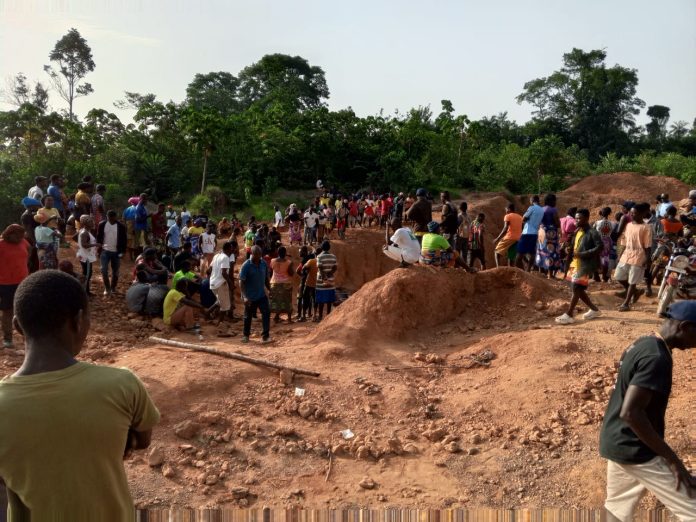
Top: People gather at the scene of a mining accident that claimed the lives of at least 10 men in Cheo Town, River Cess County. Photo credit: S. Alberto Dixon, Sr.
By Aaron Geezay and Alberto Dixon
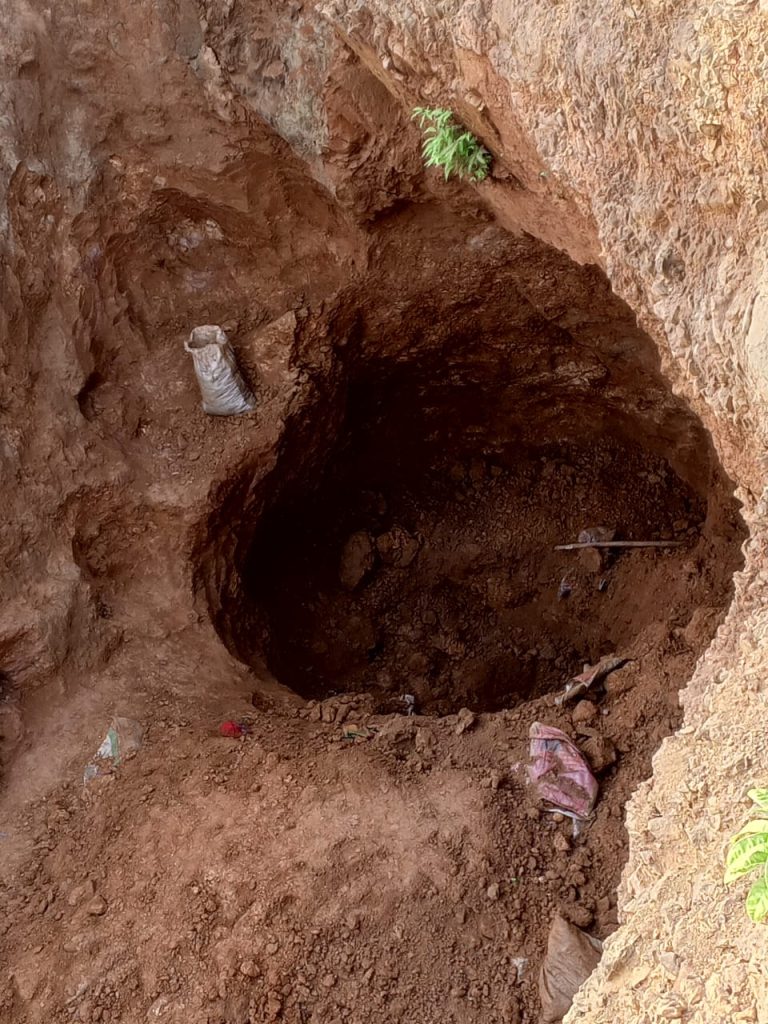
CHEO TOWN, River Cess – At least 10 miners died after a mining pit they were digging collapsed in a town in River Cess County.
“It has been confirmed that 10 bodies have been recovered, and search and rescue efforts are ongoing,” Minister of Information Cultural Affairs and Tourism Jerolinmek Piah told a news conference on Tuesday.
The miners’ bodies were recovered from the pit where they died, pictures and videos of the accident taken by the local media show.
The incident occurred between Cheo Town and Charlie Town along the Yarpah Town and Cestos highway.
Isaiah Ziah 18, an eyewitness, said there were over 10 people in the pit. Ziah had just left the pit when the disaster struck.
“I left and carried my gravel bag before it happened,” he said.
The victims are both from Cheo and Charlie Towns where the gold mine is situated. The bodies of some of the victims have been identified as Tardeh Chapay, Richard Baryogar, Edwin Dennis, Alfred Dehdyu and Paul Zah.
Cooper Barney, a liaison officer of the Ministry of Internal Affairs, said he had earlier advised the miners to leave but they did not listen.
“I even told them the Police Support Unit (PSU) was coming but they said ‘When the PSU come, we will stone them [off],’” Barney said. He added that the miners told him to “‘go and lie down.’” The DayLight could not independently verify those claims.
The fatal pit in which at least 10 miners died on Monday. Photo credit: S. Alberto Dixon, Sr.
DEVACO was awarded a medium-scale license in July 2021 and will expire in 2026, official records show. However, the company had abandoned the site for several months, according to locals.
This mining accident has added to several in the last five years. In 2020, two miners were killed in Grand Cape Mount County. That same year, four miners were also killed in a mine collapse in Jacksonville, Bong County. Earlier in 2019, 40 miners were buried alive in Nimba County, the worst mining accident since the No Way Camp disaster in 1982.
The United States Embassy in Monrovia provided funding for this story. The DayLight maintained editorial independence over its content.
Top: A cleared farmland in Jacksonville, Sinoe County. The DayLight/James Harding Giahyue
By Emmanuel Sherman
MONROVIA- Researchers have called for an open process to transform tribal certificates into title deeds, warning it could “corrode” customary land in Liberia.
“Tribal certificates are semi-recognized documents used by individuals, families and community to privatize customary or public land,” say Ali Kaba, Baba Sillah and Dr. Ibrahim Al-bakri Nyei in a recent report.
“There is no standard template or chain of custody for tribal certificates, the number in circulation is unknown but believed to be extremely high,” they add.
A tribal certificate is a legal document issued by local authorities mainly under the Public Land Law of 1956 to show interest in the land, not to own it. It was introduced by former President William V. S. Tubman to exert and expand the state’s influence in the hinterlands. Powerful chiefs and elders often awarded the documents without consulting the rest of their community.
In 2018, Liberia passed the Land Rights Act, a landmark legislation that recognizes customary land ownership. The new law mandates the government to work with communities and turn all tribal certificates into title deeds by 2020.
But more than five years after the new land law, tribal certificates are yet to be transformed into deeds, except for a few, which were issued illegally.
The researchers cite the lack of information, competing claims, social and material differences, and expertise as factors in the delay in transforming these documents into proper deeds.
“So, a community has 1,000 acres of customary land, and in that same community you have 1,000 acres of private land,” Kaba tells The DayLight in an interview.
“Those two things cannot exist in the same place. So, it becomes a corrosive instrument to undo customary land,” Kaba says.
To avoid that problem, the researchers are calling for a fair, transparent, and inclusive process and a grievance mechanism for converting tribal certificates into title deeds.
A 2015 survey conducted by the Land Commission now the Liberia Land Authority revealed there are over 1,500 tribal certificates in Bong County, averaging 250 acres per claim. The figure represents 15 percent of the total land area of the central county, which is just over 877,000 hectares.
“Validating tribal certificates at the community level must include diverse viewpoints and interest prioritizes the perspective of vulnerable groups such as women and youths,” Kaba says.
An elevated view of Quikon Clan in Kokoyah District, Bong County. The DayLight/Derick Snyder
“This mechanism must be easily accessible to civil society and community members, who must clearly understand the procedures involved and the rights and entitlements of vulnerable groups.”
The researchers urge the Land Authority to create a tribal certificate guideline or regulation that would scale up the definition of “developed” land in the Land Rights Act.
Under the Land Rights Act, holders of tribal certificates are entitled to all of the developed portions of the land the documents represent. Kaba and co recommend that the developed portion should not be limited to fencing, surveying, and conservation but must include basic use and claims rights.
Stanley Toe, executive director of the Land Authority agrees with researchers about the risk the delay in transforming tribal certificates poses.
Toe, however, discloses the Land Authority is at 90 percent completion of the work. He says the regulation would address the definition and the vetting process of tribal certificates.
“So hopefully in the next two to three months we should be done with this particular process,” Toe says.
“A committee inclusive of civil society, community members and vulnerable groups will be set up to validate [tribal certificates] and the developed portion.”
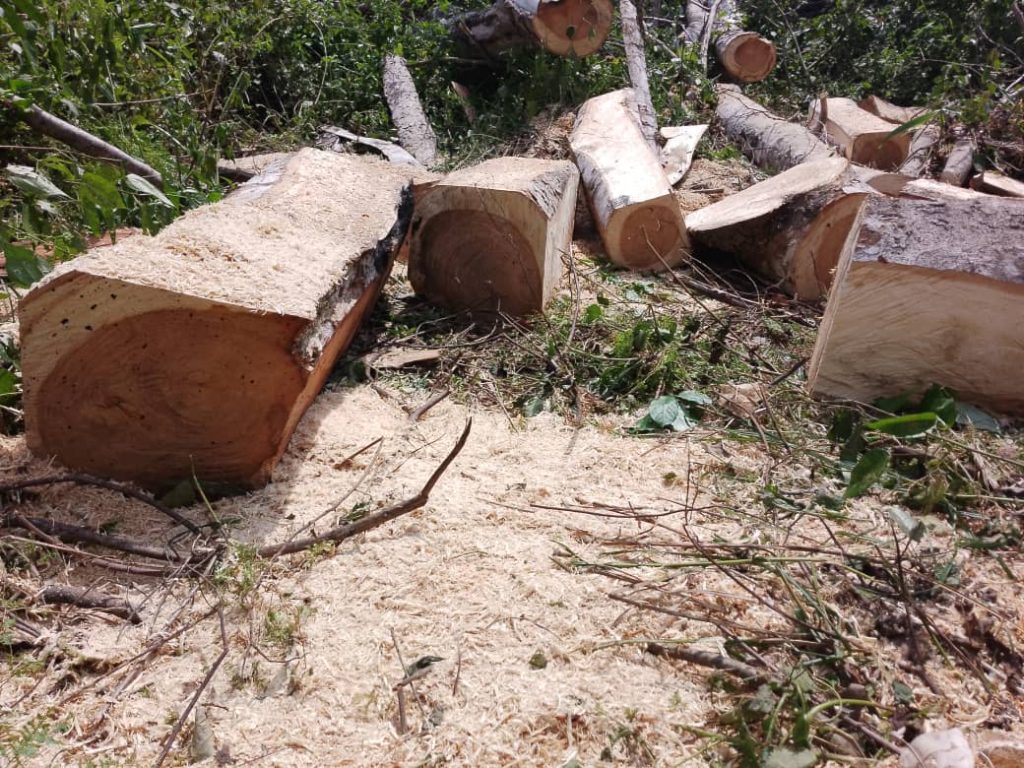
Top: New pieces of kpokolo in Gbaryama, Gbarpolu County. The DayLight/Gabriel Parker
By Esau J. Farr and Philip W. Quwebin
GBARYAMA – People in Gbarpolu are secretly harvesting Kpokolo, a boxlike timber the Forestry Development Authority (FDA) said it banned last year.
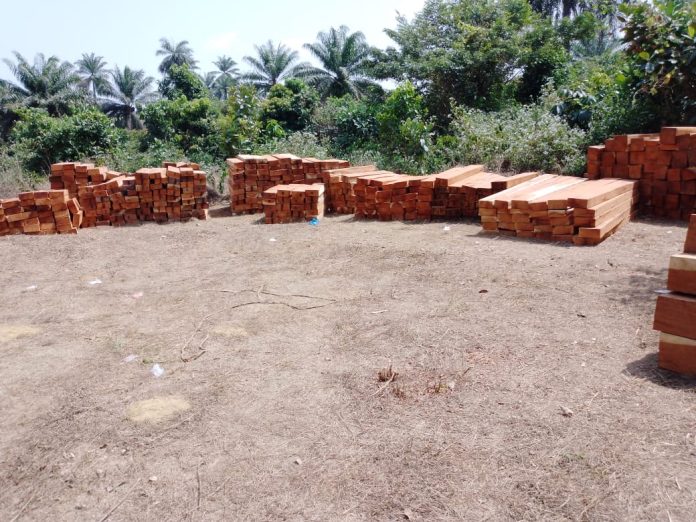
In late January, The DayLight photographed newly produced kpokolo in Gbaryama, a town in the Gbarma District about 79 miles from Monrovia. Hundreds of fresh kpokolo were placed on an open field just outside the town.
Townspeople revealed smugglers, who reside outside of the town, hired a gang of chainsaw operators to harvest kpokolo. Once harvested, the woods are transferred by a crane to a pickup, which then brings them to a location. Thereafter, they are loaded onto a container truck at night.
“They can hide it and take it away at night so, people can’t easily see them in the day,” Armah Dukuly, the Town Chief of Gbaryama Town. “We don’t get that power to stop them.”
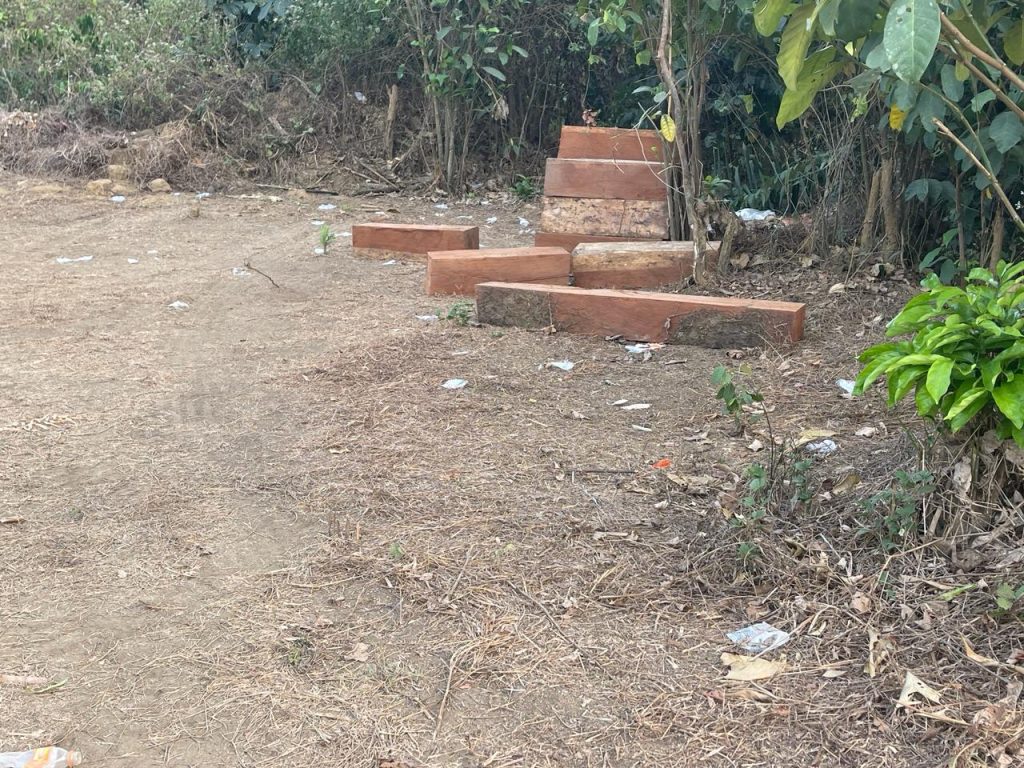
More than three weeks later, The DayLight revisited Gbaryama and found that the kpokolo had been taken away. Journalists photographed tire impressions matching the description of a truck on the now-cleared field. About 14 pieces of the illegal wood remained there. The illegal loggers had transported the rest.
There were other kpokolo in the forest. DayLight journalists took a 15-minute ride from Gbaryama on a motorcycle taxi to a forest footpath leading into the woods.
In the forest, reporters saw short round logs that were meant to produce kpokolo. Timber remnants could be seen on the floor of the forest. Loud vroom noise from at least four chainsaws buzzed at different locations.
Dukuly and other chiefs and elders told The DayLight the four men negotiate with farmers in Gbaryama, enter into a verbal agreement and start the harvesting. They said the operators pay the farmers up to L$550 for a piece of kpokolo, corroborating previous reports of locals’ involvement in the illegal trade.
People said the illegal loggers built tents made of tarpaulins in the forest to conduct their operations.
“Most of the time, they are in the forest.],” said Varsay Sirleaf, one of the oldest persons in Gbaryama Sirleaf.
A recent report by the US-based Forest Trends found that kpokolo threatens local communities, chainsaw millers and Liberia’s revenue. It uses the chainsaw milling subindustry to veil its activities, using the same workforce and timber sources, the report said.
But the difference between them is stark. Chainsaw-milled timber measures two inches and below, while Kpokolo can be up to five times thicker, or more.
A few kpokolo remained in an open field more than three weeks after The DayLight photographed piles of kpokolo there. The DayLight/Esau J. Farr
The kpokolo in Gbaryama were between two and four times the industry-accepted size of chainsaw-milled timber. The ones on the opened field were about six inches thick, based remaining ones there.
‘I felled few’
Four men conduct the kpokolo activities in Gbaryama, three of which The DayLight had previously investigated. The men are Saah Joseph (not the Montserrado lawmaker), one only identified as Sahyo, James Kelley and Richard Flomo.
Joseph has harvested kpokolo in Gbaryama for over two years, according to elders and chainsaw millers. Dukuly said Joseph recently resumed his kpokolo operations in the town after negotiating with some farmers.
The DayLight gathered evidence of Joseph’s illegal activities in December 2022. Locals said a pile of kpokolo in the middle of the town and the forest belonged to him.
“I think he has some in the bush and he is supposed to come for it,” said Molubah Korlubah, a kpokolo logger, who said he worked for Joseph in 2022.
“The FDA people don’t come here. They focus on the gate,” Korlubah added.
Sahyo is a more conning operator than Korlubah, the evidence suggests. Originally from a town called Supermarket in Bopolu District, Sahyo harvests kpokolo even without the consent of farmers. Dukuly said he had had an encounter with him the night before The DayLight’s third of four visits to the town.
“I asked him how he entered there to [harvest] kpokolo. And he only said, ‘I entered there, I saw kpokolo and myself [harvested] the logs…. I felled few.’
“Then I asked him, ‘Who [did] you ask?’”
“I stopped him,” Dukuly added.
Morris Kamara, a resident farmer, confirmed Dukuly’s account of Sahyo.
“This year, Sahyo [harvested] in my forest and produced kpokolo there and left,” Kamara revealed. “They have already transported it out of the forest to Monrovia.
“He is presently in another person’s forest producing but I don’t know where.”
Efforts to contact Sahyo and Joseph on their kpokolo operations were unsuccessful. Everyone The DayLight interviewed in Gbaryama said they did not have the duo’s contacts. Follow-up phone calls to other townspeople yielded no other results.
‘From one forest to another’
There were indications Kelley and Flomo were bigger operatives and more familiar with Gbaryama than Joseph and Sahyo.
Kpokolo townspeople said owned by Saah Joseph (not the Montserrado lawmaker) were seen in plain sight in Gbaryama in December 2022. The DayLight/James Harding Giahyue
Kelley lodged in a house in the town, where The DayLight interviewed him in December 2022. A middle-aged, light-skinned man, Kelley has been in Gbaryama since September that year, he said at the time.
Dukuly said Kelley asked him recently to harvest kpokolo on his farmland but he disagreed. Kamara and Moses Thompson, another elder, corroborated Dukuly’s account.
“Kelley is here among the [kpokolo operators] but I don’t know whose forest he is working in. They move from one forest to another in search of more woods,” Thompson added.
Kelley’s phone number did not ring when The DayLight tried to contact him. However, in that 2022 interview, he revealed that he had been involved with kpokolo since 2014. He produced kpokolo in Buchanan before coming to Gbaryama.
“Here in Gbaryama, our dimensions were 4X12X9.5 and 4X10X9.5,” Kelley said back in 2022. He meant four inches thick, 10 or 12 inches wide and nine and a half feet long.
But of all the kpokolo operators in Gbaryama, Flomo appeared to be the kingpin. Every farmer or resident The DayLight interviewed said they knew him. Even Kelley said in that 2022 interview Richard was his boss.
Dukuly said he called Flomo recently and informed him to halt the kpokolo operation but his order fell on deaf ears.
“He said, ‘Oh Chief, that one I just want y’all to give us a chance.’
“I said no. If I see it, you will lose it,’” Dukuly said. He added that Flomo tried to convince that it was the kpokolo operators that risked an arrest, not the townspeople.
Korlubah, the chainsaw miller, said he had harvested a container load of kpokolo for Richard in 2022. “There were 250 pieces of Kpokolo, 4X12 and 4X10,” Korlubah said then, confirming Kelley’s story.
“I worked for him in November. He paid me one piece for LD500.”
People said Flomo combed the region in this pickup in search of forest to produce kpokolo. They said it was he who introduced kpokolo to Gbaryama.
Efforts to contact Flomo did not materialize. No one in Gbaryama said they had his contact and Kelley had refused to share it back in 2022.
Molubah Korlubah, a kpokolo producer in Gbaryama, said he worked for Richard Flomo a kpokolo smuggler. The DayLight/James Harding Giahyue
‘There is no ban’
In February last year, said it had banned kpokolo. The unofficial pronouncement followed months of reports of widespread kpokolo activities involving the regulator.
Edward Kamara, the FDA manager for forest marketing and revenue forecast said kpokolo had become “prone to illegal exportation.”
The FDA has not published the ban or made awareness of it, except to discuss it in a meeting on Liberia’s timber trade agreement with the European Union last June. Forest Trends called on the Joseph Boakai administration to officiate, publicize and enforce the ban on kpokolo.
In Gbaryama, people are aware of the so-called ban but chiefs and elders find it difficult to keep the ban.
“If you ban kpokolo in someone’s forest, the forest owner will get vexed [at] you. That person will feel that you want to stop their family’s income,” said Dukuly.
Morris Kamara, the Gbaryama resident, blames the FDA for the illegal activities. “We are getting that information [about banning kpokolo] as rumors. I believe if the FDA banned kpokolo, they could not allow kpokolo to pass [through] their checkpoints.
The FDA has major checkpoints on Bopolu-Monrovia and Tubmanburg-Monrovia highways. There is one each at Sawmill, not far from Gbaryama, and Klay in Bomi—to name two.
“If the people [are] still passing with kpokolo, then it means that [there is no ban] on kpokolo,” Kamara said.
The FDA did not respond immediately to comments. The DayLight will update this story once it does.
[Additional reporting by Gabriel Parker]
This was a production of the Community of Forest and Environmental Journalists of Liberia (CoFEJ). Funding for the story was provided by the Kyeema Foundation and Palladium.
East International Construction Company, which builds roads, got the lion’s share of the fines.
“East International is hereby fined US$55,000 to be paid in Government Revenue at the Liberia Revenue Authority (LRA) with an official receipt presented to the EPA,” Acting EPA Executive Director Dr. Emmanuel Yarkpawolo told a news conference on Tuesday.
An EPA investigation found East International operates under an expired environmental permit, Yarkpawolo said. Investigators also found the company liable for air pollution over its construction of the Roberts International Airport Highway.
“Some people reported respiratory problems such as coughing and asthma as the major health issues affecting them,” Yarkpawolo said. He ordered East International to follow the law.
The EPA shut down Fengshou International, an affiliate of East International.
Yarkpawolo said the company would remain closed “until a more sustainable method is approved by the EPA.”
The company unsustainably backfilled and was constructing a two-kilometer road on a portion of the Marshall Wetland in Margibi County, protected under a UN convention. The EPA also found that Fengshou extended its rock quarrying into the wetland and constructed a rock sale point there without authorization.
East International and Fengshou did not immediately respond to queries.
Wetlands
The EPA says it was taking wetlands’ protection seriously, and citizens closest to the mangroves.
“In the coming days, the EPA will conduct a thorough engagement with relevant institutions of government and other stakeholders to curtail the upsurge in the wave of wetland degradations,” Dr. Yarkpawolo said.
“Recent complaints and EPA field assessment reports have highlighted massive clearing of mangroves along the Police Academy SKD Boulevard, as well as backfilling activities, including Pago’s Island, New Matadi Fanti Town, Dixville, Jacob Town, etc,” Yarkpawolo said.
The EPA called on the media to help in providing public awareness and asked the public to cooperate with the agency in protecting wetlands.
“The EPA will be engaging with relevant law enforcement authorities to arrest all violators,” Yarkpawolo added.
The EPA fined Quezp Mining Company US$2,999 and ordered it to fund a US$12,999 restoration plan for two zircon-sand mines it operates in Brewerville and Royesville. The DayLight/Charles Gbayor
Earlier, the EPA ordered Quezp Mining Corporation Inc. to pay nearly US$16,000 for illegal sand mining activities in Brewerville and Royesville. A DayLight investigation showed that Quezp did not have licenses for the operations. The company’s mineworkers fled the area after the publication.
The EPA fined Quezp US$2,999 for mining without an environmental permit. It mandated the company to restore the environment it disturbed in the two communities with a US$12,999 plan.
Yarkpawolo said that the fines must be paid in three days after official communication with Quezp.
Terrence Collins, Quezp’s owner and CEO, did not respond to queries for comments on the matter.
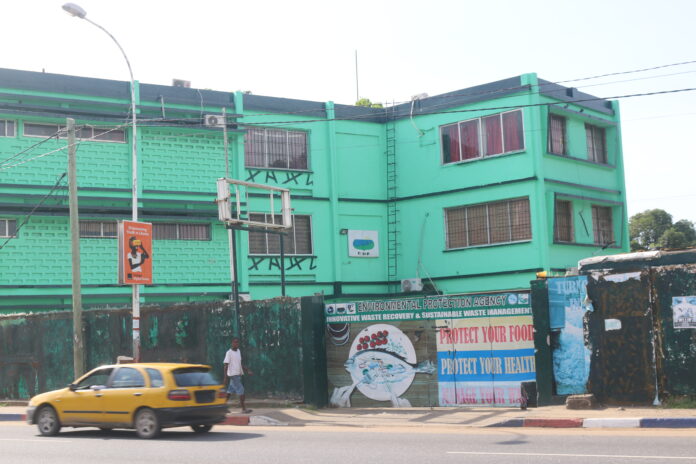
Top: The headquarters of the Environmental Protection Agency (EPA) on Tubman Boulevard in Sinkor. The DayLight/Mark B. Newa
By James Harding Giahyue
MONROVIA – The Environmental Protection Agency has ordered a mining company to pay a combined US$15,998 for operating without an environmental permit, and a restoration plan for its mines.
The investigation followed a DayLight publication, which showed Quezp had no license for a pair of zircon sand mines in the Montserrado communities.
The publication revealed the Brewerville mine had a plant where zircon sand was transported from Royesville with the involvement of residents.
The plant processed the zircon sand—a mineral used in the ceramics industry. Mineworkers placed the sand in 25-kilogram bags and then transported them elsewhere for export.
EPA investigators found that Quezp also bought zircon sand from other places, including Banjor, a Montserrado sea erosion hotspot.
“The direct beach sand mining being carried out by the company and community has resulted in serious coastal degradation and sea erosion,” the EPA report found. “This has impacted many landed properties closest to the mining operation.
Remnants of a Quezp’s illegal mining activities in Brewerville. The DayLight/Charles Gbayor
“The company’s operation has seriously impacted the mangrove forest due to the improper disposal of its mine waste,” it said.
EPA fined Quezp US$2,999 for mining without an environmental permit. It ordered the company to present a US$12,999 plan to restore the environment where it worked, according to the report.
The report also found that the miners were less than a kilometer from the beach, impacting houses closest to its illegal operations. It said Quezp encouraged residents to engage in sand mining, outlawed since 2012 to curb countrywide coastline loss.
EPA investigators urged the agency to officially inquire about the status of Quezp’s mining licenses. The DayLight found that the company only has two zircon-sand prospecting licenses in Kpayan District, Sinoe County.
The Investigators called for mining and environmental awareness in communities across the country.
Terrence Collins, Quezp’s owner and CEO, did not immediately respond to queries.
Top: A truck fleeing Brewerville with Quezp Mining Company’s equipment on Sunday, February 25, 2023. The company had illegally operated in the area for two years until The DayLight exposed it. The DayLight/Charles Gbayor
By Charles Gbayor
BREWERVILLE; ROYESVILLE – Miners operating two illegal mines outside Monrovia have fled the communities, three days after a DayLight investigation exposed them.
Over the weekend, mineworkers of Quezp Mining Company began fleeing Brewerville and Royesville, where they have mined zircon sand for the last two years. The mineral is used in the ceramics industry, with Australia and Africa as its newest markets.
The investigation unearthed that Quezp does not have a license for the suburban and rural Montserrado communities. Instead, it has two prospecting licenses for Kpayan District, Sinoe County.
Video and pictures shot by a resident and The DayLight show Quezp’s workers dismantling a plant and moving mining equipment away from Brewerville.
“We are happy that nobody will be mining sand on the beach anymore,” said Oliver Wallace, a resident of Brewerville. “What they were doing over there was [negatively] affecting the community.”
The DayLight photographed piles of abandoned zircon sand at Quezp’s transferring location in Royesville. Tire impressions in the area had been erased, indicating that the company’s earthmovers had not been there for some time.
A truck runs away with Quezp’s equipment following a DayLight investigation that unearthed the mining company’s illegal activities in Brewerville and Royesville. The DayLight/Charles Gbayor
Residents who worked with the company in the illicit trade expressed dismay and frustration over its abrupt departure.
“They are moving and I don’t know where they are going for now because no one is saying anything to us,” said Junior Sirleaf, a Royesville resident who was involved in the illicit trade. “I am just hurt that I and some Liberians were used in the illegal sand mining business.”
A machine dismantles Quezp’s mining plant in Brewerville. Picture credit: Alvin Kromah
Terrance Collins, the owner of Quezp, said an official had told him to shut down after the publication. Collins declined to identify the person.
“I don’t want to get in any more trouble as I am already in,” Collins told The DayLight via WhatsApp. He said he was in Turkey on a medical trip.
“When you’re wrong, you’re wrong,” he added.
The Department of Mines at the Ministry of Mines and Energy declined to speak on the matter.
Illegal mining carries a fine of up to US$2,000, a 24-month prison term, or both fine and imprisonment, if covicted by a court.
Funding for this story was provided by the United States Embassy. The DayLight maintained editorial independence over the story’s content.
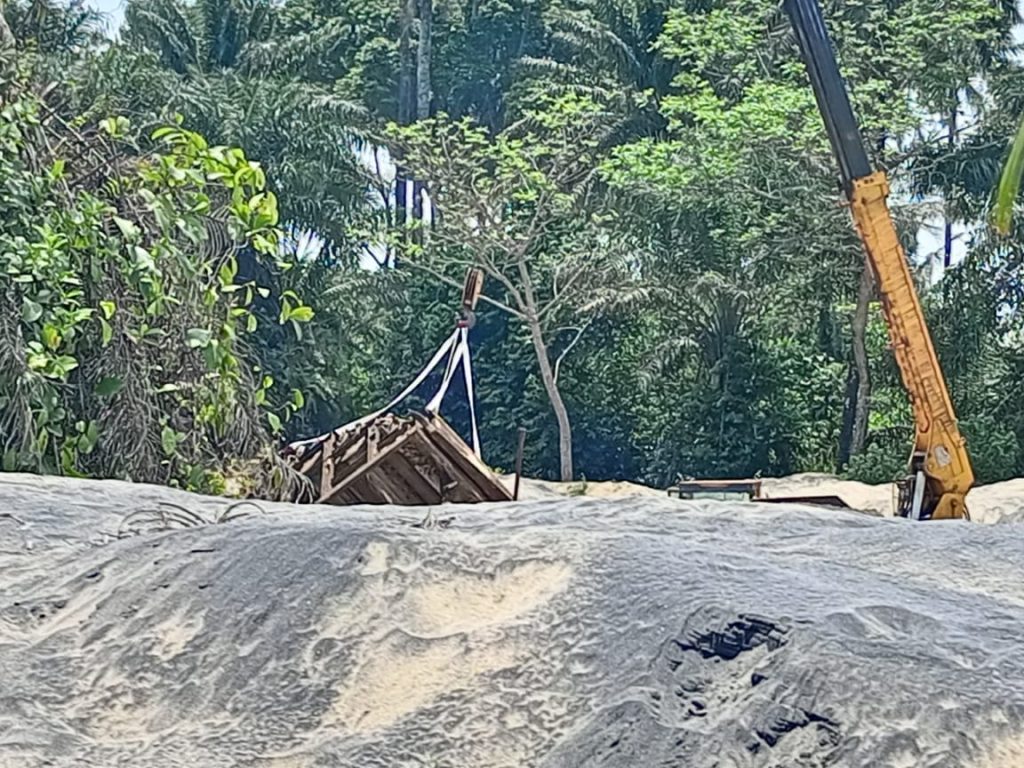
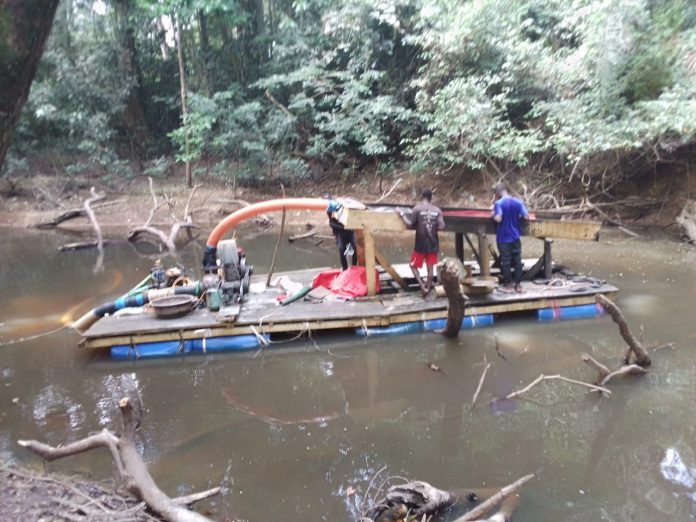
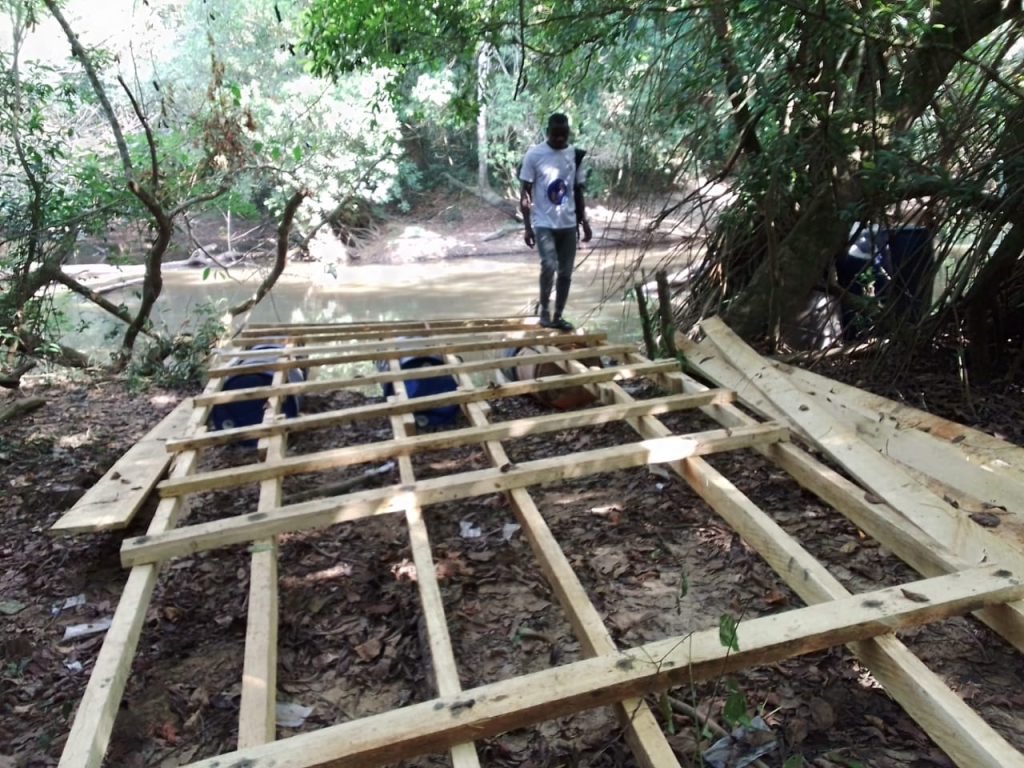
Top: Men make a dredging machine on the Zormue Creek in Bokomu District, Gbarpolu County after Weedor Gee, the owner, obtained clearance from the local representative of the Ministry of Mines. Picture credit: Korninga A Community Forest
By James Harding Giahyue
ZORMU, Gbarpolu – Illegal miners are set to dredge a sacred creek in a town in the Bopolu District of Gbarpolu County.
The miners who work for Weedor Gee, a businesswoman who hails from the region, built dredge on the Tumu Creek. Gee has no prior history of holding a mining license, records of the Ministry of Mines and Energy show.
Tumu Creek is revered in the Korninga Chiefdom, and it is a sacrilege to even put a canoe over it without a traditional rite, locals say.
Initial videos and photographs obtained by The DayLight show the miners building the machine. Others taken a week later reveal two miners assembling the makeshift machine on the creek, ready to operate.
In 2019, the ministry imposed a moratorium on dredging nationwide. The suspension, which is still in place, was meant to curb the pollution of water bodies across the country and the degradation of the rural environment.
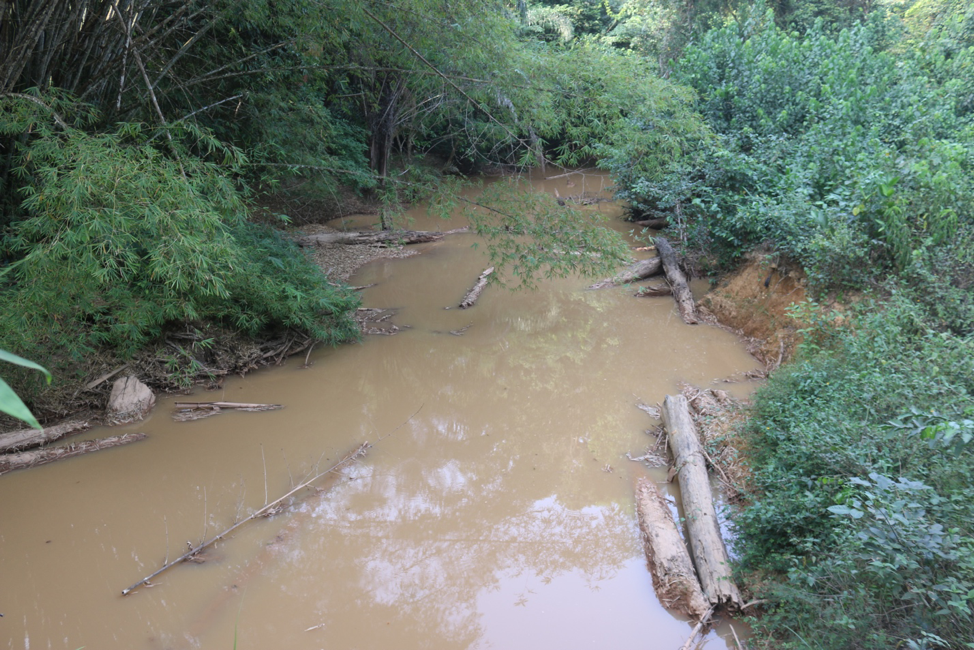
But the dredging and other forms of illicit mining continue to proliferate in remote regions, polluting streams and threatening local traditions.
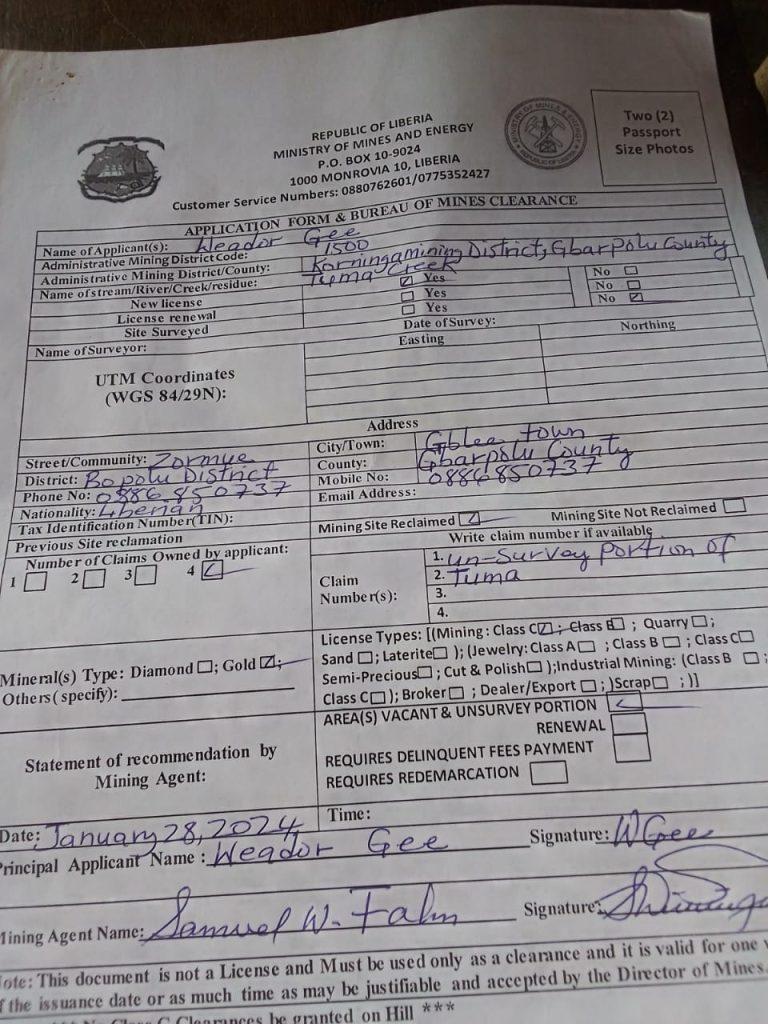
A copy of a clearance Samuel Fahn, a Ministry of Mines and Energy representative in Bopolu District, Gbarpolu County, issued to Weedor Gee. Gee built a dredge on Tumu Creek, a sacred water in the Konringa Chiefdom.
Samuel Fahn, the mining representative in the region, had issued Gee a clearance late last month. Gee paid Fahn US$400 for the clearance, with both of them confirming the transaction.
Clearance fees for mining agents are not legal but are accepted by authorities. An outgoing official of the ministry, who asked for anonymity, said it was meant to empower mining agents to function.
The leadership of the Korninga A Community Forest, in which the creek is located, raised qualms about the dredge, based on the videos and pictures.
“The document says class C but the materials they are carrying are for dredging,” said Emery Ciapha, the acting chairman of the Korninga A Community Forest.
“I know that the… Ministry of Mines and Energy is not offering a license for dredging in this country,” Ciapha added in an interview in Tawalata Town. He said he would monitor the situation “closely.”
Gee said in a phone interview that dredging would keep illicit miners away. “We want to stop people from invading our farmland, that is the main issue that carried me there,” she said.
“It is just to stop people from [encroaching on] the land because if a person gets a license, you cannot stop them from doing what they want to do.
“If you have the land and get a claim, you can do what you want to do with it,” Gee added.
Experts say illicit miners or wildcat miners pollute water sources in towns and villages, thanks to the remoteness of these places and corrupt mining authorities. The creek in Tawalata Town in Bopolu District, Gbarpolu County is one of their victims. The DayLight/James Harding Giahyue
Gee disclosed that she had thought about farming but changed her mind to mining based on someone’s advice. She decided to dredge because it produced quicker results than mining on the land or the banks of the creek.
A dredge uses a vacuum to suck out mud and debris from the bottom of a water body. Then a water pump removes unwanted sediments and traps gold nuggets on a slanted platform. The process involves less labor but pollutes the water environment and makes it inhabitable for fish, experts say.
Fahn denies authorizing the businesswoman to dredge the creek. “I did not tell them to use dredge. If I come and see anyone mining with dredge, I will close them down,” he told The DayLight. Fahn had made those comments about a week before The DayLight obtained evidence that Gee built the dredge.
Gee refutes Fahn’s claims, though. She counterclaims that he was aware of her intent to dredge the creek from the beginning. She failed to provide any evidence to back that claim.
“Each time he goes there, he asks, ‘Where is the [dredge’s] key?’
“We say, ‘Here is the key. We are not working. “He says, ‘Are you working?’ We say, ‘No, we are working.’” Gee said she did not know dredging was outlawed and Fahn did not inform her.
A mineworker inspects a frame for a makeshift dredge owned by Weedor Gee, a first-time miner in Zormue Town, Gbarpolu County. Picture credit: Korninga A Community Forest
Fahn did not answer calls for a reply to Gee’s comments and he did not return the call. However, Fahn said in his original interview that the creek was mentioned so that Gee’s mineworkers could work on the banks of Tumu Creek.
The clearance also appears to vindicate him. The document marks class C as the license type. Multiple sources familiar with the industry said Fahn mentioned the creek to locate the claim, not to authorize dredging.
Asked about her relationship with traditional authorities, Gee said she had the support of chiefs and elders as their daughter.
George Ballah Sumo, the Paramount Chief of Korninga Chiefdom, denies that claim.
“Nobody has met up with my office about dredging,” Sumo said. “I will not allow people to dredge on that water because it will destroy the water source.”
Sumo said the community would only accept a medium or large-scale mine there to build its road network.
Mining on a sacred site without the authorization of local chiefs and elders is prohibited under the Minerals and Mining Law.
Funding for this story was provided by the United States Embassy. The DayLight maintained editorial independence over the story’s content.