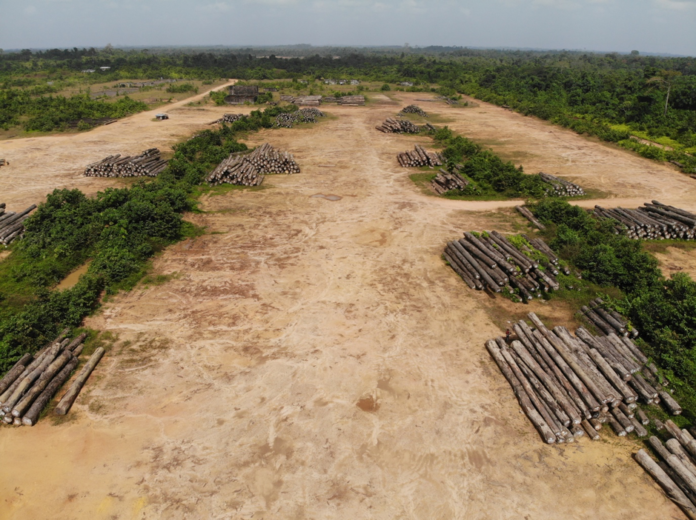
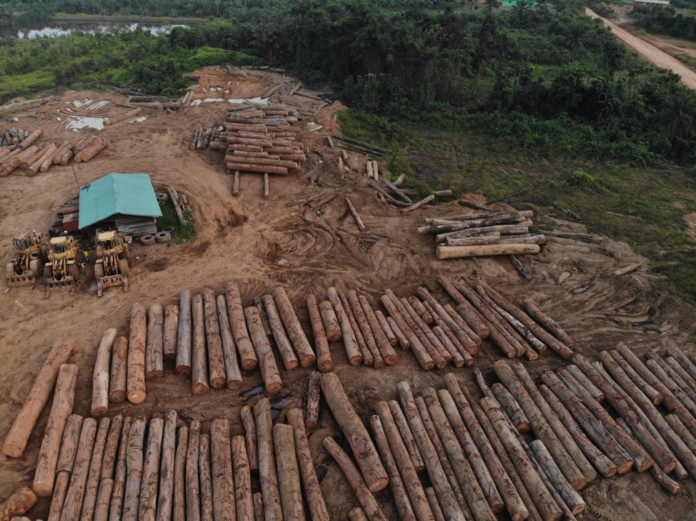
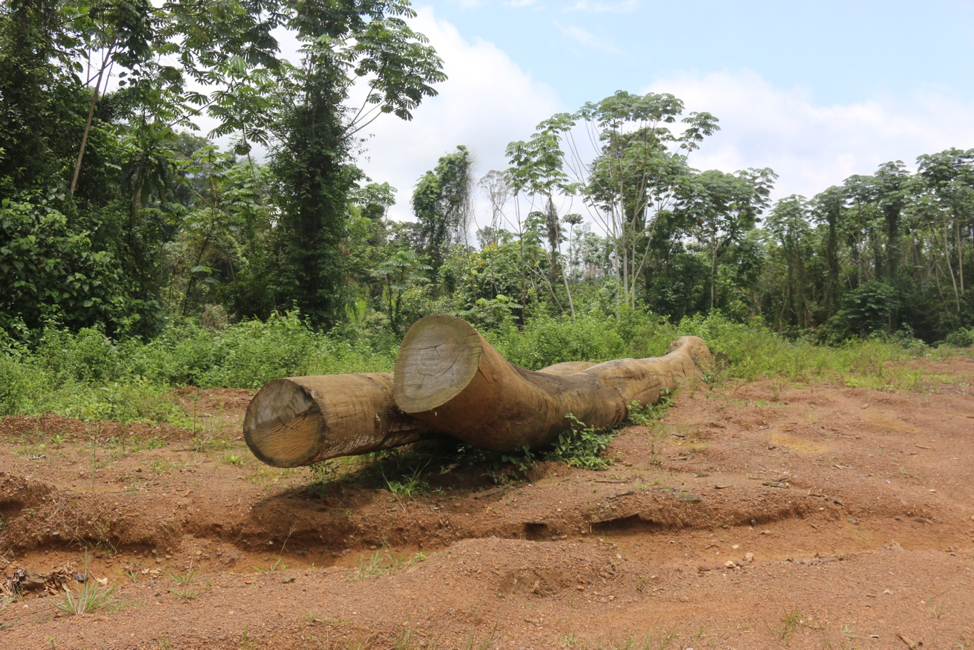
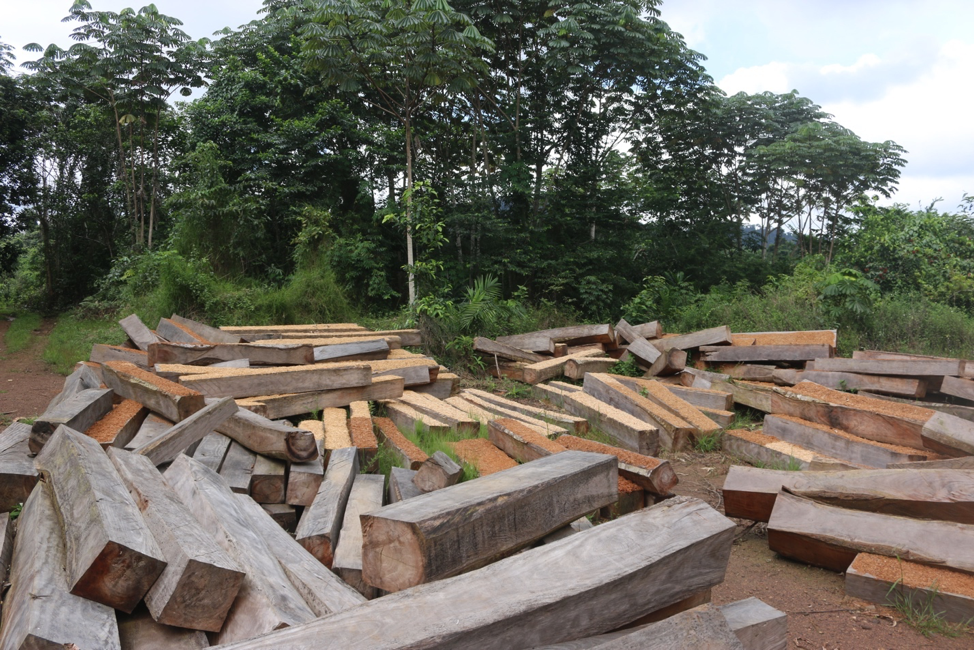
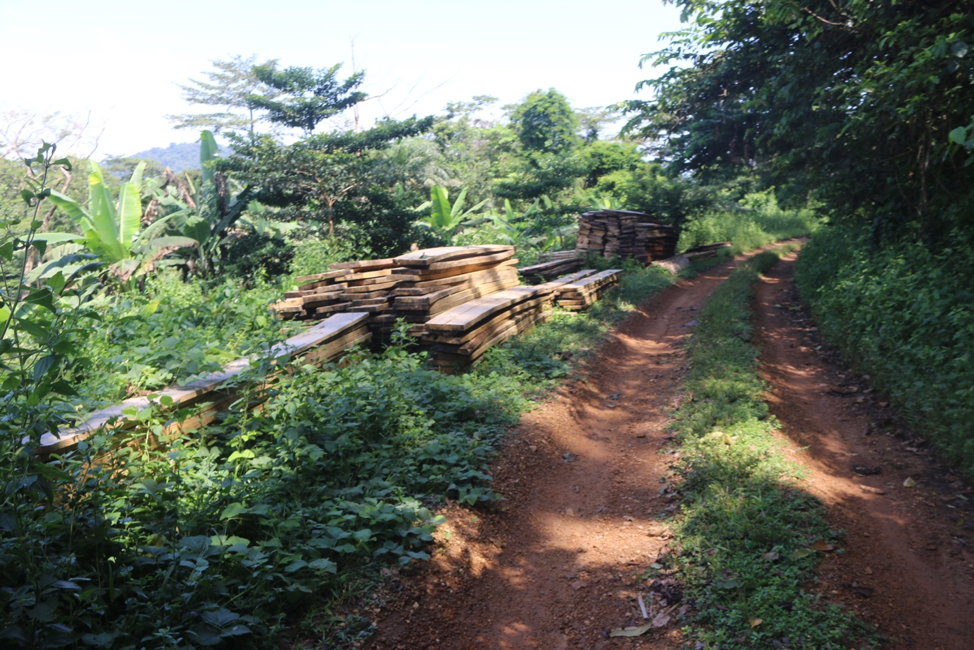
Top: A drone shot of a log yard in Greenville, Sinoe County. The DayLight/Derick Snyder
By Mark B. Newa
MONROVIA – Forestry violations and delayed payments of benefits to logging-affected communities were the major issues at the just-ended forest conference hosted by the Liberian government.
The “Forest and Climate Resilience Forum” was expected to reassess the commitment of the Liberian government and the international community to the protection of the country’s rainforest, the largest in the west African region.
The event came on the backdrop of reports of widespread irregularities and impunity in Liberia’s forestry sector. Associated Press recently reported that President George Weah ignored calls from foreign partners to tackle illegalities in the forestry sector.
“Current situation in Liberia`s forest sector is worrying,” said Laurent Delahousse, the head of the European Union (EU) Delegation, at the close of the event over the weekend. “It is characterized by [……] too short rotations, by the lack of proper forest management plans, and by illegal logging, which are real threats to forest regeneration and which affect the commercial and the global value of the forest,” Delahousse added.
On Thursday, the first day of the conference, more than 20 international nongovernmental organizations said the Liberian government was failing to control the illegal logging and undermining the systems in place to control it. They come from China, Germany, the United Kingdom, the United States of America, the Netherlands, Belgium and Finland.
“We call on the government of Liberia to ensure all timber exports go through the LiberTrace, the traceability system, and to close down all existing routes for laundering illegally sourced timber,” the group said in a joint statement.
The Managing Director of the Forestry Development Authority (FDA) Mike Doryen brushed off criticisms, promising to grant access to public information. He blamed communities for the situation.
“Illegal logging activities usually begin with forest communities. These communities are undermining our efforts to deal with violations,” Doryen said.
“People go in the communities and take money from other people to harvest and transport timber to town… outside what is required law, it is illegal logging,” Doryen added. He, however, promised to set up a task force to monitor and regulate unlawful activities in the forestry sector.
Communities’ Benefits
There were a lot of concerns about communities’ benefits during the two days of the event.
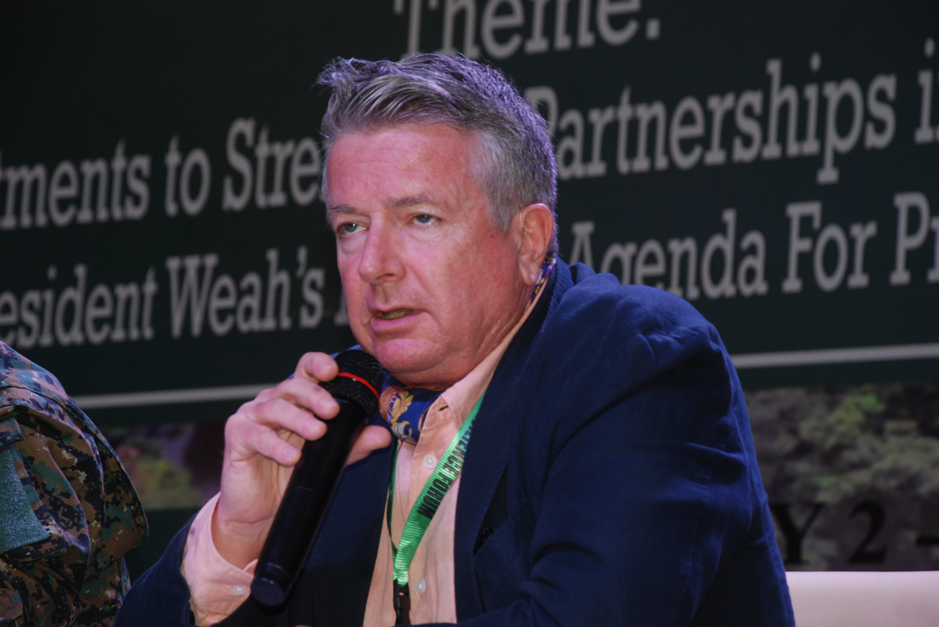
European Union Head of Delegation Laurent Delahousse flags illegalities in Liberia’s forest sector during the Forest and Climate Resilience Conference. Photo credit: Mark B. Newa/The DayLight
By law, communities hosting large-scale logging concessions and former small-scale ones set aside exclusively for Liberians, are entitled to 30 percent of the land rental fees companies pay. But this is not the case. The government, which receives the payments, owes communities US$6.6 million.
Outside the hall at the Ellen Johnson Sirleaf Ministerial Complex, where the event took place, people from those affected communities protested. The protesters carried placards with inscriptions: “Pro-poor for the poor but not against the poor,” “Government of Liberia pays our land rental fees and the forestry law is clear on community benefits, among others.”
“This money is not forthcoming, with at least over US$6 million still outstanding. The little money that has come through was [either] late or meddled in corruption,” said Loretha Pope-Kai the chairperson of the National Civil Society Council of Liberia, the largest conglomerate of pressure groups in the country.
“Our forest communities live on the forest for their cultural, social, economic, and all other needs. Forests are therefore key to all considerations of Liberia’s… future,” Pope-Kai added, receiving huge applause.
National Benefit Sharing Trust (NBST), a watchdog that oversees communities benefits, said the delayed payment made it difficult for the group to function. It is largely funded by payments communities get. It has spent US$1.8 million on 53 projects nationwide, it reported last year.
“Funding gap is undermining the long-term sustainability of the NBST,” Kollie said.
The theme of the two-day forum was “Catalyze renewed commitments and strengthen partnerships in sustainable forest management as key strategies supporting the Government of Liberia’s Pro-Poor Agenda for Prosperity and Development (PAPD).”
Top: A drone photograph of a log yard in Greenville, Sinoe County. The DayLight/Derick Snyder
By Mark B. Newa
MONROVIA – Liberia is hosting an international forest and climate conference, expected to reassess the commitment of the Liberian government and the international community to the protection of the country’s rainforest, the largest in the west African region. The event comes amid widespread irregularities and impunity in Liberia’s forestry sector.
“Liberia remains committed to the global climate change agenda,” President George Weah said in the State of the Nation Address on Monday, announcing the event, which will take place on Wednesday at the Ministerial Complex in Congo Town.
“We are looking to improve governance of the forest sector and move toward a more effective management of our forest reserves, to help us transition to a better model of climate finance,” Weah said. He added Liberia is working to enlarge its protected areas and was committed to reducing reliance on commercial logging.
Delegates expected to attend the conference include envoys from the World Bank, and the ministers of environment and forests from Ghana, Sierra Leone, and Cote d`Ivoire are also expected to attend. The climate change special envoy of Norway—the country that provided Liberia with US$150 million to combat deforestation—and the Norwegian ambassador to Liberia are also expected to attend, organizers of the event say. The same goes for the European Union, which has had a logging trade agreement with Liberia since 2011, the United States Agency for International Development (USAID) and the United Kingdom.
Liberia hosts 43 percent of the last two significant blocks of the remaining closed canopy tropical rainforest within the Upper Guinea Forest, West Africa’ spanning from Ghana, Cote d`Ivoire, Liberia, Sierra Leone and Togo. Liberia has committed to conserving 30 percent of the existing forested areas of the country.
“There are doubts from some partners that Liberia is not moving in this direction, but the forest law says we should put under conservation at least 30 percent of all our remaining forest estates to conservation,” Saah David, Jr., the national coordinator of REDD+, one of the organizers of the event. REDD+ means reducing emissions from deforestation and forest degradation and the role of conservation, sustainable management of forests, and enhancement of forest carbon stocks in developing countries.
“The forum will be used as means to now push partners to also recommit to helping Liberia helps itself,” David added.
The conference, which was rescheduled from October last year, will feature experiences from Sierra Leone, Ivory Coast, Guinea and Ghana, a country that has just been enrolled into the global carbon financing program. Ghana is now the second country in Africa after Mozambique to receive payments from the World Bank for reducing its carbon emission.
The conference comes at a time the Liberian forestry sector is marred by illegalities. Associated Press recently reported that President George Weah ignored calls from foreign partners to tackle the illegalities in the forestry sector. The investigation report highlighted illegalities in the forestry sector. Liberia failed the natural resource management component of the Millennium Challenge Compact (MCC), an American agency that measures countries’ economic policies and potential for growth.
The report said Weah had ignored calls from the international community to address forestry non-compliance, saying they were “nonsense.”
The low budgetary allotment has been another issue. In the 2021/2022 fiscal year, the Forestry Development Authority (FDA) received just below US$2.9 million, more than 90 percent of which is employees’ salaries.
But there has been some progress made in the sector. Liberia has created the Sapo National Park, the East Nimba Nature Reserve, Lake Piso Multiple Use Reserve, and the Gola National Forest. It has begun the establishment of proposed protected areas: Kpo, Krahn-Bassa Foya and others.
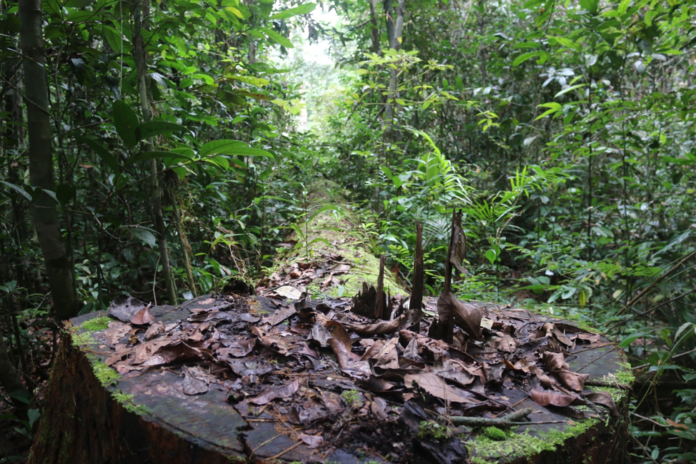
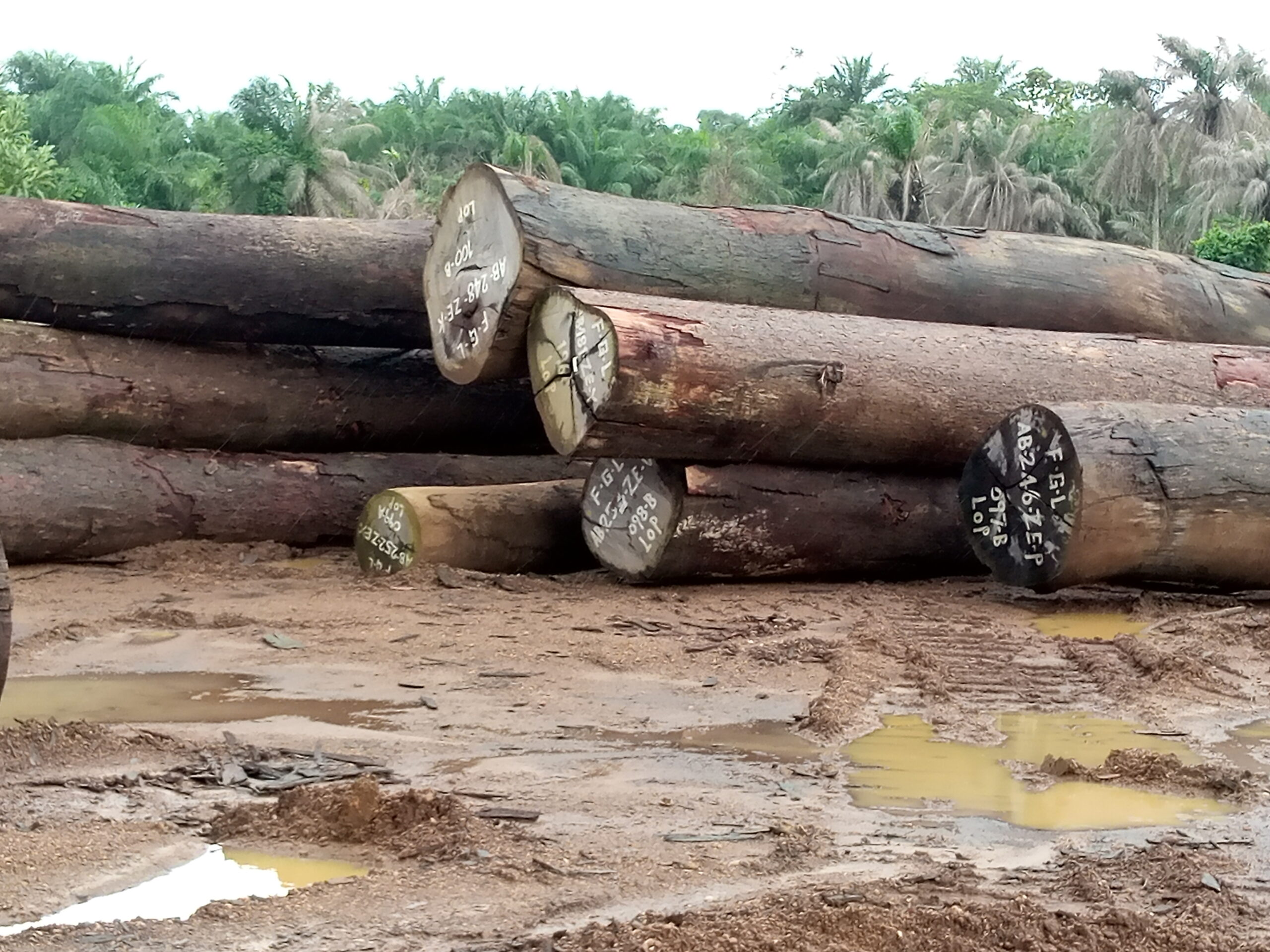
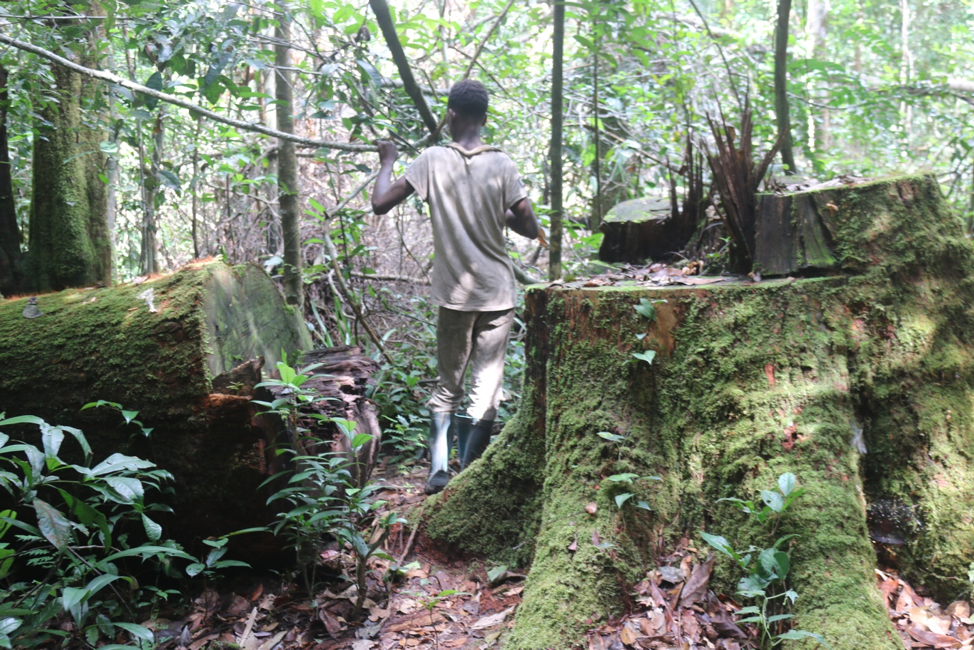
Top: One of the logs Masayaha, Magna’s partner, illegally harvested in a forest in Compound Number One, Grand Bassa County, is seen next to its stump. The DayLight/James Harding Giahyue
James Harding Giahyue
Morley Kamara, the CEO and owner of Magna Logging Incorporated emailed The DayLight, bragging not to be bothered by stories the newspaper publishes about his company’s violations
Kamara copies Cllr. Yanquoi Dolo, FDA’s lawyer, responsible to help prosecute forestry violators
Kamara’s Magna and Masayaha, its Lebanese-owned partner, have committed several offenses over the last three years—from an illegal subcontract to cutting trees outside their contract area
MONROVIA – The CEO and owner of a company has emailed The DayLight to boast that he was not bothered by revelations of the firm’s wrongdoings, copying the in-house lawyer of the Forestry Development Authority (FDA).
“These stories do not move me one bit,” said Morley Kamara of Magna Logging Corporation, sharing the communication with Cllr. Yanquoi Dolo, who helps the FDA prosecute forestry violators.
“You’re missing your mark,” Kamara added, the email in which he also copied Ali Harkous, Masayaha’s CEO and owner.
Kamara was referring to a series of investigation reports The DayLight published last year that revealed a number of logging offenses the Liberian-owned firm and Masayaha Logging Company, its Lebanese partner, committed.
The FDA failed to take any actions against the companies despite overwhelming evidence of violations revealed in the four-part series, appearing between September and October last year.
The first story exposed a string of illegal logging operations outside the Worr Community Forest in Grand Bassa County, its contract area between 2020 and 2021. It featured interviews from chiefs and elders who participated in the activities, voice WhatsApp conversations with an FDA executive and a resident, and a report from SGS on the same offenses. SGS is a Swiss firm globally acclaimed in the verification industry. It created Liberia’s log-tracking system known as the LiberTrace.
Two illegally harvested logs Masayaha Logging Company left behind in the Garkpa Charlie Town in Compound Number One, Grand Bassa County. The DayLight/James Harding Giahyue
The second story showed that Masayaha abandoned some 600 logs it had harvested during the same period of its illegal harvesting spree.
The third story covered villagers’ protest against Masayaha for their forest benefits, stopping the company from operating. The company has now paved a new road and repaired a clinic building in the community in response to the villagers’ demands.
The last part of the series uncovered the illegality of a subcontract between Magna and Masayaha. The two had signed their deal unknown to the leadership of the community, a breach of the Community Rights Law of 2009 with Respect to Forest Lands. Villagers must participate in such deals, according to one of the law’s guiding principles.
That story also shed light on Magna’s capacity to conduct logging activities, having transferred its full logging right to Masayaha, less than a year after signing its agreement with the leadership of Worr Community Forest.
By law, Magna and Masayaha should have paid different fines for stealing logs and abandoning others.
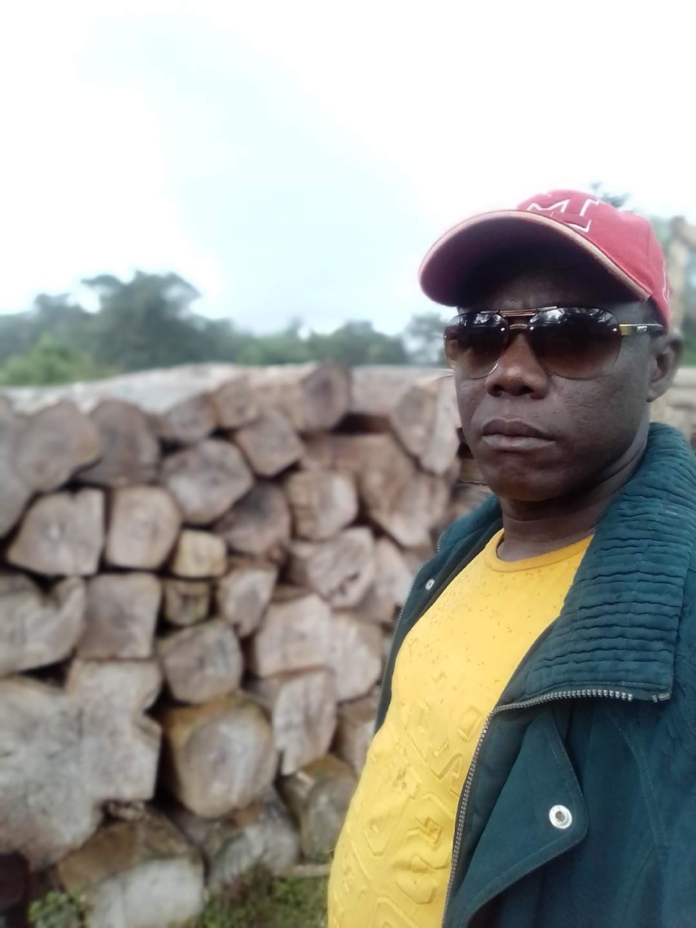
Top: Emmanuel Gongor poses before a stockpile of illegal block wood, commonly called “kpokolo.” Photo credit: Facebook/ Emmanuel Gongor
Editor’s Note: This is the first of a two-part report on the operations of an infamous illegal logger, based in Nimba County. It is also a part of a broader series on a criminal logging activity commonly called “Kpokolo.”
By Mark B. Newa
GANTA, Nimba County – On one sunny day in Karnwee late last year, forest rangers and police officers seized a truck with 80 pieces of boxlike timber, ending an hourlong chase all the way from Bahn, where the woods had been harvested.
Emmanuel Gongor, a middle-height man, arrived on the scene shortly on a motorcycle taxi, appearing shocked. This was not the first time Gongor had transported block wood, commonly called “Kpokolo” in the logging industry. For years he passed checkpoints without any problems. Sometimes he sold the wood to other companies or individuals in Liberia. Other times, he exported them.
Things had suddenly changed. Gongor learned that the Forestry Development Authority (FDA) had banned Kpokolo, derived from the sound the wood makes when it falls or “thick and heavy” in the Kpelle language. His woods were dumped by a roadside.
“We have been so committed, but if we cannot understand, we will seek the legal process by taking the FDA to the circuit court,” a furious Gongor told The DayLight in a phone interview days after the incident. He expected to get US$7,000 from the consignment and settle all of his holiday expenses.
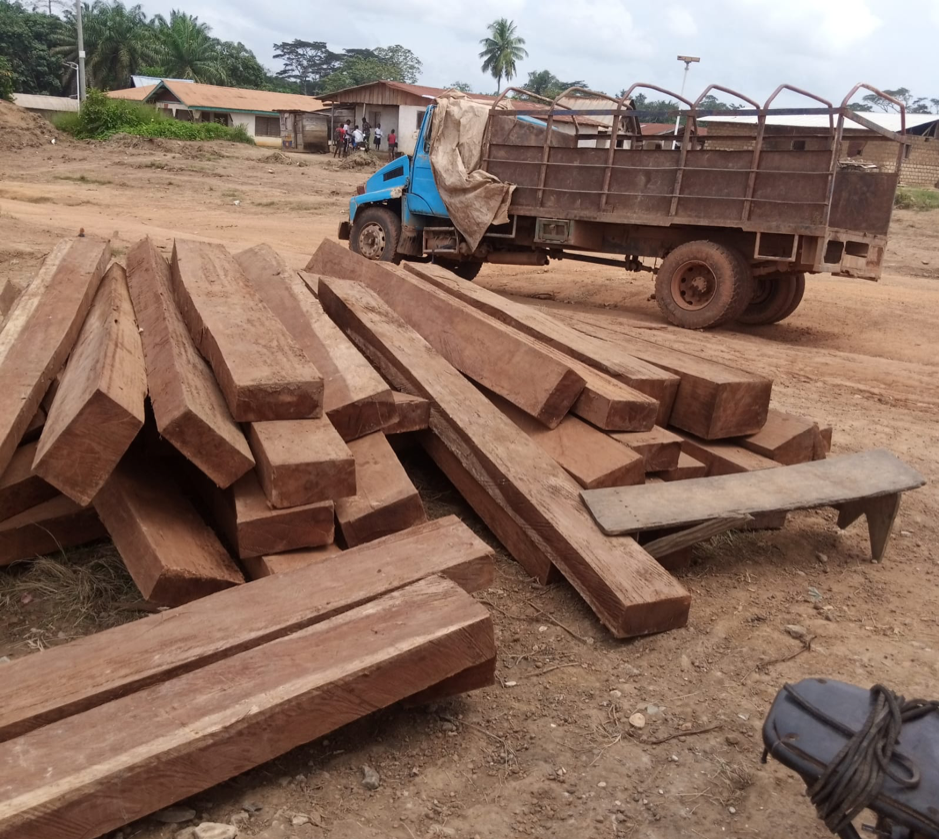
Gongor does not have a logging contract and his timber surpass the dimension defined in the Chainsaw Milling Regulation. His woods are between five and 10 inches thick, up to five times the required measurement of two inches. In photos posted to Gongor’s Facebook page, several men can be seen trying to lift the timber.
But interviews and documents show that the FDA has been aware of Gongor’s illegal logging activities for half of a decade. In fact, the agency has unlawfully received fees from him. Some of his waybills seen by The DayLight amounted to over US$1,500.
Those payments sanctioned the 48-year-old to rip off forests from central Nimba to the Cote d’Ivoire border. Nimba lost 315,000 hectares of tree cover between 2001 and 2021. That makes it second only to Bong County (363,000 hectares), according to Global Forest Watch, a tool that monitors the state of forests across the world.
‘Emmanuel, The Investor’
Gongor was an accomplished miner. He panned and sieved for gold on a number of goldfields in Gbarpolu, Grand Kru and Grand Gedeh.
He started up in the logging industry in 2017 as a chainsaw miller, pit-sawyers or plank producer. Soon he saw that he could make more money from harvesting kpokolo.
“Block wood is preferable because for normal sawing at times, we take 500 pieces of timber to be a truckload, but for block wood, some are just 150-200 pieces,” Gongor explained. “For the past six years now, I have been on that operation.”
Gongor was hired by a Turkish-owned firm called Tropical Wood Group of Companies, which obtained a one-year permit from the FDA to buy and sell. The permit was issued by Darlington Tuargben, the FDA Managing Director at the time. The legality verification department (LVD), a unit of the FDA that manages its log-tracking system called the chain of custody, said it has no record of the company. Efforts to contact Abdulla Aklan, the company’s owner, were not successful. Tuargben did not respond to queries.
Emmanuel Gongor’s 80 illegal block woods, commonly called “Kpokolo” were arrested in Karnwee, near Saclepea. Picture credit: Emmanuel Gongor
Gongor conquered the kpokolo black market. He broke out with his employer and established Tropical Wood Group of Investment. Though he is yet to register it as a legal entity, he continues his criminal deals with the new firm.
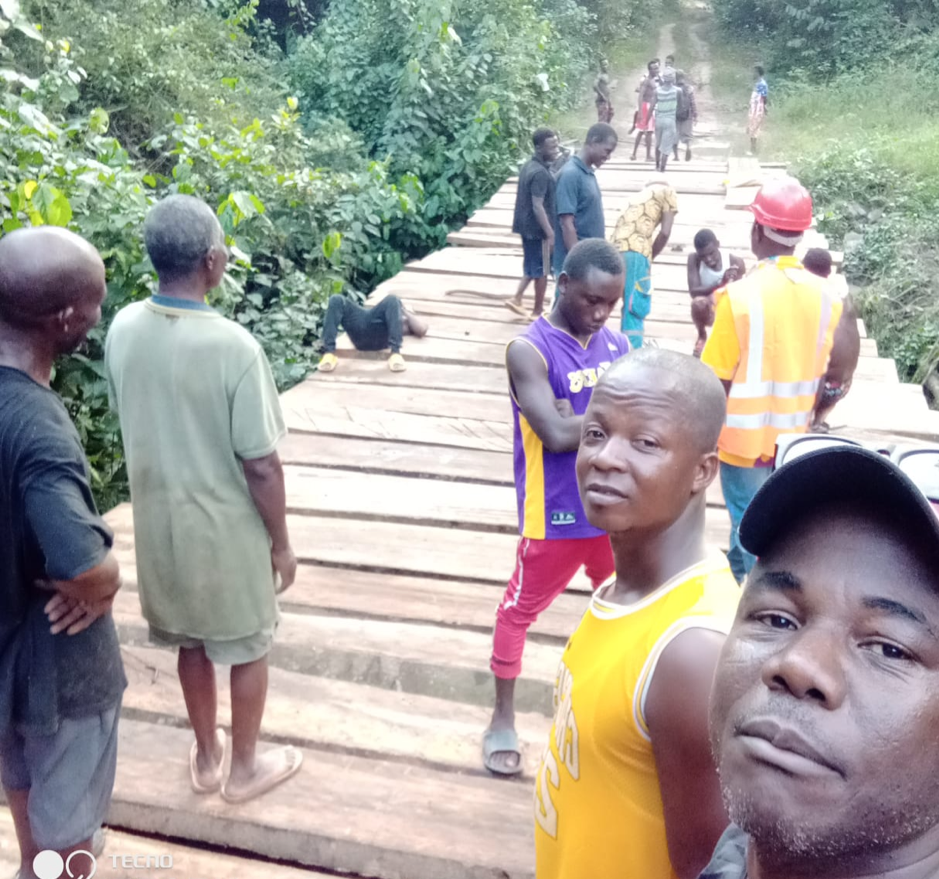
His network spans four of the nine districts in Nimba: Zoe-Gbao, Zoe-Geh, Bu-Yao and Gbelay-Geh in the central and eastern regions of the county. He boasts of a workforce of 25 people and a host of villagers and disadvantaged youth or “zogoes.” They do everything from locating forested communities to finding trees and from negotiating with local landowners, to harvesting, hauling and transporting. With 30 chainsaws, they have built wooden bridges, and town halls and have repaired schools and clinics in forested towns and villages.
Videos recorded by Gongor show him taking stock of trees he had negotiated with villagers to harvest in Tahnplay, and celebrating the completion of projects. “We finally completed the bridge connecting Kanhplay to Sehyi Town in Gbelay-Geh Statutory District,” Gongor can be heard saying in one video. “Together with the youth, elders, and chiefs, we were able to complete the first phase of operation.”
Townspeople in the areas Gongor works revere him. His name goes beyond the reach of logging companies in that region, many of whom have failed to fulfill their social agreements with communities.
“We call him Emmanuel The Investor,”Arkey Vasiee, town chief of Zortapa.
In March last year, James Zuorpeawon, Gbehlay-Geh’s development superintendent, issued him a permit to operate in the area. It authorizes Gongor to present the document “for awareness and protection during his operation within the district.”
Gongar and villagers pose for a picture following the construction of a bridge in Karnplay, Nimba.
Other kpokolo loggers across the country also respect Gongor.
“This place is small for him, he can’t even come here again,” said a plank producer from Gompa Wood Field in Ganta, who preferred not to be named. Gongor had milled planks there prior to venturing into kpokolo.
“Gongor is one of the most skillful kpokolo operators,” said James Kelley, a kpokolo logger in Gbaryama in Gbarpolu’s Bopolu District. Kelley said he had worked with him in Kinjor, Grand Cape Mount County.
Gongor does not depend on his fame—or notoriety—to run his business. He advertises on Facebook. “[If you are] interested in this Iroko table, you can WhatsApp me on this number,” a November 27, 2020 post reads, featuring a flat piece of log on a stick like a table. “If anyone is interested in buying teak wood, just contact me on my contact number,” reads a March 10, 2021 post. Both Iroko and teak logs are durable woods used for outdoor purposes. His accounts also showcase selfie pictures of him with men loading giant-sized block wood onto trucks.
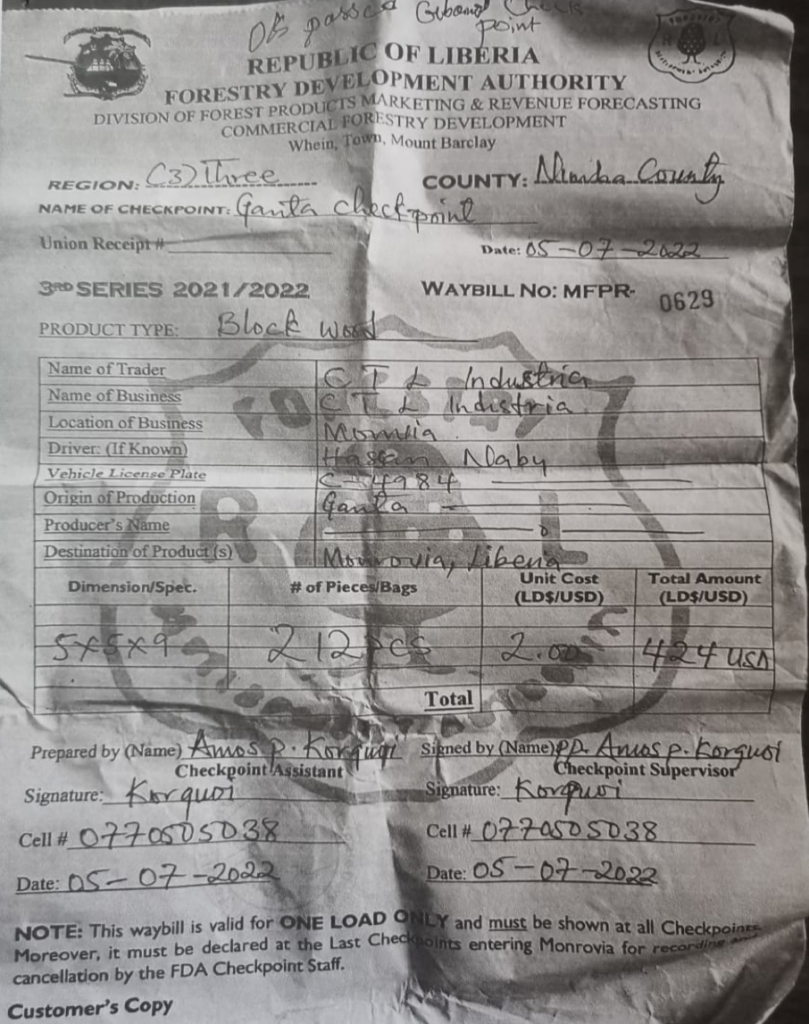
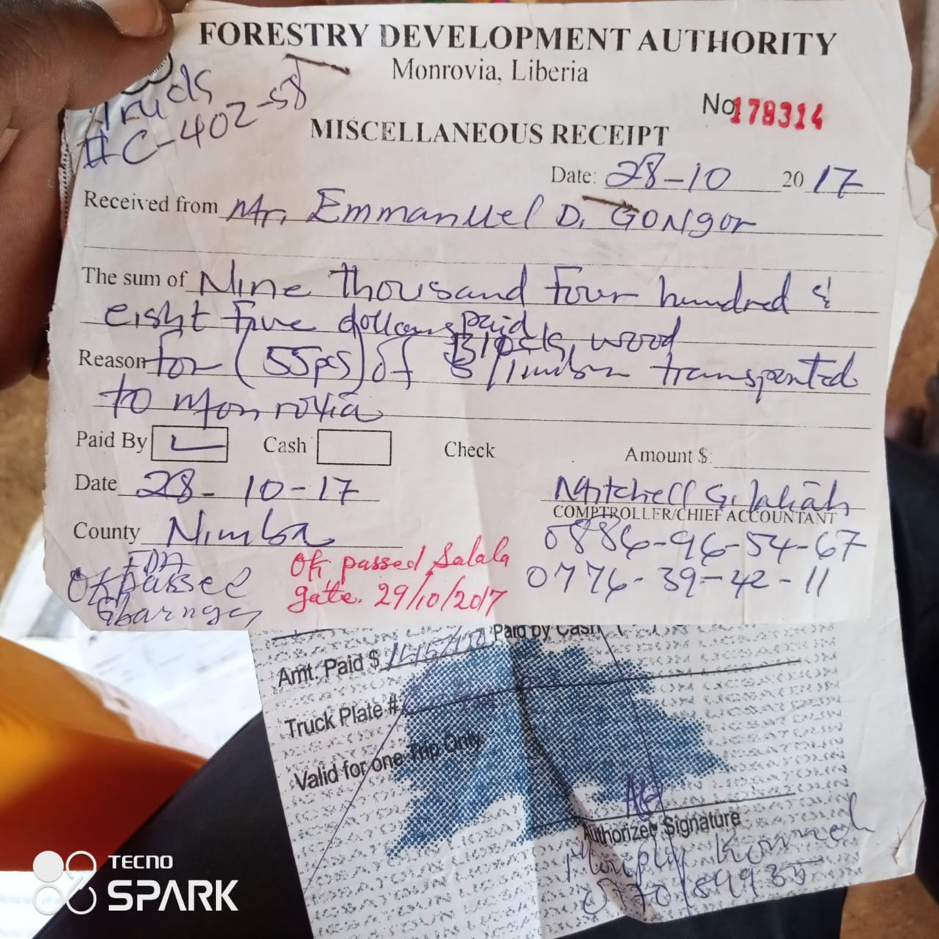
But Gongor would not have been this successful without the FDA. Receipts of their transactions show he has paid the FDA tens of thousands of United States Dollars in waybill, fees imposed on transported timber. One September 2017 receipt shows that he paid the FDA L$18,000 for 300 pieces of kpokolo. Another in May last year reveals he paid US$424 for 121 pieces.
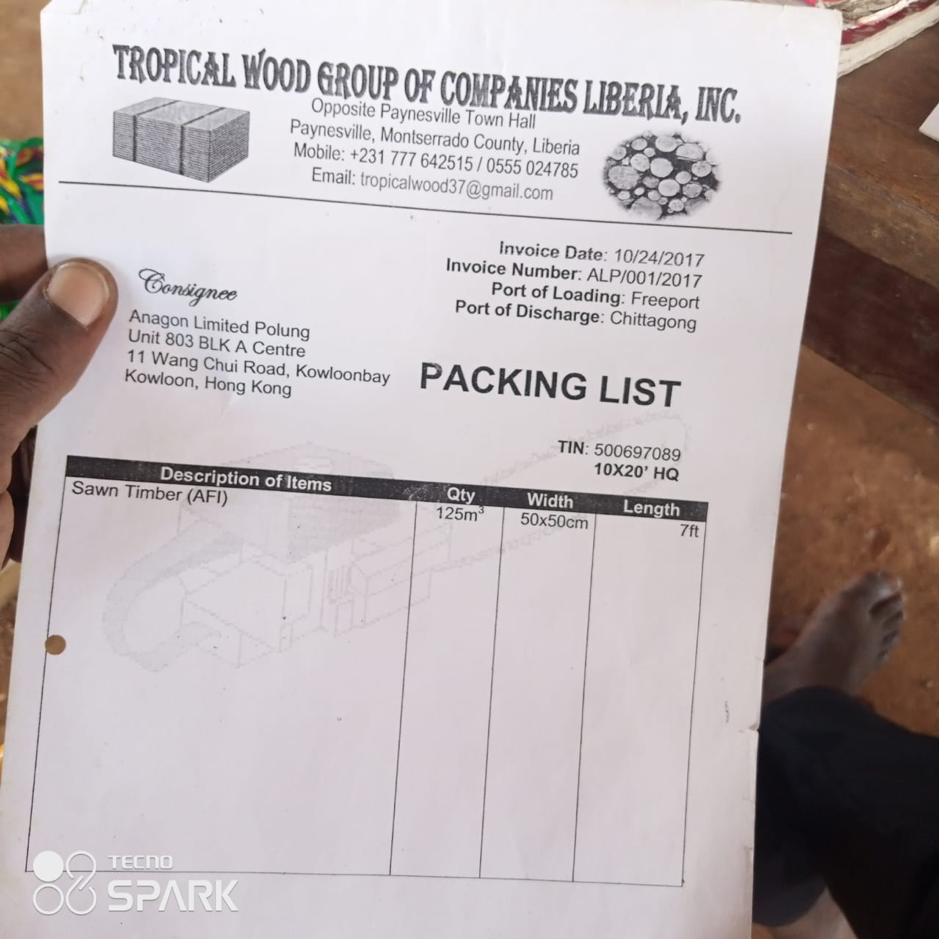
One document shows Gongor’s invoice to a firm in Hong Kong to export 125 cubic meters of sawn timber with a height and width of 50 centimeters (approximately 20 inches) and length of seven feet. He had a deal to export timber from the Freeport of Monrovia to the Port of Chittagong in Bangladesh, according to one invoice.
“The FDA agents are always informed when we are going to bring wood from the bush,” Gongor told The DayLight.
“We make more money for forestry. Our own percentage to the FDA is different from the normal [pit-sawing].” He was speaking in reference to the US$0.60 toll on a plank compared to US$2 on kpokolo, according to waybills FDA issued him, seen by The DayLight.
Emmanuel Gongor takes a selfie with men loading block wood in a truck. Facebook/Emmanuel Gongor
The fees the FDA received from Gongor are illegal in a number of ways. First, the payments he has made to the FDA do not go to the Liberia Revenue Authority (LRA), the company’s tax-payments record shows. In addition to possessing no contract, the villages where he operates do not have any legal rights to engage in logging deals. And the timber he harvests or exports does not pass through the legal channel, as mandated in the National Forestry Reform Law and the Regulation on Establishing a Chain of Custody System.
Gongor’s kpokolo waybills have also shined a light on FDA’s shady plank tolls system. Fees the agency collects from planks dealers are not made public as required by forestry’s legal frameworks, including Liberia’s Voluntary Partnership Agreement (VPA) with the European Union. They are neither paid to the LRA nor captured in the reports of the Liberia Extractive Industries Transparency Initiative (LEITI). The FDA has retained these fees for years, a breach of the financial provision of the reform law.
FrontPage Africa reported in 2020 that the Klay checkpoint in Bomi collected over L$500,000 in just one month. It said that there was a wrangle within the FDA over the management of the funds, adding that the fees went into a mobile money account belonging to Edward Kamara, FDA’s forest product marketing manager. Kamara coordinates fees collected at checkpoints countrywide.
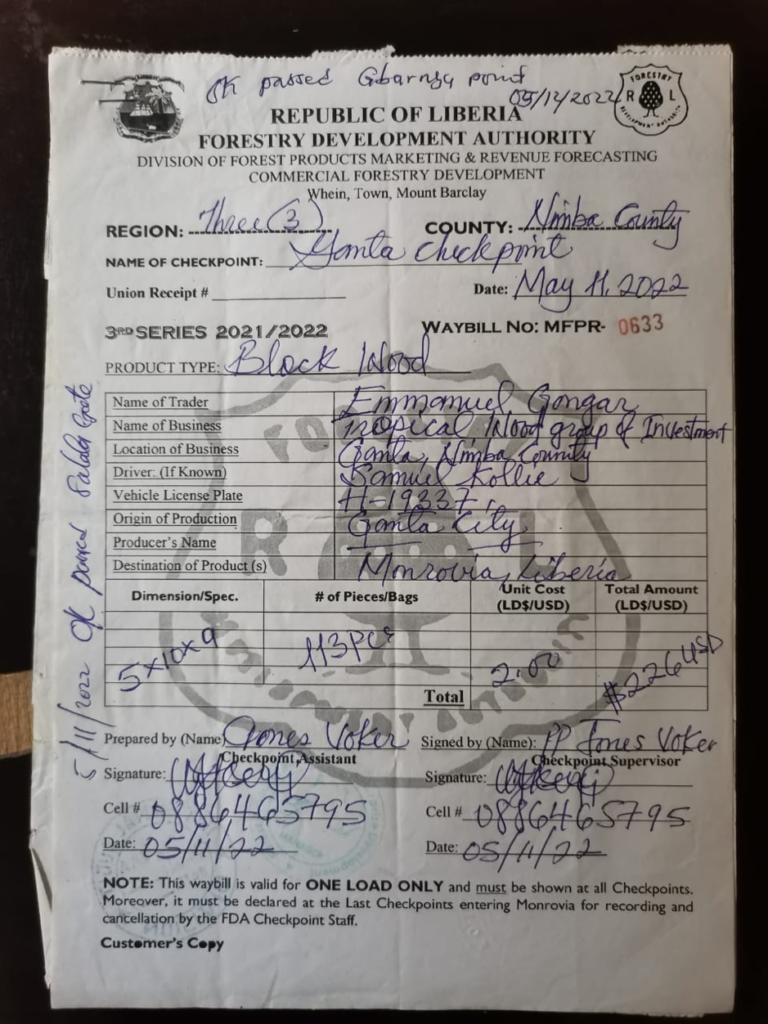
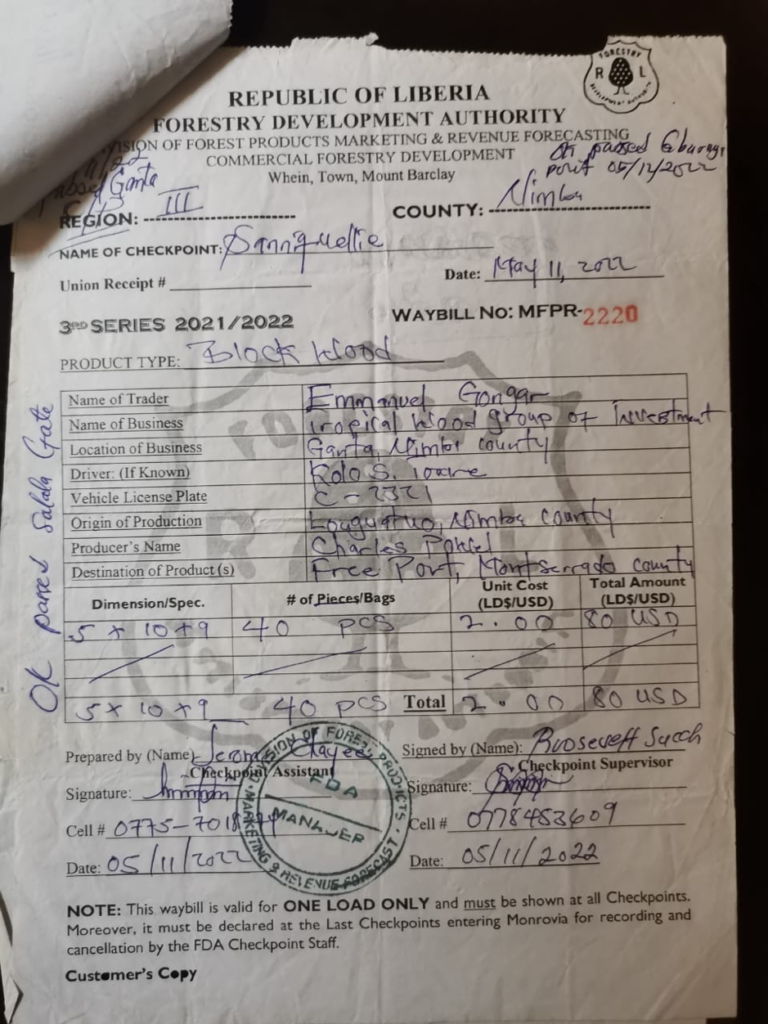
Nimba, Region III FDA agent in Ganta issued a waybill for 212 pieces of Kpokolo on July 5, 2022 Emmanuel Gongor of Tropical Wood Group of Investment paid the FDA US$226 to transport 113 block wood on May 11, 2022One of Emmanuel Gongor’s earliest receipts from the FDA for block wood, shows he paid L$9,485 to transport 55 pieces of the illegal timber on October 28, 2017.This latest FDA receipt shows Gongor paid the agency US$80 for 40 pieces of kpokolo on May 11, 2022.One of Tropical Wood Group of Companies’ illegal export documents obtained by The DayLight
Ironically, while the FDA secretly collects fees from Gongor, it has asked the public to assist it to combat illegal logging activities. The FDA said in a release last November that it had intercepted four container trucks trafficking timber from western Liberia. That statement followed a similar one three months earlier after rangers in Bomi and Gbarpolu arrested three trucks with logs illegally harvested.
Earlier this month, the Monrovia City Court issued an arrest warrant for a former police commander, an ex-envoy and eight people in the Bomi-Gbarpolu incident. The FDA is seeking court orders in the counties to auction the logs, the first such step since the formulation of Regulation on Confiscated Logs, Timber and Timber Products.
‘I am over hurt’
Gongor feels betrayed in all of this, believing he is a victim rather than the villain he actually is. For the last six years, the FDA has sanctioned his operations and accepted his payments like a typical chainsaw miller. He finds nothing wrong with producing Kpokolo.
“It would have been good for the FDA to formally inform those involved in the business before ordering us to stop the harvest and sale of block wood in the country,” Gongor said.
“I am over hurt. We have been issued hundreds of waybills. We always pay a huge sum of money to these guys,” he added.
In December, nearly a month after his consignment of timber was seized, Gongor transported them to Ganta. They were again seized and are being kept at the Gompa Wood Field.
The FDA is yet to take the required legal actions to confiscate Gongor’s timber. Under the confiscated timber regulation, The FDA should petition the circuit court in Sanniquellie to auction the wood. Both Arthur Gweh, the commander of Nimba County police detachment in Bahn, and Emmanuel Gbeh, the FDA ranger who arrested the wood, declined to comment.
By law, Gongor should face a lawsuit for his illicit activities, and if convicted he could pay a fine, serve a prison term, or both. It is a crime for a non-contract holder to harvest timber, punishable under the Penal Code as economic sabotage.
The FDA’s Managing Director Mike Doryen did not respond to emailed queries.
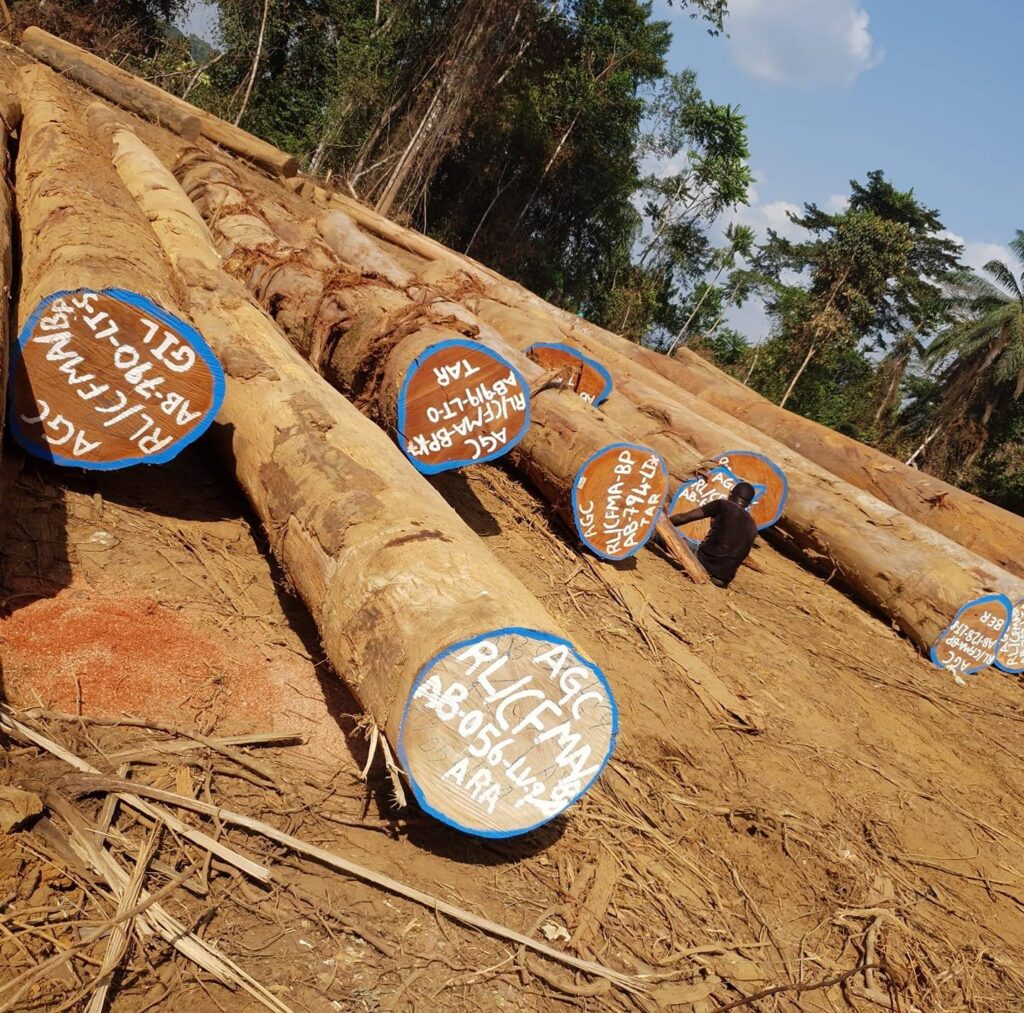
Top: Some of the illegally harvested logs. Picture credit: Independent Forest Monitoring Coordination Mechanism
By James Harding Giahyue
BUCHANAN, Grand Bassa County – The Forestry Development Authority (FDA) has accepted a Supreme Court mandate to allow a company to export a huge consignment of logs it had illegally harvested. It brings to a close more than one year of a legal battle that has shed light on widespread irregularities in Liberia’s forestry sector.
The Second Judicial Circuit Court in Upper Buchanan had issued an arrest warrant for officials of the FDA after it failed to adhere to the high court’s decision to uphold the lower court’s ruling in favor of Renaissance Inc. The firm had sued the FDA after the agency seized some 14,000 cubic meters of logs valued at an estimated US$4.17 million.
Sheriffs last week arrested Atty. Gertrude Nyaley, the technical manager of FDA’s legality verification department (LVD), which manages the system that tracks logs harvested and exported out of Liberia. Nyaley was later released on bail by her lawyers, with the agency scheduled to appear before the lower court on Monday, according to court filings.
At the proceedings on Monday, Cllr. Abraham Sillah, the head of the FDA legal team, asked the court for 10 days for the export to happen. The court granted that petition, fining Nyaley, Harrison Karnwea, the chairman of its board of directors, Managing Director Mike Doryen and his two deputies, US$300 each. It also fined Cllr. Yanquoi Dolo, FDA in-house lawyer, US$100. It said it would jail officials of the agency if the logs were not shipped by that time.
“No department of the government other than the Judiciary shall exercise judicial function,” Judge Peabody said, according to court documents. “The [actions] of the Forestry Development Authority and its managers are usurping the functions and have interfered with and is an act of reviewing the judgment of the Supreme Court and this court.”
The court also accepted the FDA’s request not to export the controversial logs through the tracking system called LiberTrace. The computerized system uses barcodes to trace timber from its sources to its final destinations. It is an integral part of Liberia’s forestry reform agenda, a foothold of the country’s trade agreement with the European Union, called the Voluntary Partnership Agreement (VPA).
“I am happy that the law is about to take its course,” said Aaron George, Renaissance’s CEO in a mobile phone interview.
Renaissance won the case after the court upheld a six-man jury unanimous verdict to allow Renaissance to export the logs. The court agreed with the company that disallowing its logs from being shipped having already paid a US$105,000 fine would have amounted to a double punishment or double jeopardy. It is a defense in Liberian law that prevents a person from being tried again for the same offense.
After that verdict, the FDA filed an appeal at the Supreme Court, which was followed by a Renaissance motion for dismissal. The FDA did not respond to that petition, leaving the high court to dismiss the appeal.
“The agencies of the government of Liberia, though exempted from filling an appeal bond, they are required to strictly abide by the other mandatory steps enumerated in the appeal statute for the completion of an appeal,” the Supreme Court said in the ruling on November 4 last year.
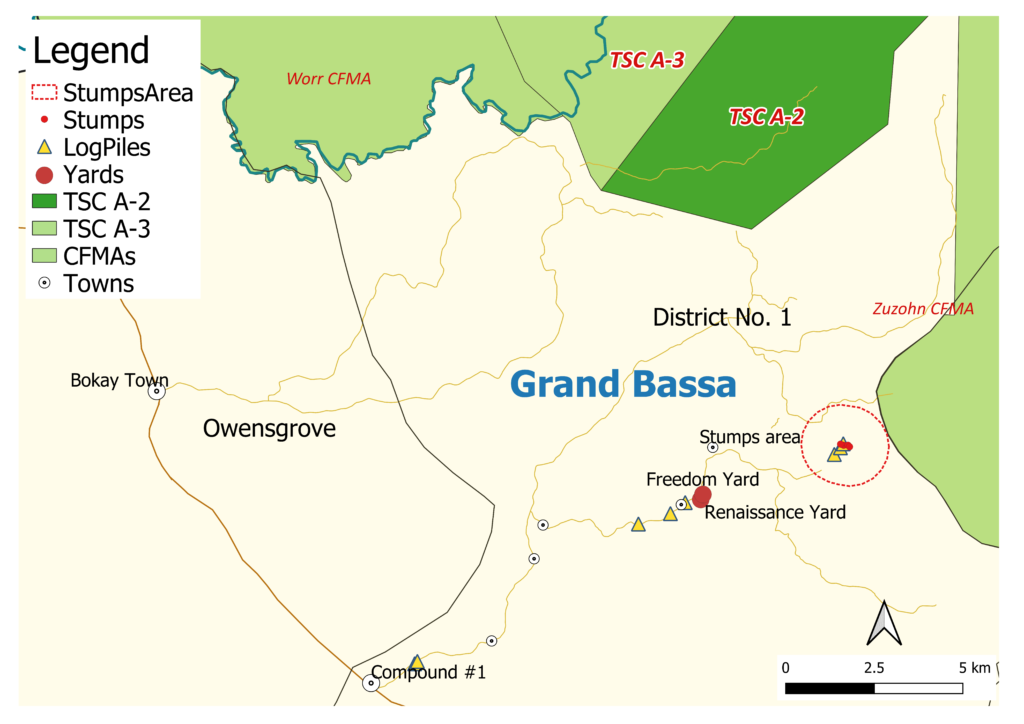
Renaissance Inc. harvested the logs outside its concession area known in the logging industry as timber scale contract area two or TSC A2, located in Compound Number Two, Grand Bassa County. Lacking a trace, FDA technicians found it impossible to register the wood into LiberTrace. Société Générale de Surveillance (SGS), a Swiss firm that co-manages the system, declined to enroll the timber, drawing the Supreme Court’s ire.
Monday’s decision is expected to anger more than a dozen international NGOs who called on the FDA to remain firm in its decision not to allow the logs to be exported. They come from the United States, European Union countries, the United Kingdom, and China three regions with a vested interest in Liberia’s forestry sector, investing millions.
“We are encouraged by the FDA taking action to stop illegally sourced timber being exported, and strongly support its staffs’ actions,” the organizations said in a joint statement on Sunday.
“We are extremely disturbed that the Liberian courts, instigated by logging company Renaissance, seem intent to punish FDA staff for doing their duty,” the statement added.
In 2021, an investigation by a group of civil society organizations found that Renaissance Inc. had harvested the logs under the pretext that it was paving a road in that area. It said all the logs were ekki wood (Lophira alata), first-class redwood currently selling for US$298 on the international market.
Two years before that, Société Française de Réalisation, d’Etudes et de Conseil (SOFRECO), a European Union-commissioned auditor based in Paris, urged the Ministry to investigate TSC A2.
This map shows the boundary of TSC-A2 and where Renaissance cut down the trees. Picture credit: Independent Forest Monitoring Coordination Mechanism
“The mere fact that an operator took the risks of felling such an important volume of logs illegally provides a high probability that the operator was confident in the possibility to export the illegal logs, which raises questions for further consideration,” SOFRECO said in a November 2019 letter to major players in the forestry sector.
The ministry investigated the illegal harvesting but has not published its report for over three years on. The international NGOs called on the ministry to release the document.
“We call upon the Government of Liberia to follow the law, publish the official investigation report by the Ministry of Justice into the Renaissance case, and use the evidence provided in this report, to guide their decisions,” the group said.
Minister of Justice Cllr. Musa Dean told The DayLight “Findings [of the report] were released to the appropriate agency and all concerned.”
In March last year, the FDA canceled TSC A2 and six others in Bassa, Grand Cape Mount, Gbarpolu and Bong after they outstayed their legal lifespan. Communities affected by TSC A2 and the other concessions have not received their benefits.
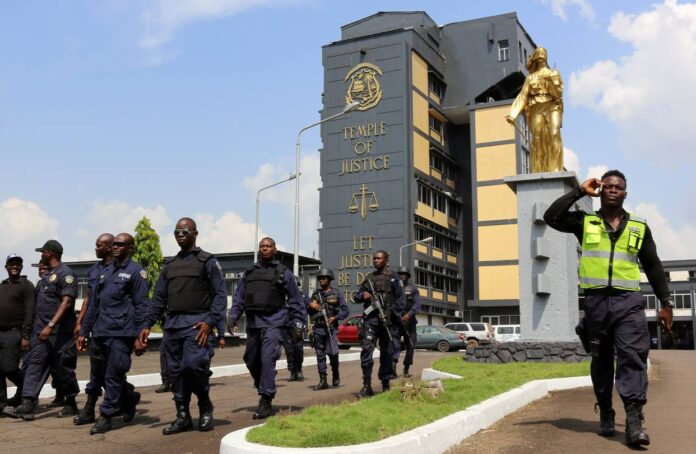
Top: The Temple of Justice in Monrovia. Picture credit: Reuters/James Harding Giahyue
By Gabriel M. Dixon
MONROVIA – The Monrovia City Court has issued an arrest warrant for 10 people for their alleged involvement in unlawful logging activities, first revealed to the public in an investigation by The DayLight.
They include Dawoda Sesay, a former police commander, Varney Marshall, a former ranger with the Forestry Development Authority (FDA), and Beomjin Lee, a Korean national.
They have been charged with property theft, forgery, economic sabotage, criminal conspiracy, criminal facilitation and bribery. A police inquest found the men felled a number of first-class logs in Gbarpolu County and attempted to ship them through the Freeport of Monrovia.
“These people will go in the bushes fell the trees, cut the logs, and use bogus documents in order to evade taxes, and will use those documents to ship the containers of logs out of Liberia,” Police Inspector General Patrick Sudue told a news conference last week.
The DayLight had broken the story and went on to assist the police in their investigation, providing them with important pieces of information that would lead to the charges.
The newspaper, which focuses on environmental investigations, first published on 14th August last year that the FDA had arrested three container trucks loaded with illegally harvested timber nearly a month earlier.
The paper would go on to publish a detailed account of the illicit activity that same month, naming members of the syndicate and the role they played in the illegal harvest. Not long after that, the FDA petitioned the circuit courts in Bomi and Gbarpolu to auction the logs, orders it is yet to be granted.
The DayLight also published a leaked video, revealing Marshall’s own illegal logging operations. Marshall can be held in the video complaining over his accomplice’s attempt to cheat him while filming huge piles of boxlike wood, commonly called “Kpokolo.” Pictures apparently taken by another accomplice show the depth of Marshall’s criminal operations, including loads of containers of kpokolo.
On Monday, the FDA announced it has dismissed Marshall, citing the report and charges against him at the Monrovia City Court. “A video circulated on social media and reported by The DayLight online media captured Mr. Marshal’s open engagement in illegal logging activities, a vice he was hired to prevent and combat,” the FDA said in a statement. It added that Marshall had admitted in an inhouse probe.
FDA also said it has suspended Edward Jallah without pay, another FDA ranger captured in The DayLight’s initial report that eventually led to the city court’s charges.
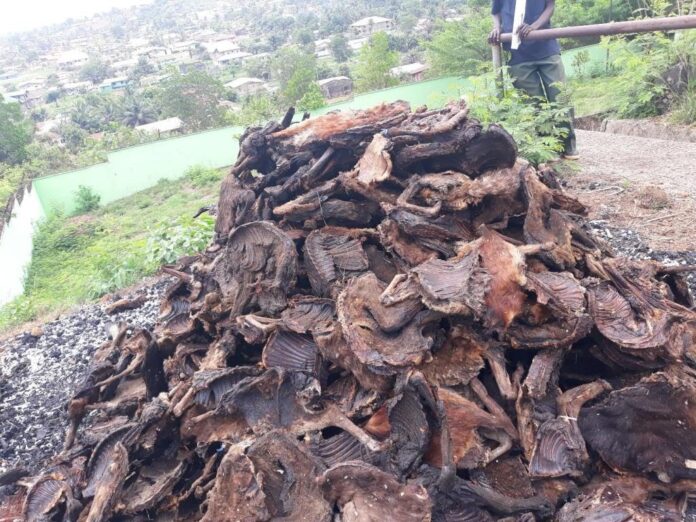
Top: A pile of meat about to be set ablaze at the headquarters of the Forestry Development Authority (FDA) in Paynesville. Photo credit: FDA
By Dounard Bondo
MONROVIA – In Liberia, forests make up more than two-thirds of the country’s land area and cover approximately 6.69 million hectares. As half of Liberia’s population lives within 2.5 kilometers of a forest, the forest and its resources have become vital to the survival of most of the population who largely depend on it for food.
But the consequent rise in human contact with wildlife has increased the possibility of zoonotic diseases; which are infectious diseases that can be transmitted from animals to humans through direct contact or through food, water, or the environment.
Liberia is no stranger to the deadly consequences of zoonotic diseases. In 2014, the country recorded its first case of Ebola, a virus scientists believe can be transmitted from fruit bats and monkeys. At the end of the outbreak in 2016, it had recorded 10,678 cases with 4,810 confirmed deaths, the worst in the sub-region.
Known as one of the deadliest viruses to humans, Ebola can cause severe bleeding, organ failure and death. The virus can be easily spread, as it can be transmitted through the body fluids of an infected person, especially dead bodies.
According to the American Center for Disease Control, while scientists do not know where Ebola virus comes from, they believe it is animal-borne, with bats or monkeys being the most likely source.
“I remember when the virus came, people were just dying, one person would fall sick and the next thing is the people in the whole house they are staying in would die,” says Siah Peters, a 38-year-old farmer from Voinjama, who witnessed the Ebola outbreak in 2014.
“Ebola killed my sister and her family. Someone in their house got it, then it spread, that’s how they died one by one, we could not even bury her, the government took the body away to burn it,” she adds.
With Liberia being home to large sections of the Upper Guinea rainforest, the country remains vulnerable to Ebola and other zoonotic diseases. However, Ebola resurfaced in Uganda, Sudan and Congo last year. In Liberia, a community health worker program and a law against hunting some of the animals that cause Ebola is helping to reduce the likelihood of another outbreak, while protecting Liberia’s wildlife.
“Liberia is at risk for zoonotic diseases because of many factors. One of the factors is the clearing of forests by humans in search of food which exposes them to wildlife,” says Mildred Bembo Harris, a public health professional and the Liberian country team leader of STOP Spillover – a USAID-funded global project which is working to prevent zoonotic diseases and their spillover.
“Some of this wildlife have diseases that could spill over from animals to humans. For example, the Ebola outbreak is believed to have come from fruit bats that are still consumed in some quarters,” Harris adds.
The program enlists people in rural areas to serve as the first line of defense through a community healthcare program. Since the launch of the community healthcare program in 2016, the Liberian Ministry of Health has stated that there are now around 4,000 community health workers serving the country’s 15 counties. They not only provide services for people in rural areas, thus increasing access to healthcare, but also serve as the focal point for the observation and reporting of zoonotic diseases.
The first phase of the program in the country depended on volunteers in suburban and urban regions. Using the results of those evaluations, the Ministry of Health and Last Mile Health, its non-governmental organization (NGO) partner, launched an initiative in 2012 to bring paid health workers to rural areas.
The results of the pilot program showed that prenatal care and other preventive health services were much more accessible to low-income and rural families. The ministry then used it to test and adjust the program’s components before rolling it out on a countrywide scale in 2016.
As part of the program, health workers undergo months of training in malaria diagnosis, first aid, and maternity health after being nominated by their fellow villagers and passing a literacy test. Then, they start talking to people in their community, addressing any problems that arise, and collecting data on local homes to address health concerns.
“This is integral as local communities do not just have little access to healthcare, but they are also at the higher risk of zoonotic diseases… because local populations hunt wildlife for food,” says Bernice T. Dahn, a former Deputy Minister for Health Services and Chief Medical Officer of the Republic of Liberia.
This view is reinforced by Harris who says “The community health workers have been a great asset to the country as they serve in rural and remote communities. There are several diseases and viruses that Liberia is on the watch out for due to public health concerns. These health workers help with surveillance in communities by reporting on time so that any potential outbreak is detected timely and responded to prevent its spread.”
A Ban On Hunting Protected Species
In addition to the community healthcare program, the Forest Development Agency (FDA) is also implementing the Wildlife and Protected Area Management Law of 2016 that bans the hunting of certain protected species for bushmeat.
The ban is not only protecting wildlife, but it is also helping to combat the spread of zoonotic diseases as It covers chimpanzees, four different species of monkeys, and bush hogs—all with a history of transmitting zoonotic diseases.
The ban is important as societal attitudes towards the consumption of bushmeat helped spread zoonotic diseases like Ebola. “When Ebola first came, we thought it was witchcraft or poison, but the government told us that it was the monkey and bush meat that we used to eat, we did not believe it at first because we have been eating it for long,” says Martha Johnson, a 40-year-old trader in Ganta, Nimba county.
Violators of the ban face a fine of US$5,000 to US$10,000 dollars or a two to a four-year jail term for any person found guilty. Additionally, the law also requires that any dead wildlife, seized or confiscated by the Authority may be quarantined, destroyed, or delivered to the appropriate governmental agency.
While the country had originally placed a temporary ban on bush meat consumption during the Ebola outbreak in 2014, post-Ebola saw an increase in both the supply and demand for bushmeat.
In response, FDA officers have positioned themselves in forest communities where they seize and destroy piles of bushmeat gotten from protected species as a means to deter the practice.
“I used to sell bushmeat before but I stopped because the FDA agent will take it all away from you and you will lose the money you put in it,” says Peters. Additionally, the government and international partners have also begun training ex-bushmeat sellers in other life skills. The purpose of the training is to encourage the sellers to switch to a legitimate line of work rather than continuing the unlawful trade of wildlife.
“I also heard on the radio that Ebola was in Congo this year, I hope it doesn’t come to Liberia, we suffered from it already,” Peters adds.
Gender Impact on the Community Health Program
The suffering Peters speaks of exceeds not just the physical and emotional impact of Ebola but also the specific gendered impact on women and girls.
Scientists believe people contract zoonotic diseases from animals they hunt for bushmeat. The DayLight/James Harding Giahyue
According to a report by Oxfam – an international NGO which works in Liberia, anecdotal evidence suggests that more women contracted the virus than men owing to their caregiving roles within the home and society. This role was even more prevalent during Ebola as formal healthcare provision was weak and often inaccessible.
“We women really suffered during Ebola; we were just dying. And it was spreading fast among us because when anybody is sick in the house, it’s their ma that’s responsible, it’s also us that can go to the market for food, so I am not surprised that the virus really spread among us,” says Johnson.
Additionally, women in the healthcare sector who served primarily as nurses, midwives, and traditional birth attendants, were severely affected by Ebola. During the epidemic, Liberia lost eight percent of its doctors, nurses, and midwives to Ebola, many of which were women.
Pregnant women who already had limited access to quality health care lost crucial resources due to Ebola. Consequently, the epidemic resulted in an upsurge in the number of avoidable deaths of pregnant women. It was widely reported that pregnant women were being turned away from clinics and forced to give birth in the street, in cars, or in their own houses.
For Peters, Johnson and many other Liberians who witnessed Ebola, there is the hope that the measures taken are adequate to prevent the next zoonotic disease outbreak.
“We really suffered, I hope Ebola or anything that’s like never comes back again,” Johnson says.
This story was produced with the support of a grant from Internews’ Earth Journalism Network.
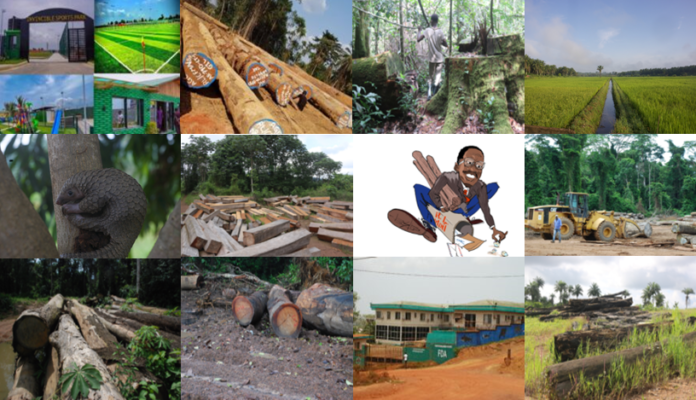
Top: A collage showing investigations published by The DayLight in 2022. The DayLight/Gabriel Dixon
MONROVIA – This year has been very eventful for The DayLight. We produced some very revealing investigations, particularly in the forestry sector. They include violations of all sorts: conflict of interest, illegal logging and wildlife poaching.
Our stories led to at least one official inquest and two court cases. They put the forestry industry under the spotlight for accountability and transparency, apparently led to administrative actions within the Forestry Development Authority (FDA), and uncovered certain illegal logging activities commonly called “Kpokolo.” We even lifted the lid on abandoned logs across the country.
As the year draws to an end, we take a look at our best stories:
The Invincible park shines with beauty but goes against international aviation safety regulations. Picture credit: Knewsonline
In this April piece, Gabriel M. Dixon exposes how President George Weah’s much-loved Invincible Park, built at the foot of the James Spriggs Payne Airfield, breaches international aviation standards. Citing the rules and regulations of the International Civil Aviation Authority (ICAO), the article showed the facility is a beautiful nuisance. Draped in the exposure of Weah’s inconsistent comments in the buildup to the park’s dedication, the story features a history of accidents at the airport and its 6,000-foot runway’s relevance to Liberia’s troubled political history.
It is our most-read story with more than 4,555 readers as of writing time.
Akewa Group of Companies has been involved in illegal logging for over a decade now. Picture credit: Facebook/Akewa Group of Companies
Editor-at-large Emmanuel Sherman and Managing Editor James Harding Giahyue started the year on a very high note, investigating a bundle of violations by Akewa Group of Companies.
The January investigation exposes very serious offenses committed by the company as well as the failure of the FDA to enforce forestry laws and regulations. They include lying under oath, forging another company’s tax clearance, prolonging indebtedness to communities and illegal issuance of contracts meant solely for Liberian companies.
A scene of Masayaha’s illegal logging operation outside the Worr Community Forest in Compound Number One, Grand Bassa County. The DayLight/James Harding Giahyue
Editor-at-large Emmanuel Sherman tells a tale of Masayaha’s illegal logging activities. The Lebanese-owned company harvested an unspecified number of logs outside its contract area in Compound Number One, Grand Bassa County. Evidence Sherman gathered—interviews, pictures and official reports—shows Masayaha felled trees in several communities far away from the Worr Community Forest it is, in practice, entitled to.
Sherman and our Director/Managing Editor James Harding Giahyue would expose the company’s other wrongdoings, including an illegal transfer of its logging rights from Magna, a Liberian-owned firm, its indebtedness to communities and abandonment of nearly 600 logs.
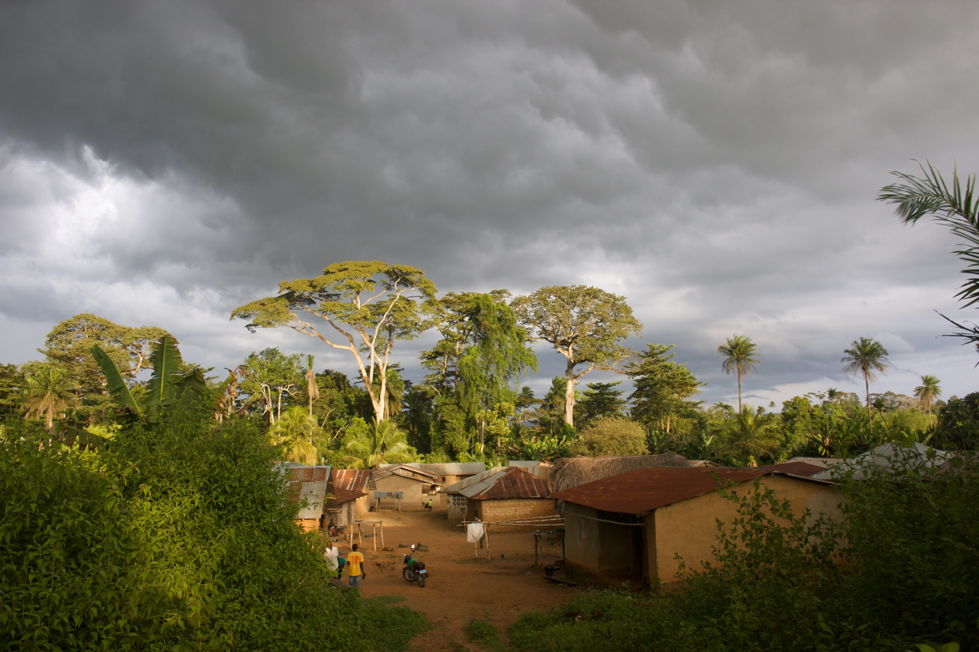
Rain sets over a village in Foya, Lofa County. The DayLight/James Harding Giahyue
James Harding Giahyue tells us how a collaboration among villagers, local authorities, civil society, the private sector and an international nongovernmental organization is putting Foya on the cusp of victory against deforestation.
Trees have been replanted on riverbeds and where there was savannah, with crops thriving. A large group of farmers is returning to swamplands and producing rice threefold. All of this is happening with locals having formalized ownership of their land.
Foya may have surrendered its breadbasket profile to the marauding savannah grass fueled by climate change but it is getting it back.
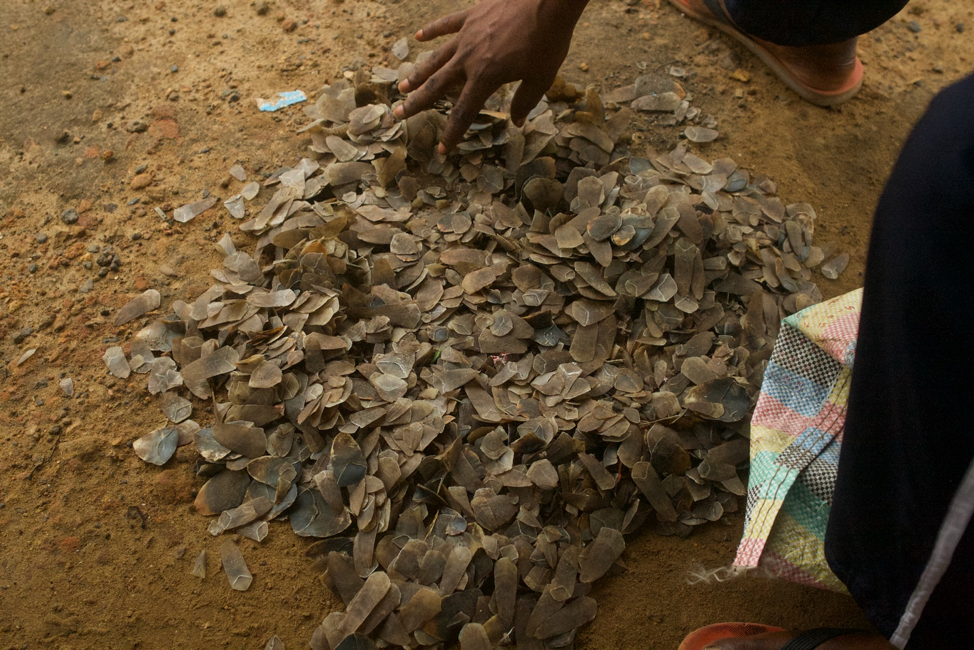
Pangolin scales in Bopolu, Gbarpolu County. The DayLight/James Harding Giahyue
In a four-year investigation covering nine counties, The DayLight sheds light on a network that traffics pangolin scales out of Liberia. It names and shames major actors of the illicit trade and exposes the organization of the cabal as well as its trafficking routes.
Illegal timber or “Kpokolo” harvested by Binta Bility, a businesswoman, in Compound Number One, Grand Bassa County. The DayLight/James Harding Giahyue
The unlawful operation in Grand Bassa County of Binta Bility, a businesswoman, was exposed in this September investigation. The article showed that Bility produced block wood, which has come to be known in the industry as “Kpokolo.”
Having initially denied she ran the kpokolo operation in Compound Number One and somersaulted to confirm she was the one, Bility has vowed to cease her illicit activities. But the law requires she is punished.
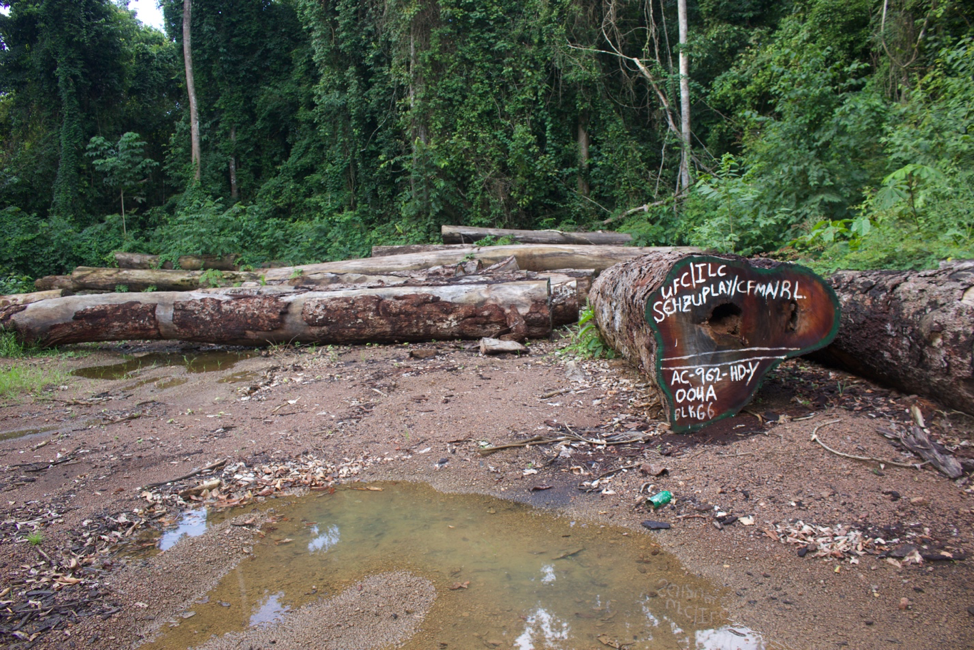
Logs illegally harvested by Universal Forestry Corporation, co-owned by Minister of Posts and Telecommunications Cooper Kruah, are seen in the Sehzueplay Community Forest. The DayLight/James Harding Giahyue
This late June investigation, the first of a three-part series, reveals the Minister of Posts and Telecommunications Cooper Kruah is involved in a conflict of interest with shares in Universal Forestry Corporation (UFC). The company has held about a dozen mining licenses and one logging contract since Kruah became a minister in February 2018.
Kruah established UFC back in the 1980s and retains his five-percent stake in the company even after he was appointed to his ministerial post in February 2018. Kruah admits he holds the shares but claims he turned them over to a relative, which still contravenes a number of Liberian laws, including the Constitution.
The second part of the series uncovers Kruah and UFC unlawfully subcontracted their agreement with a community forest in Nimba and harvested a number of logs without authorization.
The third and final part of the series will focus on UFC’s mining violations.
Sing Africa harvested a huge number of logs outside its contract area in Zorzor, Lofa County. The DayLight/James Harding Giahyue
Another bombshell in June, this first of a two-part series exposes a Singaporean company that cut some US$2.2 million logs outside its contract area in Balagwalazu in Lofa’s Zorzor District.
Sing Africa had rejected the particular portion of forestland where it felled the trees in 2016 when it signed an agreement with the Bluyeama Community Forest. However, that patch of the forest has a good number of first-class logs, and the company secretly harvested them.
At the same time, the second part of the series shows Sing Africa also abandoned an estimated 2,500 logs.
FDA Managing Director Mike Doryen said at the time: “Eventually, we are going to take some actions [against Sing Africa]. We are in a better position now to be faster.”
Doryen suspended and replaced the FDA ranger responsible for Grand Bassa after the story was published. However, no actions have been taken against the company.
African Wood and Lumber harvested logs in the Gbarsaw and Dorbor Community Forest in River Cess without authorization. The DayLight/James Harding Giahyue
African Wood and Lumber Company, owned by an Italian businessman, harvested 550 logs in a River Cess community forest, this July article reveals.
Cesare Colombo’s company felled the trees in the Norwein District without a harvesting certificate, a violation of the National Forestry Reform Law.
The Forestry Development Authority (FDA), infamous for its complicity in the sector, suspended and replaced its staff responsible for River Cess after the publication. It made no reference to The DayLight’s investigation, though.
Police commander Dawoda Sesay and Richmond Anderson, an ex-envoy at the Liberian Consulate in South Korea, are being held for illegal logging. Picture credit: Facebook/Dawoda Sesay.
This August investigation by Gabriel Dixon (Henry Gboluma and Mohammed Sheriff) exposes a log-trafficking network comprising a former envoy, a policeman, illicit loggers, middlemen and villagers. It all came to light when The DayLight published
People named in the investigation and an FDA ranger whose illegal activities were exposed in a leaked video are being investigated. And the FDA has petitioned courts in Bomi and Gbarpolu to confiscate and auction the illegal timber and vehicle used to transport them.
Some of the teak woods Rosemart Inc. exported from the illegal permit the FDA awarded it. The DayLight
In our biggest report of the year, The DayLight exposes FDA Managing Director Mike Doryen and top managers of the agency award export permits outside of the legal channel.
The October investigation proved that Doryen and co have collected fees from two companies—Rosemart Inc. and Porgal Enterprise Inc.—but have not accounted for the funds. It also sheds light, particularly, on the illegal operations of Rosemart, which has operated illegally for a number of years in Nimba County. A follow-up article uncovers the company has shipped US$100,000, citing the illegal permits we obtained.
FDA’s attempt to deny the report did more harm than good. It claimed that Générale de Surveillance (SGS), the Swiss firm that established Liberia’s log-tracking system, rejected Rosemart’s logs. However, SGS refuted that claim.
Also, Gertrude Nyaley, the technical manager for FDA’s legality verification department (LVD) overseeing the log-tracking system, denied knowledge of Rosemart’s permits.
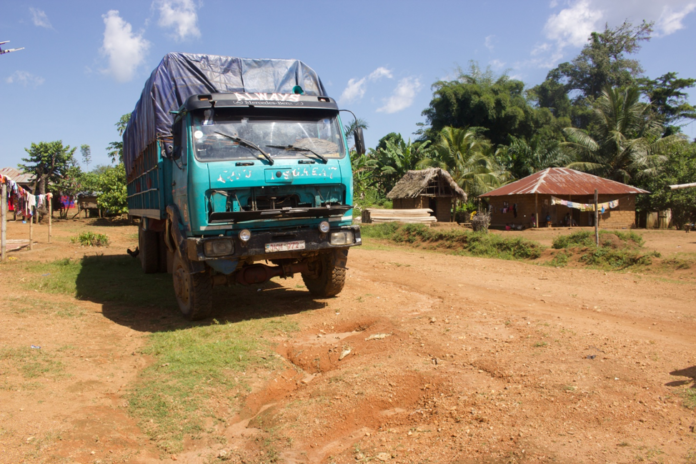
Top: A Sierra Leonean truck awaits locals in Vahun, Lofa County to smuggle planks into the neighboring country. The DayLight/James Harding Giahyue
By James Harding Giahyue
A self-proclaimed aide of the Forestry Development Authority (FDA) and a customs officer collect fees on planks exported to Sierra Leone through Vahun, Lofa County
But the export of such woods is strictly prohibited under forestry legal frameworks
The smuggling of planks is an open secret and has been going on in that region for years
Vahun’s bad road networks and its closeness to Sierra Leone fuel the illicit trade
The FDA said it is investigating the matter
VAHUN, Lofa County – Planks produced in Liberia are not allowed to be exported. They are made solely to support construction works within the country since round logs are meant entirely for foreign markets.
But that rule does not apply in Vahun, Lofa County’s district on Liberia’s northwest border with Sierra Leone. Locals here smuggle planks in broad daylight, thanks to agents of the Forestry Development Authority (FDA) and Liberia Revenue Authority (LRA).
Instead of blocking the trafficking of wood, the agents do the exact opposite. Abraham Konneh, a villager who claims to be an aide, gets unspecified amounts on consignments of planks crossing the border. Richard Gbargondah, the LRA chief collector in that region, collects L$20 on each wood.
“The FDA people are aware that we sell the wood in Sierra Leone. LRA and the police, too,” said Daoda Kromah, a chainsaw miller in the region. The FDA and the LRA get toll.” Daoda Kromah is not his real. His and the names of other chainsaw millers in this story have been changed to protect them from any reprisals.
The DayLight obtained a number of receipts of the illegal transactions. That was also corroborated by chiefs, elders, and plank makers, known in the forestry sector as pit-sawyers or chainsaw millers. The term “chainsaw millers” come from the millers’ use of chainsaws or power saws. “Pit-sawyers” connotes a centuries-old method of producing planks with a handheld saw by placing a tree trunk over a pit.
It appeared the isolated nature of Vahun, one of the most forested places in Liberia, plays a part in the plank scam. The district is cut off from other parts of Lofa due to its bad road networks. People here conduct all of their businesses across the border, including the purchases of gasoline and spare parts for chainsaws. In fact, they even use Leone, the Sierra Leonean currency.
‘Just a token’
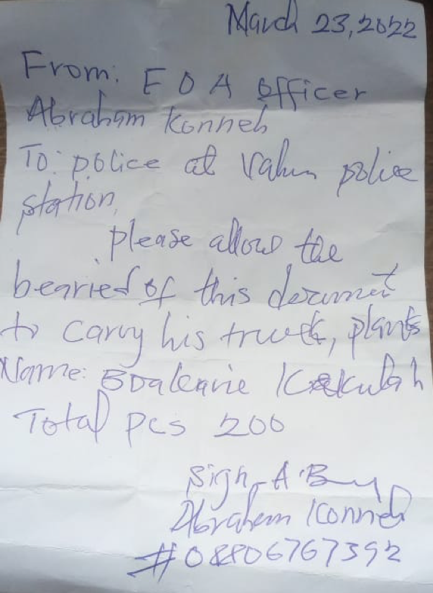
“Please allow the [bearer] of this document to carry his truck of planks,” Konneh said to the Vahun police depot in a note, seen by The DayLight. It was in reference to 200 planks that were to be trafficked on March 23 earlier this year.
Konneh said Ben Miller, an FDA ranger assigned at the Proposed Wonegizi Nature Reserve, appointed him as an aide, a claim supported by other villagers. He said he collected up to 200,000 Leones (L$1,700) on each transport of planks to Sierra Leone.
“The sawyers themselves declare [their production] and give what they have,” Konneh said in an interview. “Sometimes they don’t pay. It is just a token.” We caught up with Miller 139 miles away in Konia but he declined an interview.
Locals smuggle planks across Liberia’s border with Sierra Leone via Vahun, Lofa County. The DayLight/James Harding Giahyue
Gbargondah’s LRA scam is more organized than Konneh’s FDA profiteering. It all started with a meeting on tax collection Gbargondah organized some time ago. He had convinced locals that paying taxes would record Vahun’s contribution to the Liberian government’s revenue.
“I did not want to be counted among the unproductive custom officers,” said Gbargondah, who controls the tax region from Barziwen, Zorzor District to the Sierra Leonean border in Vahun.
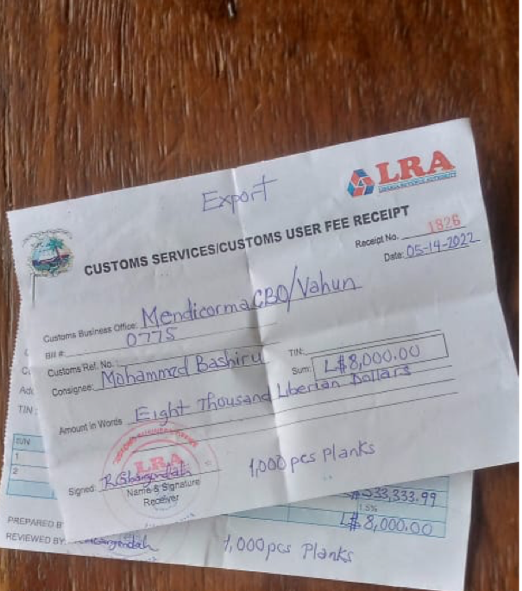
People started to comply with the tax code, including Gbargondah’s illegal plank scheme. He charges L$20 on each plank and only allows records from 100 pieces and above. Unlike the FDA agent, he provides official LRA receipts to make the payments look genuine, deceiving the townspeople that the money they pay goes into the government’s revenue.
Gbargondah claimed that he started to collect the duties on planks just four months ago. However, receipts of some of the illegal transactions show earlier dates. He collected L$8,000 on 1,000 planks valued at L$533,333.99 on May 14, 2022, for example, according to one of the documents.
Also, the procedure for payment in Gbargondah’s scheme is a red flag. Invoices for the exportation of timber do not come from the LRA. They are generated within the chain of custody, a system that tracks the wood from their sources to the buyers, and has become to be a game-changer in Liberia’s quest to tackle illegal logging. It is a major component of Liberia’s trade agreement with the European Union, known as the Voluntary Partnership Agreement (VPA).
‘We are not happy’
Abraham Konneh’s handwritten note to the police in Vahun.
A receipt issued by Richard Gbargondah, an LRA customs officer in Lofa
Vahun’s chainsaw millers said they were aware planks are not to be sold on foreign soil but had no option. Predominantly farmers and gardeners, incomes from smuggled planks help them clean their farms and take care of household needs, according to them. They said they sell construction and furniture woods between L$600 and L$1,400 in Leones. Ishmael Kamokai, a chainsaw miller in a town called Folima told The DayLight his main customer was a woman in the Sierra Leonean city of Kenema he only named Lucia.
Piles of newly milled planks lined up the route to the border in the Guma Mande Clan. Rotting planks, blackened from years of rain and sunbath, could be seen nearly everywhere on the 30-mile road.
A heavy truck with a Sierra Leonean license plate was parked in Folima. Kromah, Kamokai and townspeople interviewed said the vehicle crossed the border nearly every week, transporting up to 250 planks per trip. It is the most infamous of all the smuggling vehicles. Ibrahim Sannoh, its driver, evaded an interview.
“We are not happy as Liberians to take the resources of the country to carry in Sierra Leone but no other way,” said Kamokai.
“Vahun has lots of resources, including diamonds, gold and other things. Because of the lacking of road connectivity completely, this is why most of our resources can go to the neighboring country,” adds Mohammed Kamara, the central clan chief for Guma Mande. “You cannot expect people who live here with resources and they are not well connected to their own country.”
The road from Vahun to Kolahun is one of the worst in the country. Untrimmed bushes make it difficult to see the ground. Erosion caused by yearly rainfalls, rocks and steep hills feature almost permanently. At one point, it takes a deep left turn at the head of a cliff so deep that even the green and yellow coloring of a cocoa garden on its side could not cover the lurking danger.
Kromah narrated how he and other chainsaw millers attempted to transport some 800 planks to Voinjama in a truck in 2017 but lost all the woods. He said they had to pay for the repair of the vehicle and needed a full year to recover from the loss.
“If you go on the road, you will see some of the woods,” he said with a dry smile. “We lost more than L$1 million.”
The LRA did not reply to queries emailed them nearly two weeks ago up to writing time.
The FDA said it did not have a local office in Vahun, and that Miller had denied authorizing Konneh to collect fees in the name of the agency. Konneh also denied he collects tolls, despite admitting to doing so in our interview.
“We do not take this at face value and are investigating along with the authorities,” said Yanquoi Dolo, the head of the FDA legal team in an emailed statement.
Planks by the roadside toward Liberia’s border with Sierra Leone in Vahun, Lofa County. The DayLight/James Harding Giahyue
Edward Blamo contributed to this report.
This story was a production of the Community of Forest and Environmental Journalists of Liberia (CoFEJ).
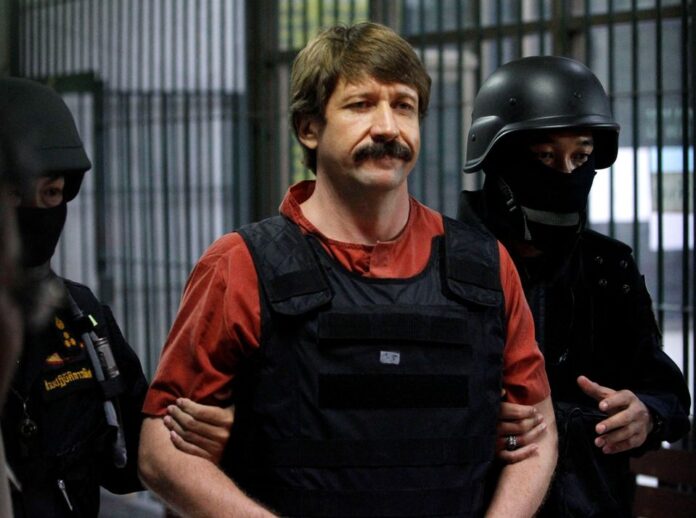
Top: Viktor Bout being led by US security officers. Reuters/Sukree Sukplang
By James Harding Giahyue
MONROVIA – The United States has releasedViktor Bout, the notorious arms dealer who sold weapons to warring factions in Liberia’s civil wars in exchange for the country’s timber. His release was part of a long-proposed prisoner swap deal between Washington and Moscow that saw the latter freed Brittney Griner, the American basketball player who was serving a nine-year sentence by a court in Moscow for possessing and smuggling drugs.
“I’m glad to say Brittney’s in good spirits… she needs time and space to recover,” President Joe Biden told reporters at the White House on Thursday following.
Russian state media showed footage of Bout and Griner passing each other at the airport alongside their respective teams crossing on the tarmac with their respective teams. Bout greets Russian officials while Griner looks on.
“The Russian citizen has been returned to his homeland,” the Russian foreign ministry statement said.
Between 1989 and 2003, Bout sold weapons to Liberian warring factions—most notably former President Charles Taylor—busting several United Nations arms embargoes. Within that time, Taylor’s forces and rivals illegally exploited the country’s timber and mineral industries to buy Bout’s weapons. Some 250,000 people were killed in the conflict, destroying Liberia’s forest. As the result, the country became synonymous with “logs of war” and “conflict timber.”
Liberia’s Truth and Reconciliation Commission (TRC) recommended in 2009 that Bout be investigated for his role in the country’s crises but this is yet to happen more than a decade on. And his release has made that possibility even slimmer.
“Even though he spent time in jail, through the effort of the US justice system, we do not think he deserves to be a free man,” said Hassan Bility, the executive director of Global Justice and Research Project (GJRP), an NGO that has helped to prosecute Liberian war criminals Alieu Kosiah and Kunti Kamara, and United States immigration fraudsters Mohammed Jabbateh and the late Thomas Woewiyu whose crimes were linked to the country’s civil wars.
“Bout’s business deals and his thirst for profits led to the murder of tens of thousands of Liberians. And what do the victims get in return?” Bility said.
Critics of the Bout-for-Griner swap were unfair as the Russian’s crimes were way graver than the American’s offense. While Bout was convicted of wire fraud, money laundering and the illegal purchase of an aircraft, Griner was held for being in possession of a cannabis-laced ointment.
Michael McCaul, the top Republican on the US House of Representatives foreign affairs committee, said in the Guardian, “Trading Viktor Bout, a dangerous convicted arms dealer who was in prison for conspiring to kill Americans, will only embolden Vladimir Putin to continue his evil practice of taking innocent Americans hostage for use as political pawns.”
Stephen Rapp, former chief prosecutor for the United Nations-backed Special Court for Sierra Leone, said there was still something to celebrate.
“I am pleased that Britney Griner has now been freed. I would have preferred that this could have happened without the release of the notorious arms dealer Victor Bout,” Rapp told The DayLight. “I take some solace in the fact that Bout was in jail for almost 15 years since his arrest in Thailand in March 2008. I am sure that many were saved from death and injury from the use of the arms that he would have traded to violent groups around the world.
‘The Merchant of Death’
Bout was active in Afghanistan, Colombia, Angola, the former Yugoslavia, Yemen, Somalia and the Democratic Republic of Congo. But it was his deals with Taylor that capped the former Soviet soldier’s career as the world’s most notorious arms trafficker.
While Bout busted arms embargos to supply Taylor with arms and ammunition in Liberia, Taylor illegally exploited the country’s logs and minerals and abused its huge shipping registry—the second-largest in the world—to pay Bout. The two men met personally, according to eyewitnesses cited by American journalists
Douglas Farah and Stephen Braun in their 2007 book “Merchant of Death: Money, Guns, Planes and the Man Who Makes War Possible.”
Earning other aliases: “Sanctions-buster,” “Lord of War” and “The McDonald’s of Armed Trafficking,” Bout broke a number of United Nations arms embargos on Liberia between 1992 and 2003. His fleet of ships and airplanes transported the weapons to Liberia, using different pseudonyms and shell companies, transiting through countries like Gambia, Chad, Burkina Faso, Cote d’Ivoire and Niger.
In 2003, the Liberia United for Reconciliation and Democracy (LURD), which had launched its rebellion against Taylor in 1999, attacked the capital. With American President George W. Bush stating he “must leave Liberia” and Nigerian president Olusegun Obasanjo offering him exile, Taylor resigned in August 2003. And that marked the end of 14 years of civil unrest.
In 2004, Bout and Taylor were subjected to UN and U.S. sanctions, a travel ban and assets seizure, similar to the one placed on three officials of the current Liberian government. It took more than a decade for the asset freeze and travel ban to be lifted.
Bout moved on with his illegal arms deals after Taylor’s fall from power, surviving an International Criminal Police Organization or Interpol notice, and forgery charges in the Central African Republic. In July 2004, Bush issued an executive order, freezing the assets of Bout, Taylor, Taylor’s relatives and some members of the Liberian government. Taylor’s ex-wife and now Vice President of Liberia Jewel Howard Taylor, and opposition figure Benoni Urey were subject to the measure. The assets freeze followed a similar one by the UN Security Council earlier that year.
Bout ignored the sanctions. In 2008, he was arrested in an Interpol operation in Bangkok, Thailand. Bout had offered to supply weapons to rebels of the Revolutionary Armed Forces of Colombia (FARC). It turned out the rebels were actually officers of the U.S. Drug Enforcement Agency (DEA) and the Royal Thai Police.
Initially, American prosecutors charged him with conspiracy to kill U.S. nationals, conspiracy to kill US officers and employees and conspiracy to provide surface-to-air missiles and other weapons to a foreign terrorist organization. But while the U.S. Justice Department pressed for Bout’s extradition from Thailand to America, prosecutors happened upon a new development. Bout had been negotiating to buy a plane on U.S. soil, which violated the sanctions Washington imposed on him and Taylor. Additional charges were filed against him: illegal purchase of aircraft, wire fraud and money laundering. He was convicted by a New York court in 2012 and sentenced to 25 years in prison, 15 years of supervised parole and forfeiture of US$15 million. The court dismissed his initial charges, saying they only originated from the deceptive operation that led to his arrest.
That, perhaps, closed the chapter on the career of the world’s most infamous arms trafficker, born Viktor Anatolyevich Bout on January 13, 1967, in the former Soviet Union now Tajikistan.