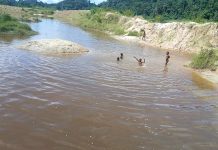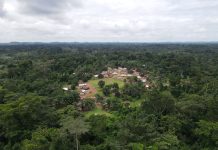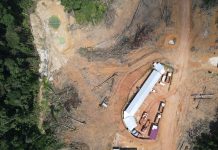
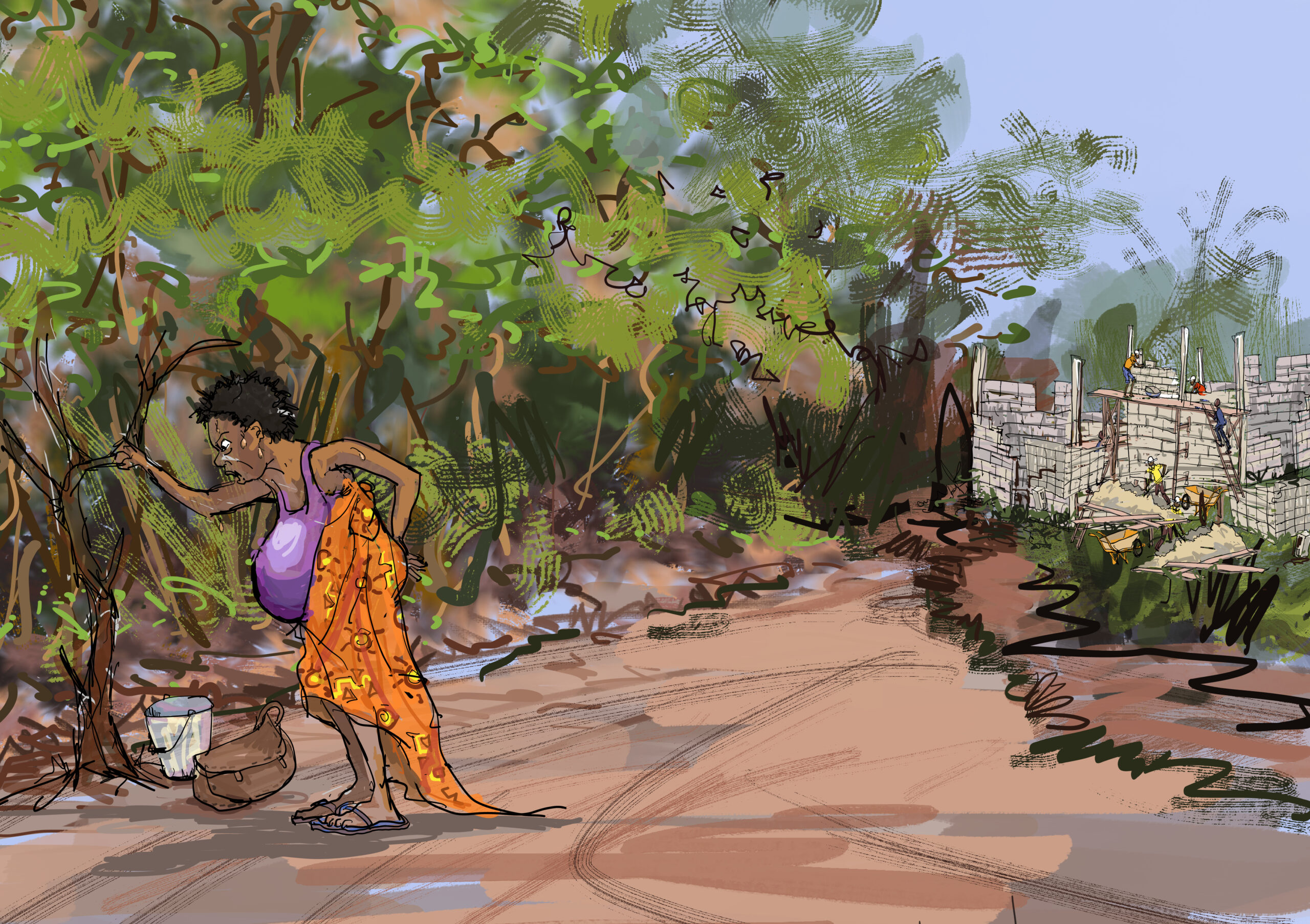
Top: Women in Deabo Parken, River Gee County, have given birth by the roadside, while walking long distances to the nearest health facility. A US$72,000 clinic project, funded by a logging concession, would have prevented that. Leslie Lumeh, special for The DayLight.
By Esau J. Farr, Sr.
DEABO PARKEN, River Gee County – In 2023, a teenager we will call Beatrice Toe was in labor for her first child. There was no car or motorcycle, so she had to walk from her home in Parken to a clinic one-and-a-half-hours away in River Gee’s Toubo District.
Midway through the journey, Toe gave birth by the roadside. Her family named the baby boy Teelee, for “born in the street” in the Grebo language.
Toe and other women in that area would not have to walk long distances to see a midwife had a clinic, which costs about US$72,000, been completed there. As part of a logging concession, the government and local communities awarded the clinic contract to LIDA (Liberia) Limited, a Montserrado-based firm. Eight years later, construction is still incomplete, leaving pregnant women to give birth in the open while seeking maternity care.
“I regret interacting with and awarding LIDA Liberia a contract,” said George Desuah, a River Gee community leader. “We wonder why a Liberian company should treat us this way. We are ashamed, discouraged and embarrassed.”
It all started in 2012 when health authorities in River Gee decided to build a health center in Deabo Parken, but did not have the money. Six years later, the money came through the National Benefit Sharing Trust Board, a forestry watchdog that manages and distributes benefits from logging among communities adjacent to concessional forests.
The money for the Deabo Parken clinic came from a 25-year concession between the Liberian government and Euro Liberia Logging Company, covering 253,670 hectares across River Gee and Grand Gedeh Counties. Per the deal, Deabo Parken and other local communities are entitled to 30 percent of the annual land rental fees Euro Logging pays to the government.
In 2018, River Gee communities presented a proposal for a US$62,000 clinic project, which the Board approved. Thereafter, community leaders contracted LIDA and made an initial payment of US$24,000 for the project. But four years on, in 2022, the clinic—a one-year contract—lagged at foundation level.
An FAO-funded report for the Board discovered that the clinic had been demoted to a health post, a smaller facility. The report determined that the Board did not monitor the contract in the four years that followed its award, and community leaders did not report regularly on its progress either. In fact, the Board awarded LIDA over a dozen such projects in five counties.
A person familiar with the Board’s work told The DayLight that the clinic construction did not meet value for money. “Integrity was not shown, and there was no fair judgement for the selection of contractor,” the source said.
St. Solomon Small-Man Peters, the Board’s Chairperson, declined to return questions for comment. He said the watchdog was in a labor case with one of its workers the newspaper contracted, though the questions do not relate to the case.
In 2021, county authorities heard about the clinic and two other projects and sued LIDA’s CEO, Marshall Yeanue. Yeanue was jailed by River Gee County officials in Fish Town, its capital, and was released only after he signed a performance bond to complete the project the following year, according to court documents. However, that never happened, and Yeanue vanished into thin air.
With LIDA abandoning the clinic and the other projects, the community handed the completion of the clinic to a local contractor for US$32,000, according to George Desuah, the community leader. It is unclear what happened to the remaining US$6,000, having disbursed US$56,000 in total.
Desuah claims that there is no balance due. “LIDA Liberia told us the clinic project costs US$56,000, and not US$62,000,” he said. But the facts contradict his claim. Official documents show the community received US$62,000 in total, not US$56,000.
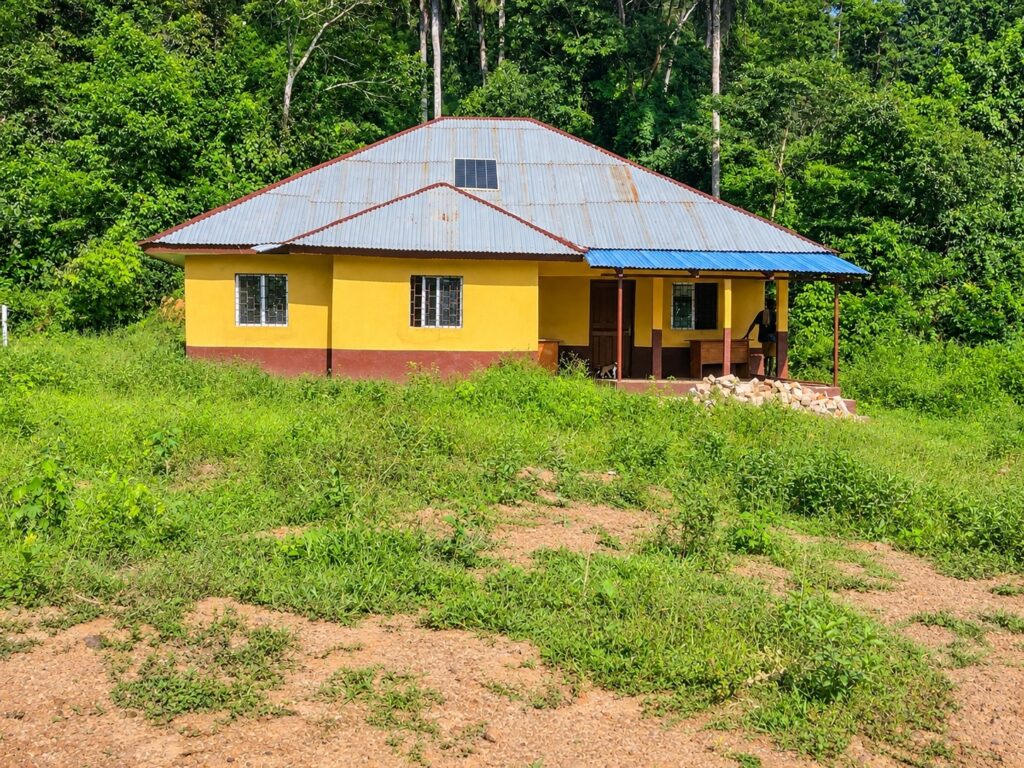
Earlier this year, a new contractor completed construction of the clinic with additional funding from harvesting fees Euro Logging paid, taking the project to about US$72,000.
No due diligence
The people here know the clinic-turned-health-post is not worth the investment, and are frustrated by the outcome.
“As a result of the failure of the clinic project, our suffering has increased. Our women have started giving birth on the highway,” said Nathaniel Chuwah, Commissioner of Toubo District, where Deabo Parken lies.
Desuah said the clinic had taught him a lesson. “Before we give a project to any company in the future, we will make sure to do due diligence to avoid what Marshall [Yeanue] did to us,” said Desuah.
Efforts to contact Yeanue, LIDA’s co-owner and CEO, were unsuccessful. We got replies to the email, texts, and WhatsApp queries. None of the numbers on the company’s legal documents or the ones on the court documents rang either. No one seems to know Yeanue’s whereabouts, including Jebbeh Kanneh, his partner, who said she had not seen him for over three years.
Back in Parken, no pregnant woman has delivered by the roadside since Beatrice Toe and another woman in 2023. However, the situation remains dire, as there is still no functional clinic in the area.
“I wish that one day this trouble will be over…,” said the husband of another woman, who gave birth by the roadside. He was compelled to participate in the delivery, a taboo to local people, and could not eat any meat for some time.
He adds, “If this clinic project was going to finish earlier than later, all those things would not have happened.”
This story was a production of the Community of Forest and Environmental Journalists of Liberia (CoFEJ).