Home Tags Community Rights Law

Tag: Community Rights Law

9 Proposed Changes to the Forestry Law Explained

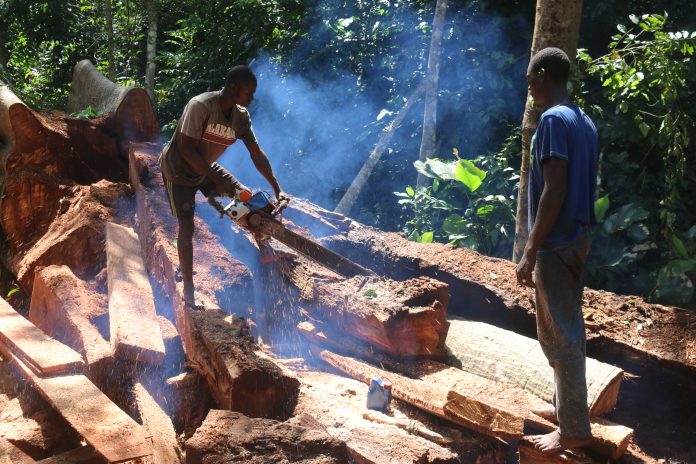
Top: Operators mill planks with a chainsaw in Borkeza, Lofa County, in 2022. The DayLight/James Harding Giahyue


By Roberto T. Kollie


MONROVIA – The Liberian government is considering one of the most significant overhauls of the National Forestry Reform Law since its enactment 20 years ago. In 2006, Liberia’s legal landscape was very different. Since then, the country has enacted major legislation, including the Community Rights Law… with Respect to Forest Lands and the Land Rights Act. Liberia has also committed to international agreements on climate change, biodiversity conservation, and legal timber trade.

Several provisions of the existing forestry law now conflict with these newer legal frameworks or fail to address emerging issues such as carbon trading, community land rights, traceability of timber exports, and mining activities in forest areas.

Government agencies, communities, civil society organizations, development partners, and the private sector will discuss the changes further before preparing any final legislative proposal. If consensus is reached, a formal amendment bill would eventually be prepared for consideration through Liberia’s legislative process.

Should the proposed reforms be adopted, they could significantly reshape how Liberia manages its forests, balances conservation with economic development, protects communities’ rights, regulates timber production, and improves transparency in one of the country’s most valuable natural resource sectors.

Here is what the proposed reforms could mean:

1. Sustainable management would become the foundation

One of the biggest proposals is the introduction of sustainable forest management as the guiding principle for every forestry decision. Instead of focusing primarily on commercial timber production, the revised law would require government institutions to balance economic development with biodiversity conservation, climate resilience, community livelihoods, transparency, and protection against illegal logging.

This change would align Liberia’s forestry sector with international agreements such as the Paris Agreement, REDD+, and other global forest governance standards.

2. A legal definition of ‘forest

Surprisingly, Liberia’s forestry law currently lacks a statutory definition of what constitutes a forest. The proposed amendment would establish an interim definition based on the 2018 National Forest Inventory. It would allow the Forestry Development Authority (FDA) to periodically revise technical criteria through regulations after future national forest inventories.

Supporters argue that this would reduce uncertainty in land classification and forest management.

Forestry reformers are attempting to define what constitutes a forest in changes to the National Forestry Reform Law. Picture credit: James Harding Giahyue

3. Clarified community ownership

One of the most important reforms concerns ownership of forest resources. The existing law generally states that forest resources are held “in trust” by the Republic. However, the proposed amendments would recognize that forest resources located on customary land belong to communities, while those on private land belong to private landowners, consistent with the Land Rights Act.

Government trusteeship would continue primarily over forests on government and public land.

4. Greater decision-making power to communities

The draft proposes making free, prior and informed consent (FPIC) a legal requirement before any forestry license affecting customary or community forests can be approved. No forest license would be issued on community land without documented approval from local people.

The objective is to ensure that communities understand proposed projects and voluntarily agree before forests are allocated for use.

5. Stronger community forestry

The review also proposes placing community forest management agreements (CFMAs) within the National Forestry Reform Law. Currently, it is not there, as the CFMAs were created by the Community Rights Law, three years after the National Forestry Reform Law. (CFMAs are agreements between communities and the FDA for co-management of community forest resources.

Although communities already manage forests under separate legislation, supporters say integrating these arrangements into the National Forestry Reform Law would eliminate confusion and strengthen community rights.

The amendments would also clarify the respective responsibilities of community forest management bodies (CFMBs), community forest development committees (CFDCs), and community land development and management committees (CLDMCs) to reduce overlapping mandates. (CFMB was created by the Community Rights Law, CFDC was created by the National Forestry Reform Law, and the CLDMC was established by the Land Rights Act).

6. Legal but regulated chainsaw milling

One of the most controversial proposals involves chainsaw milling. Although chainsaw milling has long operated informally in many parts of Liberia, it is not currently recognized as a licensed activity.

The draft would create a formal Chainsaw Milling Permit available only to Liberian citizens, cooperatives, and authorized communities under strict conditions. It would limit operations to community forests or private land, prohibit exports of chainsaw-milled timber, require environmental approvals, and establish penalties for violations.

Supporters argue that regulation is more practical than allowing widespread informal operations.

7. Transparent revenue management

The review follows concerns raised by previous audits regarding forestry benefit-sharing.

The draft requires forestry payments to pass through designated government accounts, and not directly to individuals. It would also establish by law the National Benefit Sharing Trust Board, which manages benefits for communities affected by certain commercial logging activities. It would also require annual audits and strengthen oversight of community forestry funds.

These measures are intended to improve accountability and reduce opportunities for misuse of forestry revenues.

8. Tighter controls over mining in forests

Perhaps the most controversial proposal addresses the growing overlap between mining and forestry.

The amendments would prohibit mining in protected areas, require community land access agreements before mining on customary land, and establish stronger coordination between the Forestry Development Authority and the Ministry of Mines and Energy. Mining companies would also need FDA site assessments before forest-clearing could occur.

9. Stronger monitoring of forestry operations

The draft would require annual independent audits of all major forestry licenses, including community forestry agreements and chainsaw milling permits.

Audit reports would be published, increasing public access to information about timber harvesting, payments, community benefits, and legal compliance.

The amendments would also require the National Forest Policy to be reviewed every five years through a participatory process, involving government, communities, civil society, and the private sector.
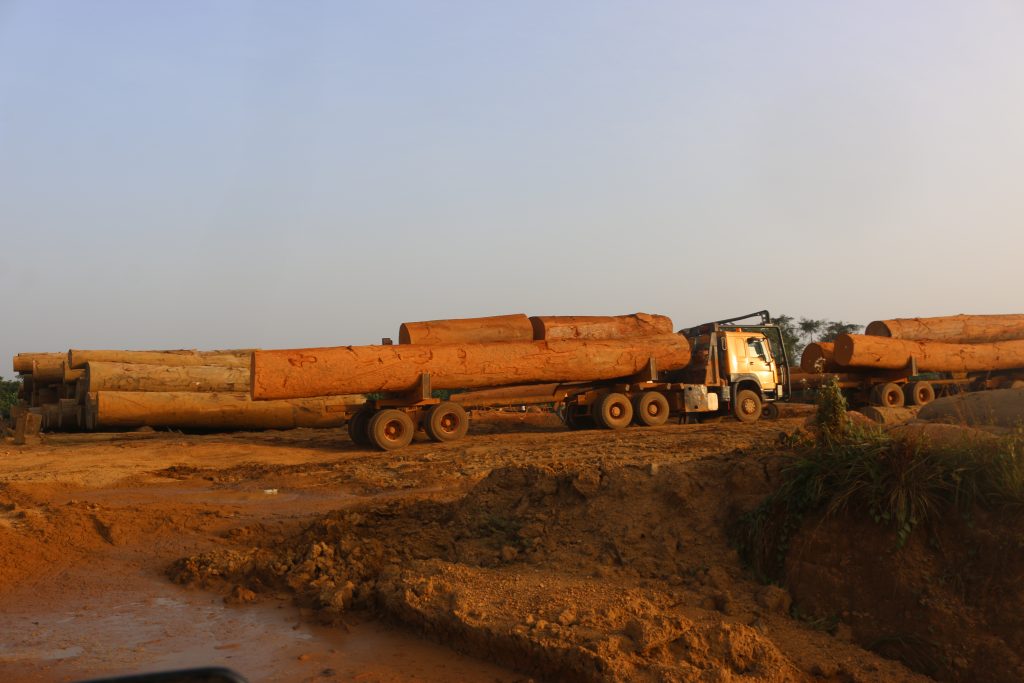
Trucks offload logs outside Greenville, Sinoe County. The DayLight/James Harding Giahyue

Other Issues

But not every issue has been resolved. The review identifies several questions requiring additional consultation, including:

  • Whether new Forest Management Contracts and Timber Sale Contracts should be allowed on community land or restricted to government land.
  • Whether all forestry contracts should follow a uniform 25-year harvesting cycle or whether smaller community forests should have different harvesting rules.
  • How large community commercial contracts should comply with public procurement principles.

Salayea Shows Community Land and Forest Leaders Can Work Together

IMG 1596 scaled
IMG 1596 scaled

Top: Eva Kpandah, Palama Clan’s community land and development committee chairperson. The DayLight/Harry Browne


By Esau J. Farr


SALAYEA TOWN, Lofa County – In 2019, the Sehyi Clan in Sanniquellie-Mahn District, Nimba County began the legal process of acquiring a customary land deed. Sehyi’s community land development and management committee spearheads that process.

Another clan group has exercised similar functions over Sehyi’s forest since 2017. The Sehyi Ko-doo Community Forest’s community forest management body comanages the 1,538-hectare forest alongside the Forestry Development Authority (FDA).  

There is a problem, though. The forest leadership does not have a good relationship with its land counterpart. Like several communities, they are at loggerheads, with mounting calls for a national conversation to resolve these disputes.

But things are different in the Salayea District of Lofa County over 200 miles away. There, three—not two—community land and forest bodies, peacefully coexist and solve some of the district’s problems.

Since 2009, the district has had a community forest development committee, representing locals’ interests in a large-scale logging concession.  

In 2016, the Salayea Community Forest was established, with a community leadership to co-manage the forest.

Then in 2019, Palama, a clan that hosts a portion of the Salayea Community Forest, established a governance structure to help develop and manage its land.

“If we don’t merge and work together, things will not work well for us,” says Yassah Mulbah, the chief officer of the Salayea Community Forest.

“We are working together as a team for a goal to protect the forest, to take it from illegal activities for the community’s development,” adds Eva Kpandah, the chairperson of Palama Clan’s land committee.

All three of the district’s bodies combat community challenges, including land conflicts and illegal mining activities.

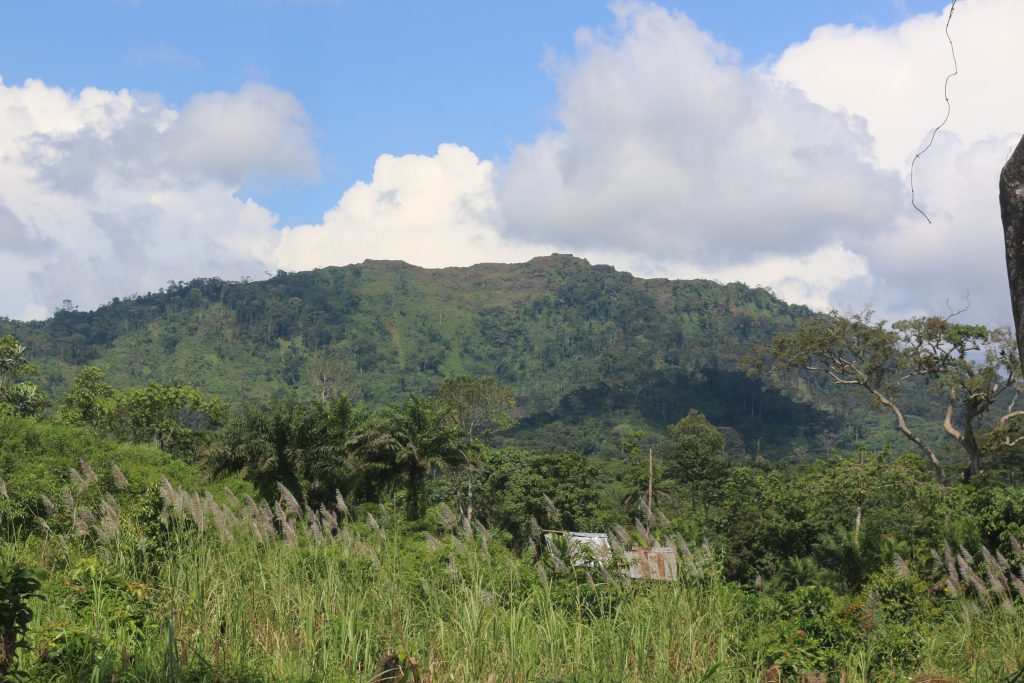
A portion of the 8,270-hectare Salayea Community Forest in Lofa County. The DayLight/Harry Browne

In May, Kpandah tipped off Mulbah when she spotted miners entering the forest. Kpandah and Tokpah Koiwu supported Mulbah in filing a lawsuit against the miners. Koiwu is a member of Salayea District’s committee regarding the district’s large-scale logging concession.

In another instance, Mulbah and Koiwu are supporting Kpandah in Palama’s boundary dispute with Gbarlain, a neighboring clan.

‘Not invited’

In Sehyi, the stakes are even higher. Like Salayea, its forest and those of its neighbors Zor, Gba and Blei are all adjacent to the East Nimba Nature Reserve. The four communities run conservation programs that help protect the reserve’s endangered and endemic species, including chimpanzees and the Nimba toad. However, confusion among community leaders undermines livelihood programs that benefit locals and keep the forest standing. 

Yassah Mulbah speaks to The DayLight at the margins of the National Land Conference in September 2024. The DayLight/Harry Browne

“The [community forest] leadership said… they can’t accept to collaborate with us,” says Peter Dolo, Sehyi’s land leadership.  “When they are having meetings, [we are] not invited.”

Ericson Flomo, the leader of Sehyi’s forest leadership,  denies that accusation. “They have not called us in any of their meetings,” Flomo says. He claims he is the one who has invited Dolo to several meetings. 

Dolo refutes Flomo’s comments, saying he has attended Flomo’s meetings as a townsperson, not the land leader.

This crisis has rocked communities outside of Nimba. In River Cess, the leaders of Gbarsaw and Dorbor Community Forest have refused to recognize land leaders of the clan. “They are only there to take care of the land after the loggers have left. They have no authority over the forest,” James Gbordoe, the forest leader of Gbarsaw and Dorbor, said in 2021. “When the logs have been cut from there, they will have the whole land to take care of.”

The intensity of the crisis was displayed at a workshop in Ganta last month. Things got so heated that Silas Siakor, the Country Manager of Dutch NGO IDH, who helped organize the event, had to suspend the topic after a discord of claims and counterclaims from participants. The event was being held to gauge communities’ views on what they would need to manage their forest sustainably.

‘Forerunner’

Campaigners foretold this result.  A few months after the passage of the Land Rights Act in 2018, the Margibi-based NGO Sustainable Development Institute published a report, predicting the power struggle.   

(R-L) Peter Dolo, the chairman of Sehyi Clan’s community land development and management committee (CLDMC), and Ericson Flomo, the chief officer of Sehyi Ko-doo Community Forest. The DayLight/James Harding Giahyue

The report argues that “conflicting provisions” in the law, which created the community land leadership, and Community Rights Law…, which established the forest leadership, would escalate tension.

“Our thinking is the crisis will increase because part of the reasons the law was crafted was to address issues of rural marginalization in respect to managing resources in the country but also conflicting, overlapping rights,” Ali Kaba, the then-head of SDI’s community land protection program, said at the time.

“It is a good law. However, there are loopholes, there are gaps and there are contradictions,” added Kaba, who is now a Commissioner at the Liberia Land Authority.

Speaking in 2021 at a conservation event in Monrovia, Cllr. Negbalee Warner, a senior partner at Heritage Partners and Associates (HPA) and one of the laws’ crafters, somehow acknowledged the “overlap” SDI spoke of.

“If there is anything, it is that the provisions of the two laws are in some instances [overlapped], although an argument can be made that the more appropriate term will be ‘reinforcing,’” said Warner.  “The [land leadership] is therefore superior to all the structures established by the [Community Rights Law].”  

‘Confusion will do nothing’

Bonathan Walaka, the lead facilitator of the National Union of Community Forest Management Body, says that understanding the roles and responsibilities of the two groups is crucial for progress.

The union intends to hold a forum with national stakeholders of the sectors to help ease the tension between community leaders.   “The [forest leadership] should know that those who own the land are the community [people] and that they are only managing the forest,” Walaka says.

Augustine Dweh, the chairperson of a network of community land managers, agrees with Walaka, saying education and awareness are crucial to the solution.

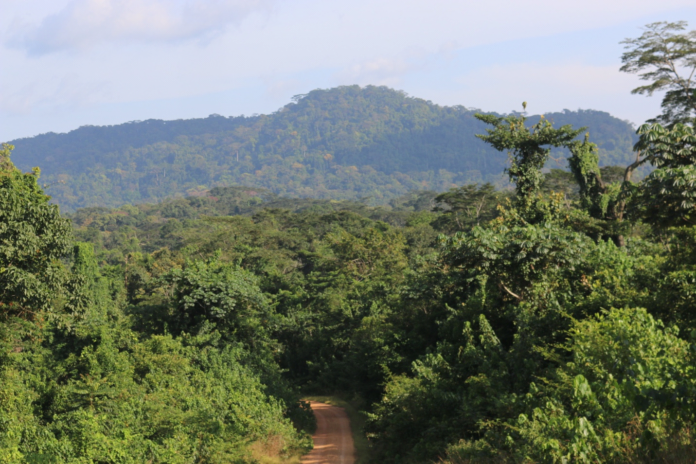
An elevated view of the Sehyi Ko-doo Community Forest in Nimba County. The DayLight/Derick Snyder

The same goes for Eddie Beangar, Nimba County’s Land Administrator.  “Having both them to understand their roles and to ensure that their involvement impacts the environment positively,” says Beangar.

Back in Sehyi, Dolo and Flomo are willing to work together. Dolo promises to invite Flomo and his team to an impending meeting, hoping to pave the way for a renewed, smooth relationship. The same goes for Flomo

“[Anything] that is better for Sehyi, Sehyi Ko-doo will accept, Flomo tells The DayLight in an interview at an entrance of the mountainous forest. “Confusion will do nothing for us.”

Gbarpolu Clans Sign Agreements To Manage Their Forests

gbar
gbar

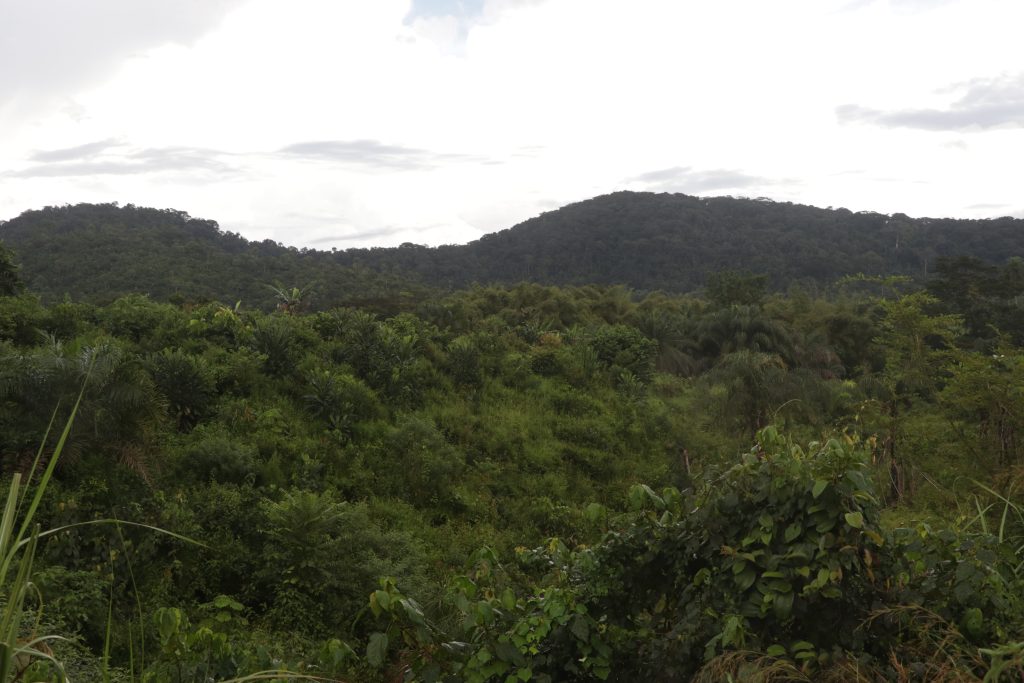
Banner Image: A forest in Gbarpolu County. The DayLight/James Harding Giahyue


By Wiliam Q. Harmon

PAYNESVILLE – For five years, Tonglay and Normon craved to obtain the right to manage swathes of forest in the Kongbor District of Gbarpolu County.

Earlier this month, they achieved that dream.  

Their signing of separate community forest management agreements (CFMAs) means they can now control what happens across the combined 29,000 hectares of muggy, dense woodland.   

“We are happy that the government has agreed to allow us to take care of our own forest and we will make sure that we do our best so that our people can enjoy the resources that are in their forests,” said Karimu Fofanah, the head of the body charged to conduct forest business for Tonglay, known in the forestry sector as of the community forestry management body (CFMB).  “Our people have suffered a lot and with this initiative, we will ensure we bring development to our people.”  

Boakai Kanneh, Fofana’s counterpart in Normon, could not be reached.  

Both communities had to complete a nine-step process to gain authorized forest community status. It includes a nonrefundable registration fee of US$250, harmonizing boundaries with neighbors, and preparing a forest management plan. The European Union (EU) and Rainforest Trust provided funding for the process.  

Michael Garbo, the executive director of Society for Conservation of Nature Liberia (SCNL)—the nongovernmental organization that helped the community complete the process—termed the signing of the agreement a “dream come true.

“It is a great day today, and it’s a great honor as well for donors who have been supporting us throughout the stages of this process,” Garbo told the signing ceremony at the FDA headquarters in Whein Town, Paynesville.

FDA’s managing director Mike Doryen admonished the communities to hold together and avoid confusion, urging them to also remain law-abiding and stop shielding people, especially elites, who want to use their community forests for self-aggrandizement.

Doryen warned that anyone violating the forestry land will be prosecuted.

No contract yet

As authorized forest communities, Tonglay and Normon will now manage their forests for the next 15 years, with the FDA to review the agreement in the fifth and tenth years. They must give their consent to any person or company wanting to enter the forest under the Community Rights Law of 2009 with Respect to Forest Lands.  The law was a crucial part of the forest reform in postwar Liberia, giving locals their share of forest resources.

Fofana noted that no agreement has been reached with any company, but the community was doing all it could to attract investors to the area. Tonglay and Norman are underdeveloped communities without roads, up-to-date clinics and schools.

“We want to do first things first and don’t want to jump the gun before we encounter problems ahead. We want to finish with all the necessary steps before we start to invite investors,” Fofana said. “When we sign third party… we intend to prioritize infrastructural development, especially bridges, clinics and schools.”