Home Tags Cocoa

Tag: Cocoa

Investigation Finds Flaws and Falsehoods in Presidential Letter

Farmers lied in letter to President Boakai
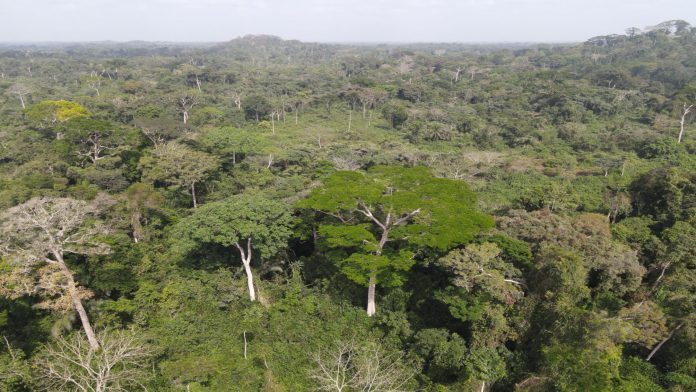
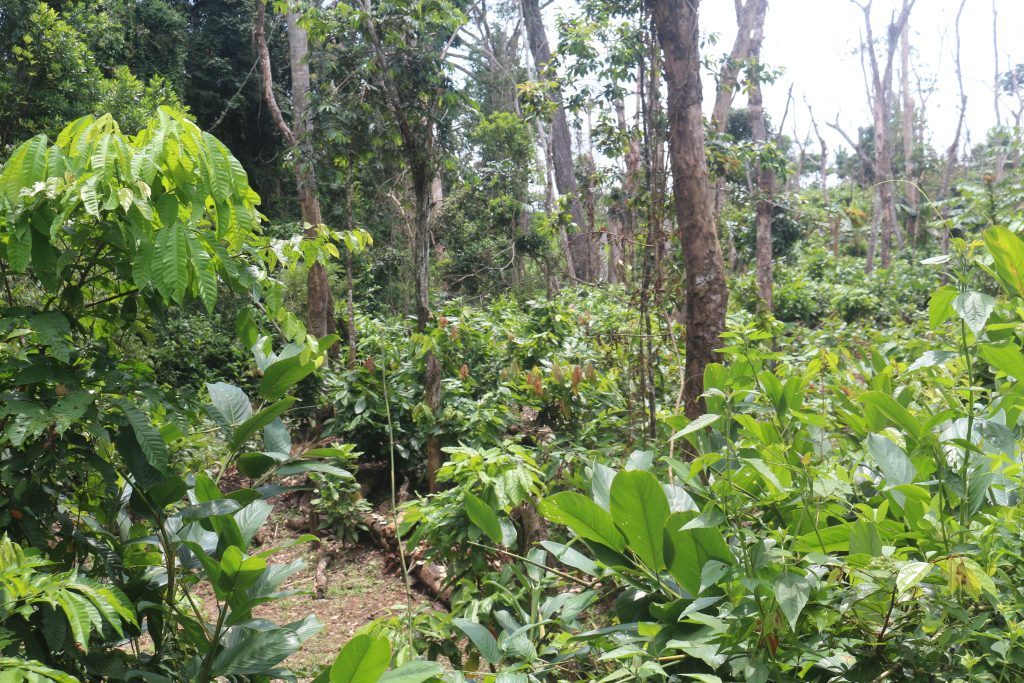
A forest in Boundary, Grand Gedeh County

Top: A drone picture of a forest in Grand Gedeh County. The DayLight/Samuel Jabba


By Varney Kamara


POUH TOWN – Local cocoa farmers in Grand Gedeh County manipulated signatures in an appeal letter to President Joseph Boakai, rejecting boundaries between their communities and the Kwa Proposed Protected Area, a DayLight investigation found.  The investigation established that the letter was based on falsehoods, as some had already agreed to the proposed park’s boundaries.

Late last month, farmers from the Gbarzon District wrote to President Joseph Boakai, claiming forestry authorities did not seek their consent before cutting the boundaries. They allege that they signed no MoU and there was no guarantee they would have access to their farmlands. They had been intimidated, their properties destroyed, and forest rangers made unauthorized entry into their communities.

For this reason, the farmers want the proposed park’s boundaries pushed to 10 kilometers. President Boakai then ordered an immediate investigation into the matter. Official talks took place last weekend as part of the presidential inquest.

Covering 172,200 hectares, the Kwa Proposed Protected Area lies between River Cess, Sinoe, and Grand Gedeh Counties. It is part of Liberia’s efforts to protect 30 percent of its forests and contributes to the country’s climate commitments.

An ‘error’

The DayLight reviewed the appeal letter, interviewed some of its signatories, and found inconsistencies. Reporters found that although the letter to the President lists 16 signatures, only 15 people actually signed it. Abednego Zweh, a farmer from Pouh Town, where most of the appealing farmers live, signed twice.  

George Totaye, another Pouh Town farmer, said he did not sign the letter.  

“I personally cannot remember signing any petition. I cannot remember signing that communication,” said Totaye. “My farm does not extend on that side. I am not close to the park. I am not part of them.”

Zweh insists Totaye signed the letter, but listing 16 signatories instead of 15 was an “error.”
IMG 7840
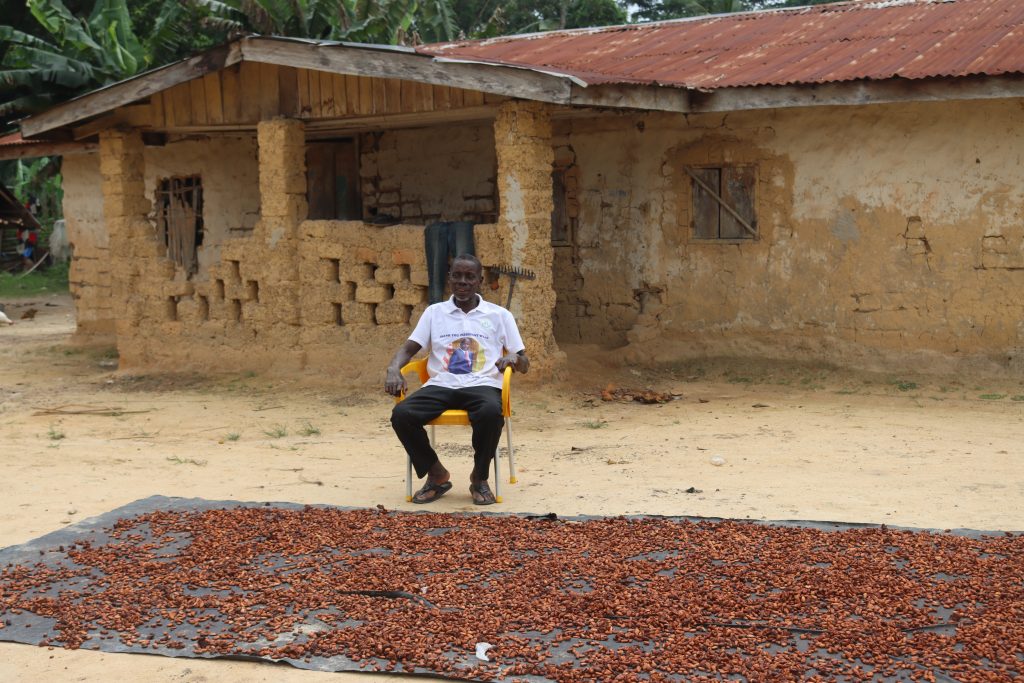
Routy Beh, a cocoa farmer in Pouh Town, sits behind his half-dried cocoa beans. The DayLight/Varney Kamara
IMG 7832
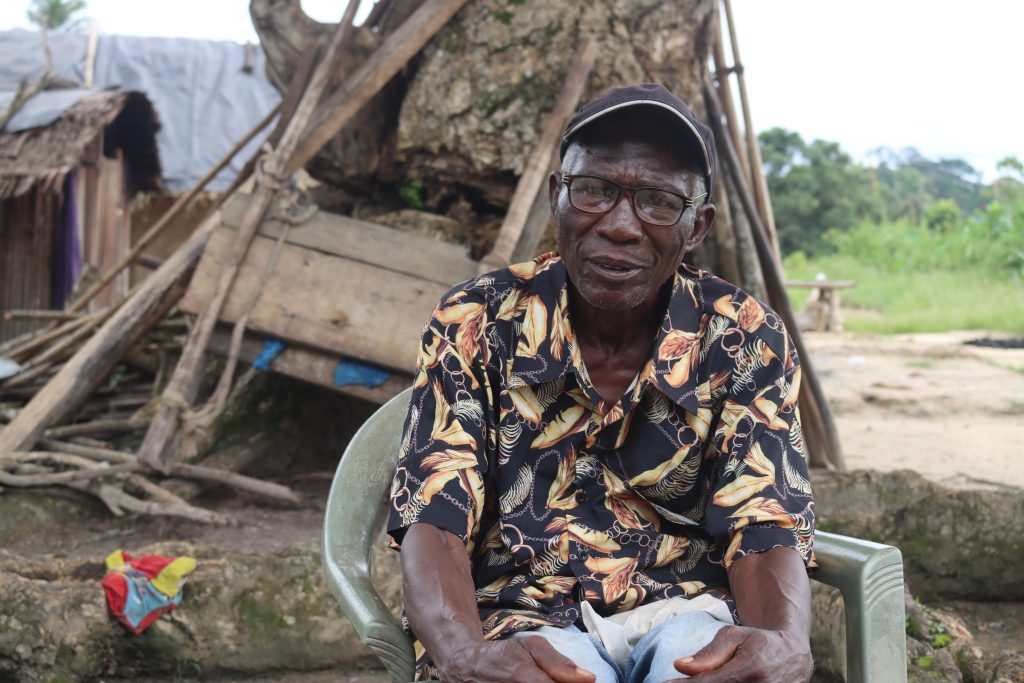
Garretson Seo, one of the cocoa farmers, grants an interview with The DayLight in Pouh Town. The DayLight/Varney Kamara
IMG 7768
Dixon Roberts, General Town Chief of Tojallah, is one of 15 cocoa farmers who wrote to President Joseph Boakai. The DayLight/Varney Kamara

Several of the 15 cocoa farmers who wrote the appeal to President Boakai had consented to Kwa in 2023. They told The DayLight they hosted between two and 10 Burkinabés. Dixon Roberts (six Burkinabés) of Tojallah signed. Tommy Yarkpawolo (two) and Garretson Seo (10) of Goluay signed.

There were other inconsistencies regarding the farmers’ appeal, though. Last year, the communities signed a boundary harmonization agreement with the FDA and partners, confirming the 2023 boundary. Then early this year, the clans that host the communities signed agreements with the Liberia Land Authority, confirming the boundaries.

The DayLight also noted one more issue. Pouh Town, where the majority of the farmers live, is not among the communities adjacent to the proposed park. It is 19 kilometers away.

The farmers admitted signing the consent forms. However, they claimed they were unaware of any boundary demarcation.

“We agreed for the park to be created, but we never agreed on any boundary issue, and we did not take part in any boundary demarcation exercise,” said Yarkpawolo, who has a three-hectare cocoa farm in Gaye Town.

“During our previous meetings with the FDA and the Wild Chimpanzee Foundation, we agreed that they would come back to us when they get ready to cut the lines. But, to our surprise, we only saw them destroying our crops,” added Yarkpawolo. His comments reflect the general view of farmers The DayLight interviewed, including those who did not sign the letter to Boakai.

But the facts contradict the farmers’ comments. The documents they signed show that they agreed to the boundaries, among other things.

“Our town confirms that since 2020 the FDA, LLA and partners have been holding community consultations and meetings to keep us informed. Our town confirms that as part of the boundary harmonization process, the boundary line was trekked by designated community members, local authorities, and relevant institutions, and all grievances were resolved,” read the consent document Yarkpawolo and other townspeople signed in Goluay.
IMG 7822
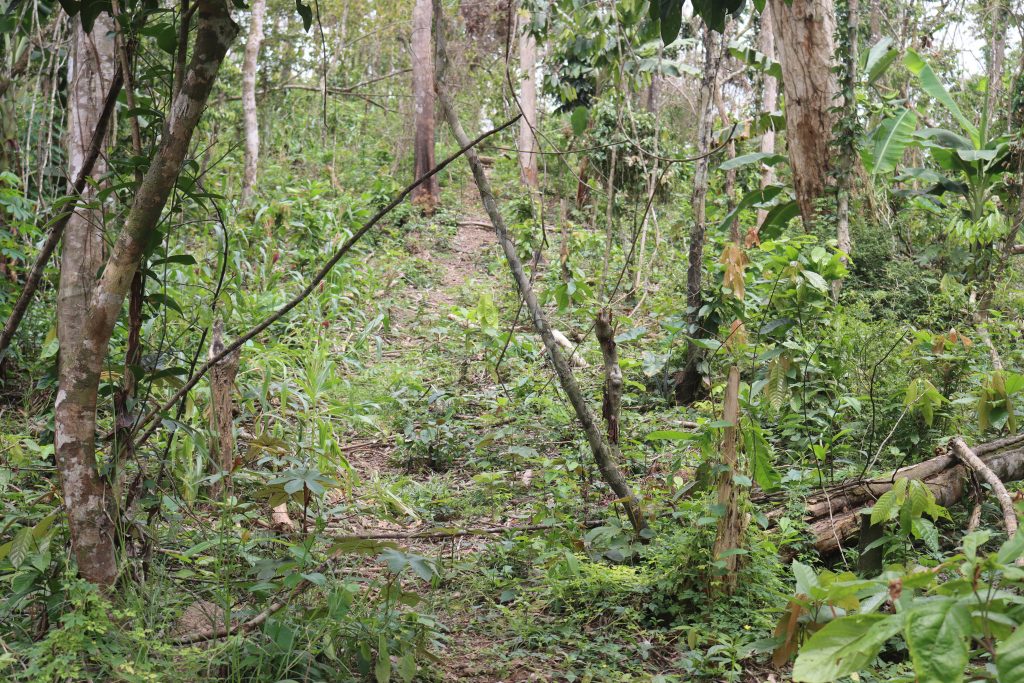
A cocoa farm in Gbaryea Town in Gbarzon District, Grand Gedeh County. The DayLight/Varney Kamara

Apart from the consent form, other documents disprove the farmers’ comments.

As recently as May, community land leaders and clan chiefs signed a boundary agreement with the Liberia Land Authority for the proposed park. In the document, the farmers “fully acknowledged” the proposed Kwa Park and agreed on its “official boundaries.” Also, there is no record of any farmer raising any qualms when authorities published notices about the proposed park between June and August 2023. 

Wild Chimpanzee Foundation, an NGO that works with the FDA to establish Kwa, refuted the farmers’ claim.

“From our side, the consent forms were signed by the rightful community representatives in 2023,” said Dr Annika Hillers, Country Director of Wild Chimpanzee Foundation. “The consent forms were about the establishment of the park, the confirmation of the [consent] process, the harmonized boundary, and also, communities committed not to do any farming and other activities inside the proposed park.”

Some youths agree on the current boundaries. “We need reserved forests for our children,” and “Enough is enough,” adorned their posters.  

One farmer somehow conceded.

“I think we made a mistake from the beginning as a community,” said Dixon Poya, who lives and farms in Pouh Town. “When the people came with this discussion on the park issue, we were too quick to agree. We should have studied all other conditions that we are raising now.

“In my mind, we should accept what is happening. We can only appeal to the government to have some consideration and redraw the boundary back a little bit,” added Poya.

Under pressure

Dr Hillers also denies allegations of human rights abuses. “We are 100 percent sure that these allegations are false and that neither FDA nor any other law enforcement entity ever violated human rights or did anything not in line with Liberian laws,” she added.  

The FDA did not respond to DayLight’s queries while the government investigates the issue. However, the FDA resurveyed the area and found that over 14,000 hectares of the proposed park have been clear-cut for cocoa cultivation.

Over the years, the park has shrunk from 236,246 hectares to 172,200 hectares due to competing mining and logging interests. The farmers’ boundary appeal comes amid cocoa-fueled, nationwide deforestation.   Between 2000 and 2020, Liberia lost approximately 2.52 million hectares of tree cover, with cocoa responsible for about 15 percent of that, according to a 2024 report.

Local people smuggle in Burkinabe migrants from neighboring Ivory Coast into Liberia to plant cocoa. An estimated 140,000 Burkinabes have migrated to  Liberia in Grand Gedeh and River Gee, according to the Liberia Refugee Repatriation and Resettlement Commission. This cocoa rush has also resulted in encroachments on community forests and logging concessions, leaving deadly land conflicts in its wake.
Grand Gedeh Cancels Cocoa Agreement

IMG 8445 scaled
IMG 8445 scaled

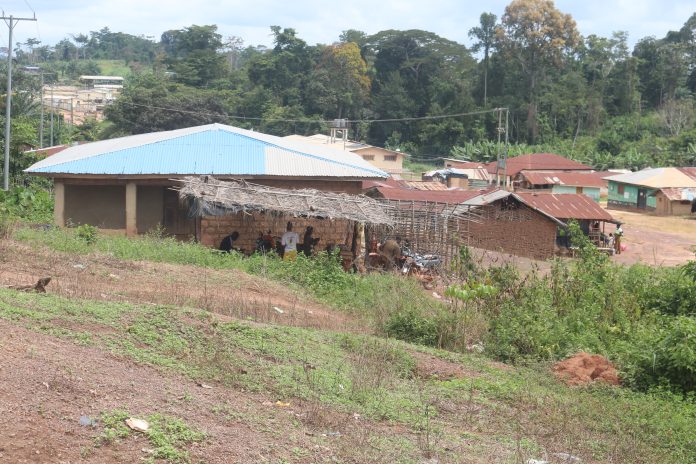
Top: An overview of B’hai Jozon, a border town in the Gbarzon District in Grand Gedeh County that separates Liberia and Cote d’Ivoire. The DayLight/Varney Kamara


By Varney Kamara


ZWEDRU – A cocoa lease agreement between Grand Gedeh County and a Burkinabe businessman has been canceled, County Attorney Wilkins Nah announced today on a local radio station.  

Nah said he had observed several irregularities in the deal that needed to be corrected, including not getting local people’s consent.

“Upon learning about those things, I immediately called the superintendent and informed him that the Minister of Justice has ordered that we put a halt to everything until we can put in those things that are required,” said Nah.

“The superintendent and I agreed that we needed to correct some procedural errors in the agreement,” Nah added.

Grand Gedeh County administration recently signed the 30-year lease agreement granting Boubou Sebu the right to plant cocoa on 500 acres of land in the B’hai administrative district. The deal is valued at US$600,000.

But local people, prominent citizens and civil society have criticized the deal for lacking consultation and transparency, among others.  

The announcement followed Superintendent Alex Grant’s admission to an error in the cocoa agreement with a Burkinabé businessman.

“I regret that the locals were not informed by the district’s authorities.  I think is a procedural error,” Grant told a team of reporters in an interview in Zwedru City. “Once they don’t agree, and we agreed, we can both come to the negotiation table and have a conversation around it.”

Grant said he signed the deal because he believed it protected the land from illegal activities and to generate revenue for the county.

The land in question, Grant said, had been conflicted in the past, and that signing a legal agreement was a way of ending that conflict. He thought the district’s commissioner had informed local people of their consent.

The Commissioner of Gbarzon District, Kelvin Kayee, conceded.

“I signed it because I did not want to disrespect my boss,” said Kayee. “After that, I called a big meeting of community people and I apologized to them for not   letting them know about it before signing it.”

Excluding the affected communities violates their right to consent, as stipulated in the Land Rights Act of 2018. The law requires consultations and the consent of communities before signing agreements regarding ancestral territories.

The deal sparked outrage, with locals calling for the return of their land.

“I don’t know anything about this agreement. Nobody told me about it, and we only heard this news on the Toe Town radio station the day before yesterday,” said Moses Taryor, Town Chief of B’hai Jozon. “I don’t agree to it today, tomorrow, and forever.”

“The bush is for us. But people from outside are telling us that they sold our bush. We are not happy about it. We will tell the government to return our land,” said Sam Nah, General Town Chief of B’hai Niko Clan.

One of several Burkinabe cocoa farms in the B’hai Administrative District, Grand Gedeh County. The DayLight/Varney Kamara

On Monday, a group of Grand Gedeh citizens had petitioned the southeastern county’s legislative caucus, the Ministry of Internal Affairs, and the Liberia Land Authority for the cancellation of the deal, recommending disciplinary action against Superintendent Grant.

“We can no longer move freely in our forest to hunt, farm, or gather food,” the petition read.   

Before that, the Grand Gedeh Bar Association criticized Grant for a lack of transparency, demanding a review of the deal.

“Our goal is not to obstruct development but to ensure that every development is lawful and genuinely beneficial to the people of Grand Gedeh,” Kanio Bai Gbala, President of the association, posted on Facebook.


Liberia Forest Media Watch provided funding for this story. The DayLight maintained editorial independence over its content.

Immigration Registers 40,000 Burkinabées Amid Cocoa Crisis

IMG 8089 scaled
IMG 8089 scaled

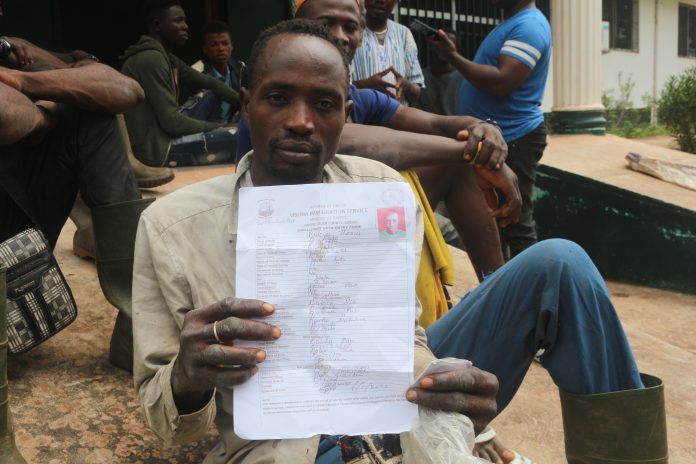
Top: A Burkinabé man displays his immigration document at the FDA regional office in Zwedru, Grand Gedeh County. The DayLight/James Harding Giahyue


By Varney Kamara


GBOLEKEN, Grand Gedeh – The Liberia Immigration Service (LIS) reported that it has recorded over 40,000 Burkinabé cocoa farmers to monitor and legalize their status.

“It is intended to establish how many of them entered the country and where exactly they crossed,” Alex Kpakolo, Assistant Immigration Comptroller of Grand Gedeh County.

“We are taking stock of their movements and actions across the different towns, villages, districts, and communities where they are hosted. By doing this, we can easily trace them if there is a problem.”

Burkinabés began to enter Liberia from the Ivory Coast in the 2010s to plant cocoa. Last year, France 24 reported 25,000, capitalizing on Liberia’s weak monitoring, large rainforests, and higher cocoa prices. Ivory Coast has lost 90 percent of its forest to cocoa farming in the last six decades, according to that report. The same is happening in Liberia, which has lost 386,000 hectares of primary forests between 2002 and 2024, according to Global Forest Watch, which tracks annual deforestation. 

Immigration records show over 1,000 Liberians host at least one Burkinabe farmer, known locally by their ethnic group, Mossi. They have settled mainly across Maryland, River Gee and Grand Gedeh. 

In Grand Gedeh alone, the number of registered Burkinabes has exceeded 36,000. To ensure a smooth process, immigration authorities have established 18 registration sectors. “As a result of this process, most of the Burkinabes are now coming out of the bushes and registering. Their hosts, too, encourage them daily to come for the registration. That’s why you see we have this kind of high number,” Kpakolo said in an interview at his office in Gboleken, Gbarzon District.

A Burkinabé man sets a tree ablaze in a forest in Grand Gedeh County. Picture credit: Forestry Development Authority

After the registration, the Burkinabes would be vetted and issued resident permits, in line with the Alien and Nationality Law of Liberia. The law requires non-Liberians to obtain a permit to reside in Liberia. ECOWAS citizens pay US$100 for the permit, with a fine or deportation for violators.

“After registration, we will review their status and find out whether they are here only temporarily or if they want to stay and work here permanently. After this process, LIS will decide to start issuing resident permits,” Kpakolo said.

Rising tension

Labor authorities are watching the process.  Robson Bah, Labour Commissioner of Grand Gedeh, said the ministry intended to formalize contracts between locals and their West African partners.

“We have noticed that people who don’t have titled deeds are cutting boundaries and giving out land to Burkinabés. And, as a result of this, you have confusion all over the place,” said Robson Bah, Labour Commissioner of Grand Gedeh.

“Today, everything appears to be going well between the Burkinabes and their Liberian hosts, but when money starts to come and things start to happen, they may not be peaceful.”

Across the southeastern region, cocoa farming is splitting families and communities, according to court records. The Zwedru City Magisterial Court has recorded at least 10 similar cases. Last week, 31 accused of illegally encroaching on concessions to plant cocoa were jailed at the Zwedru Correction Palace. 


This was a Community of Forest and Environmental Journalists (CoFEJ) production.

31 Burkinabés Jailed for Alleged Forest Invasion

IMG 20250711 171434 883 1 scaled

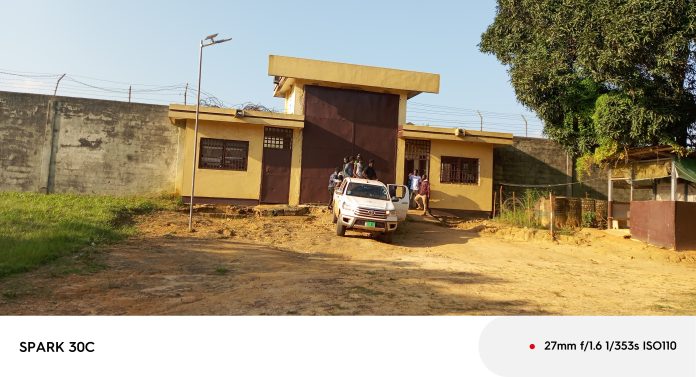
Top: An FDA vehicle transports Burkinabés suspected of criminal trespassing in a community forest and a logging concession to the Zwedru Correction Palace. The DayLight/Varney Kamara


By Varney Kamara


ZWEDRU – Thirty-one Burkinabé cocoa farmers were jailed for allegedly clearing forestry concessions in Grand Gedeh County to plant cocoa.

The men, with ages ranging from teenagers to the 50s, were rounded up by rangers of the Forestry Development Authority (FDA) during a routine patrol. They were recently arrested at two forestry contract areas.

“The Burkinabés are damaging these places with cocoa farming. We met them brushing in the park. We also caught some of them cutting demarcation in the FMCs,” Yei Neagor, FDA’s head for that region, told The DayLight at the Zwedru City Magisterial Court. Pictures shared by the FDA show the man setting up camps and setting trees ablaze.

“I can tell you that the situation is alarming. They are destroying the forest. It is on a massive scale,” added Neagor.

The suspects were arrested in the Gbarzon District at two locations. Fifteen were picked up at Marbo 1 Community Forest and 16 at a dormant concession known as Forest Management Contract Area K or FMC ‘K’.

They had been arraigned at the FDA’s regional office in Zwedru and later taken to the police station before being forwarded to court. They have been charged with criminal trespassing and criminal mischief, court documents show. They were jailed at the Zwedru Correction Palace after failing to post bail.

‘The land belongs to us’

In an interview with The DayLight, the suspects admitted to the charges but blamed their Liberian hosts for the situation.

“We fell into this problem because our host did not show us the actual demarcation of the boundary,” said Soré Sayouba, a spokesman for the Burkinabés.

Sayouba, 57, said he and the other men crossed the Ivorian border into Grand Gedeh through local people or hosts. Immigration records list Bamba Paye, a Gbarzon resident, as one of their hosts.

Paye denies any wrongdoing, saying his family farmed on the controversial land for decades.  “I don’t understand why they arrested my Burkinabé workers because my parents planted cocoa and orange way back on this land. In our traditional setting, life crops represent inheritance,” Paye said via phone.

“The land belongs to us.”

The suspects have been freed on bond and are expected to reappear in court on Tuesday.

Cocoa court cases

The case adds to several lawsuits involving Burkinabés, the FDA and individuals in Grand Gedeh, regarding cocoa cultivation.  

Burkinabés began flocking into Liberia in the 2010s, after a cross-border agreement between then-President Sirleaf and Ivoirian leader Alhassan Ouattara, according to immigration authorities.

Alleged Burkinabés forest invasion suspects head for the Zwedru Correction Palace. The DayLight/Varney Kamara

“From that time, we noticed that people started coming in. But they were not coming as agriculturists. Now, as we speak, they are all along the Cavalla belt,” said Alex Kpakolo, Grand Gedeh’s Assistant Comptroller of Immigration.

Last year, France 24 reported 25,000, capitalizing on Liberia’s weak law enforcement, large rainforests and high cocoa prices.

Ivory Coast, the world’s largest cocoa producer, has lost 90 percent of its forest to “brown gold” farming in the last six decades, the report said.

This trend continues in Liberia, which lost 386,000 hectares of primary forests between 2002 and 2024, according to Global Forest Watch.


This story was a production of the Community of Forest and Environmental Journalists of Liberia (CoFEJ).