Home 2026 August

Monthly Archives: August 2026

Shadow Firm Smuggled over US$400K of Timber to Ivory Coast

Shadow Firm Smuggles over US$400K of Timber to Ivory Coast
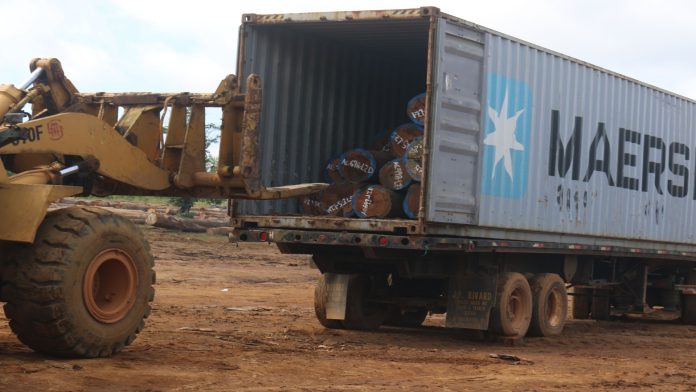
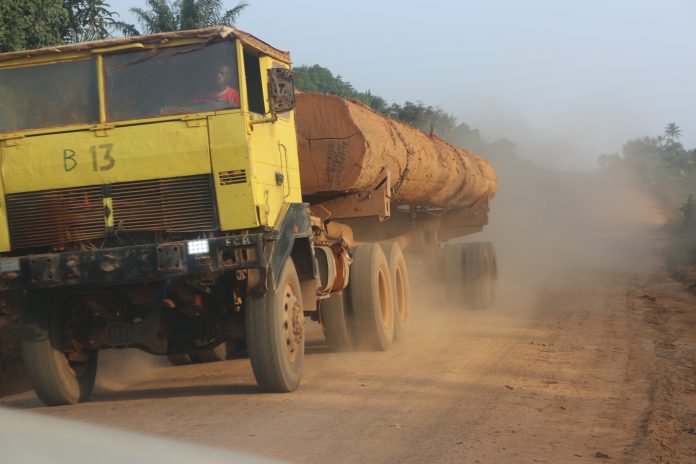
A truck transports logs outside Greenville, Sinoe County in 2023.

Top: A truck transports logs outside Greenville, Sinoe County, on January 3, 2023. The DayLight/James Harding Giahyue


By Varney Kamara


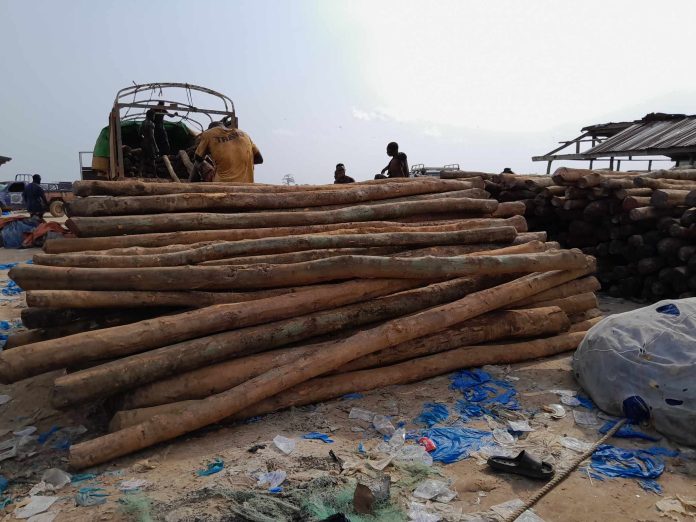
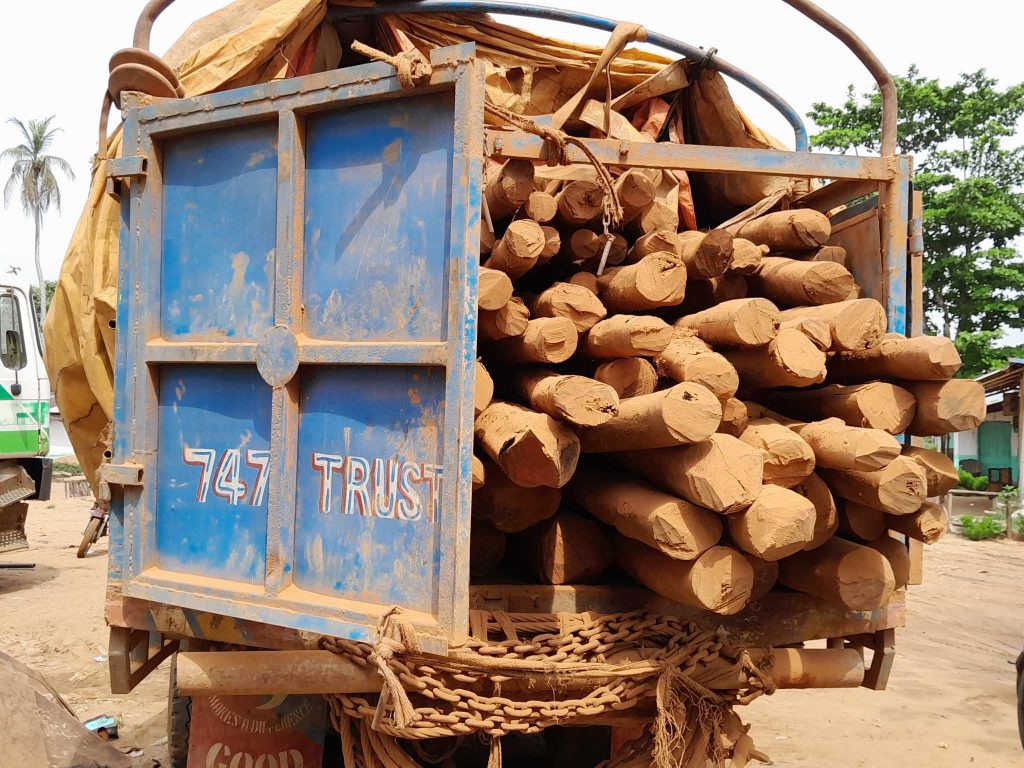
MONROVIA – Horizon Logging Limited, an Israeli-owned logging company with unknown owners, smuggled timber to the Ivory Coast on multiple occasions, valued at US$437,000, A DayLight investigation found.

The two shipments occurred in 2023 and 2024, according to Trademo, a US-based business platform that publishes international trade data. However, those shipments happened outside of LiberTrace, Liberia’s legal timber-trading system.

Of the total value, Horizon shipped US$163,790 in 2023 and  US$273,380 in 2024, the data shows. One of its Ivorian buyers is the Abidjan-based Sdma, which offers sea, air and land transport services.  

A review of all of Horizon’s export records through LiberTrace shows no trace of the Ivorian shipments. Further review of its trading at the Ministry of Commerce & Industry and the Liberia Revenue Authority produced the same result.

Companies can trade outside LiberTrace and still pay export taxes to the LRA due to weak coordination among public entities. However, Horizon did not pay any taxes for its Ivorian shipments, the LRA records show. This means the exports happened outside the entire government system and were smuggled across the eastern borders. The exports were documented because the Ivorian government declared them under international trade protocols.

Exporting logs outside the legal system violates the Regulation on Establishing a Chain of Custody System. The regulation provides that timber is traced from its origins to the final destination. The idea is a centerpiece of forestry reform and Liberia’s timber trade agreement with the European Union, which has decided to terminate the deal over continued violations.

Ivory Coast, likewise, prohibits the illegal importation of timber, according to the country’s regulations on the import and export of forest products. The laws state that entities engaged in the import of forest products must get approval from the Ivoirian Minister of Water and Forests, and documentation of a timber legal origin.

“Illegal timber extraction and shipments create a compounded loss for Liberia. Communities lose legitimate forest benefits, livelihoods and climate resilience, while government loses revenue and potential economic benefits, says Dayugar Johnson, the lead campaigner at the Civil Society Independent Forest Monitor.

“At the community level, illegal logging and exports can deprive forest-dependent communities of social benefits and other revenues that could support schools, health facilities, roads, water systems and livelihoods, undermining their rights, as well as fueling local conflicts.” 

Mystery owners

The illegal shipments are not the company’s only wrongdoing. The DayLight found other issues with Horizon’s ownership. Horizon Minerals BV holds 99 percent of Horizon’s shares, and one Dov Aronvich holds the remaining. However, Horizon Minerals BV does not list its shareholders, a requirement under the Beneficial Ownership Regulation of 2023.

Originating from the Liberia Business Association Act, the regulation requires companies to declare their ultimate beneficial owners or the individuals who own them. It is part of a global scheme to combat financial crimes, including money laundering, terrorist financing, and tax evasion. As part of that fight, the Liberian cabinet approved the establishment of a beneficial ownership registry.
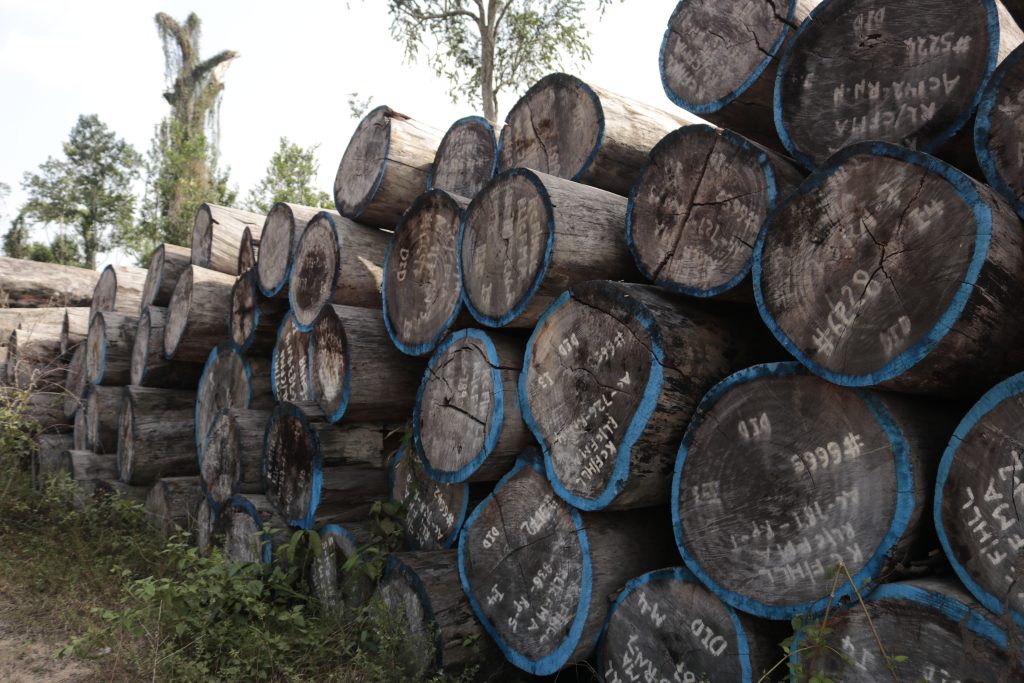
Horizon Logging Limited abandoned several logs in Konobo Community Forest, Grand Gedeh County. DayLight/Samuel Jabba

Horizon has been inactive for two years now, according to its business registration certificate. It deserted a 15-year logging contract with the Konobo Community Forest in Grand Gedeh County. It promised to pay the community, build a school, and erect hand pumps, among others, in exchange for harvesting Konobo’s 49,627-hectare forest. Instead, it left unpaid benefits and several logs in the moggy forest and other locations.

Horizon did not respond to The DayLight’s queries for comments.

Augustus Abram, one of its executives, acknowledged receipt of the newspaper’s queries. Later, he denied it was him, even though the newspaper had contacted him earlier this year about Horizon. The DayLight also called his number on official documents and emailed him, but both attempts failed.

Moreover, The DayLight tried contacting Lev Segev, another Horizon executive, but that effort proved unsuccessful. The newspaper then emailed Jamil Ali Fayad, Horizon’s incorporator, but that too did not materialize.     
FDA Regains Control of Grebo-Krahn National Park

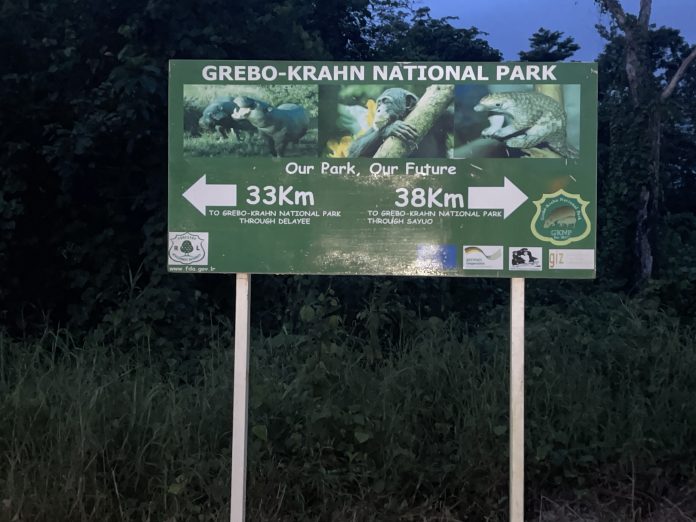
A Krahn-Grebo National Park signboard in Grand Gedeh County

Top: A signboard of the Krahn-Grebo National Park in Grand Gedeh County. The DayLight/Esau Farr


By Esau J. Farr


BILLIBO TOWN – The Forestry Development Authority (FDA) has regained control of the Grebo-Krahn National Park from traditional leaders in Grand Gedeh County for the first time in months.

The FDA recently did so following a meeting in Billibo Town, Konobo District. Since May, traditional leaders prevented the FDA from entering the forest due to a misunderstanding over forest rangers’ alleged destruction of cocoa plants.

“We have resolved the issue,” said Alex Grant, the Superintendent of Grand Gedeh County. “This means that FDA’s rangers can now go into the forest and do their regular work free of intimidation.”

The traditional leaders in the Konobo District had held rangers for allegedly breaching traditional norms. The followers of the masked dancer, commonly known as “country devil,” claimed rangers cut down young cocoa trees outside the park. As a result, they held them for a whole day, demanding a cow and two sheep for their release.

The rangers denied any wrongdoing, saying rangers only destroyed tents that illegal occupants had built in the park during a routine inspection.

They were only released after the intervention of James Saylee, Paramount Chief of Gbardru Chiefdom, Konobo District, who provided a sheep and a bag of rice.

But the rangers’ ordeal was not over. The traditional leaders demanded that the FDA present a cow and the two sheep to have access to the park.  

At the Tuesday meeting, the Ministry of Local Government disagreed with the actions of the traditional leaders.

“Don’t use the culture to solve matters,” said William Jallah, Assistant Minister of Culture. “If you hide behind the culture, it will give the Superintendent and the Legislature a hard time to fight your case,” Jallah called for coordination among traditional leaders and local county officials, and warned them of stern punishment against troublemakers.

“We don’t want a repeat of what happened in Sinoe during the regime of former President Ellen Johnson-Sirleaf when traditional activities were banned for five years,” Jallah said.

At the end of the meeting, everyone agreed that rangers resume their work in the park.

Jerry Yonmah, FDA’s Technical Manager for Conservation, appreciated stakeholders for jointly helping to put an end to the misunderstanding. He encouraged rangers to better collaborate with community people to manage the park.  

“I feel happy that this matter has been resolved,” said Yonmah. “I told our people that hearing actions that undermine the government’s work sometimes border on disrespect for the government.”

Illegal miners enter the park

In the absence of rangers in the park, illegal miners began mining there. Locals told The DayLight they chased the miners from the area. DayLight could not independently verify the information.

Established in October 2017, the Grebo-Krahn National Park covers 97,136 hectares of forestland that lies between Grand Gedeh and River Gee Counties southeast of Liberia. It is home to forest elephants, chimpanzees and pygmy hippopotamus.

It holds over 300 animal species and 270 plant species, highlighting its environmental significance. The park is also designated as an Important Bird Area (IBA) by BirdLife International, the world’s leading global partnership dedicated to the conservation of birds and their habitats.

Two Loggers Killed in Horrific Accident

Tree falls and kills two loggers in Sinoe County.
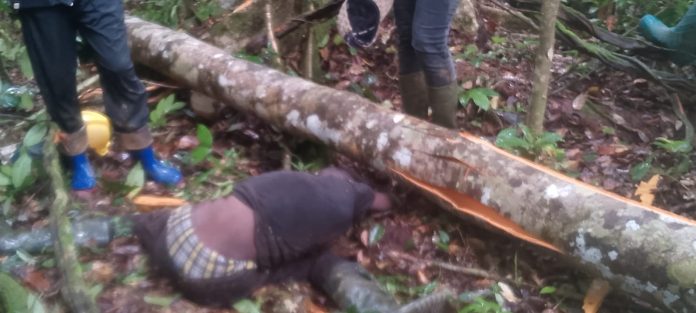
One of two loggers killed in a logging accident on August 12, 2026 in Numopoh, Sinoe County

Top: The body of one of the loggers killed in an accident last week. Picture credit: Superintendent Darius Nagbe, Sr.


By Myer Saydi


NUMOPOH — Two loggers died after a tree crushed them in Sinoe County recently, the police said. 

The victims have been identified as William Wleh Tarpeh, 49, and Stephen Chea Jr., about 25. They were contractors with African Finch Logging Limited, a company operating the Numopoh Community Forest in the Kpanyan District.

“Our investigation is ongoing. We are working to establish exactly what happened and to identify the people who were involved in the logging operation when the accident occurred,” said Moses Dweh of the Liberia National Police’s Criminal Services Division.

“Unfortunately, the company has not yet identified the workers allegedly involved, which is making it difficult for us to fully establish the circumstances surrounding the incident.”

Preliminary accounts indicate that Tarpeh and Chea had completed their assignment when the tree the unnamed worker cut fell on them. 

The accident left Wleh trapped beneath a heavy log, where he reportedly remained for nearly two days before his body could be recovered. The recovery operation drew county officials, chiefs and elders, and residents to the scene.

Chea Jr. was rushed to Kilo Town Clinic on Tuesday evening following the incident, where he was pronounced dead upon arrival.

Speaking through their grief, Stephen Chea, Sr., father of the deceased, expressed profound pain over the death of his son.

“I am fully and painfully frustrated. I don’t see any meaning in living any longer. Why is this world so wicked and heartless?”

Stephen’s mother, visibly devastated by the loss, said her son would never return home again.

“My son will never come back again. See the nasty way my son died!”

The remarks reflect the deep emotional pain surrounding the tragedy. They also express concerns about how the matter has been handled after their son’s death.

Stephen Chea Jr. (arrowed) was one of the two loggers killed last Tuesday in Sinoe County. Picture credit: Facebook/Stephen Chea, Jr.

Nathaniel Wah, African Finch’s Human Resources Manager, expressed condolences to the bereaved families.

“It was an accident, no body deserved such a death. We all regret this, and we console the families. We are in pain and frustrated,” Wah said.

He said that the deceased men were contracted through a subcontractor that is responsible for African Finch’s production.

There are growing concerns about the company’s responsibility and the circumstances surrounding the deaths.

Residents and local authorities are reportedly seeking answers about the individuals who were operating the chainsaw at the time of the accident. They want to know whether other workers have been brought in for questioning by the police.

Concerns have also been raised about why logging operations have reportedly continued while the deceased’s families are still mourning.

These concerns have intensified calls for the relevant authorities to establish exactly what happened, determine responsibility where necessary, and ensure that appropriate safety measures are being followed at logging sites.

Darius Nagbe, the Superintendent of Kpanyan District, expressed frustration over African Finch’s “inadequate response to the tragedy.”

We are worried that individuals who allegedly felled the trees are yet to be identified,” Nagbe said. He called for the chainsaw operators who felled the fatal tree to be turned over to the police for questioning. 

Dweh, the police officer assigned to the case, said the investigation has encountered difficulty because the company had not identified the alleged chainsaw operators—the company has since not commented on this issue.

For the families of Tarpeh and Chea Jr, the pain goes far beyond the questions now being asked. The two men left home expecting to return. Instead, their families received their dead bodies.

This is a production of the Community of Forest and Environmental Journalists of Liberia (CoFEJ).

Chinese Firm Exports US$13K Timber Amid Moratorium  

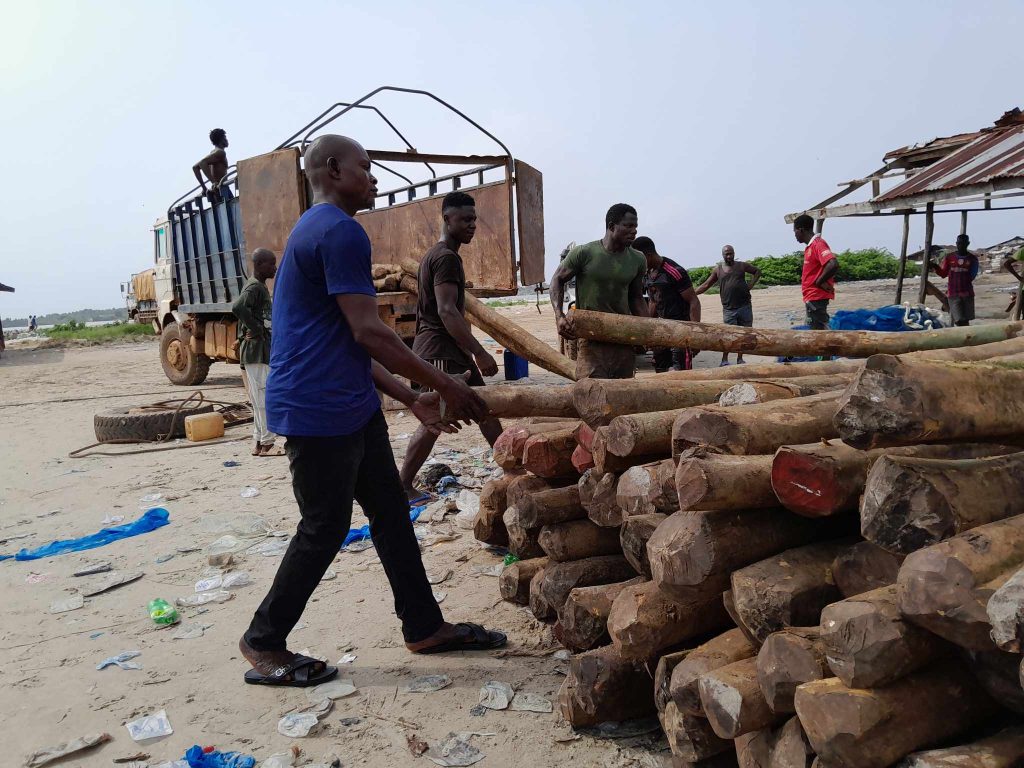
Men upload a consignment of a non-timber forest product in Sinoe, 2024.

Top: Men offload non-timber forest products on a beach in Greenville, Sinoe County, in January 2024. The FDA permits export of the NTFPs amid a moratorium. File Picture: Anonymous


By Esau J. Farr


MONROVIA – A Chinese company was permitted to ship logs despite the existence of a moratorium against such shipment, official records show.

Jiuzhou International Liberia Limited, a sand mining company, exported 320 pieces of camwood to China in January, according to the Ministry of Commerce and Industry’s records. Camwood (Baphia nitida) is a hardwood tree grown mainly in West Africa used as a natural dye, soap-making and woodworking. It is among wood species with high price values in Liberia, selling US$550 per cubic meter.

Jiuzhou’s export was confirmed by Export Genius, a US-based business platform that publishes international trade data. Export Genius’ data also reveals that last year Jiuzhou made a similar export, both exports valued over US$13,000, and passed through the Freeport of Monrovia.

The Forestry Development Authority’s records show that Jiuzhou’s exports occurred outside the legal system for timber trade, or LiberTrace.

But in 2021, the FDA placed a moratorium on non-timber forest products (NTFPs), including camwood. Then, the FDA’s board of directors retained the moratorium in a July 2024 board meeting.

“All other certificates signed by the [Managing Director] become null and void,” according to unpublished minutes of the board meeting seen by The DayLight. “FDA needs to invite all those involved for a way forward.”

Albert Blanyon, the newly appointed FDA Deputy Managing Director for Technical Services, said the regulator does not enroll NTFPs in LiberTrace.

“I can’t confirm if a moratorium was passed,… as people I asked, who were here at that time, can’t confirm, nor is there any document to that effect,” said Blanyon.

The facts contradict Blanyon’s comments.

At the July 2024 meeting, the FDA board agreed that the moratorium remained in place until the Regulation on NTFPs, formulated in 2008, was reviewed. The board intended to use the review to address deforestation and the lack of benefits for communities that host NTFPs.

Two years on, however, there is no record that the review has happened. Key forestry NGOs, including the Botanical Products Association of Liberia, which raises awareness of the protection and trade of NTFPs, said they were unaware of it.  

A truck carrying a load of a non-forest timber product in Sinoe in 2024. Picture credit: Anonymous

“We have not really been informed about any review on the NTFPs Regulation,” said Fredrick Gonkartee, the association’s president.

The Jiuzhou exports are not the first of NTFPs since the moratorium five years ago. Last year, The DayLight found evidence that the FDA violated it by awarding businesses permits to export chewing sticks.

An underground market

Jiuzhou was established in October 2013. It is owned by two Chinese nationals: Hao Shuli (80 percent shares) and Wang Depeng (20 percent shares). It has had 10 licenses between 2020 and 2026 for sand mining and rock quarrying in Margibi County. It could have one more license, which is under review for a sand mine between Margibi and Grand Bassa Counties.

In an interview, Li Yuan Hai, a Jiuzhou executive, denied any wrongdoing, as the FDA had approved the exports.

“Me, I didn’t do anything on my own,” Li said. “I paid my tax to the Liberia Revenue Authority (LRA). If the government was going to say I didn’t pay tax, then that’s my problem.”

Asked whether he was adding forestry to his company’s mining profile, Mr. Li now said he did not own the wood. He had aided friends to ship the consignment, using his company’s documents.

The underground NTFP exportation resembles Kpokolo—containerized timber blocks shipped outside the legal system, and banned in 2022.

Men offload non-timber forest products on a beach in Greenville, Sinoe County in January 2024. Picture credit: Anonymous

Exporting outside LiberTrace leaves no trace, does not verify tax payment or community benefits, and does not show the exporter’s eligibility. Furthermore, like in the case of kpokolo, FDA managers control the accounts into which companies pay NTFP fees.

Forestry campaigners are critical of timber exports outside the legal system.

“Illegal timber extraction and shipments create a compounded loss for Liberia. Communities lose legitimate forest benefits, livelihoods and climate resilience, while government loses revenue…,” said Dayugar Johnson, the chairman of the Civil Society Independent Forest Monitors.

Johnson added, “Illegal logging and exports can deprive forest-dependent communities of stumpage fees, social benefits and other revenues that could support schools, health facilities, roads, water systems and livelihoods.”

Scrap Company Turns to Illegal Timber Trafficking

An earthmover uploads timber

Top: A 2022 photo shows an earthmover loading logs into a container in Grand Bassa County. The DayLight/James Harding Giahyue


By Samuel Jabba


MONROVIA – A scrap company on the Japanese Freeway shipped round logs to India outside the legal channel for timber export. Elephant Multipurpose Corporation exported the seven round logs to India in January, according to records of the Ministry of Commerce and Industry.

The shipment was confirmed by Market Insight, an international trade data company and subsidiary of Business Insider, the US-based global financial news giant. It is the only shipment the company, established in 2021, has made. Omkara Overseas, an Indian textile firm, was the buyer.

But records from the Forestry Development Authority (FDA) show that the export occurred outside of LiberTrace, the legal channel for timber trading, known as the Chain of Custody System. The evidence reveals that Elephant Corporation is not registered in the FDA’s system, and has never traded through it. Additionally, Sundeh Albert Blanyon, the FDA’s Deputy Managing Director for Technical Services, confirmed the information.

Forestry Regulation on Establishing a Chain of Custody System requires that timber be shipped through the system so it can be traced from its origins to its final destinations. It guarantees tax payment and community benefit.

Having exported timber outside the system, Elephant Corporation evaded substantial taxes to the government and the community where the timber originated. Taxes include land rental, harvesting, and other fees.

“We have observed a lot of smuggling activities in timber exports. This has not improved businesses and revenue payment to the Government,” says Jonathan Yiah, the lead forest campaigner at the Sustainable Development Institute, a Margibi-based NGO. “Smuggling is bringing a lot of frustration within the affected communities.”

Elephant owners
A collage of Elephant Multipurpose Corporation’s owners. Ismail Y. Sheriff (left) and Ayouba Kamara, via their WhatsApp profiles.

Penalties

Elephant Multipurpose Corporation was founded on October 12, 2021, according to its legal documents at the Liberia Business Registry. Mr. Sheriff has 60 percent shares, and Ayouba Kamara has the remaining ones.

Efforts to interview Sheriff and Kamara did not materialize. However, Mohamed M. Sidibey, an Elephant Corporation executive, claimed that the company had bought the logs at a public auction at the Freeport of Monrovia. He presented no evidence.

The National Port Authority did not confirm or deny the alleged auction. An NPA spokesman said the agency could not say anything about the export because it did not have the identification number of the container in which the logs were exported.

Regardless, the facts contradict the procedure surrounding the alleged auction.

NPA auctions goods that overstay at the ports nationwide. However, it does not have the authority to auction timber. Instead, that authority belongs to the FDA, per the Regulation on Abandoned Logs, Timber and Timber Products. The 2017 regulation requires the FDA to auction unattended logs with a court warrant. Violators face a fine, confiscation of their properties, and imprisonment, but companies exploit poor coordination among government agencies, customs brokers and truckers.

Confronted with the inconsistency, Sidibey shrugged off the likelihood of Elephant Corporation facing any penalties.

“I don’t know about any violation. When they close the company, then we will sit down. I don’t have a problem with the fines or imprisonment; that’s not an issue,” Sidibey said.

Much is unknown about Mr. Kamara’s track record, but his partner is all too familiar.  A 2026 General Auditing Commission report found that Mr. Sheriff and 14 Nimba officials misappropriated US$12 million and L$55 million (US$305,555 today) from the county’s social and county development fund. Mr. Sheriff did not respond to queries for comment on that issue.


This story was a production of the Community of Forest and Environmental Journalists of Liberia.

Two Protected Forests Near Establishment

Group pic Gt
Group pic Gt

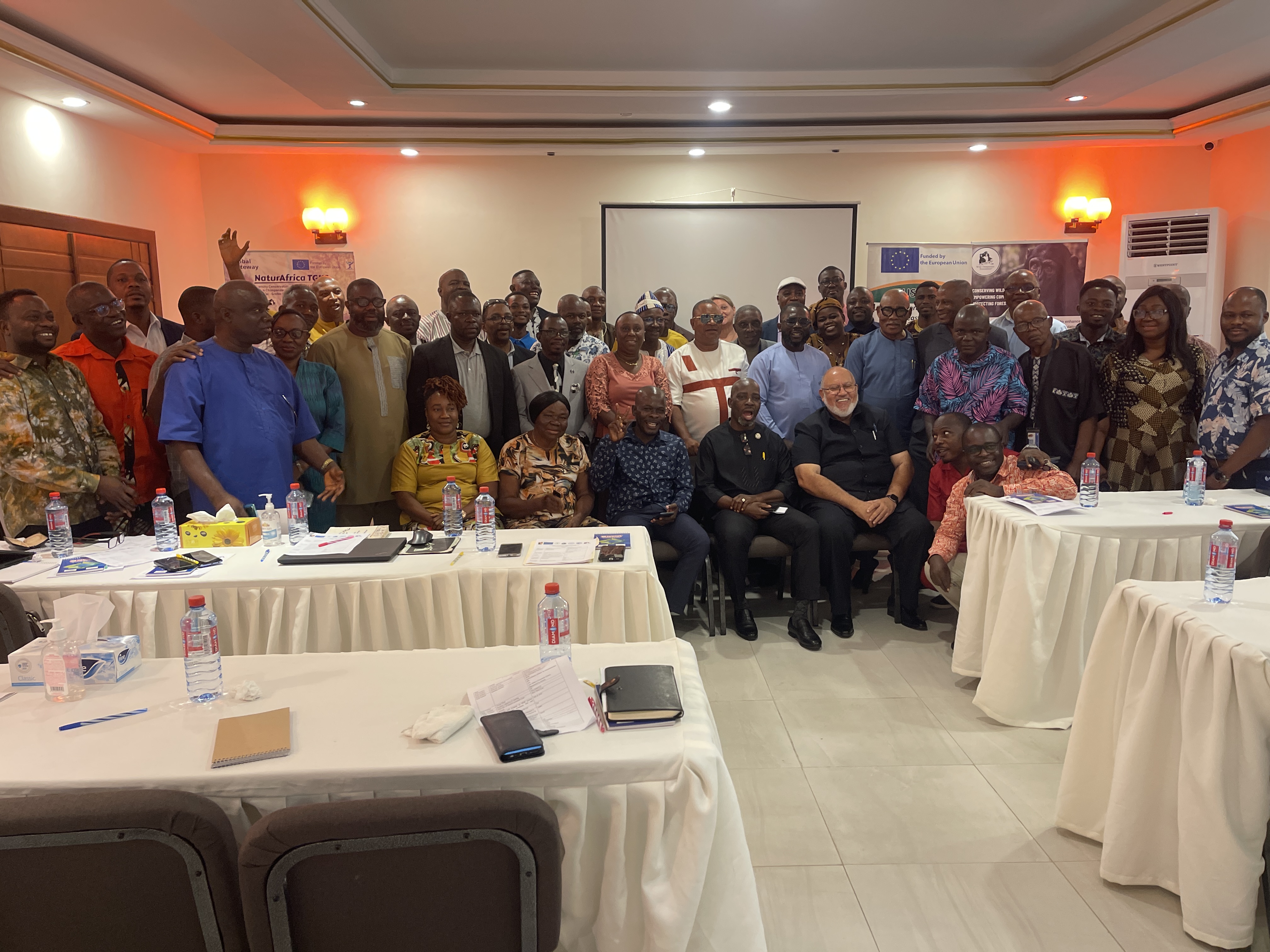
Top: Stakeholders at the Proposed Kwa Gazettement forum in Monrovia. The DayLight/Esau J. Farr


By Esau J. Farr


MONROVIA – Forestry actors agreed to establish the Kwa and Wonegizi Protected Areas in Liberia, and expect them to become reality soon.

Officials held two public engagement forums in Monrovia to gather stakeholders’ input for Kwa and Wonegizi’s gazettement. Scores of conservationists, forest campaigners, and governmental agencies participated in the events.

“Today, we have come with a package to put this portion of the Kwa into protection for the future of our people,”  said Rudolph Merab, the FDA Managing Director, at the Kwa event. “We appreciate the efforts of all who helped reach this far.”

Pygmy hippo

Kwa and Wonegizi safeguard critical swathes of Liberia’s remaining portion of the Upper Guinean forests. They are home to endangered species and are part of the country’s commitments to preserve 30 percent of its forests.

The Kwa Proposed Protected Area covers River Cess, Sinoe and Grand Gedeh Counties, extending some 236,246 hectares. Its establishment began in 2016. The FDA partners with the Wild Chimpanzee Foundation, based in the Mano River basin, and the US-based Rainforest Trust to establish the area.

Kwa supports Liberia’s second-largest known population of critically endangered western chimpanzees, endangered pygmy hippopotamuses, and critically endangered slender-snouted crocodiles.

Dr. Annika Hillers, the Country Director of Wild Chimpanzee Foundation, told the Kwa ceremony reveled in the progress.

“We need to talk about what is best for the country and not what is best for an individual. We hope that for the best of Liberia, the proposed Kwa National Park will become a reality as soon as possible,” added Dr. Hillers.

Meerab
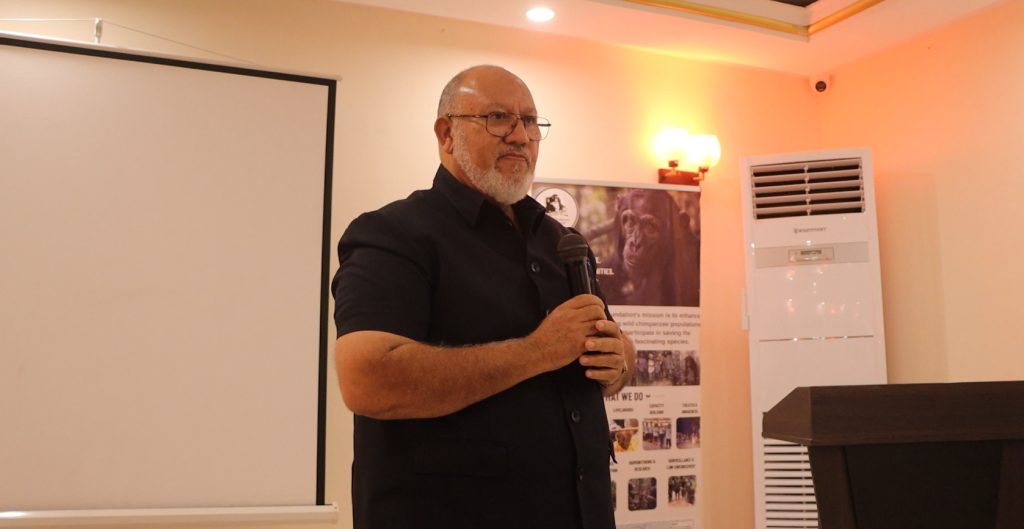
FDA Managing Director, Rudolph J. Merab, Sr. The DayLight/Samuel Jabba

Zebra duiker

The Wonegizi Proposed Protected Area covers 27,645 hectares in Lofa County’s Ziama Clan. Started in 2013, the FDA works with Fauna & Flora (FFI), a UK-based NGO, to establish Wonegizi. Located along the Liberian-Guinean border, it is an important transboundary forest landscape with Guinea’s Biosphere Reserve.

Full of rocky terrain and lowland rainforests, Wonegizi is home to forest elephants, pygmy hippopotamuses, and the rare zebra duiker. It allows large mammals to migrate safely between the two countries, maintaining a range of diverse species across regional highlands.

The formation of Wonegizi is also meant to prepare communities for carbon trade with an estimated US$2.5 million community benefit annually, according to FFI.

“I am very pleased that we have come to this stage finally. It took a long process,” said Dr. Mary Molokwu-Odozi, FFI’s country director. “It will now be a smooth process going forward.”

Efforts to establish Kwa and Wonegizi have experienced challenges.

Kwa’s establishment has been stalled due to competing mining interests and agricultural activities.  Between 2002 and 2025, Kwa lost 64,358 hectares or roughly 27 percent of its original size, leaving its current area at 171,020 hectares.

In June this year, citizens from Grand Gedeh’s Gbarzon District accused the FDA of illegally extending Kwa’s boundaries into farmlands and destroying their crops. President Joseph Boakai ordered an investigation into the matter.

Senator Augustine Chea of Sinoe County, Chairperson of the Senate Committee on Judiciary, called for caution.

“Consulting us is the right thing to do, but we must do this against the background that there are people who reside on the land, who have customary rights to the land,” said Chea. “Conservation is good, but survival is more important than conservation.”

Ancestral land deed

Meanwhile, Wonegizi’s establishment was delayed due to adjacent communities’ efforts to obtain ancestral land deeds. The communities finally obtained their deeds last year and earlier this year, thrusting the process forward.

Stakeholders also raised qualms about the human-elephant crisis in the region. In the last decade, elephants have raided towns and farms in the northwest in search of food. This has caused people to migrate to new areas.

“The elephant issue must be looked at as we don’t intend to harm them. Each and everyone’s interest must be protected in the process,” said Lavelah Massaquoi, the Superintendent of Lofa County.

The gazettement packages of the forest areas are expected to be presented to the Legislature for enactment. Once passed into law, they will be sent to the President for approval.

“We have done a lot, and we are now at the last stage of their establishment,” said Merab. “When we have finally passed the act that creates these areas, we will hope that you will support and ensure that it is not encroached upon.”

Cocoa Drives Deforestation after Logging Fails

compressed DJI 0131
compressed DJI 0131

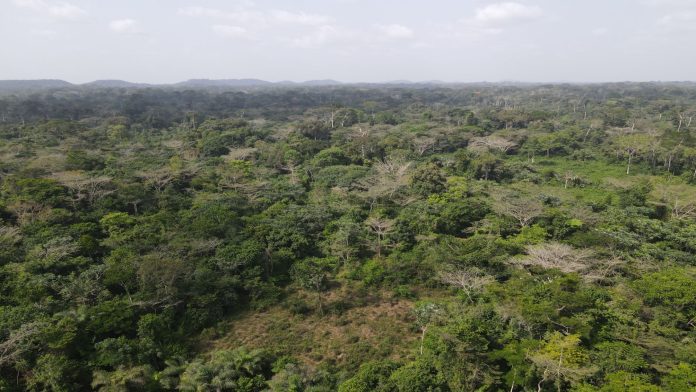
Top: A view of the Putu Pennoken forest with portions cultivated. The DayLight/Samuel Jabba 


By Mark Neywon Mengonfia


PENNOKEN, Grand Gedeh – When the Putu Community Forest signed a logging agreement with Africa Wood and Lumber Company, residents hoped that the deal would bring jobs, development, and manage their forest. Instead, the Italian-owned company failed to deliver on its promises, and eventually deserted the contract.

Townspeople here are hosting scores of Burkinabé migrants for cocoa cultivation. Though it is illegal to farm in a community forest, locals use the failure of the logging contract to justify their encroachment.

“The company depleted the forest without benefits, but with the cocoa farming, in a few years, we will get benefits,” says Wullu Elijah, youth president in Pennoken, one of the towns that own the forest.

“Our parents hunted in this forest, took care of it from generation to generation; logging companies came and lied to people.”

Owned by an Italian businessman, Cesare Colombo, African Wood signed a seven-year contract with the Putu Community Forest in July 2019. The deal gave the company the right to harvest trees in a 21,337-hectare forest. The company agreed to pay the community US$22,603 annually for land rental and scholarships. It allocated funds for harvesting and development, but the amount is unspecified. The company also agreed to pave roads.

However, African Wood did not deliver as promised. It deserted the contract, abandoned hundreds of logs in the forest, and owes locals a substantial debt.

MG 0072
A town in Pennoken, Grand Gedeh County. The DayLight/Samuel Jabba

The failure of the logging contract influences the farmers’ rush for cocoa in Putu, according to residents and local leaders. Those who waited for support from families in Monrovia and abroad no longer tarry for such handouts, thanks to Burkinabé migrants, or Morsis, as locals call them.  Across towns and villages, locals enter into a verbal agreement with the migrants. Burkinabés provide cash and labor, while their Putu landlords provide the land and home to stay. They use the profits generated from the cocoa cultivation to support families and their communities.

In forestry, it is illegal to farm in a community forest without the FDA’s authorization. Companies are under an obligation to harvest trees sustainably.  However, that rule does not apply to the cocoa farmers. They cleared land stretching deep into the forest, using chemicals and setting trees ablaze to gradually fall.

In several places, large charred trunks lay on the ground afterward, while rows of newly planted cocoa seedlings now stand where towering trees and wildlife once thrived. Migrant farmers march along narrow paths and major highways, carrying cutlasses to or from the forest. Sometimes, up to 15, usually in pocket discussions.

Authorities say eight out of nine community forests are being cleared for cocoa cultivation, with massive encroachment on concessions and proposed protected areas. This is happening as Liberia lost 420,000 hectares of primary forest between 2002 and 2025, according to Global Forest Watch, an app that tracks deforestation. Grand Gedeh lost 72,000 hectares of primary forest, 11,000 hectares alone in the Konobo region where Putu lies.

“They are burning trees daily, and community dwellers themselves are involved,” says Beyan Woi, the FDA’s regional management officer for the southeast. “Most of [those] community forests that people wanted to do logging and conservation in are under threat by Burkinabés.”

There has been a series of arrests involving migrant farmers. Early last year, the FDA arrested dozens of Burkinabé nationals in the Konobo Community Forest for illegal farming and deforestation. Then in July of  2025, 31 more were jailed for alleged encroachment on a logging concession area. Two months earlier, authorities deported 60 for illegal entry and farming in a protected forest area. This June, authorities announced there were 140,000 Burkinabé migrants in Liberia.

Burkinabes transfering cocoa beans
Two Burkinabé migrants transport cocoa beans in Grand Gedeh County. The DayLight/Samuel Jabba

Residents are aware that their cocoa activities in the Putu Community Forest are illegal but cannot resist the cocoa benefits. Even those who upheld the law have now joined the bandwagon.

“I do not have a cocoa farm, but almost all of my family on our side here have cocoa farms,” says Patrick Rue, a community forest leader. Until now, Rue, a member of Putu’s community assembly, the highest-decision making body in community forestry,  had advocated for the rule of law. He says the reality overwhelms him.

“I have decided to get a farm. I am convinced now because I have been fighting a one-man battle and it is not holding, so now I have decided to put in for Bukinabés,”  he tells The DayLight. 

Mr. Rue is not the only person who has flipped sides in this cocoa conflict. Farley Wilson, Putu Community Forest’s chief officer, is the unlikely newest.

Wilson says on many occasions he was tired of his efforts to save Putu Community Forest going to waste. He fears that he does not want to hold on until the opportunity disappears. He says he cannot sit and watch other residents cash out from encroaching on the forest while he protects it.

“If I don’t do anything, people will say, ‘Where were you?’”


This story was a production of the Community of Forest and Environmental Journalists of Liberia (CoFEJ).

Loan Scheme Eases Pressure on Salayea Forest

Loan Scheme Eases Pressure on Salayea Forest
A house in Salayea, Lofa County being constructed by a community forest loan scheme

Top: Nenee David’s house under construction in Telemu Town, which she funded with the loan she received from the Salayea Community Forest. The DayLight/Harry Browne


By Esau J. Farr


SALAYEA TOWN, Lofa County – Before joining the Salayea Community Forest’s savings club, Krubo Tokpah sold pastry in a transparent bucket for a year. Now she uses the loan to sell used clothing, which she uses to feed her children and send them to school.

“This program has made me have money all the time,” says Tokpah. “I can’t be a beggar again.”

Tokpah is the chairlady of the village saving and loan association in Salayea town, one of six communities adjacent to the Salayea forest.  The loan scheme is helping to stop locals from using the 8,270-hectare forest in the Salayea District of Lofa County.

In 2022, Salayea Community Forest introduced the loan program to empower women and make them financially independent. Five women’s groups of 25 people each began the loan program, which now has over 250 beneficiaries across the district.

Palladium Group Liberia, a British NGO, trained townspeople and provided special boxes to save the money. Townspeople are prohibited from farming, mining, or building homes in the forest. However, people are allowed to garden in areas outside the primary forest, including swamps and marshes.

Salayea Forest (1)
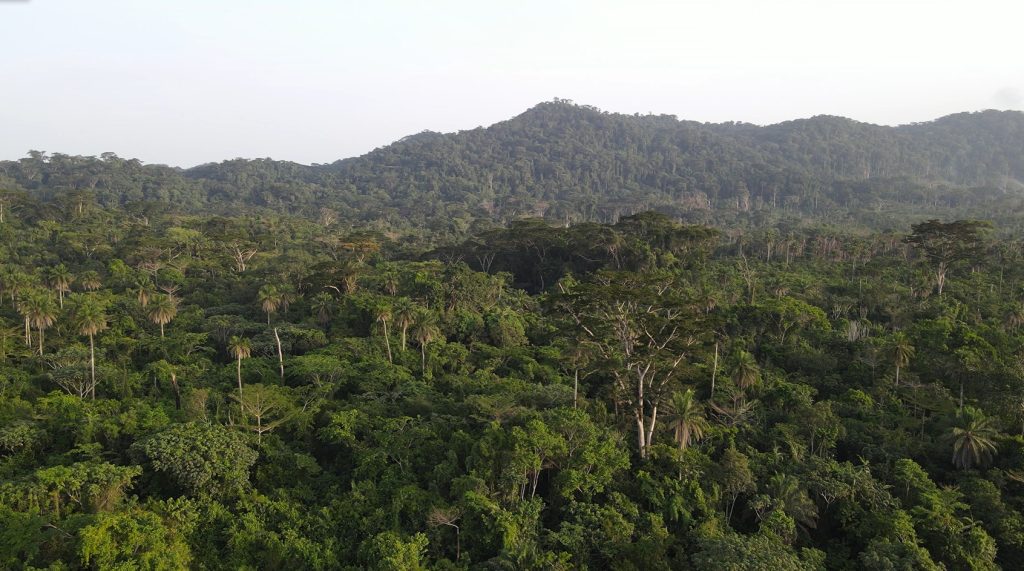
A drone photo of the Salayea Community Forest. The DayLight/Samuel Jabba

“The loan program and the other alternative livelihood programs are all helping to protect our forest,” says Yassah Mulbah, the head of the Salayea Community Forest. “It helps keep our forest from being destroyed,” adds Mulbah.

Before the loan program, unauthorized occupants mined and farmed in the Salayea forest. The loan program is now reversing that course.  

“Two months ago, we did our infantry in the bush; we did not see any new farming nor a hunter in the forest,” says Garmen Flomo, a Salayea forest leader in Beyan Town. “There were animals that we did not see at first when we entered the forest.”

The scheme is one of several strategies the Salayea Community Forest is applying to stop illegal activities and reduce locals’ dependence on the forest. The other programs include animal farming, cocoa cultivation, guesthouse management and woodwork. Two Sinoe communities—Wehjad and Jaedae—are implementing a similar project to protect their forests.

Transformation

Beneficiaries of the loan scheme say the project is paying off for them.

“I am happy for this program to come to us… because it is transforming our lives,” says Mamie Kollie, a Telemu Town resident. “From my savings, I am helping my husband to build this new house I am sitting under.” Situated on a hill in the center of Telemu Town, Kollie and her husband had zinced their new home. The house is built of bricks made of brown mud and cement.  

Like Kollie, Nenee David, another Telemu Town resident, is constructing a three-bedroom house.

“We used some of the money that we got from the village saving loan to build our house,” said Madam David. “I used part of that money to buy different kinds of goods….”

Besides construction, businesses are improving every year. Members of the loan program expect to save at least L$3,000,000 (US$16,666) this year.

Mamie Kollie VSLA Telemu
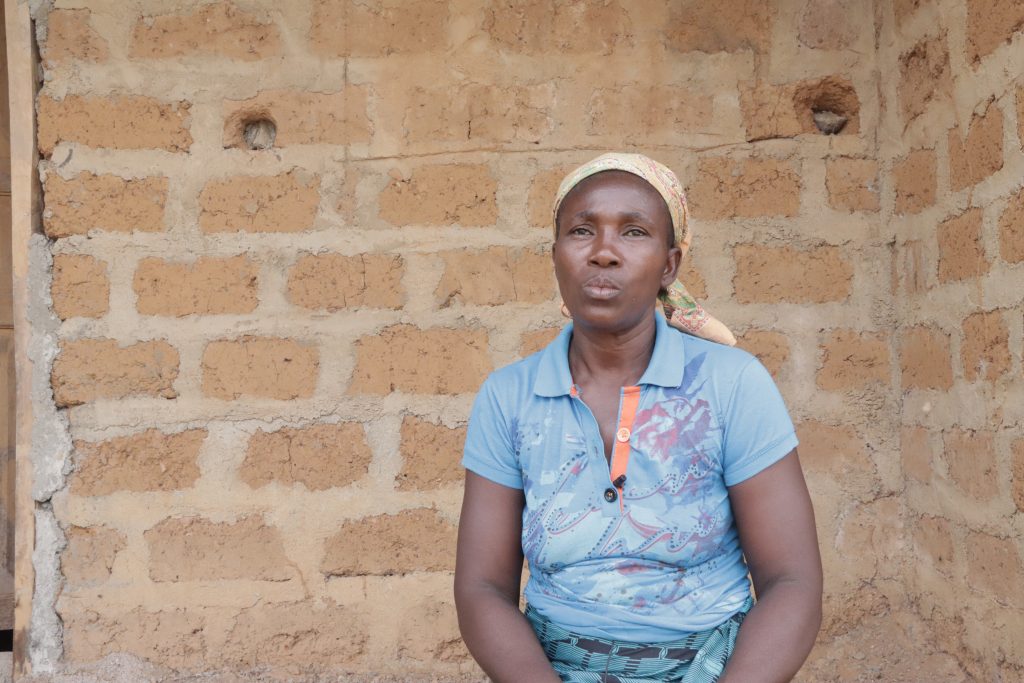
Mamie Kollie being interviewed at her new house in Telemu Town. The DayLight/Harry Browne

Businesses have moved from lower to higher levels since the introduction of the program. Like Krubo Tokpah and Garmen Flomo, both from Salayea Town, have moved from selling locally prepared bread to selling used clothes.  Korto Flomo in Gorlu Town and other members of the Beyan Town program have swapped the table market for a shop. 

Yassah Mulbah, Chief Officer of the Salayea Community Forest, is grateful.

“It has reduced most of the burdens on the women, and we want more support to increase beneficiaries.”


This was a production of the Community of Forest and Environmental Journalists of Liberia.