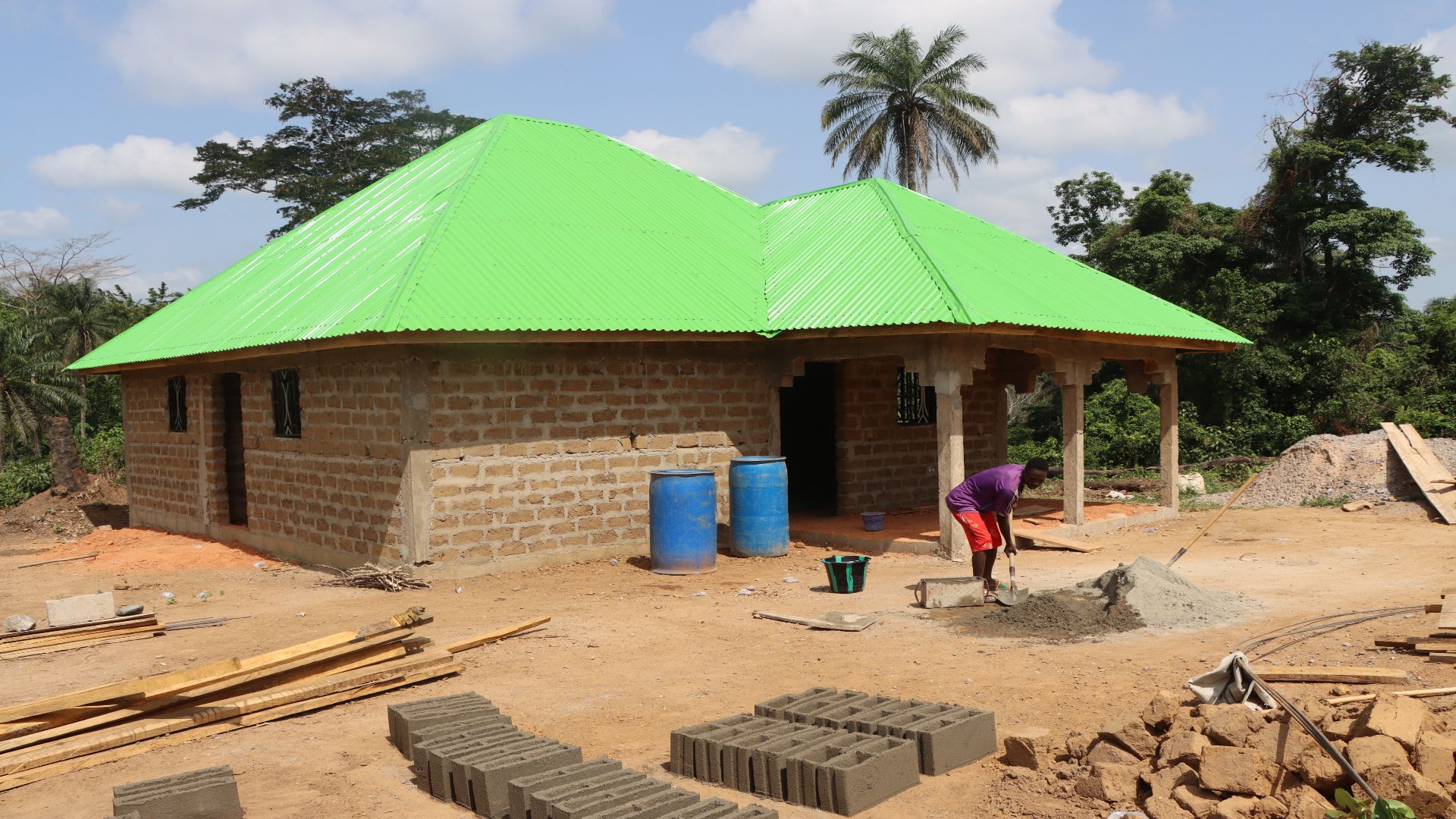
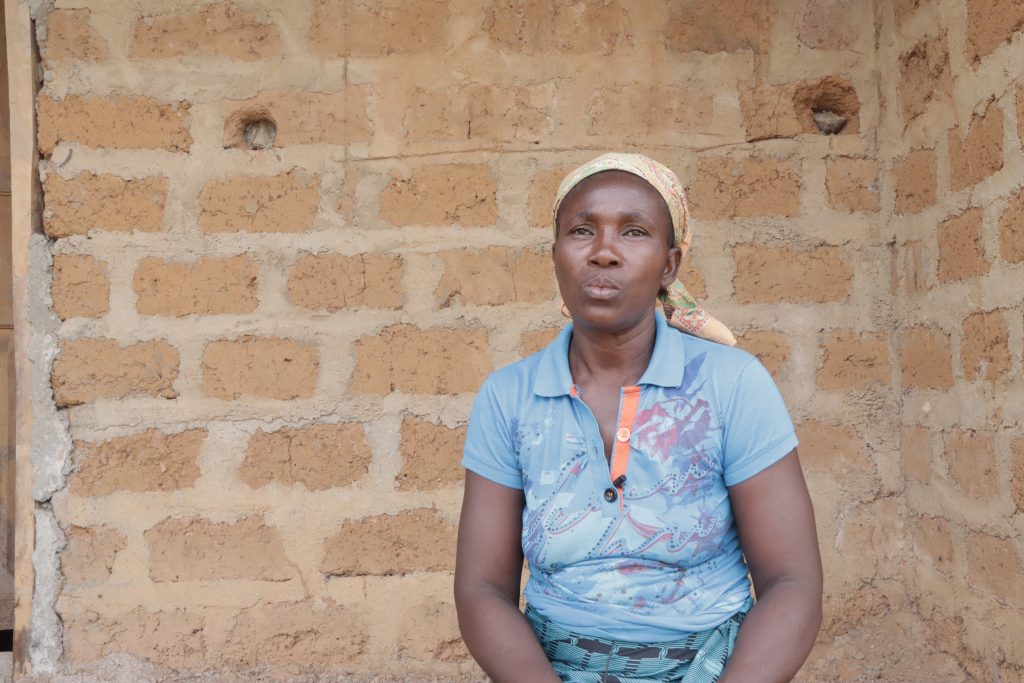
Top: Nenee David’s house under construction in Telemu Town, which she funded with the loan she received from the Salayea Community Forest. The DayLight/Harry Browne
By Esau J. Farr
SALAYEA TOWN, Lofa County – Before joining the Salayea Community Forest’s savings club, Krubo Tokpah sold pastry in a transparent bucket for a year. Now she uses the loan to sell used clothing, which she uses to feed her children and send them to school.
“This program has made me have money all the time,” says Tokpah. “I can’t be a beggar again.”
Tokpah is the chairlady of the village saving and loan association in Salayea town, one of six communities adjacent to the Salayea forest. The loan scheme is helping to stop locals from using the 8,270-hectare forest in the Salayea District of Lofa County.
In 2022, Salayea Community Forest introduced the loan program to empower women and make them financially independent. Five women’s groups of 25 people each began the loan program, which now has over 250 beneficiaries across the district.
Palladium Group Liberia, a British NGO, trained townspeople and provided special boxes to save the money. Townspeople are prohibited from farming, mining, or building homes in the forest. However, people are allowed to garden in areas outside the primary forest, including swamps and marshes.
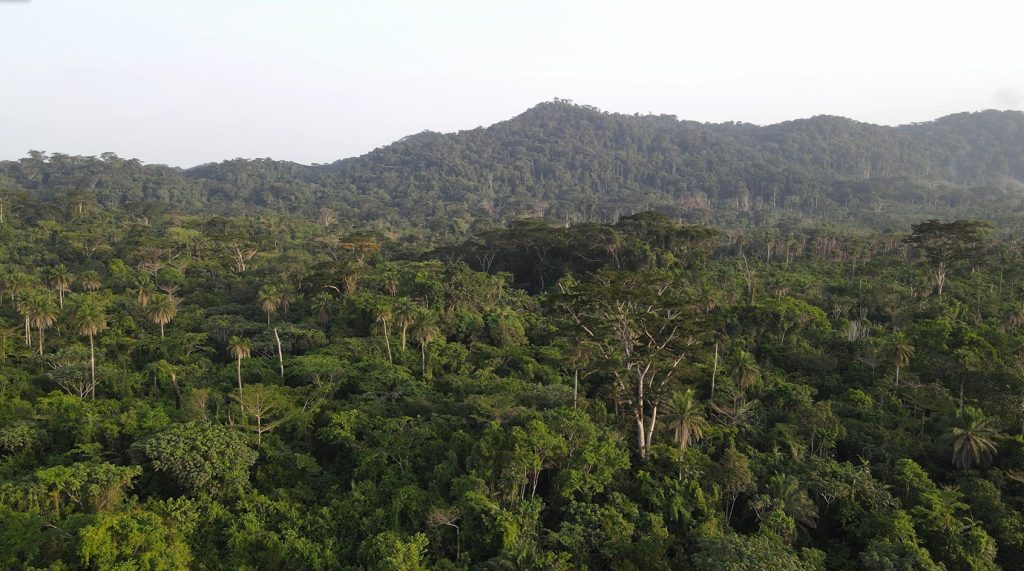
“The loan program and the other alternative livelihood programs are all helping to protect our forest,” says Yassah Mulbah, the head of the Salayea Community Forest. “It helps keep our forest from being destroyed,” adds Mulbah.
Before the loan program, unauthorized occupants mined and farmed in the Salayea forest. The loan program is now reversing that course.
“Two months ago, we did our infantry in the bush; we did not see any new farming nor a hunter in the forest,” says Garmen Flomo, a Salayea forest leader in Beyan Town. “There were animals that we did not see at first when we entered the forest.”
The scheme is one of several strategies the Salayea Community Forest is applying to stop illegal activities and reduce locals’ dependence on the forest. The other programs include animal farming, cocoa cultivation, guesthouse management and woodwork. Two Sinoe communities—Wehjad and Jaedae—are implementing a similar project to protect their forests.
Transformation
Beneficiaries of the loan scheme say the project is paying off for them.
“I am happy for this program to come to us… because it is transforming our lives,” says Mamie Kollie, a Telemu Town resident. “From my savings, I am helping my husband to build this new house I am sitting under.” Situated on a hill in the center of Telemu Town, Kollie and her husband had zinced their new home. The house is built of bricks made of brown mud and cement.
Like Kollie, Nenee David, another Telemu Town resident, is constructing a three-bedroom house.
“We used some of the money that we got from the village saving loan to build our house,” said Madam David. “I used part of that money to buy different kinds of goods….”
Besides construction, businesses are improving every year. Members of the loan program expect to save at least L$3,000,000 (US$16,666) this year.
Businesses have moved from lower to higher levels since the introduction of the program. Like Krubo Tokpah and Garmen Flomo, both from Salayea Town, have moved from selling locally prepared bread to selling used clothes. Korto Flomo in Gorlu Town and other members of the Beyan Town program have swapped the table market for a shop.
Yassah Mulbah, Chief Officer of the Salayea Community Forest, is grateful.
“It has reduced most of the burdens on the women, and we want more support to increase beneficiaries.”
This was a production of the Community of Forest and Environmental Journalists of Liberia.