Home 2026 May

Monthly Archives: May 2026

The ‘Gold Boys’ of Wologizi Park

MG 8532
MG 8532

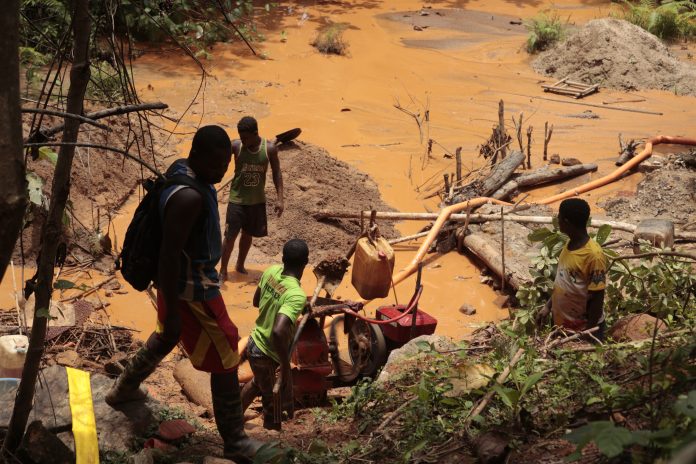
Top: “Gold boys” operating in a mining pit deep into the forest in Salayea, Lofa County. The DayLight/ Samuel T. Jabba


By Samuel T. Jabba


BETIBA, Lofa County — Illegal miners are destroying the Wologisi Proposed Protected Area, clearing the mountainous forests, polluting watercourses beneath it, and carving huge pits into the landscape in an unrelenting hunt for gold.

Amid the ongoing gold rush, unlicensed miners, known here as “gold boys,” say it is their only means for survival.

“The one that encourages me is because I’m getting my living from there,” said James Jallah, a 23-year-old gold boy and sixth-grade dropout. “I will not sit down, and be suffering, and there’s no work for me to do. I should go to the forest that has money.”

For the illicit miners, the Wologizi Protected Park is their fortress. They say they make a lot of money. Some of them own businesses and have built houses.

The illicit miners blame their situation on a lack of opportunity.

“We are mining in plenty of areas here. We get Betiba, we get Darbu, LISCO, Karza, all of them in this same zone. All those places are mining areas. We get more field here to hustle. That is, a lazy man can’t eat, so if I work a day, when God blesses me, I can buy you anything you want,” Sampson Fayiah

The Wologizi Proposed Protected Area is one of nine forests the Liberian government has designated as a reserve. Zigzagging the Wologizi Mountain, and measuring 99,538 hectares, it is home to various endangered species, including monkeys and chimpanzees. It is a part of a US$9 million project that aims to preserve the forest and enhance the use of its natural resources.

Despite these efforts, Wologizi faces a growing threat of deforestation and forest degradation. In 2025, Voinjama, which hosts the forest, lost 3,100 hectares of natural forest, according to Global Forest Watch, an online deforestation-tracking application.

Reporters witnessed this firsthand. Just at the edge of the forest, on a hill three to five minutes from Betiba, a large town beneath the Wologizi forest, lies a site locals call Umaru Field. A hub for gold boys, it hosts numerous illicit mining operations that involve forest clear-cutting, land degradation and pollution. 

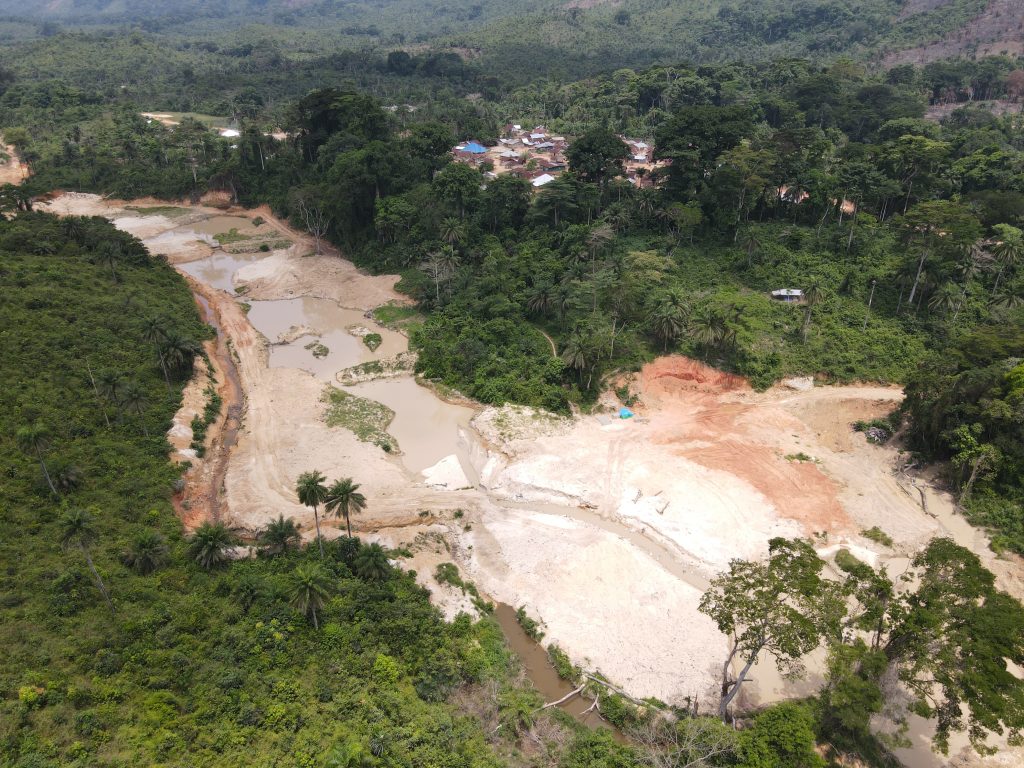
The illicit miners carved huge open pits into the earth, where they dig for gold. After washing the mineral, muddy water forms a polluted pond that flows into nearby streams locals depend on for drinking, fishing, and washing. Drone footage revealed a network of countless pits or “bogeyman holes,” as the gold boys call them in reference to the danger they pose to people.

When DayLight reporters asked how to address the water pollution, they said a company in the area is responsible for it. They said that they even have to carry drinking water with them to the fields, and that they expect farmers to do the same.

“The water is not giving me money, so how will I stop? What I want is money. “If money can come, that one,” I will stop the work, Jallah said.

For residents of nearby communities, the damage is already being felt, especially in Betiba. Once clear and promising, streams have turned murky, while the encroaching mining pits and felled trees threaten farmlands near the forest.
Gold boys
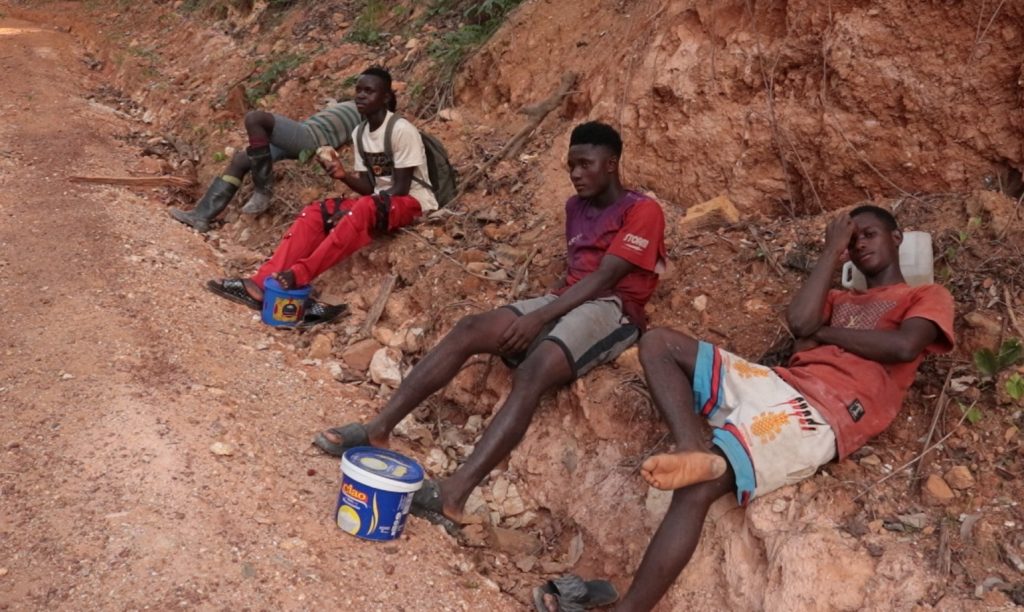
Picture of “gold boys” cooling off at a roadside after work in Betiba, Lofa County. The DayLight/Samuel T. Jabba

To curb these activities, the community land leadership set up a team to monitor mining activities in the region and apprehend illicit miners. The team visits various mines and contacts other communities on the issue.

“We are appealing to the government to put a stop to the illegal mining activities here,” said Yassa Smith Kullie, the Betiba’s land leader. “The Illegal mining is too much in our community. People have two to three mining fields, but when you ask them for documents, they will not show you any.”

Kullie’s claims are backed by evidence. Records from the Ministry of Mines and Energy show only four licenses in that region for two companies. Mining without a license in Liberia is punishable by a fine, a prison term, or both, upon conviction.   
DJI 0248
Drone image showing a muddy runoff in Kiliwu, Lofa County. The DayLight/Samuel T. Jabba

But not everyone in Betiba disapproves of the illicit mining. Some residents get their livelihoods from illegal activities. They no longer travel to Voinjama or other long distances to the market. To them, life with the miners is better than without them.

Betiba is a city in the middle of the forest. Businesspeople set up a market in the town hall located at the heart of the town. Clothes on sale hung on the wall, while household materials and foodstuffs filled tables. New houses built by gold boys adorned the town. Two small entertainment centers sell cold drinks and beverages. There is a local electricity facility with wires running through the town.

“We cannot have all this forest standing while people are suffering. We are poor farmers. We need help to make a living,” Sonie Supo, a leader in Betiba. “If the government wants us to protect the forest and doesn’t allow people to mine in it, let them give us US$50,000.”

Kullie, Betiba’s land leader, said that poverty could not justify illegal mining and environmental harm.  

“If we continue to look at poverty and always behave this way,” Kullie said, “they will destroy all of our land, and when the resources are destroyed, they will leave the area empty.”


This story was produced by The DayLight with support from the Embassy of Ireland through Integrity Watch Liberia. The DayLight maintained editorial independence over its content, which does not reflect the position of the Embassy of Ireland or Integrity Watch Liberia.
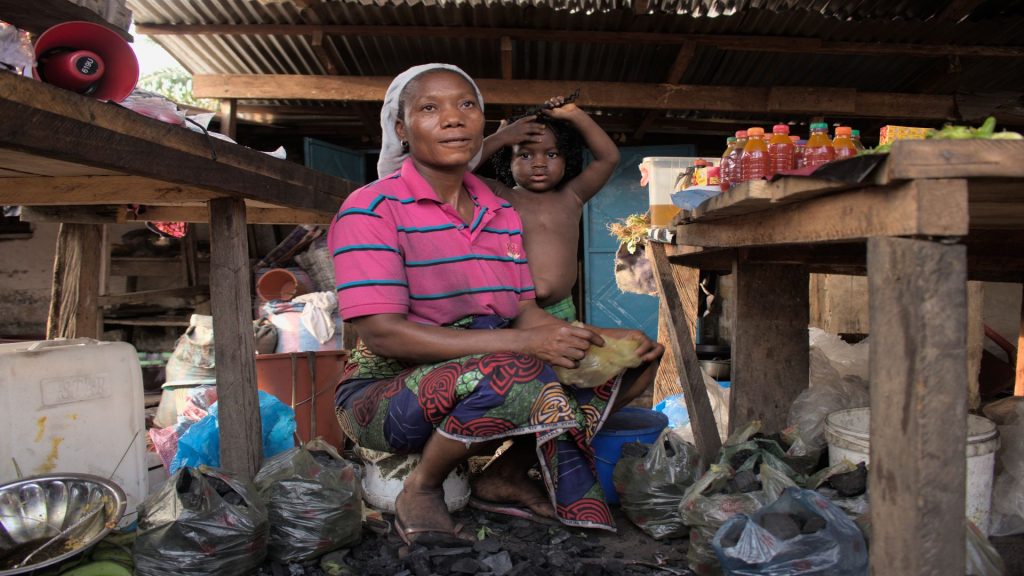
Cocoa Farming Leads to Charcoal Shortage in Grand Gedeh

Visual of no charcoal

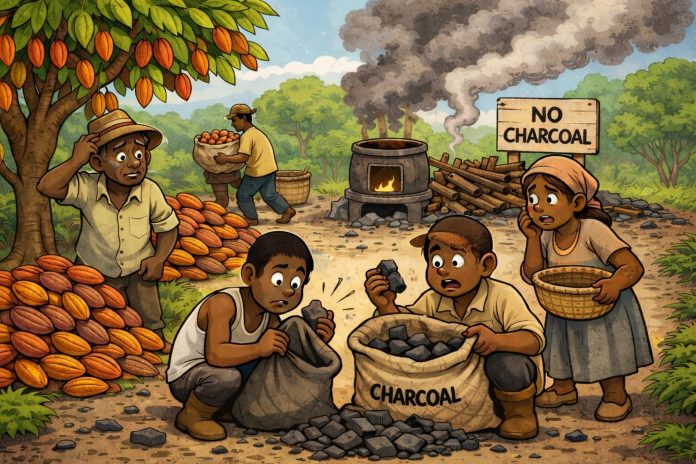
An AI-generated visual depiction of the charcoal crisis in Grand Gedeh County. The DayLight/Samuel T. Jabba


By Samuel T. Jabba


ZWEDRU, Grand Gedeh County – At any time five years ago, Josephine Nyenkor’s charcoal warehouse would be filled. She would have to stand on one bag of charcoal to reach the next.

Today, there is no charcoal in the warehouse, a concrete structure located in Zwedru’s main market. Several large bags filled with empty bags stand on the wall, and folded tarpaulins lie on the blackened floor.  

“It’s just by the grace of God I am surviving. Selling charcoal is my only means for survival,” says Nyenkor, 41, who has sold charcoal for nearly two decades here.

“Charcoal used to give better profit but not [any longer],” she adds.

Nyenkor’s struggle reflects the impacts of the shortage of charcoal in Grand Gedeh County. For the first time, charcoal is in short supply, driving the commodity’s prices high. This is happening as Burkinabé migrants and local landlords are clearing the southeastern region’s vast forests to plant cocoa, forcing charcoal producers deeper into the forest.  

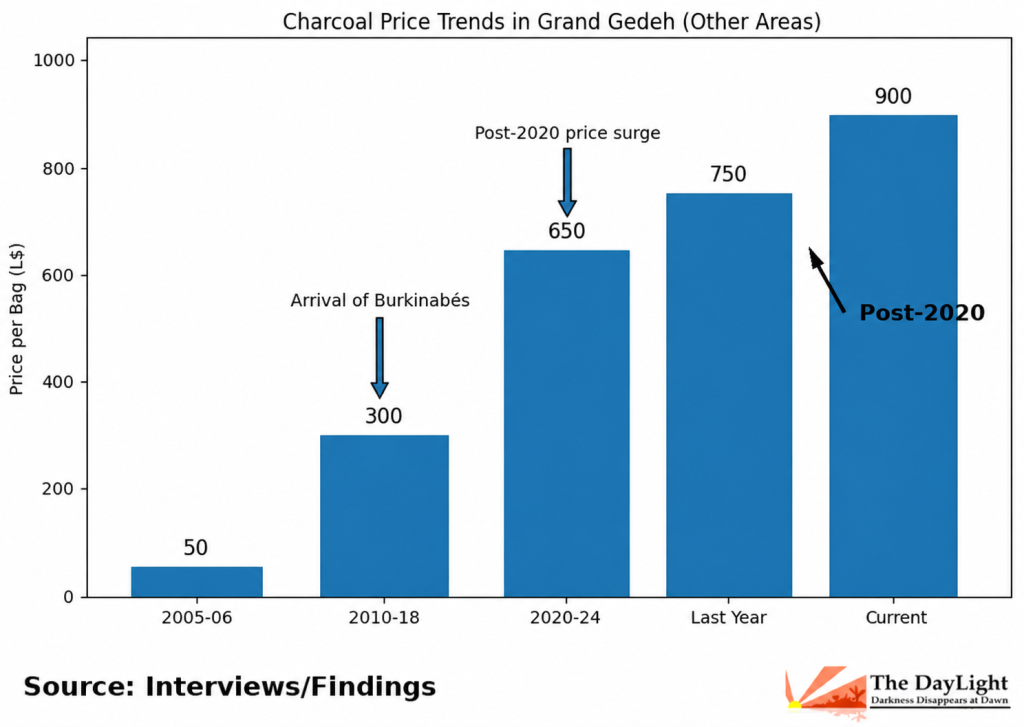
“In 2005 and 2006, we were buying a bag of charcoal for L$50. Today, charcoal is L$900, because of the deforestation,” says Marcus Toe, the executive director of One Health Advocacy Network. Toe works with local communities on health and the environment.

“Because the bush is being burned, you have to walk a far distance to get trees. So, the people who get them make them very expensive,” he added.

Burkinabés began migrating to Liberia from the neighboring Ivory Coast in the 2010s in search of farmlands. Once here, they entered an agreement with locals, who provided them with land. Immigration authorities recorded 55,000 Burkinabe migrants, with 48,000 in Grand Gedeh County alone.

Across Liberia, charcoal remains the leading cooking fuel and contributes to deforestation. Demand for it reached a record high in 2018, an estimated 337,000 metric tons valued at approximately US$46 million, according to a report by the Liberia Forest Sector Project.

compressed MG 0152
Once a wholesaler, Josephine Nyenkor is bagging charcoal in a makeshift kitchen in front of her warehouse at the Zwedru market. The DayLight/ Samuel Jabba

However, cocoa cultivation has a larger impact on the forest. A 2024 study found that 15 percent of the deforestation in Liberia from 2001 to 2024 was driven by cocoa. During this time, Grand Gedeh lost 59,000 hectares of primary forest, according to Global Forest Watch, an online deforestation-tracking application.

Charcoal producers say Burkinabés aren’t giving them access to the forest, so they can’t produce the quantities they used to. They have to hire motorbikes to transfer charcoal from deep inside the forest, since cars cannot access the roads.

Margaret Ziahyee, a charcoal seller who shares the same warehouse with Nyenkor, confirmed this information.

“We will soon start using stoves to cook, because it is very hard to find trees to burn charcoal,” says Ziahyee. As she spoke, Daylight reporters saw a charcoal seller offload eight bags of the commodity from a motorbike at the front of her warehouse.

Last and final chart
A chart breakdown of charcoal prices over the years in Grand Gedeh County. The DayLight/Samuel T. Jabba

‘Zero to hero’

Across Grand Gedeh, the price of charcoal has risen to its highest ever. Between 2005 and 2006, a bag of charcoal was sold for only L$50. From 2010 to 2018, with the arrival of the Burkinabés, a bag was sold for at L$300 to L$450. Then prices soared to L$650 by 2020. Last year, the price climbed to L$750 and L$800. Currently, a bag costs L$900, the same as in Monrovia.

Due to the energy crisis, community dwellers switched to stoves. Townsfolk are now crossing to the Ivory Coast to buy stoves.

“My sister, who has a tea shop, has one and is using it already. To even find charcoal is not easy. Even I myself parked my coal pots because there’s no coal, and the small we have is very expensive. I’m using wood now. In a few times from now, I will send for my own stove.” Alice Doe, a resident of Boundary Town, said in an interview.

Konobo is the leading supplier of charcoal to Zwedru, thanks to its vast forest, according to Toe. Charcoal burning was less expensive, and producers had less work in finding mature and suitable trees. Charcoal producers found it easy to find trees and haul their chunks.

But now, it is the fastest-deforested region in the county. Producers travel beyond cocoa farms to fell trees and spend more money on chainsaw operators and haulers.

Amid the crisis, charcoal is losing ground to cocoa farming because of the less work associated with cultivating the crop.

“At least the cocoa business that came here is helping some of us, from zero level to hero,” says Alice Doe, another former charcoal producer and now a cocoa farmer from Boundary Town in Konobo district.

“Yes, before we used to just go into the forest and start felling trees. But now, you can’t just go into the forest and start felling trees. You will damage someone’s cocoa farm. So, everything is under restrictions because of the cocoa farms,” said Doe.


Civil Society Independent Forest Monitors provided the funding for this story. The DayLight maintained editorial independence over its content.

Mining Destroying Proposed Wologizi Park

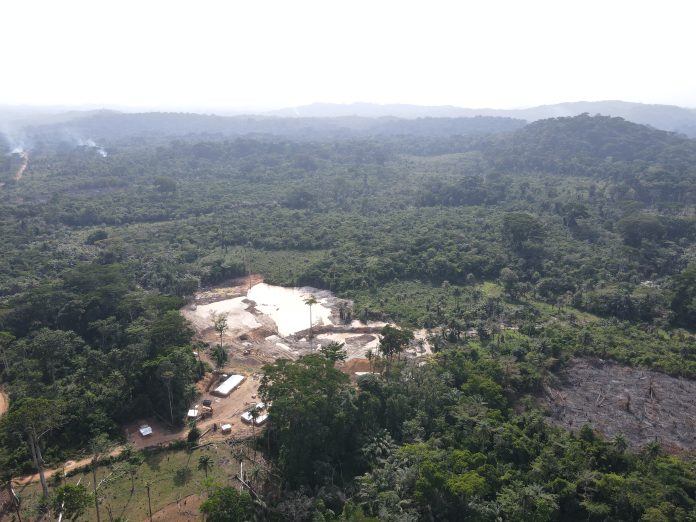
DJI 0324
DJI 0324

Top: A drone shot of a gold mine inside the Proposed Wologizi Protected Area outside Betiba Town, in the Voinjama District of Lofa County. The DayLight/Samuel Jabba


By Varney Kamara


BETIBA – In 2015, the Government of Liberia began the process to create the Wologizi Proposed Protected Area, located in Lofa County’s Voinjama District. The move prevented locals from hunting, farming, or building homes in the forest.

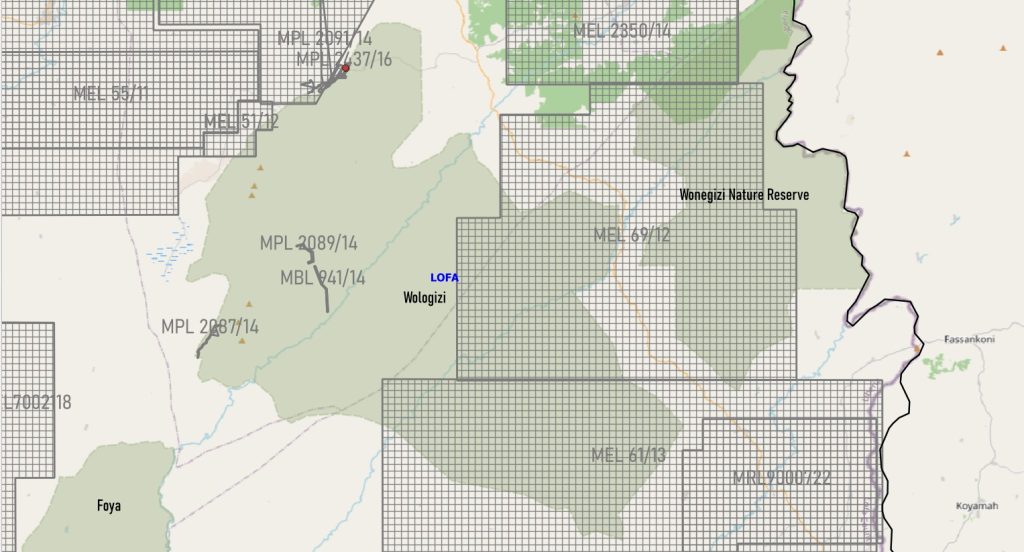
That rule changed last May when miners arrived here with mining licenses to operate in the wooded area adjacent to the Wologizi Mountain. Beginning in 2022, the Ministry of Mines and Energy has awarded five licenses, some of which overlap the Wologizi Proposed Protected Area. These licenses not only undermine conservation efforts in the area but also endanger lives and destroy the environment.

“They are digging everywhere and damaging the waters,” said Yassa Sumo, chairperson of the land leadership of Kpakaza Clan, where the proposed park sits. “We are trying hard to protect our forest, but mining in this area is giving us a hard time.”

“Everyone here was farming and making gardens, when the Chinese came, gold boys took over the community,” said James Akoi, Town Chief of Betiba, in an interview with The DayLight.

There are two companies in the area, which is in the Voinjama District. Hong Sheng Mining Company, a Chinese-owned firm, has had two licenses: a gold exploration license and a now-expired prospecting license. Sprout Global Mining Ventures, Inc. has three active licenses: two prospecting licenses and a class B or medium-scale license for gold.  

Satellite imagery and the Ministry of Mines’ records show these mining licenses—and a host of others—overlap the proposed Wologizi park. This evidence corroborates a recent report that found mining licenses overlapped more than 2 million hectares of forest across Liberia.

The mining activities inside the Wologizi are having a devastating toll on the proposed park. Using heavy earthmovers, miners are cutting down trees, polluting rivers locals use for drinking, and destroying the environment.

Wologizi forest is among several places the Liberian government has designated as a proposed protected area. Measuring 99,538 hectares, it is an important ecosystem that is home to various endangered species, including monkeys and chimpanzees.

Late last year, the Forestry Development Authority, French NGO GRET, and Fauna & Flora International, a UK-based NGO, launched a US$9 million project to create a protected area corridor spanning 130,000 hectares along the Wonegizi-Wologizi landscape. It is part of Liberia’s climate commitment to protect 1.5 million hectares of forestlands and halve deforestation by 2030.  

The FDA did not respond to queries for comment on the matter.

260428 WologiziPPA ExpiredMineLicenseAreas(DY) (1)
A map showing mining licenses overlap the Wologizi Proposed Protected Area. Graphic credit: David Young

Hassan Kroroma, a Sprout executive, and Gao Feng, a Hong Sheng representative, declined to comment on the issue. However, Richard Manuba, the ministry’s spokesman, said that a company was encroaching on another’s area.  

“The ministry has issued a closure order in that particular area,” Manuba said on Okay FM. He did not provide any further details on the alleged encroachment.

Consent, conflicting interests

Betiba was unaware that the licenses were issued, according to residents. Obtaining locals’ consent is a fundamental right under Liberia’s Land Rights Act, which recognizes customary land ownership. The law grants communities the right to have a say in decisions regarding their ancestral territories.  

“When they came to the community, they said the government sent them to mine here,” said Sumo, the community land leader. “They did not have any prior discussion with us.”

Sonie Supo, a Betiba elder, supports mining in the Wologizi area. Supo demands compensation to keep the forest standing.

We cannot have all this forest standing while people are suffering. We are poor farmers. We need help to make our living,” Supo said. “If the government wants us to protect the forest and doesn’t allow people to make farms or do mining in there, let them give us US50,000.”

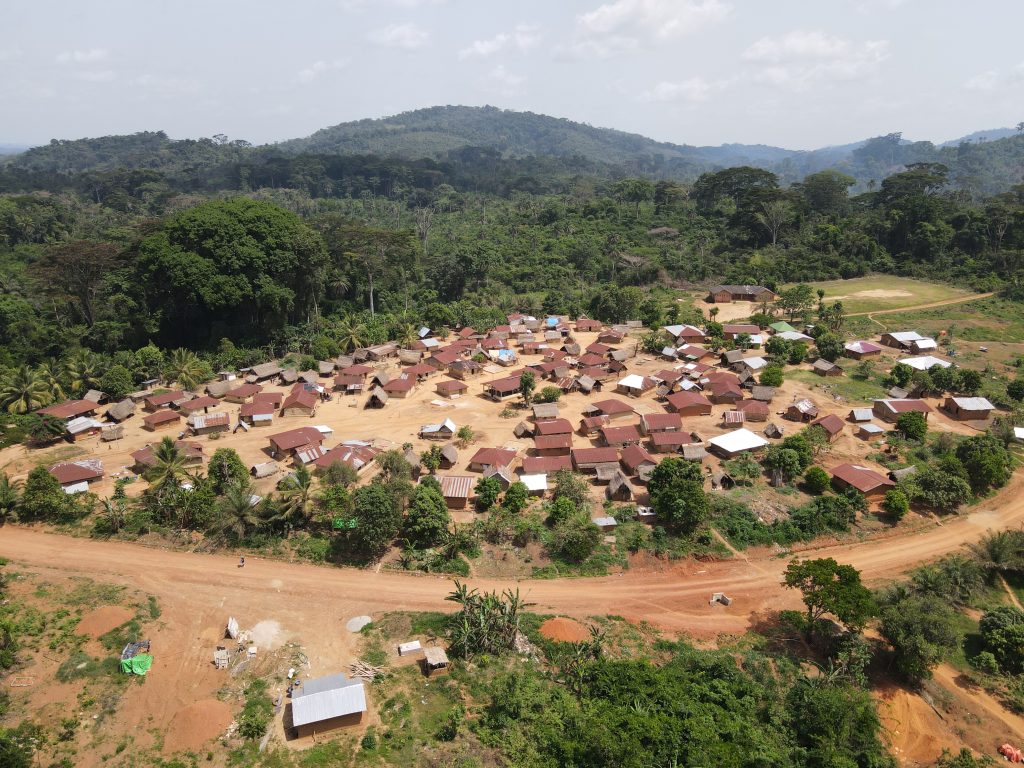
DJI 0292
A drone shot of Betiba in Voinjama District, Lofa County, a town adjacent to the Wologizi Proposed Protected Area. The DayLight/Samuel Jabba

Just as views are mixed in Betiba, so are laws conflicting regarding mining in a proposed protected area. The Wildlife Protected Area Management Law and the National Forestry Reform Law bar mining with a medium-scale license in a proposed protected area. However, the Minerals and Mining Law—the oldest in the Mano River sub-region—does not recognize a proposed protected area.

The draft Mineral and Mining Law of 2023 recognizes a proposed protected area, but its establishment has been stalled upon the inception of the Boakai administration.  

Responding to the overlap, Alwell Aloysius Carr, the Director of Mines, said a lack of coordination among government institutions was responsible for the problem.

“The challenges are that the Ministry of Mines has budgetary constraints. We rely on our agents to feed us with information,” Carr said.

“But equally so, with respect to this information, we will not take it lightly. We will ensure that it is swiftly investigated.”


The story was a production of the Community of Forest and Environmental Journalists of Liberia (CoFEJ).