Home 2026 April

Monthly Archives: April 2026

Evading Taxes, Miners Leave Behind Death Traps and Polluted River

Kpeteyea mines2026 04 21 175354

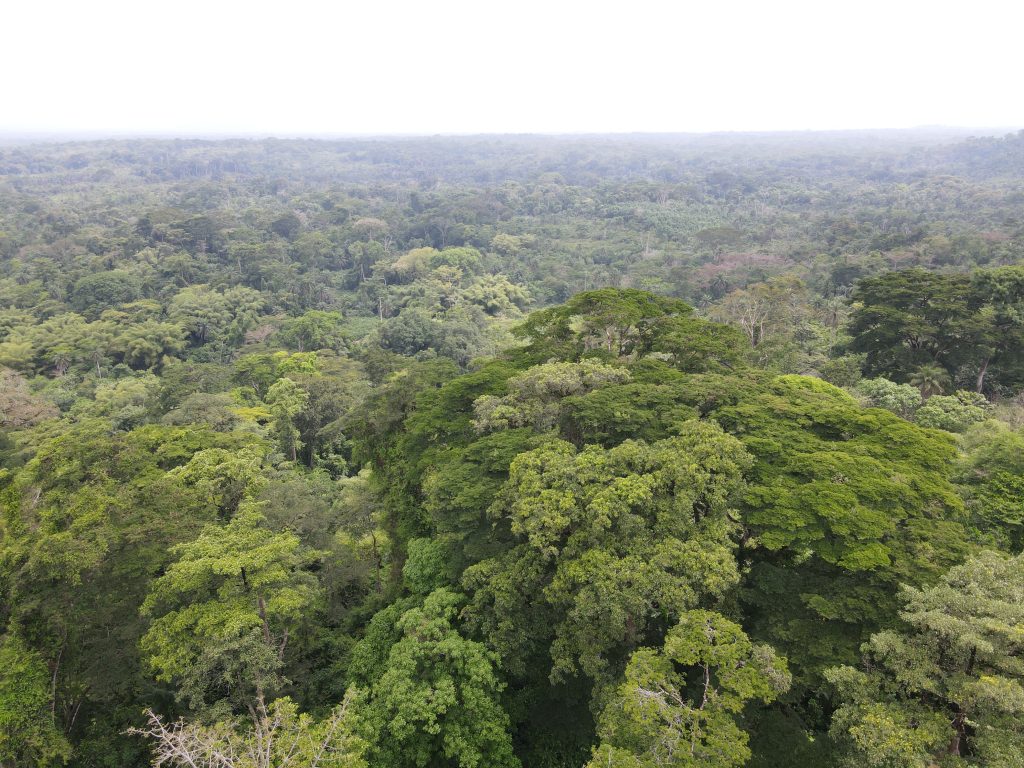
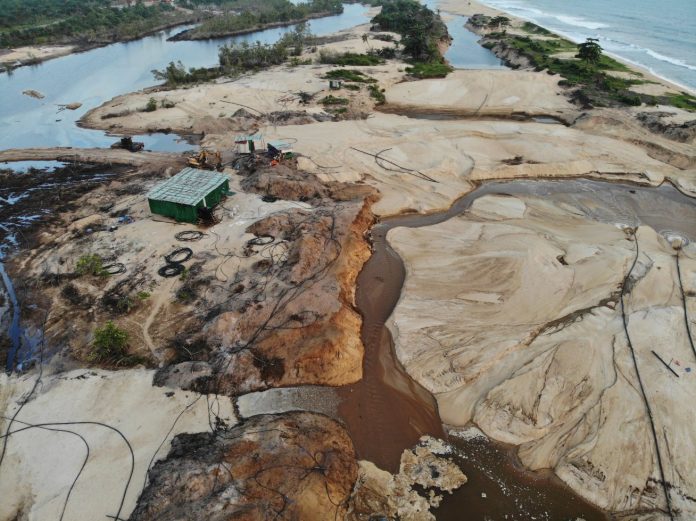
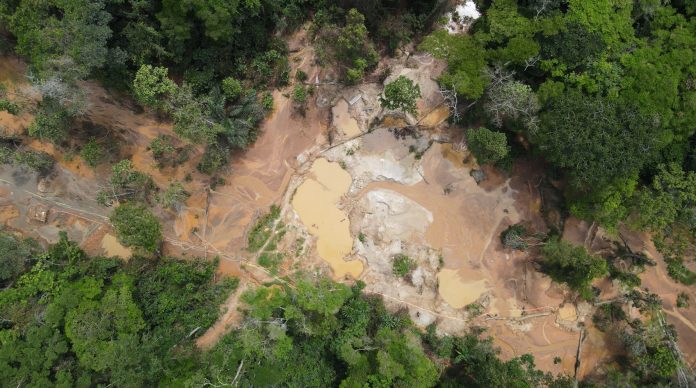
Top: A drone shot of Golden Trip Group Limited’s abandoned mine in the Kpeteyea town of Salayea District, Lofa County. The DayLight/Samuel Jabba


By T. Prince Mulbah, special for The DayLight


KPETEYEA, Lofa County – One day in May 2020, Chief Anthony Flomo joined townspeople to sign an MoU with a mining company. The five-year deal required Golden Trip Group Limited to pay Kpeteyea—a town in the Gbalin Clan of Salayea District—US$900 monthly, pave a major road with concrete bridges, and provide scholarships.

For the first time, the people of Kpeteyea felt their nightmare of bad roads, a lack of high school graduates and unsafe drinking water was over.

But what Chief Flomo and the townspeople did not know was that Golden Trip had issues. Between the signing and when the community’s realization, Golden Trip had dug several giant-sized pits, polluted watercourses, allegedly owed the community benefits, and evaded a substantial amount of taxes.

“Golden Trip really surprised me, because when they entered Kpeteyea, I thought it was a new day for us…,” said Chief Flomo, sitting under a tree where the Gold Trip MoU was signed.

“We thought the young people of this town were going to get good jobs, our children were going to sit in modern classrooms with safe drinking water,” he added.

Unauthorized mining

Golden Trip was established in April 2018 and is owned by Chein Haibin (75 percent), a Chinese national,  and Randy Scott (25 percent), a Liberian businessperson, according to the company’s articles of incorporation.
compressed MG 8583
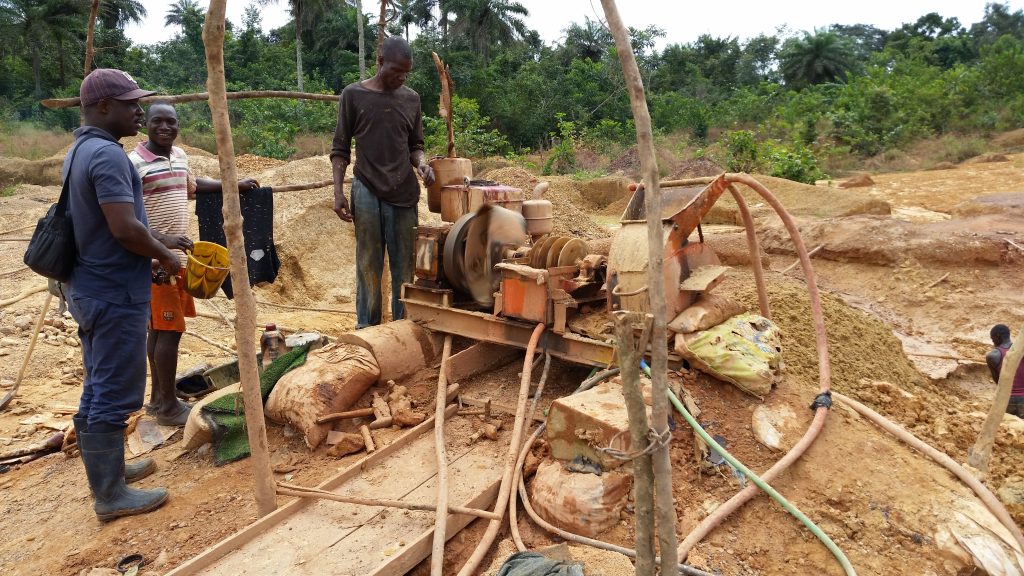
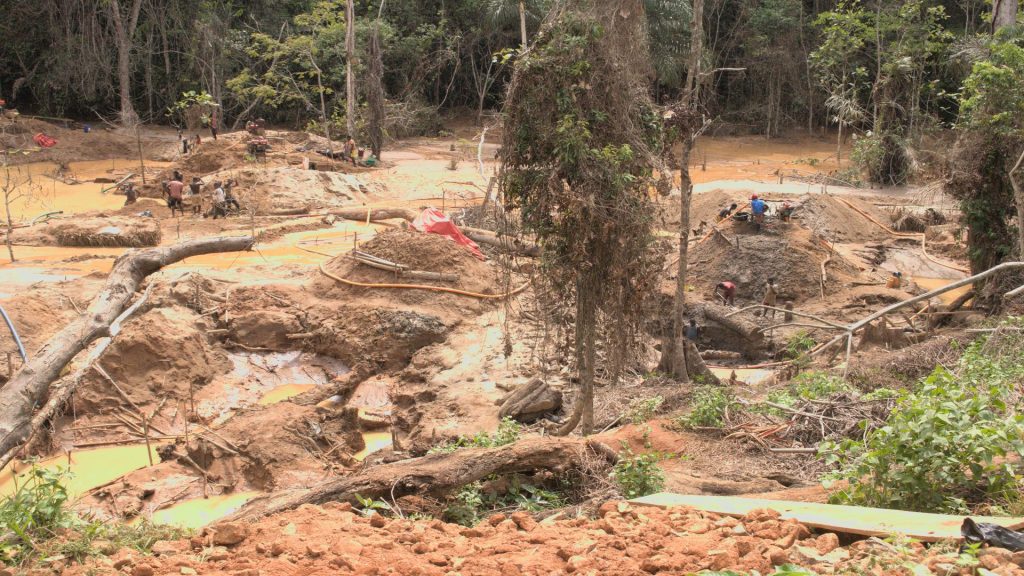
Wildcat miners at Golden Trip’s gold mine in Kpeteyea. Reporters counted over 30 water pump machines at the site. The DayLight/Samuel Jabba

In February 2020, it applied for a class ‘B’ or a medium-scale mining license on 98.3 acres in the Salayea District. Its application was approved three months later. However, the Ministry of Mines placed it under review in 2024 and has remained that way ever since.

Locals only discovered this information when Scott, Golden Trip’s Liberian co-owner, allegedly refused to present its documents. They had become suspicious after several companies claimed the same gold mine as Golden Trip, among other things.

Their suspicion pushed Arthur Quiah, then-Salayea District’s Mining Agent, to investigate. Quiah, a mines ministry representative in the region, established that Golden Trip’s particulars were incomplete and shut down its operations.  

“I closed them because their document had expired and they did not have a current document. Their document was not proper, and the false one that I took from them… expired,” Quiah told the DayLight in a telephone interview. Quiah, who has now been replaced, presented no evidence.

Also, it is unclear whether the Ministry of Mines took any action against Golden Trip for its illegal activities, though operating without a valid mining license violates the Minerals and Mining Law, which carries a fine, a prison term, or both for convicted offenders.

Randy Scott, Golden Trip’s minority shareholder, denies Quiah’s accusation. Scott, questioning Quiah’s employment status with the ministry, said Quiah was unaware of the situation.

“How will he close me down when the Ministry of Mines is still sending me communications?” Scott, who has been linked to several mining companies, quipped. “Arthur Quiah lied.”

Meanwhile, the people of Kpeteyea have seized Golden Trip’s properties until it pays all debts it allegedly owes the community. Golden Trip owes Kpeteyea US$8,100 in monthly dues, two hand pumps, a guesthouse, three bridges, and the renovation of a school building, among others, according to Chief Flomo.
compressed DJI 0159
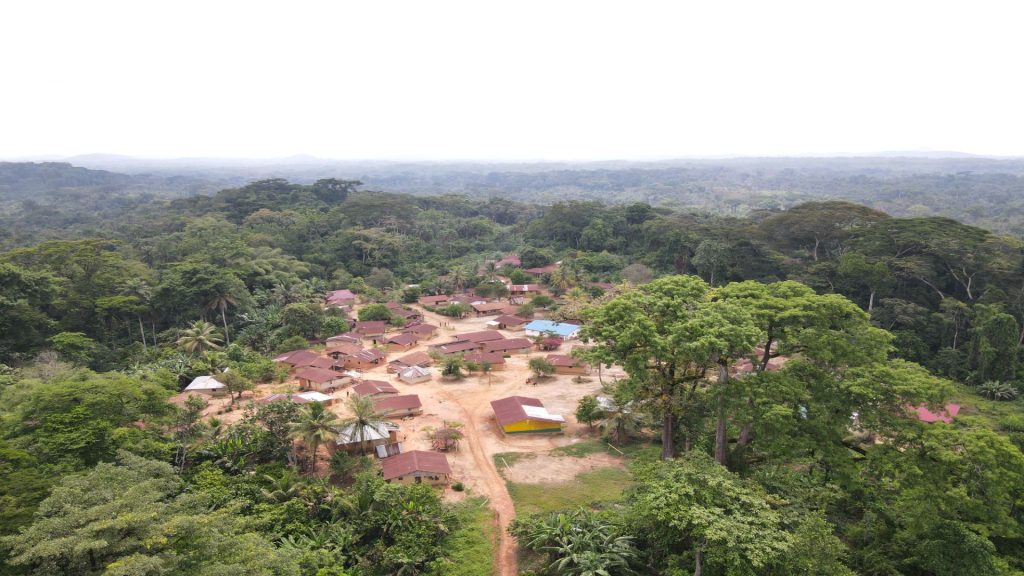
A drone shot of Kpeteyea Town in Salayea District, Lofa County. The DayLight/Samuel Jabba

“I swear these people lied to us, but thank God their materials are still here. If they cannot pay our US$8,100, and implement the projects we agreed on in the MoU, nobody will take any machine from here,” said Chief Flomo.  

Scott denies being indebted to Kpeteyea, dubbing the town’s claim as “nonsense.” He, who had said last year he would resume work this year, now said he had moved from the area.

“Let them take [the equipment],” he told The DayLight in a phone interview. “The government issued the license to different persons; I don’t have [anything] to do over there again.” There is no record of the new company Scott mentioned.

Bogeyman holes

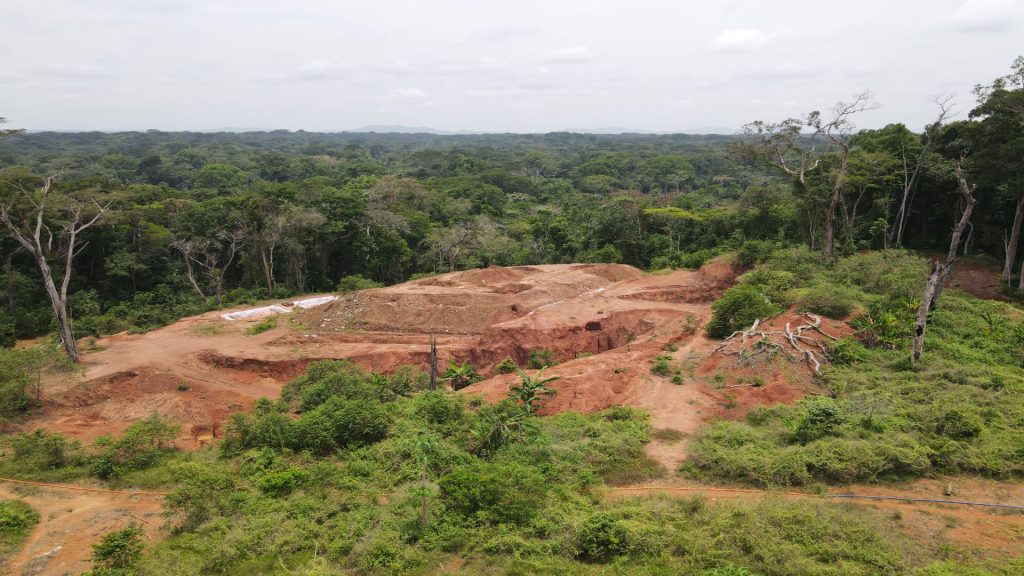
Reporters documented Golden Trip’s mining footprints in Kpeteyea. There were huge, open mining pits locally known as bogeyman holes for being death-traps. There were traces of muddy water running into the Wainda River from mining activities. There was a network of pipes meant to channel water from the rover, which flows into the St. Paul River, and is used by locals for drinking.

Chief Flomo told the DayLight that farmers discovered dead fish floating on the river and the riverbank. It has been polluted with chemicals.

“People were complaining that they had lots of dead fish in the water, but we were really confused about who did the act. Actually, we never discovered what killed the fish, so we advised the citizens not to use the water,” added Flomo. A group of wildcat miners from faraway and near, digging the open pits, confirmed the townspeople’s story.

Scott squashed those claims as a “lazy argument” from the people of Kpeteyea. He claims that the pipes in the river were used to fetch water to his camp.

“Look, mercury? That is a lazy argument. My company was working in the place, and we needed water, which is why you saw pipes in the river. Besides, if fish were dying, then I don’t know why,” added Scott.

The DayLight could not independently verify that claim. However, locals’ descriptions of the alleged pollution are consistent with cyanide poisoning, since mercury kills fish gradually through long-term exposure.

Scott also denies Golden Trip left behind bogeyman holes, a common cause of mine collapses nationwide, including one of the deadliest in River Cess two years ago.
compressed DJI 0165
In 2024, the Ministry of Mines and Energy shut down Golden Trip’s operations, four years after it was awarded. The DayLight/Samuel Jabba

“I never dug in pits. I dug in a mountain,” said Scott. “I never worked on a low ground. You can’t cover the mountain. Who can cover a mountain?  Is a mountain a hole?”

The mining law does not support Scott’s claims. The law requires a company to restore the land or watercourse to its previous state. It does not provide an exception for montane or flat areas.

No work permit

It is unclear how much gold Golden Trip produced, as the Ministry of Commerce and Industry’s records show the company did not export any minerals.

Scott corroborated that information, claiming Golden Trip did not find gold in Kpeteyea. “If I were getting minerals, would I leave from there?” He asked rhetorically.

It was the third reason Scott provided for Golden Trip’s inactivity in Kpeteyea. He had first blamed the local community and later “human errors” on his license.

But the scale of Golden Trip’s operations and the interviews with townspeople tell a different story. Chinese and Liberian workers dug huge pits and piled up gravel in their search for tiny gold nuggets. Four Chinese teams mined the area in Golden Trip’s name. Company executives made frequent trips in the north-western countryside day and night, said Charles Vesselee, a Kpeteyea youth.

“What do you mean? Randy Scott Golden Trip company never took gold from here?” He reacted to The DayLight’s findings. “That’s not true. Then why are trucks and Land Cruiser cars moving day and night? I beg you yaaa! Those guys carried minerals from here,” said Vesselee.

The mystery surrounding Golden Trip’s production is not the only issue. Turns out, none of the 16 foreign workers it brought into Liberia between 2021 and 2023 obtained work permits, according to official records. The Ministry of Labor confirmed this, except for one Zing Wei.

Also, the records establish that the workers obtained a resident permit. However, only four workers’ statuses were renewed. For instance, the residential status of Guangxian Li, a Chinese national who arrived in Liberia at some point, was renewed in 2023 after being skipped in 2022.

 Similarly, the one for Hang Lu, another Chinese, who arrived in 2021, was only renewed in 2023. The Liberia Immigration Service said it did not have a record for any of the 16 workers.  
MG 8564
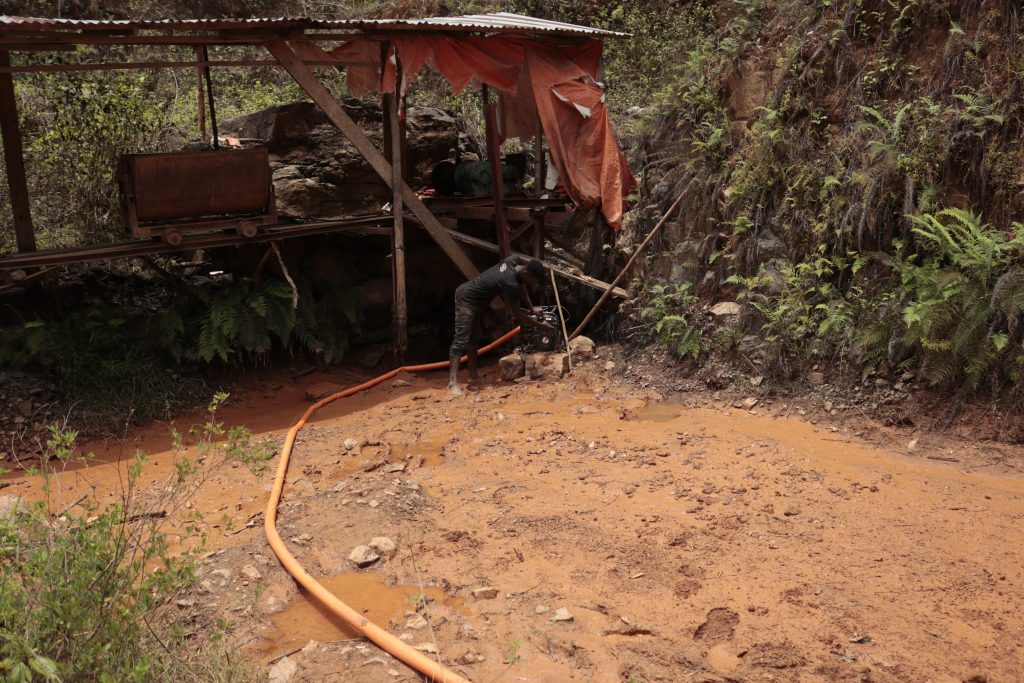
An illegal miner starts a water pump machine at Golden Trip’s mine in Kpeteyea, Lofa County. The DayLight/Samuel Jabba

The DayLight reviewed Gold Trip’s tax history and found that it failed to renew its license from 2021 until it was shut down in 2024. There was no payment for an environmental permit, a requirement for medium-scale mining.

Based on those findings, Golden Trip evaded tens of thousands of United States dollars in license fees, work, and resident permits, according to official records and fee structures.

The DayLight noted one more irregularity with Golden Trip, though. Official records show that Mr. Chein, the company’s majority shareholder, does not reside or work in Liberia.

Scott confirmed that Mr. Chein did not live or work in Liberia. However, he claims his Chinese business partner is not required to do so.

But that claim is incorrect. The mining law requires that a non-Liberian who holds up to 60 percent shares in a company with a medium-scale license be legally permitted to live and work in Liberia. The license empowers Liberian businesspersons to boost the country’s economy.


This content is produced by The DayLight with support from the Embassy of Ireland through Integrity Watch Liberia. The DayLight maintained editorial independence over its content, which does not reflect the position of the Embassy of Ireland or Integrity Watch Liberia.
Ex-Farmers and Hunters Farm Animals to Protect Forest

compressed IMG 1368
compressed IMG 1368

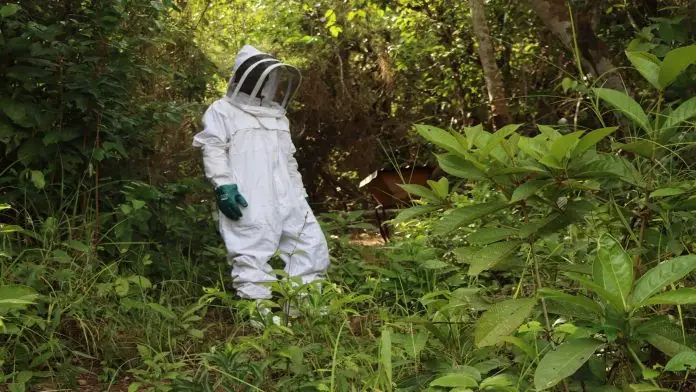
Titus Morlu, a beekeeper in Beyan Town,  Salayea, visits one of his beehives. The DayLight/Harry N. Browne


By Esau J. Farr


SALAYEA, Lofa County – Back in the days, Titus Morlu hunted deer, raccoons and pythons. But in 2024, he put down his gun and trap and became a beekeeper.  

Morlu no longer has to walk long distances at night to hunt animals, and he does not worry about contracting any diseases from his prey.  He keeps bees in Beyan Town, in Lofa’s Salayea District, bordering Bong County, and expects his first harvest soon.

“For now, some of us have no interest in going to the forest to hunt or look for honey because we have [honey] right behind our vineyards,” says Morlu.

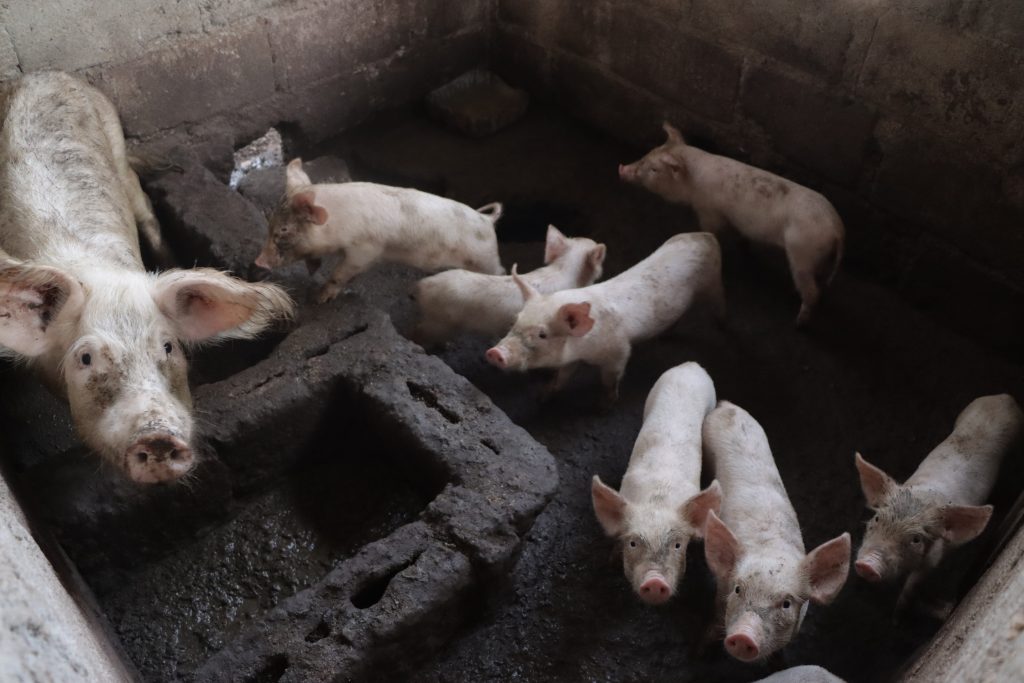
Like Morlu, Wolobah Nuapolor hunted in the Salayea forest for decades. When he learned of an opportunity to raise pigs rather than hunt deer and squirrels, he jumped on it. He now has 12 pigs.

The beekeeping and piggery projects are two of several programs the Salayea Community Forest is undertaking to provide alternative, sustainable livelihood opportunities for townspeople, aimed at reducing their reliance on the forest and protecting it. It also includes a wood shop, cocoa farming, village loan scheme, and guesthouse management.

IMG 1022
A pigpen at a farm in Salayea Town, Lofa County. The DayLight/Harry N. Browne

Established in 2016, the Salayea Community Forest is an 8,270-hectare conservation forest with rich biodiversity. The livelihood programs have impacted the forests at different levels. There is no more forest farming, as many have turned to lowland farming, animal raising and local businesses. Organizers say the project is intended to cut deforestation and forest-induced emissions.

“We are doing beekeeping, cocoa farming, village savings and loan program, and piggery in the six affected communities to fight against all forms of illegal activities in our forest,” says Yassah Mulbah, Salayea Community Forest’s chief officer.

“The village saving loan has empowered the women within the six affected communities in Salayea. They no longer receive credit from outsiders like in the past; their children are no longer being sent out of school for fees.”

DJI 0160
A drone shot shows a partial view of the Salayea Community Forest. The DayLight/Samuel T. Jabba

‘A part of me’

In 2023 and 2024, Palladium Group, a UK-based NGO, trained people from the six communities that own the forest in different areas for two weeks. Beneficiaries of the piggery training received two pairs of pigs to begin their farming, while beekeeping trainees got beehives.  

A team of DayLight reporters, which visited Telemu and Beyan Towns, observed that the beehives were ready for harvest.

Beekeepers in Salayea have chosen next month to harvest their beehives, all of which have colonized. The beekeepers want the community forest to help find buyers for their honey. One beekeeper told reporters that a liter of natural honey is sold for L$1,200 (US$6.66) in the area.

“I have decided to have my own beehives, about seven or eight, to help send my children to school and to help my family,” said John Tokpah, a former forest farmer-turned-beekeeper in Telemu Town, who has spent a year in the program.

“This (beekeeping) will be a part of me. I will not let it go from me.”

The piggery program is a little faster than the beekeeping program. It has already begun providing income for beneficiaries.

The piggery program recruited more than a dozen people, including women in Beyan, Telemu, and Salayea Towns. It started with 12 pairs of pigs, which have now multiplied. Currently, there are 18 pigs at three functional pig farms.

The Salayea pig farm has been sold at least three times. Proceeds from those sales have been added to the community forest’s savings of over L$400,000 (US$2,222), according to Mulbah. 

“We have been using some of the pigs for other programs here in Salayea,” says Wolobah Nuapolor, a piggery manager. “Even last week, we killed some and sold it and the money was put into the community forest’s account.”

IMG 1048
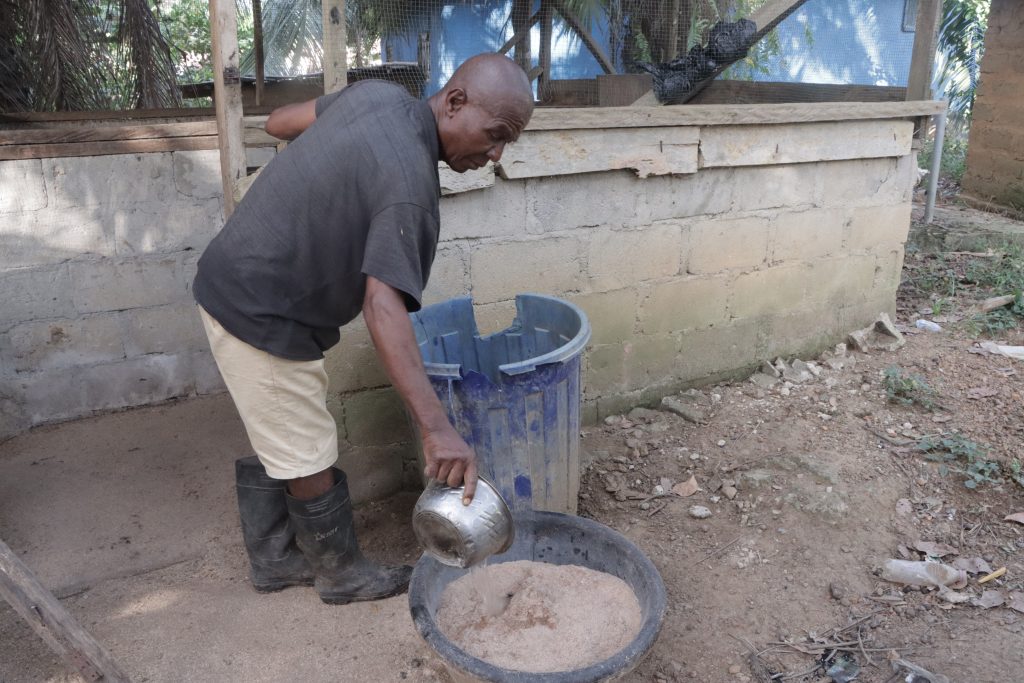
Wolobah Nuapolor, a piggery manager in Salayea, prepares food for pigs. The DayLight/Esau J. Farr

“When these pigs are plentiful here, our men will not be hunting in the forest,” says Nenei David, a pig farmer in Telemu.  

In the next five years, Mulbah, Salayea’s chief officer, wants the community to be independent of the forest. Illegal activities in the forest have reduced since 2024, she says. This, however, was propelled by a string of legal victories against illegal occupants—farmers, miners and loggers.

“These livelihood programs will make Salayea Community Forest financially strong and put an end to illegal forest activities in the years ahead,” Mulbah says.


The story was a production of the Community of Forest and Environmental Journalists of Liberia (CoFEJ).

How a Newsroom Led to a ‘Ban’ on a Timber Black Market

IMG 0789
IMG 0789

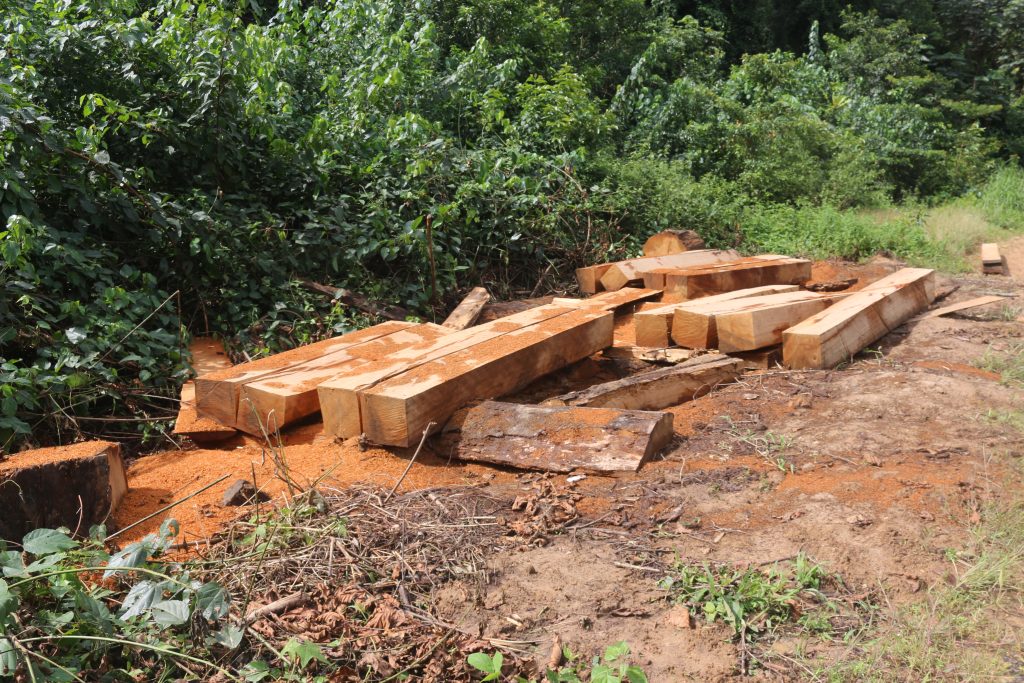
Top: Kpokolo harvested by businesswoman Binta Bility in Compound Number One, Grand Bassa County, in 2022. The DayLight/James Harding Giahyue


ByJames Harding Giahyue


MONROVIA – On September 29, 2022, Emmanuel Sherman, The DayLight’s Editor-at-large, and I set off on a logging investigation in Compound Two, Grand Bassa County. While on our way, we saw several suspicious timber blocks by the roadside in Boyah Town and decided to investigate.

Our investigation found that Joe Jarvis Boyeah, a townsman after whose family the town is named, ran the kpokolo operation. Boyeah worked for Othello Teah, a regular caller on radio talk shows in Buchanan. Teah had been hired by Chanda Cole, the owner of one of Buchanan’s oldest businesses, the Cole Joe Wood Workshop.

The story that exposed the Boyeah Town syndicate was one of several DayLight investigations that led the government to “ban” kpokolo, though it was never a legal trade. The so-called ban might have marked the end—at least on paper—of the trade. However, each investigation untangled the criminal world of Kpokolo—how it prospered private individuals and public officials, costing the Liberian government millions.

“We have ordered all our checkpoint staff members to stop the issuance of waybills for all sawn timbers with a thickness above two inches because this is the dimensional range of thickness that is prone to illegal exportation,” said Edward Kamara, FDA’s manager for forest marketing and revenue forecast, in February 2023. Kamara was responding to a DayLight email about the spiraling of kpokolo countrywide, saying the regulator had issued “tens” of kpokolo permits.

“It had been observed that most of the timber arrested for attempting to illegally export consisted of these dimensions. Therefore, it is the chainsaw milling block wood… that is banned…,” Kamara added. The ban was officially announced at an annual meeting of forestry actors four months after Kamara’s passive disclosure.

Kpokolo started somewhere in the 2000s, based on local people and actors in the illegal trade. The term means “thick and heavy” in the Kpelle language. Logs are shaped into blocks to fit neatly into containers, and then are shipped to Asia, especially China and Vietnam.

By 2022—the year the ban was imposed—Kpokolo had peaked. Illicit operators ran advertisements on social media, and kpokolo had well been normalized. The Associated Press reported that 70 percent of Liberia’s timber exports were likely illegal, citing a diplomatic document. A 2023 report by the US-based Forest Trends found that kpokolo was a growing threat to Liberia’s forests, undermining the country’s climate change mitigation efforts.

“Flora crimes, particularly illegal logging and timber trafficking, are a significant criminal market in Liberia. Illegal practices like chainsaw milling large blocks of timber for export, known locally as kpokolo, further contribute to the scale of the trade,” reads the 2025 Global Crime Index. The annual report by organizations, including Interpol, chronicles the state of organized crime across the world.  

Kpokolo has contributed to the toll that forestry activities have on Liberia’s rainforest, the largest in the West African region. In 2022, Liberia recorded the tenth-largest forest loss in the world, according to Global Forest Watch, an online tool that tracks deforestation in real time.  The country lost 23 percent of its primary forest that year alone.  

Leaked videos, pictures

Before the Boyeah Town investigation, The DayLight exposed Varney Marshall, a ranger with the Forestry Development Authority (FDA) at the Klay checkpoint, Bomi County. The newspaper published videos and pictures from a WhatsApp conversation between Marshall and an illegal logger.

The evidence exposed a reel of the ranger’s illegal operations: kpokolo being cut, large ones packed into a container, a picture of Marshall’s equipped operatives, and a proud Marshall himself posing for a picture. He was eventually dismissed following the publication. However, the story showed that Kpokolo involved officials—not just loggers—a fact the newspaper would later further establish.

IMG 4365
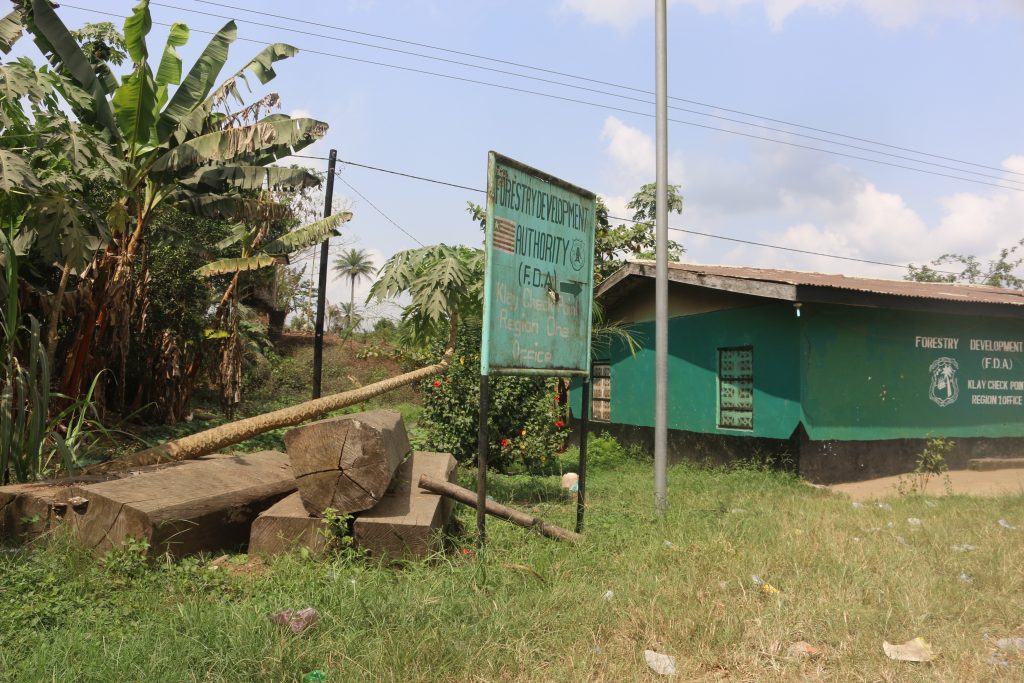
Seized Kpokolo at the Forestry Development Authority’s sub-office at the Klay checkpoint in Bomi County, in 2024. The DayLight/James Harding Giahyue

After the Marshall leaks, The DayLight investigated Binta Bility, a businesswoman, in Compound One, Grand Bassa. The investigation dug out that she ran a kpokolo camp in Zoegar Town with 17 accomplices, including townspeople.

The DayLight applied old-fashioned forensic techniques seen often in crime documentaries. We showed the businesswoman’s pictures to townspeople for identification, and we interviewed a man whose number was taken from the wall of the makeshift camp in the forest, near the Worr River.

About two months after the publication, Binta Bility, who denied she ran the operations, somersaulted and admitted her wrongdoing, and vowed to do things lawfully. However, that confession came after police in Bahn, Nimba County, seized a consignment of kpokolo she was transporting a month earlier.

Binta Bility might have been organized; however, a cartel of two Turks, two Chinese, and their Liberian accomplice push criminal timber trafficking, perhaps to the highest known level. With the aid of at least 33 local people, China Turkish Liberia Industries (CTL) transformed a portion of the Central Agriculture Research Institute (CARI) into a kpokolo factory.  

Videos and pictures The DayLight obtained show large pieces of boxlike timber and various machines used between 2019 and 2021. They were the most illegal timber and equipment the newspaper had ever seen at a single location.

“They got over there with a different plan,” said Dr. James Dolo, then-Officer in Charge of CARI. “They said they wanted land to set up some demo and start some production…   but those guys came, and they started bringing logs in overnight.”

In the end, the Forestry Development Authority sued the syndicate’s ringleaders. Though the trial has yet to start, the syndicate claimed they bought logs from Alpha Logging and Wood Processing Company, which operated in Lofa County. In all, the CARI investigation further proved that large-scale logging companies were involved in the illicit trade, not just small ones as previously perceived.

Collusion

Another investigation into a Turkish company pinpointed the collusion between kpokolo operators and government officials. The unravelling of the crimes of Marshall, the now-dismissed FDA ranger, provided a clue; this investigation uncovered the whole story.

IMG 1199
Kpokolo in a forest in Gbaryama, Gbarpolu County, in 2022. The DayLight/James Harding Giahyue

The 2023 publication established that Askon Liberia General Trading Inc., run by a Turkish family—Hasan, Umit, and Yeter Uzan—illegally operated between Ganta and Sanniquellie, Nimba County. The Uzans advertised their kpokolo business on social media and online business platforms.

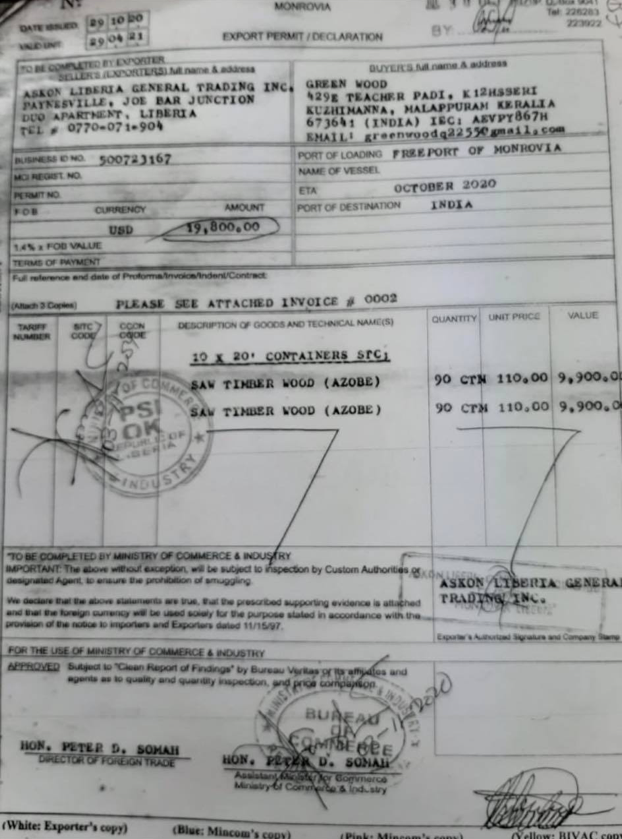
In 2020, Askon exported two container trucks of timber to India for US$19,800 with the help of Peter Somah, then-Assistant Minister for Trade at the Ministry of Commerce and Industry. The export of timber occurred outside the legal system, known as LiberTrace.

The investigation led the FDA to blacklist Askon. Its executives, including Hasan Uzan, the majority shareholder, were arrested days later in Nimba and reportedly deported, ending the company’s years of illegal activities in the north-eastern countryside.

Askon proved the collusion between public officials and kpokolo operatives existed, but it was an investigation into a kpokolo kingpin that cemented that fact.

With 25 men and 30 chainsaws, Emmanuel Gongor’s operations spanned four of Nimba’s nine districts. People called the miner-turned-logger “Emmanuel the Investor” for his habit of conducting community projects such as bridges and roads.

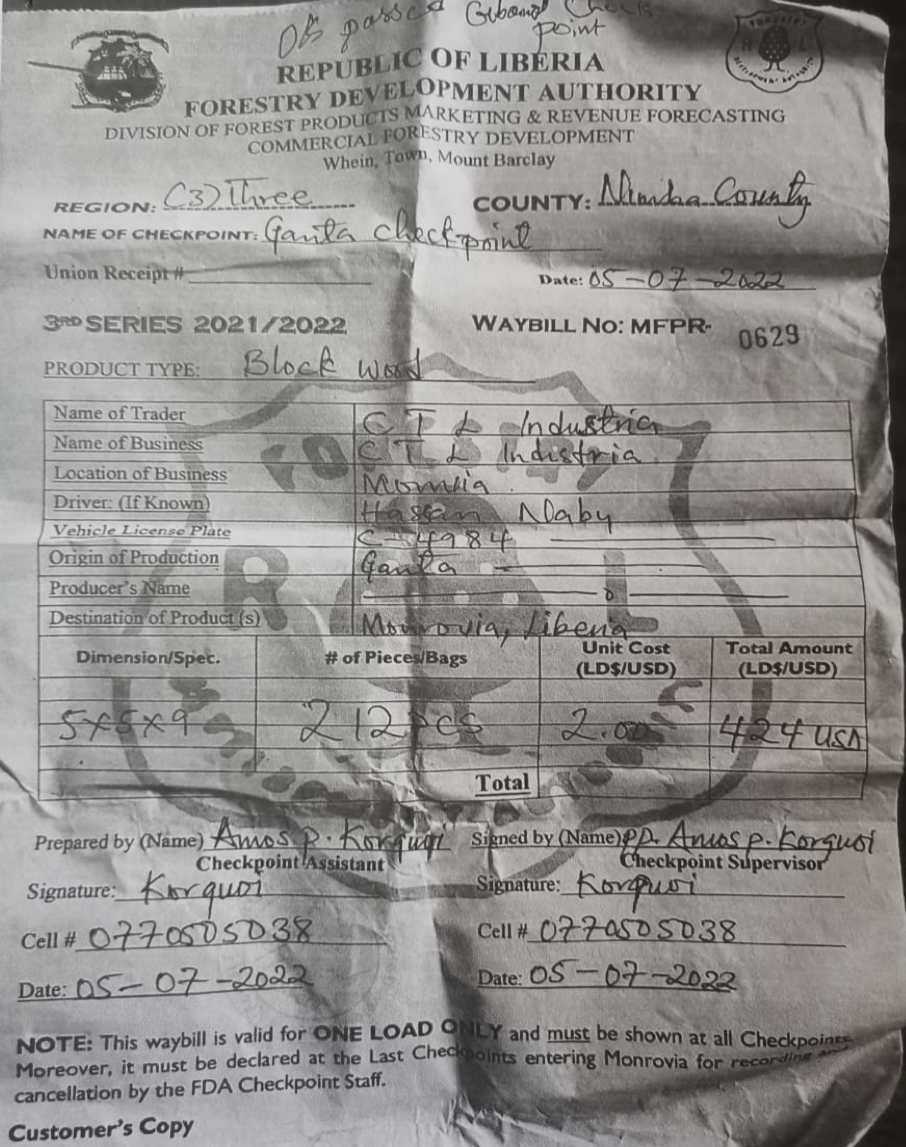
Documents and interviews with Gongor revealed that the FDA colluded with him for several years. During this time, he paid the agency tens of thousands of United States dollars in permit fees and waybills. One waybill showed that he paid the FDA US$424 for 212 pieces of kpokolo in May 2022, a few months before the ban.  

The money Gongor paid the FDA did not go into the government’s consolidated account at the Central Bank of Liberia. Instead, it was paid into accounts at commercial banks, controlled by the FDA’s top management, a legal breach.

“The FDA agents are always informed when we are going to bring wood from the bush,” Gongor told The DayLight in 2023. “We make more money for forestry.”

Gongor’s kpokolo reign came to an end late 2022, barely a month before our explosive interview with him. Police seized 80 pieces of kpokolo from him at a checkpoint in Bahn, Nimba, ending an hour-long car chase.

The Gongor and Askon stories uncovered collusion among officials and Kpokolo businesspeople. However, a landmark investigation last April unearthed other individuals’ roles in the crime.

The April publication dug into a trove of documents to expose Ben Wesseh, a veteran customs broker, who smuggled timber for over a decade. The evidence showed that Wesseh, alongside his daughter, Benetta Wesseh, forged documents from the FDA and the Ministry of Agriculture to facilitate his crime.

IMG 9955
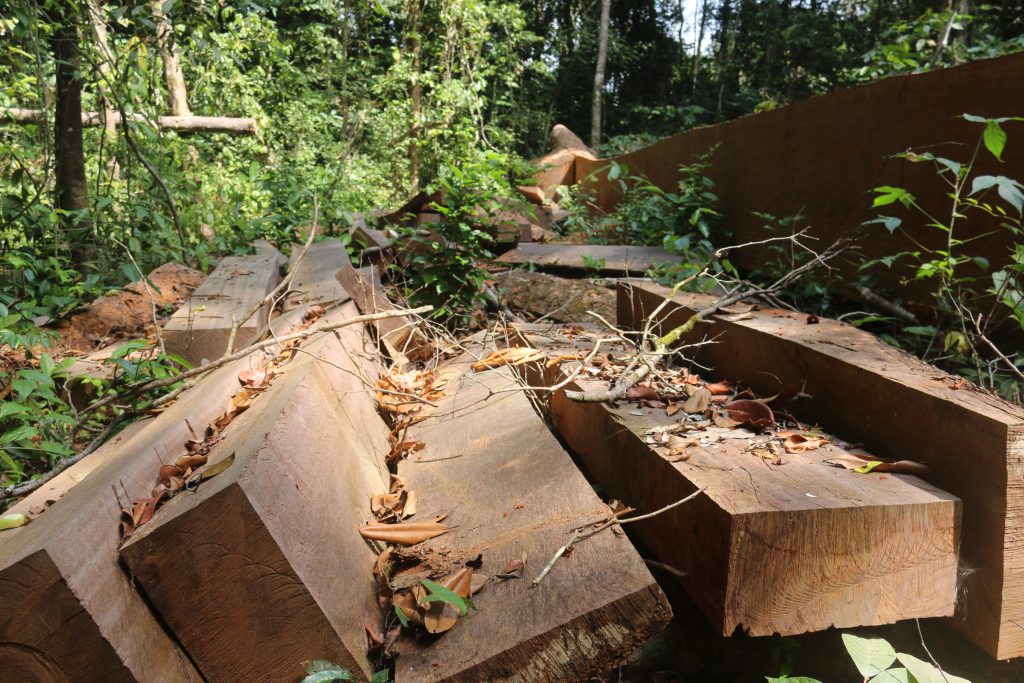
Kpokolo by the roadside in Boyeah Town, Compound Two, Grand Bassa County, in 2022. Spotting them proved essential to unravelling the illegal trade. The DayLight/James Harding Giahyue

The newspaper obtained recordings and screenshots of a WhatsApp chat between Mr. Wesseh and a client. The documents revealed Wesseh charged the client US$325 for two FDA documents and US$75 for a phytosanitary certificate, issued to certify that the consignment was pest-free. These revelations corroborated other evidence from an undercover investigation in Totoquelleh, Gbarpolu County, in 2024, as kpokolo resurfaced.

A police probe into Mr. Wesseh’s alleged crimes faltered. However, The DayLight investigation sparked reform of the Ministry of Agriculture’s phytosanitary department to prevent forgery of such a certificate.

But the samplings of the illegal trade remain.

The first evidence of this came from Gbaryama, a town in Gbarpolu’s Gbarma District. There in March 2024, reporters photographed hundreds of freshly-sawn kpokolo. Reporters also documented logs in a nearby forest that illegal loggers had harvested to mill kpokolo. They gathered that smugglers had contracted local chainsaw millers to produce the wood they trucked at night.  

“They can hide it and take it away at night; people can’t easily see them in the day,” Armah Dukuly, Gbaryama’s Town Chief. “We don’t get that power to stop them.”

The DayLight’s latest kpokolo investigation occurred last January. The subject was Libfor Forest Corporation, which ran an unlicensed sawmill in Caldwell. Since 2022, Libfor has exported 51 times, valued at US$71,447, according to data compiled by British export tracker Experian. In May 2024, it shipped 55,000 cubic meters of kpokolo, valued at US$22,000. The company brought in workers from Sierra Leone, from where it smuggled wood into Liberia, official documents revealed.

Four days after the publication, two executives of Libfor were jailed and later charged. Their case at the Bushrod Island Magisterial Court has yet to begin.

Kpokolo might not have gone away. Certainly, there is evidence that the ban—as the result of the investigations—has significantly minimized the illicit trade. The FDA no longer issues permits for it or approves its transport, something it did for over a decade. Kpokolo operatives have switched to other things, based on our recent interviews and observation, and social media advertisements of the trade have disappeared.


This story was a production of the Community of Forest and Environmental Journalists of Liberia (CoFEJ).

FDA Explores Ecotourism Potential in Gola Park

Fonnor oh 1 1 scaled

Top: A view of the Gola National Park from Fonnor Town, Grand Cape Mount County. The DayLight/Esau J. Farr


By Esau J. Farr


FONNOR TOWN, Grand Cape Mount County – The Forestry Development Authority (FDA) is exploring forests for potential ecotourism sites.

The exercise recently started with a visit to portions of the Gola National Park and other areas in Grand Cape Mount and Gbarpolu Counties. FDA’s Managing Director Rudolph Merab led a delegation of FDA staffers and tourism stakeholders on the mission.

“Some people want to come to Liberia to see and explore other things, especially when we talk about the rainforest. People from the West and the Americas want to come here, but we will have to come and set the stage…,” Merab told reporters.

“[What] we are trying to do is for people to know our forests. They’ve got to know the tree and animal species we have. We need to bring researchers to research the forests to find which trees can help us with our own health.”

Established in 2016, the Gola National Park is an 88,000-hectare forest that extends into neighboring Sierra Leone. It has a rich ecosystem with diverse wildlife. The park has 300 bird species, including the Gola Malinbe and the white-necked Picathartes, 49 mammal species, reptiles and amphibians.

The tour followed a recent trip to neighboring Sierra Leone last month to understand that country’s park management structure and operations.   

The FDA Managing Director, Rudolph J. Merab, speaks at the agency’s Camp Fonnor. The DayLight/Esau J. Farr

Merab said showcasing Liberia’s tourism potential would attract tourists to its forests and generate revenue. Tourism is one of the pillars of President Joseph Boakai’s developmental agenda for inclusion, a sector that has been underdeveloped for decades.

“This is meant to amplify the voice of the President on his tourism pillar in the ARREST agenda. That is why you are seeing me here in the forest,” adds Merab. The FDA intends to train young people in tourism so they can develop the sector in the future.  

The tour was conducted jointly with the Liberia National Tourism Authority and the Society for the Conservation of Nature of Liberia (SCNL), a Monrovia-based NGO that helped establish the Gola Park.  

A delegate of the Tourism Authority said the it was working with the FDA to map tourism activities in the country.

“We will tap into all the opportunities that these forests have and we are going to develop them sustainably,” said Juanita Yiah, the Tourism Authority’s technical director. “We want to do everything to make Liberia ecotourism-friendly.”

Tour delegates, including the FDA, the Tourism Authority and SCNL representatives at the FDA camp in Tima Town, Gbarpolu County. The DayLight/Esau J. Farr

Calling birds

James Mulbah, SCNL’s landscape manager, praised local communities for the protection of the Gola Park. said locals needed support to maintain the park’s rich biodiversity.

“We have come to overlook this place to see how well we can attract national and international tourists to come,” said Mulbah.

“The community people have a way of calling birds and other animals and you see them coming to you live,” Mulbah mentioned several local tourism sites, including an elephant fall and a famous bird watch site.

The FDA, the tourism authority and conservationists acknowledge the community’s efforts in preserving the park over the years and assure them of tourism benefits.

The FDA is seeking support for researchers to conduct a study of tree and animal species and potential tourist sites.

“Whatever we do, whether it is commercial, conservation, or even carbon, it has to impact the lives of our people for the positive,” said Merab.

Court Terminates Logging Company’s  Contract

resized normal 1280x675

Top: A worker labels logs in Akewa’s log field in Beyan Poye Community Forest, Margibi. Photo credit: Akewa Group of Companies via Facebook


By Emmanuel Sherman


MONROVIA – A court in Monrovia has terminated a logging agreement between a community forest and a company after an arbitration process, ending over four years of legal battle.

The Commercial Court at the Temple of Justice handed down the ruling recently after Akewa Group of Companies failed to honor the arbitration with the Beyan Poye Community Forest in Margibi County.

“The community forest management agreement… between the Beyan Poye Community Forest and Akewa Group of Companies is hereby deemed terminated as a matter of law…,” read the ruling.

“Failure to appear in open court to make a case, this court has no other option after hearing the informant’s argument and giving due recourse to the parties pleading than to grant the informant’s Bill of information,” added the ruling.

Abigail Funke Odebunmi, Akewa’s manager and co-owner, did not immediately respond to queries.

A long legal battle

Beyan Poye Community Forest, on March 25, 2017, signed a 15-year logging agreement with Akewa to harvest its 33,338 hectares of forestland in the Gibi District.  

In 2022, Beyan Poye invoked an arbitration clause in its logging agreement with Akewa after nearly five years of stalemate.   Subsequently, the FDA set up a panel, and the process began.

The panel awarded Beyan Poye over US$80,000 in forest-related benefits and granted Akewa the right to continue its operations unhindered.

Akewa opposed the arbitrators’ decision and petitioned the Commercial Court to review it.

When that review ended unsuccessfully, Akewa, owned by Nigerian businesswoman Abigail Funke Odebunmi, petitioned the Supreme Court. However, the company committed procedural errors in its petition to the high court.  

The Supreme Court sent the case back to the Commercial Court to enforce the arbitration award, granting Beyan Poye’s motion for dismissal.

Then Beyan Poye petitioned the Commercial Court to terminate Akewa’s contract for failing to resume operations. The petition referenced a provision of the arbitration award that the company restart activities in January 2023.

The Commercial Court sided with Beyan Poye, terminating Akewa’s contract.

Samuelle Hare-King of the Heritage Partners and Associates, Beyan Poye’s lawyer, told The DayLight the law firm had contacted another firm to seek a court’s order to freeze Akewa’s bank accounts until it could settle its debt to Beyan Poye.

Jehudi Barnyou, Beyan Poye’s chief officer, reveled in the victory and has advice for community forests across the country.

“As a community leader, if you have a problem with a company concerning land rental, royalty, or whatever, take the lead and go to court,” said Barnyou.   He promised to present the ruling at the community meeting with members of the community later this month.

This story was a production of the Community of Forest and Environmental Journalists of Liberia.

Liberia Fails to Report US$2.7B Mining Exports, Study Finds

compressed DJI 0033 1

Top: A drone shot of a zircon sand mine in Greenville, Sinoe County, in 2023. The DayLight/Derick Snyder


By Varney Kamara


MONROVIA – Liberia’s mining sector failed to report US$2.7 billion in gold and iron ore exports between 2007 and 2023, likely due to underreporting and/or smuggling, a new report found.

The US-based Forest Trends found that Liberia reported US$5.1 billion from mining exports over the 16 years. However, researchers established that importing countries reported US$7.8 billion from Liberia, resulting in the US$2.7 billion discrepancy.

“The scale of the problem is massive,” said Arthur Blundell, one of the report’s co-authors. “There is no reason to believe that what the government reported was a mistake because Liberian sources agree with the numbers.”

The report—”A Rapid Assessment of Liberia’s Mining Sector…”—determined that underreporting of export commodities and smuggling were the potential reasons for the revenue loss. Moreover, there are strong indications that the country could be giving away valuable revenue at a staggering rate. For instance, Liberia’s sales of rough diamonds and iron ore fell below the international benchmark during the reporting period.

Weak enforcement likely enabled underreporting, smuggling, and tax evasion, as well as environmental violations, costing hundreds of millions of dollars annually.

The report recommends that the government halt illegal mining, improve trade oversight, protect ecologically critical areas, ensure transparency, uphold community rights, and enforce companies’ legal obligations fully.

The report utilized legal review, trade data, and geospatial analysis. Data used in the study were collected from various government agencies, including the Ministry of Mines & Energy, Liberia Extractive Industries Transparency Initiative, Forestry Development Authority (FDA), Central Bank of Liberia, Liberia Revenue Authority, and the Environmental Protection Agency. Researchers analyzed Liberia’s minerals exported to Switzerland, the EU, the United Arab Emirates, Turkey, and other countries.  

A mine in Vaguay, Grand Cape Mount County, in 2020. Picture credit: James Harding Giahyue

Overall, the report found that it was impossible to calculate all losses due to a lack of transparency in the reporting process, as there were likely losses from unpaid import fees and withholding taxes, social security payments, surface rental, license fees, etc.

The Ministry of Mines did not return queries for comment on the report’s findings.

Community benefits and the environment

The report also established that unfulfilled promises, human rights abuses, and environmental damage, among other things, hinder the mining sector, which accounts for a fifth of Liberia’s GDP, while dominating exports and generating a significant share of government revenue despite the losses.

Mining impacts across communities have been staggering, the report found. The study revealed that communities were not benefiting from their natural resources. It shows companies are not complying with their legal obligations to communities.

There is no official reporting on whether mining companies are paying two percent of their exploration budget on local health and education, as required by the mineral exploration regulation, nor is there reporting on whether companies are giving five percent equity to communities as required by the Land Rights Act.

Overall, it found that 1.4 million hectares of community forest lands were overlapped by mining licenses, undermining local people’s economic opportunities, and thus their autonomy and right to self-determination. The mining environmental laws require permits for semi-industrial scale or class ‘B’ licenses.

Benefits legally guaranteed to communities remain unrealized, while affected communities increasingly face degraded lands, abandoned open pits—deepening their vulnerability and leaving them with more burdens than they can actually handle.

“We only know what has been reported for communities, not what has actually been done. Additional payments may have been made that were unreported, but also payments reportedly made for communities may also have been misdirected elsewhere,” said Blundell, noting that since 2012, rather than putting the revenue into community funds, the government has required all payments to first be deposited into the County accounts. “What has happened to these funds is not clear.” However, the report noted that the General Auditing Commission, in its most recent audit on County Development Fund spending, found gross violations and lack of oversight by the Ministry of Internal Affairs, which they said may “lead to fraud…through the processing and disbursement of illegitimate transactions.”

“Any reform should include immediate steps to stem financial losses, compel compliance, and ensure accountability of compensation and other benefits sharing with local communities,” Blundell concluded.

The report revealed Liberia’s forests are at risk, with licenses overlapping more than 2 million hectares nationwide. Mining is undermining the environmental health of these forests, citing a report by Liberia’s Environmental Protection Agency. For example, the EPA found that many Class ‘B’ license holders are not obtaining environmental permits, a major requirement under the mining law, and that companies were using heavy machines to pollute major watercourses.

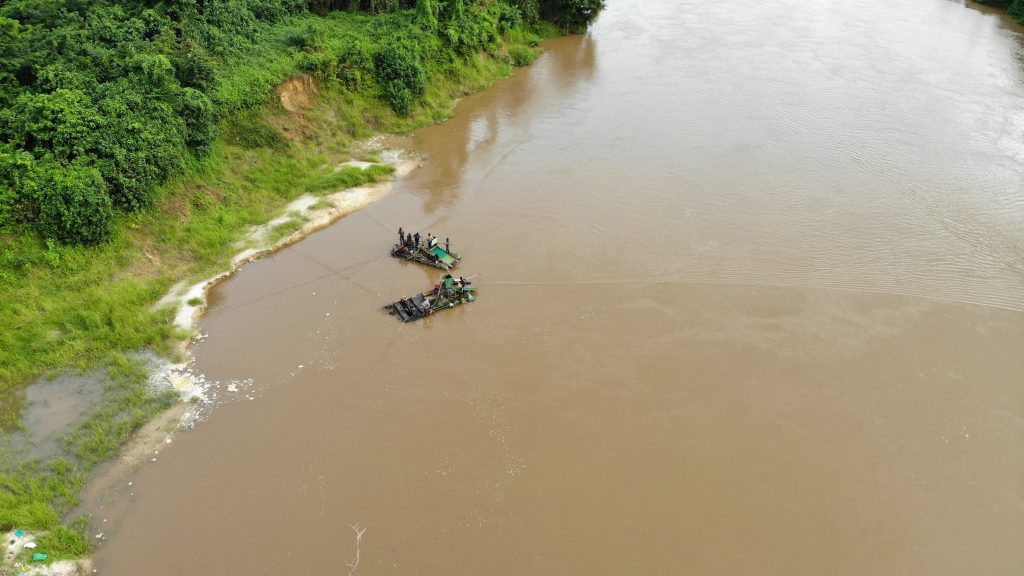
Dredges on the Dugbe River in Sinoe County in 2023. The DayLight/Derick Snyder

The assessment found mining-linked deforestation, hazardous chemical mismanagement, and water pollution at an increasing rate, while monitoring and enforcement remain major challenges to tackling those issues nationwide.

Moreover, the Forest Trends assessment cautioned that these statistics do not include widespread artisanal, unlicensed mining because these mines go unreported by the Ministry of Mines & Energy.

Between 2021 and 2024, Liberia lost 390,000 hectares of primary forest to deforestation due to logging, agriculture expansion, and illegal mining, according to the Global Forest Watch. The recent boom in cocoa farming in the country’s southeast has increased the pace of deforestation.   

The report recommends that the government stop illegal mining, enforce existing mining laws and regulations, increase consultations between miners and communities, urging miners to refill holes they dig across communities.

“What is needed now is more transparency, accountability, and a fundamentally different model of resource governance—one that prioritizes social equity, environmental sustainability, and community rights,” the report concludes.

Court Fines 28 for Illegal Mining in Sapo Park

WhatsApp Image 2026 03 10 at 13.40.46

Top: An illegal mine in the Sapo National Park. File picture/Forestry Development Authority


By Myer Saydi


GREENVILLE – A court in Sinoe County has fined 28 suspects and ordered them to do community service for illegal mining in the Sapo National Park.  

The Greenville Magisterial Court fined the men US$1,300. It also ruled that they cut grass at the Presidential Palace in Greenville for seven working days.  

The suspects had pleaded guilty to theft of property and criminal trespass following their arrest in February by park rangers.  They escaped imprisonment because prosecutors did not prove they had any prior convictions for the crimes.

“I am happy for my clients despite government fines and community services because they are not going to jail,” said  Franklin Myers, the convicts’ lawyer. “The court ruling is not based on public sentiment but on what the law says. So, I am happy for them.”

John Smith, Chief Warden of the Sapo National Park, said the ruling would serve as a deterrent to illicit occupants. Smith added that Liberia’s protected areas are critical to biodiversity conservation. He urged citizens to respect conservation laws and support sustainable practices.

Joint security forces arrested the men in February 2026 during an enforcement operation, court documents show. Security forces seized 4.2 grams of gold, a half-filled 25-kilogram bag of rice, six gallons of gasoline and eight pieces of carpet.

Authorities reported that the group was actively involved in unauthorized mining, a direct violation of Liberia’s forestry, mining, environmental and wildlife laws.

The ruling comes amid ongoing efforts to curb environmental degradation inside Liberia’s largest park. To date, thousands of illicit occupants have been removed from the 697-square-mile park, one of the world’s biodiversity hotspots.


This story is a production of the Community of Forest and Environmental Journalists of Liberia (CoFEJ).


Cocoa Changing Lives but Destroying Grand Gedeh’s Largest Forest

Boundary Town deforested 1 scaled

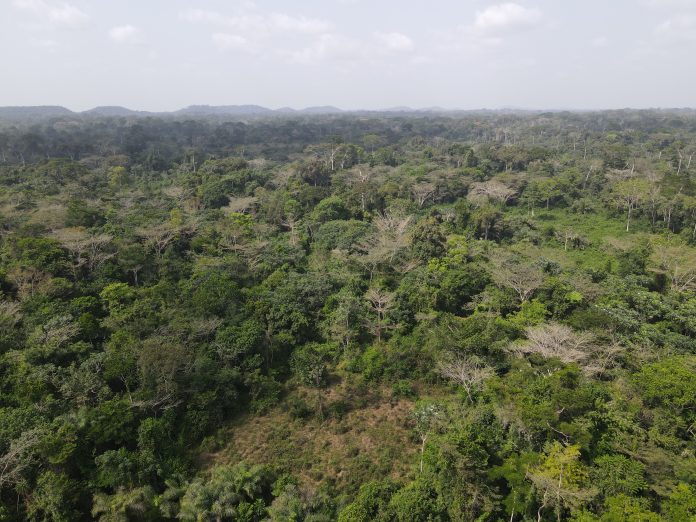
Top: A partial view of the Konobo Community Forest in Grand Gedeh County. The DayLight/Samuel Jabba


By Esau J. Farr   


BOUNDARY TOWN, Grand Gedeh County – Lawrence Koolor woke up one cool morning, his face beaming with a smile and joy pouring out of his heart. Koolor’s dream became a reality late last year when he moved his family into his new house. He had lived in his uncle’s house for decades.

Koolor built his home out of money he received from Burkinabé cocoa farmers he hosts in Konobo. His house—part-mud, part-concrete with metal roofs— stands out among huts with thatched roofs in Boundary, a town on the border between the Konobo and Tchien Districts in Grand Gedeh County.

“I felt so happy that day for me to go and live in my own house at that time,” recalls Koolor. “That was a complete relief for my family to [move from one bedroom] to a whole house.”

Koolor is one of several residents of Konobo, who, along with their Burkinabé guests, have encroached on Grand Gedeh’s largest remaining rainforest. Townspeople in Konobo say the arrival of Burkinabé cocoa farmers in their communities has transformed their lives.

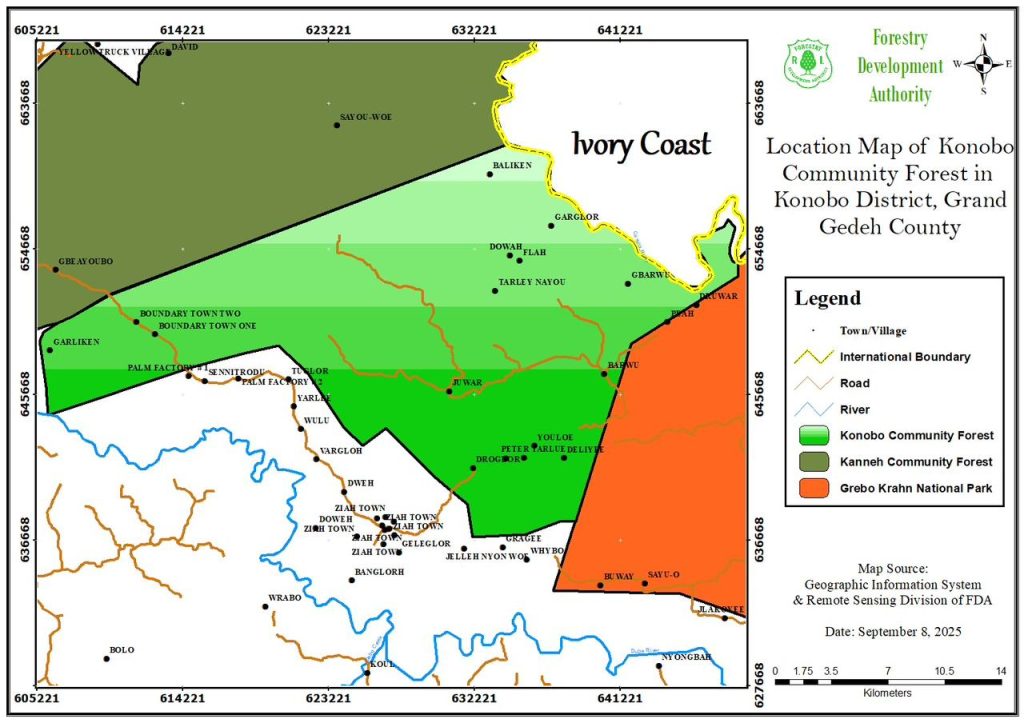
The map of Konobo. File photo/Forestry Development Authority

Konobo has 390,000 hectares of natural forest, according to Global Forest Watch, an application that tracks deforestation. Gbarzon and Tchein Districts are second to Konobo District in Grand Gedeh County, with higher rainforest, 360,000 hectares each.  

Burkinabés likely started migrating into Liberia from the neighboring Ivory Coast in 2014 in search of cocoa farmlands. The Liberia Immigration Service (LIS) has profiled 55,000 Burkinabés in southeast Liberia, 48,000 in Grand Gedeh. Burkinabés, also known as “Mossi,” have agreements with locals in which they provide investment and labor, while the locals provide land.

“The cocoa business that came here is helping to take us from zero to hero,” says Alice Doe, who hosts six Burkinabé migrant workers in Boundary Town.

“Before, we could not get a dime to buy a sheet of zinc. But for now, that story has changed, because before the Burkinabés enter your [forest], they give you [money],” adds Doe.

Interviews and reporters’ observations show Konobo District—a low-income community of 26,588 people—is transforming in several ways. People are earning income from cocoa that they have never earned in their lives. New houses are being built, and one resident is sponsoring his son’s studies in Spain.

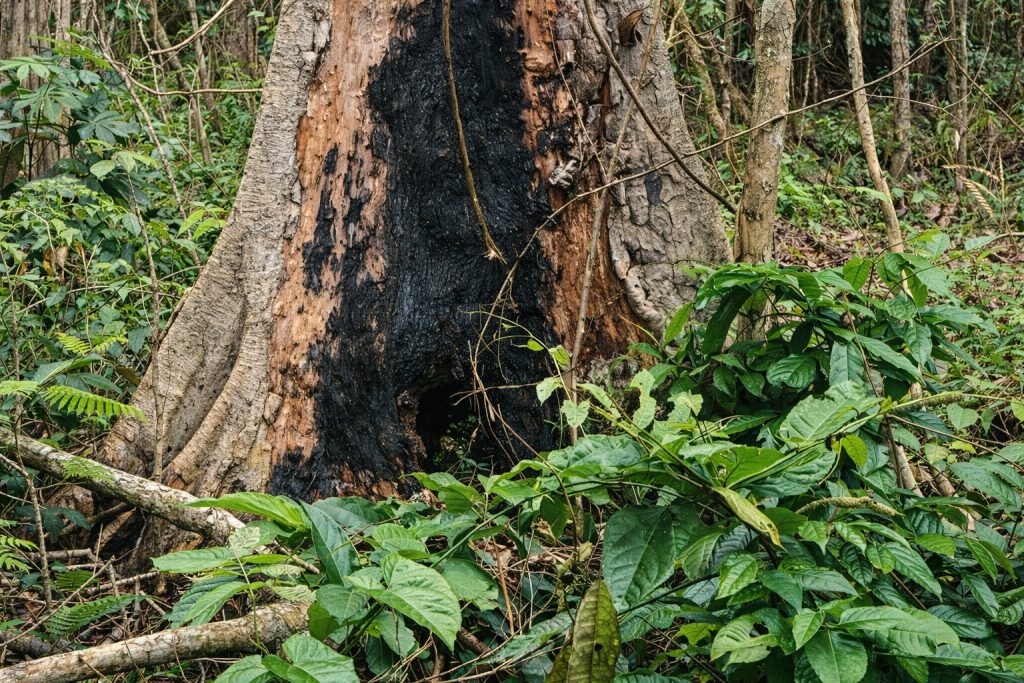
Cocoa farming might be transforming lives in Konobo, but it is wiping out the district’s forest. To plant cocoa, Burkinabés burn down the forest. Reporters saw trees losing their foliage, gradually morphing into woody skeletons.  

Between 2002 and 2024, Konobo lost 9,300 hectares of primary forest. A 2024 study found that 15 percent of Liberia’s deforestation is linked to cocoa cultivation. Then, last November, the London-based Global Witness linked top European chocolate makers to deforestation in Liberia.

‘Under threat’

Satellite imagery confirms that cocoa farmers are encroaching on the Konobo Community Forest, a 49,625-hectare woodland meant for logging. Konobo and the Forestry Development Authority (FDA) signed an agreement in 2020 to co-manage logging activities with the regulator. The agreement outlaws farming in the community forest.

And that is exactly the case. Drone shots show cocoa pods sprouting amid decaying trees and cultivated forests. 

“When the Burkinabés enter the forest, they burn all the trees…,” says Beyan Woi, FDA’s regional manager in Grand Gedeh. “Most of [those] community forests that people wanted to do logging and conservation in are under threat by Burkinabés.”

Burkinabé migrants set fire or apply chemicals to the base of trees in clearing the forest for cocoa cultivation.  File photo/Forestry Development Authority

Woi says the FDA has made efforts to curtail encroachment on forests in the southeast, including prosecution.  

Wulu Gaye, the chief officer of Konobo Community Forest, echoes Woi’s comments. The encroachment is the biggest challenge Gaye, who was recently elected, faces.   

“As we speak, the forest is not well protected. There are illegal farmers farming in the forest,” says Gaye.

Burkinabés-hosts in Konobo deny farming in the community forest, claiming the farmland was their private property.

“I have more than 20 Burkinabés working for me on more than a-kilo-hectare of our farmland here in Boundary Town,” said Dennis Jakar, a classroom teacher and a resident of Boundary Town. Jakar claimed he is using ancestral land for his cocoa farm.

The DayLight could not independently verify Jakar’s and other townspeople’s comments due to the distances to the farms and the security of the reporters. Furthermore, the newspaper could not identify the owners of the farms the drone captured.

However, farmers hosting the Burkinabés say people are farming in the community forest because logging has failed them. Their position is a reference to an inactive logging agreement locals have.

In May 2021, Konobo and Horizon Logging Limited, a Monrovia-based firm, signed a contract. Horizon agreed to construct health facilities, handpumps, and latrines in the affected communities in addition to land rental and harvesting fees. The company failed to carry out the projects, leaving behind unpaid debts and abandoned logs.  Horizon did not respond to queries for comment on the contract.

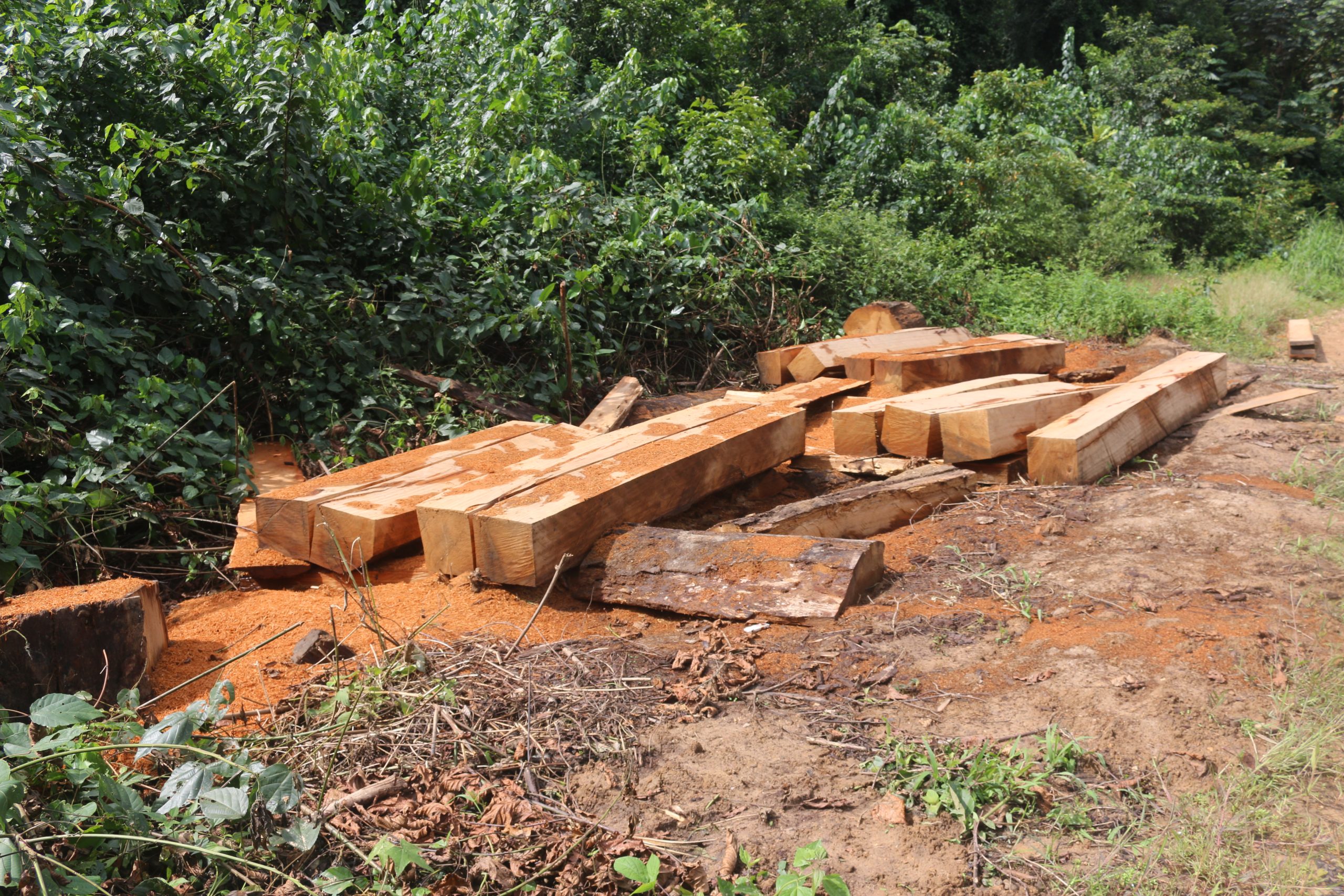
The contract’s failure is visible throughout Konobo. Several logs are abandoned in Boundary Town, behind a clinic and at other locations. Locals drink from creeks, and there are no public latrines.

“They (Horizon) lied to us; so, we were left with no other option but to put Burkinabés in the concession area to [farm for us],” says Christian Menyeah, a Konobo resident, who hosts three Burkinabé migrants.

“The money we are now getting from cocoa farming is plenty and quicker than what a logging company would give us,” adds Bill Yallah, a host of dozens of Burkinabés migrants.

Gaye, Konobo’s chief officer, says his leadership is working with county authorities to remove the encroachers from the community forest.

Gaye says, “Well, all the local authorities [bought] the idea that there’s a need that we remove the illegal farmers…”


Samuel T. Jabba contributed to this story.


This story was a production of the Community of Forest and Environmental Journalists of Liberia (CoFEJ).