Home Tags Wonegizi Proposed Protected Area

Tag: Wonegizi Proposed Protected Area

Two Protected Forests Near Establishment

Group pic Gt
Group pic Gt

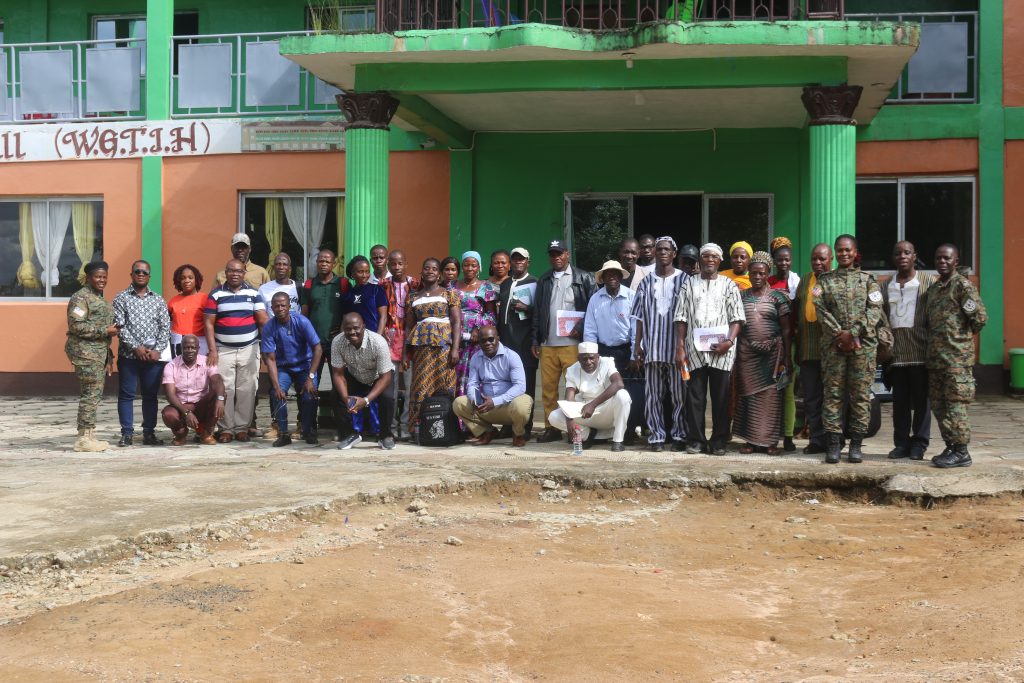
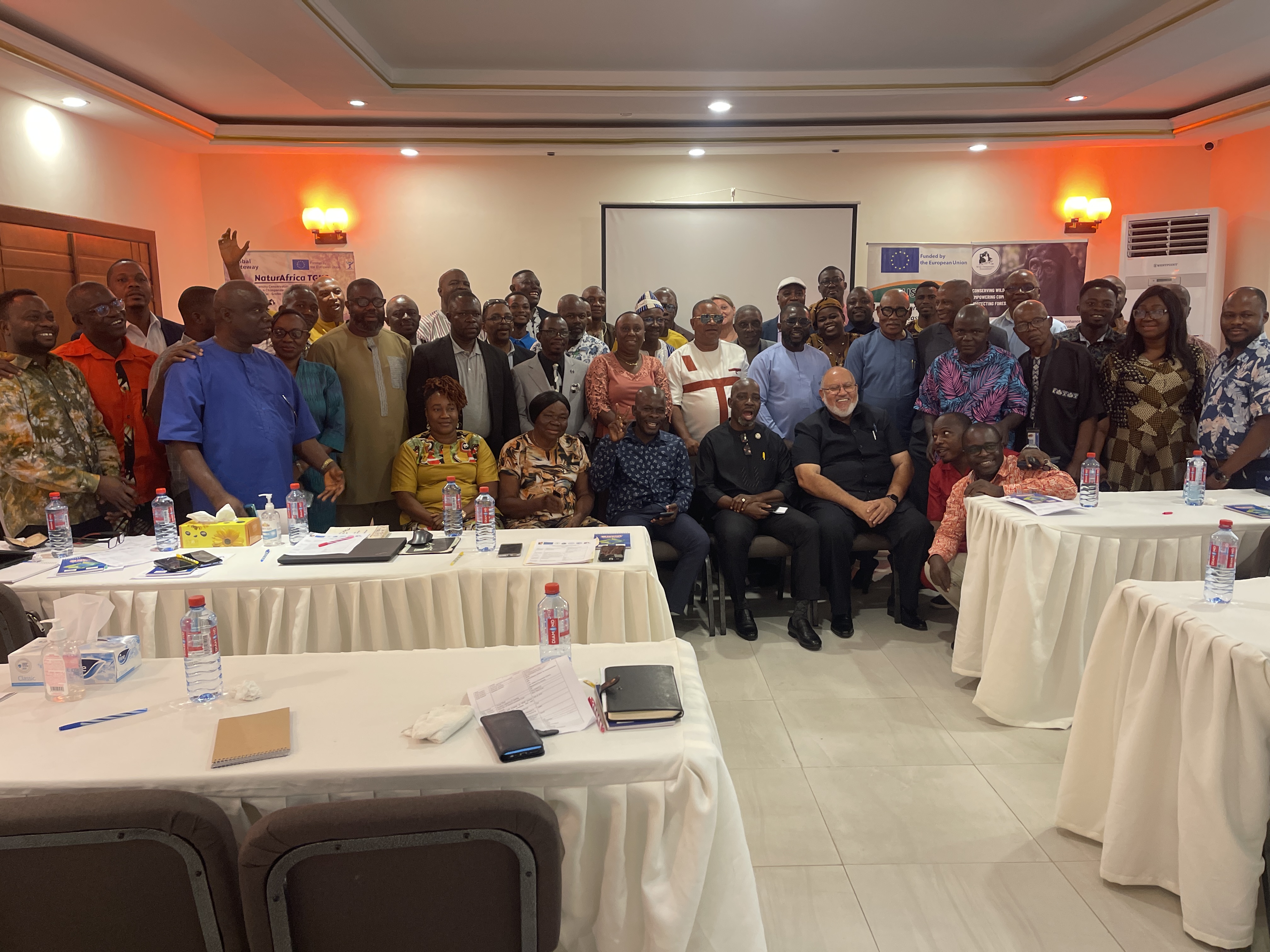
Top: Stakeholders at the Proposed Kwa Gazettement forum in Monrovia. The DayLight/Esau J. Farr


By Esau J. Farr


MONROVIA – Forestry actors agreed to establish the Kwa and Wonegizi Protected Areas in Liberia, and expect them to become reality soon.

Officials held two public engagement forums in Monrovia to gather stakeholders’ input for Kwa and Wonegizi’s gazettement. Scores of conservationists, forest campaigners, and governmental agencies participated in the events.

“Today, we have come with a package to put this portion of the Kwa into protection for the future of our people,”  said Rudolph Merab, the FDA Managing Director, at the Kwa event. “We appreciate the efforts of all who helped reach this far.”

Pygmy hippo

Kwa and Wonegizi safeguard critical swathes of Liberia’s remaining portion of the Upper Guinean forests. They are home to endangered species and are part of the country’s commitments to preserve 30 percent of its forests.

The Kwa Proposed Protected Area covers River Cess, Sinoe and Grand Gedeh Counties, extending some 236,246 hectares. Its establishment began in 2016. The FDA partners with the Wild Chimpanzee Foundation, based in the Mano River basin, and the US-based Rainforest Trust to establish the area.

Kwa supports Liberia’s second-largest known population of critically endangered western chimpanzees, endangered pygmy hippopotamuses, and critically endangered slender-snouted crocodiles.

Dr. Annika Hillers, the Country Director of Wild Chimpanzee Foundation, told the Kwa ceremony reveled in the progress.

“We need to talk about what is best for the country and not what is best for an individual. We hope that for the best of Liberia, the proposed Kwa National Park will become a reality as soon as possible,” added Dr. Hillers.
Meerab
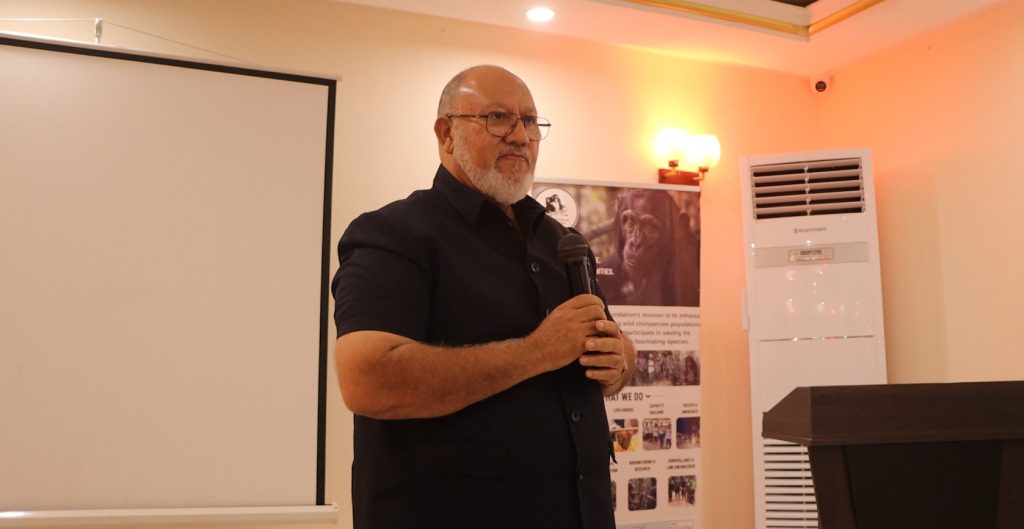
FDA Managing Director, Rudolph J. Merab, Sr. The DayLight/Samuel Jabba

Zebra duiker

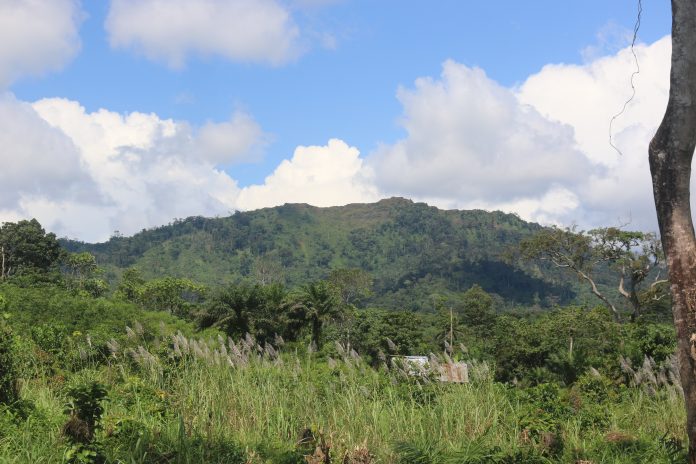
The Wonegizi Proposed Protected Area covers 27,645 hectares in Lofa County’s Ziama Clan. Started in 2013, the FDA works with Fauna & Flora (FFI), a UK-based NGO, to establish Wonegizi. Located along the Liberian-Guinean border, it is an important transboundary forest landscape with Guinea’s Biosphere Reserve.

Full of rocky terrain and lowland rainforests, Wonegizi is home to forest elephants, pygmy hippopotamuses, and the rare zebra duiker. It allows large mammals to migrate safely between the two countries, maintaining a range of diverse species across regional highlands.

The formation of Wonegizi is also meant to prepare communities for carbon trade with an estimated US$2.5 million community benefit annually, according to FFI.

“I am very pleased that we have come to this stage finally. It took a long process,” said Dr. Mary Molokwu-Odozi, FFI’s country director. “It will now be a smooth process going forward.”

Efforts to establish Kwa and Wonegizi have experienced challenges.

Kwa’s establishment has been stalled due to competing mining interests and agricultural activities.  Between 2002 and 2025, Kwa lost 64,358 hectares or roughly 27 percent of its original size, leaving its current area at 171,020 hectares.

In June this year, citizens from Grand Gedeh’s Gbarzon District accused the FDA of illegally extending Kwa’s boundaries into farmlands and destroying their crops. President Joseph Boakai ordered an investigation into the matter.

Senator Augustine Chea of Sinoe County, Chairperson of the Senate Committee on Judiciary, called for caution.

“Consulting us is the right thing to do, but we must do this against the background that there are people who reside on the land, who have customary rights to the land,” said Chea. “Conservation is good, but survival is more important than conservation.”

Ancestral land deed

Meanwhile, Wonegizi’s establishment was delayed due to adjacent communities’ efforts to obtain ancestral land deeds. The communities finally obtained their deeds last year and earlier this year, thrusting the process forward.

Stakeholders also raised qualms about the human-elephant crisis in the region. In the last decade, elephants have raided towns and farms in the northwest in search of food. This has caused people to migrate to new areas.

“The elephant issue must be looked at as we don’t intend to harm them. Each and everyone’s interest must be protected in the process,” said Lavelah Massaquoi, the Superintendent of Lofa County.

The gazettement packages of the forest areas are expected to be presented to the Legislature for enactment. Once passed into law, they will be sent to the President for approval.

“We have done a lot, and we are now at the last stage of their establishment,” said Merab. “When we have finally passed the act that creates these areas, we will hope that you will support and ensure that it is not encroached upon.”
Illegal Miners Encroach on Wologizi Forest

IMG 0943
IMG 0943

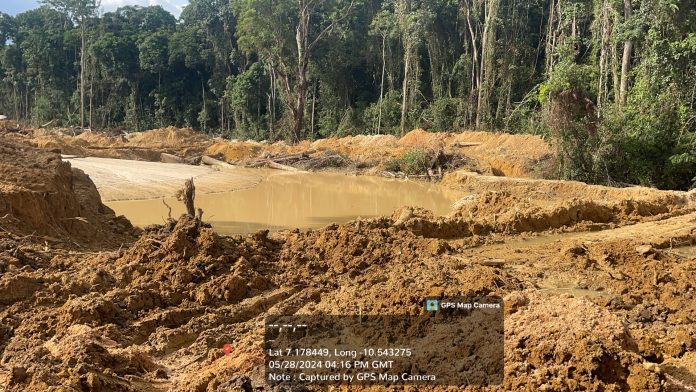
Top: Illicit miners are ravaging the Wologizi Proposed Protected Area, according to a ranger and a community leader. The DayLight/Esau J. Farr


By Varney Kamara


GANTA, Nimba County – Illicit miners have encroached on the Wologizi Proposed Protected Area in Lofa County,  according to a ranger and a community leader. Illegal miners have overrun this critical habitat, smuggling gold and diamonds into neighboring Guinea.

“We are just starting to tackle these issues. We are working hard to minimize them,” said Momo Ricks, an FDA ranger stationed there. “Illegal activities like these harm the environment.”

Ricks revealed this information at a recent community forestry meeting in Ganta, Nimba County, where regional leaders discussed sustainable ways for communities to benefit from forest resources.

Ricks’ comments were supported by Anthony Sumo, the community land and development committee (CLDMC) chairman of Zogoleemai Township, where portions of Wologizi and Wonegizi Proposed Protected Areas are located. Sumo added that locals were making efforts to combat illegal mining.

“We are actively fighting against these activities, especially in areas close to the river,” Sumo said.

The 28,894-hectare forest is a part of the Wonegizi-Wologizi Ziama (WWZ) cross-border landscape, linking Liberia, Guinea and Sierra Leone. It hosts endangered species like chimpanzees and pygmy hippopotamus. It is one of Liberia’s protected areas, covering over 1.14 million hectares of humid rainforests.

Despite legal safeguards, unlawful practices continue in the vast forest. Community resistance, weak law enforcement, and limited deterrents have worsened illegal activities.

“The community has requested more forest guards, better salaries, and stronger partnership support, but resources have yet to materialize,” said Sumo. “For conservation to succeed, we need consistent backing. Without it, we risk losing the forest and its benefits.

“We are focused on resisting illegal activities, like logging while promoting sustainable practices that support our community,” Sumo added.

The news of illegal mining supports a 2020 report by Fauna & Flora International, which found habitat loss from unregulated activities.


CORRECTION: This version of the story corrects a previous version, which mistook Wonegizi for Wologizi. It also corrects Anthony Sumo’s title as the community land development and management committee chairman of the Zogoleemai Township, not the Wonegizi Proposed Protected Area.

The story was a production of the Community of Forest and Environmental Journalists (CoFEJ).

Communities Desire Direct Benefits to Conserve Forests

IMG 9916 scaled
IMG 9916 scaled

Top: A view of the Sehyi Ko-doo Community Forest in Nimba County. The DayLight/James Harding Giahyue


By Varney Kamara


GANTA, Nimba County – Local communities are firm on conserving their forests but they want direct benefits from doing so.

“We’ve noticed that not giving funds directly to communities led to too many bureaucracies with limited social and economic impacts on the communities,” said Anthony Sumo, a community leader in the Proposed Wologizi and Wonegizi Protected Areas in Lofa County. The areas are part of the Wologizi-Wonegizi-Ziama belt, extending Guinea and connecting to Sierra Leone, and home to the critically endangered pigmy hippopotamus.

“Every day we hear about the money coming, but not much of how much development it brought to the community. There is a need to change things around.”

Sumo is one of 41 people from northern and northeastern Liberia who attended a recent meeting in Ganta, Nimba County to identify new ways local people could benefit from keeping their forests standing.

Their views and an emerging report on options Liberia could pursue to generate revenue will be developed into a proposal and turned over to the government and international partners for possible action.

The Community Rights Law… and Land Rights Act grant locals ownership of ancestral territories. Up to 75 percent of Liberia’s land is under customary control, including 1.3 million hectares of community forests and 1 million large-scale logging concessions.

Locals also support Liberia’s commitments to combat climate change, including halving deforestation, restoring a quarter of its degraded forests and reducing gases from forest use.  A host of communities run conservation programs and support protected and proposed protected areas, covering 1.14 million hectares.

Yet those communities have not significantly gained from forest resources over the last one and a half decades.  Failed logging contracts have left debts, abandoned logs and anger countrywide, while communities have struggled to profit from local conservation efforts.

“Any benefits that come from preserving the forests should go directly to the people, instead of passing through multiple organizations or international people,” said Sumo in an interview with The DayLight. “That’s what we have been asking for.”

Those views were echoed by other community leaders in Salayea, Blei, Sehyi Ko-doo and Zor and Gba. 

Robert Mahn, a leader of the Zor Community Forest in the Sanniquellie-Mahn District of Nimba, said direct benefits were necessary for residents to manage and maintain ownership.  The mountainous Zor, Gba and Blei are conservation community forests adjacent to the East Nimba Nature Reserve, an 11,538-hectare forest that is home to chimpanzees and the Nimba toad.  

Over 40 people and rangers from communities and the East Nimba Nature Reserve discussed local people’s benefits from keeping their forest standing. The DayLight/James Harding Giahyue

“I feel that direct funding will boost our CLDMC’s involvement in decision-making, helping us use our benefits more effectively,” said Mahn.

“The people depended on these forests from our ancestral days. Now that you want them to manage and protect it in other ways, you need to provide benefits like soap-making, women’s arts, tailoring, village saving loans, animal raring, and more,” said Yassah Mulbah, the chief officer of the Salayea Authorized Forest Community.

Eight thousand two hundred and seventy hectares Lofa County, Salayea, runs a conservation program, focusing on livelihood projects Mulbah mentioned.

But other attendees, including Grace Kotee, a ranger with the East Nimba Nature Reserve, caution against mismanagement. They referenced an instance in the Korninga A Community Forest in Gbarpolu, where townsmen were tried for allegedly misusing US$76,000.

“We think that providing direct benefits to communities is a good idea but we have a little bit of concern about this. There should be a process or system put in place that will make them to be accountable,” said Kotee.

All parties agreed NGOs were crucial to communities’ conservation efforts. However, most frowned on NGOs implementing projects for communities.  

Ericson Flomo, the chief officer of Sehyi Ko-doo Authorized Community Forest, called on conservation donors and the government to empower communities.  

The community has planted 30,000 indigenous and fruit trees, one of the highest totals in the country. Sehyi Ko-doo has an MoU with ArcelorMittal Liberia in which the company pays a dozen local forest guards a monthly stipend.

“We want to get things done,” Flomo told The DayLight at Sehyi Ko-doo’s border with Gba amid the hooting of chimpanzees. “We just need the right training and resources to succeed.”

Silas Siakor, the Country Manager of Dutch NGO IDH, who was one of the workshop’s facilitators, welcomed the participants’ views.

“By protecting their resources, they can access funds tied to conservation ownership,” said Siakor. “The objective is to identify other sources of economic benefits and revenue that you can use for your own development as a community, as an incentive for you to better manage your forest.

“The idea is to balance conservation with community needs.”

The next discussions will be held in Buchanan, Grand Bassa County. After that, Inclusive Development Consultancy will draft the proposal on how communities can benefit from sustainably managing their forest.