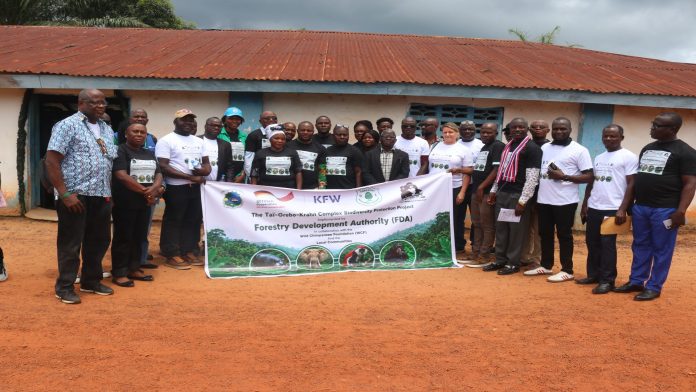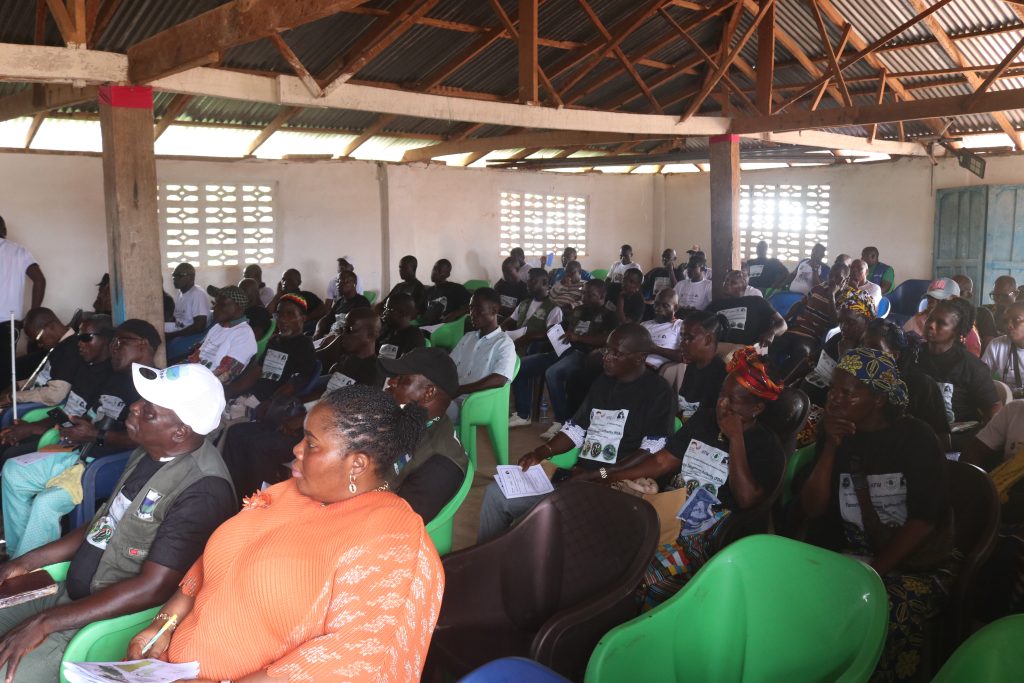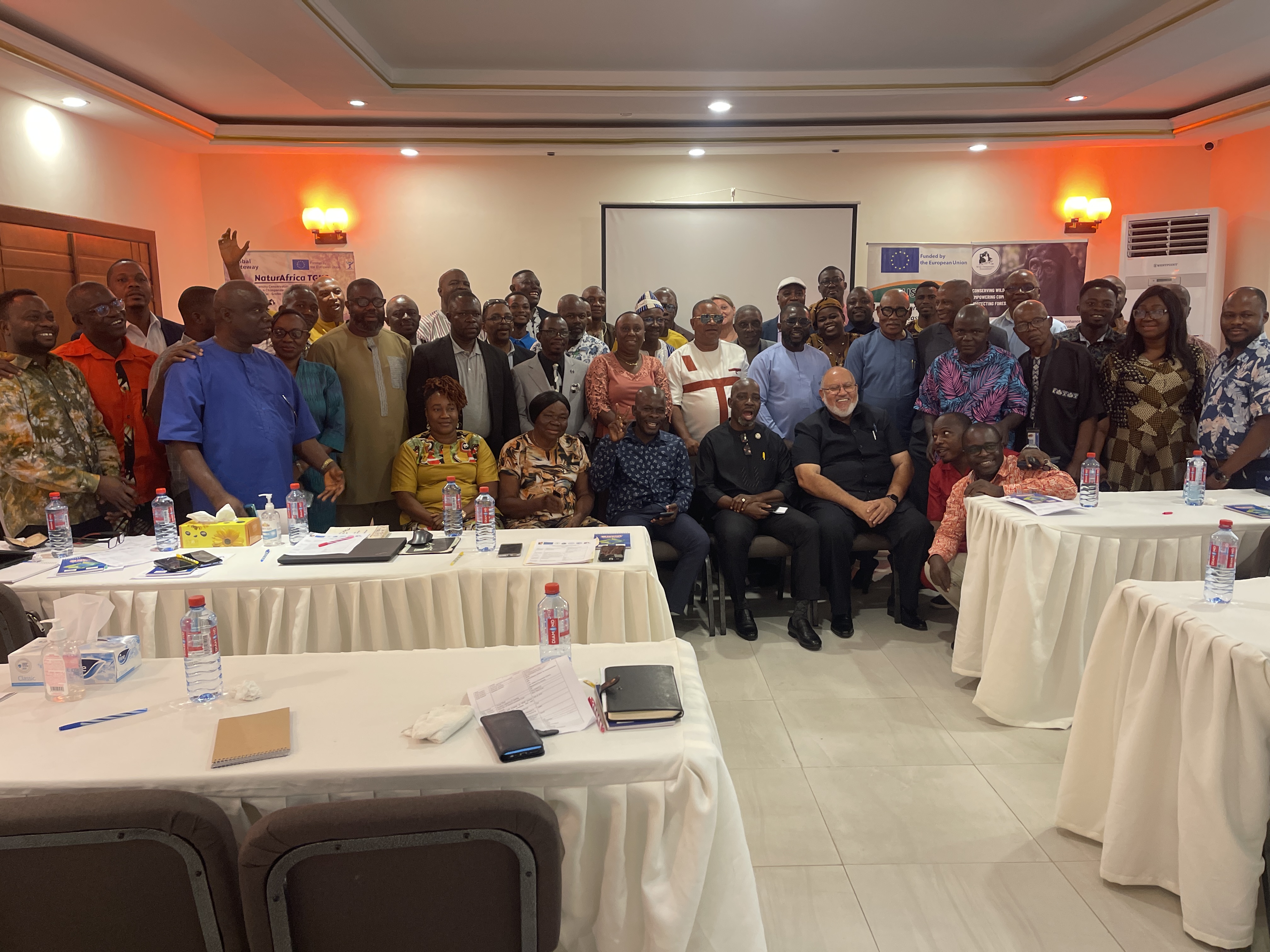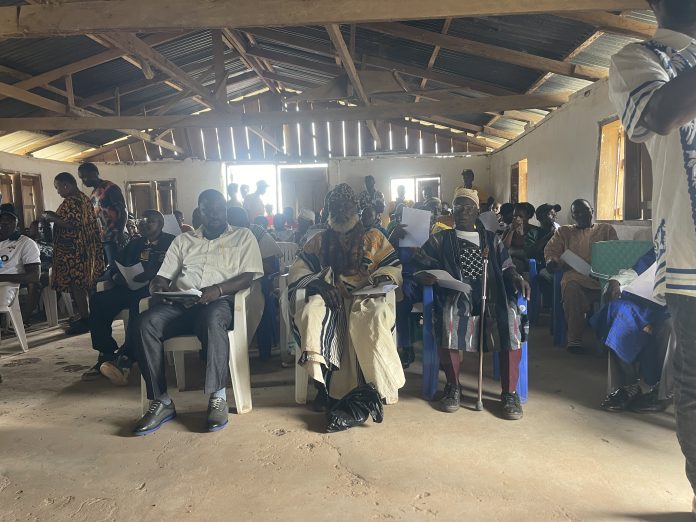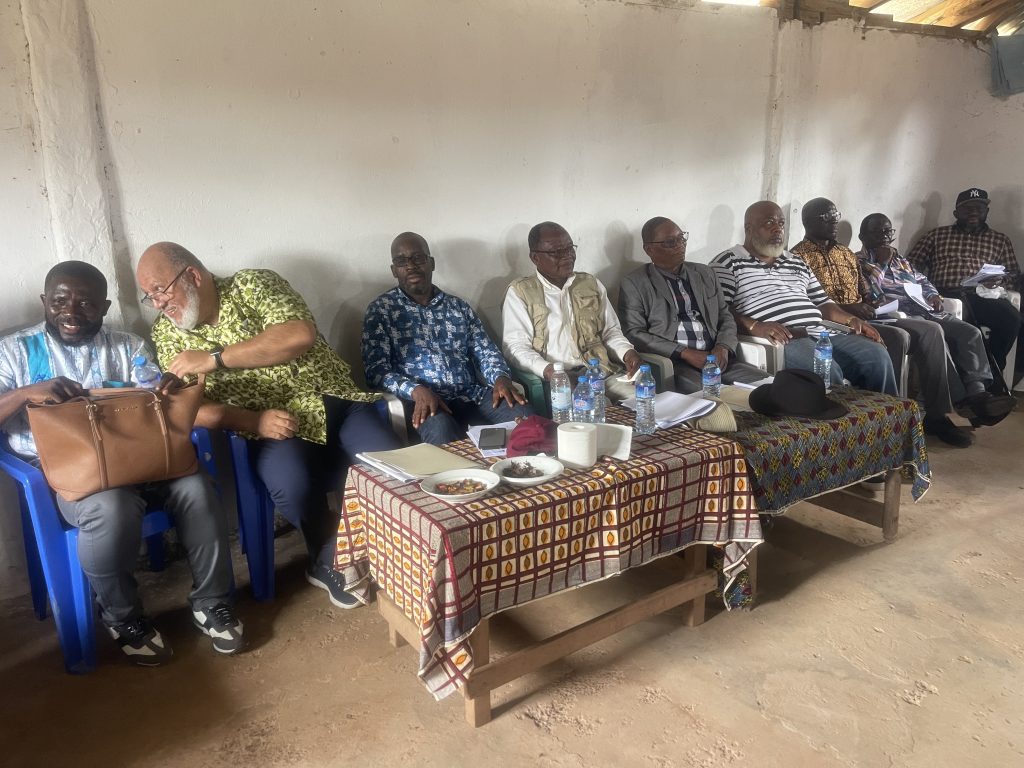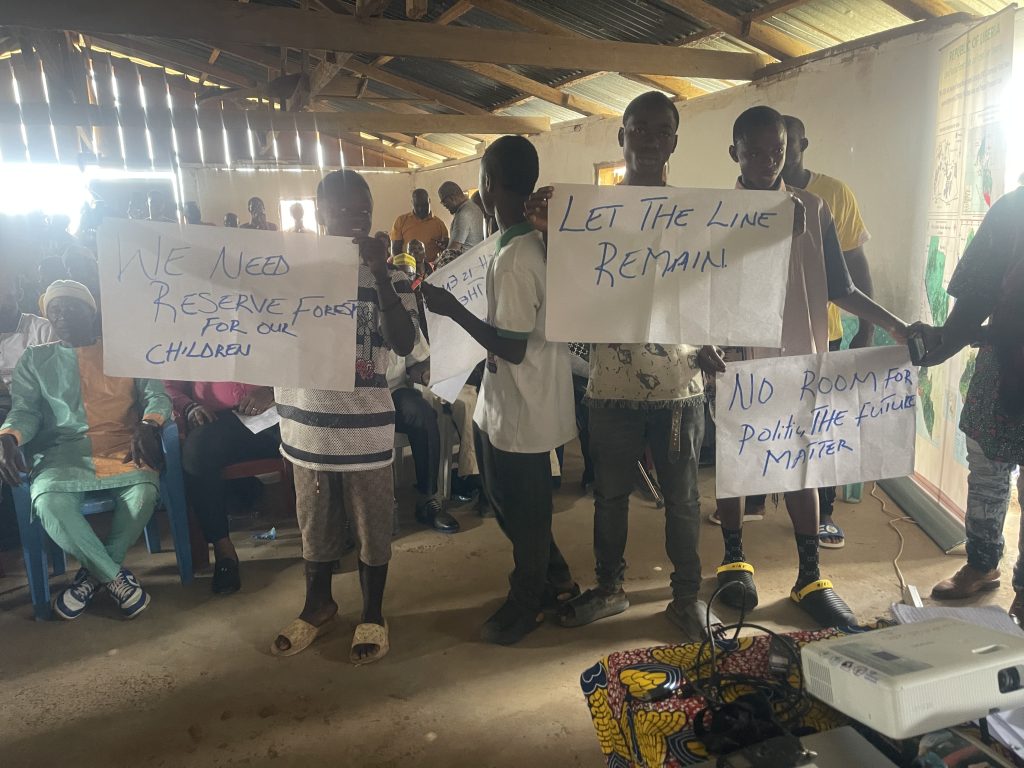
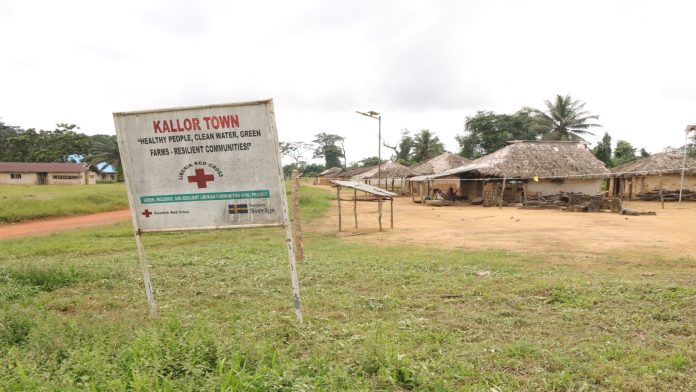
Top: A view of Kallor Town, in Lower Sanquin Clan, Sinoe County. The DayLight/Samuel T. Jabba
By Varney Kamara, Esau J. Farr and Samuel T. Jabba
KALLOR TOWN – People in Sinoe County lied in a letter to the European Union Delegation in Liberia regarding their participation in the establishment of a proposed park, a DayLight investigation found.
In early September, the Lower Sanquin Clan citizens wrote ex-Ambassador Nona Deprez to intervene in an alleged violation of their customary rights regarding the Kwa Proposed Protected Area, according to the letter, seen by The DayLight. In the letter, they claim that they did not sign any agreement with authorities and had not consented to the establishment of Kwa. They are asking the EU, which is funding the park, to halt the process until they get redress.
Kwa is a collaboration among the Forestry Development Authority (FDA), Wild Chimpanzee Foundation (WCF), and the Liberia Land Authority (LLA). Legislation to finalize its formation is now before President Joseph Boakai for his signature. Thereafter, the document would go to the Legislature for enactment.
“To be clear, our community has not given [its consent] for the creation of the park,” read the Sanquin citizens’ letter. “We have asked that the gazettement be delayed until the FDA, the LLA, and the WCF propose a model of conservation that will respect our customary rights.”
But a DayLight review of official documents and interviews—including with signatories—contradicts the claims in the letter.
Contradiction
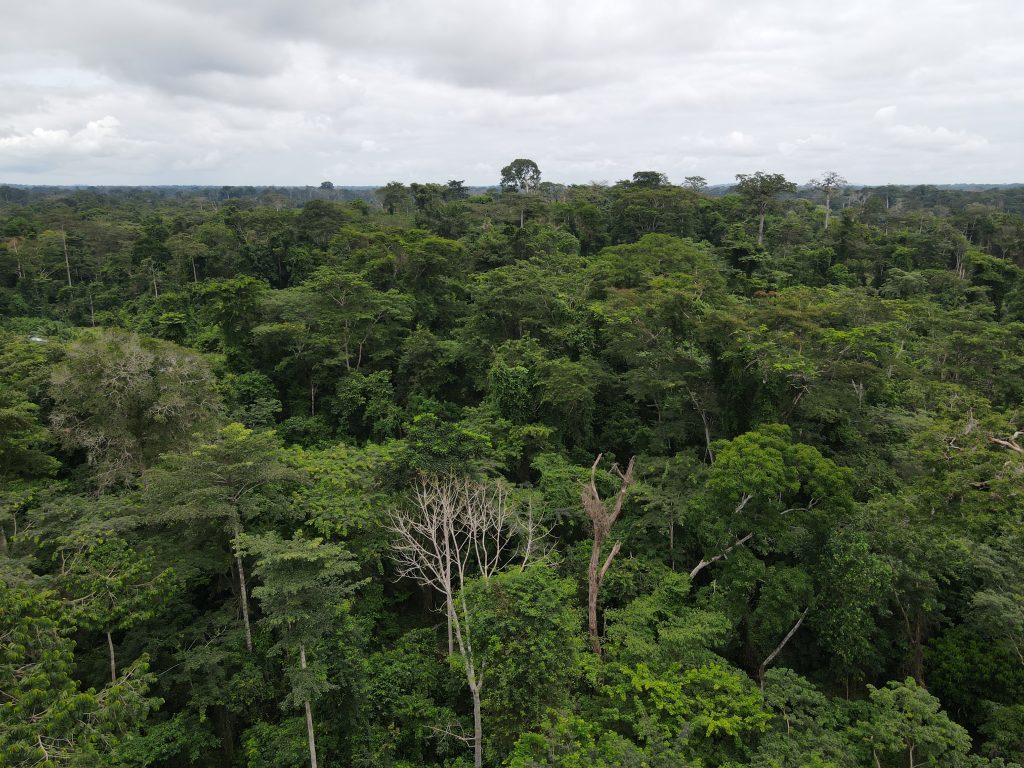
Covering 171,888 hectares, the Kwa Proposed Protected Area spans River Cess, Sinoe, and Grand Gedeh Counties. The forest is a habitat for Liberia’s second-largest known population of critically endangered western chimpanzees, pygmy hippopotamuses, and forest elephants. It supports national efforts to protect 30 percent of Liberia’s forests and fulfills its climate commitments.
In 2016, the Kwa process started. However, in 2023, a group of NGOs, including Social Entrepreneurs for Sustainable Development (SESDev), objected to the process. The group flagged that communities had not confirmed their customary ownership of the forestland. The advocacy referenced the Gbehzohn Declaration, in which actors agreed to confirm customary land tenure before establishing a park.
Eventually, the process resumed in early 2023, with customary land activities. Locals finally gave their consent for Kwa, signed boundary agreements, and agreed to co-manage the park alongside authorities, official documents show. They also participated in meetings about the humid forestland.
“Our towns commit to actively participate in the sustainable management of protection of the future… Kwa National Park,” read one document they signed. “Our town wishes to receive specific benefits based on negotiations from the future… Kwa National Park.”
Ironically, three individuals who co-wrote the letter to the EU envoy had signed documents to establish Kwa.
Evelyn Kpalleh, Town Chief of Kallor Town, signed a Kwa co-management agreement on April 5, 2023, and a boundary paper on June 27 this year. She admits to signing the documents, but said she co-wrote the EU letter because she was allegedly left out of the boundary process.
Esther Broh, a farmer in Kallor Town, signed a similar Kwa co-management document that Kpalleh signed on the same day. However, she denies signing the document. “I don’t remember signing any agreement that the park should come to our community,” said Broh in an interview with The DayLight at her home.
However, the evidence does not support Broh’s comments. Broh and three other Kallor townspeople even agreed to take part in species monitoring and patrols, according to official documents. They promised to farm outside “the agreed harmonized boundary” of the proposed park.
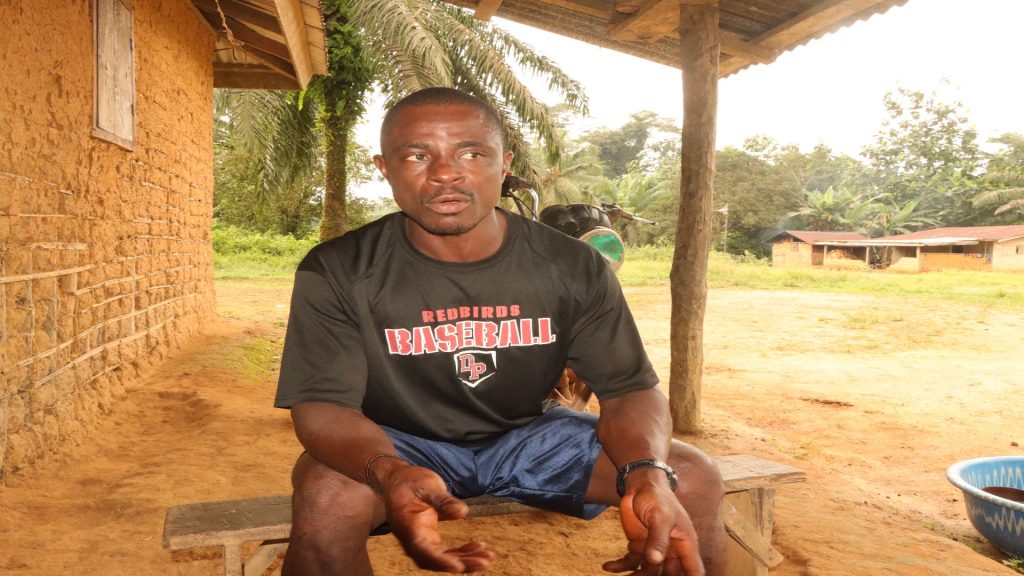
Reason Seequeh, who heads the community land leadership, signed a Kwa boundary agreement with five other people, including Kpalleh and Clan Chief Anthony Blay. Seequeh now claims his signature on the Kwa document was forged, and accused authorities of extending the boundary into his farmland.
“I remember attending a meeting in Bolue-2. We only signed the attendance sheet for people who participated in the meeting. I did not sign any form for the establishment of this park,” said Seequeh.
Two townspeople who also signed the boundary agreement confirmed Seequeh signed it.
“We signed the paper. Mr. Seequeh, who is our chairman, also signed the document,” said Sarah Jlateh, a Sayon Town leader.
“We signed the document in a big meeting in Kallor Town. I signed it. Mr. Reason Seequeh and other people signed it. The only issue we have now is that when they got ready to cut the line, they did not involve us in the process,” said Jerry Baker, a Sayon Town resident.
Dr. Annika Hillers, WCF’s Country Director, said all legal procedures regarding customary land were followed.
“These steps served to ensure that the communities’ farming activities were excluded from the park and the boundary was shifted and the size of the park was reduced to make sure that no crops were affected,” Dr. Hillers said. “The communities were fully part and thus influenced the boundary location.”
The LLA, which oversees the customary land activities, said it would investigate Seequeh’s claim. “The same people who are now saying that they did not sign any documents are the same people who participated, got involved in meetings, and signed attendance sheets and other agreements,” said Ezekiel Weah, Assistant Director of Customary Land. The FDA did not respond to queries.
A second lie
Like the letter’s co-authors, several people who signed boundary and consent papers denied doing so. However, reporters interviewed one person who admitted signing the documents.
Mathew Tarpeay, a New Town resident, now Commissioner of Upper Sanquin: “The only issue we had was for the park to go behind our sacred creek. Once that was done and resolved, we agreed and signed for the park to come. We have no objection to it.”
This is the second time local people have lied about their involvement with Kwa. Earlier this year, The DayLight published evidence that cocoa farmers in Grand Gedeh County misinformed President Boakai, leading to a government inquest. The farmers claimed they had not given their consent for Kwa formation. Turns out, like in the Lower Sanquin case, signatories of the presidential letter had signed official documents for Kwa. The findings from the government inquest have not been published.
But in interviews in four adjacent Kwa communities in Grand Gedeh, townspeople expressed support for the proposed park.
“From the beginning, we said no because the forest is where we can get our living,” said Cephus Krah, Town Chief of Kumah Town in Tchien District. “But after they taught us about the importance of the forest, we signed the document without anybody forcing us.”