28.1 C
Monrovia
Friday, December 12, 2025
Home Tags Sapo National Park

Tag: Sapo National Park

Park Warden Wants 250 Armed Rangers to Protect Sapo Park

#image_title

Top: A Sapo National Park signboard in Cherue Town, Sinoe County. The DayLight/Carlucci Cooper


By Varney Kamara


JAYLAY TWON, Sinoe County – The government should arm 250 rangers to protect the Sapo National Park from illegal occupants, John Smith, the reserve’s Chief Warden, has said.

Spanning over 180,000 hectares across Grand Gedeh, River Gee, and Sinoe Counties, Sapo Park is Liberia’s largest natural reserve. However, only 30 law enforcement rangers man it.

“The size of the forest tells us that the number is insufficient to protect an area of this magnitude,” Smith told a DayLight interview in Jaylay Town, the rangers’ headquarters. “This has compelled the need to increase the force so that we can effectively deal with the situation on the ground.”

Established in 1983, the Sapo National Park is a global biodiversity hotspot, sheltering 125 mammal species and 590 bird species, including several endangered species. It is the second-largest rainforest in West Africa after the Tai National Forest in neighboring Ivory Coast.

However, the park faces environmental threats from illegal logging, agricultural expansion, and mining. There are 13 known illegal mining camps in the park, predominantly occupied by miners from the West African sub-region – Mali, Nigeria, Ivory Coast, and Guinea, the report found. A 2012 report found weak monitoring and poor boundary awareness among miners as key challenges.


In May 2017, a mob of local rioters killed a ranger and severely injured four others. It took armed anti-riot police to bring the situation under control.

Taylor Kaydee, an FDA-assigned ranger in Chebioh Town, the setting of the 2017 violence, said rangers were attacked often. About a year ago, he and other rangers were attacked after they arrested some illegal miners in the park. A court in Juarzon intervened for their handcuffs to be retrieved.
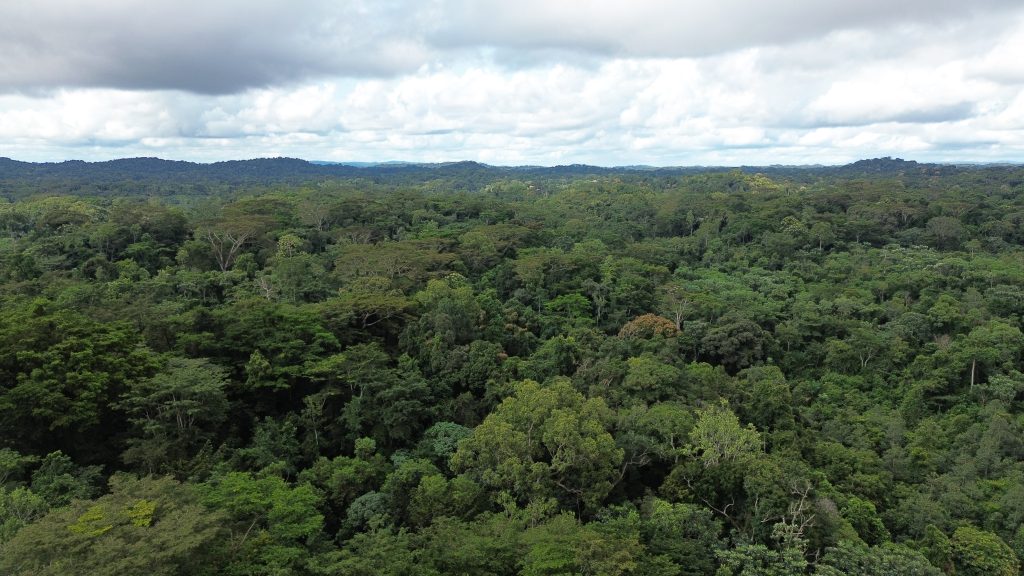
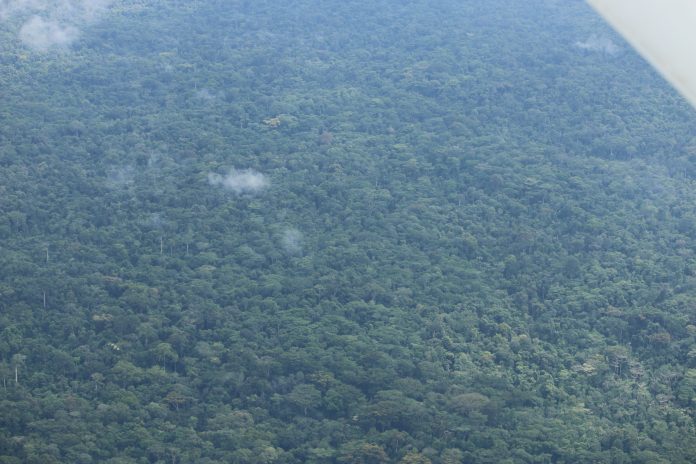
A drone shot of a portion of the Sapo National Park. The DayLight/Carlucci Cooper

“How do you go to arrest somebody who has arms in a jungle terrain of this nature, but you, who are the law enforcer, don’t have arms?” Smith asked rhetorically.  Smith added that it was impractical for unarmed rangers to protect the park against its illegal occupants, armed with single-barrelled guns. 

Security actors have been critical of arming rangers for the two decades that followed since Liberia’s civil wars ended in 2003. Critics fear arming forest rangers could lead to abuse of power, violence, and undermine reform efforts.

Smith disagrees. He believes sufficient law enforcement rangers must be trained, armed, and deployed not to shoot people but perform their tasks in line with the law.

“It is a sustainable approach that speaks to the longstanding difficulties we face over the years. We need the manpower, training, and logistics to support our security plans and operations.”
Mano Accident Victim Receives US$120K for Damages

#image_title

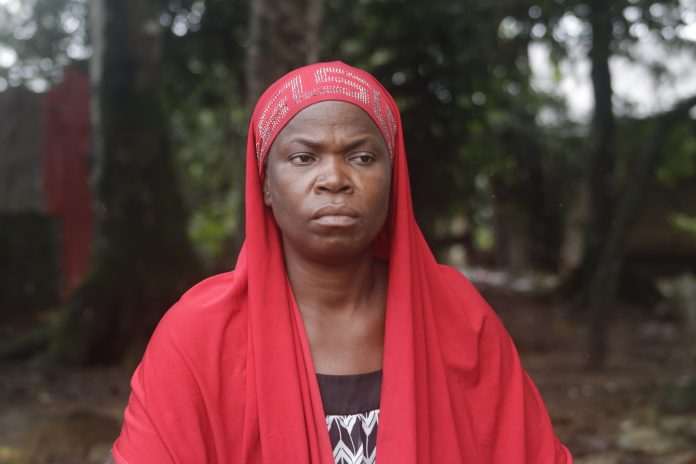
Top: Bendu Sonii received US$120,000 from Mano Palm Oil Industries as damages for an accident that left her with one leg. The DayLight/Harry Browne


By Matenneh Keita and Harry Browne


BALLAH’S TOWN, Grand Cape Mount County – A woman, who lost a leg in an accident involving a Mano Palm Oil Industries vehicle, received US$120,000 for damages.

In May last year, a Mano vehicle swerved off the Babangida Highway and hit Bendu Sonii, a casual laborer with the Lebanese-owned company. Doctors at the St. Joseph Catholic Hospital amputated Sonii’s right leg, which was severely injured in the accident.  

After recovery, the 42-year-old mother of eight continued to receive her US$70 or US$80 wage and four 25-kilogram bags of rice. However, that changed after she won the lawsuit against her employer for damages.

“The money Mano gave was US$120,000.  I brought it and turned it over to [Sonii],” said Sensee Johnson, the victim’s fiancé. “We took off the expenses that were made, and the balance was saved in the bank.”

The payment is a soothing twist in a sad story.

In an interview on her hospital bed two months later, a distressed Sonii could not hold back tears. She continued that mood even after she was discharged from the hospital, ruing a bleak future.

Not long after her story was published, Sonii found a lawyer and sued Mano at the 11th Judicial Circuit Court in Tubmanburg, Bomi County.

She petitioned the court for US$1.45 million in damages for wrong, personal injury and emotional distress, court records show.  However, she reached an out-of-court settlement with the Lebanese-owned company for the eventual amount.

Having received the payment, Sonii praised the justice system, her spouse and journalists for the victory.

“I tell God thank you for the situation that came to me between me and Mano Oil Palm Plantation. The law was there to fight my case, and today I have become successful.

“It was difficult but thank God the laws of Liberia were there for me during the court process.

“My husband was there and also [The DayLight] too fought. All of you were there for me,” added Sonii at her home in Ballah’s Town, Grand Cape Mount County.

Mano did not speak on the settlement. Richard Hilton, the company’s communication officer, promised to grant an interview but evaded reporters.


Additional reporting by Gabriel Parker in Tubmanburg, Bomi County.

Joint Security Seizes Illicit Drugs in Sapo Park

#image_title

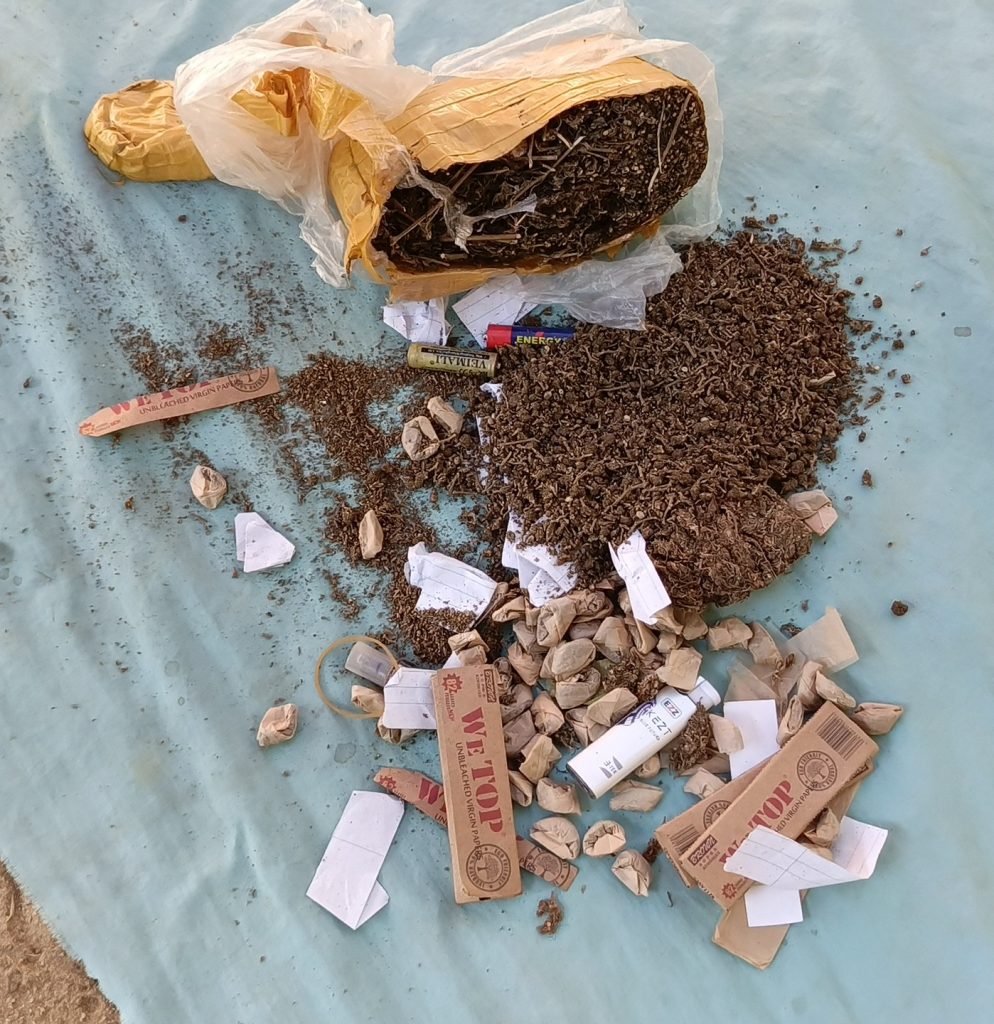
Top: Marijuana joint security forces seized from illicit miners in the Sapo National Park. Filed picture/Joint Security


By Varney Kamara   


KORJAYEE, Sinoe County – Joint security forces have seized a slew of banned substances from illegal occupants in the Sapo National Park, dismantling a major, decades-long illicit drug hub.

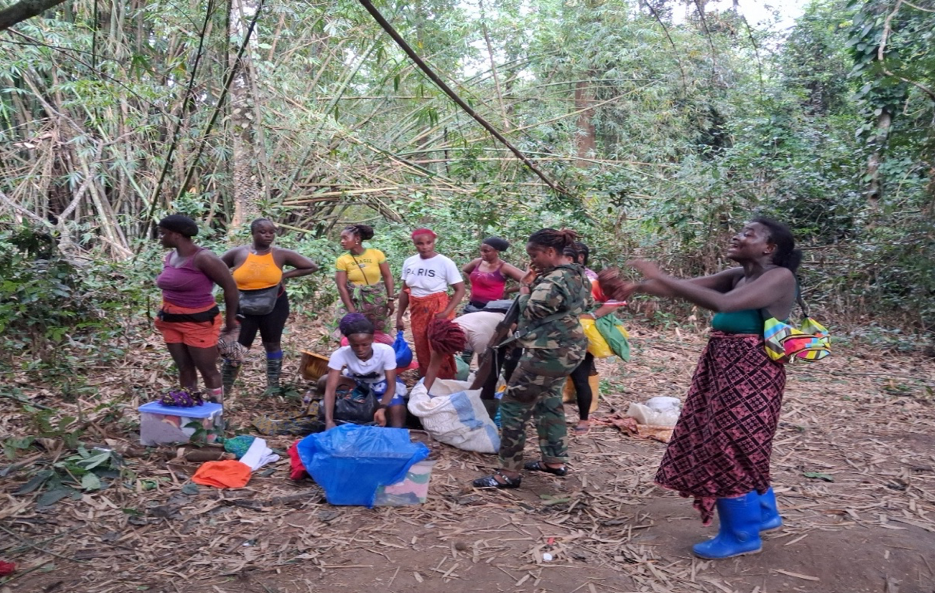
Last month, soldiers, police, anti-drug agents, border officers, and forest rangers deployed at “Camp America,” one of the 13 known illegal settlements in the park. So far, some 2,000 people have been removed from the area, and with them an array of drugs from occupants.

“The place is a lawless ground where people are getting drunk with harmful drugs in the camps,” said John Smith, the park’s manager, in an interview with The DayLight in Jaylay Town. “We also heard stories about people getting intoxicated, and a few death cases relating to harmful drugs in the camps.”

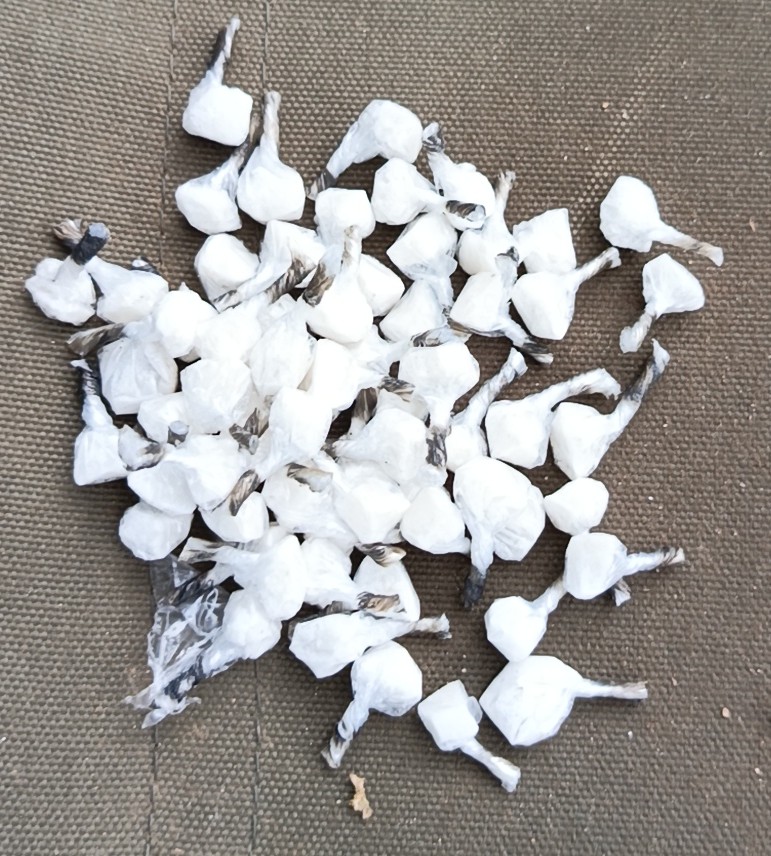
Drug abuse is one of the adverse impacts of mining on communities. However, this is the first time the ones associated with the Sapo park, West Africa’s second-largest rainforest, have come to light. Pictures of the seizure in an unpublished official report, seen by DayLight, show heroin, marijuana, tramadol, and the deadly Kush. An unpublished joint security report, seen by The DayLight, said occupants practiced “immoral and cruel acts far away from human civilization.”

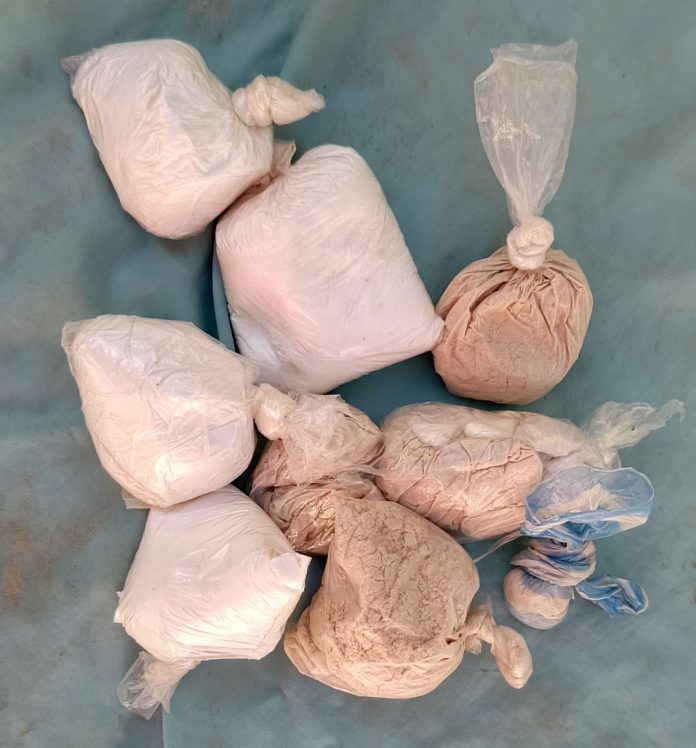
Top and here: Several grams of heroin, commonly called Italian white or tar, were seized by joint security forces in the Sapo National Park in August. Filed picture: Joint Security Team

The park’s drug trade is being fueled by Nigerians, Sierra Leoneans, and other nationalities, using land and water routes, according to residents and ex-park occupants alike.  Drugs are smuggled into the park at night, eluding rangers.

Many illegal occupants are hooked on drugs, according to ex-occupants DayLight interviewed. After taking in the harmful substance, they bleed from their noses and mouths. In some cases, they die from an overdose.  

“Our children are spoiled with drugs. As a mother of three boy children, I am saddened by the pictures I saw in the camp. When I see a boy child smoking and think about kids, it makes me feel so bad,” said Beatrice Giddings, who ran a business in the 1,804-square-kilometer park. Giddings was speaking to reporters in Korjayee, where the joint security is based, and one of the entrances to the forest.

An AFL soldier searches women for contraband. Filed picture/Joint Security Team

Leaked videos obtained by The DayLight corroborate Giddings’ comments. In one of the videos, a young man is seen crying and begging for mercy while being tied. His cries, however, fall on deaf ears, as his torturers ordered that he be given kush instead. A deadly mixture of chemicals, kush kills about a dozen weekly and hospitalizes thousands in neighboring Sierra Leone. It has wreaked havoc in Liberia since its introduction four years ago.

Nixon Browne, chairman of the Movement for Citizen Action, which advocates for the park’s protection, said people have made illegal drugs a permanent business in the park.

“The camps are a major hideout for this kind of criminal business that the guys need to support their habit,” said Browne. “There are other people who want to live in the camps because there is a drug there.”

Rebuttal To The ‘Proposal For The De-Gazettement Of The Sapo National Park’

#image_title

By Saah A. David, Jr.


Introduction

Sapo National Park (SNP) is one of Liberia’s greatest natural treasures. Globally, it is recognized as both an Important Bird Area and a Key Biodiversity Area, underscoring its irreplaceable value for avian conservation and biodiversity. Regionally, SNP contains the second-largest area of intact tropical rainforest in West Africa, after Cote d’Ivoire’s Tai National Park, and stands as Liberia’s first and largest protected area.

The park provides critical habitat for the pygmy hippopotamus–found only in the Mano River Union countries–with Liberia hosting the largest population. It also shelters the largest population of western chimpanzees in Liberia, making the country second only to Guinea in West Africa for this endangered species. Moreover, SNP holds Liberia’s most significant population of African forest elephants, a species now severely threatened across the region.

Concerns with the De-Gazettement Proposal

Hon. Thomas Romeo Quioh’s proposal to partially or fully de-gazette Sapo National Park (SNP) raises serious concerns. While socio-economic development and community welfare are essential, any alteration of SNP’s legal status must be consistent with Liberia’s constitutional mandate, national legislation, and international commitments to environmental protection and sustainable development. De-gazettement would violate these obligations, undermine conservation gains, and risk irreversible ecological damage.

This initial response highlights key legal frameworks that support the preservation of SNP, emphasizing the importance of upholding Liberia’s environmental obligations and the long-term ecological and socio-economic consequences of de-gazettement. A subsequent response – scheduled for release in the coming days – will examine the economic benefits Liberia can gain (monetary and non-monetary benefits) from ecotourism, carbon sequestration, and other sustainable practices associated with the park and other protected areas in the country.

1. International Legal Frameworks Upholding Conservation of Sapo National Park

  • Convention on Biological Diversity (CBD, 1992): Liberia has committed to conserving biological diversity (Articles 6 and 8) and to meet the 30X30 target under the 2022 Kunming-Montreal Global Biodiversity Framework, which requires protecting at least 30% of the world’s land and sea areas to be under effective protection and sustainable management by 2030. De-gazettement would directly undermine this goal.
  • Ramsar Convention on Wetlands (1971) and UNESCO’s Man and Biosphere Programme: SNP’s wetlands provide vital ecosystem services such as water regulation, carbon storage, and climate resilience. Downsizing or de-gazetting the park would diminish these services and harm local livelihoods.
  • UN Framework Convention on Climate Change (UNFCCC) & REDD+ Initiatives: Liberia commits to forest protection to mitigate climate change through reducing deforestation. De-gazettement of SNP would lead to deforestation, forest degradation, carbon emissions, and loss of international climate financing opportunities

2. National Legal Protection and Policy Frameworks

  • Constitution of Liberia (Article 7): Mandates sustainable use and conservation of natural resources for present and future generations.
  • Liberia Forestry Reform Law (2006):  Mandates the protection of forest reserves and national parks for sustainable development and environmental preservation. It provides mechanisms for review but strongly emphasizes conservation and does not facilitate facile removal of protected status without stringent assessments and multi-stakeholder consultation.
  • Environmental Protection Agency (EPA) Act of 2003: Demands comprehensive Environmental and Social Impact Assessments (ESIA) before any action that could harm protected ecosystems. No such ESIA has been conducted for SNP’s de-gazettement
  • Land Rights Act (2018): While affirming customary land ownership, this law requires coordination with environmental protection efforts. The presence of communities within the park’s boundaries necessitates integrated land-use planning without compromising ecological integrity, not wholesale de-gazettement.
  • National Biodiversity Strategy and Action Plan (NBSAP 2017): Commits Liberia to expanding, not reducing, its network of protected areas.

3. Conservation and Sustainable Development Interdependence

  • Sustainable Development Goals (SDGs): Particularly SDG 15 (Life on Land): Obligates countries to sustainably manage forests and halt biodiversity loss. De-gazettement of SNP would contravene this goal and risk isolating Liberia from international development partnerships.
  • Long-Term Socio-Economic Impacts: While some short-term economic gains may arise from legalizing mining and logging, these are outweighed by biodiversity loss, disruption of ecosystem services (such as water regulation and soil conservation), and increasing vulnerability of local communities to environmental degradation.

4. Addressing Enforcement and Governance Challenges without De-Gazettement

The proposal rightly identifies enforcement and governance as challenges, yet de-gazettement is not the sole or best solution. Alternatives supported by conservation laws include:

  1. Strengthening the institutional capacity of the Forestry Development Authority, EPA, and law enforcement with adequate financing, training, and community empowerment.
  2. Enhancing community-based natural resource management, offering genuine benefit-sharing schemes under existing legal frameworks to incentivize conservation.
  3. Creating the enabling environment and infrastructure for sustainable ecotourism as part of diversified local economies, consistent with national forest and wildlife policies.

5. Risks of Creating a Precedent for Protected Area Downgrading

Partial or full de-gazettement would set a dangerous precedent, inviting similar moves across other protected areas and emboldening illegal encroachment, contrary to the global principle of “no net loss” of biodiversity or natural ecosystems.

6. Conclusion

Sapo National Park is not only a symbol of Liberia’s heritage but also a cornerstone of its environmental obligations and sustainable development ambitions. De-gazettement would cause lasting ecological, social, and economic harm, eroding Liberia’s credibility in global environmental governance. The responsible path forward is to improve governance, strengthen enforcement, empower communities, and pursue sustainable economic models that keep SNP intact for future generations.


Author: Saah A. David, Jr. – Development Practitioner, REDD+ and Climate Change Specialist. Former Natural Resource Management Specialist – USAID-Liberia, former National REDD+ Coordinator Liberia. Co-authored two books – Sustainable Forest Management (SFM in Liberia – The 4 Cs Approach and Sustainable Forest Management in Liberia (SFM) – Practices and Approaches

Podcasts