28.3 C
Monrovia
Thursday, March 26, 2026
Home Tags Liberia

Tag: Liberia

How FDA Gave Loggers Over 14K Hectares of Surplus Forests

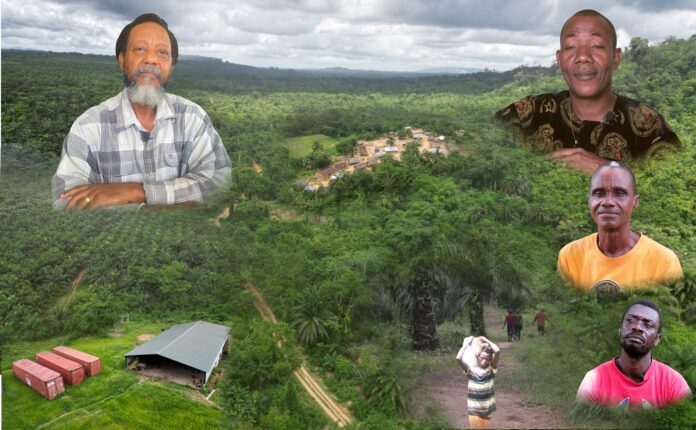
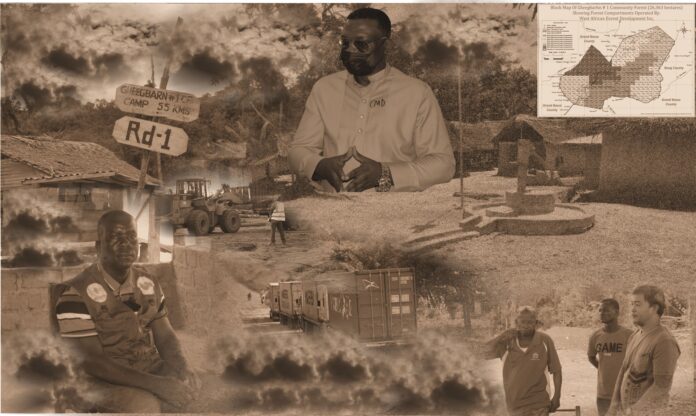
Top: Graphic showing FDA Managing Director Mike Doryen and different illegal activities of West Africa Forest Development Incorporated (WAFDI) in Grand Bassa County. The DayLight/Rebazar Forte


By Emmanuel Sherman


GONO TOWN, Grand Bassa County – At the end of 2021, the Ministry of Justice concluded an investigation into a Chinese-owned company accused of illegal logging.  

The investigation confirmed that the West African Forest Development Incorporated (WAFDI) harvested logs in the Gheegbarn #1 Community Forest in excess of legal requirements. However, the investigation found WAFDI was not alone.

It turned out, the Forestry Development Authority (FDA), which had recommended the official inquest, had illegally awarded WAFDI about 14,460 hectares of extra woodland in Grand Bassa’s Compound Number Two. The agency had approved Gheegbarn’s entire 26,363 hectares to be harvested over two times faster than normal forestry regime demands.

What happened in Gheegbarn was the peak of illegal logging activities in at least seven community forests in four counties. It could be the biggest logging scandal after the FDA illegally awarded about 2.5 million hectares of forestlands to companies over a decade ago.

‘We hereby approve…’

It all began in December 2018 when WAFDI signed a seven-year agreement with the leadership of Gheegbarn #1. (They call it that way to distinguish it from Gheegbarn #2, a neighboring community forest). WAFDI is owned by a Chinese named Wang Chenchen. It has a link with Augustine Johnson, the manager of  Mandra, an Asian-owned company the FDA recently penalized over its abandonment of thousands of logs.

One year on, WAFDI presented the FDA with its harvesting blueprint for five years, known in the industry as a forest management plan. Then it broke down the plan into seasons.

Season 2018-2019, the first, targeted about 3,700 hectares, the documents show. The other plans featured larger harvesting areas, including about 4,000 hectares for the season 2024-2025, according to The DayLight’s estimate.
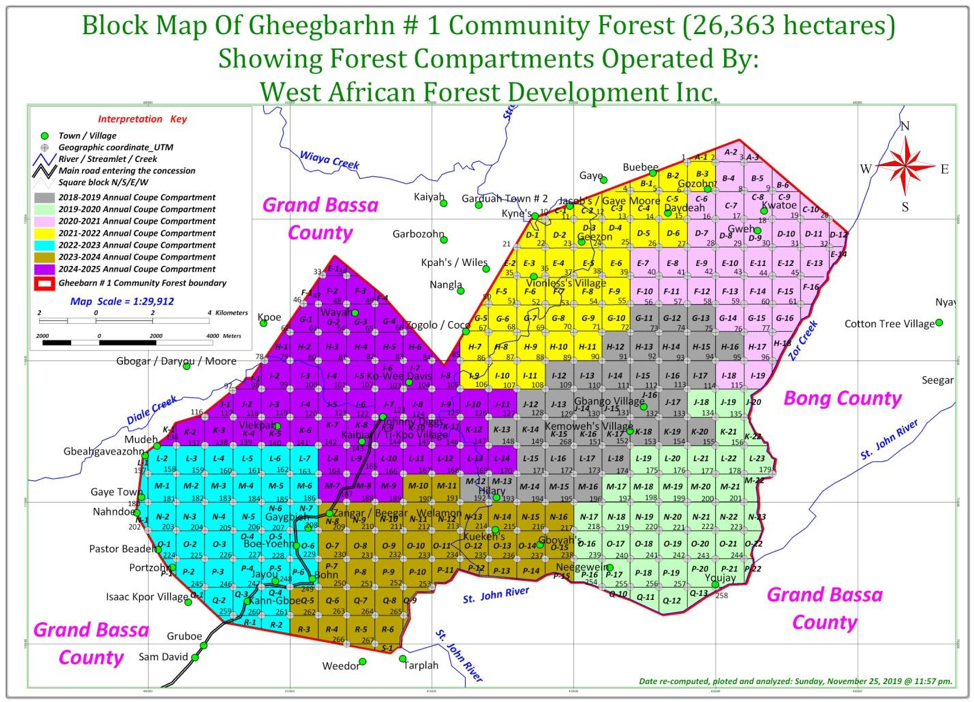
The unlawful map of WAFDI’s operations in Gheegbarn #1 shows the company’s plan to harvest all the community forest within just seven years, more than two times faster than the normal rate.

The FDA confusingly illegally approved WAFDI’s plans twice, first on July 4, 2019, and then on August 26, 2020, according to official documents.

“We hereby approve said plans having met all basic requirements,” FDA’s Managing Director Mike Doryen said in communications to the company. It ironically hyped the plans for being “complete,” “accurate” and containing “quality information.”

“Therefore, management anticipates full compliance in the implementation of these plans as we strive to ensure sustainable forest management in Liberia,” the letters added.

Plans approved, WAFDI began to operate in 2019, according to official records.

But barely two years later, the FDA disapproved of WAFDI’s attempt to export 601.801 cubic meters of logs. The FDA accused WAFDI of harvesting timber in forest areas it had not permitted.

Later on, the FDA asked the Ministry of Justice to investigate, which it completed in about two months. SGS had reported the matter a month earlier in a monthly publication.

By that time, WAFDI had harvested 6,007 or 32,347.855 cubic meters of logs, according to the Liberia Extractive Industries Transparency Initiative (LEITI), citing FDA and company records. It exported some 29,104 cubic meters. In 2021 alone, WAFDI sold US$531,460, LEITI records show.

The investigation did more than book WAFDI over the embattled swathe of forest. It found that the FDA was largely responsible for the situation.
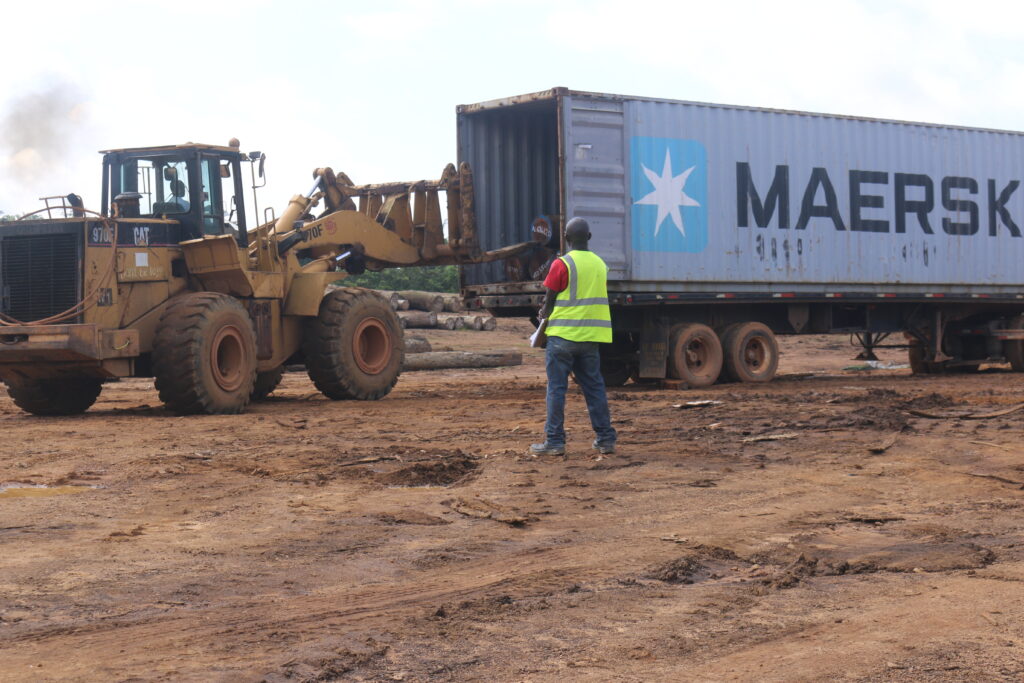
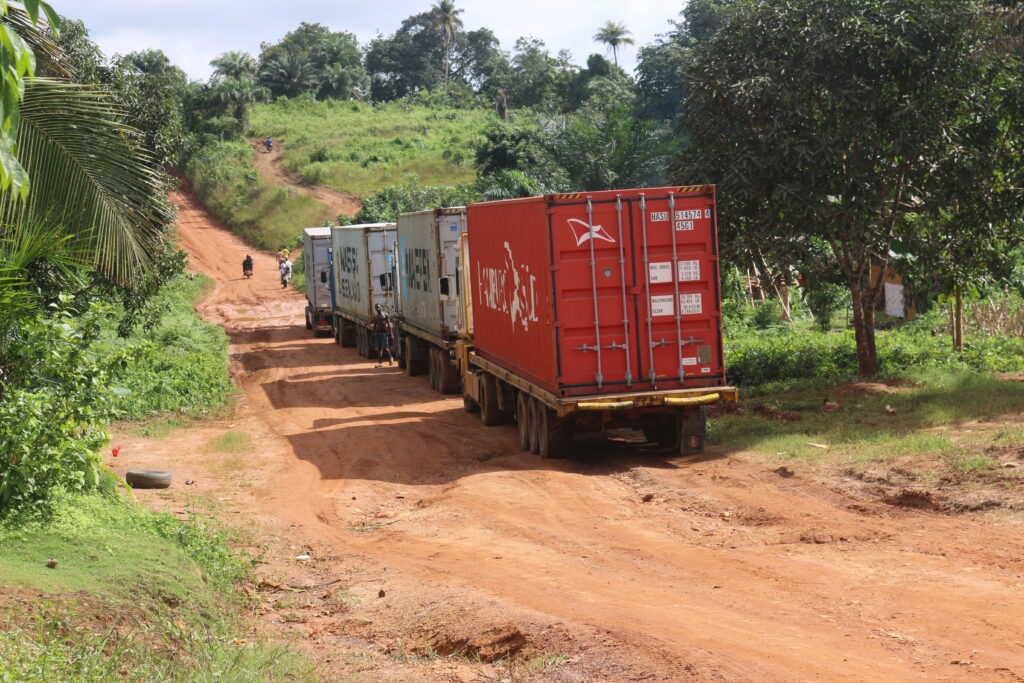
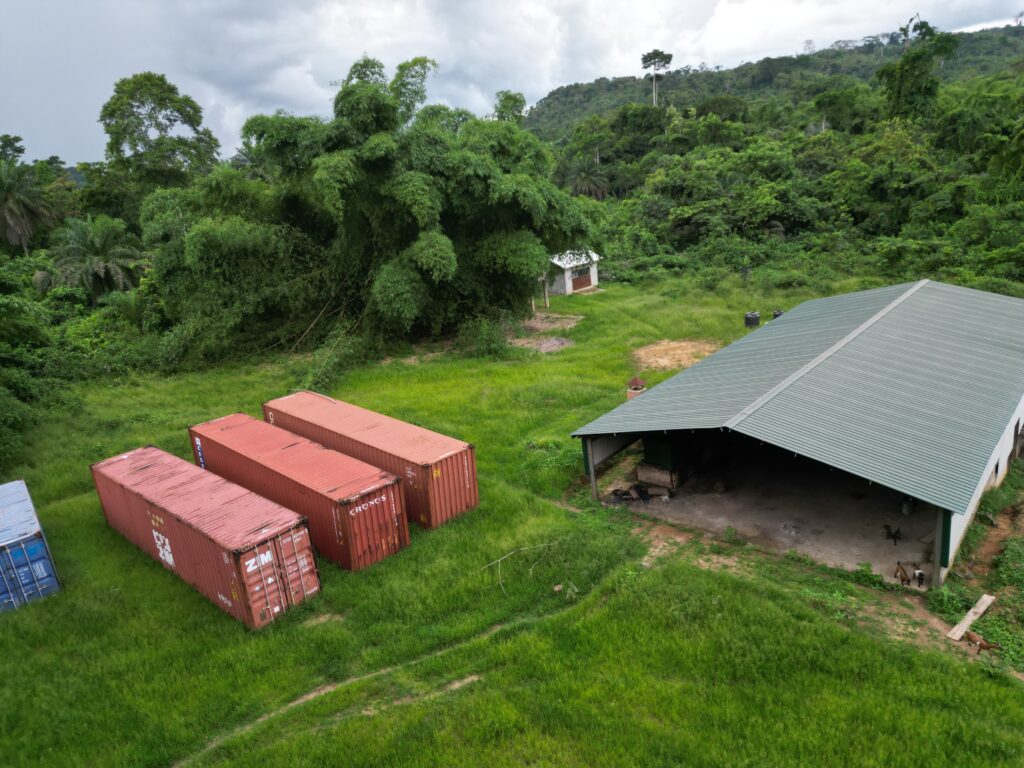
Top: A worker watches as logs of West African Forest Development Incorporated (WAFDI) harvested with an illegal plan are loaded onto a container truck. Here: Four container trucks loaded with logs WAFDI illegally harvested in Grand Bassa County. The DayLight/James Harding Giahyue

“The investigation found that other logs from the purported unapproved blocks were previously approved and export permits were signed by the FDA… and SGS,” Minister of Justice Frank Musa Dean wrote to Harrison Karnwea, the chairman of FDA’s board of directors, on December 2, 2021.

“WAFDI took advantage of [FDA’s illegal approval] and requested to commence operations and same was granted by FDA beginning 2019,” Dean’s letter further read.

It said FDA and SGS had sanctioned the company’s harvest and export under the very illegal plan FDA. SGS is a Switzerland-headquartered firm that helps track Liberian logs from their sources to final destinations.

The FDA broke the law in the first place by approving the company’s plan to harvest all 26,326 hectares in seven years, the investigation found.  The National Forestry Reform Law requires the FDA to monitor all harvests and ensure they are legal and sustainable. The Code of Harvesting Practices, on the other hand, restricts the rate of felling trees to 15 years.

The investigation unearthed FDA had endorsed the WAFDI-Gheegbarn deal to last for seven years, instead of the 15 years in the Community Rights Law of 2009 with Respect to Forest Lands.

The DayLight’s review of the illegal harvesting plan showed FDA awarded all of Gheegbarn’s 26,326 hectares in just seven years. The regulator further okayed the company to operate somewhere between 3,700 and 4,000 hectares. That was more than doubled the forest area the code requires.

Overall, the FDA granted WAFDI an area in excess of 14,460 hectares of humid, Bassonian forest, according to our calculations. And by the time of the ministry’s inquest, WAFDI had already harvested 11,600 hectares an unlawful bonus of 6,500 hectares. That means, in less than three years, WAFDI cut trees which would have taken seven years to do legally.  

WAFDI was not the only company in the scandal. Within that same period, the FDA illegally approved six other agreements in Grand Bassa, River Cess, Nimba and Gbarpolu.

Like WAFDI, the FDA authorized the companies to harvest all of their contracted forests within the duration of their agreements.

The scandal mirrored another one in Zorzor, Lofa County, where the FDA permitted a company to harvest an estimated US$2 million worth of logs outside its contract area. The FDA replaced its staff who supervised the county at the time.

‘Restore the Sanctity of the FDA’

The Ministry of Justice urged FDA’s board to take action against individuals “to restore the sanctity of the FDA.”

C. Mike Doryen oversaw the Forestry Development Authority’s approval of illegal community forest agreements from 2018 to 2020 that granted companies excess forest areas. The DayLight/James Harding Giahyue  

The board of directors heeded the ministry’s advice. It passed a resolution on January 26 last year, calling for the dismissal of Jerry Yonmah and Simulu Kamara, the technical managers of the commercial and legality verification departments, respectively.

The resolution also called for the dismissal of Abraham Sheriff and Jessie Vannie, the operations and data information managers of the legality verification department, correspondingly. They deny any wrongdoing.
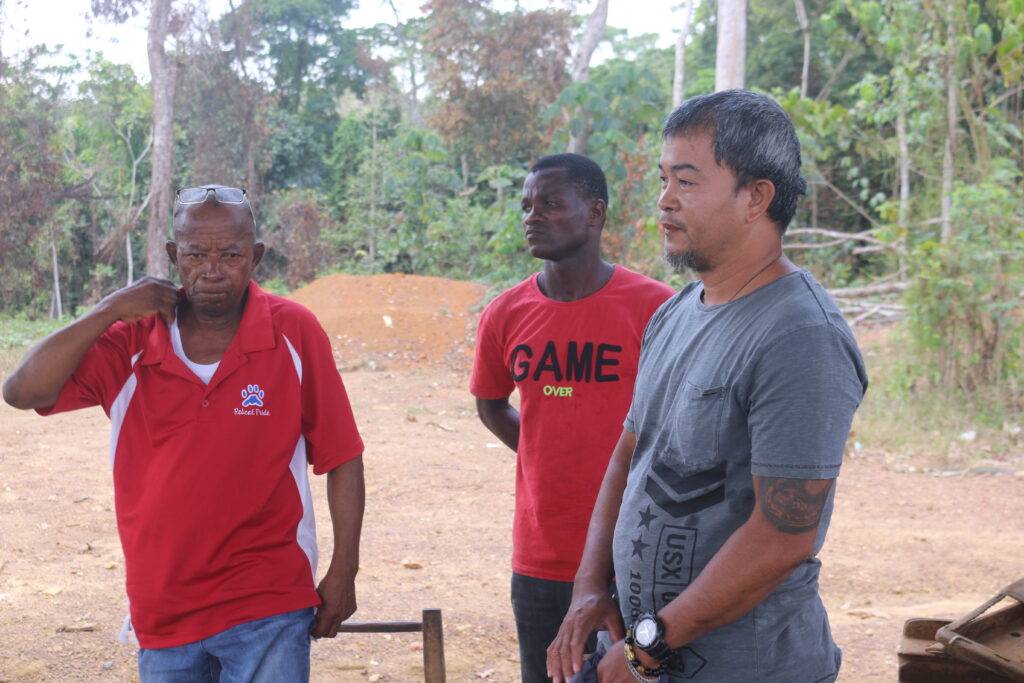
Gualberto Ojo, right, and some of WAFDI’s workers at an event in March. The DayLight/James Harding Giahyue

Five days after its resolution, the board asked President George Weah to sack and retire Joseph Tally, FDA’s Deputy Managing Director for Operations. The board accused Tally, who the resolution listed, of aiding in the illegalities.

“This will send a strong message to would-be violators,” Karnwea’s letter to President Weah read. It said the scandal had “eroded the credibility of the management team, thereby affecting donors’ behaviors.”

Though the resolution spared Doryen, who approved all of the illegal documents, he was clearly reprimanded. The resolution advised him not to sign any future documents without the counsel of the FDA’s legal department and that he must attend important meetings to be abreast with forestry matters.

President Weah did not heed the board’s recommendation and Tally remains in his position. Tally told The DayLight in June the matter was now “water under the bridge,” praising “dynamic” and “prudent” President Weah for retaining him.

Also, none of the accused masterminds was fired. However, they were all replaced, giving way to new heads of the commercial, legality and community forest departments.

The Aftermath

In the end, WAFDI’s agreement with the villagers was amended from seven years to 15 years. Subsequently, work in Gheegbarn ceased for about 11 months.  It was unclear whether the FDA and WAFDI corrected its harvesting plan as the Ministry of Justice had instructed. The FDA did not grant The DayLight’s request for that and other documents, a violation of several forestry legal instruments.

As the scandal shook the FDA to the core, it took a toll on Gheegbarn.   

In their agreement, WAFDI promised to build roads, schools, a clinic, and latrines, construct handpumps, and pay scholarship fees. However, the company has not met its obligations.

“They are using the halt as an excuse to not do our projects,” said Junior Wesseh, the head of the community leadership. “They have been operating for five years, only two handpumps and a latrine they dealt with.”
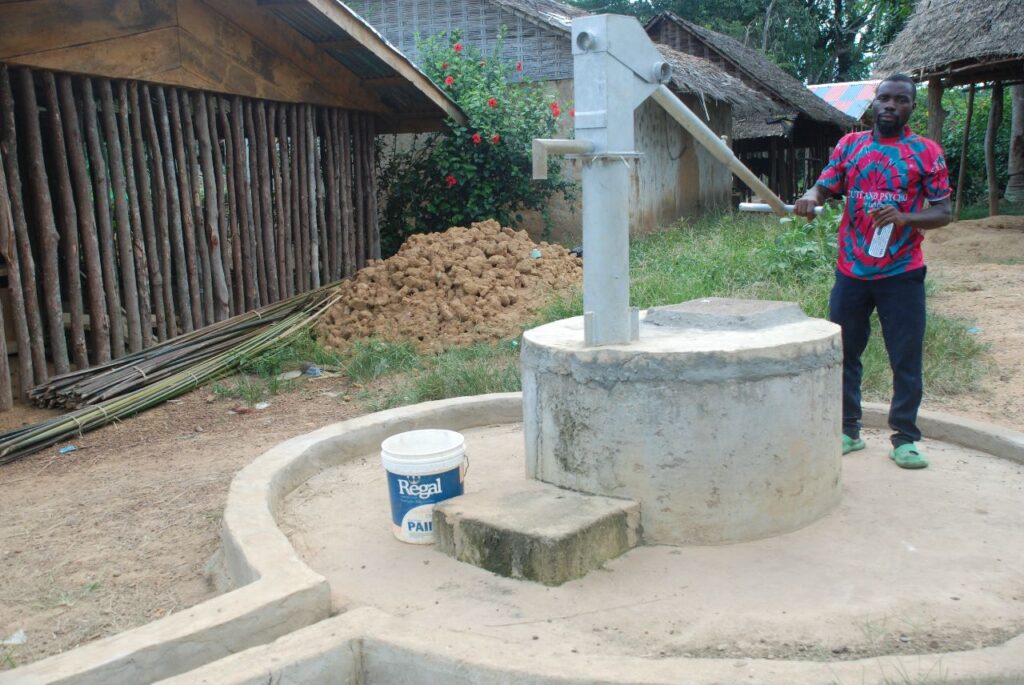
One of the two handpumps in Gono Town, WAFDI constructed. It is obligated to construct eight of them by now. The DayLight/Carlucci Cooper

Apart from community projects, the company also failed to pay harvesting fees before its operations ceased.

“They said they were not responsible for our cubic meters fee, because they lost US$1 million dollars,” said Larry Tuning, the secretary to the community leadership.

Based on The DayLight’s calculations, WAFDI should pay Gheegbarn US$64,695 for the logs it produced from 2019 to 2021, at least according to official data. We could not independently verify Tuning’s claim in the absence of payment records. By law, WAFDI and the FDA should have published the figures in the newspapers and the agency’s website.
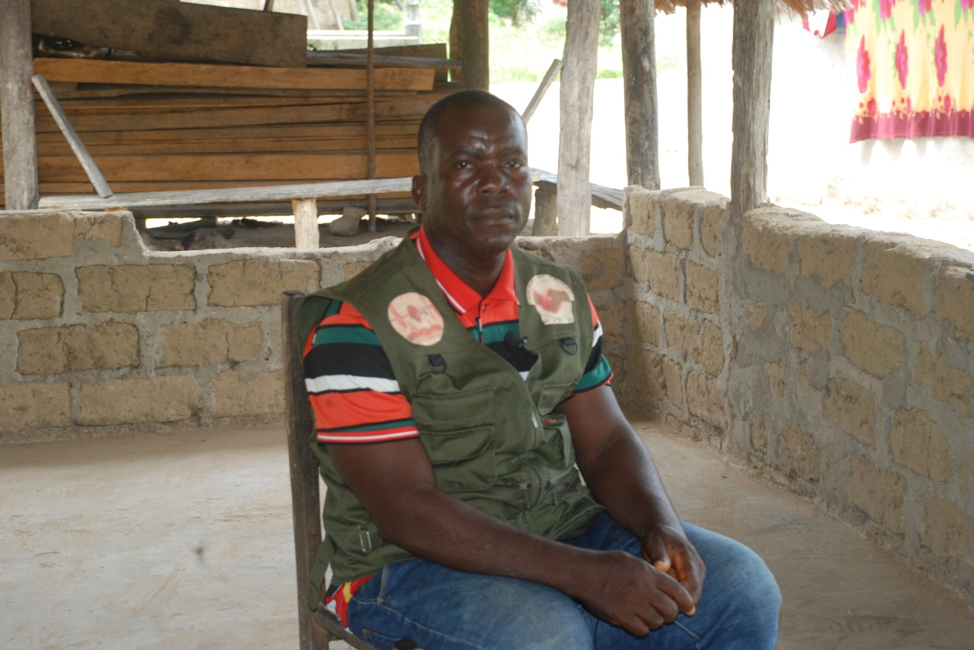
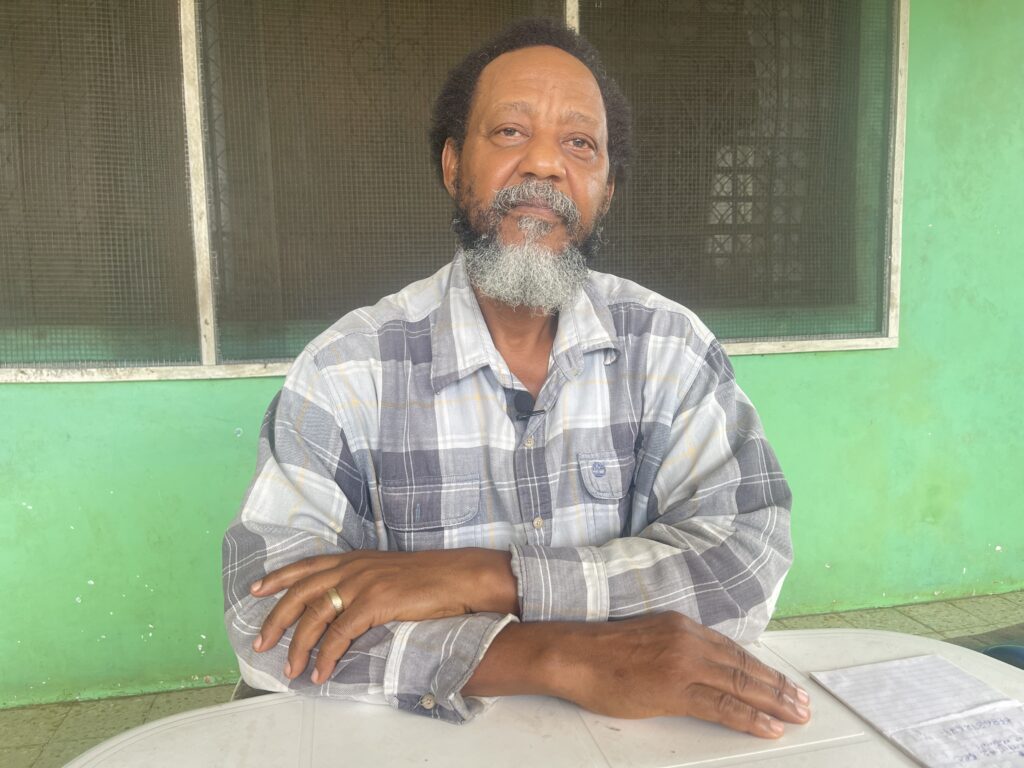
Junior Wesseh, head of Gheegbarn #1 Community Forest leadership. The DayLight/Carllucci Cooper

WAFDI called off an interview with The DayLight in its third minute upon Johnson’s orders. Johnson said the newspaper had not given prior notice. He did not respond to emailed queries afterward.  

But responding to criticisms from Gheegbarn’s leadership when the European ambassador visited the area in March, Gualberto Ojo, a WAFDI representative, blamed the company’s indebtedness and failures on the U.S-China trade war and illegal chainsaw milling. The ambassadors had chosen the region as a case study to understand the challenges of community forestry.

Ojo—and the FDA managers present—avoided talking about perhaps forestry’s biggest scandal in the last decade.

The FDA did not return The DayLight’s queries for comments.


This story was a production of the Community of Forest and Environmental Journalists of Liberia (CoFEJ).
Six Laws Blue Carbon Deal Would Violate Explained

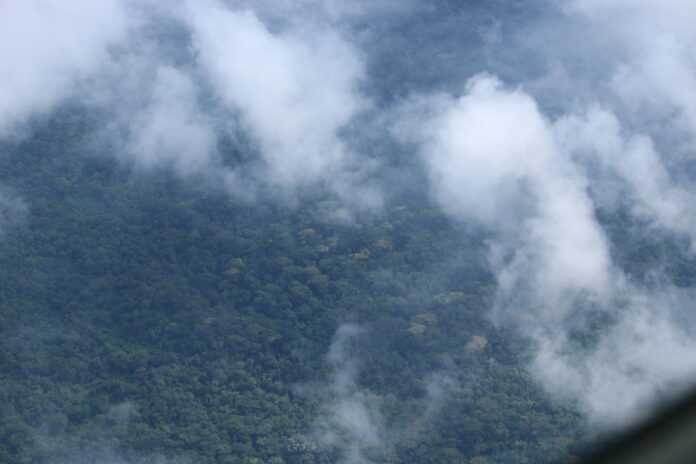
Top: A forest in Sinoe County, one of the places that would be affected by the proposed Blue Carbon deal. The DayLight/James Harding Giahyue


By Esau J. Farr


The government of Liberia is in negotiation with a United Arab Emirates-based Blue Carbon in a deal that is worth US$50 billion.

The parties have drafted a memorandum of understanding (MoU) in which Blue Carbon will manage over a million hectares of Liberia’s rainforests for 30 years.     

UAE sees the deal as part of its efforts to create a decarbonized world, according to the Gulf country, in line with the Paris Climate Agreement.

But it has been hugely criticized for disregarding a number of Liberian laws.

National and international NGOs and the opposition Liberia People’s Party have criticized the draft agreement. All three groups called for the Liberian government to halt the negotiation and make the necessary legal corrections.  

The DayLight takes a look at the laws the deal would violate if sealed:   

The National Forestry Reform Law

The proposed Blue Carbon deal would be a complete violation of the National Forestry Reform Law because it would cover more than 1 million hectares of forest. The law restricts the size of any concession to not more than 400,000 hectares. That is nearly three times the size of the proposed Blue Carbon deal.

The Public Procurement and Concession Act

If it goes through, the Blue Carbon deal will breach the Public Procurement and Concession Act of 2010.   

Section 55 of the law grants the Public Procurement and Concession Commission the power to sole source a concession but only in an “extreme urgency,” and other instances, none of which the deal qualifies for. 

Section 101 of the act also provides for a sole source but limits it to a bidder with specialized expertise only that the bidder can provide, the concession involves research only the bidder can undertake or it would be against national security for a competitive bidding process.

But, none of those instances fits Blue Carbon, established only about a year ago and has not traded in the carbon market before.

The Land Rights Act

The Blue Carbon MoU fails to recognize customary land ownership since it did not seek the free, prior and informed consent information of rural communities.

Article 32 of the Land Rights Act of 2018 grants community ownership of customary land to rural community members. It states that “Customary land is acquired and owned by a community in accordance with its customary practices and norms based on a long period of occupancy and or use.”

Liberia has even created an FPIC policy and an FPIC guideline that reinforces villagers’ consent power.

Noteworthy, “free” means that locals must be allowed to say yes or no without fear or coercion.  “Prior” implies that consent must occur significantly in advance and there must be ample space for consultation. “Informed” means villagers must have all the information about the project, including nature, size and duration. And “consent” can be granted and withheld, even with consultation.

The Community Rights Law…

Nine years before the law, rural communities already owned forestlands under the Community Rights Law of 2009 with Respect to Forest Lands. That law also guarantees communities’ right to consent to any concession on their forestland.

The law clearly states in Section 2.2, “Any decision, agreement or activity affecting the status or use of community forest resources shall not proceed without the free, prior and informed consent of [the] said community.”

Section 10 of the National Forestry Reform Law had three years earlier guaranteed community “informed participation” in forestry governance and management.

In fact, community along with, commercial logging and conservation were the “three Cs” of Liberia’s forestry reform process before carbon credit made it “four Cs.”

The United Nations Declaration on the Rights of Indigenous Peoples

Because the Blue Carbon MoU did not seek the free, prior and informed consent of members of the potentially affected communities, it would breach the United Nations Declaration on the Rights of Indigenous Peoples

Liberia is one of 144 countries that have ratified that instrument, which is not legally binding but shows the direction of the international community on indigenous people matters.   

An excerpt of the September 13, 2007, UN Resolution, the precursor of the principle, states, “Convinced that control by indigenous peoples over developments affecting them and their lands, territories, and resources will enable them to maintain and strengthen their institutions, cultures and traditions, and to promote their development in accordance with their aspirations and needs.”

Community right to consent is also a major part of other human rights instruments, including the African Charter on Human and People’s Rights and the very United Nations Framework Convention on Climate Change that guides the carbon market.  

The Liberian Constitution

Since the right to property is clearly protected in the Constitution of Liberia, it would be unconstitutional for the government to interfere with community property. The government can only grant concessions for forest carbon on forest lands it owns.

The forest areas concerned in the Blue Carbon, are, however, not owned by the Government. There is a good chance that communities own much of the proposed agreement-affected area.  

So, there is an uncertain legal basis for the Liberian government to negotiate a concession for land it potentially does not own. 

This is a production of the Community of Forest and Environmental Journalists of Liberia (CoFEJ).  
More People Flee Elephants

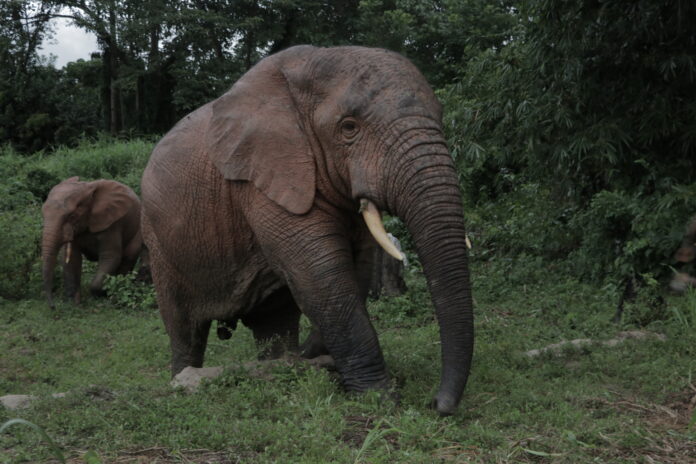
Top: A pair of elephants in Grand Gedeh. The DayLight/Harry Browne


By Mark B. Newa


GBARMA, Gbarpolu – In June, Boakai Momo and 14 other members of his family fled the Bongomah village from a herd of elephants.

The elephant had eaten his rice and potato farms, turning the once flush greenery into dirt in one night.

“There is no more safe area to make farm,” Momo tells The DayLight in an interview at his refuge in the town of Zuo.  “People want to make farms but when the elephants start coming, they will make things hard for us.”

Momo says more than a hundred people have fled their villages from the invading elephants, something other displaced farmers corroborate. Three of the five clans in Gbarma Chiefdom, according to  Paramount Chief Henry Cooper, have been affected. Among the affected villages are Bongomah, Gbengar, Gbarlomehn, Jarjuah, Todeemehn and a place locals call Africa.

All the victims have the same story as Momo’s. An elderly woman named Fatu Lomehn, a widow and mother of 12 children and grandchildren, ran from the Gbarlomehn. Morris Tarweh, a young farmer abandoned the Yarjuah village because the elephants made it “scary.” George Anderson of the Torgboima clan, fled with his family to a new location when the herds damaged eight acres of cassava.  Abraham Clarke, a father of six, fled Africa to Daniel village and then to Zuo.  

A sanctuary—for now

Zuo might be a sanctuary for the displaced villagers. The largest town in that region, with the bulk of its estimated 1,900 people are farmers.  However, it is also not safe from the herds.  In fact, they have already begun visiting farms here.

Townspeople in Zuo are worried.  Some of them had just finished plowing their farms when elephants ravaged them in late June.  A week earlier, the herds had ravaged a farm about a 30-minute walk from Zuo.

The elephants travel from the Bopolu District and cross the Maher River to their communities and back each year, locals say. In the last five years or so, the tuskers have, however,  frequented their daily and nightly raids.  A trail of footprints and elephant dung is seen on one potato and rice farm. Two farmsteads are abandoned.  

“They are getting closer to us now. When they cannot find food there, they will enter on us in this town,” says George Anderson, a farmer. “This is their eating place now.”

Elephants eat according to their bodies. The animals eat up to 169 kilograms (375 pounds) of food daily, according to experts. Fruits, vegetables, grasses, leaves and roots form a big part of their everyday menu.

Experts blame farming, hunting and mining for what they call the human-elephant conflict.  

“When the villagers are making farms on the elephants’  tracks, we will see them appearing,” according to Raymond Kpoto of the Society for the Conservation of Nature Liberia (SCNL).

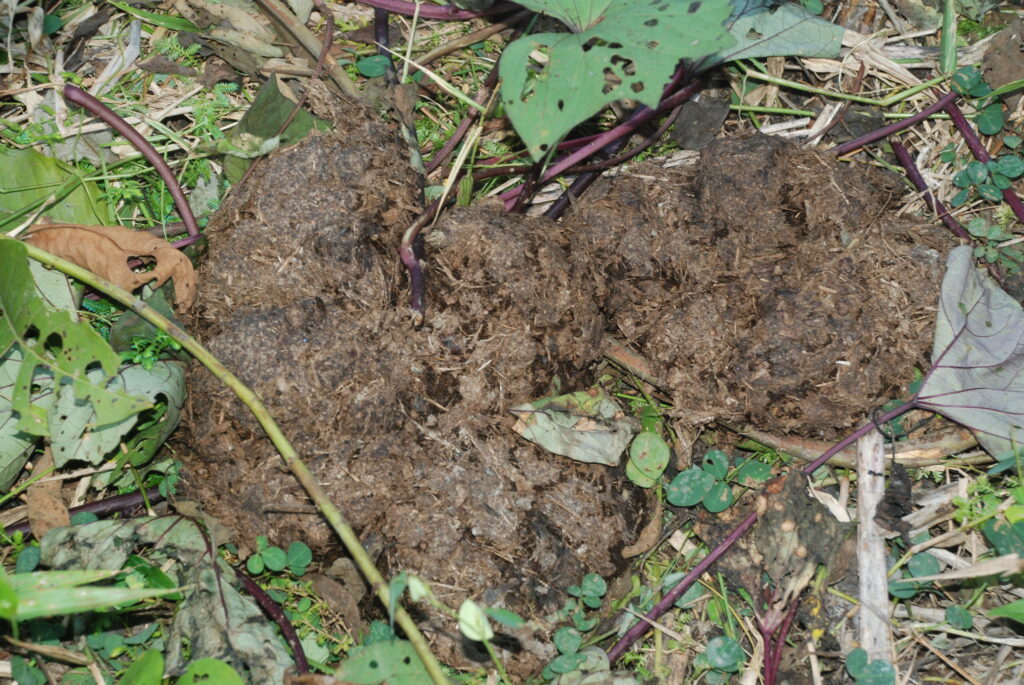
Elephants dumped their dung after eating from a potato farm that lies less than a kilometer away from Zuo, a town located between Gbarma and Weasuo. The DayLight/Mark B. Newa
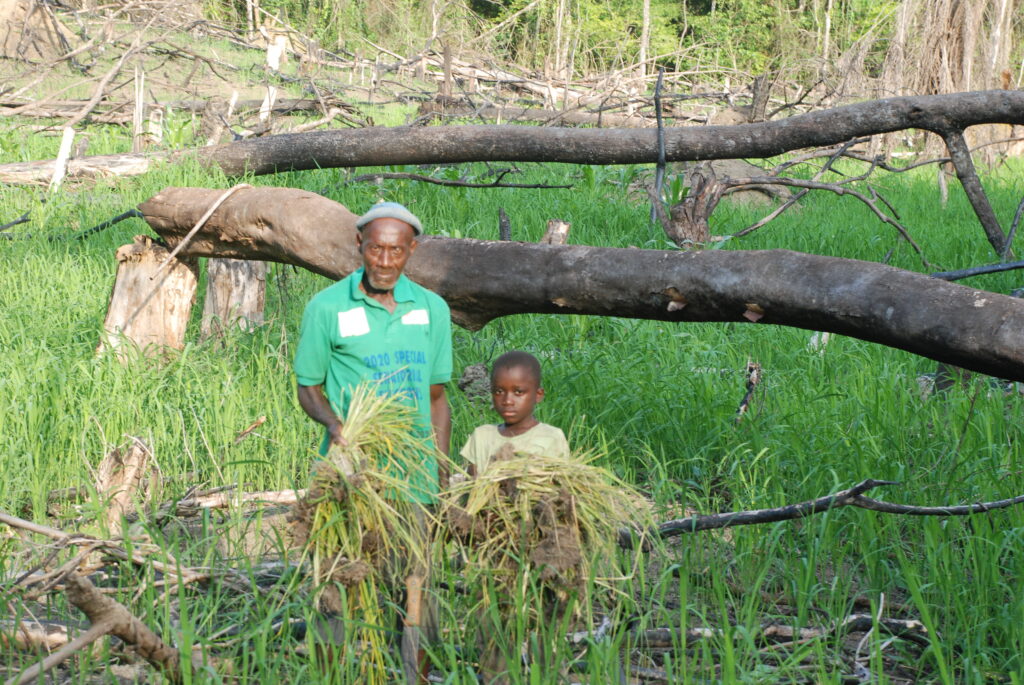
Villager and his grandson holding the residue of rice the passing herds of elephants have eaten. The herds ate off the fresh green leaves of a rice field. The DayLight/Mark B. Newa

There is an atmosphere of insecurity in Zuo due to the elephant situation. Villagers are afraid to go into the forest, affecting farming and other activities.  

Recently, one farmer who had gone to harvest palm fruit sat in the tree for nearly six hours, Clarke tells me in a phone interview.

Motorcycle taxi drivers are afraid to ply the routes for fear of encountering the animals, with few plying the routes, according to villagers.  

This has led to a surge in the costs of rice, gasoline and transportation, locals say.  

No Compensation

Villagers say they have used other means to cope but all seem not to work. They clang pots, blow horns and burn pepper. Some have even installed solar lamps on farms but not enough to drive away their unwelcome tusked guests.

In the first quarter of this year, the Elephant Research and Conservation (ELRECO), a German NGO, successfully tested a device with the sound of honeybees. In the video posted to the NGO’s website, an elephant is seen walking away after hearing the buzzing sound of honeybees from BuzzBox. However, villagers in the region say they have no idea about the technology.

Satta Mambu, an influential woman in Zuo, urges the government to set up a program to help them repel elephants.

“When the government [does] not come in, in the next four to five years, the elephants will drive us from here,” Clarke says.

There is no compensation for villagers who have lost farms to elephants, according to Saah David, national coordinator of REDD+ at the Forestry Development Authority (FDA). REDD+ means Reducing Emissions from Deforestation and Forest Degradation.  

Melvin Goeh, a ranger at FDA’s checkpoint in Sawmill, says his unit is not aware of the elephant situation in the region. Sawmill is less than 10 kilometers away from Zuo.

Alfred Bai Commissioner of Gbarma District, says his office is not aware of any elephant situation. He promises to follow up on the matter.

Funding for this story was provided by Wild Philanthropy with the support of the Elephant Protection Initiative Foundation (EPI). The DayLight maintained complete editorial independence over the story’s content.

International NGOs Call for Halt to Blue Carbon Deal

Top: Liberia’s proposed deal with Blue Carbon of the United Arab Emirates is expected to cover over a million hectares of rainforests. Graphic by Rebazar Forte


By James Harding Giahyue


  • Liberia and Blue Carbon should halt carbon credit negotiation, as the deal violates Liberian laws, according to a group of international NGOs  
  • The deal must comply with procurement, forestry and land laws, and seek the consent of local communities to continue
  • The NGOs say the United Arab Emirates wants to use the agreement to “greenwash,” its own carbon emissions
  • NGOs say the “vague” and “secret” deal is not good for the Liberian government and indigenous communities and undermines Liberia’s own climate targets

MONROVIA – A group of 16 international NGOs has called for a halt to an ongoing carbon credit deal between Liberia and Blue Carbon of the United Arab Emirates until it complies with Liberian laws and is clear on how the country and local communities would benefit.  

The Liberian government and Blue Carbon negotiating the terms of the agreement. The government wants to give the company over 1 million hectares of land over 30 years for US$50 billion, according to a draft memorandum of understanding (MoU).

But the deal would be a violation of Liberia’s procurement forestry and land laws, the statement said. 

“We, therefore, call upon the Government of Liberia and Blue Carbon to halt these negotiations until there is clear evidence that the contract is in line with Liberian law,” the NGO said in a statement released last week. 

“This risks the livelihoods of up to a million people. It would also extinguish community land ownership in the selected areas while violating peoples’ legal right to provide free, prior and informed consent for any developments on their land,” it added.

In March, Liberia and Blue Carbon penned the agreement, in which Liberia is expected to lease Blue Carbon a number of protected areas and proposed protected areas to solely manage. Blue Carbon’s mission is to use bilateral agreements to help reduce carbon emissions globally, according to its website.

“This bilateral association marks another milestone for Blue Carbon to enable government entities to define their sustainable frameworks and help transition to a low-carbon economical system…,” Sheikh Ahmed Dalmook Al Maktoum, Blue Carbon’s chairman and senior member of UAE’s Royal Ruling Family.  

Minister of Finance and Development Planning Samuel Tweah, Jr. said the deal marked an “era of sustainability.”  

But local communities that would be affected by the deal have not had a say in it, a violation of the National Forestry Reform Law, the Land Rights Act and the United Nations Declaration on the Rights of Indigenous Peoples, an instrument Liberia has signed into law.  All three legal instruments require villagers’ free, prior and informed consent in concessions negotiations.

Furthermore, more than 1 million hectares of rainforests render the MoU illegal. Liberia’s forestry law limits forest concessions to 400,000 hectares.

The NGOs call on the parties to consult communities and incorporate their benefits into the deal. They include Fern, Friends of Earth Netherlands and the Environmental Investigation Agency.

“It should also prove that the financial support provided protects threatened forests and restores degraded forests with strict monitoring and control mechanisms in place,” the statement said.

The proposed deal would also break the Public Procurement and Concession Act because there was no bidding.

A forest in Sinoe County is one of the places that would be affected by the proposed Blue Carbon deal. The DayLight/James Harding Giahyue

The Liberian cabinet endorsed Blue Carbon as a sole source on June 3, based on a letter from the Managing Director of the Forestry Development Authority (FDA) Mike Doryen to the Public Procurement and Concession Commission (PPCC).

In the letter, Doryen asked PPCC’s Officer-in-Charge Stevenson Yond to approve Blue Carbon as a sole bidder for the concession.

Section 55 of the procurement law allows for “sole sourcing,” except in an “extreme urgency,” and other instances, none of which the deal qualifies for.  

Section 101 of the act also provides for a sole source but limits it to a bidder with specialized expertise only that bidder can provide. It also requires the concession to involve research only the bidder can undertake or it would be against national security for a competitive bidding process. However, none of those instances fits Blue Carbon, established only about a year ago and had not traded in the carbon market before.

Doryen did not immediately respond to The DayLight’s queries for comments.

‘Greenwashing’

The international NGOs accused the UAE, a country that has one of the highest emission rates in the world, of using the Blue Carbon deal to offset its own greenhouse gas emissions. In other words, the Arab nation, which hosts the United Nations climate change conference later this year, allegedly wants to invest in Liberia’s rainforest and continue its energy, oil/gas and infrastructure projects.

“The revenue model described in this contract generously allows for that,” the statement said. “This contract seems to give Blue Carbon, a private UAE company, the authority to act on Liberia’s behalf to negotiate [United Nations Framework Convention on Climate Change] Article 6 rules.” Article 6 of the Paris Climate Agreement talks about carbon credits and trading.

The NGOs critique the draft document’s intent to award Blue Carbon the exclusive right to use carbon credits. Blue Carbon would exclusively manage the forest resources, including reforestation, conservation and ecotourism, according to the MoU.

“If they are sold, Liberia will not be able to use the carbon credits to meet its own climate targets,” the statement said. Liberia committed at the Paris Summit to reduce deforestation by 50 percent by 2030.  

“It is unclear what the benefits for Liberia and its communities will be. The contract is confidential and extremely vague, and a [MoU]… signed in March this year has not been widely discussed,” it added.

The statement followed criticisms from national NGOs and the Liberian People’s Party.  

The DayLight has reached out to Blue Carbon for comments.

Gongloe’s Party Wants Blue Carbon Deal Halted

Top: A forest and a village in River Cess County. Pictures by William Q. Harmon and Derick Snyder Graphic by Rebazar Forte


By Esau J. Farr


MONROVIA – The Liberian People’s Party (LPP) of Cllr. Tiawan Gongloe has called on the government of Liberia to discontinue a carbon credit deal with Blue Carbon of the United Arab Emirates (UAE), as the agreement fails to recognize the rights of indigenous people and exceeds the area threshold for a forestry concession.   

“Blue Carbon must therefore discontinue negotiation with the government of Liberia until it is presented with evidence that would-be affected communities have given their free, prior, and informed consent as required under Liberian law,” the party said in a statement on Tuesday.   

“The Government has an obligation to protect the land rights of customary communities across the country – entering into this agreement with Blue Carbon would contravene that sacred responsibility,” the statement added.

The Ministry of Information Cultural Affairs and Tourism did not immediately respond to queries for comments.

In March this year, Liberia signed a US$50 billion memorandum of understanding (MoU) with Blue Carbon to implement carbon removal projects on more than 1 million hectares of Liberia’s rainforests for 30 years.

“We are honored to sign this MoU with The Republic of Liberia,” said Sheikh Ahmed Dalmook Al Maktoum, Blue Carbon’s chairman.  

“This bilateral association marks another milestone for Blue Carbon to enable government entities to define their sustainable frameworks and help transition to a low-carbon economical system…,” he added. Blue Carbon’s mission is to use bilateral agreements to help governments and UAE-based firm’s clients achieve a de-carbonized economy in line with the Paris Climate Agreement, according to its website.

Minister of Finance and Development Planning Samuel Tweah, Jr. stated the deal would help Liberia prevent forest degradation and deforestation. “We are confident that this collaboration is another step forward for us to mark an era of sustainability…,” Tweah said.  (President George Weah  proposed to the  United Nations climate conference in Scotland in 2021   the establishment of an African Carbon Credit Trading Mechanism.)

But the deal would violate a number of Liberian laws, including on land and forestry as it fails to recognize local communities’ rights.

Under Liberia’s Land Rights Act, communities have the right to control the use, protection, management and development of forest resources. The law guarantees local communities’ right to consent.  

A draft of the MoU, seen by The DayLight, has provisions for local communities’ consent but after the agreement would have been signed.

That is a red flag, as the consent principle, emphasizes the participation of the indigenous people prior to an agreement. It is a major pillar of the United Nations Declaration on the Rights of Indigenous Peoples, which Liberia signed into Law.

Also, one million hectares of land would contravene the National Forestry Reform Law, which restricts a forestry concession to 400,000 hectares.

“Allocating one million hectares under a single contract and including communities’ customary land in [the] said contract would violate the forestry law,” the party, vying to unseat the government in October, said.

On Monday, a group comprising several civil society organizations, the Independent Forest Monitoring Coordination Mechanism, also criticized the deal.

It expressed concern over the Blue Carbon MoU’s possible breach of a 2014 climate agreement between Liberia and Norway, which requires to halt deforestation nationwide for US$150 million.  

Under the deal, Liberia would give Blue Carbon exclusive rights to manage several protected areas and proposed protected areas. That includes the Sapo National Park and the Krahn Bassa Proposed Protected Area. The firm would singlehandedly run reforestation, ecotourism and conservation programs, and trade carbon credits.  

“The status of that agreement is currently unclear given the Norway funds have not been fully utilized and the agreement remains in effect until 2025,” the group said.

The Broken Promises of a Private Palm Plantation

Top: A poster shows views, elevation images and actors of an agreement between Coniwein in Grand Bassa and Local Farm Inc. Images by Carlucci Cooper and Harry Browne, and graphic design by Rebazar Forte for The DayLight.


By Esau J. Farr and Carlucci Cooper


GBIAGAYE TOWN – In 2007, villagers in Coniwein in District Number Two, Grand Bassa County jubilated after signing an agreement with Local Farm Inc., a Liberian-owned agriculture company.

But 15 years on, things have turned out to be the exact opposite. Controversies with Franklin Jackson, Local Farm’s owner and CEO,  have changed the inspiration for hope among townspeople into despair.

“[Franklin Jackson] told us that Local Farm was a pumpkin and he was planting the pumpkin to spread in Coniwein. But the pumpkin is not spreading. Now we are suffering,” says Anthony Ben, a resident of Gbiagaye Town, the headquarters of Coniwein.  

Coniwein leased Local Farm Inc. 2,500 acres of land to plant crops, with profits from their sales to be shared equally between the parties, according to their 2007 agreement.

The villagers wanted development in the area, following decades of neglect by the state like much of the countryside. They would use the funds to pave roads, build a school and a clinic, and erect handpumps, among others.

Local Farm planted palm trees on about 750 acres of the land found in the Marblee Clan, the villagers and the company say. Production started in 2010, according to the community, or 2013, according to Jackson.  

But except for US$20,000 in 2013, Jackson has made no payments to Coniwein over the years. It did not make any financial reports—to announce profits or losses—as the agreement mandates.

This soured the relationship between the community and the company.

Franklin L. Jackson, Managing Director of Local Farm Inc./The DayLight Esau J. Farr

The peak of their conflict was when Coniwein sued Jackson in 2018  for economic sabotage and misapplication of entrusted property. He had used the community’s deed as collateral to acquire a US$160,000 loan from the Afriland First Bank, US$90,000 of which he received. However, the Second Judicial Circuit Court in Buchanan, Grand Bassa County cleared him of all charges, according to court documents.  

‘I take full responsibility’

In an interview at his home in Paynesville, Jackson says he cannot pay the community any money because he has not made a profit, despite investing US$1 million in the plantation. He says the US$20,000 in 2010 was an upfront payment.

An elevation view of a dormant mill at Local Farm Inc. in District Number Two, Grand Bassa County. The DayLight/Carlucci Cooper

Jackson concedes breaching the agreement and blames the Ebola epidemic and the coronavirus pandemic for his farm’s woes. He says Ebola, which broke out in Liberia in 2014, disrupted the farm’s initial efforts to produce palm oil. And when it was recovering, coronavirus came in 2020.

“Like all businesses, we shut everything down. If we don’t make a profit, you can’t divide nothing,” he tells The DayLight.

Jackson claims that he informed the community he was shutting down due to the epidemic. However, there is no record that Local Farm activated the force-majeure provision of the agreement with Coniwein.

Apart from the contract issues, Local Farm owes its workers several months of unspecified, unpaid wages.

“First, from the brushing, they paid us by cash and second, they paid us by oil but the oil that we were supposed to receive, we [did] not receive all,” says Ben, also a former contractor.

Jackson again blames Ebola for owing workers and says he is willing to pay them once he resumes production on the farm.  

“We thought that Ebola could have lasted a few months. That resulted in us owing ex-employees,” Jackson says. “We had to lay off the employees and we didn’t have the money to pay them. This is where that employees’ liability comes in.”  

Joseph Ben, a former worker of Local Farm Inc./The DayLight/Harry Browne

Matters are worsening at the plantation by the day. Two months ago, chiefs and elders halted operations. Villagers are harvesting the plantation in Gbeal Town. Reporters of The DayLight photographed and video-recorded one man carrying a container of palm oil from the plantation. There were signs of no guards at the plantation.

“The agreement we [entered] in, we can’t get our share. That’s why we put [a] halt to the farm,” says Joseph Karngbo, president of the Coniwein-Gbeal Development Association, the group established to manage the section’s land.   

This elevation image shows a portion of a palm plantation Local Farm Inc. developed in Coniwein in Compound Number, Grand Bassa County. The DayLight/Carlucci Cooper

Jackson fears the plantation could be lost soon because villagers are not trained to harvest palm bunches.

“We trained particular people to harvest. Handling palm during harvesting is one of the most delicate things because if you don’t know how to harvest, you kill it (palm tree) prematurely,” Jackson notes.

The action of the townspeople to halt operations at the farm violates the agreement. It requires the community to embark upon an arbitration process to resolve its dispute with the company.

But Jackson appears resigned already. “I have come to understand that I was wrong, I was naive, stupid and I made the wrong decision; I take full responsibility.”

Women Want to Continue Roles in Troublesome Community Forest

Top: Dugbormar Kwekeh, a member of Gheegbarn #1 Community Forest tells European envoys about challenges with commercial logging in that part of Liberia in a March meeting. The DayLight/James Harding Giahyue


By Emmanuel Sherman


JIMMY DIGGS TOWN – A logging contract between a community forest and a Chinese-owned company in Compound Number Two, Grand Bassa County is perhaps forestry’s most troublesome agreement today.

But women on the leadership of Gheegbarn #1 Community Forest, which has a contract with West African Forest Development Incorporated (WAFDI), desire to continue their roles as elections draw near.

“We will be willing to work again if elected because we want to develop our place,” says Dugbormai kwekeh a member of Gheegbarn’s community assembly (CA). She and other women spoke in the Bassa language through an interpreter.

“We want our children to go to school, we don’t want them to be like us,” Kwekeh added.

Elections for a new corps of officers for the community’s forestry leadership are slated later this year.

Every five years, a forest community elects new members to its community assembly, which represents towns and villages that own the forest. Members of the new assembly then elect officers of its executive committee, the highest decision-making body in community forest governance. The assembly also elects members of the community forest management body (CFMB), which runs the affairs of the community forest. The CFMB tenure ranges from two to five years. The Community Rights Law of 2009 with Respect to Forest Lands requires at least a slot for a woman on the CFMB.

Oretha Toway, a member of the CFMB  hopes to serve another term. “If appointed again, I will help the new leadership to build the community,” says Toway. “We don’t have any school, hospital.”

Illegal Logging

Gheegbarn’s trouble began from the very beginning in 2018. The FDA illegally approved the community’s Forest agreement with WAFDI with a lifespan of seven years, not 15 as required by law.

After that, the FDA authorized WAFDI harvest of more than three times the size of the forest as the law mandates. It took over three years for the Ministry of Justice to discover the scandal in an investigation.

The ministry later reprimanded FDA, SGS, the firm that created Liberia’s timber-tracking system, and WAFDI for breaking forestry laws and regulations.

The scandal tore off the roof of the FDA and the towns and villages of Gheegbarn. Logging activities in Gheegbarn were halted for nearly a year.  FDA board of directors asked President George Weah to dismiss several senior managers of the agency. That did not happen but a major reshuffle took place. Gheegbarn and WAFDI have retroactively signed a new contract for 15 years.

The women-member of Gheegbarn are aware of the impacts of the scandal on the community, including the over-exploitation of the forest in the last three years. (WAFDI exported 29,104 cubic meters of round logs during that time, according to the Liberia Extractive Industries Transparency Initiative, citing FDA figures). However, it motivates them more.

(L-R) Dubormai Kwekeh, Oretha Toway and Markoni Geezee, members of Gheegbarn Community Forest leadership. The DayLight/Emmanuel Sherman

“I will agree to serve as a member of the assembly, provided there will still be logs in the forest,” says Etta Diggs an assembly member.

The women want to cancel the agreement with WAFDI because it has not lived up to the agreement.

By now, WAFDI should have constructed two schools, connected four farm-to-market roads, and 10 handpumps by now and employed 60 percent of its workforce from Gheegbarn.

“We don’t want the company anymore. They brought poverty on us,” Kwekeh adds.   She had made the same point when EU ambassadors visited the community back in March. Kwekeh’s comments are backed by the law, as villagers can choose to cancel contracts with companies.

But amid the rigmarole with WAFDI, Gheegbarn also has an internal wrangle, which the women also want to address. The executive committee chair Robert Zeogar and the secretary to the CFMB Larry Tuning are at loggerheads with the chief officer of the CFMB Junior Wesseh, according to Wesseh and the women. Efforts to speak to Tuning and Zeogar on the issue did not materialize. Both men were not present during this reporter’s two-day stay in the area and their phones were off.

Wesseh, Zeogar and Tuning are signatories to the account, contrary to the community rights regulation. The regulation mandates the chief officer, the treasurer another authorized community member approved by the assembly.

“The EC chair [Zeogar] and CFMB secretary [Tuning] have been making unauthorized withdrawals with alerts coming to the CFMB chief officer [Wesseh],” says  Jonathan Yiah. Yiah’s NGO, the Sustainable Development Institute (SDI), works with Gheegbarn’s leadership.  

Markoni Geezee, a member of the assembly would only serve another term given that Tuning and Zeogar are replaced.  She accuses the duo of enriching themselves at the expense of the community.

“We walked till our slippers cut along the way for the company to come but now we are the losers,” says Geezee.  “You only have a few people getting rich from the forest.”

Gheegbarn #1 Community Forest has been a scene of forestry’s biggest scandals in a decade. The DayLight/James Harding Giahyue

Funding for this story was provided by the Foundation for Community Initiatives (FCI). The DayLight maintained complete editorial independence over its content.

Crocodiles and Monkeys Seized at School Owner’s Home

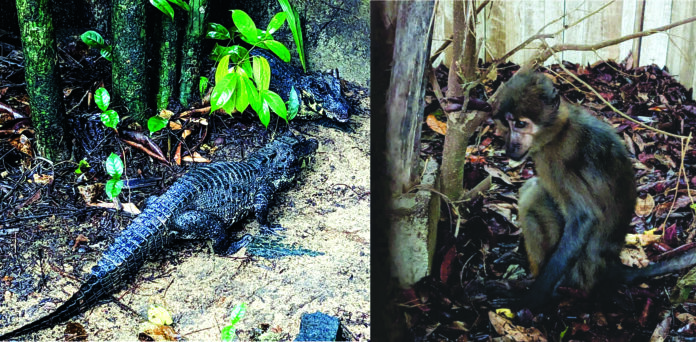
Top: A collage of pictures of a crocodile and monkey seized by the Special Wildlife Investigation Unit now at the Libassa Wildlife Sanctuary


By James Harding Giahyue


  • The Special Wildlife Investigation Unit on Thursday seized crocodiles and monkeys at the home of a school owner
  • Crocodiles and monkeys are endangered species whose protection is mandated by law
  • The school owner said he runs a “mini zoo”
  • unauthorized possession of live animals violates the wildlife law, with a fine between US$100 and US$150 or a three-month sentence

MONROVIA – In the Bible, Noah gathered many animals in an ark to save them from a horrible flood, following God’s instructions.

But the owner of a school named after the prophet’s famous ship may have taken matters into his own hands.  

The Special Wildlife Investigation Unit on Monday seized seven crocodiles and two monkeys at the home of  Joseph Bestman, the owner of Noah’s Ark High School in Gardnersville Township.

The unit recovered the animals following an early morning combing of Bestman’s Gardnersville home, acting on a search and seizure warrant. Pictures on Facebook show armed officers deployed at the house.

In videos obtained from the unit, crocs can be seen in a concrete enclosure with darkened and rotting water. The monkeys appeared shaky in their metal cages as officers took them away.

“The hunting, trading, keeping as a pet, killing or rating of protected species is never acceptable in Liberia…,” the unit, which comprises the police Forestry Development Authority (FDA)/the Wildlife Crime Taskforce and the Liberia Revenue Authority, said in a statement.

Joseph Bestman. Picture credit: Facebook/Noah’s Ark High School

Bestman is being held at the headquarters of the Liberia National Police in Monrovia and would be sent to court, police spokesman Moses Carter said.

Efforts to speak to Bestman did not materialize up to writing time. However, Bestman told Prime FM earlier he had established the “mini zoo” to show students what the animals look like.

The unit works with other institutions such as the Libassa Wildlife Sanctuary and Liberia Chimpanzee Rescue and Protection. It is supported by Focused Conservation, an international charity that helps to bring wildlife poachers and traffickers to justice.

“The Liberian authorities together with their international partners will continue to work to bring wildlife traffickers to justice,” the statement added.

The animals were taken to Libassa Wildlife Sanctuary in Margibi, where a vet examined them, according to the unit.

The operation was the unit’s fourth in four months of its establishment. The first was the recovery of chimpanzees, the second was the detention of a pangolin scale trafficker, and the third was the arrest of an 85-year-old man with 26 live parrots.

The National Wildlife Conservation and Protected Area Management Law prohibits unauthorized possession of live animals, with a fine between US$100 and US$150 or a three-month prison term.

Crocodiles and monkeys are endangered species, protected by both Liberian and international law.

[O’Neil Philips contributed to this report]

The Guardians of Liberia’s ‘Largest’ Waterfall

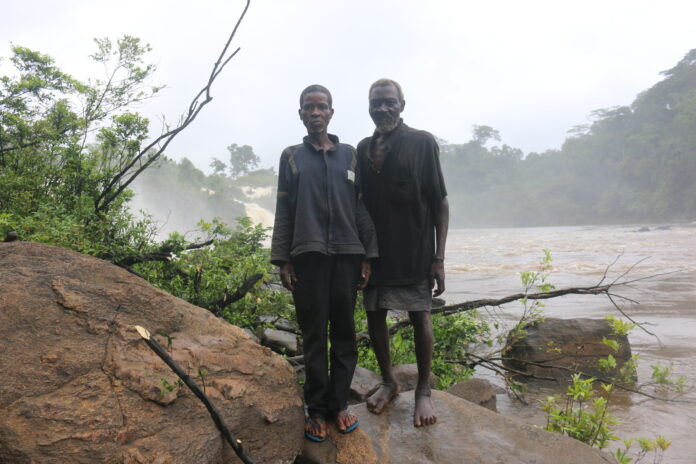
Top: Elijah Kolleh (left) and Yarkpawolo Kollie are guardians of the Whorn Waterfall in Kokoyah District, Bong County. The DayLight/James Harding Giahyue


By James Harding Giahyue


SEEGAR TOWN, Bong County – The two elderly men take my colleague Derick Snyder and me on a tour of an enormous yet largely unknown waterfall.  

Yarkpawolo Kollie and Elijah Kolleh are not just some random tour guides. They are guardians of Whorn Waterfall on the St. John River in the Kokoyah District Bong County.

Kollie and Kolleh spend a good portion of their time regulating access to the fall. Skilled basket weavers and fishermen, the men protect it and a Sande shrine nearby from unauthorized access and desecration.  

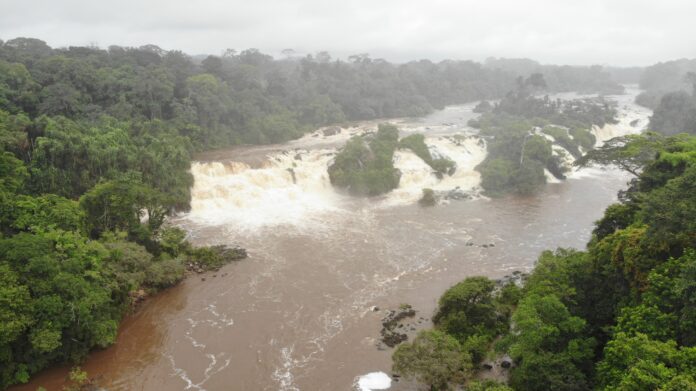
“That area is a traditional area, the [largest] waterfall in the Republic of Liberia,” Morris Dukuly, a former chief of Seegar Town. The DayLight could not independently verify Dukuly’s claim but drone pictures show it is larger than the Kpatawee Waterfall. Whorn is about a 20-minute walk from Seegar Town through farms and a swathe of rocky, hilly forest.

“We can’t just permit anybody to just enter,” adds Dukuly, a descendant of the family that founded Seegar Town.    

It was Dukuly and the rest of the town’s leadership who appointed Kollie and Kolleh. It is part of a tradition that has lasted since the early 1900s, Dukuly tells us.

The elderly men are not the fall’s only guardians. Other townsmen play that role, too. They belong to a legion of villagers who spend a lifetime protecting their land and custom.

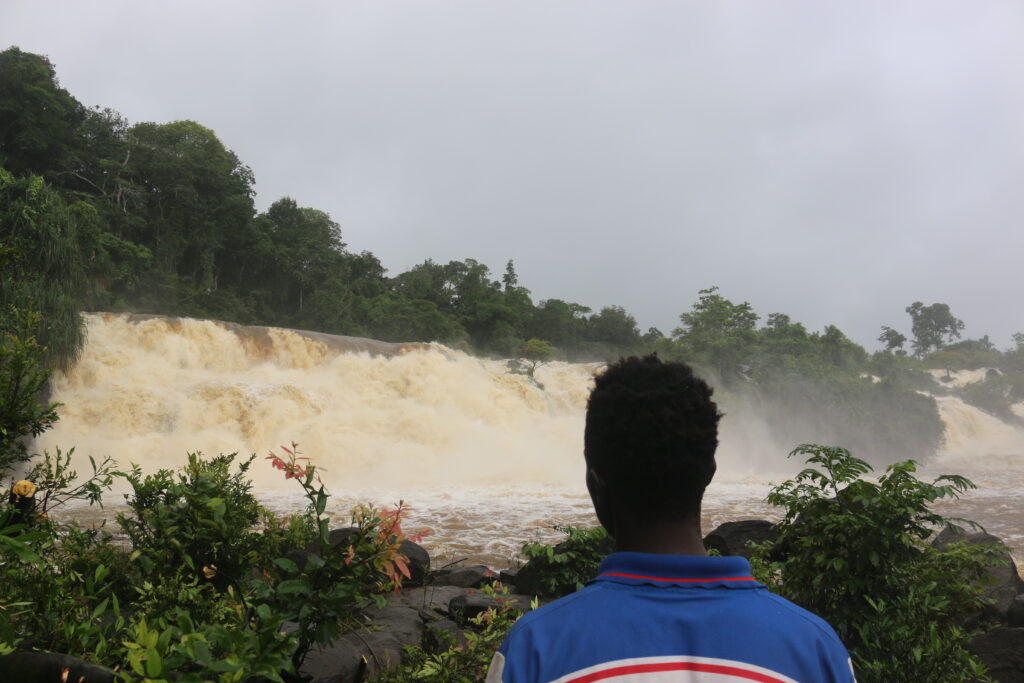
The Whorn Waterfall is the largest in Liberia, according to local people. The DayLight/James Harding Giahyue

Last month, Quikon Clan, where the waterfall is located, asked an NGO to assist it to get a customary deed. The clan wants to preserve that and benefit from their resources, following years of government neglect.

Under the Land Rights Act, Quikon owns the land, water and forest in Seegar and 23 other towns, covering more than 2,000 hectares. However, it must meet certain legal requirements to get a deed from the government.

Gbarnga-based NGO Parley Liberia is now guiding Quikon in its quest. The clan is one of 37 communities across eight counties benefiting from a US$3.54 million project, funded by the International Land and Forest Tenure Facility of Sweden.  

“Once we have a deed, we get the power to say anything to any investor that will come… to use that waterfall,” says Junior Tarr, the Paramount Chief of Kokoyah.

Kollie and Kolleh are aware of the new quest but are focused on their jobs.

They spend the rainy season at the waterfall, fishing and smoldering their catch. We are not allowed to go to where they fish—because of the shrine—but we can see a few rattan baskets.   

One basket hangs not far from the doorway of a hut a few feet from the rocky riverbanks next to the fall. Two others are outside the hut and two more are in different locations.

“When the dry season comes, we go back in the town,” explains Kolleh 60-something, the younger of the two men. A lot of people come to see the fall at that time, he adds.

The waterfall makes a forest spectacle. Its brownish water pours down a rocky, steep hill, making a loud noise. Droplets form a cloud and reduce the green shading of the forest on both sides of the river. Big rocks line up the riverbanks, creating a stage for us to stand and behold nature at its best.

After nearly two hours here, it is time for us to go. Kollie and Kolleh gave us some worm fish from a drier to eat. We say goodbye and start our journey back to Gbarnga.

Waterfall Clan Seeks Customary Land Deed

created by dji camera

Top: The Whorn Waterfall is arguably Quikon’s most famous natural resource. The DayLight/Derick Snyder


By Esau J. Farr


KOKOYAH DISTRICT, Bong County – A clan with a waterfall larger than Kpatawee has consented to a project seeking to assist it get an ancestral land deed.

Located on the boundary between Grand Bassa and Bong County, Quikon Clan hosts the Whorn Waterfall on the St. John River.

For decades, villagers in the clan have protected the fall, the forest around it and the land. They know that acquiring a deed to their clan would formalize their ownership of the land—and everything on it.

With Liberia having passed the Land Rights Act in 2018, the villagers cannot wait to end generations of longing.  

“We’ve been bringing people to see [the waterfall] but we don’t have the deed for the land,” said Junior Tarr, the Paramount Chief for Kokoyah District in which Quikon is located. “Once we have a deed, we get the power to say anything to any investor that will come in the district to use that waterfall.”  

The Land Rights Act guarantees rural communities ownership of their land, based on customs, norms and oral tradition, for at least five decades. However, communities must go through a legal procedure to get deeds for their land, the technical knowledge they lack.

And that is where civil society organizations come in.  

At an event in Rock Crusher, Quikon’s busiest town, the clan officially asked a civil society organization to help it.

“We the citizens and residents of Quikon Clan…  hereby declare our free, prior and informed consent (FPIC) for customary community land formalization addressed to Parley Liberia,” locals said in a declaration recently.

A view of Rock Crusher in the Quikon Clan of Kokoyah District, Bong County. The DayLight/Derick Snyder

That FPIC request to Parley Liberia, a Bong-based organization, recognizes the rights of the clan as an indigenous community, said Josephus Blim, Parley Liberia’s program officer. FPIC aligns with Liberia’s land law and other laws, Blim added. It is a United Nations-backed principle whose roots can be traced to the universal right to self-determination.

Parley Liberia—with other organizations—is assisting 39 communities in eight counties to get their customary deeds. The International Land and Forest Tenure Facility, a Sweden-based charity, provided US$3.54 million for the project over a three-year period.    

“The success of this work depends on the community, yourselves, the partnership with government, including the District Commissioner, Paramount Chief, Clan Chief and the Liberia Land Authority,” said Gregory Kitt, executive director of Parley Liberia.

Bendu Cheeks, a women’s rights leader in Quikon Clan, signs a consent declaration for assistance to get its customary land deed. The DayLight/James Harding Giahyue

Isaac Freeman, the Acting Superintendent of Kokoyah Statutory District, said the deed would end illegal sales of land there. He said local authorities regularly resolve land disputes.

“We will work with you people so that this thing can be realized,” Freeman told an event marking the signing of the consent declaration. “We have been wishing for someone to come and help our people.”

Isaac Davies, another resident, said people were trading huge plots of land for less valuable materials. Home to some 6,000 people, Quikon is a farming community, covering an estimated 25,000 hectares.

“As a result, we the citizens and youths are beginning to suffer because we are vulnerable,” Davies said. Other townspeople we interviewed echoed his comments.

What Next for Quikon

Quikon must declare itself as a landowning community, communally map the land it claims and cut the boundaries with its neighbors and develop bylaws.

Thereafter, the Land Rights Act requires it to establish a governance body, known as the community land development and management committee (CLDMC).

Then the Land Authority will conduct a survey and give it a customary deed, according to the law.

Podcasts