Home Tags Kwa Proposed Protected Area

Tag: Kwa Proposed Protected Area

Investigation Finds Flaws and Falsehoods in Presidential Letter

Farmers lied in letter to President Boakai
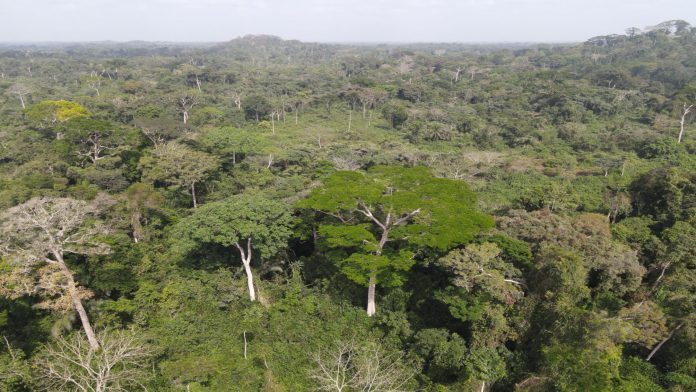
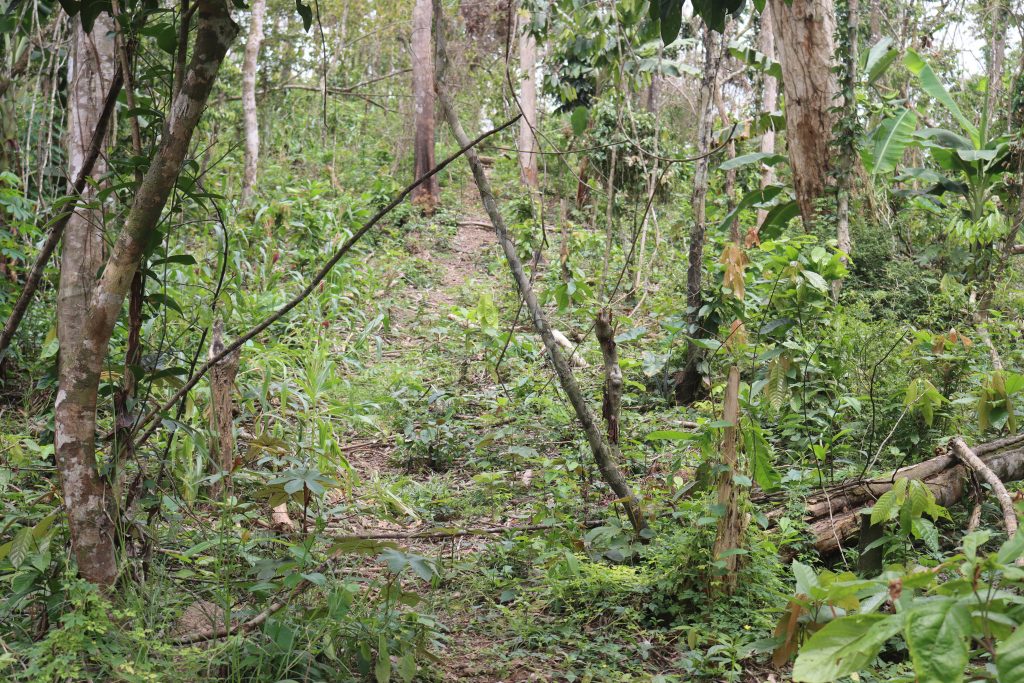
A forest in Boundary, Grand Gedeh County

Top: A drone picture of a forest in Grand Gedeh County. The DayLight/Samuel Jabba


By Varney Kamara


POUH TOWN – Local cocoa farmers in Grand Gedeh County manipulated signatures in an appeal letter to President Joseph Boakai, rejecting boundaries between their communities and the Kwa Proposed Protected Area, a DayLight investigation found.  The investigation established that the letter was based on falsehoods, as some had already agreed to the proposed park’s boundaries.

Late last month, farmers from the Gbarzon District wrote to President Joseph Boakai, claiming forestry authorities did not seek their consent before cutting the boundaries. They allege that they signed no MoU and there was no guarantee they would have access to their farmlands. They had been intimidated, their properties destroyed, and forest rangers made unauthorized entry into their communities.

For this reason, the farmers want the proposed park’s boundaries pushed to 10 kilometers. President Boakai then ordered an immediate investigation into the matter. Official talks took place last weekend as part of the presidential inquest.

Covering 172,200 hectares, the Kwa Proposed Protected Area lies between River Cess, Sinoe, and Grand Gedeh Counties. It is part of Liberia’s efforts to protect 30 percent of its forests and contributes to the country’s climate commitments.

An ‘error’

The DayLight reviewed the appeal letter, interviewed some of its signatories, and found inconsistencies. Reporters found that although the letter to the President lists 16 signatures, only 15 people actually signed it. Abednego Zweh, a farmer from Pouh Town, where most of the appealing farmers live, signed twice.  

George Totaye, another Pouh Town farmer, said he did not sign the letter.  

“I personally cannot remember signing any petition. I cannot remember signing that communication,” said Totaye. “My farm does not extend on that side. I am not close to the park. I am not part of them.”

Zweh insists Totaye signed the letter, but listing 16 signatories instead of 15 was an “error.”

IMG 7840
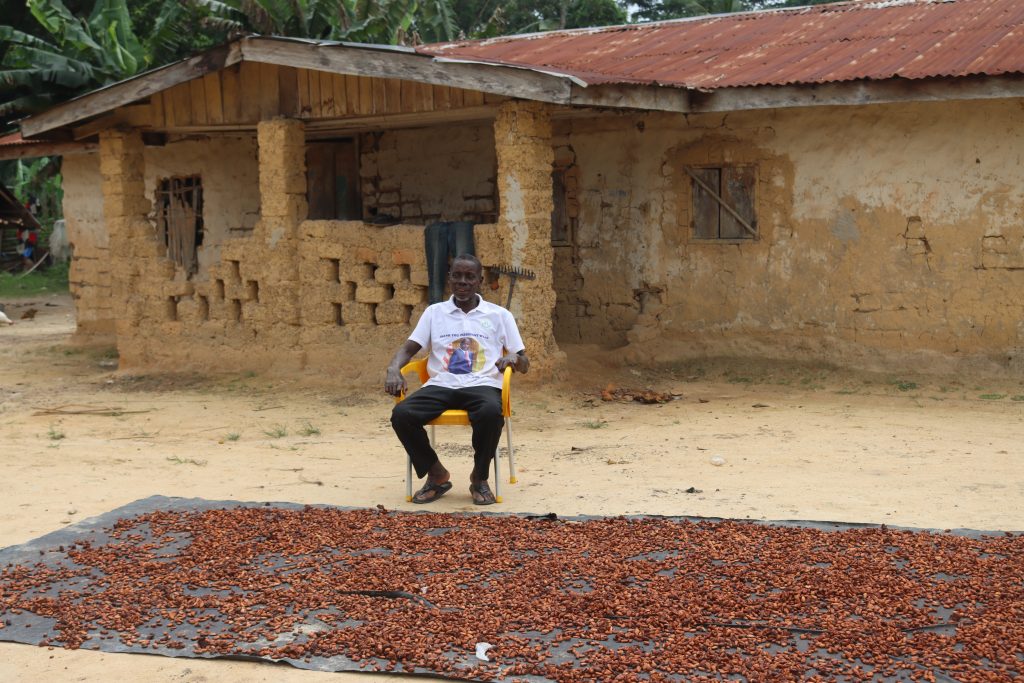
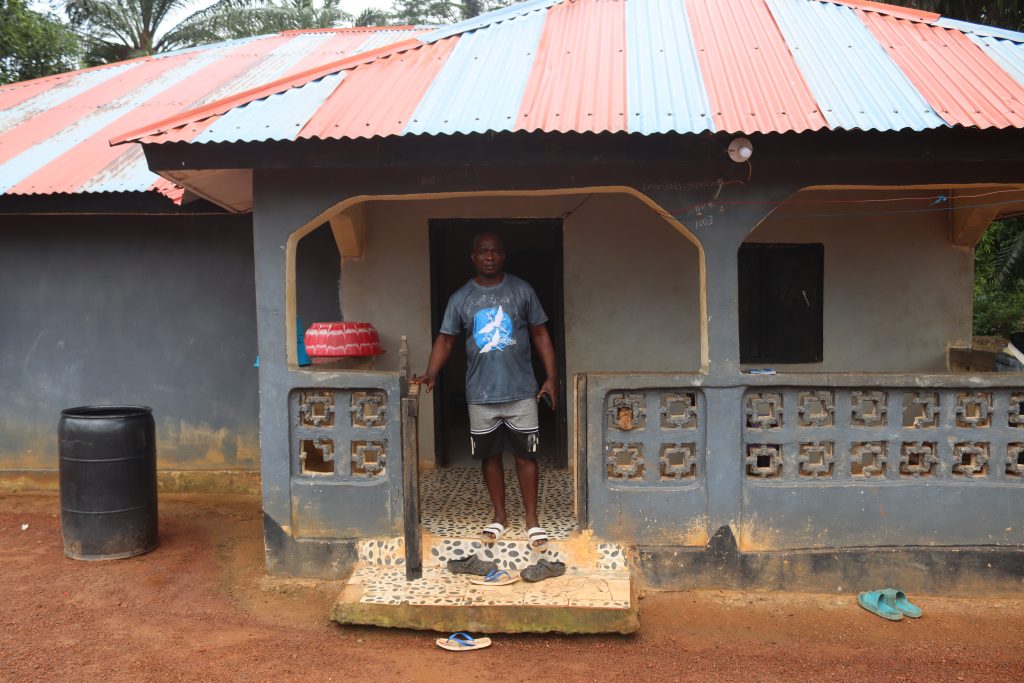
Routy Beh, a cocoa farmer in Pouh Town, sits behind his half-dried cocoa beans. The DayLight/Varney Kamara
IMG 7832
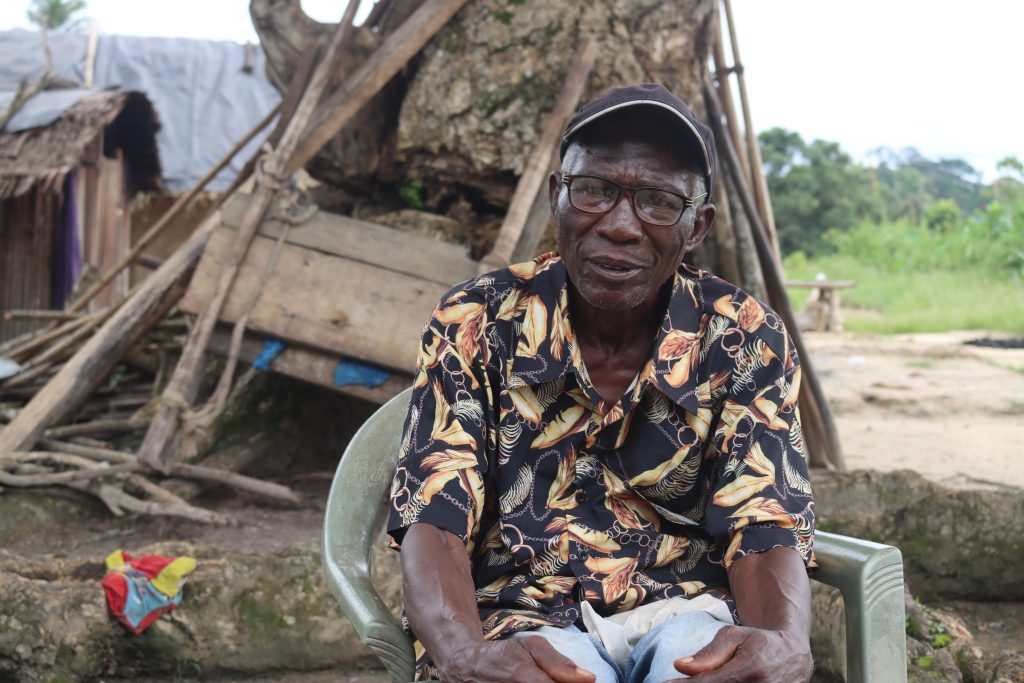
Garretson Seo, one of the cocoa farmers, grants an interview with The DayLight in Pouh Town. The DayLight/Varney Kamara
IMG 7768
Dixon Roberts, General Town Chief of Tojallah, is one of 15 cocoa farmers who wrote to President Joseph Boakai. The DayLight/Varney Kamara

Several of the 15 cocoa farmers who wrote the appeal to President Boakai had consented to Kwa in 2023. They told The DayLight they hosted between two and 10 Burkinabés. Dixon Roberts (six Burkinabés) of Tojallah signed. Tommy Yarkpawolo (two) and Garretson Seo (10) of Goluay signed.

There were other inconsistencies regarding the farmers’ appeal, though. Last year, the communities signed a boundary harmonization agreement with the FDA and partners, confirming the 2023 boundary. Then early this year, the clans that host the communities signed agreements with the Liberia Land Authority, confirming the boundaries.

The DayLight also noted one more issue. Pouh Town, where the majority of the farmers live, is not among the communities adjacent to the proposed park. It is 19 kilometers away.

The farmers admitted signing the consent forms. However, they claimed they were unaware of any boundary demarcation.

“We agreed for the park to be created, but we never agreed on any boundary issue, and we did not take part in any boundary demarcation exercise,” said Yarkpawolo, who has a three-hectare cocoa farm in Gaye Town.

“During our previous meetings with the FDA and the Wild Chimpanzee Foundation, we agreed that they would come back to us when they get ready to cut the lines. But, to our surprise, we only saw them destroying our crops,” added Yarkpawolo. His comments reflect the general view of farmers The DayLight interviewed, including those who did not sign the letter to Boakai.

But the facts contradict the farmers’ comments. The documents they signed show that they agreed to the boundaries, among other things.

“Our town confirms that since 2020 the FDA, LLA and partners have been holding community consultations and meetings to keep us informed. Our town confirms that as part of the boundary harmonization process, the boundary line was trekked by designated community members, local authorities, and relevant institutions, and all grievances were resolved,” read the consent document Yarkpawolo and other townspeople signed in Goluay.

IMG 7822
A cocoa farm in Gbaryea Town in Gbarzon District, Grand Gedeh County. The DayLight/Varney Kamara

Apart from the consent form, other documents disprove the farmers’ comments.

As recently as May, community land leaders and clan chiefs signed a boundary agreement with the Liberia Land Authority for the proposed park. In the document, the farmers “fully acknowledged” the proposed Kwa Park and agreed on its “official boundaries.” Also, there is no record of any farmer raising any qualms when authorities published notices about the proposed park between June and August 2023. 

Wild Chimpanzee Foundation, an NGO that works with the FDA to establish Kwa, refuted the farmers’ claim.

“From our side, the consent forms were signed by the rightful community representatives in 2023,” said Dr Annika Hillers, Country Director of Wild Chimpanzee Foundation. “The consent forms were about the establishment of the park, the confirmation of the [consent] process, the harmonized boundary, and also, communities committed not to do any farming and other activities inside the proposed park.”

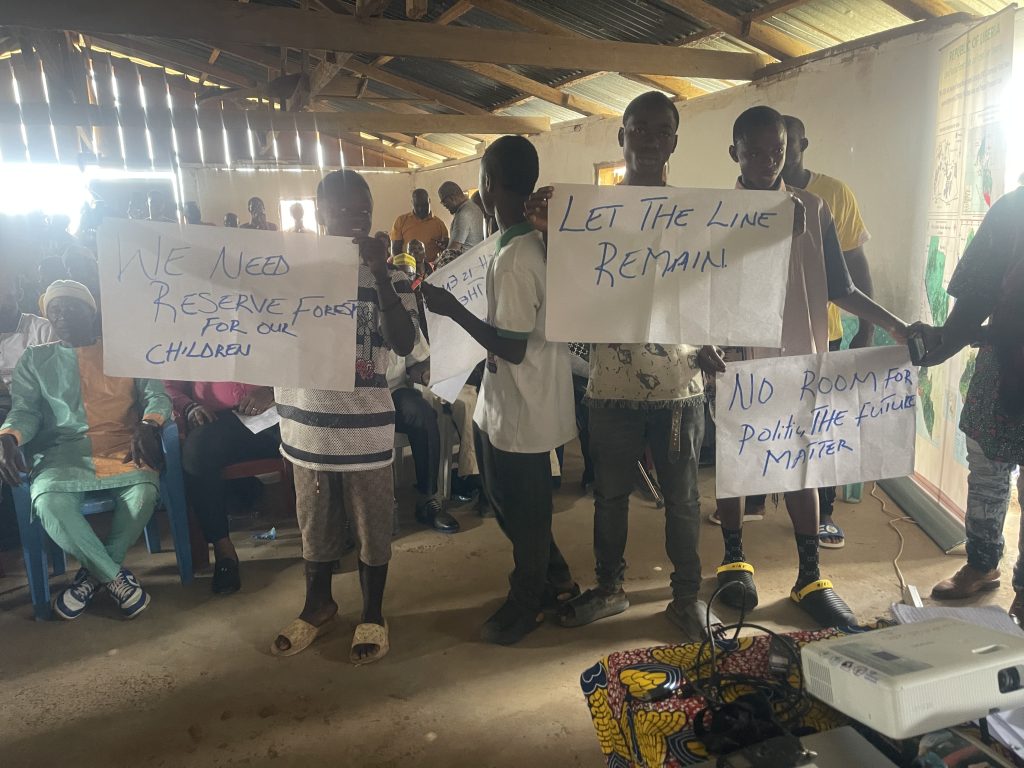
Some youths agree on the current boundaries. “We need reserved forests for our children,” and “Enough is enough,” adorned their posters.  

One farmer somehow conceded.

“I think we made a mistake from the beginning as a community,” said Dixon Poya, who lives and farms in Pouh Town. “When the people came with this discussion on the park issue, we were too quick to agree. We should have studied all other conditions that we are raising now.

“In my mind, we should accept what is happening. We can only appeal to the government to have some consideration and redraw the boundary back a little bit,” added Poya.

Under pressure

Dr Hillers also denies allegations of human rights abuses. “We are 100 percent sure that these allegations are false and that neither FDA nor any other law enforcement entity ever violated human rights or did anything not in line with Liberian laws,” she added.  

The FDA did not respond to DayLight’s queries while the government investigates the issue. However, the FDA resurveyed the area and found that over 14,000 hectares of the proposed park have been clear-cut for cocoa cultivation.

Over the years, the park has shrunk from 236,246 hectares to 172,200 hectares due to competing mining and logging interests. The farmers’ boundary appeal comes amid cocoa-fueled, nationwide deforestation.   Between 2000 and 2020, Liberia lost approximately 2.52 million hectares of tree cover, with cocoa responsible for about 15 percent of that, according to a 2024 report.

Local people smuggle in Burkinabe migrants from neighboring Ivory Coast into Liberia to plant cocoa. An estimated 140,000 Burkinabes have migrated to  Liberia in Grand Gedeh and River Gee, according to the Liberia Refugee Repatriation and Resettlement Commission. This cocoa rush has also resulted in encroachments on community forests and logging concessions, leaving deadly land conflicts in its wake.

Cocoa Farmers Ask Gov’t to Push Proposed Park Behind      

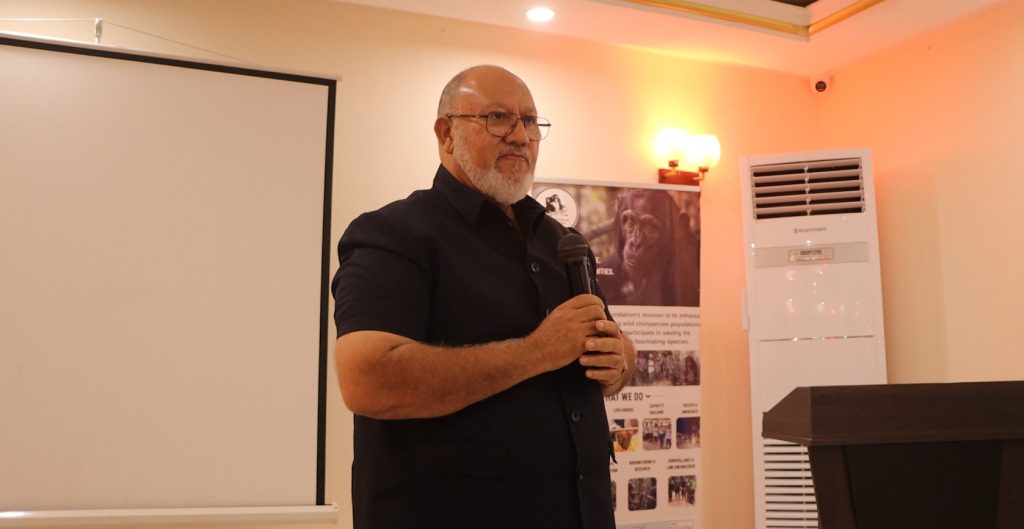
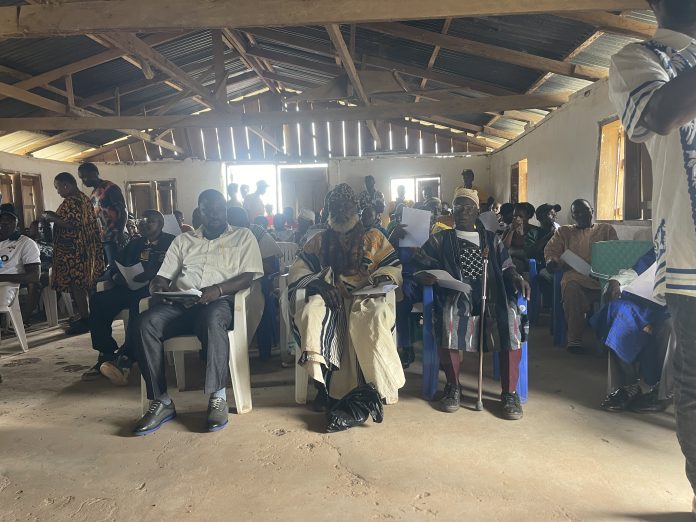
Elders and chiefs at a meeting in Gaye Town to discuss the boundaries of the Kwa Proposed Protected Area in Grand Gedeh
Chiefs and elders meet for the Kwa Proposed Protected Area

Top: Some participants at the meeting in Gaye Town. The DayLight/Esau J. Farr


By Esau J. Farr


GAYE TOWN – Cocoa farmers in Grand Gedeh County have requested that boundaries between the Kwa Proposed Protected Area and their communities be extended.

The communities lie between 3.8 and 19 kilometers from Kwa, which covers 172,200 hectares across Grand Gedeh, River Cess and Sinoe. However, they want the boundary lines to be 10 kilometers further away so they can access more farmlands.

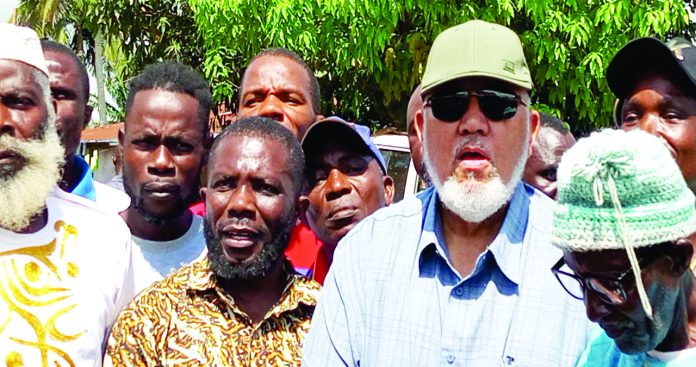
“We can guarantee you that when this boundary line is passed, you don’t need to pay people to protect the park. We ourselves will protect the forest,” said Abednego Zweh, Chairman of Grand Gedeh’s farmers. Zweh spoke at a recent meeting to resolve a dispute with the Forestry Development Authority (FDA) and partners in Gaye Town, Gbarzon District.

“If our request is not honored by the President, we will still appeal,” he added.

The meeting was part of an investigation President Joseph Boakai ordered last month following the farmers’ appeal for his intervention.  

In their letter to President Boakai, the farmers claimed that they did not consent to the proposed park’s boundaries. They accused authorities of abusing their rights, allegations authorities deny.   

IMG 8393
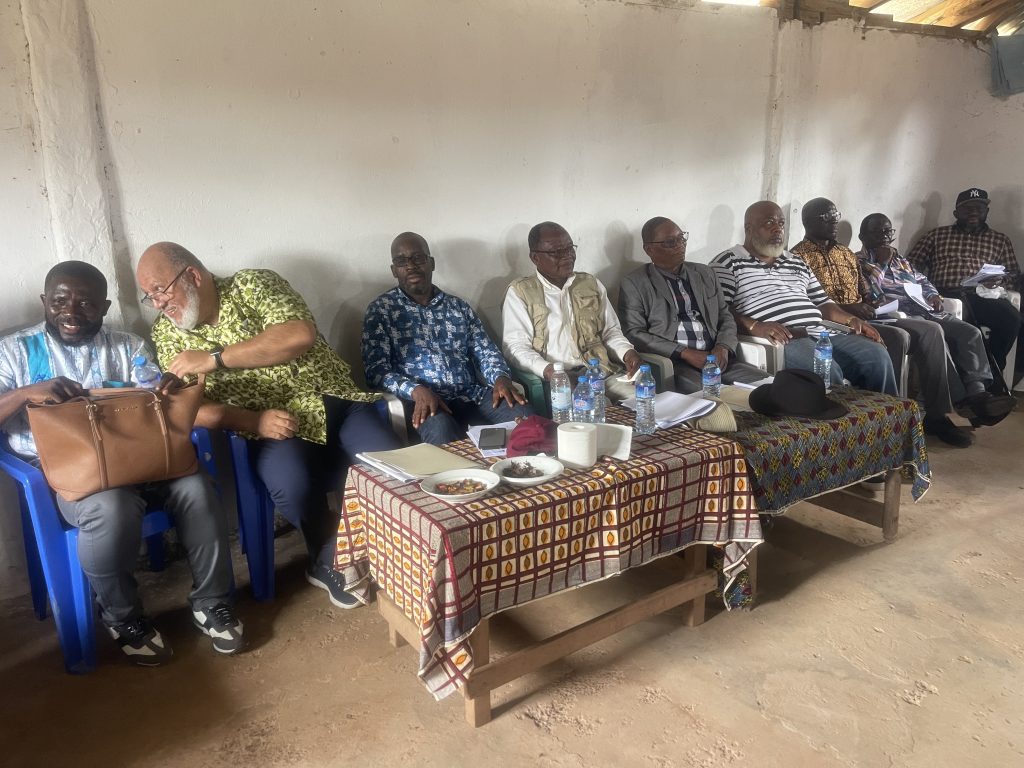
FDA boss Rudolph Merab chats with Grand Gedeh lawmaker Jacob Debee. Lawmaker Jeremiah Sokan and Thomas Yaya and other county authorities at the meeting. The DayLight/Esau J. Farr

The farmers said they participated in meetings, but were unaware of any boundary arrangements.

Clement Tweh, the program manager of Wild Chimpanzee Foundation—an NGO that works with the FDA to establish Kwa—dismissed those claims. Tweh said the farmers signed consent and boundary documents.

“We don’t want a handful of individuals who have farms and are not the actual representatives of the communities to benefit, rather than the entire community,” said Tweh. The DayLight independently reviewed the documents to verify his claims.

‘Let the boundaries remain’

Interestingly, a group of concerned youths of Gbarzon District disagreed with the farmers. Led by Leo Wilson Jahyee, the youths carried placards, brandishing inscriptions: “Let the boundaries remain,” “We need reserved forests for our children,” and “Enough is enough.”

“We believe that forests should be managed, be cared for and the boundary line should remain,” Jahyee said.

The group accused the farmers of wanting to expand their cocoa farms with the help of Burkinabe migrants they host. Several of the farmers The DayLight interviewed had at least two Burkinabe migrants. About 140,000 Burkinabe migrants are in Grand Gedeh and River Gee, according to the Liberia Refugee, Repatriation and Resettlement Commission (LRRRC). 

IMG 8412
Members of the concerned youths of Gbao District at the Gaye Town meeting. The DayLight/Esau J. Farr

Cocoa farming is fast depleting Grand Gedeh’s forest. Local farmers have encroached on logging concessions, community forests, and the proposed park. From 2002 to last year, Gbarzon lost 46,000 hectares, or 14 percent of its primary forest, according to the Global Forest Watch, an app that tracks deforestation.

Following presentations from the opposing sides, the FDA Managing Director Rudolph Merab told locals they would hear from him following a meeting with President Boakai.

“I could have concluded [this matter] right now and made a decision, but unfortunately, I cannot do that because you have also written the President,” said Merab. “I cannot make a decision without consulting him.”

At the end of the meeting, the farmers agreed not to extend their farms until they hear from the FDA.  Meanwhile, the regulator has mandated forest rangers to halt all operations in the disputed areas, pending the President’s decision.  

FDA Resurveys Kwa Forest Amid Mining Interest

FDA 1
FDA 1

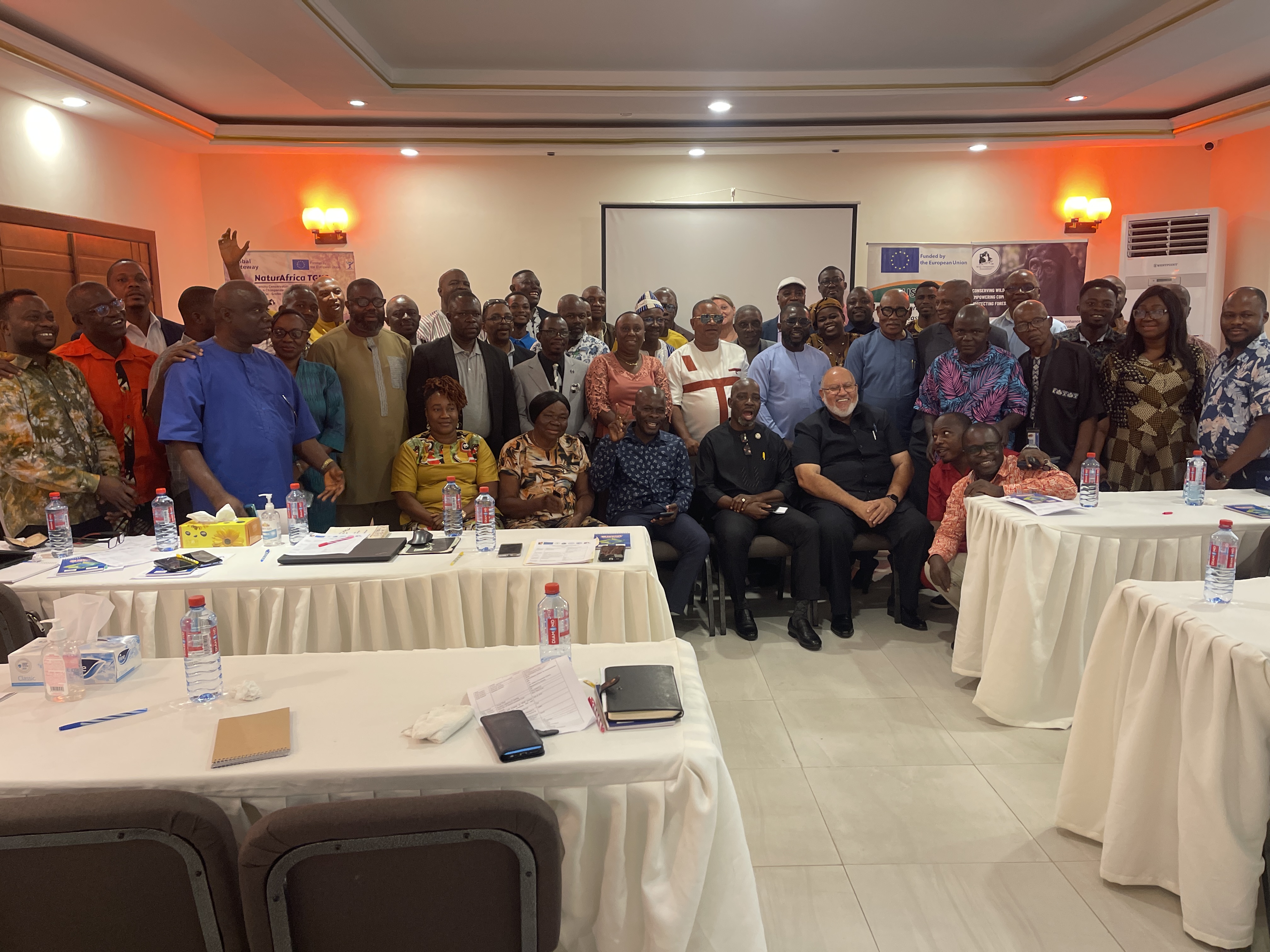
Top: FDA Managing Director Rudolph Merab in a group photo with residents of the Proposed Kwa National Park, Gbarzon District, Grand Gedeh County. Gaye Town-Thursday, November 13, 2025. The DayLight/Varney Kamara


By Varney Kamara


GAYE TOWN, Grand Gedeh – The Forestry Development Authority (FDA)  recently announced a resurvey of the Grand Gedeh portion of the Proposed Kwa Protected Area within 90 days. The FDA ordered farmers to halt further degradation of the park, warning of punitive actions.

“We will cut the boundaries and ensure that the government collects what belongs to it, and then the community will get its benefit,” Merab said in a meeting with community representatives in Gaye Town, which borders the park. “I don’t want to see anybody planting cocoa or doing farming business in there.”

But Merab left out important information about the FDA’s plan after the resurvey. A document The DayLight obtained shows that the FDA targets a potential auction of the area where cocoa has been planted. The document was written on October 10, about a month before the Gaye Town meeting.  

The document also shows that an unnamed FDA manager dissented from the regulator’s plan to seize and auction. The manager wrote that the “bad precedent” would undermine conservation efforts, fuel violence, and be legally misplaced.  

“My technical advice is straight implementation of the law – establish boundaries at the jointly agreed areas and make the presence of the forest rangers,” wrote the unnamed manager.

A DayLight review of multiple laws and regulations confirms the manager’s dissent. While the FDA can punish encroachers, it cannot auction farmland in a proposed protected area.

Like the anonymous manager, the Wild Chimpanzee Foundation (WCF), an NGO helping to establish Kwa, opposes the seizure and auctioning plan. Clement Tweh, WCF’s Program Manager, said there was no need to seize and auction the property. He urges the FDA to remove encroachers from Kwa and identify and support livelihood programs for communities.

Tweh also disagrees with the FDA over the resurvey idea, warning the exercise would cause more harm than good.

“This will lead to more problems because lines were drawn during previous surveys. Potential conflict spots were duly identified and demarcated. I don’t see the need for another one,” Tweh said.

“All the FDA needs to do is to remove the park’s illegal occupants, and identify and support alternative livelihood activities for communities.”

The FDA insists on the resurvey. Asked whether the FDA would replicate this action in other proposed and protected areas since encroachment was commonplace, Merab nodded, depending on a “positive” outcome of Kwa’s resurvey.

“We are here because our people keep complaining about encroachment and conflict all around here. Our action is intended to resolve all these issues,” Merab told The DayLight on the margins of the Gaye Town meeting.  

Kwa crosscuts River Cess, Sinoe, and Grand Gedeh Counties. It protects Liberia’s vital biodiversity within the Upper Guinean forests, West Africa’s largest remaining rainforests. With 90 percent of its primary forest intact, Kwa hosts vulnerable wildlife species such as the Western chimpanzee, pigmy hippopotamus, and slender-snouted crocodile.

Protecting Kwa is vital for Liberia’s commitment to conserve 30 percent of its rainforests, conservationists say. It contributes to the country’s climate commitment to cut deforestation and forest-related emissions by 2030.

It would be the third time that Kwa has been surveyed.

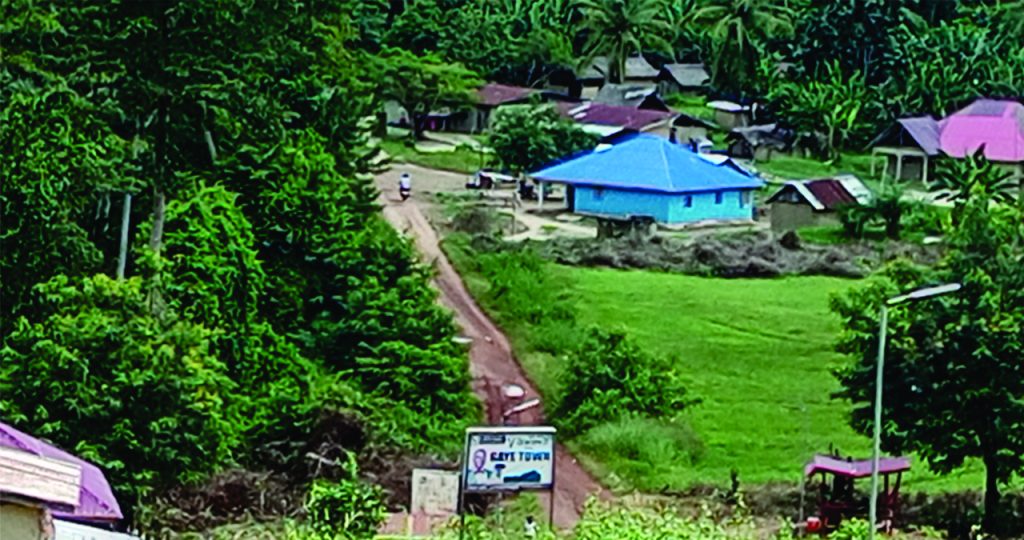
An overview of Gaye Town, Gbarzon District, where the FDA held its consultative meeting with Kwa National Park’s residents. The DayLight/Varney Kamara

Kwa, formerly known as the Krahn-Bassa Proposed Protected Forest, was first surveyed between 1950 and 1952 as part of a general survey of the Kwa National Forests, a fulfillment of the Act for the Conservation of Forests, which established legal frameworks for National Parks and protected areas.

In 2023, a survey found that Kwa measured 236,246 hectares after feasibility studies and community consultation in 2016. However, it lost some 64,358 hectares to roads, encroachment, and mining, and now measures 171,888 hectares. These activities have led to habitat loss and the destruction of the ecosystem.

Conservation versus mining

The disagreements over the FDA’s resurvey come amidst miners’ interest in parts of Kwa.  In July and August, Grand Gedeh Superintendent Alex Grant met representatives of GLM Inc., an affiliate of Bea Mountain Mining Corporation, Liberia’s largest gold producer.

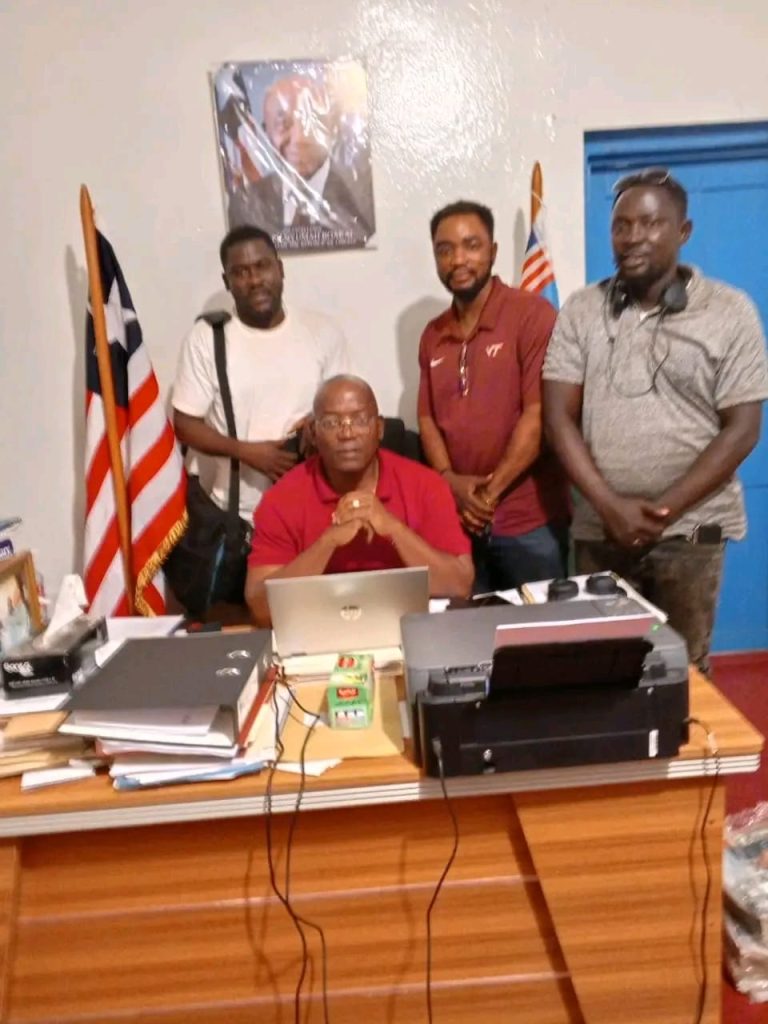
Pictures The DayLight obtained show Grant, Timothy Amos, a GLM official, and another man in a group picture with Grant in his Zwedru office. They disclosed plans to extend their operations to Boe Geewon, Grand Gedeh’s portion of Kwa.

“I remember some members of a Bea Mountain affiliate met me in my home office and said they wanted to do prospecting in parts of River Cess and Grand Gedeh,” said Grant, who has been under fire for an illegal cocoa farm deal covering 500 acres.

“I told them to go and bring their authorization from the Ministry of Mines and Energy. I did not authorize anyone to go mine in those places.”

Merab said he was unaware of miners’ interest in Kwa, and that nothing had been decided when the survey ended. “We will come back and sit down with our people to decide what to do when it is finished.”

GLM did not respond to queries from The DayLight. Amos had promised to return the question on Wednesday, but had not by Thursday.

Grand Gedeh Superintendent Alex Grant poses with a representative of GLM Inc., an affiliate of Liberia’s largest gold mining company.

Earlier this year, communities in River Cess withdrew their support for the establishment of Kwa through a petition to lawmakers, leading to the extraction of a portion of Kwa. Locals would later sign an MoU with GLM Inc., a subsidiary of Bea Mountain, which is now exploring for gold in the area.

In October, a US-based NGO, Forest Trends, published a mining report that found several licenses overlap with Kwa and other protected areas.

Mining in a proposed or protected area is illegal, under the National Forestry Reform Law, except for industrial mining, which must meet certain requirements.