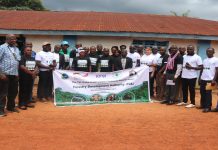
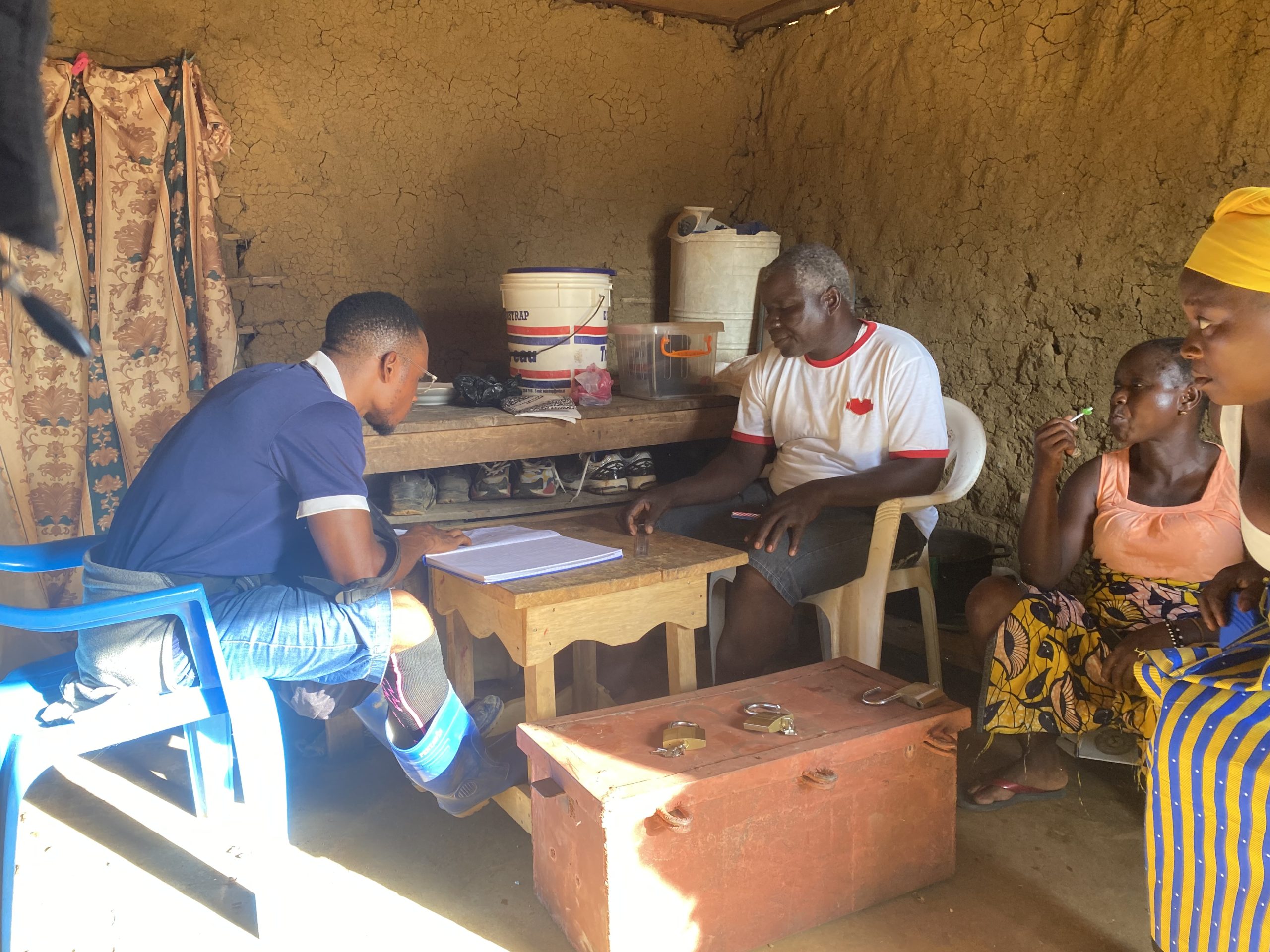
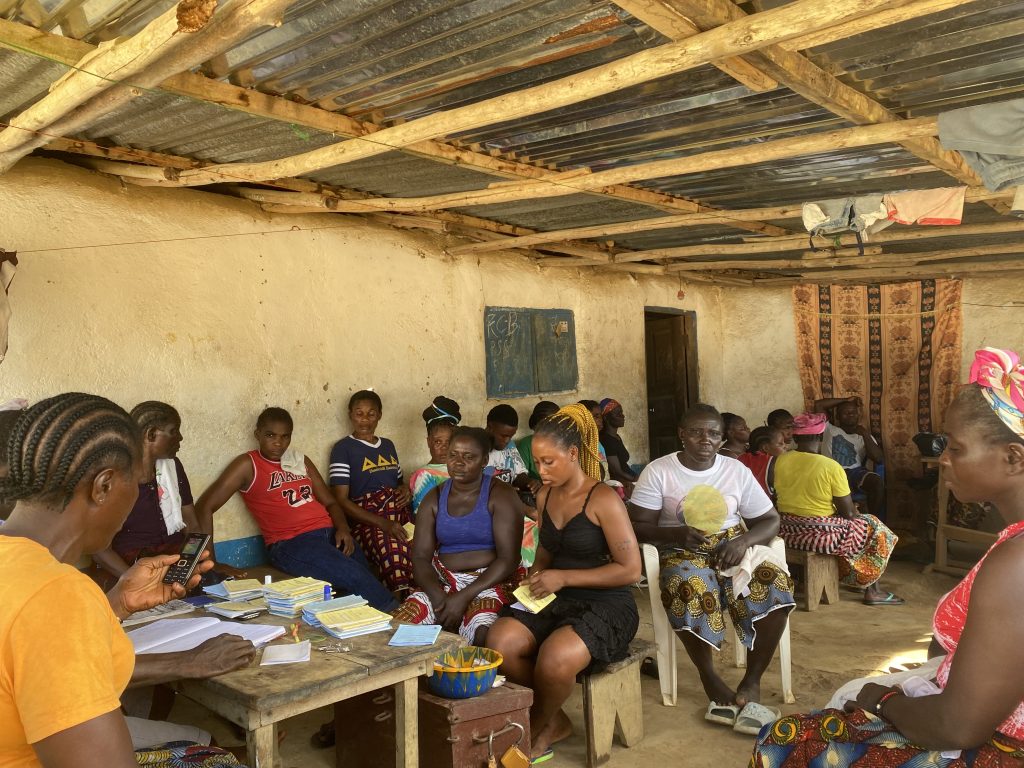
Top: Some members of the club met at their meeting in Diyankpo Town, and a staff member of the Integrated Development Learning visited to take records. Photo credit: Tina S. Mehnpaine
By Tina S. Mehnpaine
NAJOR TOWN – Maybel Payne walks steadily along a dirt path, a tub of harvested chili peppers balanced on her head. She is hurrying, not to the market, but to a meeting that has become one of the most important parts of life in this small farming town.
Payne is the box keeper for Najor’s Village Savings and Loan Association (VSLA), known locally as a money club. She is the first to arrive, carrying the metal box that holds the group’s savings and records.
For most of her life, Payne farmed the way many people here do. She harvested, sold what she could, and used the money almost immediately for food, school costs, medicine, transport, and other basic needs. Saving was not part of the routine, partly because there was no bank nearby and partly because the money rarely lasted long enough.
Now, through the club, she and other townspeople save, borrow, and invest under a new conservation program. They can take a loan for their farms or use their savings in times of emergency. Daily life in Najor is shaped by distance, poverty and the forest. The town has no school, clinic, police station or electricity. Mobile network here is weak, and the road is difficult, especially during the rainy season. Motorbikes are often the only transport, and even those are not always available.
“It is helping us to stand on our own,” Payne says. “This savings club is good for us,” says Payne, a mother of nine. “We can now save and support our farms.”
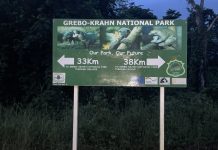
Najor is one of 10 communities covering 7,131 hectares of forest being protected through the payment for stewardship, a project supported by the Irish government and implemented by Integrated Development Learning, a Margibi-based NGO. The project is an area-based payment initiative, though plans are underway to scale to result-based payment. Beneficiary communities have received $21,392 for protecting the forest. The ten communities are situated within the Jeadea and Wedjah districts. For this reporting, we also visited Jarwee, Soloe, Gboyee, Gartee, Flahn, Konwonkpo and Diyankpo.

The savings clubs were introduced in 2022 as a livelihood support, giving residents a way to build income, strengthen small businesses, and reduce dependence on forest resources. IDL provided training, metal boxes, padlocks, wall clocks, and stationery.
In an email, Bahnavileh Jones, who leads IDL’s small-business grant and savings programs, says linking conservation with savings is necessary because many projects fail to create sustainable income after donors leave.
“They also promote alternative livelihoods by enabling members to invest in small businesses, improved farming, or livestock,” Jones tells me. “VSLA funds can support environmentally friendly practices like agroforestry and sustainable farming.” He adds that access to savings and small loans can reduce pressure on forests by giving families other ways to meet urgent needs.
In communities like Najor, those needs are constant. Roads worsen with heavy rainfall. Sick people must travel to other towns for treatment. Children must leave the community to attend school. Farmers depend on cassava, pepper, beans and other crops, but getting produce to market remains costly.
For Payne, the change started in 2025 when the program reached Najor. After earning L$8,000 from her harvest, she bought two shares in the club totaling L$1,200.
“The L$8,000 was plenty,” she recalls. “As soon as I got my money, I took out L$5,000. My children in Greenville are going to school, and I bought their physical education uniforms.”
Liberia’s forests are a precious jewel in the world, holding more than 40 percent of the Upper Guinea rainforests, West Africa’s largest remaining forests, home to endangered species. But for decades, these forests have been lost to illegal logging, farming, and deforestation.
Saah A. David, Jr., former National Program Coordinator of the Liberia Forest Sector Project, a defunct US$150 million national initiative to combat deforestation, supports paying communities to keep their forests standing. Najor’s forest is particularly important because it borders Sapo National Park, Liberia’s largest protected area and the country’s only national park. Program and project
“Payment for standing forests has been a dream of our people and the world at large. Making it a reality is a dream come true,” says David, who says he was hired to work as a consultant for the payment for stewardship in the first two years. “The communities are excited. Working with them on meaningful/impactful projects with their money remains a little challenge.”
The loan scheme has expanded beyond Najor. It is now active in 43 communities in the southeast, benefiting 2,207 people—1,623 women and 585 men.
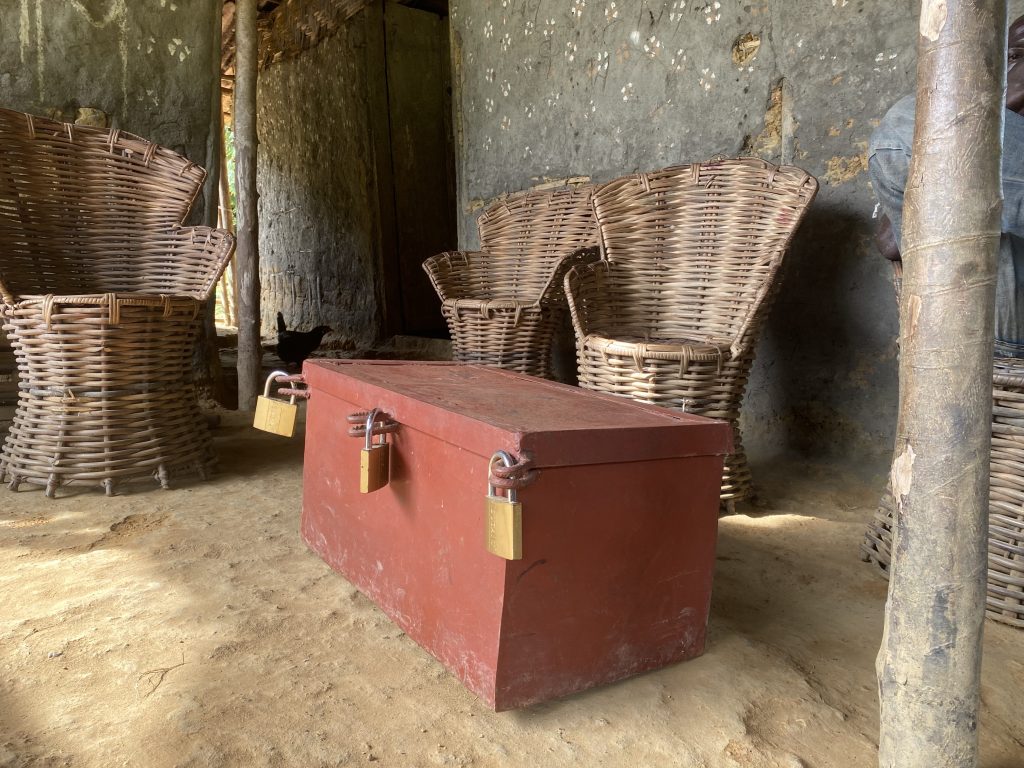
The clubs are owned and managed by the communities themselves. In each group, one person keeps the box, while three other people keep separate keys. The box can only be opened when all key holders, members, and leadership are present, and transactions are conducted in the presence of the full group. Money counters, a chairlady, and a chairman help manage the process.
“It is open to everybody; nobody can cheat,” says Oretha Swen from Jorwee Town.
In Jorwee, farming remains the main source of livelihood. Many residents produce gari, a processed cassava product. In the past, they grated cassava by hand and dried it for days. IDL later donated a processing mill to the savings club. Members pay a small fee to use the machine, and that money helps cover maintenance and repairs.
Other forms of support are also tied to the clubs. Some communities received motorbikes under a revolving scheme. A member receives a motorbike and makes installment payments until the full cost of 250,000 Liberian dollars is paid. Ownership then transfers to the member, and the group uses the money to buy a new motorbike for another member.
After each new motorbike is purchased, any remaining balance is divided between community development and the loan group. The group’s share is later distributed among members as part of interest earned at the end of the savings cycle.
But the support does not solve every problem. Yatta Flahn, chairlady of Diayanpo Town, says the motorbike brought relief, but finding a reliable rider has been difficult.
“So we’re still keeping the bike,” she said.
IDL has also provided small business grants to club members who save regularly and repay loans on time. Jones says 148 members, including 123 women and 25 men, have received grants totaling L$6,436,820 (over US$35,700).
The grants help members expand existing businesses. First-cycle grants range from about L$35,000 to L$50,000. If members repay within three to four months with a five percent interest, they may qualify for a second round of US$75,000 to L$80,000. A third round of US$100,000 or more may follow, depending on the borrower’s business proposal and repayment record.
The club serves as guarantor. If one member fails to repay, no other member in that club can access another grant until the balance is cleared. The system is meant to build discipline and collective accountability.
For some residents, the club’s value goes beyond money. In farming communities, where people spend most of the day on their farms, meetings provide a rare opportunity.
“Most especially, it puts people together to discuss our town,” said Patrick Nimely of Flahn Town.
Nimely said the club has helped residents talk about conflicts, farming needs, and community development. IDL also donated seedlings, which farmers can plant and later replant on their own farms. Members, too, contribute 50 Liberian dollars to a social fund, which can be used when members are sick, getting married, or facing other needs.
Still, transportation remains one of the biggest barriers. Oretha Shepard from Jarwee Town, who received a small grant, says high transport costs reduce farmers’ earnings from gari and crops. A trip from Greenville can cost L$1,500.
“The transportation is too much, so we can’t see anything inside,” she laments.
Security is another concern. In towns without police, the metal savings box can become a target. Renee N. Gibson, program manager for the Rural Integrated Center for Community Empowerment (RICCE), recalls one incident in which a thief stole a money box while villagers were away farming. The community later found the box, but the money was gone.
“What we’ve done now is transition to much larger, heavy-duty metal boxes,” Gibson said. “They are built so heavily that even two people cannot easily move them.”
For Payne, the box still represents something larger than cash. It is a sign that a town long lacking banks, roads, and basic services has found a way to save together, borrow together and plan together. The money club has become a small but practical form of security.
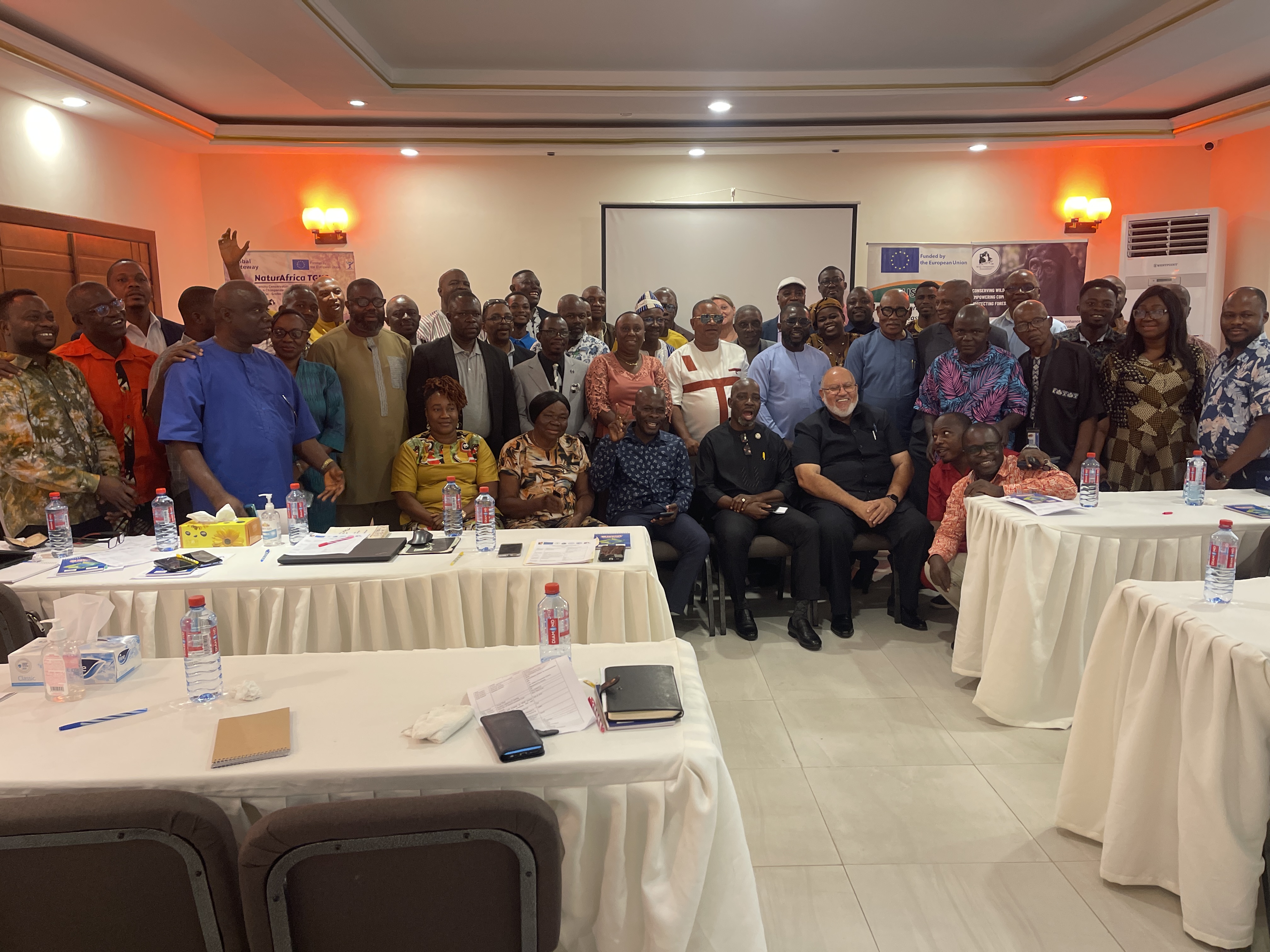
This story was a production of the Community of Forest and Environmental Journalists of Liberia (CoFEJ).