Home 2026

Yearly Archives: 2026

5 Things to Know About Gold Smuggling from Liberia

20191019 110346 scaled

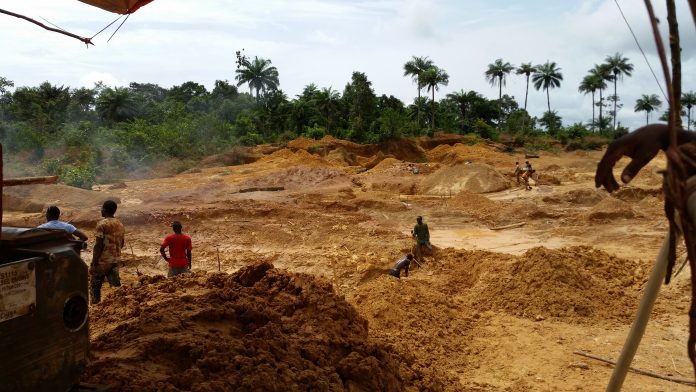
Top: Artisanal miners in Wayjue, Grand Cape Mount County, in 2019. Picture credit: James Giahyue


By Varney Kamara


MONROVIA – Gold is one of Liberia’s most valuable natural resources, yet much of it may be slipping quietly out of the country—untaxed and undocumented. New findings by SWISSAID, a Switzerland-based NGO that provides data on Africa’s mineral exports, suggest that gold smuggling from Liberia has reached alarming levels, potentially leading to billions of U.S. dollars loss for Liberia each year.

The report, published last May, is part of a larger research project on African gold flows. The information it provides was collected from state agencies, company reports, publications, civil and multilateral organizations, researchers, and open-access databases.

This explainer breaks down the report into five key things to understand about how Liberia’s gold is smuggled. It explains where it goes and why weak data, tax gaps, and informal mining continue to fuel the illegal trade.

So, here are five things to know about gold smuggling in Liberia:

1. Liberia Could be Losing US$1.4B to Gold Smuggling

Liberia could be losing US$1.4 billion to gold smuggling annually, according to a DayLight calculation, based on the current price of gold on the world market. Smugglers could be illegally exporting nine tonnes of gold from Liberia through Guinea and Mali yearly.   

2. Liberia’s Smuggled Gold Comes mainly from Artisanal Miners

Liberia’s smuggled gold comes mainly from the artisanal and small-scale mining sector (ASM), a largely informal sector that undervalues and underreports the volumes of gold exported out of the country. All of Liberia’s industrial golds are shipped through official border records. However, a majority of the country’s rich yellow minerals produced in the artisanal sector is smuggled through neighboring countries, with no official data reflecting the actual volumes of gold extracted.

While it was asserted that gold is being smuggled into all of Liberia’s neighboring countries, it is a universal consensus that the mineral is mainly trafficked through Guinea before ending up in Mali. Switzerland, the United Arab Emirates, and Lebanon are the top three destinations outside of Africa.  Liberian gold is also smuggled through airports, mainly to the UAE, and directly to Dubai, which is by far the main destination for all undeclared ASM gold from Africa.
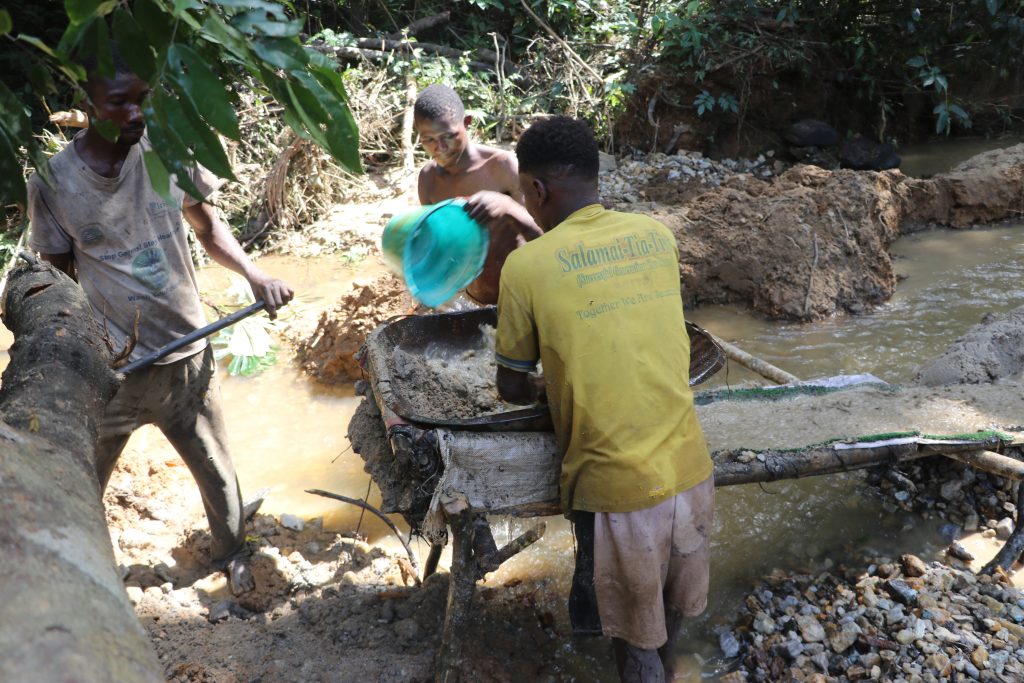
Artisanal miners in the Salayea Community Forest in Lofa County. The DayLight/Harry Browne

3. Differences in Tax Rates and Loopholes

Differences in tax rates for exported gold, destinations, and variations in tax systems serve as the main loopholes or incentives for gold smuggling between Liberia and Guinea. 

Liberia and Guinea have one percent lower royalty or export rates, compared to other countries in the sub-region, one of the main factors driving illicit gold flows across the region.

In an effort to maximize profits, foreign investors prefer to travel to Liberia and Guinea, which impose lower royalty rates on gold exports.   These countries trade in United States dollars, a currency more accessible for international trade. Analysis showed that lower tax rates and access to U.S. dollars were the main smuggling patterns, according to the Global Initiative against Transnational Organized Crime.

In an effort to maximize profits, foreign investors prefer to travel to Liberia and Guinea, which impose lower royalty rates on gold exports.   These countries are able to trade in United States dollars, a currency more accessible for international trade. SWISSAID’s analysis showed that lower tax rates and access to U.S. dollars were the main smuggling patterns.

To resolve this situation, interventions must be developed beyond mine sites, addressing cyclical financial flows influenced by power structures, and formalizing ASM efforts aligned with the government’s medium-term production goals, including standardizing regional tariff rates to combat smuggling, SWISSAID recommended.

4. Discrepancies in Stats

There are discrepancies between Liberian statistics and the Swiss statistics on imports of gold from Liberia. 
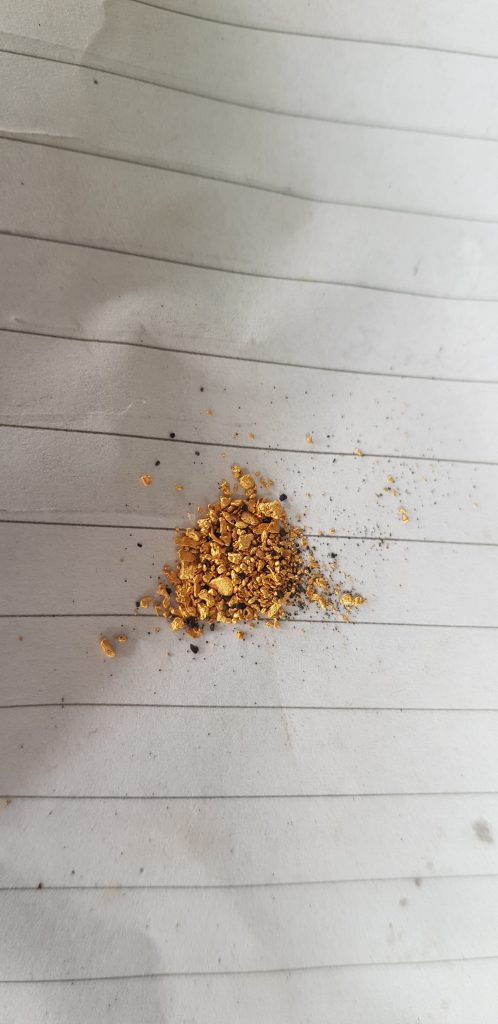
Gold is selling for US$4,874 as of Thursday. The DayLight/James Giahyue

Liberia’s data on gold production and exports, released by the Central Bank of Liberia in its annual reports, is inconsistent with that reported by the Liberian chapter of the Extractive Industries Transparency Initiative (LEITI).

This is surprising for both entities refer to the same sources, namely the Ministry of Mines and Energy. Second, Liberian authorities do not report trade data to the UN Comtrade, which provides export trade data globally. To resolve this issue, SWISSAID had to ask Liberia’s mining authorities to provide export figures that grouped countries of destination. Large discrepancies of data provided were observed, compelling SWISSAID to cast serious doubts over their credibility. 

Official figures on gold production cover only part of the actual volumes of gold being extracted and traded. This is because artisanal and small-scale mining in Liberia, which has taken place on a larger scale in recent years, is highly informal. In 2018, large discrepancies were observed between the figures on gold exports published by the CBL and those on gold exports from Liberia, reported to the UN Comtrade by the authorities of the countries of destination.

SWISSAID noticed substantial inconsistencies in the official figures published by various Liberian entities. Gold export estimates are not updated. This suggests several tons of gold were smuggled out of the country yearly, and imported illegally into other countries, in particular the UAE.

5. Poor Data Complicates Analysis

Poor data situation complicates the analysis of gold flows in Liberia. Comparing figures on the imports of gold from Liberia reported by the authorities with those of the countries of destination to UN Comtrade or published by the London Bullion Market Association (LBMA), SWISSAID observed such large discrepancies with available data, which impacted the quality of its analysis and seriously hampered its ability to conclude. As a result, several questions remain unanswered.


This story is produced by The DayLight, with support from the Embassy of Ireland through Integrity Watch Liberia. The DayLight maintained editorial independence over its content, which does not reflect the position of the Embassy of Ireland or Integrity Watch Liberia.
9 Things about Liberia’s Extractive Industries

compressed Edited Bao Chico

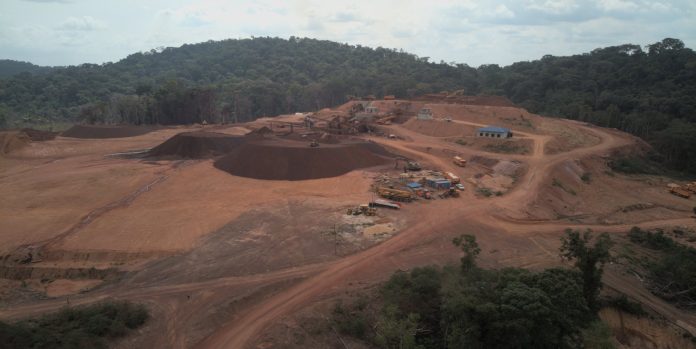
Top: A Bao Chico iron ore mine in Gbarpolu County in 2023. The DayLight/Derick Snyder


By Varney Kamara


The Liberia Extractive Industries Transparency Initiative (LEITI) 16th report highlights both progress and challenges across the country’s extractive sectors.

The report provides information on the mining, agriculture, forestry, and oil/gas sectors’ contribution to the Liberian economy. The annual report is meant to enhance natural resource governance, accountability and transparency.

Covering January 1 to December 31, 2023, the report provides details on payments, productions, exports, and other things. It was published last December, weeks before President Joseph Boakai’s recent State of the Nation Address.  

In the address, President Boakai praised the extractive sectors’ contribution to Liberia’s 5.1 percent economic growth in 2023, largely driven by mining, citing the International Monetary Fund.

So, here are nine key takeaways from the LEITI’s 16th report on the performance of the extractive industries in 2023:

1. Extractive Industries Exported US$1.3 Billion Commodity

Liberia exported US$1.3 billion of extractive commodities in 2023. Major exports included gold, iron ore, diamonds, and round logs. The country exported 12,379 kilograms of gold, 4,002,474 metric tons of iron ore, and 56,838 carats of diamonds.

Artisanal and small-scale mining exports increased, with gold exports rising to 232 kilograms from 82 kilograms in 2022. Diamond exports rose slightly from 55,111 carats in 2022 to 56,838 carats in 2023, a 3.04 percent increase.

The forestry sector produced 661,958 cubic meters of round logs, but exported only 98,426 cubic meters.

Rubber, crude palm oil, and kernel oil sold US$188,463,190 million, representing 13.9 percent of all export earnings. Rubber represents 7.6 percent of the country’s total export receipts and 54.9 percent of agriculture exports, while 6.12 percent of the sector’s exports came from crude palm oil and kernel oil.  

Key export destinations for artisanal minerals were Israel, Belgium, the United Arab Emirates, and Turkey. Israel imported diamonds valued at US$6.68 million (27.09 percent), while Belgium imported US$6.57 million (26.67 percent). The UAE and Turkey dominated gold imports, valued at US$4.46 million (18.09 percent) and US$2.29 million (9.27 percent), respectively.

2. Mining is the Largest Exporter

Mining accounted for US$1.16 billion, the most among the four extractive industries. Bea Mountain Mining Company and ArcelorMittal Liberia were the top exporters.

Bea Mountain exported 12,146 kilograms of gold, valued at US$653.6 million, representing 56.3 percent of extractive exports, up from 52.38 percent in 2022.

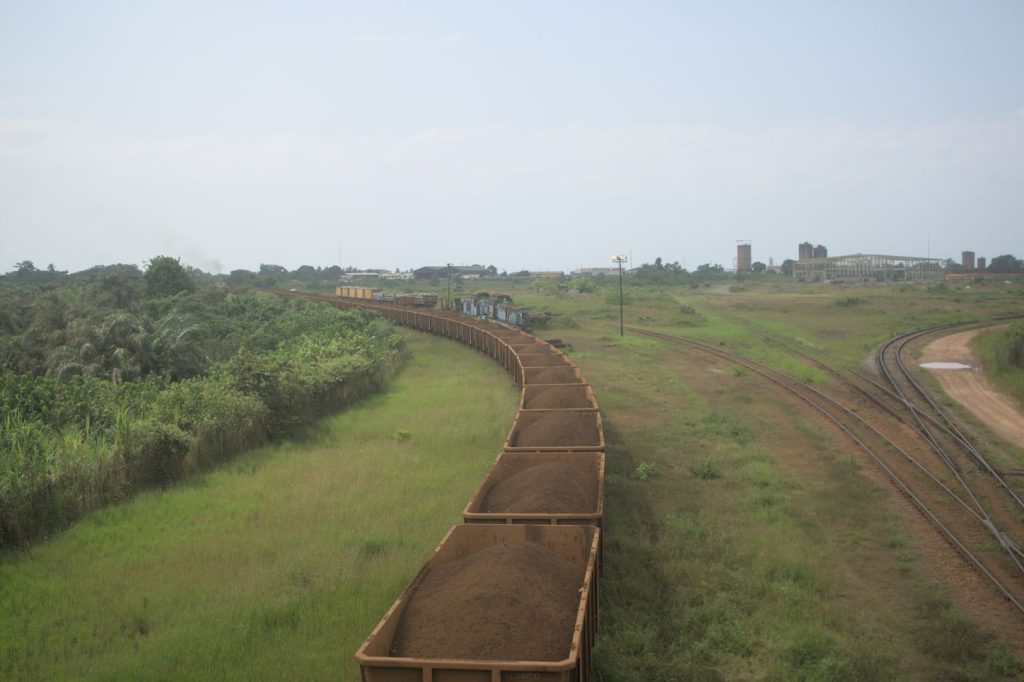
An ArcelorMittal train transporting iron ore to the Port of Buchanan in 2021. The DayLight/James Harding Giahyue

On the other hand, ArcelorMittal’s iron ore production declined from 471 metric tons in 2022 to 70 metric tons in 2023. Together, Bea Mountain and ArcelorMittal accounted for 93 percent of mining exports, up from 91 percent the previous year.

Gold accounted for 72 percent of mining exports, up from 40 percent in 2019, driven by higher global prices and increased production.

3. Forestry Is the Least Exporter

Forestry recorded the lowest export performance. Companies exported 98,426 cubic meters of logs, generating US$4.3 million in 2023, compared to 159,473 cubic meters valued at US$3.6 million in 2022. The report attributes the decline—over 38 percent in volume—to the closure of several forestry companies during the year.

Euro Liberia Logging exported 39,676 m3 of logs from 27,675 cubic meters, representing 30.3 percent, the highest in forestry. WESTNAF Limited followed, exporting 753 cubic meters in 2023 from 1,662 m3 in 2022, constituting 18.2 percent of exports.

Keshav Global Industries Ltd recorded the lowest export with 312 m3 of logs in 2023, representing 0.4 percent of exports, and recorded no exports in 2022.

Most logs were shipped to China, Bangladesh, and India, which together accounted for 93 percent of forestry exports.

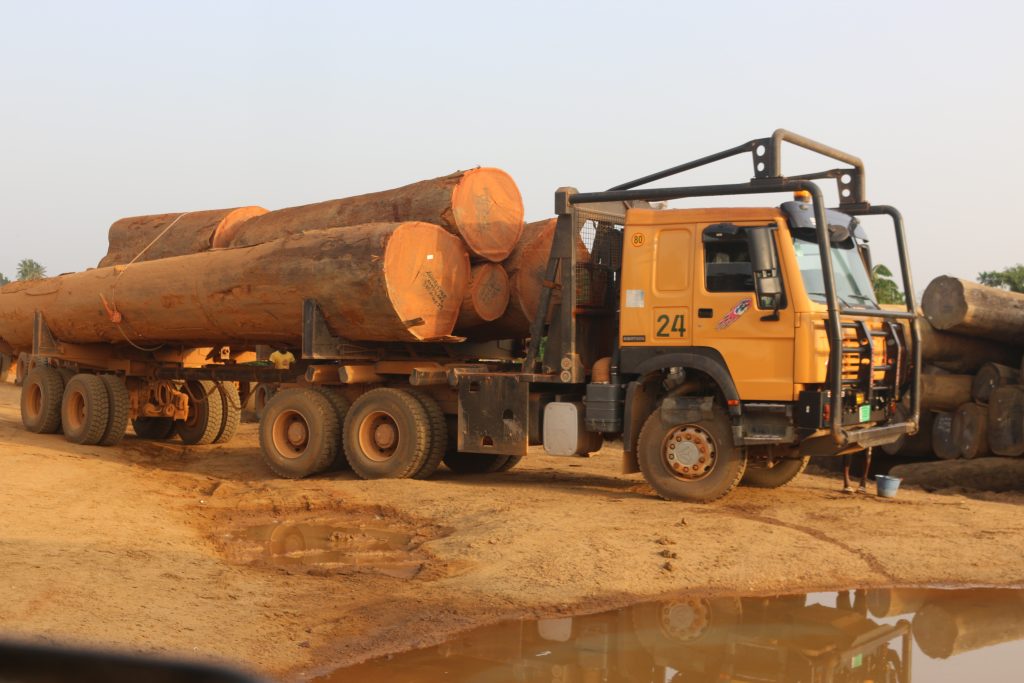
A truck transfers logs outside of Greenville, Sinoe County in 2023. The DayLight/James Harding Giahyue

4. Extractive Revenue Hit US$152.46 Million

Mining, agriculture, forestry, and oil/gas contributed US$152.46 million to the Liberian government’s revenue. This amount represents over a fifth of total revenue and over half of gross domestic product.

 
The 2023 contribution was a 14percent decline from US$182.35 million from July 2021 to December 2022.

The Liberia Revenue Authority collected 80.45 percent of the revenue. The National Port Authority, Forestry Development Authority, the Environmental Protection Agency, and social and environmental contributions accounted for the remaining.

5. Mining Contributed the Highest

Mining accounted for the largest share of extractive revenues, reinforcing its role as the backbone of the Liberian economy. It brought in US$121.49 million, a fall from US$140.61 million in 2022, representing 19.61 decline. Gold, iron ore, and diamond were the main contributors. 

6. Oil/Gas: the Least Contributor

The oil and gas sector was the lowest contributor to overall extractive revenue, recording a minimal contribution of $0.55 million (US$550,000), constituting 0.36 percent of the overall extractive revenue.

No oil/gas licenses, production, exports, or agreements existed in 2023, with no records of active companies. However, the NOCAL collected the money from seismic data and contracting.  

The amount contrasts with the 2011/2012 fiscal year, when the sector generated US$82.07 million, 14 percent of GDP at the time.

7. Agriculture: largest Employer

The extractive sector employed 12,333 people, representing 0.49 percent of Liberia’s labor force. Of this workforce, agriculture employed 9,302 workers, making it the largest employer among the extractive industries. Women accounted for 23 percent of agricultural employment, the highest female participation rate among extractive industries.

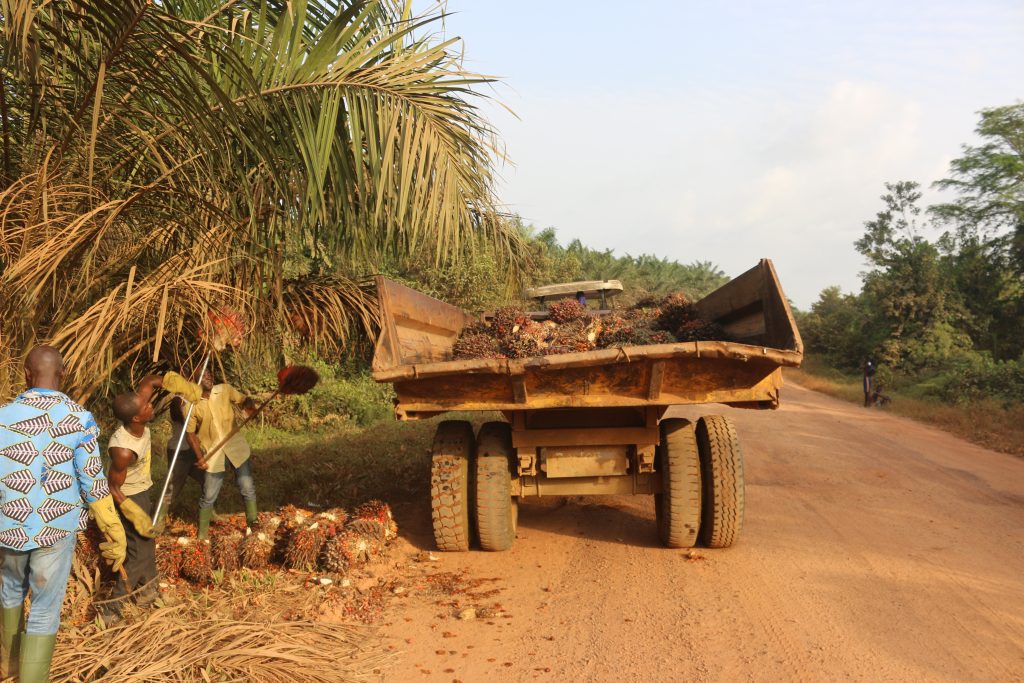
Workers with the Maryland Oil Palm Plantation (MOPP) are uploading fresh palm bunches to a truck in 2023. The DayLight/James Harding Giahyue

Meanwhile, mining employed 2,587 workers, while forestry employed 444, the least.

Firestone Natural Rubber concession, the world’s largest natural rubber producer, is the biggest private sector employer in Liberia.

8. ArcelorMittal Single-largest Taxpayer

ArcelorMittal Liberia was the single-largest tax payment, with US$60 million or 39.4 percent of all extractive revenue. Bea Mountain followed with US$37.6 million or 24.7 percent. Firestone (US$11.6 million or 7.6 percent), Western Cluster (US$10.2 or 6.8 percent), and China Union (US$9.6 million or 6.3 percent) were third, fourth, and fifth, respectively.

Additionally, ArcelorMittal paid US$17.5 million in “unidentified taxes” into the government central account. The LRA provided no details of the payment, the 16th LEITI report found.

9. Beneficial Ownership Regulation Formulated

The Beneficial Ownership Disclosure Regulation is one of the features of the report. It aims to combat illicit financial flows, including money laundering and tax evasion.

Enforced by the Liberia Business Registry, the regulation requires companies to disclose their ultimate beneficial owners, in line with amendments to the Business Association Act of 1976.  The regulation is also consistent with Liberia’s Anti-Money Laundering Act, the National Forestry Reform Law, and the Code of Conduct for Public Officials.


This story is produced by The DayLight, with support from the Embassy of Ireland through Integrity Watch Liberia. The DayLight maintained editorial independence over its content, which does not reflect the position of the Embassy of Ireland or Integrity Watch Liberia.
Liberia Permits Dredge Mining while Ghana Outlaws It

the daylight pres. Boakai

Top: Illustration by Michael Harijgens for The DayLight


By Emmanuel Sherman


MONROVIA – Liberia has introduced a permit for gold and diamond dredging, lifting a ban on the mining method associated with pollution. Meanwhile, that is exactly the opposite of what has been done in Ghana, where it has been outlawed.

Both countries’ actions come at a time of a new report by the United Nations Office on Drugs and Crime that illegal mining poses a serious global threat. The report found that criminal gangs were seeking to gain control of gold mines in Sub-Saharan Africa, Latin America, the Caribbean, and Southeast Asia.  

Last year, Liberia introduced a permit for dredging to increase mining revenue. Small-scale gold and diamond miners can now pay US$1,500 for a dredge permit, and medium-scale miners US$10,000. The permit lifts the 2019 ban, aimed at reforming Liberia’s artisanal mining subsector. So far, no permit has been issued.

Ghana, on the other hand, repealed a law last December to protect its forests and waterways from dredging and other forms of illicit mining. The 2022 law had allowed mining in protected forest reserves, exposing 89 percent of Ghana’s forest reserves to mining.

The repeal followed demonstrations that called for a state of emergency to combat dredging, or as Ghanaians call it, galamsey—a play on “gather them and sell.” 

President John Mahama, who made fighting galamsey a campaign promise, had encouraged demonstrators to push the government to act. “I am determined. Let us win this galamsey fight together,” President Mahama said.

One of Ghana’s biggest environmental issues is galamsey, which dates back to pre-colonial times when rural communities were involved in gold-winning practices. It allowed gold won by locals to be used to sustain trade across the goldfields, which later developed into an organized criminal network that spiraled out of control.

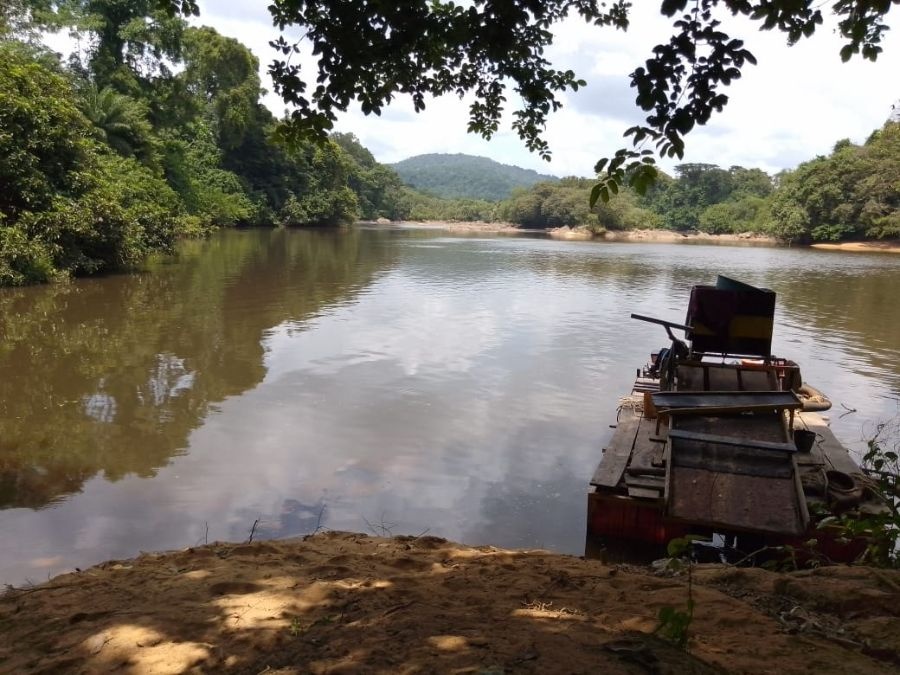
A dredging machine on the banks of the St. John River, Grand Bassa County, 2024. The DayLight/Emmanuel Sherman

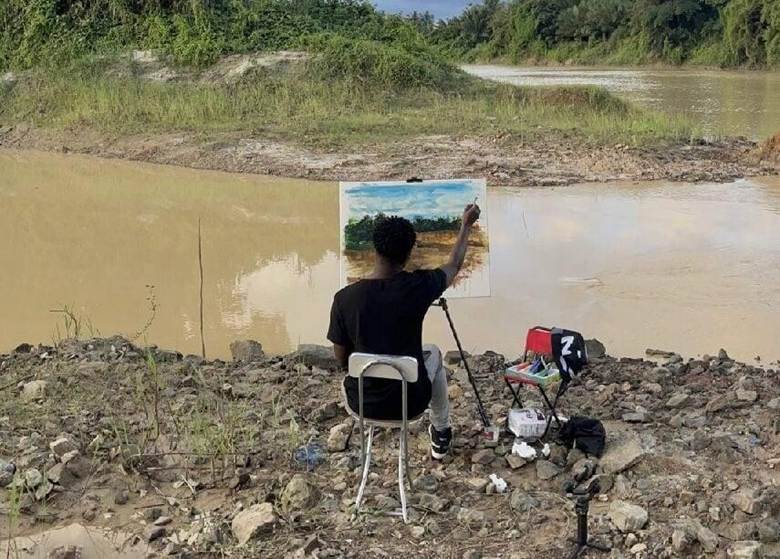
Galamsey, the illegal mining trade, has a severe toll on Ghana, which led to the destruction of over 4,700 hectares of land across seven regions, causing deforestation and degradation. The Pra River, once a vibrant ecosystem, has been polluted with toxic chemicals like mercury.  Israel Derick Apeti, an artist- activist, used some of the polluted water to paint, highlighting the crisis.

George Manful, a former official of Ghana’s Environmental Protection Agency, intimated that mercury remains in waterways for 1,000 years. “We are slowly poisoning ourselves with undrinkable water,” Manful told the BBC.

Like Ghana,  dredge mining has polluted Liberia’s watercourses, posing a health hazard to rural dwellers and threatening their livelihoods. It also has huge negative impacts on aquatic species, experts say.

“When rivers are dredged, the nesting grounds are destroyed, and fish migrate,” said Eugene Shannon, an environmentalist and an ex-Minister of Mines and Energy, who set up the previous fee structure that did not include dredging permits.

Last year, the Environmental Protection Agency of Liberia warned illegal miners about the overuse of mercury in Liberian waters.

“When we mine gold using mercury, the mercury spreads in the water. The fish live in the water and get their food. The mercury enters the fish. When we eat fish, mercury enters our bodies,” said Dr. Emmanuel Yarkpawolo, Executive Director of the Environmental Protection Agency of Liberia.

“This can cause damage to our kidneys, cause deafness, cause blindness, and cause women to give birth to children with all kinds of brain problems.”

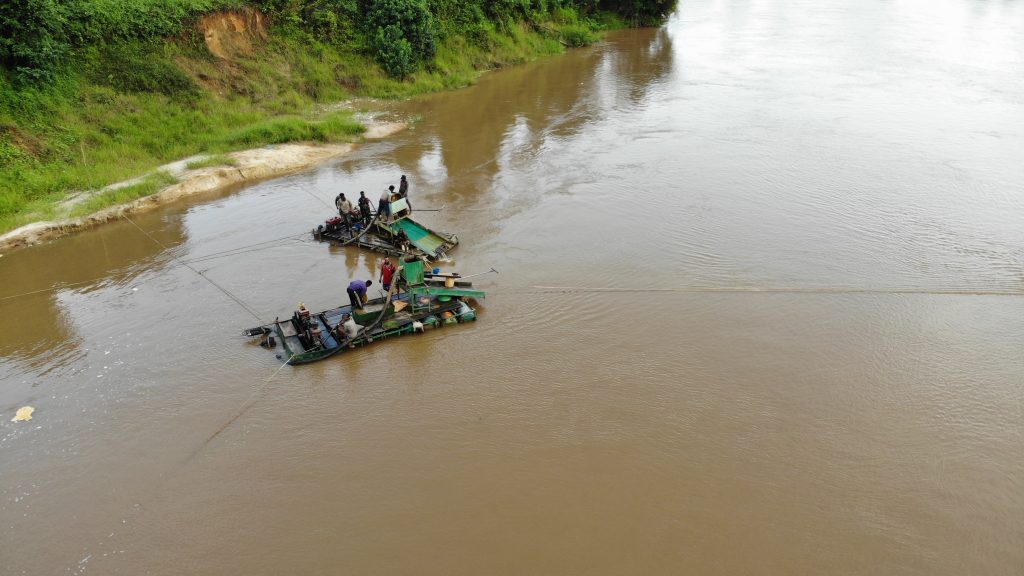
A drone shot of two dredges on the River Dugbeh in Sinoe County in 2024. The DayLight/Derick Snyder

Two months after Yarkpawolo’s speech, Liberia ratified the Minamata Convention on Mercury, which protects people and the environment from the chemical.

‘Dangerous’ level

Mining is one of the key drivers of Liberia’s economy. The sector generated over US$121.49 million in 2023 or nearly 85 percent of total revenue, according to the Liberia Extractive Industries Transparency Initiative. Mining also contributed about 80 percent of all exports. The International Monetary Fund estimates that the Liberian economy will grow by 5.4 percent this year, up from  4.6 percent last year, thanks to the mining industry.

But illegal mining has been a problem for Liberia due to a weak regulatory system, according to a 2021 report by the General Auditing Commission. About 90 percent of gold from Liberia’s artisanal and small-scale mining sector is believed to be smuggled out of the country each year, according to the Organization of Economic Cooperation and Development. That amounts to a US$455 million loss as of 2011. 

Liberia has, however, convicted no one for smuggling or illicit mining.   A US$48.8 million case involving Randy Scott, a Liberian miner, and several Chinese nationals, the biggest in Liberia’s mining history, was dropped mysteriously. The men had been accused of economic sabotage, tax evasion, criminal conspiracy, environmental degradation, and encroachment.

Like Liberia, mining is also a pillar of the Ghanaian economy. Ghana is Africa’s largest and the world’s sixth-highest producer of gold, which is at an all-time high of US$4,670 per ounce as of Monday. Last year, Ghana generated over US$10 billion from small-scale gold export. Its GDP grew by 5.7 percent in 2024, with mining largely responsible for the growth.

But, unlike Liberia, Ghana has taken measures to combat dredging. Apart from repealing that law recently, over 850 people are facing prosecution currently for galamsey. Authorities said 76 galamseyers, including 18 foreign nationals, have been convicted of illegal mining since August 2021. Thousands of Chinese have been deported in a crackdown on illegal miners. The country intends to imprison 10 Chinese arrested for illegal gold trade if convicted.

“We are moving heaven and earth so that they dance to the music of the Ghanaian law,” said Prince Kwame Minkah, spokesman for the Ghana Gold Board.

Israel Derrick Apeti, known as Eni Art on social media, paints draw public attention to the plight of galamsey in Ghana. Picture credit: The Africa Report

In response to The DayLight’s queries, the Liberian Ministry of Mines and Energy justified that the permit was an alternative to the dredging ban that had proved “difficult to control.” The ministry stated that it had a system to monitor dredge permit holders.   

“The fees will not only increase revenue collection for the government. [It] will help enhance enforcement activities in the mining sector, while the Ministry continues to collaborate with the Environmental Protection Agency on curbing harms to the environment from mining activities,” said the ministry.

Emmanuel Swen, Liberia’s ex-Assistant Minister for Mines, who had helped ban dredging, said permitting dredging was all about the money, and not people or the environment.  

“The issue is not about the contribution the use of dredge makes to revenue generation, which seems to be the ministry’s concern,” said Swen. “It is about the adverse environmental footprints that the permit in itself does not address.”

Liberia’s position on dredging mining mirrors Ghana’s initial stance on it, which proved counterproductive.  In 1989, Ghana legalized the use of mercury to formalize its small-scale mining subsector. The decision helped spur an increase in gold exports, but a state-backed study found mining has driven mercury pollution to a “dangerous” level.


Integrity Watch Liberia provided funding for this story. The DayLight maintained complete editorial independence over its content.

Grand Gedeh Superintendent Allegedly Received over US$7K for Dirty Deed

DJI 0434 1 scaled
DJI 0434 1 scaled

Top: Picture of thriving cocoa beneath tree skeletons located in B’hai Jozon, Grand Gedeh County. DayLight/Samuel T. Jabba


By Varney Kamara and Samuel T. Jabba


B’HAI JOZON, Grand Gedeh County – Local leaders in B’hai District, Grand Gedeh County, alleged they gave Superintendent Alex Grant about 4 million CFA (US$7.111) to get a deed for their ancestral land.

Last March, a delegation from B’hai met Grant at his Zwedru office and gave him the money, according to Jammie Kinyea, spokesperson of B’hai Jozon Management Council. Kinyea said they wanted the Superintendent to leverage his position to assist them in obtaining the deed.

“We were very happy when Grant took over. We thought his ascendency would help to complete the survey of our land to get our deed quickly,” Jammie Kinyea, spokesman of the B’hai Jozon Land Management Council, said in an interview with The DayLight in Toe Town, Grand Gedeh.  

“Grant assured us that he would try his best for us to get our deed from the Liberia Land Authority. We tried without success. This is my disappointment,” Kinyea added.

Grant admits to receiving the money, but claims he received only about half of that amount. He said the money was paid through instalments—the first payment was made two months after the meeting, and the second six months later. Like in Kinyea’s case, The DayLight could not independently verify Grant’s claim, as he provided no evidence.

Grant said the money was intended to survey the land and resolve a conflict over it, and not for a deed. The dispute arose between two Burkinabees who were competing to plant cocoa on the land, Grant said.

“I personally suggested to them that to resolve this issue, we need to survey to know who owns what and who doesn’t. This was my way of trying to end the dispute,” Grant said. “That’s how they gave the money for the survey, and the surveyor went in there and did the survey.”

Grant went on to obtain a deed for the land. However, the deed was not in B’hai Jozon’s name as Kinyea and the townspeople had bargained for. Instead, the deed to the farmland was issued to the Grand Gedeh County local government. It was part of a 30-year lease agreement with Boubou Sebu, a Burkinabé businessman.

Barely a week after securing the deed, the Land Authority revoked it over irregularities.

Likewise, county authorities terminated their lease agreement following media reports that exposed violations and inconsistencies. A community acquires a customary deed through a legal process under the Land Rights Act. There is no evidence that B’hai has completed any of those steps.  

Townsfolk in B’hai said they only learned that the lease agreement was intended for their land after it was cancelled.

Jimmy Kinyea and the townspeople of B’hai Jozon in Grand Gedeh County gave Superintendent Alex Grant money to help them get a customary deed. The DayLight/Samuel T. Jabba

Grant said the community undermined his efforts to acquire a deed apart from the one that was revoked. He said a draft of the document had been produced, but not been authorized by the Land Authority. Grant did not present a copy of the alleged draft deed, even though he promised to make it available to The DayLight.   

Kinyea shrugged off Grant’s comments.

“If he says so, then that’s fine,” Kinyea said. “But all I want to say is that we are happy that the 500 acres that were taken away from us through the lease agreement have been returned.”

DayLight reporters observed thousands of hectares of abandoned cocoa farms on the disputed land. Most of the harvested cocoa is transported to Toe Town. In contrast, others are being shipped across the border town of Barcubley, La Côte d’Ivoire, according to Sonconpocodgou Yologo, spokesman of the Burkinabe workers in Pierre’s Village-1.

Deaths and Divisions Follow Cocoa Farming Paths

DJI 0421 scaled
DJI 0421 scaled

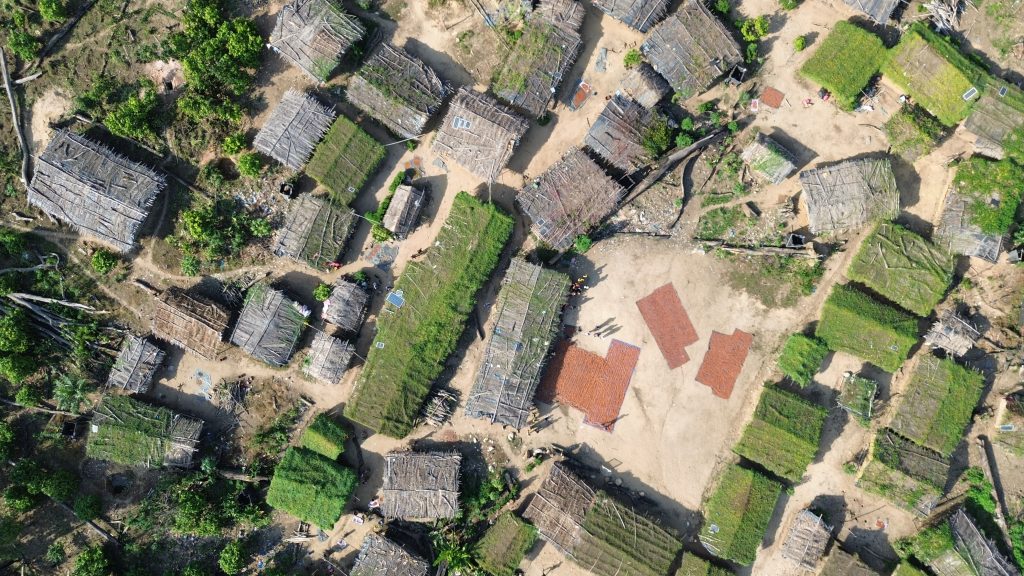
Top: A drone shot of Pierre Village-1, the largest settlement of Burkinabe migrants in Grand Gedeh County. The DayLight/Samuel T. Jabba


By Varney Kamara and Samuel T. Jabba


FISH TOWN – In late September, Deppu Kobera, an Ivoirian teenager working on a cocoa farm, was found dead near a forest in River Gee County.

Fifteen-year-old Kobera had gone missing while farming cocoa in the Kwawe Gee Forest, Glorra District, according to the River Gee Police Detachment. His body was discovered three days later in a nearby forest, beheaded and with bullet wounds.

The River Gee case highlights growing conflicts linked to Burkinabe mass migration to Liberia. Known by their tribal name “Mossi,” these Burkinabés travel deep into towns and villages in search of cocoa farmlands. However, this search has been characterized by deaths, divisions, and deforestation. Over the past three years, dozens of disputes involving Burkinabe cocoa farmers have been reported in southeastern Liberia, according to court records.

“I believe their influx will create some maximum-security threat in the country in the future,” said Uriah Zokruah, Deputy Commander of the Grand Gedeh Police Detachment. His detachment has forwarded several cases involving Burkinabés to court.

“We have had about 10 of these cases. In some instances, fines are imposed,” said Shad Dweh, Senior Magistrate of the Zwedru City Magisterial Court. “It’s a complex problem that requires cooperation between the Liberia Immigration Service, the Police, the FDA, and the communities.”

Many Burkinabés cross borders into Liberia from neighboring Côte d’Ivoire by canoe, motorbike, or on foot. Once here, they enter into informal contracts, wherein they invest money and labor, while Liberian hosts and landlords contribute land. Over time, the migrants have come to outnumber their hosts across communities. They are a constant feature on highways and footpaths, having farming tools in their hands.

“We do not want trouble,” Soré Sayouba, a Burkinabe farmer in Grand Gedeh’s Gbarzon District, tells The DayLight. “We feel sad about what is happening, but when there is confusion, everyone gets blamed.”

Liberia Immigration Service recorded 55,000 Burkinabes in Liberia as of August, with 48,000 in Grand Gedeh County alone. There are 4,000 in River Gee, 2,000 in Nimba, and 426 in Maryland.

Divisions

Last March, six months after the Burkinabe teenager’s death,    a land dispute between the Kiteabo and Glaro sub-tribes in River Gee County left three people dead: Eric Nyenpan, Sabastine Saylee, and Aaron Teah.

The violence began when Nyenpan of Kiteabo was allegedly shot by Glarro men while setting up tents on the Cheapoo Island, a disputed territory. In retaliation, Kiteabo tribesmen destroyed Glaro villages, killing Saylee and Teah. The clashes have strained longstanding ties between the two groups.

“It is a tragic thing. Investigation into these incidents is growing deeper to find who the killers are. We are trying to establish the motive behind these acts,” said Theophilus Togba, River Gee’s Assistant Police Commissioner.

A drone picture of a new farm shows cocoa thriving while trees decay. The DayLight/Samuel T. Jabba

A conflict between Tojallah and Bargblor in the Gbao and Cavalla districts of neighboring Grand Gedeh may be less chaotic. However, it is getting tense. The dispute began when Tojallah men allegedly abducted over a dozen Burkinabe farmers working for Bargblor in Karblee, a contested forestland.

Tojallah claims a local creek as their traditional boundary, while Bargblor insists it lies somewhere else. Once linked by intermarriages, the two communities—cousins and nephews—now clash bitterly over ownership.

This scenario is unfolding in Dougee Town, Gbarzon District, where relatives are embroiled in a fierce legal battle over a 1,500-acre plot of land.

In 2023, Anthony Rancy, son of a former Grand Gedeh senator, John Rancy, sued his relative, Robert Bestman, at the Zleh Town Magisterial Court, alleging that Bestman had farmed cocoa on his land. Rancy further alleged that Burkinabe migrants, acting on Bestman’s orders, invaded the property inherited from the late senator.

A drone shot of Pierre Village-1, a Burkinabe settlement in B’hai Jozon, Grand Gedeh County. The DayLight/Samuel T. Jabba

But Bestman denies the charges, claiming the land had been illegally acquired by John Rancy Sr. decades ago, and that residents had long warned Anthony Rancy to stay away.

In the end, the Zleh Town Magisterial Court ruled in favor of Anthony Rancy, sentencing Bestman to nine months at the Zwedru Palace Correctional Center for trespassing.

The conflicts are not limited to Liberian communities and families alone.  In some cases, Burkinabé migrants clash with their Liberian counterparts and even their Burkinabé compatriots.

In 2018, the Toe Town Magisterial Court heard a land dispute between Ali Kabore, a Burkinabe cocoa farmer, and Goeyeazon Belaydee, a resident. Their dispute started after Belaydee failed to honor a cocoa agreement, according to court officials.  Belaydee had agreed to relinquish a portion of his ancestral land to Kabore in return for cocoa.

However, following years of production, Belaydee failed to deliver on the terms of the agreement, prompting Kabore’s court action. Belaydee admitted breaching the agreement.  while the case ended in an out-of-court settlement.

Last August, police in Grand Gedeh arrested several Burkinabe migrants in the Gboryeazon forest area of B’hai District over a land dispute that left three persons injured. Two of the men were so severely injured that they had to be referred to a hospital in Côte d’Ivoire.

Deforestation

Skilled and hardworking farmers, Burkinabe migrants began arriving in Liberia from neighboring Ivory Coast in the 2010s in search of cocoa farmland. Liberia’s abundant, fertile forestlands and weak law enforcement would make their search for the so-called “brown gold rush” a reality.  

Liberia holds over 40 percent of West Africa’s largest remaining rainforests, the Upper Guinea forests. However, deforestation is also an issue for Liberia. Between 2002 and 2024, it lost about 390,000 hectares of primary forest, according to the Global Forest Watch, which tracks deforestation.

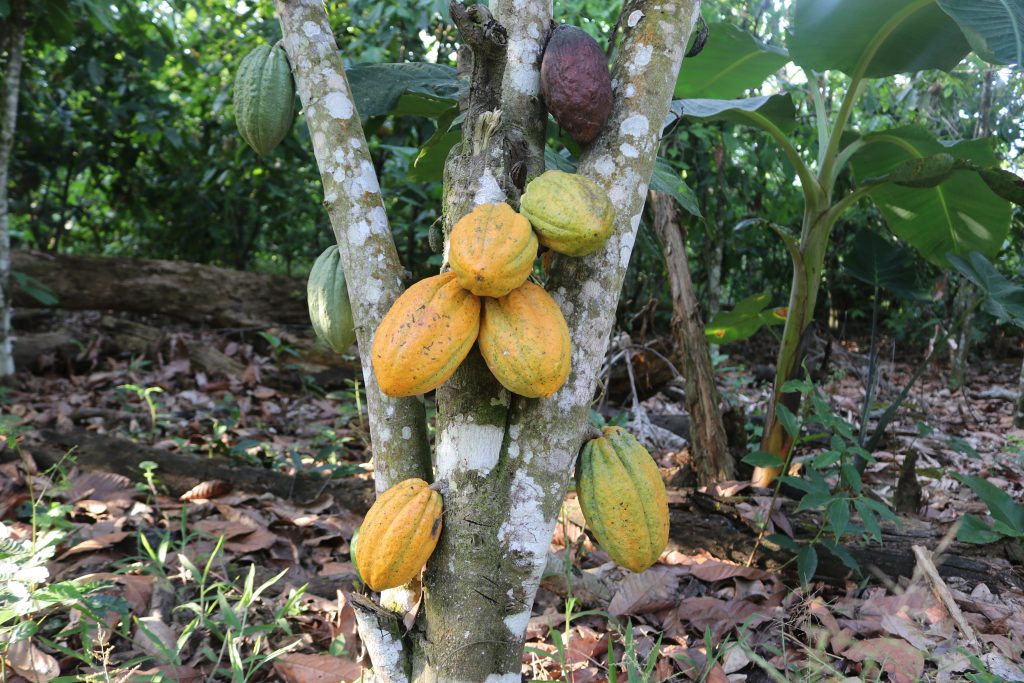
A flourishing cocoa tree in B’hai Jozon Forest in Grand Gedeh County. The DayLight/Samuel T. Jabba

Cocoa farming was a huge contributor to that. A recent report by the UK campaign group Global Witness found that from 2021 to 2024, Liberia lost a forest area of over the size of the European nation of Luxembourg.

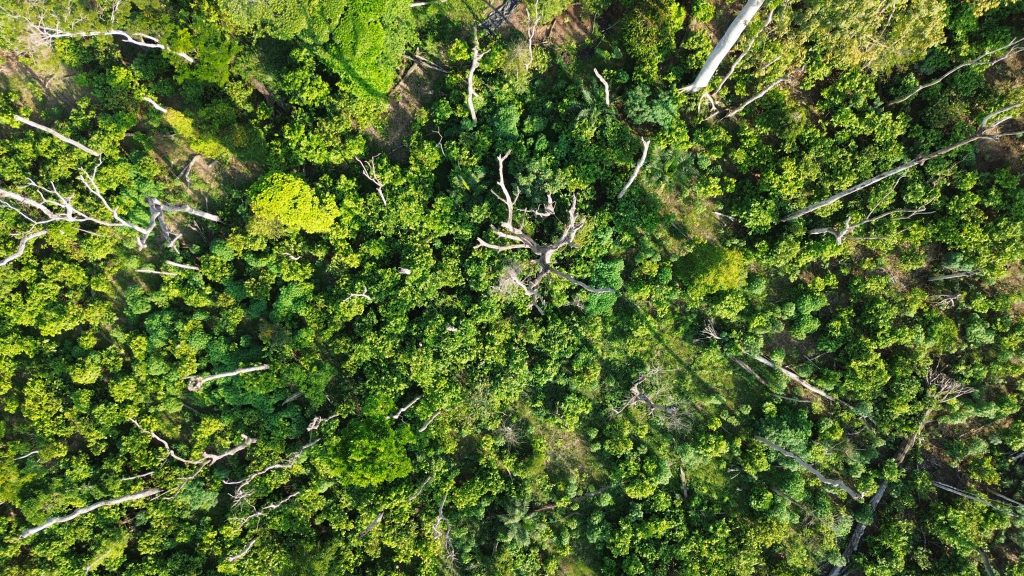
It is easy to see how that works. Unlike the traditional Liberian method of retaining tree canopy, Burkinabe farmers fell trees to plant the crop. They would set fire to the base of trees or apply chemicals, killing them gradually. Drone footage reveals cocoa plants flourishing beneath vast tree graveyards.

These farms are everywhere, including forestry concessions, proposed and national parks, and community forests, resulting in deforestation across vast areas.  Farming in parks, designated parks, concessions, and authorized community forests is illegal, according to the National Forestry Reform Law.

Last December, 21 migrants were arrested in Grand Gedeh’s Konobo Community Forest. Their arrest followed several, including 31 Burkinabe nationals, mostly teenagers, for allegedly encroaching on a community forest and a logging concession.

Back in River Gee, a jury confirmed foul play in the death of Kobera. However, no arrests have been made.

In Katebo, 21 suspects, including five Ivoirians and three Burkinabes, have been arrested in connection with the death of the three men. The defendants face multiple charges, including murder and illegal weapon possession.

Their case is before the 15th Judicial Circuit Court.


[Additional reporting by Paul Rancy in Grand Gedeh and Prince Copeland in River Gee]

FDA Begins Logging Concession Process In Gbarpolu

IMG 6949 1 scaled
IMG 6949 1 scaled

Top: A team of FDA staff in a town hall meeting with affected forest leaders in Tima Town. The DayLight/Esau J. Farr


By Esau J. Farr


TIMA TOWN, Gbarpolu County – The Forestry Development Authority (FDA) has initiated the process of establishing a new logging concession. The FDA has engaged with the communities that would be affected in Kongba District, Gbarpolu County, near the Gola Park forest management contract area, specifically “D” or FMC-D.   

The FDA is conducting social and economic surveys in the area in line with the Forestry Reform Law. The law requires the regulator to seek local people’s consent for possible commercial logging activities. It also mandates the FDA to conduct an inventory of all species of the forest that qualify for a concession agreement.

“Government needs resources and if it must continue infrastructural development, we need to get those resources from the communities for the benefits of all of us,” says Rudolph Merab, the FDA Managing Director. “We want to see our communities developed. Our people in the rural area have been there for years in abject poverty. So, our intervention has to be real.”

FMCs are large-scale concessions signed between the government and logging companies. It covers at least 50,000 hectares of forestland and not more than 400,000 hectares for 25 years.

After the First and Second Liberian Civil Wars, Liberia’s forest cover area was divided into 26 large-scale contracts. They were labelled as FMC “A” to “Z”. This one in Gbarpolu and others were, however, not granted to companies due to technical reasons.

Currently, two of them are active—Geeblo Logging Company and Euro-Liberia Logging Company—according to the FDA’s records, with the rest inactive.

A view of a forest in Tima Town, where the FDA wants to create a logging concession. The DayLight/Esau J. Farr

When completed, the Kongba-based concession would be the first since the initial ones over 15 years ago.    

“The team that is here will talk with community people. They will go into the bush to check and find the different kinds of trees there,” Ekema Witherspoon, an FDA consultant, tells a town hall meeting in Tima Town, one of the landowning communities.

“They will take some people from here and work with the team that is coming from Monrovia because your children know the forest.”

Forest leaders of Kongba welcome the idea of commercial logging in their area.  

“We don’t want any more parks in our district. The only thing we want is a company that will come and improve our living conditions,” says  Blama Kanneh, Paramount Chief of Kongba District.

Other chiefs agree with Kanneh.

“For us to hear you today that you want to work with us for companies to come here, we are very happy,” says Aaron Momo, Zuie Clan Chief. “If you compare other counties in Liberia with Gbarpolu County, especially Kongba District, you will feel at for us here. Development is very slow here!”

Following the FDA’s field report, companies will have to bid for the forest through the Public Procurement Concession Commission (PPCC). The winner of the bid, after legislative approval, will sign a social agreement with the would-be affected communities.

But forestry campaigners dissent from the process. Jonathan Yiah, the head of forest governance of the Sustainable Development Institute (SDI), believes it is counterproductive.  Yiah references the troubled history of large-scale logging concessions.

A 2013 Liberian government-commissioned report by the London-based Moore Stephens found all seven concessions, covering 1,007,239 hectares, had been illegally awarded. 

Likewise, a 2024 review by the US-based Forest Trends found that all FMCs were noncompliant.

“The FDA should refrain from pursuing another forest management contract when nearly all existing contracts are either dormant or underperforming,” says Yiah.

“Instead, the FDA should focus on implementing the recommendations from the Liberia Forest Concession Review (Phase II) of 2024.” The review determined several large-scale logging contracts did not meet essential prequalification criteria, among others.

“Resolving these critical issues should take precedence over initiating another [large-scale logging concession],” Yiah adds.