Home 2026 October

Monthly Archives: October 2026

The Forgotten Children of Wartime Loggers

The Forgotten Children of Wartime Loggers
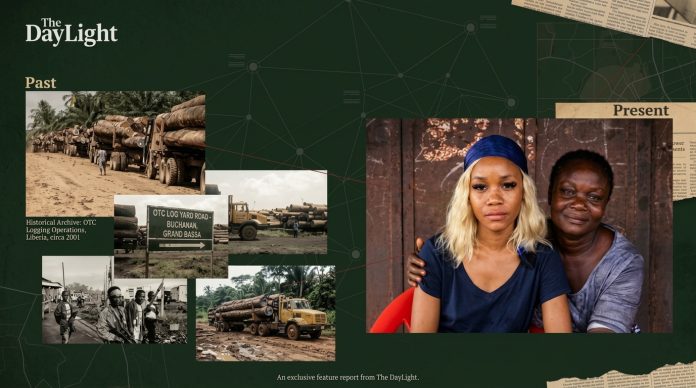
Maya Lipin, 24, sits on the lap of her mother Mahn Thomas. Maya's father worked with Oriental Timber Company between the later 1990s and early 2000s.

Top: A poster depicting OTC’s operations, combatants and Maya Lipin and her mother, Mahn Thomas. Poster by Michael Harijgens for The DayLight


By Emmanuel Sherman and Philip Quwebin  


NEEZUIN, River Cess County – In 2000, Mahn Thomas, 17, visited her aunt in Buchanan, Grand Bassa. There she met Dennis Lipin, a 35-year-old Malaysian trucker with the Oriental Timber Company (OTC), the largest logging company then.

Initially, Mahn resisted Mr. Lipin’s proposal, as she “did not want a white man.” However, her aunt, who had a great influence over her, convinced her, and she gave in to Mr. Lipin. Shortly after, she moved to Neezuin, River Cess County, where Mr. Lipin was stationed. By 2001, she was pregnant with their first child, Maya, and another daughter, Nana, arrived two years later.

“He was nice and very good,” said Mahn.

But misfortune was right around the corner. Two months after Nana’s birth, a war between Liberian government forces and rebels intensified, and the family fled to Buchanan. When the war finally broke out in the port city, Mr. Lipin departed Liberia for Malaysia. That was the last time Mahn, Maya, and Nana ever saw him.

Maya and Nana are two of a large number of children fathered by Asian workers of OTC, which was owned and operated by Guus Van Kouwenhoven, a Dutch businessman who died last month in South Africa. Gus, as he was affectionately called in Liberia, collaborated with then-President Charles Taylor, making OTC and people connected to it targets for rebels.

When Taylor’s regime ended in October 2003, OTC’s Asian workers—Malaysians, Indonesians, Filipinos and Chinese—fled the country abruptly. But they left behind scores of children they had with Liberian women and never returned.

The ‘Red Sea’
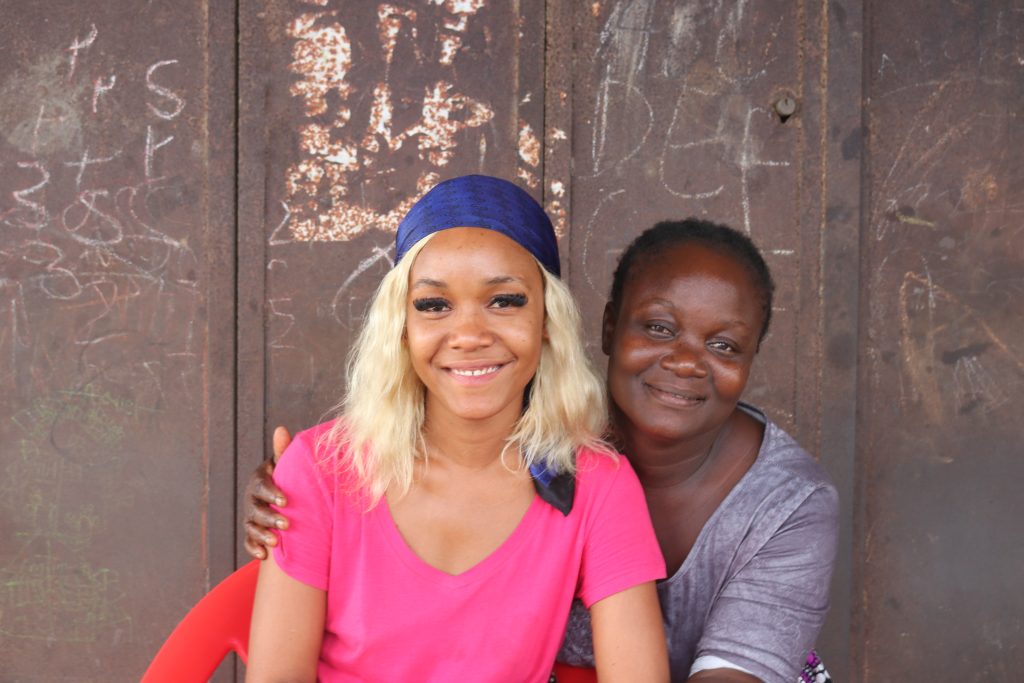
Mahn and Maya. The DayLight/Philip Quwebin

Her OTC connection in mind, Mahn decided to escape Buchanan with her children and go to Firestone. They walked all night, and by dawn, they were stuck at the St. John Estuary in Upper Buchanan, where the Benson and Mechlin Rivers meet and discharge into the Atlantic Ocean. Many people drowned attempting to cross the watercourse. Afraid of that fate, she changed her mind and headed back to Buchanan with her daughters.  

Interestingly, when she left, the water level miraculously dropped, allowing people to cross to safety. Overjoyed, people likened their experience to Moses leading the Israelites across the Red Sea in Exodus 14. “We called it the Red Sea, because the water parted and people walked on the [riverbed],” Mahn recalled.

The rebel faction that attacked Neezuin and Buchanan was the Movement for Democracy in Liberia (MODEL). Led by Thomas Nimely Yaya, the future Grand Gedeh Senator, MODEL had become active in March 2003. The group was linked to another rebel faction and based on an Ivorian militia loyal to then-President Laurent Gbagbo.

MODEL clashed with Taylor forces for the OTC belt, stretching across Grand Bassa, River Cess, and Sinoe counties. The Taylor regime granted OTC 1.6 million hectares of forest land and the Port of Buchanan in exchange for millions of dollars to fund his war, which contributed to the killing of some 250,000 people. Kouwenhoven used Hotel Africa he had managed since 1980, as a base for illegal arms trading. Joseph Wong, a Malaysian executive of the OTC, supported Taylor’s ties to rebels in Sierra Leone, fueling the carnage there. Thus, Liberia’s wartime timber was coined “conflict timber,” “blood timber,” or “logs of war.”

Struggle and stigma after the war

Twenty-three years after the war, as their hopes of reuniting with their fathers faded, OTC-linked children have moved on with their lives, amid hardship and stigmatization.
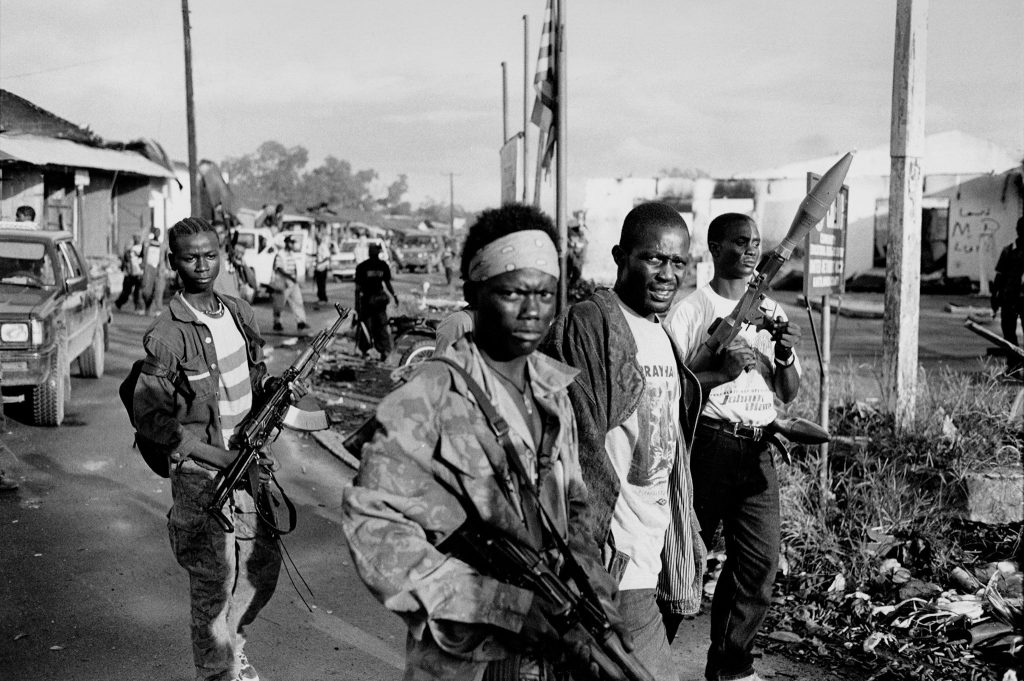
Forest resources were used to fund Liberia’s deadly civil wars between 1989 and 2003. Picture credit: Teun Voeten

Teta Giah did not meet her father, who reportedly died in Malaysia in 2004. A resident of New Buchanan, she struggles with accepting the life of fatherlessness. Her mother had met an OTC Asian worker during the war, who disappeared shortly after she was born.

“I used to think about my father when school fees, gala day fees, and other activities were hard to come by,” said Teta, a petty trader. She plans to attend college after she has saved enough money.

Prince Walker is a 23-year-old high-school graduate who no longer asks his OTC father for anything. Prince’s mother, Teta Doe, met his father in Compound Number Four. Prince lived with his grandmother, who cared for him since he was 11 months old. His father had already fled Liberia before he was born.

“Sometimes I tell him to forget about his father and move on with his life,” said Rebecca Walker, Prince’s grandmother.

For her part, Malissa Giah (no relation to Teta) lives with her aunt in Paynesville, outside Monrovia. Her father, whom she only knows as Johnny, was an OTC trucker. Before moving to Paynesville, Malissa sold in the market. Her friends used to scorn her as a “white woman selling pepper and [garden eggs].”

She wants to study accounting, but her uncle, who sponsored her through high school, cannot afford to send her to college. She is a single parent of a one-year-old girl.
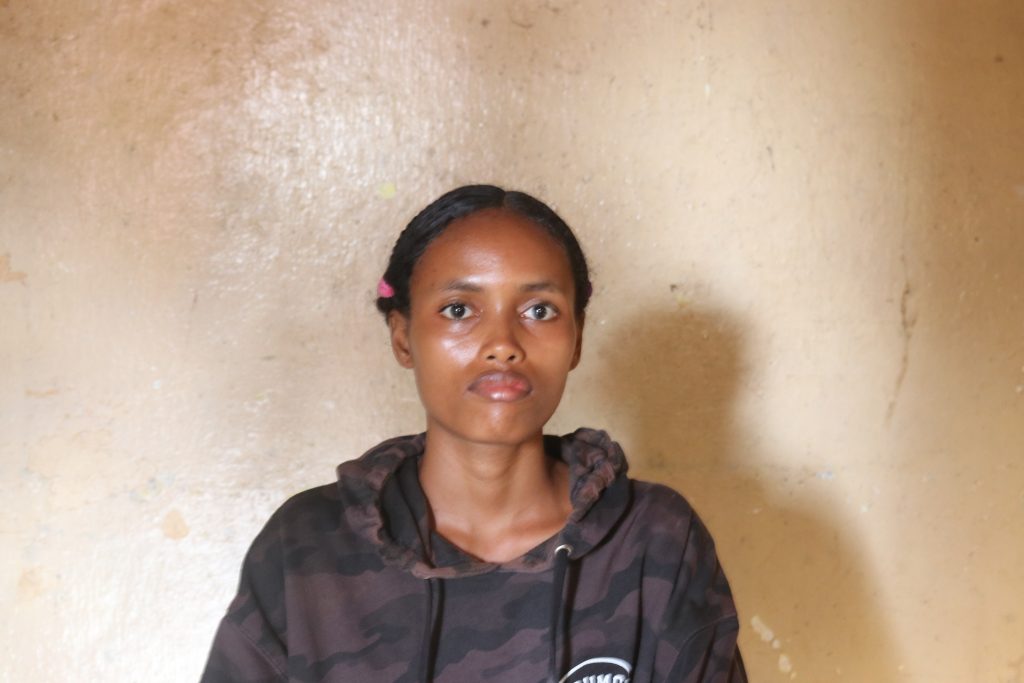
“Sometimes I feel hurt, but it is where I find myself. When I am alone, I cry, pray to God to change my situation,” said Malissa.

The Truth and Reconciliation Commission (TRC) found that children faced severe stigmatization, exclusion, and shaming as a result of the conflict, and made several recommendations. The Liberian government has started the process to create the war crimes court the TRC recommended. However, war victims have yet to receive any reparations.

“So far, successive governments have failed to create a national reparations trust fund,” said John Stewart, former Commissioner of the TRC. “A reparations trust fund and a reparations commission require strong political will.”

Eric Saab, 24, hopes to meet his father to help him finish high school.

Eric’s Malaysian father, Henry Garlawu, worked as a mechanic for OTC and left Liberia before the war. His mother, Oretha, now deceased, had met his father at an OTC camp in River Cess. Eric, like Prince, lives in Buchanan with his grandmother

“I want to see my father,” Eric sobbed in a phone interview with The DayLight.

Dead feelings

Not only did the OTC children’s world fall apart, but also OTC’s. the same year of the MODEL attack, the United Nations imposed a travel ban on Taylor, Kouwenhoven, and Wong for their roles in the conflict, and embargoed Liberian Timber.  Taylor was later sentenced to 50 years for crimes he committed in Sierra Leone. A Dutch court sentenced Kouwenhoven to 19 years for war crimes he committed in Liberia while in South Africa, but he was not extradited to the Netherlands to serve the term.

Today, Mahn sells things and does manual work to sustain herself and the children. Both girls have graduated from high school, but she regrets raising the children alone.

“I regret it because he left his children with me. He is supposed to be talking with his children and talking with me,” Mahn told The DayLight.

Her eldest daughter, Maya, is now 24. She, too, has two children and wants to study nursing.  

“My feelings for my father have died, because I feel he is not concerned about what he left behind,” Maya said.   “If something is important to you, no matter what it takes, you will try to find it.”


This story was a production of the Community of Forest and Environmental Journalists of Liberia (CoFEJ).
Locals Lie to the EU over Proposed Park, Investigation Finds

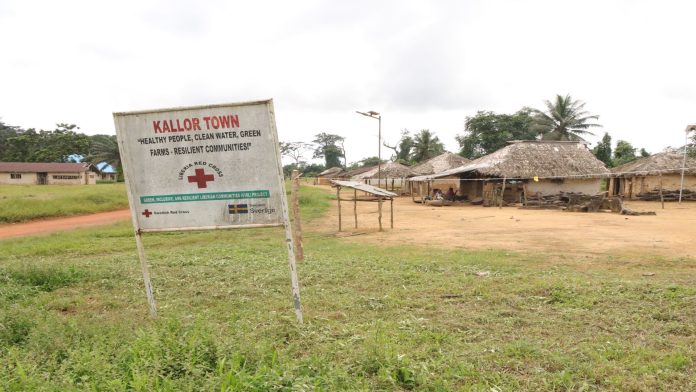
Top: A view of Kallor Town, in Lower Sanquin Clan, Sinoe County. The DayLight/Samuel T. Jabba


By Varney Kamara, Esau J. Farr and Samuel T. Jabba


KALLOR TOWN – People in Sinoe County lied in a letter to the European Union Delegation in Liberia regarding their participation in the establishment of a proposed park, a DayLight investigation found.

In early September, the Lower Sanquin Clan citizens wrote ex-Ambassador Nona Deprez to intervene in an alleged violation of their customary rights regarding the Kwa Proposed Protected Area, according to the letter, seen by The DayLight. In the letter, they claim that they did not sign any agreement with authorities and had not consented to the establishment of Kwa. They are asking the EU, which is funding the park, to halt the process until they get redress.

Kwa is a collaboration among the Forestry Development Authority (FDA), Wild Chimpanzee Foundation (WCF), and the Liberia Land Authority (LLA). Legislation to finalize its formation is now before President Joseph Boakai for his signature. Thereafter, the document would go to the Legislature for enactment. 

“To be clear, our community has not given [its consent] for the creation of the park,” read the Sanquin citizens’ letter. “We have asked that the gazettement be delayed until the FDA, the LLA, and the WCF propose a model of conservation that will respect our customary rights.”

But a DayLight review of official documents and interviews—including with signatories—contradicts the claims in the letter.

Contradiction

Covering 171,888 hectares, the Kwa Proposed Protected Area spans River Cess, Sinoe, and Grand Gedeh Counties. The forest is a habitat for Liberia’s second-largest known population of critically endangered western chimpanzees, pygmy hippopotamuses, and forest elephants. It supports national efforts to protect 30 percent of Liberia’s forests and fulfills its climate commitments. 

In 2016, the Kwa process started. However, in 2023, a group of NGOs, including Social Entrepreneurs for Sustainable Development (SESDev), objected to the process. The group flagged that communities had not confirmed their customary ownership of the forestland. The advocacy referenced the Gbehzohn Declaration, in which actors agreed to confirm customary land tenure before establishing a park.

Eventually, the process resumed in early 2023, with customary land activities. Locals finally gave their consent for Kwa, signed boundary agreements, and agreed to co-manage the park alongside authorities, official documents show. They also participated in meetings about the humid forestland.

“Our towns commit to actively participate in the sustainable management of protection of the future… Kwa National Park,” read one document they signed. “Our town wishes to receive specific benefits based on negotiations from the future… Kwa National Park.”

Ironically, three individuals who co-wrote the letter to the EU envoy had signed documents to establish Kwa.

Evelyn Kpalleh, Town Chief of Kallor Town, signed a Kwa co-management agreement on April 5, 2023, and a boundary paper on June 27 this year. She admits to signing the documents, but said she co-wrote the EU letter because she was allegedly left out of the boundary process.

Esther Broh, a farmer in Kallor Town, signed a similar Kwa co-management document that Kpalleh signed on the same day. However, she denies signing the document. “I don’t remember signing any agreement that the park should come to our community,” said Broh in an interview with The DayLight at her home.  

However, the evidence does not support Broh’s comments. Broh and three other Kallor townspeople even agreed to take part in species monitoring and patrols, according to official documents. They promised to farm outside “the agreed harmonized boundary” of the proposed park.

Reason Seequeh, the chairman of the Upper Sanquin Clan’s land committee, speaks with The DayLight. The DayLight/Samuel Jabba

Reason Seequeh, who heads the community land leadership, signed a Kwa boundary agreement with five other people, including Kpalleh and Clan Chief Anthony Blay. Seequeh now claims his signature on the Kwa document was forged, and accused authorities of extending the boundary into his farmland. 

“I remember attending a meeting in Bolue-2. We only signed the attendance sheet for people who participated in the meeting. I did not sign any form for the establishment of this park,” said Seequeh.

Two townspeople who also signed the boundary agreement confirmed Seequeh signed it.

“We signed the paper. Mr. Seequeh, who is our chairman, also signed the document,” said Sarah Jlateh, a Sayon Town leader.

“We signed the document in a big meeting in Kallor Town. I signed it. Mr. Reason Seequeh and other people signed it. The only issue we have now is that when they got ready to cut the line, they did not involve us in the process,” said Jerry Baker, a Sayon Town resident. 

Dr. Annika Hillers, WCF’s Country Director, said all legal procedures regarding customary land were followed.

“These steps served to ensure that the communities’ farming activities were excluded from the park and the boundary was shifted and the size of the park was reduced to make sure that no crops were affected,” Dr. Hillers said. “The communities were fully part and thus influenced the boundary location.”

The LLA, which oversees the customary land activities, said it would investigate Seequeh’s claim. “The same people who are now saying that they did not sign any documents are the same people who participated, got involved in meetings, and signed attendance sheets and other agreements,” said Ezekiel Weah, Assistant Director of Customary Land. The FDA did not respond to queries.

A second lie

Like the letter’s co-authors, several people who signed boundary and consent papers denied doing so. However, reporters interviewed one person who admitted signing the documents.

Mathew Tarpeay, a New Town resident, now Commissioner of Upper Sanquin: “The only issue we had was for the park to go behind our sacred creek. Once that was done and resolved, we agreed and signed for the park to come. We have no objection to it.”

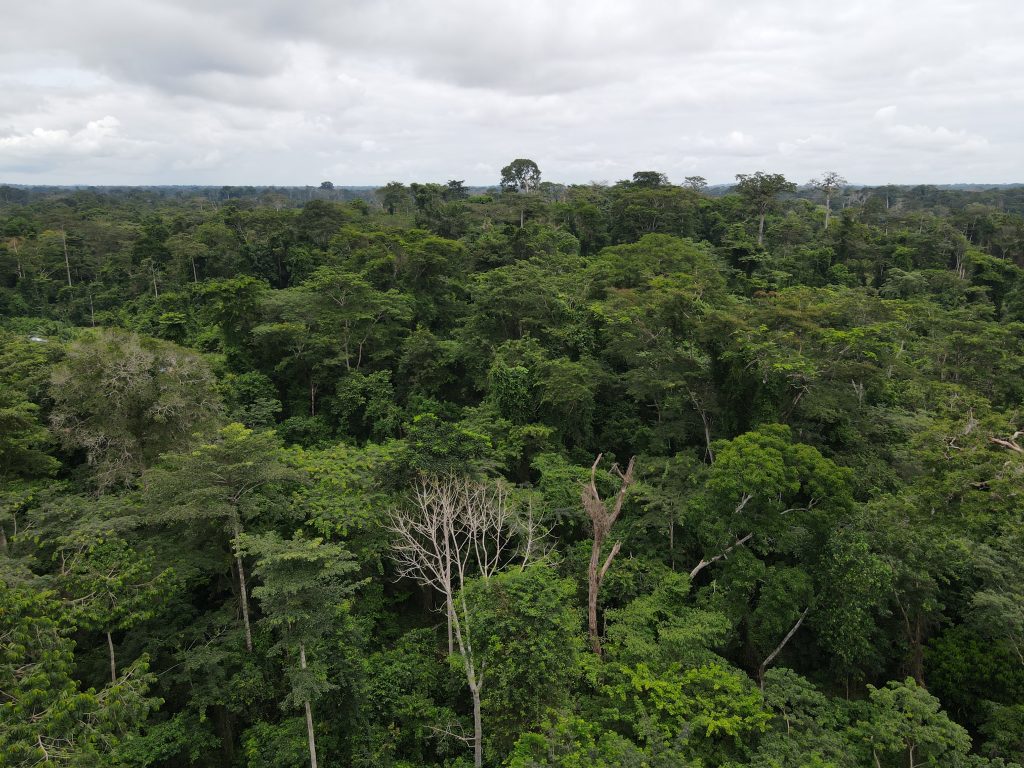
A drone picture of the Kwa Proposed Protected Area in Grand Gedeh County. The DayLight/Samuel T. Jabba

This is the second time local people have lied about their involvement with Kwa. Earlier this year, The DayLight published evidence that cocoa farmers in Grand Gedeh County misinformed President Boakai, leading to a government inquest. The farmers claimed they had not given their consent for Kwa formation. Turns out, like in the Lower Sanquin case, signatories of the presidential letter had signed official documents for Kwa. The findings from the government inquest have not been published. 

But in interviews in four adjacent Kwa communities in Grand Gedeh, townspeople expressed support for the proposed park.

“From the beginning, we said no because the forest is where we can get our living,” said Cephus Krah, Town Chief of Kumah Town in Tchien District. “But after they taught us about the importance of the forest, we signed the document without anybody forcing us.”