
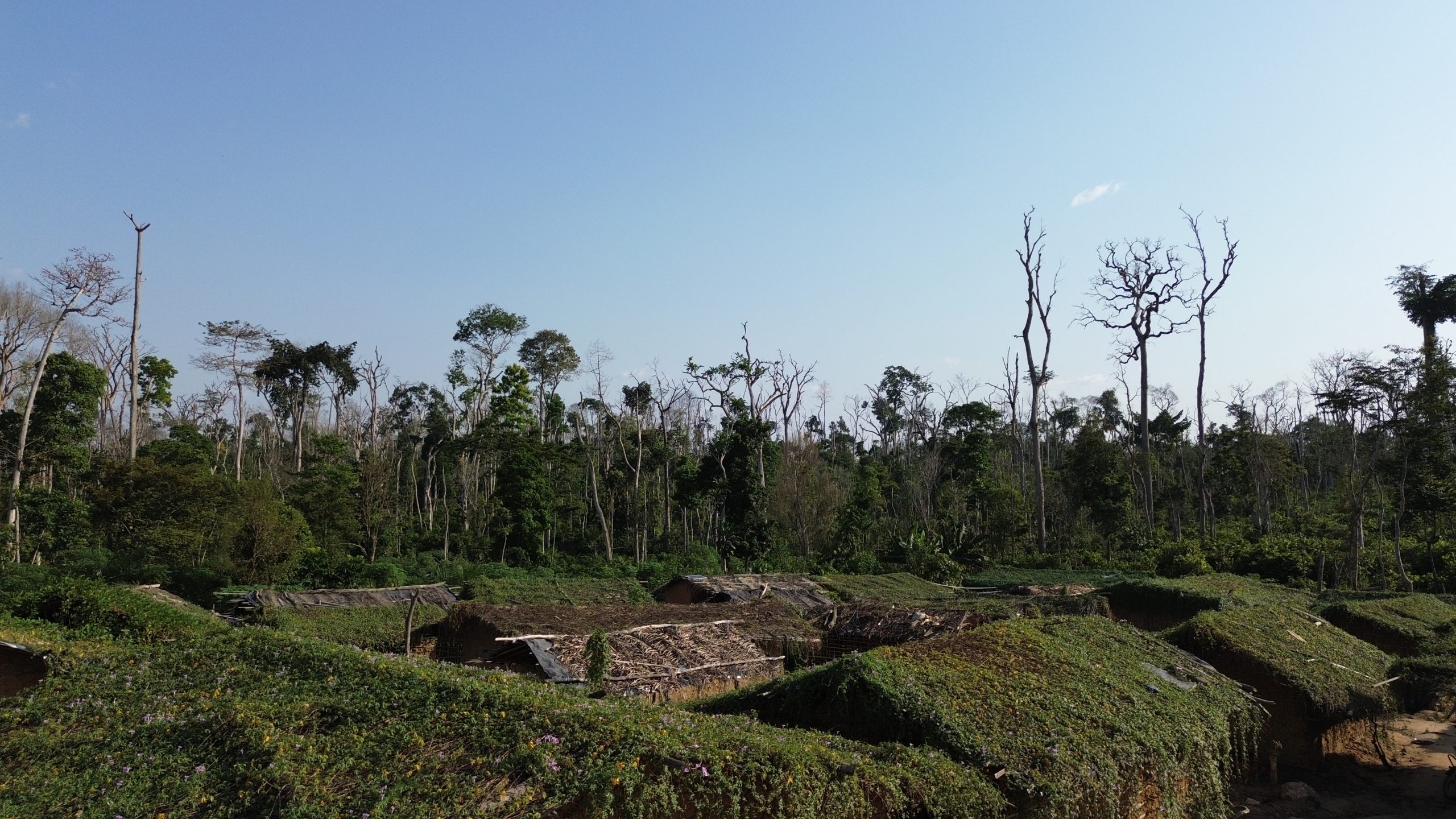
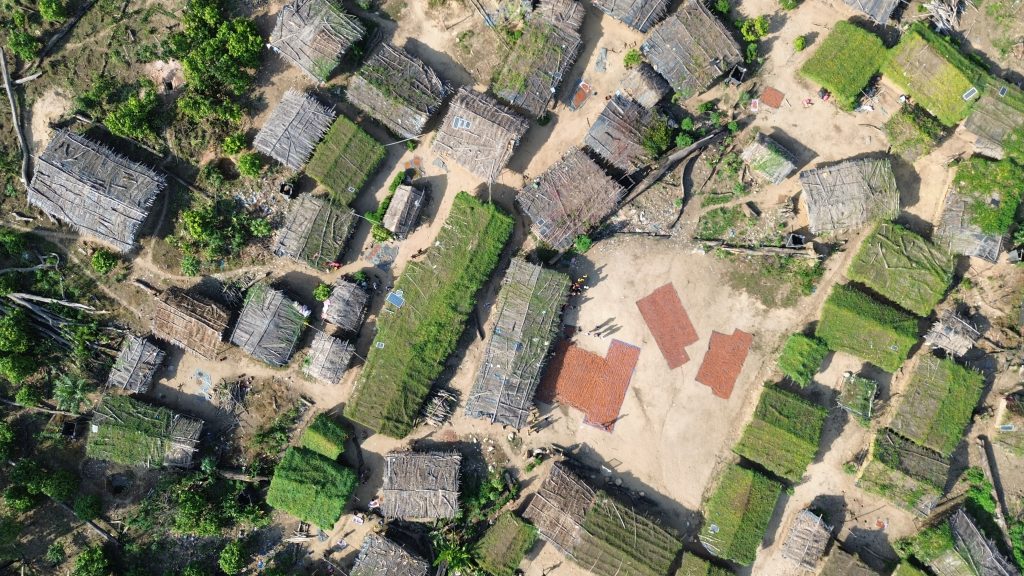
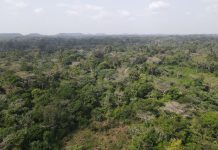
Top: A drone shot of Pierre Village-1, the largest settlement of Burkinabe migrants in Grand Gedeh County. The DayLight/Samuel T. Jabba
By Varney Kamara and Samuel T. Jabba
FISH TOWN – In late September, Deppu Kobera, an Ivoirian teenager working on a cocoa farm, was found dead near a forest in River Gee County.
Fifteen-year-old Kobera had gone missing while farming cocoa in the Kwawe Gee Forest, Glorra District, according to the River Gee Police Detachment. His body was discovered three days later in a nearby forest, beheaded and with bullet wounds.
The River Gee case highlights growing conflicts linked to Burkinabe mass migration to Liberia. Known by their tribal name “Mossi,” these Burkinabés travel deep into towns and villages in search of cocoa farmlands. However, this search has been characterized by deaths, divisions, and deforestation. Over the past three years, dozens of disputes involving Burkinabe cocoa farmers have been reported in southeastern Liberia, according to court records.
“I believe their influx will create some maximum-security threat in the country in the future,” said Uriah Zokruah, Deputy Commander of the Grand Gedeh Police Detachment. His detachment has forwarded several cases involving Burkinabés to court.
“We have had about 10 of these cases. In some instances, fines are imposed,” said Shad Dweh, Senior Magistrate of the Zwedru City Magisterial Court. “It’s a complex problem that requires cooperation between the Liberia Immigration Service, the Police, the FDA, and the communities.”
Many Burkinabés cross borders into Liberia from neighboring Côte d’Ivoire by canoe, motorbike, or on foot. Once here, they enter into informal contracts, wherein they invest money and labor, while Liberian hosts and landlords contribute land. Over time, the migrants have come to outnumber their hosts across communities. They are a constant feature on highways and footpaths, having farming tools in their hands.
“We do not want trouble,” Soré Sayouba, a Burkinabe farmer in Grand Gedeh’s Gbarzon District, tells The DayLight. “We feel sad about what is happening, but when there is confusion, everyone gets blamed.”
Liberia Immigration Service recorded 55,000 Burkinabes in Liberia as of August, with 48,000 in Grand Gedeh County alone. There are 4,000 in River Gee, 2,000 in Nimba, and 426 in Maryland.
Divisions
Last March, six months after the Burkinabe teenager’s death, a land dispute between the Kiteabo and Glaro sub-tribes in River Gee County left three people dead: Eric Nyenpan, Sabastine Saylee, and Aaron Teah.
The violence began when Nyenpan of Kiteabo was allegedly shot by Glarro men while setting up tents on the Cheapoo Island, a disputed territory. In retaliation, Kiteabo tribesmen destroyed Glaro villages, killing Saylee and Teah. The clashes have strained longstanding ties between the two groups.
“It is a tragic thing. Investigation into these incidents is growing deeper to find who the killers are. We are trying to establish the motive behind these acts,” said Theophilus Togba, River Gee’s Assistant Police Commissioner.
A conflict between Tojallah and Bargblor in the Gbao and Cavalla districts of neighboring Grand Gedeh may be less chaotic. However, it is getting tense. The dispute began when Tojallah men allegedly abducted over a dozen Burkinabe farmers working for Bargblor in Karblee, a contested forestland.
Tojallah claims a local creek as their traditional boundary, while Bargblor insists it lies somewhere else. Once linked by intermarriages, the two communities—cousins and nephews—now clash bitterly over ownership.
This scenario is unfolding in Dougee Town, Gbarzon District, where relatives are embroiled in a fierce legal battle over a 1,500-acre plot of land.
In 2023, Anthony Rancy, son of a former Grand Gedeh senator, John Rancy, sued his relative, Robert Bestman, at the Zleh Town Magisterial Court, alleging that Bestman had farmed cocoa on his land. Rancy further alleged that Burkinabe migrants, acting on Bestman’s orders, invaded the property inherited from the late senator.
But Bestman denies the charges, claiming the land had been illegally acquired by John Rancy Sr. decades ago, and that residents had long warned Anthony Rancy to stay away.
In the end, the Zleh Town Magisterial Court ruled in favor of Anthony Rancy, sentencing Bestman to nine months at the Zwedru Palace Correctional Center for trespassing.
The conflicts are not limited to Liberian communities and families alone. In some cases, Burkinabé migrants clash with their Liberian counterparts and even their Burkinabé compatriots.
In 2018, the Toe Town Magisterial Court heard a land dispute between Ali Kabore, a Burkinabe cocoa farmer, and Goeyeazon Belaydee, a resident. Their dispute started after Belaydee failed to honor a cocoa agreement, according to court officials. Belaydee had agreed to relinquish a portion of his ancestral land to Kabore in return for cocoa.
However, following years of production, Belaydee failed to deliver on the terms of the agreement, prompting Kabore’s court action. Belaydee admitted breaching the agreement. while the case ended in an out-of-court settlement.
Last August, police in Grand Gedeh arrested several Burkinabe migrants in the Gboryeazon forest area of B’hai District over a land dispute that left three persons injured. Two of the men were so severely injured that they had to be referred to a hospital in Côte d’Ivoire.
Deforestation
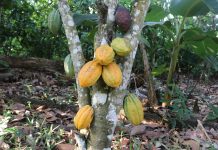
Skilled and hardworking farmers, Burkinabe migrants began arriving in Liberia from neighboring Ivory Coast in the 2010s in search of cocoa farmland. Liberia’s abundant, fertile forestlands and weak law enforcement would make their search for the so-called “brown gold rush” a reality.
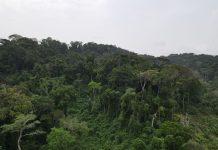
Liberia holds over 40 percent of West Africa’s largest remaining rainforests, the Upper Guinea forests. However, deforestation is also an issue for Liberia. Between 2002 and 2024, it lost about 390,000 hectares of primary forest, according to the Global Forest Watch, which tracks deforestation.
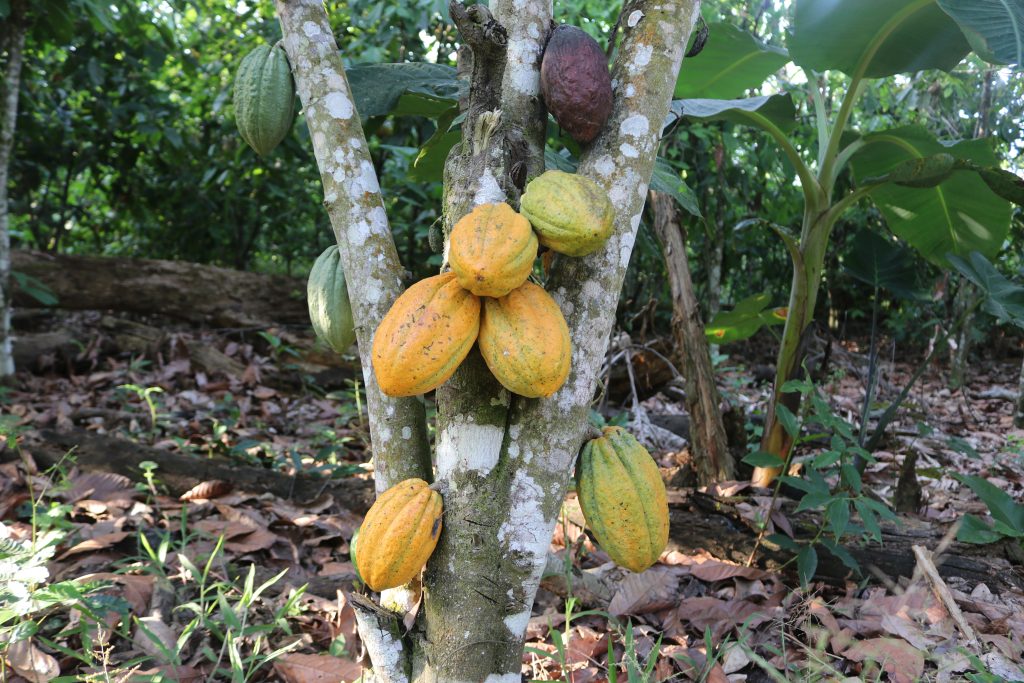
Cocoa farming was a huge contributor to that. A recent report by the UK campaign group Global Witness found that from 2021 to 2024, Liberia lost a forest area of over the size of the European nation of Luxembourg.
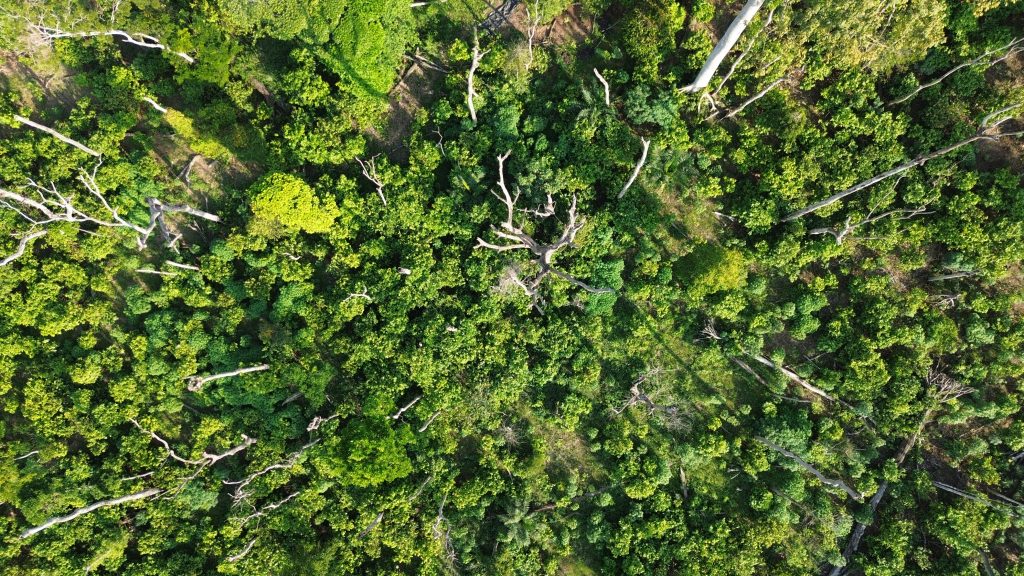
It is easy to see how that works. Unlike the traditional Liberian method of retaining tree canopy, Burkinabe farmers fell trees to plant the crop. They would set fire to the base of trees or apply chemicals, killing them gradually. Drone footage reveals cocoa plants flourishing beneath vast tree graveyards.
These farms are everywhere, including forestry concessions, proposed and national parks, and community forests, resulting in deforestation across vast areas. Farming in parks, designated parks, concessions, and authorized community forests is illegal, according to the National Forestry Reform Law.
Last December, 21 migrants were arrested in Grand Gedeh’s Konobo Community Forest. Their arrest followed several, including 31 Burkinabe nationals, mostly teenagers, for allegedly encroaching on a community forest and a logging concession.
Back in River Gee, a jury confirmed foul play in the death of Kobera. However, no arrests have been made.
In Katebo, 21 suspects, including five Ivoirians and three Burkinabes, have been arrested in connection with the death of the three men. The defendants face multiple charges, including murder and illegal weapon possession.
Their case is before the 15th Judicial Circuit Court.
[Additional reporting by Paul Rancy in Grand Gedeh and Prince Copeland in River Gee]

Facebook Comments