Justice Minister Oswald Tweh Receives the forest bible from MFGAP’s Team Lead Letla Mosenene. The DayLight/Harry Browne
By Varney Kamara
MONROVIA – The Ministry of Justice has received 150 copies of the “forest bible,” a book containing laws and regulations governing Liberia’s forestry sector. The ministry also received the same number of forestry compliance handbooks, a comprehensive guide for the sector’s law enforcement and procedures.
The lack of understanding of environmental laws and compliance regulations has significantly hampered prosecution and enforcement efforts in the country’s forest sector. Both books, comprising basic definitions, crimes, and fines, aim to close this gap. It is an undertaking of the Multi-stakeholder Forest Governance and Accountability Project (MFGAP), funded by the British government.
“This is a very good opportunity to understand the laws. It will improve the prosecutorial arm of the ministry because our prosecutors and county attorneys will have all of them at their fingertips,” said Justice Minister N. Oswald Tweh.
“In many instances, our prosecutors have to find the law, define and explain it. Now, summarizing them in a single place makes their task easier. This is a very good step.”
In May 2017, the Forestry Development Authority published the overview of the legal framework for forests, meant to improve sectoral governance and ensure compliance. However, progress has been marginal, with the sector plagued by irregularities and noncompliance.
Lucia Gbala, a representative of Heritage Partners and Associates, the firm that compiled the books, said it would enhance accountability in the sector.
“The best lawyers need to know where to find the laws,” Gbala said. “Putting these laws together and compiling all of the relevant laws for the work of prosecutors and other laws to be able to have easy access and educate the communities.”
Letla Mosenene, MFGAP’s team lead, said her group was working with the Ministry of Justice and other agencies to ensure adequate awareness of forestry legal frameworks.
“This is one of the efforts we are making to ensure that the people obey the laws, and that they effectively participate in governance of the forest sector,” said Mosenene. “We think this tool will go a long way to help the ministry carry on its work.”
Top: Seekon Pellokon Community Forest covers 44,989 hectares. The DayLight/Carlucci Cooper
By Emmanuel Davies
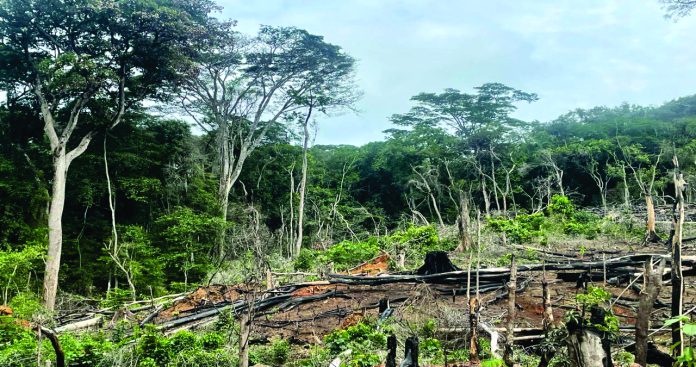
SEEKON PELLOKON, Sinoe County – A community forest has signed a logging contract with a company despite multiple reports highlighting problems with the deal.
The agreement green-lights the Liberian Hardwood Corporation to carry on logging activities in the Seekon Pellokon Community Forest in Sinoe County.
Signed on 10th September, the contract provides for a combined annual payment of US$47,930 to the community in exchange for the 44,989-hectare forestland. It provides for land rental fees, development initiatives, and education, among others, for landowning communities.
Several roads were captured for rehabilitation and maintenance throughout the lifespan of the contract. Liberian Hardwood to construct durable wooden and concrete bridges, the agreement shows.
It was signed a day after two DayLight reporters, Esau Farr and Carlucci Cooper, narrowly escaped the wrath of a masked dancer, commonly known as “Country Devil.”
Reporters Farr and Cooper had traveled to conduct an investigation for a contract-signing ceremony in the Community Forest when they were suddenly confronted by the country devil.
Seekon Pellokon’s leaders were reacting to an investigation the online newspaper published. It highlighted issues and concerns about Liberian Hardwood’s capacity to operate Seekon Pellokon amid its failure in the Bloquia and Neezonnie Community Forests in Grand Gedeh, and its management of the largest active forestry concession in Liberia, covering Grand Gedeh and River Gee Counties, 254,670 hectares. The concession is known in the sector as the forestry management contract area-F (FMC–F).
Junior Kumah, a Seekon Pellokon leader, had dismissed the warning of Liberian Hardwood failure in Grand Gedeh. Kumeh argued that they had signed a five-year contract, the company would pay after production, and they would terminate the contract if Liberian Hardwood breached the contract.
Pellokon Town in the Seekon District, Sinoe County. The DayLight/Esau J. Farr
“I am not a rocket scientist to know whether Hardwood will fail or not. All I am telling you is that what happened in Bloquia will not be repeated here. What happened to John doesn’t mean the same thing will happen to Paul,” Kumah said.
The investigation also shed light on the relationship between the company’s manager and co-owner, Jihad Akkari’s relationship with the Managing Director of the Forestry Development Authority (FDA), Rudolph Merab. The investigation accused Merab of negotiating for Akkari to get Seekon Pellokon.
“FDA is the one that is negotiating. The FDA has all those documents in its possession,” said Kumah in a phone interview.
“FDA said it would not do business with us unless the community signs a contract with Liberian Hardwood,” said Stanley Kreejarly, a Seekon Pellokon leader, confirming Kumah’s claim.
Merab did not respond to The DayLight queries for comments on the accusations. However, Akkari denied any wrongdoing. In a statement, he claimed he had lost US$4 million in Grand Gedeh, and had “the capacity to operate” the combined nearly 300,000 hectares of Seekon Pellokon and FMC – F.
This story was produced by the Community of Forests and Environmental Journalists of Liberia (CoFE).
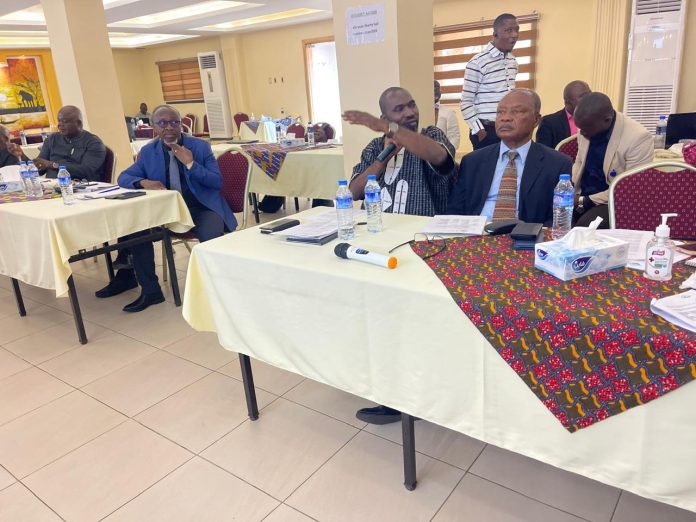
Top: Some lawmakers at the training workshop. The DayLight/Esau J. Farr
By Esau J. Farr
MONROVIA – Lawmakers on concession committees have learned how to use a new tool to review contracts to increase revenue generated from natural resources.
Integrity Watch Liberia organized the training with funding from the Irish Aid. Participants in the event included the Legislature, especially lawmakers, Integrity Watch, and the Irish Embassy.
“Effective natural resource governance requires a strong legislature – one that can engage rigorously with concession agreements and understand their fiscal implications,” said Gérard Considine, Irish ambassador to Liberia, at the event. “You, as members of the legislature, hold that responsibility.”
Lawmakers on committees that review concessions will use the “standardized scoring framework.” Fifteen lawmakers—nine senators and six representatives—participated in the event.
Liberia’s resource sector, especially mining and concessions, is important for the country’s economic development. Concessions have, however, been marred by unfair fiscal terms, weak monitoring, a lack of transparency, and inadequate benefit-sharing with communities.
The training became necessary based on the request of lawmakers who attended previous workshops. Past participants have called for more training and a developed tool as a guide to review agreements, according to Integrity Watch.
In response, Integrity Watch collaborated with the African Parliamentary Network on Illicit Financial Flows and Taxation (APNIFFT) to develop the framework. It is in line with international best practices and provides a structured, evidence-based method for assessing agreements on legal, fiscal, social, environmental, and governance lines.
Participating lawmakers expressed their appreciation for the training and the tool. The legislators also called on the organizers of the training for greater opportunities for all members of the first branch of government, aimed at enhancing their oversight role.
“We thought this was necessary not only for the current lawmakers, but also for future lawmakers,” said Harold Aidoo, head of Integrity Watch, in an interview with The DayLight.
“This standardized scoring framework is a landmark tool to enhance the work of members of the legislature to carefully scrutinize concession agreements in Liberia.”
Top: An overview of B’hai Jozon, a border town in the Gbarzon District in Grand Gedeh County that separates Liberia and Cote d’Ivoire. The DayLight/Varney Kamara
By Varney Kamara
ZWEDRU – A cocoa lease agreement between Grand Gedeh County and a Burkinabe businessman has been canceled, County Attorney Wilkins Nah announced today on a local radio station.
Nah said he had observed several irregularities in the deal that needed to be corrected, including not getting local people’s consent.
“Upon learning about those things, I immediately called the superintendent and informed him that the Minister of Justice has ordered that we put a halt to everything until we can put in those things that are required,” said Nah.
“The superintendent and I agreed that we needed to correct some procedural errors in the agreement,” Nah added.
Grand Gedeh County administration recently signed the 30-year lease agreement granting Boubou Sebu the right to plant cocoa on 500 acres of land in the B’hai administrative district. The deal is valued at US$600,000.
But local people, prominent citizens and civil society have criticized the deal for lacking consultation and transparency, among others.
The announcement followed Superintendent Alex Grant’s admission to an error in the cocoa agreement with a Burkinabé businessman.
“I regret that the locals were not informed by the district’s authorities. I think is a procedural error,” Grant told a team of reporters in an interview in Zwedru City. “Once they don’t agree, and we agreed, we can both come to the negotiation table and have a conversation around it.”
Grant said he signed the deal because he believed it protected the land from illegal activities and to generate revenue for the county.
The land in question, Grant said, had been conflicted in the past, and that signing a legal agreement was a way of ending that conflict. He thought the district’s commissioner had informed local people of their consent.
The Commissioner of Gbarzon District, Kelvin Kayee, conceded.
“I signed it because I did not want to disrespect my boss,” said Kayee. “After that, I called a big meeting of community people and I apologized to them for not letting them know about it before signing it.”
Excluding the affected communities violates their right to consent, as stipulated in the Land Rights Act of 2018. The law requires consultations and the consent of communities before signing agreements regarding ancestral territories.
The deal sparked outrage, with locals calling for the return of their land.
“I don’t know anything about this agreement. Nobody told me about it, and we only heard this news on the Toe Town radio station the day before yesterday,” said Moses Taryor, Town Chief of B’hai Jozon. “I don’t agree to it today, tomorrow, and forever.”
“The bush is for us. But people from outside are telling us that they sold our bush. We are not happy about it. We will tell the government to return our land,” said Sam Nah, General Town Chief of B’hai Niko Clan.
One of several Burkinabe cocoa farms in the B’hai Administrative District, Grand Gedeh County. The DayLight/Varney Kamara
On Monday, a group of Grand Gedeh citizens had petitioned the southeastern county’s legislative caucus, the Ministry of Internal Affairs, and the Liberia Land Authority for the cancellation of the deal, recommending disciplinary action against Superintendent Grant.
“We can no longer move freely in our forest to hunt, farm, or gather food,” the petition read.
Before that, the Grand Gedeh Bar Association criticized Grant for a lack of transparency, demanding a review of the deal.
“Our goal is not to obstruct development but to ensure that every development is lawful and genuinely beneficial to the people of Grand Gedeh,” Kanio Bai Gbala, President of the association, posted on Facebook.
Liberia Forest Media Watch provided funding for this story. The DayLight maintained editorial independence over its content.
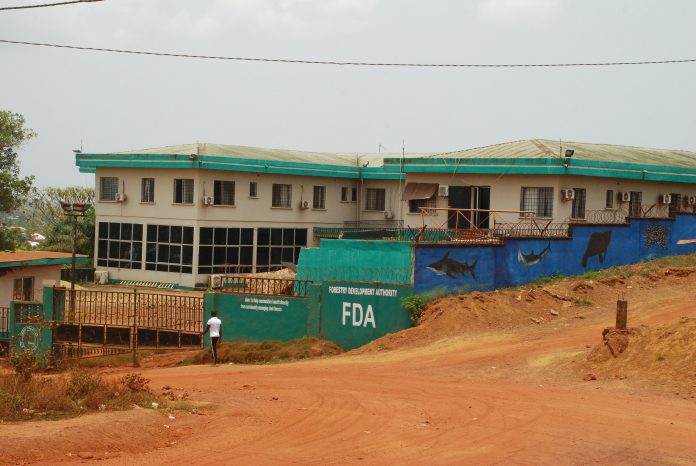
Top: The Forestry Development Authority’s headquarters in Whein Town, Paynesville. The DayLight/James Harding Giahyue
By James Harding Giahyue
MONROVIA – A member of the Forestry Development Authority’s board of directors has resigned, following a DayLight investigation that established he received board-sitting fees through a proxy while residing in the United States of America.
“Yes, [Mr. Grigsby has resigned],” Loretta Pope-Kai, an FDA board director, told The DayLight.
“The board is yet to receive his replacement, and his proxy no longer attends meetings,” Mrs. Pope-Kai added.
The FDA did not immediately respond to queries for comment. However, two other persons, familiar with the board’s activities, confirmed the information.
Gabriel Sarkpa Flaboe, a project coordinator with the Ministry of Public Works, who served as Mr. Grigsby’s proxy, did not return questions on the matter. Efforts to contact Mr. Grigsby did materialize.
Per DayLight estimates, the New Jersey resident’s resignation saves over half a million Liberian dollars (US$2,925) for the FDA, which barely has money for fieldwork.
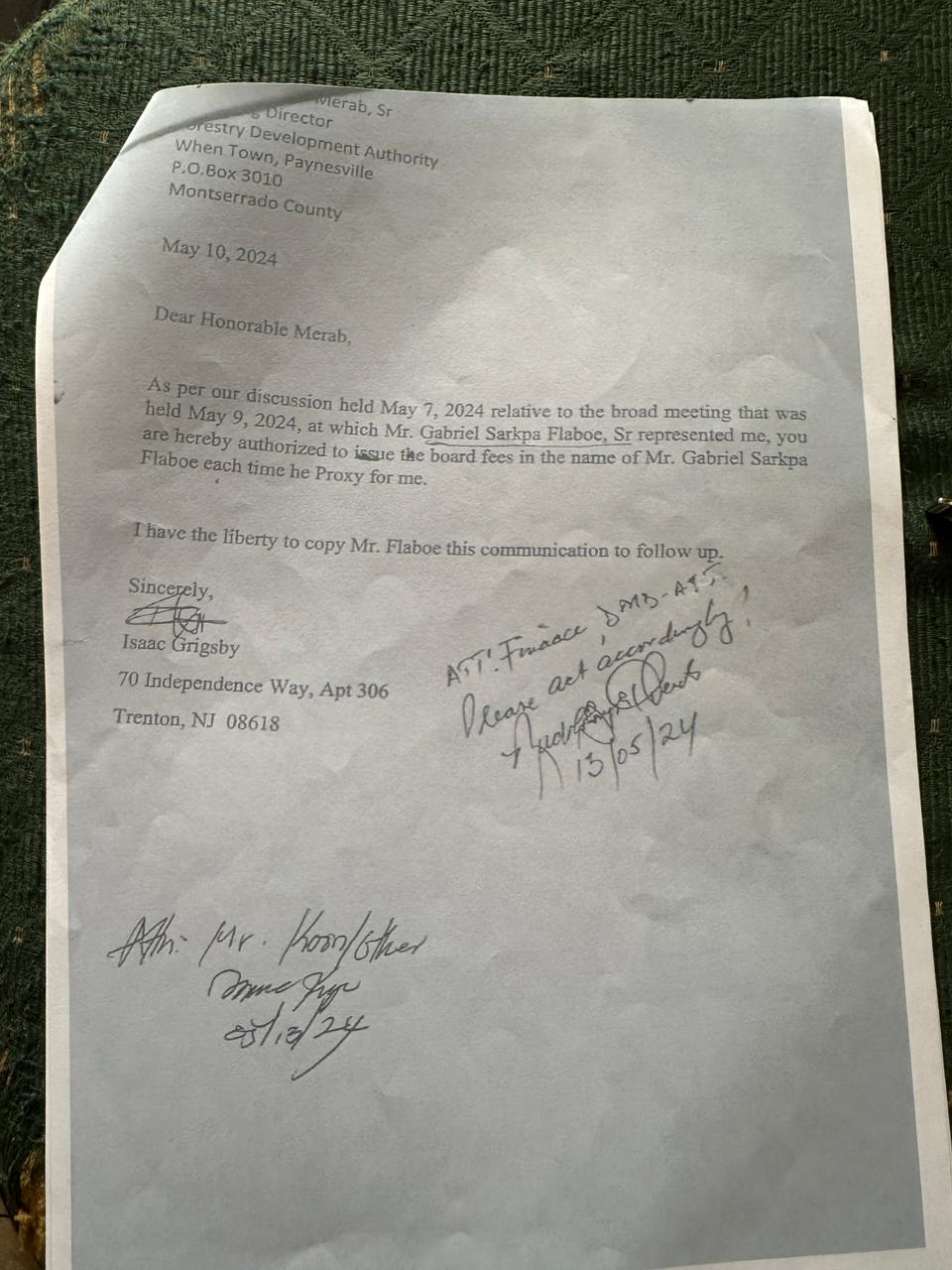
Before his resignation, Mr. Grigsby received L$131,625 periodically through Mr. Flaboe, who, board minutes show, made no contributions.
The amount was equivalent to US$500 for the board-sitting fee, US$50 for communication, and 25 gallons of fuel for transportation. The FDA Managing Director, Rudolph Merab, had approved Grigsby’s payment in May last year, according to official documents.
This was a production of the Community of Forest and Environmental Journalists of Liberia (CoFEJ).
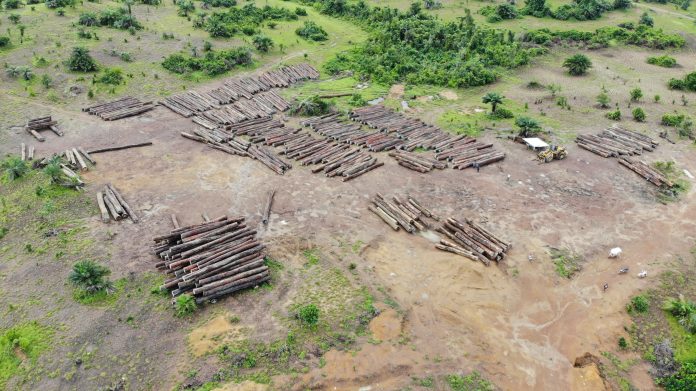
Top: Iroko logs on an open field outside of Greenville, Sinoe County. The DayLight/Derick Snyder
By Varney Kamara
MONROVIA – In this and the last three years, The DayLight published a series of reports, exposing a Nigerian-owned logging company’s offenses. Yet, the Forestry Development Authority (FDA) ignored each of the six investigations, approving the firm’s operations.
Over eight months after the newspaper’s last story, Iroko Timber and Logging Company has ceased operations. An FDA online portal identifies Iroko as “inactive.” The company is indebted to the Liberian government and the Central River Dugbe Community Forest in Sinoe, where it operated.
“There are signs that Iroko may not return to the community. As I speak, most of their workers are now working with different companies,” said Ernest Slah, a local leader, in a phone interview. “I am seriously disappointed because the community is still struggling to get its benefits after all these big promises.”
The story started in 2022 when Iroko signed a 15 -year logging contract with Central River Dugbe Community Forest to lease 13,193 hectares in exchange for schools, handpumps, and other benefits.
However, Iroko failed to live up to the agreement. It owes the villagers US$28,720.19 in land rental, harvesting and other fees, as well as projects, according to the community.
From their obligations to the community and the clearing of the logs from the forest, everything has been stalled since that time,” said Bartee Togba, Central River Dugbe’s chief officer. “They have still not paid the community debts they owed it.”
The FDA sanctioned Iroko’s export amid its indebtedness to the Central River Dugbe and the government, violating the Regulation on Forest Fees. The regulation requires that the FDA disapproves of an indebted company’s export.
A DayLight investigation found that a majority of the logs exported were illegally harvested and had been red-flagged by LiberTrace, the FDA tracking system.
Official records show that from July to August last year, Iroko paid the government US$173,432, covering export, land rental and other fees. The evidence, however, shows that the company owed the government US$16,263 in land rental fees.
That August, Iroko asked the Liberia Revenue Authority (LRA) to pay the balance due September and October, official records show.
“If we default on this agreement, our tax debt may be referred to the Ministry of Justice to sue for the unpaid tax and or court’s authorization to seize and sell our property,” read Iroko’s commitment.
The LRA agreed, but the money has not been paid, according to official records. Iroko and the LRA did not immediately respond to queries for comments.
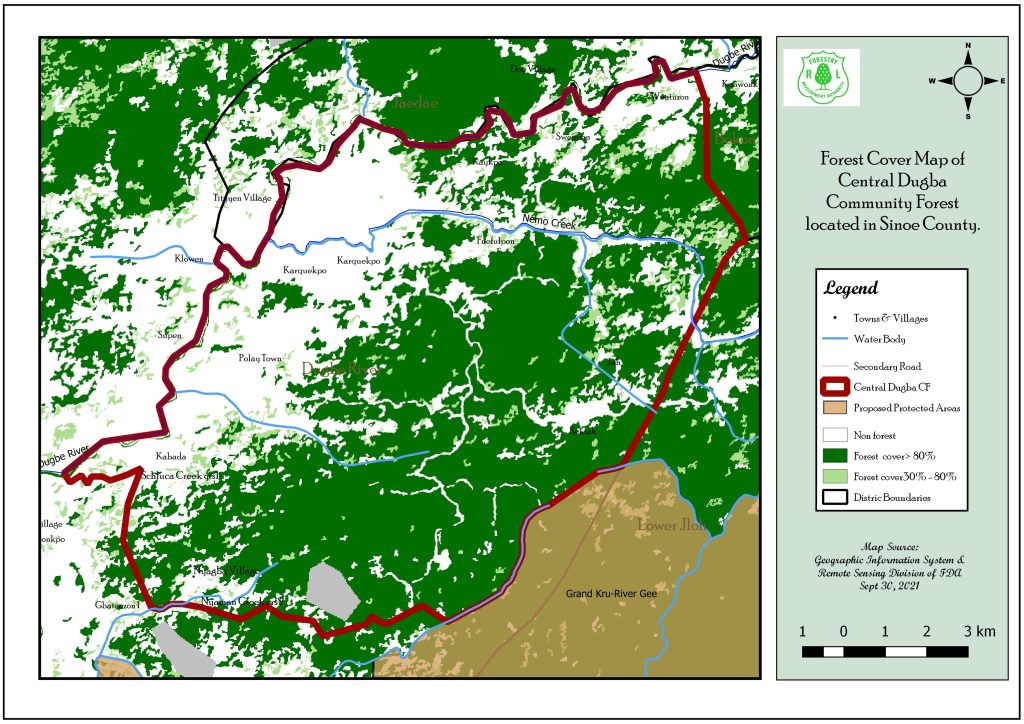
A map of the Central River Dugbe Community Forest. Filed picture/Forestry Development Authority
Another DayLight investigation last year established that the FDA permitted Iroko to export abandoned logs without fining the firm. Thus, the government lost over US$100,000 in fines, based the Regulation on Abandoned Logs, Timber and Timber Products.
In fact, Iroko was not qualified for Central River Dugbe Community Forest due to its shareholder Timothy Odebunmi.
Odebunmi is also a shareholder in Akewa Group of Companies, which was fined US$1,000 for forging a tax clearance in 2019. The Regulation on Bidder Qualifications restricts a person who is part of a dishonest company from forestry activities for five years.
Back in Sinoe, Togba and other locals brace for a court action.
“It is a sad thing to hear this because Iroko is still obligated to the community. It owes the community numerous benefits that have not been settled,” said Togba.
“If the company decides to close and leave the community without settlement, we will use the law to demand our social and financial benefits.”
This was a production of the Community of Forest and Environmental Journalists of Liberia (CoFEJ) production.
Top: Smith Sulonteh is claiming a portion of the Salayea Community Forest, including where he makes charcoal and planks. The DayLight/T. Prince Mulbah
By Prince Mulbah
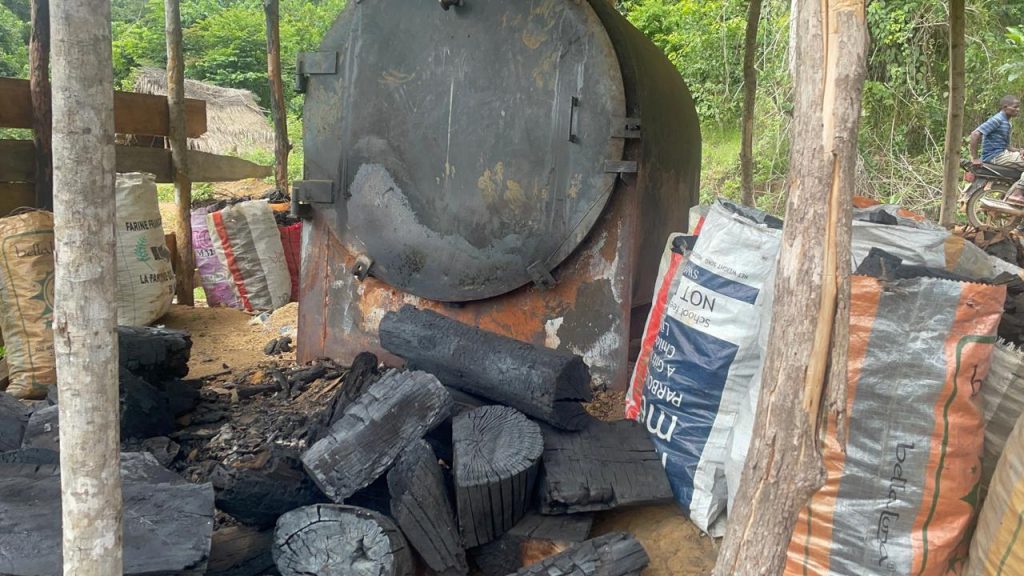
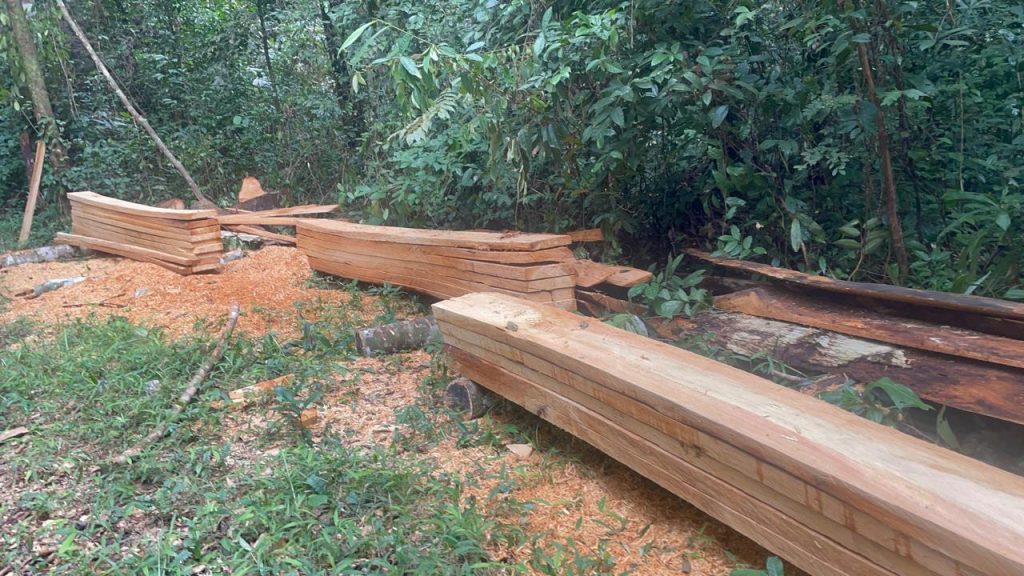
SALAYEA, Lofa County – Last year, townsmen were stunned when they discovered a huge pile of planks and the sound of a chainsaw deep in the forest in Gorlu during a routine patrol. When local guardians investigated, they found that a man was making planks and burning charcoal in the forest.
Angered by Smith Sulonteh’s actions, the community forest sued them at the Salayea Magisterial Court. It would turn out to be the beginning of a legal battle that has pitted the family against the community.
“We are managing this forest for the future generation, so we cannot allow a family just to come and claim the forest themselves,” said Yassah Mulbah, Salayea’s chief officer, outside of the courtroom.
“If they had their deed, they should have made it available during the establishment of the forest. The establishment of the forest was all on the radio; everyone knew about it,” added Mulbah. She was referring to a 30 or 90-day required period for a person with a private land claim to register their claim before a community forest is authorized.
However, Mr. Sulonteh said they decided not to make any claims at the time, based on their lawyer’s advice. He said their families purchased 2,244.27 acres or nearly 11 percent of the forest from chiefs and elders in 1967. He presented the families’ deed to the court, case files show.
“These people are claiming our land because they have few local authorities of Gorlu who are supporting them,” said Solunteh. If it is for this land business, they will kill me. I’m ready to die fighting for my rights, but our side is the law and the law is for everybody.”
A charcoal mass production machine with some processed coals in bags, Mr. Solunteh produced. The DayLight/T. Prince Mulbah
Lawsuits
Salayea Community Forest was established in 2019, comprising six communities: Salayea, Yarpuah, Telemu, Gorlu, Ganglota and Beyan’s Town. It covers 8,270 hectares of rocky forestland in the Salayea, Lofa County, and is home to species, including monkeys, pangolins, and elephants.
Since its formation, Salayea has been involved conservation programs, including animal husbandry, village saving loan schemes, a mini-wood shop and Cocoa farming. It outlawed hunting, mining and other commercial activities.
Following Salayea’s lawsuit, the Salayea Magisterial Court imposed a stay order on Mr. Solunteh’s plank and charcoal. The court would later fine him for violating that order.
During courtroom proceedings, Mr. Solunteh presented a deed to the court to back his claim. The court handed the document to Salayea to verify at the Center for National Documents and Records Agency in Monrovia.
Mr. Solunteh disagreed with that judgment and filed a petition with the 10th Judicial Circuit Court in Voinjama to overturn the lower court’s decision.
The circuit court sided with Mr. Solunteh, according to the case files. The higher court reprimanded the lower court for not verifying the families’ deed itself, and for fining Mr. Sulonteh. The higher court then lifted the stay order on his activities in a March 18 verdict.
Three months later, Lofa County Attorney Cllr. Luther Sumo re-imposed the stay order following complaints from chiefs and elders of Gorlu. This term, Sumo sent in the police to enforce the stay.
“I have received several phone calls and complaints from the commissioner that the chiefs have threatened that if they cannot stop the pit-sawing and charcoal burning, they are going to protest and take unspecified actions, which we do not want,” Sumo said in a telephone interview.
“If I sit here and allow things to go off hand, who will be blamed at the end of the day… and we do not want chaos in our communities in Lofa.”
Piles of planks in the Salayea Community Forest. The DayLight/T. Prince Mulbah
Despite Mr. Sumo’s order, Mr. Sulonteh continued to operate, sticking with the circuit court’s decision. Only the court could tell him to stop, not any individual.
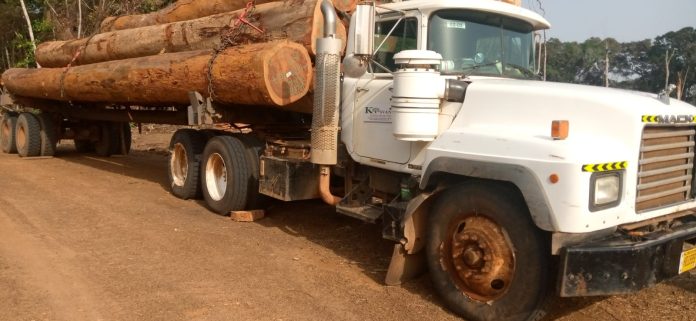
His insistence fueled the townspeople’s anger. In July, Gorlu townsmen stopped him from transporting planks from the area, seizing a truckload of wood that was headed to Monrovia because he was defying the County Attorney’s stay mandate.
Mr. Sulonteh sued the townsmen for alleged “menacing, theft of property and disorderly conduct.” However, the Salayea Magisterial Court dismissed the case, citing a lack of evidence, court filings show.
After the September 11, Mr. Sulonteh halted his operations—for the time being.
“Presently, we are not doing anything in the forest,” he told The DayLight. “We are running after some documents for the same land in question to allow our lawyer to advise us on the next action to take.”
This story was a Community of Forest and Environmental Journalists of Liberia (CoFEJ) production.
Top: A log yard in Greenville, Sinoe County, in 2023. The DayLight/Derick Snyder
By Esau J. Farr
BOEGEESAY TOWN – A community forest in River Cess County has chosen to conserve its forests after a four-year contract with loggers ended.
Central Morweh Community Forest made the decision earlier this year that Kisvan Timber Corporation had terminated its contract.
“Everyone is now looking at the future because the future can benefit you than the present,” said Clinton Cephus, chief officer of the Central Morweh. “It is not good to eat all today, and tomorrow you get nothing.”
In 2021, Central Morweh signed the logging contract with Kisvan to operate in the 19,091-hectare southcentral forest. Kisvan agreed to pay land rental and harvesting fees, as well as provide hand pumps and build a school.
That did not go as planned. Kisvan delayed in paying locals their fees and benefits soon after signing the contract.
This sparked an internal wrangle in Central Morweh, causing locals to rethink their agreement with Kisvan.
While that went on, Kisvan opted to terminate the contract, paying all its debt to Central Morweh, Cephus said. Kisvan did not respond to queries for comments.
Locals welcome the termination as an opportunity to conserve their forest. Before the Kisvan deal, townspeople had floated the idea of conservation.
Established in 2019, Central Morweh Community Forest is home to endangered pygmy hippos, western chimpanzees, red colobus monkeys and others.
“Conservation is good and very key to us. All over the country, people are talking conservation and carbon just in the interest of the community,” said James Gbordoe, a Central Morweh leader.
It joins several communities that are conserving their forests, as Liberia drafts its carbon policy.
“I believe that conservation is more beneficial [than logging] because you keep your forest, while you benefit and receive cash,” said Cephus. They are not touching any of the trees.”
This story was a Community of Forest and Environmental Journalists of Liberia (CoFEJ) production.
Top: A drone shot of a Greenville, Sinoe County beach. The DdayLight/Derick Snyder
ByVarney Kamara
MONROVIA – Recently on Spoon Talk, Moriah Yeakula-Korkpor, an executive of the Alternative National Congress, claimed that President Joseph Boakai signed several bogus concessions while serving as vice president during the 2000s and 2010s. Ambulah Mamay, another panelist on the show, disputed Korkpor’s claim, prompting this fact-check.
“The Ellen Johnson Sirleaf government, with Boakai serving as Vice President, signed 66 bogus concessions, heavily criticized by the public. He signed them,” said Mrs. Korkpor.
Mr. Mamey disagreed. “There have never been 66 bogus concession agreements in Liberia, and there are no bogus concessions signed in Liberia,” he said.
To fact-check both comments, The DayLight analyzed Korkpor’s claim by breaking down her use of the phrase “66 bogus concessions” into two parts, using official documents. First, we fact-checked whether the figure was correct as it constituted a significant part of her claim, and then looked up the remaining phrase “bogus concessions.”
We determined whether Mrs. Korkpor’s claim could be traced to any public or official records, an essential principle for fact-checking. After a thorough search, we found that her statement was based on an audit report by the London-based Moore Stephens (now Moore Global), commissioned by the Liberia Extractive Industries Transparency Initiative (LEITI) in November 2012 and published in May 2013.
The audit covered the forestry, agriculture, mining, and oil/gas sectors between 2009 and 2011, assessing the legal compliance of the processes through which the contracts were awarded.
What did we find
Our fact-check found Korkpor’s claim that two out of 66 concessions were “bogus” to be incorrect. The audit report established that 68 concessions, contracts, and licenses were awarded. Of that number, only six were compliant, 25 were partially compliant, 35 were non-compliant, and two had limitations of scope.
Moore Stephens defined “Compliant” where it “did not note several instances of non-compliance.” It defined “partially compliant” as “when the instances of non-compliance encountered were not material to the extent that the whole process was deficient.” It defined non-compliant as “major departure from relevant legislation,” and “limitations of scope” where Moore Stephens did not receive documents on the award process.
A sand mining site in Sinoe County. The DayLight/Derick Snyder
Those findings establish that Mr. Mamey’s counterclaim against Mrs. Korkpor is correct. There were 68 contracts, not 66; and six compliant contracts, not two.
Also, Mr. Mamey’s rebuttal of Mrs. Korkpor’s claim of bogus concessions was factual. In fact-checking this, The DayLight researched several references, including the Black’s Law dictionary, a world leader in legal terminology. It defined “bogus” as “anything phony or fictitious.”
That definition did not align with Moore Stephens’ descriptions of “partially compliant” and “non-compliant,” the phrases relevant to the debate. Though the audit was conclusive about 64 problematic contracts, it does not necessarily mean they were bogus. For a concession, contract, or license to be declared bogus, there must be strong evidence of fabrication.
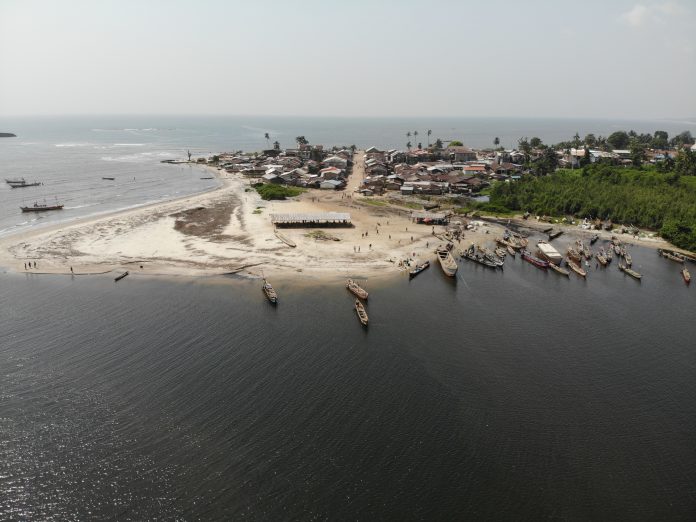
Top: Aerial view of Fanti Town, one of the two most affected communities in Robertsport. Carlucci Cooper/ DayLight
By Carlucci Cooper
ROBERTSPORT, Cape Mount – One quiet night in Kru Town last year, Rebecca Wleh woke to cold water above her knees. Within minutes, the flood had invaded her home, swallowing everything, including the mat on which her son, who has cerebral palsy, lay.
She resettled in Popo Town, hoping for safety. But disaster struck again earlier this year, flooding her new home and destroying the little she had rebuilt.
Wleh is one of thousands of residents in Robertsport, particularly in Kru Town and Fanti Town, who authorities say must relocate. Authorities say it is the best solution for a recurring nightmare.
“The county authorities have provided around 25 acres of land between Sembehun and Latiah to relocate communities at higher risk of flooding,” said Aaron Sambolah, Grand Cape Mount County’s Development Superintendent.
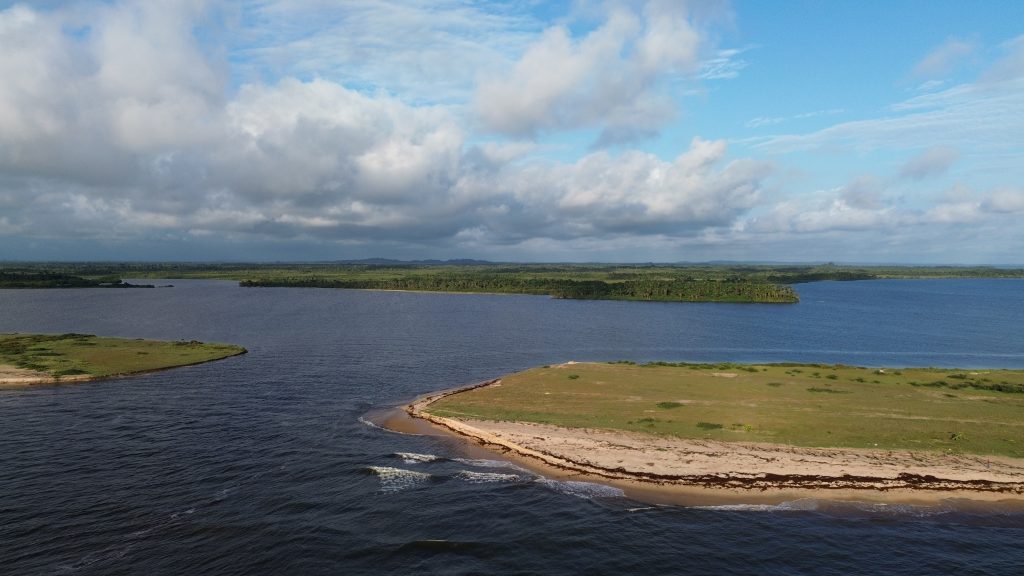
Authorities say the floods, which affected at least 15 communities, are caused by sea erosion and garbage. Both block an estuary commonly referred to as the “bar mouth,” where Lake Piso, Liberia’s largest lake, meets the Atlantic Ocean.
Sea erosion in coastal Liberia is driven by rising sea levels, increasing temperatures, and heavy rainfall. A 2017 climate risk profile found that for a one-meter rise in sea levels, Robertsport, Buchanan, Monrovia and other places will be underwater, losing US$250 million.
On the other hand, local communities dispose of their garbage in the lake, clogging the bar mouth. This prevents Lake Piso from discharging into the ocean, causing the Mole Creek and Mafa River, which flow into the lake, to overflow their banks and inundate nearby communities.
Devastating
Since 2023, flash floods have repeatedly hit Robertsport and other parts of Gola Konneh District. Over 1,000 households, especially those living in wetland and riverside or lakeside communities, have been affected in Robertsport and Monrovia, according to the International Federation of the Red Cross.
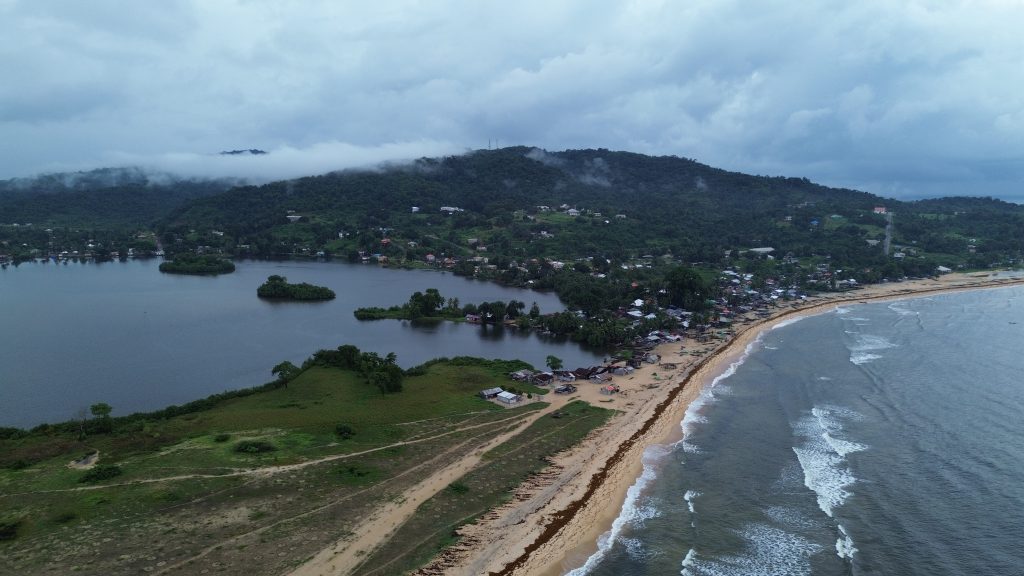
A drone shot of the estuary, where Lake Piso meets the Atlantic Ocean in Robertsport. DayLight/Carlucci Cooper
Six of Robertsport’s eight communities were impacted, with Fanti Town and Kru Town—where Wleh lives— among the worst-hit. Families were forced to evacuate in the middle of the night, leaving behind their belongings. Vulnerable groups were most affected, the Red Cross reported.
Public facilities like schools and city halls were converted into temporary shelters. However, these quickly became overcrowded, and limited access to clean water, sanitation, and basic supplies created further hardship.
Beyond health and sanitation, the economic toll has been severe, particularly for those in the fishing industry, a primary livelihood in the city. Fishermen reported damage to boats, nets, and fishing grounds. Fishmongers lost their entire stock to water damage.
“When we got there, it was devastating. The place was so flooded that even our rainboots were filled with water,” says Alice Kemokai, Youth and Volunteer Focal Person for the Liberia National Red Cross Society.
“People had nowhere to sleep, and the painful part was seeing pregnant women, mothers with babies, the elderly, and people with disabilities fighting to survive,” adds Kemokai.
The Red Cross has provided emergency shelter, food, and non-food items such as pots, mats, and buckets. Local authorities have also contributed US$10,000 to support immediate relief efforts. Additionally, funding from ECOWAS is expected to provide US$250 each to over 500 victims of last year’s flood.
Despite these, officials reckon that humanitarian assistance is unsustainable and relocation is the best solution. In 2023, they secured the land in Sembehum, some seven kilometers from Robertsport.
“We recommend relocation, especially for communities along the ocean,” says Sando Kamara, Coordinator at the National Disaster Management Agency. “It will help curtail flooding, since people in Fanti Town often dump waste into the lake, clogging the bar mouth.”
Development Superintendent Sambolah agrees with Kamara. “The intent is not to relocate Robertsport itself, one of our national heritage sites. It is to move affected communities to prevent future casualties,” he says.
The Group of 77, a government-run agency that supports people with disabilities, is advocating for a location favorable for children like Wleh’s son, who has issues with movement.
Relocation will add a new page to Robertsport’s impressive history.
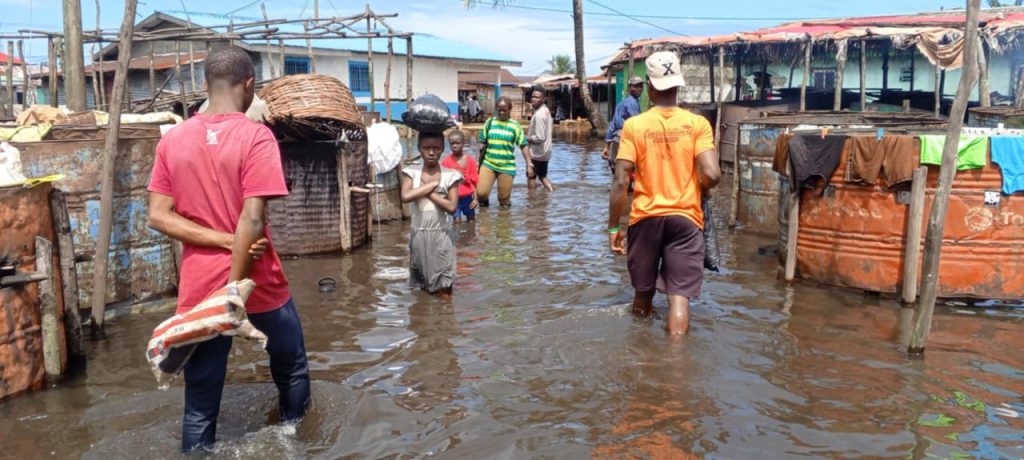
People walk in floodwater in Fanti Town, Robertsport, earlier this year. Filed picture/Group of 77
Built on a hilltop, Robertsport overlooks the vibrant Atlantic Ocean, Lake Piso, and a massive mangrove reserve.
Robertsport was founded in 1856 by freed African Americans, and its colonial-style buildings and cultural ties to the U.S. remain visible. It was named after Joseph Jenkins Roberts, Liberia’s first president, and had been discovered by Portuguese navigator Pedro de Sintra in 1462. Destroyed during Liberia’s civil wars, the city has become a symbol of resilience through eco-tourism and fisheries.
Residents like Wleh are willing to leave the city’s impressive history behind to escape the floodwaters.
“Anywhere the government wants to carry us, I’m willing. I’m tired. The cold is killing us. My son’s condition is my greatest worry,” says Wleh.
Joseph Ajane, a fisherman from Kru Town, is prepared to resettle in Sembehum or elsewhere.
A drone shot of Robertsport city overlooking Lake Piso and the Atlantic Ocean. DayLight /Carlucci Cooper
“If the government or any NGO wants to relocate us, we will be happy. Even though it will be challenging for me as a fisherman to live far from the sea, I have other skills I can survive on,” such as masonry.
Others, like Amie Fahnbulleh, a fishmonger, worry that relocation could separate them from their livelihoods. After losing her business and savings to the floods, she fears relocation will be difficult.
“We want the government to help us with money to fix our homes. We cannot relocate to somewhere far because it will give us a hard time to buy, sell and dry our fish,” says Fahnbulleh.
Some residents propose relocating inland during the floods and returning afterward.
Fishmonger Beatrice Botoe supports this idea.
“If the government and other organizations can come in to help us, this will be very good for us who are living here. We will only be coming back here to dry our fish and go back to our houses daily,” says Botoe.
[Samuel T. Jabba contributed to this report]
This was a Community of Forest and Environmental Journalists of Liberia production.