29 C
Monrovia
Tuesday, December 23, 2025
Home 2025 September

Monthly Archives: September 2025

Shady Company Gets Logging Greenlight

#image_title

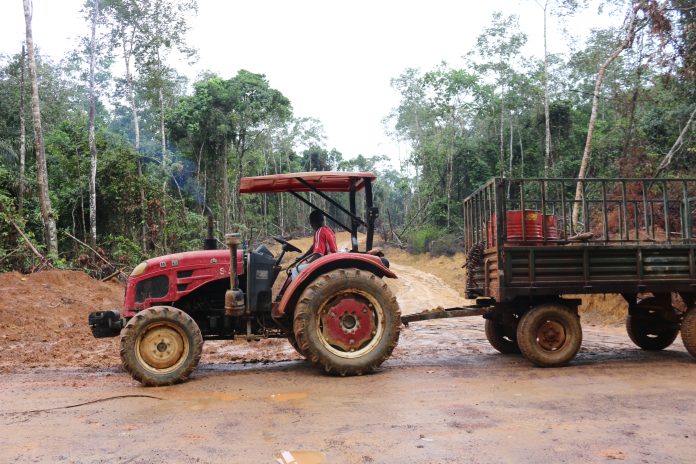
Top: An operator in a Sinoe County Forest in 2017. Picture credit: James Harding Giahyue


By Varney Kamara


MONROVIA – Forestry authorities have approved a logging contract for African Finch Logging Limited, despite the company’s unknown ownership and link to a Sinoe lawmaker.

Following The DayLight series in April and May, African Finch operations appeared to have been temporarily halted. However, some five months later, it is on the verge of harvesting logs in the 18,000-hectare forest.

In a video, an African Finch earthmover is seen making a road in the Numopoh Community Forest, while two Asian men supervise. Also, Forestry Development Authority (FDA) records show that the company paid US$500 for timber identification tags.

This development indicates that the FDA and the Liberia Business Registry ignored findings of a DayLight series of the company’s illegalities.  

The DayLight series found that the African Finch did not declare its owners, a legal requirement. The Business Association Law and the Beneficial Ownership Regulation require all firms to declare their ultimate beneficial owners, the people who own them. Meant to combat financial crimes and conflicts of interest, the regulation requires firms to disclose politically exposed persons.

Also, The DayLight found that African Finch forged a UAE certificate, which it used to register in Liberia. 

The document in question contains a passport with the identification number 167557. However, using artificial intelligence and manual checks, reporters determined the passport did not match known samples of a UAE passport. UAE passport numbers typically consist of eight digits, including letters, and not six as on African Finch’s document.

Second, the certificate was issued by the UAE’s free-trading zone on August 11, 2020. This establishes that the certificate had expired for nearly four years when African Finch used it to register in Liberia last year.

The evidence suggests that the forgers intended to use 2020 to make the document appear legitimate. However, what they apparently did not realize was that a UAE certificate typically lasts for only a year.   

The DayLight found another inconsistency in African Finch’s purported UAE certificate. The document lacks QR codes and barcodes, key features on known UAE business certificates for verifying a company’s legal status.

Hidden ownership

In its underhand filing in Liberia, African Finch names Finch General Trading, registered in the UAE free-trade zone, as its parent company. The UAE free-trade zone is a red flag in itself, a haven for shell companies to avoid taxes and conceal their ownership.

But reporters established that Finch General is not even recorded in the UAE free-trade zone registry. Similarly, checks in the UAE official, general database yielded no results. Further checks in the Organized Crime and Corruption Reporting Project (OCCRP) Aleph, one of the world’s largest databases of companies, were the same.

Now, reporters turned to Finch General’s website, which is hosted by NameSilo, known to hide firms’ identities. Turns out the address on that website belongs to another company, while verification directs users to an unofficial site. Finch General restricted access to the website following The DayLight series.

Faking the UAE document constitutes forgery, a crime under Liberian law. Moreover, using that document to obtain a forestry contract constitutes perjury or lying under oath, according to the Regulation on Bidder Qualifications.  

The African Finch did not respond to queries about its concealed ownership and forged documents, and maintained that posture throughout.  
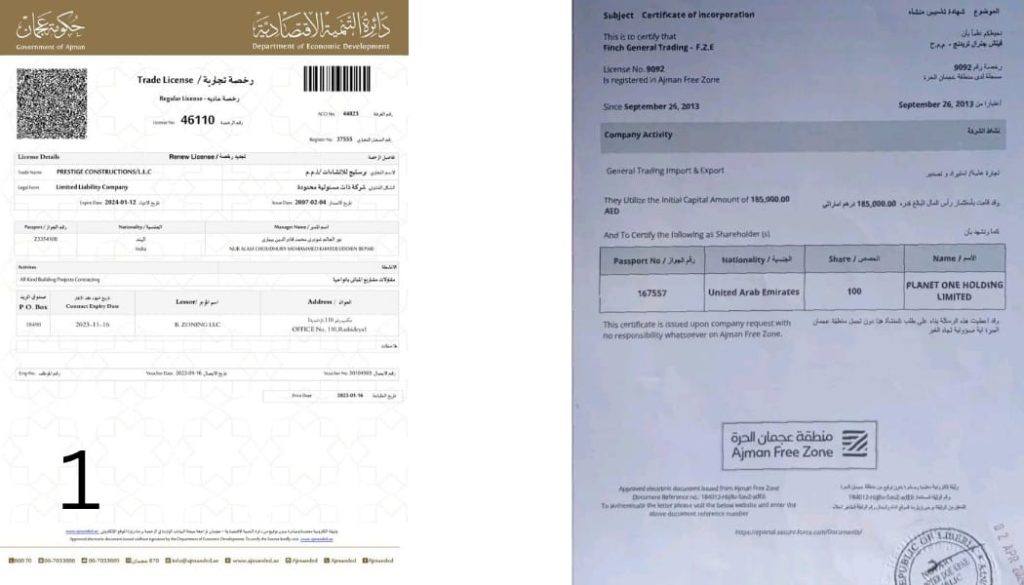
A copy of African Finch’s forged UAE business certificate on the right and a sample of a genuine Emeriti business certificate

“We don’t have any response for you,” Kwadjo Asabre, an official of the company, said in April. “We do not support mischief and dishonest publications. It’s cowardice.

“Don’t text me again.”

Similarly, the FDA and the Liberia Business Registry did not return questions about African Finch’s shadowy ownership and fake credentials. The newspaper has now filed a freedom of information request with the FDA, the beginning of a legal procedure.

Link to a Lawmaker

In August last year, the FDA approved Numopoh Community Forest’s request to terminate its contract with Delta Timber Corporation. Numopoh and Delta had signed the deal in 2016. Delta, owned by Gabriel Doe, a former presidential adviser during the Charles Taylor regime, had had unsettled debt and abandoned thousands of logs to rot.  

After terminating Delta’s contract, Numopoh signed an MoU with African Finch—but not without the help of Representative Romeo Quioh of Sinoe’s District #1.

The DayLight series revealed that Quioh allegedly coerced and bribed locals into signing the deal the same day it was introduced, violating their right to consent. Townsfolk claimed he directly and indirectly gave them L$3,000 and L$5,000. A townsman said he walked out of the signing ceremony in disagreement with Quioh.

Townspeople alleged Quioh brought African Finch to Numopoh in fulfillment of an election pledge to bring jobs to his constituency.

“This whole thing is part of that big promise he made to the community during the campaign,” said Alex Sanwon, a prominent Johnny Town resident.

The series determined Quioh was involved in a conflict of interest due to his connection with African Finch, a breach of the Code of Conduct for Public Officials.

Asabre, the African Finch executive, at least confirmed Quioh’s control of the company. He had told The DayLight in April to “Speak to [the] Hon” in response to company-related queries.

In an April Facebook post, Quioh denied that he had coerced or bribed the townspeople, but admitted to having a connection with the company.  

“As… a member of the advisory board of the Board of Directors of African Finch Incorporation, my involvement in forestry-related matters is strictly within the confines of my legislative oversight responsibilities,” said Quioh in the post.
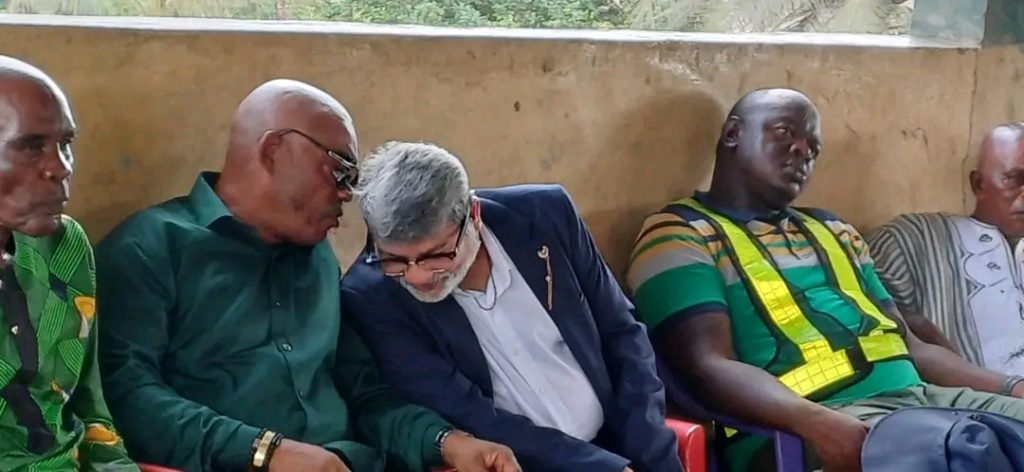
Representative Thomas Remeo Quioh converses with an African Finch executive in Numopoh. Picture credit: Anonymous

Quioh’s admission added to African Finch’s hidden human owners and the company’s unproven UAE status, leaving more questions than answers.

But before the dust settled on his admission, Quioh retracted his comments. He now claimed he had mistakenly written African Finch in the Facebook post, instead of Numopoh. He would omit “African Finch” and add “community forest management committee” to revise his rebuttal.  

But the evidence contradicts Quioh’s claim. He mentioned multiple times in the Facebook post that he was an African Finch advisor, which is inconsistent with a mistake.

There were other inconsistencies in his retraction, too. A community forest management committee or an adviser does not exist in community forestry. What exists is an executive committee that supervises the daily activities of a community forest, of which a lawmaker is a member.

When contacted on African Finch’s operations amid its legal woes, Quioh declined to speak.


“Nothing… take any action deemed appropriate,” he said, before pulling a page from Asabre’s playbook. “Going forward, please don’t ever call me on any issues regarding African Finch and its activities.”

Illegal extension

The investigation revealed that the FDA extended the community forest from 7,200 hectares to 18,000 hectares without the participation of Numopoh’s neighbors, Tartweh, Wedjah and Wolee.

Excluding neighboring communities from the expansion violates the Community Rights Law of 2009. The law requires the FDA to notify affected communities, make radio announcements, and set aside 30 days for Numopoh and its neighbors to cut their boundaries and map Numopoh’s forestland. There is no evidence that those conditions were met.
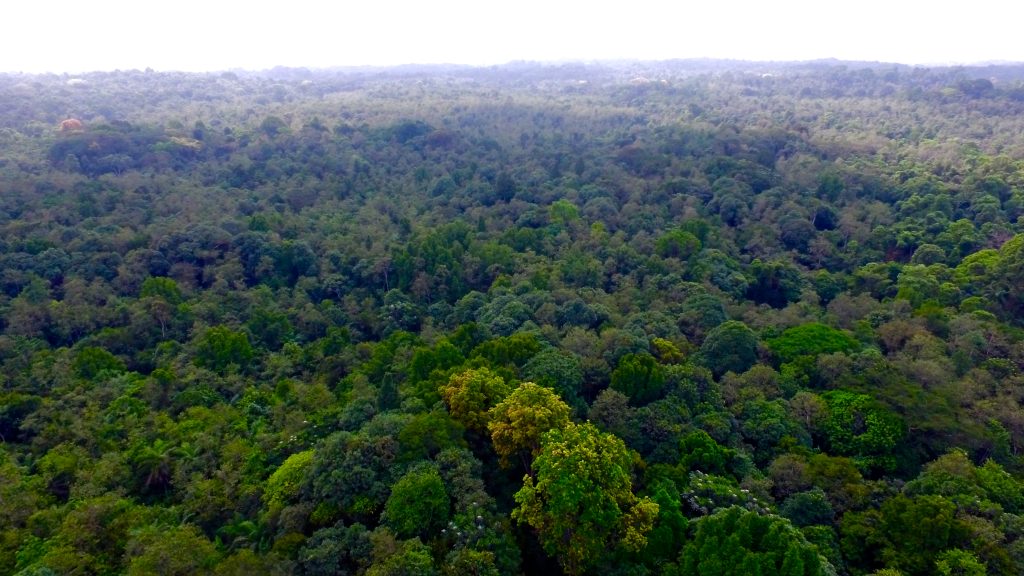
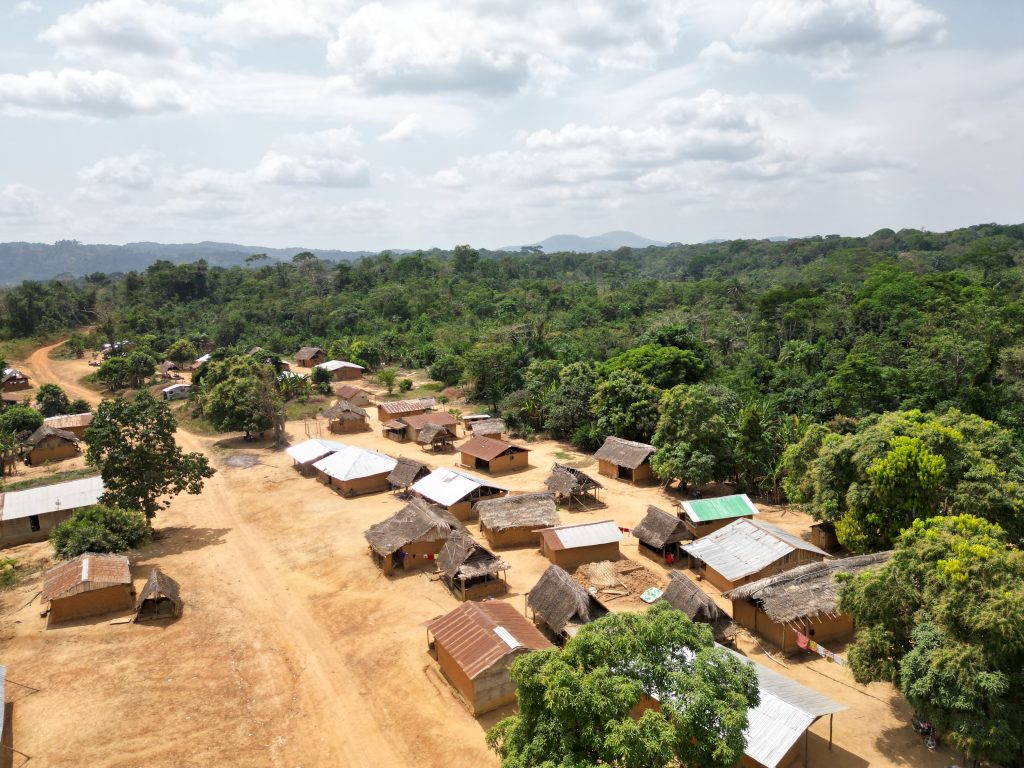
A pictorial view of the Numopoh Community Forest in Sinoe County, southeastern Liberia. The DayLight/Derick Snyder

Kwankon Saytue of Tartweh-Drapoh Community Forest said, “I only got to know about the expansion from the signed MoU when somebody posted it on social media.”

Wolee, one of three sections making up the Du-Wolee Township in the Kpayan District, is taking action against the arbitrary extension.  Numopoh and Du-Wolee are already locked in a decade-long dispute over a 463-hectare farmland, all three communities are claiming.

“We have protested about infringement on our land, and we asked them to stop,” said Abel Nyenswah, sectional head of Wolee. “The forest area the company entered belongs to us, but they are still paying deaf ears.”

Sam Kandie, a Numopoh forest leader, refuted Nyenswah’s comments, saying Numopoh had no forest boundary with Wolee. “It is a land boundary they have with Numopoh, not a forest boundary.” He did not address comments from Tartweh-Drapoh and Wedjah.


This story was a Community of Forest and Environmental Journalists of Liberia production.
Sinoe Communities Try New Conservation Method

#image_title

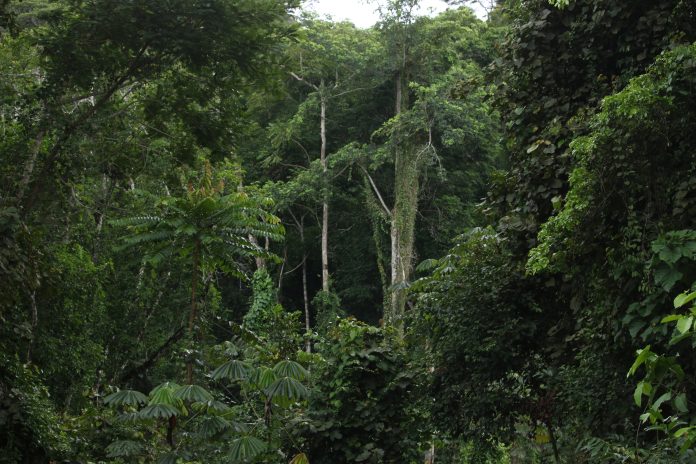
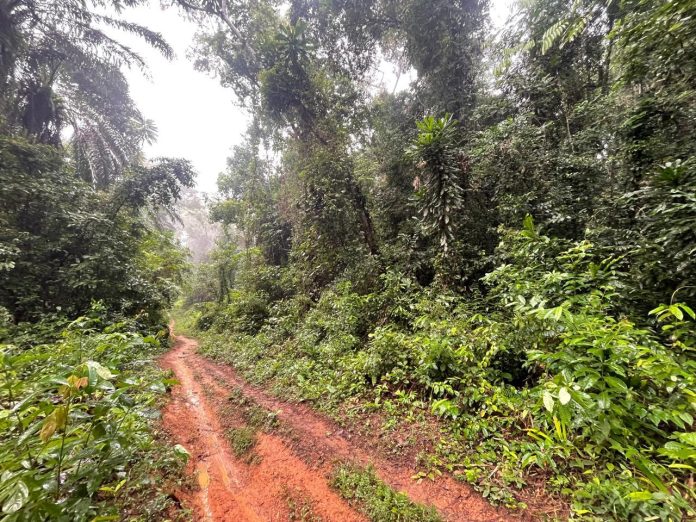
Top: A footpath inside the Lower Wedjah Community Forest. The DayLight/ Esau J. Farr 


By Esau J. Farr


GBOYEE TOWN; DIYANKPO, Sinoe County – In June, the people in Wedjah District signed an agreement with an NGO to protect 7,131 hectares of forest for yearly cash and other benefits.

“We have been waiting for this day to come for so many years,” said Savior Nyenbe, an elder of Soloe Town in Wedjah.

Two days later, the Jaedae District signed a similar agreement to keep 43,543 hectares of forest.  

“I want to say that the people of Jaedae wholeheartedly welcome the [agreement],” said Mark Toe, a local leader in Jaedae.  

The Lower Wedjah and Jaedea agreements are the first of a revolutionary approach to forest conservation in which communities receive funds for keeping their forests standing. A Paynesville-based NGO, Integrated Development and Learning (IDL), is championing the payment for stewardship.

“The agreement does not just deliver money to the community, it puts the community in charge of its own development agenda and priorities,” said Silas Siakor, IDL’s Executive Director.  

Communities own about 75 percent of Liberia’s forest. This puts local people at the core of conservation in a country that holds the largest portion of West Africa’s remaining rainforests.

The Wedjah and Jaedae agreements are a two-year trial, with a possible 25-year extension. During this time, IDL will pay Wedjah and Jaedae a combined US$152,022, with the former receiving US$21,392 and the latter US$130,630.  The first tranche would arrive this week, Siakor said.

In exchange, local people in Wedjah and Jaedae will not mine, farm, log, or build homes in their forests. They will, however, be allowed to harvest trees and other things for local development during the lifespan of the agreement.

Both communities have a rich biodiversity. Wedjah is home to several wildlife species, including chimpanzees. There are also important tree species. Jaedae, on the other hand, is part of the proposed Grand Kru-River Gee Protected Area, home to several species in West Africa.

During the trial, trained local volunteers or forest guards will conduct monthly forest monitoring. Over the years, illicit activities have undermined conservation efforts in Lake Piso, Nitrian Community Forest and the Sapo National Park next door.  A Forestry Development Authority team has traveled to Sinoe this week to train the guards. Monitoring is expected to start early next week.

Siakor believes this will not repeat in Wedjah and Jaedae. Instead, it will increase the number of protected forest areas and prevent encroachment on those forests, he says.  

“It also provides an opportunity for partnership between the community and the Wardens at Sapo, and guarantees community support for protection for the next two years.”

The trial comes at a time when commercial logging continues to fail communities. Wedja and Daedae’s neighbors, Sewacajua, Numopoh and the Central River Dugbe community forests have their share of the bad experiences.

A portion of the Jaedae District forest is in the background of a farm in Diyankpo. The DayLight/Esau Farr

Also, the Burkinabé cocoa crisis in the southeast is a new challenge for conservation.

However, evidence shows that community-based conservation programs work. There are programs similar to the one in Wedjah and Jaedae elsewhere in Salayea, Lofa, Zor, Nimba, and Central Morweh, River Cess.

Campaigners say putting locals in charge of forest conservation will help Liberia meet its climate commitments, including cutting deforestation by 50 percent in 2030.  Global Forest Watch, an institution that tracks deforestation, reports Liberia lost 162,000 ha of natural forest in 2024, equivalent to 104,000 tons of carbon dioxide emissions. 

“This initiative represents a significant step forward in forest conservation efforts,” says Andrew Zelemen, a leader of the National Union of Community Forestry Development Committees. “For too long, forest communities have not received direct compensation for their role in preserving these critical ecosystems.”


This story was a production of the Community of Forest and Environmental Journalists of Liberia (CoFEJ).

Park Warden Wants 250 Armed Rangers to Protect Sapo Park

#image_title

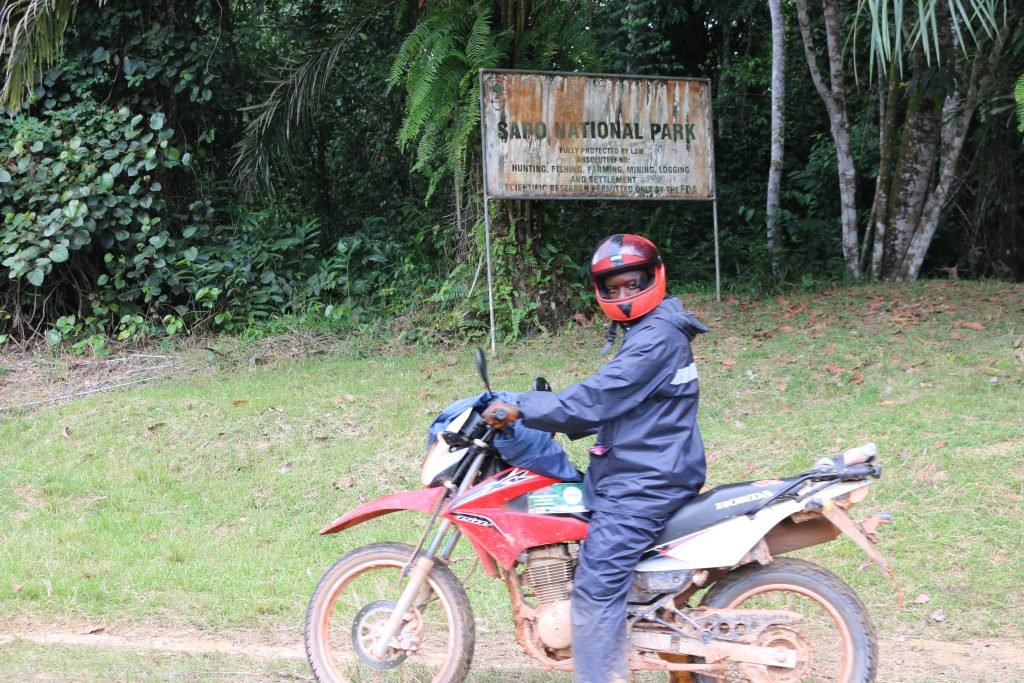
Top: A Sapo National Park signboard in Cherue Town, Sinoe County. The DayLight/Carlucci Cooper


By Varney Kamara


JAYLAY TWON, Sinoe County – The government should arm 250 rangers to protect the Sapo National Park from illegal occupants, John Smith, the reserve’s Chief Warden, has said.

Spanning over 180,000 hectares across Grand Gedeh, River Gee, and Sinoe Counties, Sapo Park is Liberia’s largest natural reserve. However, only 30 law enforcement rangers man it.

“The size of the forest tells us that the number is insufficient to protect an area of this magnitude,” Smith told a DayLight interview in Jaylay Town, the rangers’ headquarters. “This has compelled the need to increase the force so that we can effectively deal with the situation on the ground.”

Established in 1983, the Sapo National Park is a global biodiversity hotspot, sheltering 125 mammal species and 590 bird species, including several endangered species. It is the second-largest rainforest in West Africa after the Tai National Forest in neighboring Ivory Coast.

However, the park faces environmental threats from illegal logging, agricultural expansion, and mining. There are 13 known illegal mining camps in the park, predominantly occupied by miners from the West African sub-region – Mali, Nigeria, Ivory Coast, and Guinea, the report found. A 2012 report found weak monitoring and poor boundary awareness among miners as key challenges.


In May 2017, a mob of local rioters killed a ranger and severely injured four others. It took armed anti-riot police to bring the situation under control.

Taylor Kaydee, an FDA-assigned ranger in Chebioh Town, the setting of the 2017 violence, said rangers were attacked often. About a year ago, he and other rangers were attacked after they arrested some illegal miners in the park. A court in Juarzon intervened for their handcuffs to be retrieved.

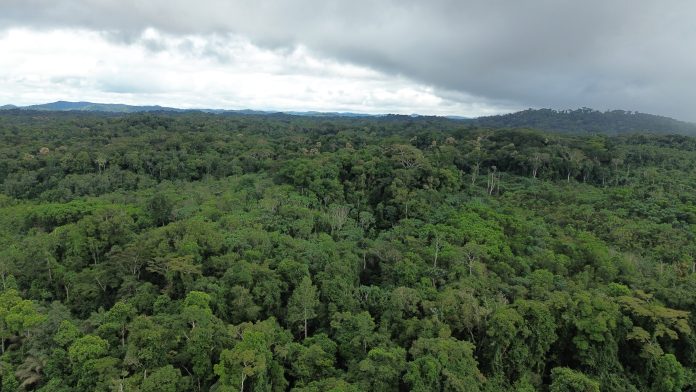
A drone shot of a portion of the Sapo National Park. The DayLight/Carlucci Cooper

“How do you go to arrest somebody who has arms in a jungle terrain of this nature, but you, who are the law enforcer, don’t have arms?” Smith asked rhetorically.  Smith added that it was impractical for unarmed rangers to protect the park against its illegal occupants, armed with single-barrelled guns. 

Security actors have been critical of arming rangers for the two decades that followed since Liberia’s civil wars ended in 2003. Critics fear arming forest rangers could lead to abuse of power, violence, and undermine reform efforts.

Smith disagrees. He believes sufficient law enforcement rangers must be trained, armed, and deployed not to shoot people but perform their tasks in line with the law.

“It is a sustainable approach that speaks to the longstanding difficulties we face over the years. We need the manpower, training, and logistics to support our security plans and operations.”

DayLight Investigation Selected as one of Africa’s Best

#image_title

Top: The DayLight was established in 2020 and began publishing in 2021.


By Gabriel Dixon


MONROVIA – A DayLight investigation was selected as one of the best in Africa, the online environmental newspaper’s first international recognition.

The Global Investigative Journalism Network (GIJN) chose “How a Family Smuggled Timber for over a Decade” for May. It was listed alongside investigations from Kenya, Nigeria and Mozambique in the GIJN monthly recognition of great African works. Established in 2003,  GIJN supports, promotes and produces investigative journalism, with 250 members.

“This is a victory for Liberian journalism,” said James Harding Giahyue, DayLight’s Director/Managing Editor, who conducted the investigation. “Our team, partners and networks need this motivation, as we hold extractive and environmental actors to account.”

The DayLight was unaware of the feat until recently.

In the investigation, Giahyue dug through documents to shed light on how a Caldwell family forged paperwork, evaded taxes and trafficked timber for 14 years. He reviewed shipping records, trade websites, a WhatsApp chat and audio recordings to expose the family. It was a follow-up to a previous story by Varney Kamara, The DayLight’s senior reporter.    

A screenshot of a Global Investigative Journalism Network newsletter listing The DayLight investigation among the network’s stories for May 2025.

The investigation led to a police inquiry into tax evasion, forgery and economic sabotage against Ben Wesseh, the suspect. However, there has been no indictment, some five months later.

It also led to a change in the Ministry of Agriculture department that issues phytosanitary certificates, which certify that timber is free of pests.

The DayLight was established in 2020 with a mission to produce evidence-based stories from nature’s frontiers, as well as inspire a new generation of Liberian investigative journalists. It coordinates the Community of Forest and Environmental Journalists (CoFEJ), which has over three dozen members nationwide.

Since its first publication in April 2021, The DayLight has won four national awards, two each in 2022 and 2024.  

DayLight investigations have led to four prosecutions, five police probes, at least two Environmental Protection Agency (EPA) fines, three suspensions, and two dismissals of a forest ranger and a police commander.

They have also led to an FDA reshuffle, an EPA halting of an illegal carbon deal, inspired a legislative inquest of a quarry company, and led to a ban on a certain logging activity, known as block wood or “kpokolo.”  

Mano Accident Victim Receives US$120K for Damages

#image_title

Top: Bendu Sonii received US$120,000 from Mano Palm Oil Industries as damages for an accident that left her with one leg. The DayLight/Harry Browne


By Matenneh Keita and Harry Browne


BALLAH’S TOWN, Grand Cape Mount County – A woman, who lost a leg in an accident involving a Mano Palm Oil Industries vehicle, received US$120,000 for damages.

In May last year, a Mano vehicle swerved off the Babangida Highway and hit Bendu Sonii, a casual laborer with the Lebanese-owned company. Doctors at the St. Joseph Catholic Hospital amputated Sonii’s right leg, which was severely injured in the accident.  

After recovery, the 42-year-old mother of eight continued to receive her US$70 or US$80 wage and four 25-kilogram bags of rice. However, that changed after she won the lawsuit against her employer for damages.

“The money Mano gave was US$120,000.  I brought it and turned it over to [Sonii],” said Sensee Johnson, the victim’s fiancé. “We took off the expenses that were made, and the balance was saved in the bank.”

The payment is a soothing twist in a sad story.

In an interview on her hospital bed two months later, a distressed Sonii could not hold back tears. She continued that mood even after she was discharged from the hospital, ruing a bleak future.

Not long after her story was published, Sonii found a lawyer and sued Mano at the 11th Judicial Circuit Court in Tubmanburg, Bomi County.

She petitioned the court for US$1.45 million in damages for wrong, personal injury and emotional distress, court records show.  However, she reached an out-of-court settlement with the Lebanese-owned company for the eventual amount.

Having received the payment, Sonii praised the justice system, her spouse and journalists for the victory.

“I tell God thank you for the situation that came to me between me and Mano Oil Palm Plantation. The law was there to fight my case, and today I have become successful.

“It was difficult but thank God the laws of Liberia were there for me during the court process.

“My husband was there and also [The DayLight] too fought. All of you were there for me,” added Sonii at her home in Ballah’s Town, Grand Cape Mount County.

Mano did not speak on the settlement. Richard Hilton, the company’s communication officer, promised to grant an interview but evaded reporters.


Additional reporting by Gabriel Parker in Tubmanburg, Bomi County.

Removed Sapo Occupants Praise Security Forces

#image_title

Top: A drone picture of the Sapo National Park. The DayLight/Carlucci Cooper


By Varney Kamara and Philip Quwebin


CHEBIOH TOWN, Sinoe County – When Andrew Saye learned that security forces wanted him out of the Sapo National Park, he grew nervous. He was in for a big surprise.

Joint security forces, including the soldiers, police officers and forest rangers, removed Saye without using any force. He was among some 2,000 illegal occupants, predominantly miners, who were removed from the park earlier last month.

“They talked to us well,” said Saye, who stayed seven months in Sapo. He spoke in an interview in Chebioh Town, one of the communities adjacent to the park. “They did not beat us.”

It signals improved relations between the government and local communities. Conflicts between communities and the government over illegal activities in the park have resulted in deaths and injuries.  In May 2017, a mob of local rioters killed a ranger and severely injured four others. In retaliation, state security forces moved into the area, killing one townsman and arresting several others.

Joint security forces have peacefully removed about 2,000 occupants from the Sapo National Park in Sinoe County. Picture credit: James Giahyue

Established in 1983, Sapo National Park is Liberia’s first and largest reserve, spanning over 180,000 hectares across Grand Gedeh, River Gee, and Sinoe Counties. It is a global biodiversity hotspot, sheltering 125 mammal species and 590 bird species, including several endangered species.

However, it faces threats from illegal logging, farming, and mining, according to a 2012 report.

Last month, a joint security team expelled the occupants from “Camp America,” one of 13 known settlements in the park.  “Operation Restore Hope IV” safeguards the park and combats illegal migration in the southeast. It also addresses financial and wildlife crimes, as well as human and drug trafficking.  

After their deployment, the security team held mass meetings with community members and sent messages to camp masters, giving them a two-week ultimatum to vacate the park. Then they set up bases in Korjahyee, John Wolo Village, and Nyennawliken in Sinoe, Grand Gedeh, and River Gee, respectively.

“We are working cooperatively and removing them from the park,” John Smith, Sapo’s Chief Park Warden. The move was meant to improve relations between adjacent communities and security forces, added Smith.  

After the ultimate expired, people still fanned around. So, the joint security forces blocked the park’s entrances, which compelled some occupants to vacate.

Next, the team walked nine hours into Camp America to remove the remaining occupants. There, they assembled occupants, explained their mission, and profiled the occupants. Then the exodus began.

A man stands next to the grave of Friday Pyne, a ranger with the Forestry Development Authority. Pyne was killed in 2017 by a mob of local rioters. Picture credit: James Giahyue

“There was no food or goods in the area. So, after that, we all left and came out of the bush,” Shedrach Pyne. He—no relation to the late Friday Pyne—had spent a month mining gold in the park.

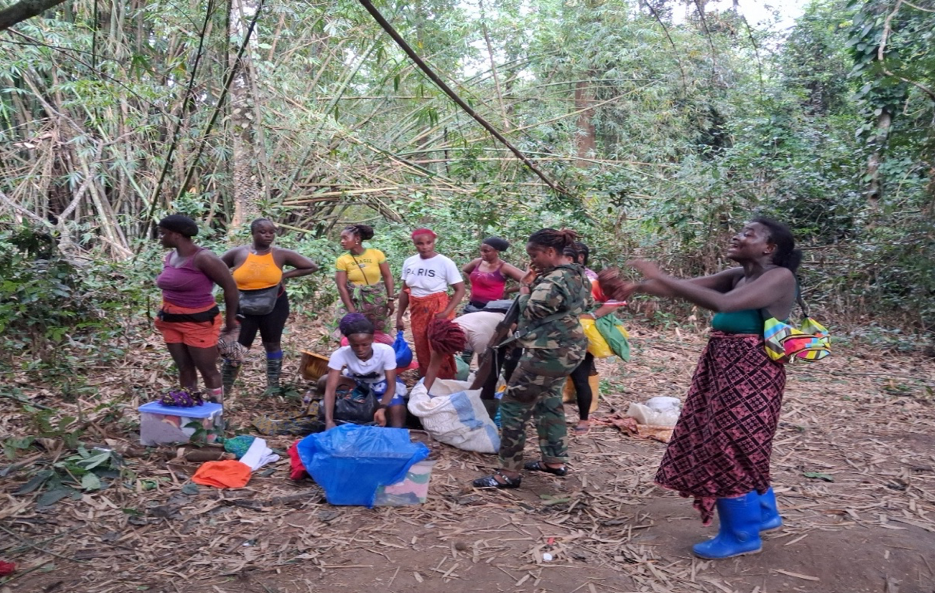
The security forces searched the occupants. Female soldiers searched the woman, while the male soldiers searched the men.  

They seized illicit drugs and a bottle of mercury, according to an unpublished report of the operation, seen by The DayLight. No arrests were made, as illegal miners were allowed to take their belongings, including water pump machines.

Joint security forces then demolished the makeshift structures the miners had used to pillage the reserve.

Security forces are now preparing to clear the remaining camps in the park.

DayLight Reporters Escape ‘Country Devil’

#image_title

Top: Pellokon Town in the Seekon District, Sinoe County. The DayLight/Esau Farr


By Esau Farr and Carlucci Cooper


SEEKON – Two DayLight reporters narrowly escaped a masked dancer last Wednesday in the Seekon Pellokon Community Forest in Sinoe County.  

Reporters Esau Farr and Carlucci Cooper were covering a contract-signing ceremony the next day as part of an investigation when a masked dancer, commonly known as “country devil,” approached.  

“It was a terrifying experience, as we thought we had come to the end of our journalism careers,” said Farr, a senior reporter with the newspaper. “My stomach stirred uncontrollably when I heard the sound of the masked dancer.”

The reporters ran into a nearby house, but their nightmare was far from over. A few minutes after they arrived, a townsman knocked at the door, calling Farr. The house’s elderly owner opened the door and began conversing with the man in the Kru language.

The man advised Farr and Cooper to leave town in five minutes or blame themselves. The masked dancer was coming to town to get them. Seekon Pellokon was unhappy about the investigation Farr had co-authored, Varney Kamara, DayLight’s senior reporter.

That report found that the Managing Director of the Forestry Development Authority, Rudolph Merab, pushed Seekon Pellokon to sign a logging contract with the Liberian Hardwood Corporation, owned by Jihad Akkari, Merab’s friend.

The investigation reviewed Akkari’s link to Euro Liberia Logging, the largest active logging concession in Liberia, including its murky ownership. The investigation also referenced two contracts in neighboring Grand Gedeh, which Akkari had failed, as well as his debarment from operating in Liberia. Akkari, who denies failing any contracts, did not comment on queries regarding his debarment and Euro Logging’s ownership.

Farr and Cooper were familiar with this history and, therefore, were unsurprised by the retaliation. Earlier that day, Junior Kumah, one of Seekon Pellokon’s leaders,  had recounted a tense interview he had with The DayLight. Kumah had announced that the newspaper was not allowed to cover the signing ceremony, though he had no such authority.

Having understood the situation, the reporters switched their attention from an investigation to their personal safety.

As a child, Farr remembered in Bong County how masked dancers manhandled “gbolora,” or non-members in the Kpelle or “saykoue deaenayourn” in the Kru language. In one instance, several men were forced to drink the water with which they washed their dirty clothes. Those memories fueled fear and despair in him.

Back in the house, the reporters’ host, an 80-something-year-old woman, added insult to injury. She had been hospitable to the duo all along. However, after her conversation with the man who knocked at the door, her body language suddenly changed.

“‘Why did you come here? Who brought you here?”’ The elderly woman asked the reporters, her face beaming with disgust, disapproval and disregard. “Where are you coming from?”  

The Seekon Pellokon Community Forest spans 44,989 hectares. The DayLight/Carlucci Cooper

Her grandchildren appeared to have maintained compassionate faces. However, while the elderly woman and the man conversed, reporters overheard the children’s discussion about the elders deciding a certain man’s fate. “Let them (elders) wait for [nightfall] to beat him,” said one of them.  This deepened the reporters’ fear.

Cooper, the younger of the two reporters, was more terrified. He had read how masked dancers and their followers committed crimes with impunity. In 2020, one brutalized two police officers in a town outside Ganta. Two years later, another judge in Bong County caused the Supreme Court to jail six traditional chiefs for six months.

It was not the first time a DayLight journalist had such an experience but this was worse. In 2022, locals in Grand Bassa’s Compound Number One threatened to unleash their masked dancer against Emmanuel Sherman, DayLight’s editor-at-large. A townsman intervened and spared the then 63-year-old any blushes for covering a community forest meeting.

Escape

Minutes after the man’s conversation with the elderly woman, he ordered the reporters out of the town. The said the masked dancer did not want them there and it was in their own interest to leave immediately.  

Cooper was troubled by that announcement. Unlike Farr, Cooper had not grown up in the hinterland. However, he had heard that it was abominable for non-members to go outdoors.

Farr, on the other hand, believed the man. He had met him on a previous visit to Seekon Pellokon. So, he convinced a reluctant Cooper to trust the man.

In the meantime, the man asked the motorcycle-taxi driver for his key and rolled the vehicle across a creek.

The reporters followed a guardian their host-turned-savior arranged for them.  The three and the motorcycle-taxi driver sneaked through the back door, passed several houses and arrived at the creek to safety.

“In the midst of all these in our hideout, we were hopeful that we could be freed, so we did not give up,” said Farr. “It was only God who intervened on our behalf.”

Despite their ordeal, Farr and Cooper continued their investigation into the expansion of the Seekon Pellokon Community Forest. While working from neighboring communities the following day, they learned that locals sealed their deal with Liberian Hardwood.


CORRECTION: This version of the story corrects the previous version, which mistook a drone shot of the Sapo National Forest for the Seekon Pellokon Community Forest.

The story was a Community of Forest and Environmental Journalists of Liberia (CoFEJ) production.

Videos Reveal Torture in Sapo National Park

#image_title

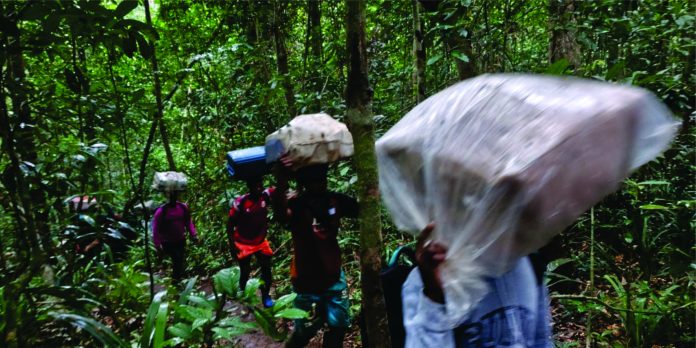
Top: Illegal occupants leave the Sapo National Park in August. Filed picture/Joint Security Team


By James Harding Giahyue   


KORJAYEE, Sinoe County – Six video clips The DayLight has obtained reveal illegal occupants of the Sapo National Park torturing their colleagues.

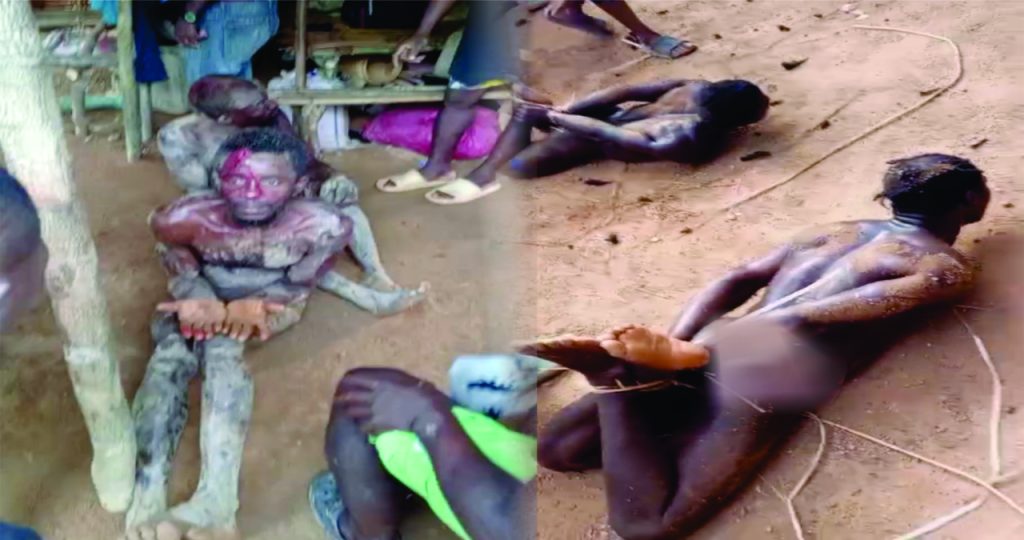
The videos, likely shot by an illegal miner, emerge as joint security forces have begun removing illegal occupants from the park. They show several men, accused of theft and stripped naked, being tortured.

“Mama, oh! I don’t know what I come for in [Sapo] National Park. Y’all feel sorry for me, oh. Y’all will kill me, oh,” cries one of the two men accused of stealing a cell phone in one of the videos. Two miners tie the pair’s hands and legs on their backs, like in the Liberian civil wars.

“That’s stealing you come for,” replies a man, while other men videotape the terrified, naked victims.  

Another torturer steps on one of the victims’ backs. He lifts the victim whose chest faces downward and drops him to the ground, while the other victim calls an elder, only identified as Papay Ogunti, for help.

A torturer nicknamed Dembélé, likely after the Paris Saint-Germain forward, said they would have killed the two torture victims if it were in an isolated area.

The video ends with the two victims on the ground like ducks, resigned to their fate.

The surroundings in the video and five others match pictures from an unpublished official report, seen by The DayLight. The amateur, cell phone-shot videos, corroborate the report’s findings of “immoral and cruel acts far away from human civilization.” 

Joint security forces have removed about 2,000 people from the so-called “Camp America,” one of the park’s illegal settlements. The operations, comprising the army, the police, the Forestry Development Authority, and other agencies, are aimed at clamping down on cross-border crimes and sub-regional insecurity.

Human rights abuses are common in illicit mines across Liberia due to their remote location. However, the videos lay that fact bare.

‘Rule of tradition’

Another video shows two men accused of stealing L$80,000 (US$450) bleeding from a head wound. One of the men was forced to drink alcohol and admit to the offense.

“Is it good to steal?” One of his tormentors asks.

“No, it is not good,” the naked man replies. “Nobody must steal, oh!”

“The time you were supposed to use your head passed,” a torturer says in disagreement with the victim’s plea.

Any angry torturer burns one of the victims with a blazing plastic sack. Seconds later, another kicked the victim’s face.

Men can be heard threatening to kill the second victim, while another miner pours liquor on his bleeding head.

A collage of screengrabs, showing four men being tortured for allegedly stealing L$80,000 and a cell phone in the Sapo National Park. Graphic by Rebazar Forte

Two videos reveal slightly different torture techniques. While the torturers refrain from beating or bounding the victims, their punishments are equally ruthless.

In one of the videos, a shirtless man is made to carry rocks in a bag attached to a twine rope, tearing into his skin. One of the torturers insists the victim must carry the rock-filled bag for 10 hours.

The next video features a shirtless, exhausted victim lying on the ground after carrying a log for several hours.

A bystander argues against the treatment but faces fierce opposition from the torturers.

“We are not under the rule of the government,” an illegal occupant says. “We are under the rule of tradition.”

But sometimes the tide turns in favor of the victim. In one video, a miner is being saved from drowning after falling into a deep mining pit. He had been chasing a man suspected of stealing something.

“He was going to leave in the water,” an illicit miner commentates on the ordeal, as the terrified man hangs on to a stick.

“You can make it with the man?” The commentary continues. “You go to arrest someone, but you can make it. Now they are hauling him.”

Watch the video below:

Joint Security Seizes Illicit Drugs in Sapo Park

#image_title

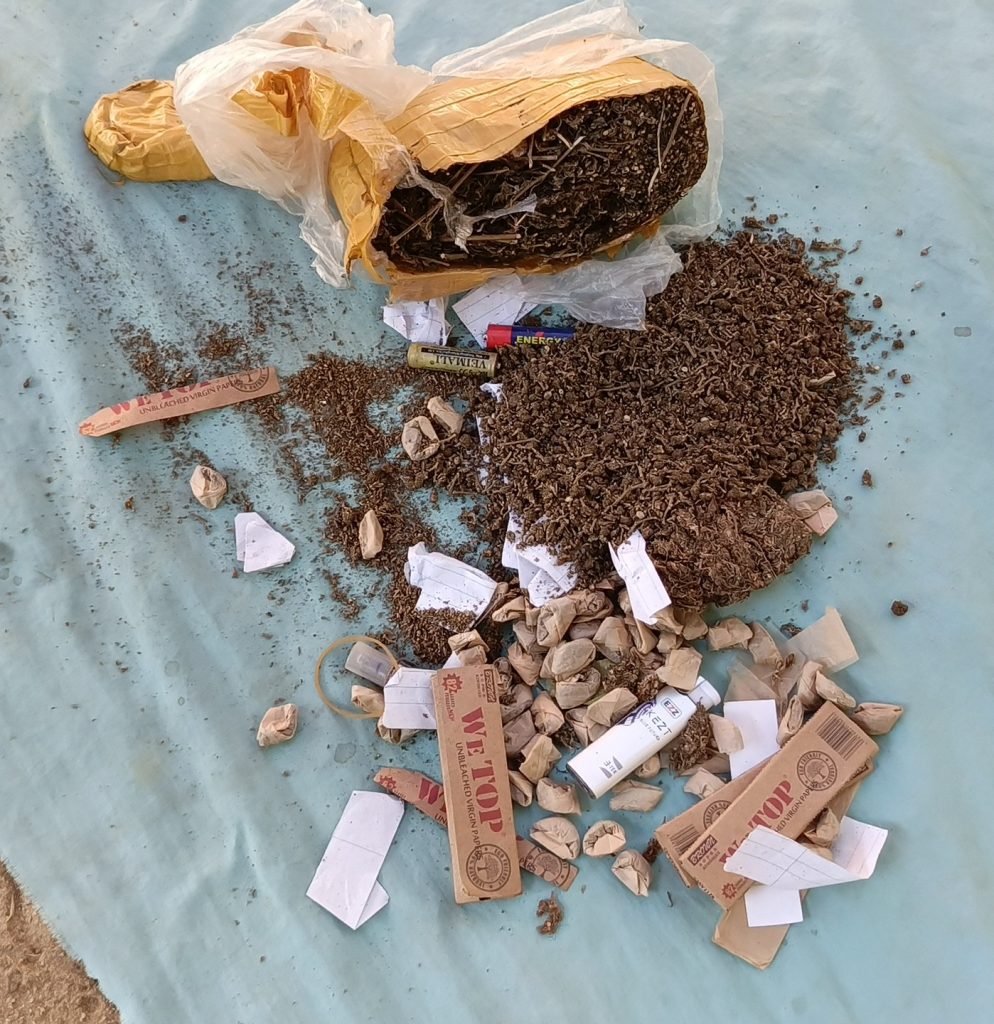
Top: Marijuana joint security forces seized from illicit miners in the Sapo National Park. Filed picture/Joint Security


By Varney Kamara   


KORJAYEE, Sinoe County – Joint security forces have seized a slew of banned substances from illegal occupants in the Sapo National Park, dismantling a major, decades-long illicit drug hub.

Last month, soldiers, police, anti-drug agents, border officers, and forest rangers deployed at “Camp America,” one of the 13 known illegal settlements in the park. So far, some 2,000 people have been removed from the area, and with them an array of drugs from occupants.

“The place is a lawless ground where people are getting drunk with harmful drugs in the camps,” said John Smith, the park’s manager, in an interview with The DayLight in Jaylay Town. “We also heard stories about people getting intoxicated, and a few death cases relating to harmful drugs in the camps.”

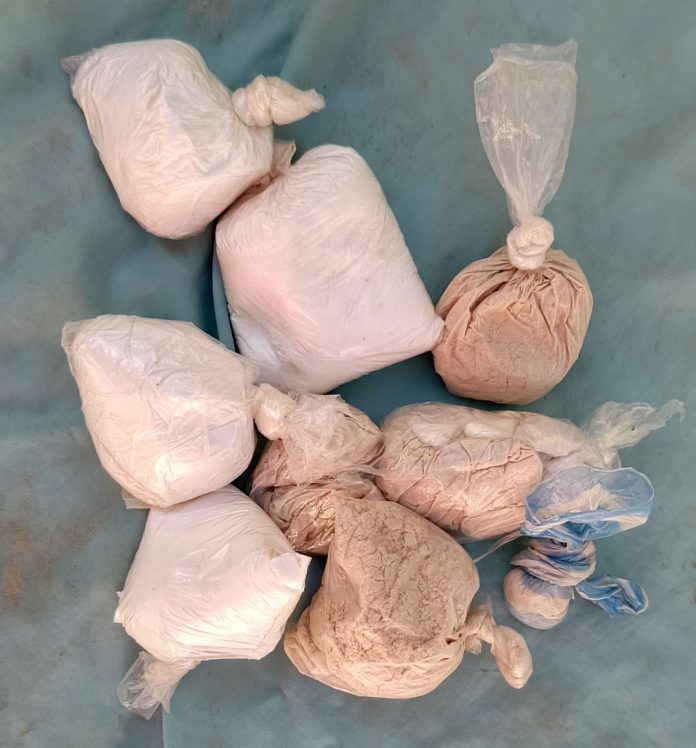
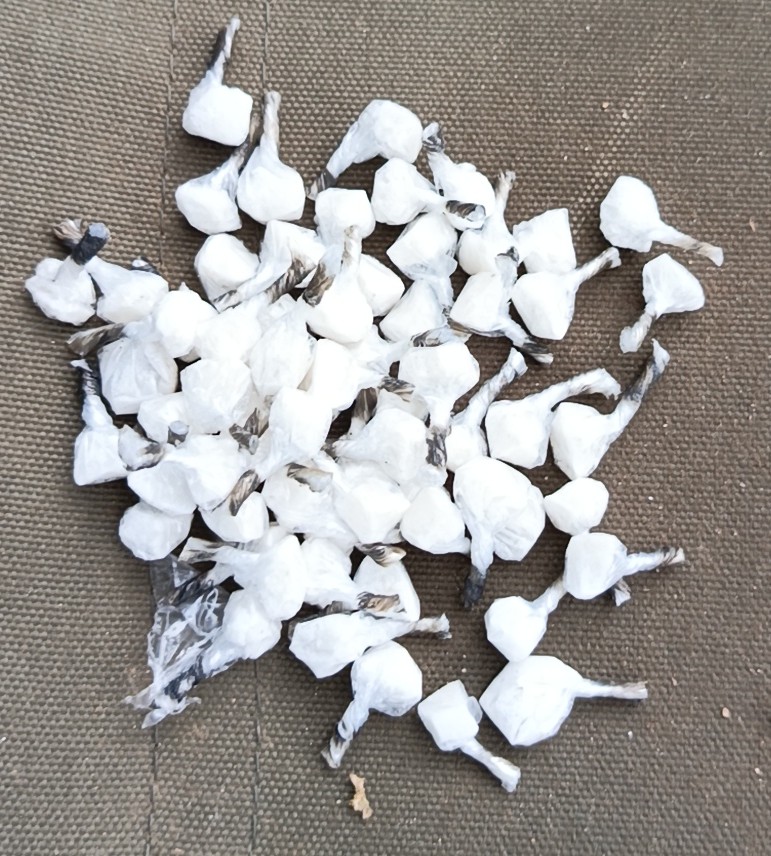
Drug abuse is one of the adverse impacts of mining on communities. However, this is the first time the ones associated with the Sapo park, West Africa’s second-largest rainforest, have come to light. Pictures of the seizure in an unpublished official report, seen by DayLight, show heroin, marijuana, tramadol, and the deadly Kush. An unpublished joint security report, seen by The DayLight, said occupants practiced “immoral and cruel acts far away from human civilization.”

Top and here: Several grams of heroin, commonly called Italian white or tar, were seized by joint security forces in the Sapo National Park in August. Filed picture: Joint Security Team

The park’s drug trade is being fueled by Nigerians, Sierra Leoneans, and other nationalities, using land and water routes, according to residents and ex-park occupants alike.  Drugs are smuggled into the park at night, eluding rangers.

Many illegal occupants are hooked on drugs, according to ex-occupants DayLight interviewed. After taking in the harmful substance, they bleed from their noses and mouths. In some cases, they die from an overdose.  

“Our children are spoiled with drugs. As a mother of three boy children, I am saddened by the pictures I saw in the camp. When I see a boy child smoking and think about kids, it makes me feel so bad,” said Beatrice Giddings, who ran a business in the 1,804-square-kilometer park. Giddings was speaking to reporters in Korjayee, where the joint security is based, and one of the entrances to the forest.

An AFL soldier searches women for contraband. Filed picture/Joint Security Team

Leaked videos obtained by The DayLight corroborate Giddings’ comments. In one of the videos, a young man is seen crying and begging for mercy while being tied. His cries, however, fall on deaf ears, as his torturers ordered that he be given kush instead. A deadly mixture of chemicals, kush kills about a dozen weekly and hospitalizes thousands in neighboring Sierra Leone. It has wreaked havoc in Liberia since its introduction four years ago.

Nixon Browne, chairman of the Movement for Citizen Action, which advocates for the park’s protection, said people have made illegal drugs a permanent business in the park.

“The camps are a major hideout for this kind of criminal business that the guys need to support their habit,” said Browne. “There are other people who want to live in the camps because there is a drug there.”

Carbon Markets: Liberia’s Next Frontier for Sustainable Growth

#image_title

Top: A forest in Jacksonville, Bong County, in 2020. Picture credit: Harry Browne


By Winnie Oguerilam


As the world accelerates efforts to address climate change, carbon markets have become a central mechanism linking environmental stewardship with economic opportunity. For Liberia, a country endowed with vast forest resources and rich biodiversity, carbon markets offer a promising path to sustainable development, poverty alleviation, and international climate leadership.

Understanding Carbon Markets and Carbon Credits

A carbon market is a system that enables the buying and selling of carbon credits. Each carbon credit represents one metric ton of carbon dioxide (CO₂) either removed from the atmosphere or prevented from being emitted. These credits can be generated through a variety of projects and activities that reduce greenhouse gas emissions. Examples include protecting existing forests, planting new trees, shifting to renewable energy sources, improving agricultural practices, and managing waste more sustainably.

Countries and companies that produce more emissions than allowed under regulations or voluntarily set targets purchase carbon credits to offset their excess emissions. There are two main types of carbon markets. The compliance market involves transactions regulated by governments under international agreements such as the Paris Agreement. The voluntary market allows businesses and organizations to buy credits to meet self-imposed environmental goals or demonstrate corporate social responsibility.

At its core, the carbon market places a monetary value on the reduction of carbon emissions, creating an economic incentive for conservation and sustainable practices.

Why Carbon Markets Matter for Liberia

Liberia is home to a significant portion of the Upper Guinea forests, one of West Africa’s most important and intact tropical rainforest ecosystems. These forests are critical not only for Liberia but for the global climate. They absorb vast quantities of carbon dioxide, helping to mitigate climate change. Beyond carbon sequestration, Liberia’s forests support biodiversity, regulate rainfall patterns, protect watersheds, and provide livelihoods for thousands of rural communities.

For Liberia, participating in the carbon market offers multiple benefits that align with environmental conservation and economic growth.

New Revenue Opportunities

Carbon credits represent a new and sustainable source of income. As global demand for credible carbon offsets rises, Liberia could generate millions of dollars annually by protecting its forests. This revenue could diversify the country’s economy, reducing dependence on traditional sectors such as mining, rubber, and timber, which often have significant environmental and social costs.

Community Empowerment and Development

Properly designed carbon market projects have the potential to directly benefit local communities, particularly those living in or near forested areas. Funds generated can be invested in schools, healthcare facilities, clean water systems, and livelihood programs. This approach can help reduce poverty, strengthen local governance, and ensure that the people who protect the forests receive tangible rewards.

Environmental Conservation

Carbon finance provides a strong economic rationale for preserving Liberia’s forests. By attaching financial value to standing forests, it becomes more profitable to conserve trees than to clear them for agriculture, logging, or mining. This not only helps combat climate change but also safeguards biodiversity, protects soil quality, and maintains essential ecosystem services.

International Climate Leadership

Liberia’s active engagement in the carbon market would enhance its global standing. It would demonstrate the country’s commitment to international climate agreements and sustainable development goals, strengthening its voice in climate negotiations and attracting further international support and investment.

Why Now Is the Time for Liberia to Act?

The urgency of embracing carbon markets cannot be overstated. The global appetite for carbon credits is growing rapidly. Governments, multinational corporations, and financial institutions are under increasing pressure to meet ambitious net-zero emissions targets. They are looking for high-quality carbon credits from countries with large, intact forests, making Liberia one of the few nations with the natural capital to meet this demand.

At the same time, Liberia’s forests face escalating threats. Illegal logging, mining, agricultural expansion, and infrastructure development put immense pressure on forest resources. If Liberia fails to develop alternative sources of income that reward conservation, the value of its forests will decline, and deforestation will accelerate.

Fortunately, Liberia has taken important steps in environmental governance. It has strengthened environmental laws and institutions, improved monitoring systems, and committed to international climate agreements. This progress lays the foundation for Liberia to develop transparent, accountable, and credible carbon trading systems.

Addressing Challenges for Success

Despite their promise, carbon markets come with challenges that Liberia must proactively address to ensure fair and sustainable outcomes.

Transparency and Accountability are essential to build trust among all stakeholders. Clear systems must track carbon credit projects, verify emission reductions, and ensure revenues are properly managed. Without these safeguards, carbon markets risk corruption, fraud, or mismanagement that could undermine Liberia’s credibility.

Drone shot of a community in Gbarpolu. The DayLight/James Giahyue

Community Inclusion is critical. Forest-dependent communities must be active participants in carbon projects. Their consent, rights, and benefits must be respected and prioritized. Excluding local people risks social conflict, project failure, and loss of forest protection.

Institutional Capacity must be strengthened. Liberia needs investment in technical skills, data infrastructure, and regulatory frameworks to navigate the complexities of carbon markets. Partnerships with international organizations and experts can accelerate this process.

Seizing a Defining Opportunity

Liberia stands at a crossroads. Carbon markets offer a unique opportunity to transform the country’s natural wealth into a foundation for sustainable growth and climate action. Rather than viewing forests as obstacles to development or sources of short-term profits through logging or land conversion, Liberia can treat its forests as living assets—generating income, creating jobs, supporting communities, and helping to solve the global climate crisis.

The decision is clear: Carbon markets are shaping the future of climate policy and economic development worldwide. Liberia must choose to lead rather than follow. By drafting a national strategy that balances conservation with economic needs, invests in strong governance, and includes local communities, Liberia can position itself as a leader in Africa’s emerging green economy.

The world is watching. Liberia’s forests are too valuable to lose and too important to ignore. With decisive action today, Liberia can secure a prosperous and sustainable future for generations to come.

The time to act is now. Liberia’s next chapter in sustainable growth starts with the carbon market.


Winnie S. Oguerilam is a Communications and Public Relations professional with a background in Environmental Science. She is currently serving as a trainee in the Political, Press & Information Section at the European Union Delegation in Liberia, where she supports public diplomacy and policy outreach. With experience in climate communication, advocacy, and community engagement, Winnie’s work bridges the gap between sustainability, governance, and public awareness. Her research and writings focus on environmental resilience and market-driven solutions to climate challenges in Liberia and beyond.

Podcasts