Home Tags Wild Chimpanzee Foundation

Tag: Wild Chimpanzee Foundation

Locals Lie to the EU over Proposed Park, Investigation Finds

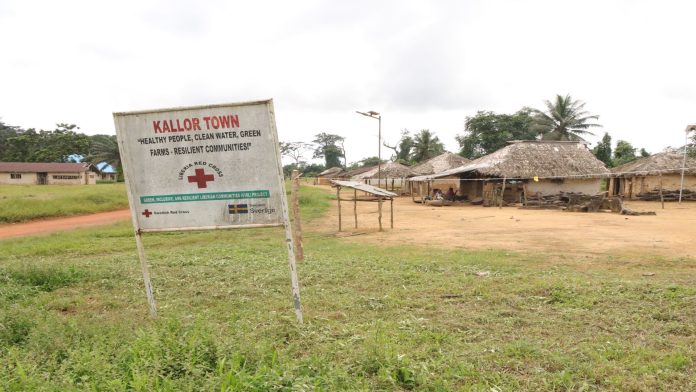
Top: A view of Kallor Town, in Lower Sanquin Clan, Sinoe County. The DayLight/Samuel T. Jabba


By Varney Kamara, Esau J. Farr and Samuel T. Jabba


KALLOR TOWN – People in Sinoe County lied in a letter to the European Union Delegation in Liberia regarding their participation in the establishment of a proposed park, a DayLight investigation found.

In early September, the Lower Sanquin Clan citizens wrote ex-Ambassador Nona Deprez to intervene in an alleged violation of their customary rights regarding the Kwa Proposed Protected Area, according to the letter, seen by The DayLight. In the letter, they claim that they did not sign any agreement with authorities and had not consented to the establishment of Kwa. They are asking the EU, which is funding the park, to halt the process until they get redress.

Kwa is a collaboration among the Forestry Development Authority (FDA), Wild Chimpanzee Foundation (WCF), and the Liberia Land Authority (LLA). Legislation to finalize its formation is now before President Joseph Boakai for his signature. Thereafter, the document would go to the Legislature for enactment. 

“To be clear, our community has not given [its consent] for the creation of the park,” read the Sanquin citizens’ letter. “We have asked that the gazettement be delayed until the FDA, the LLA, and the WCF propose a model of conservation that will respect our customary rights.”

But a DayLight review of official documents and interviews—including with signatories—contradicts the claims in the letter.

Contradiction

Covering 171,888 hectares, the Kwa Proposed Protected Area spans River Cess, Sinoe, and Grand Gedeh Counties. The forest is a habitat for Liberia’s second-largest known population of critically endangered western chimpanzees, pygmy hippopotamuses, and forest elephants. It supports national efforts to protect 30 percent of Liberia’s forests and fulfills its climate commitments. 

In 2016, the Kwa process started. However, in 2023, a group of NGOs, including Social Entrepreneurs for Sustainable Development (SESDev), objected to the process. The group flagged that communities had not confirmed their customary ownership of the forestland. The advocacy referenced the Gbehzohn Declaration, in which actors agreed to confirm customary land tenure before establishing a park.

Eventually, the process resumed in early 2023, with customary land activities. Locals finally gave their consent for Kwa, signed boundary agreements, and agreed to co-manage the park alongside authorities, official documents show. They also participated in meetings about the humid forestland.

“Our towns commit to actively participate in the sustainable management of protection of the future… Kwa National Park,” read one document they signed. “Our town wishes to receive specific benefits based on negotiations from the future… Kwa National Park.”

Ironically, three individuals who co-wrote the letter to the EU envoy had signed documents to establish Kwa.

Evelyn Kpalleh, Town Chief of Kallor Town, signed a Kwa co-management agreement on April 5, 2023, and a boundary paper on June 27 this year. She admits to signing the documents, but said she co-wrote the EU letter because she was allegedly left out of the boundary process.

Esther Broh, a farmer in Kallor Town, signed a similar Kwa co-management document that Kpalleh signed on the same day. However, she denies signing the document. “I don’t remember signing any agreement that the park should come to our community,” said Broh in an interview with The DayLight at her home.  

However, the evidence does not support Broh’s comments. Broh and three other Kallor townspeople even agreed to take part in species monitoring and patrols, according to official documents. They promised to farm outside “the agreed harmonized boundary” of the proposed park.
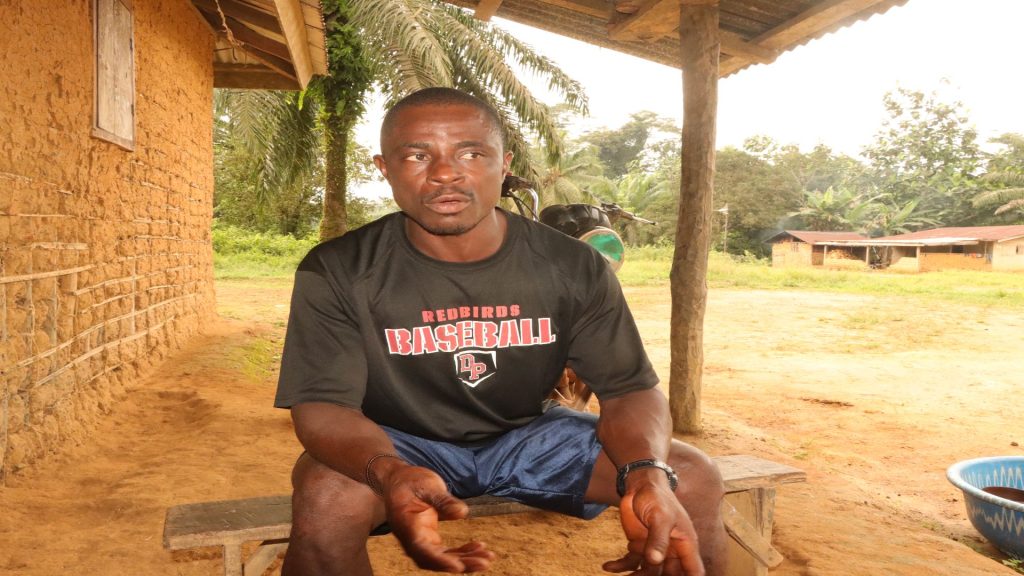
Reason Seequeh, the chairman of the Upper Sanquin Clan’s land committee, speaks with The DayLight. The DayLight/Samuel Jabba

Reason Seequeh, who heads the community land leadership, signed a Kwa boundary agreement with five other people, including Kpalleh and Clan Chief Anthony Blay. Seequeh now claims his signature on the Kwa document was forged, and accused authorities of extending the boundary into his farmland. 

“I remember attending a meeting in Bolue-2. We only signed the attendance sheet for people who participated in the meeting. I did not sign any form for the establishment of this park,” said Seequeh.

Two townspeople who also signed the boundary agreement confirmed Seequeh signed it.

“We signed the paper. Mr. Seequeh, who is our chairman, also signed the document,” said Sarah Jlateh, a Sayon Town leader.

“We signed the document in a big meeting in Kallor Town. I signed it. Mr. Reason Seequeh and other people signed it. The only issue we have now is that when they got ready to cut the line, they did not involve us in the process,” said Jerry Baker, a Sayon Town resident. 

Dr. Annika Hillers, WCF’s Country Director, said all legal procedures regarding customary land were followed.

“These steps served to ensure that the communities’ farming activities were excluded from the park and the boundary was shifted and the size of the park was reduced to make sure that no crops were affected,” Dr. Hillers said. “The communities were fully part and thus influenced the boundary location.”

The LLA, which oversees the customary land activities, said it would investigate Seequeh’s claim. “The same people who are now saying that they did not sign any documents are the same people who participated, got involved in meetings, and signed attendance sheets and other agreements,” said Ezekiel Weah, Assistant Director of Customary Land. The FDA did not respond to queries.

A second lie

Like the letter’s co-authors, several people who signed boundary and consent papers denied doing so. However, reporters interviewed one person who admitted signing the documents.

Mathew Tarpeay, a New Town resident, now Commissioner of Upper Sanquin: “The only issue we had was for the park to go behind our sacred creek. Once that was done and resolved, we agreed and signed for the park to come. We have no objection to it.”
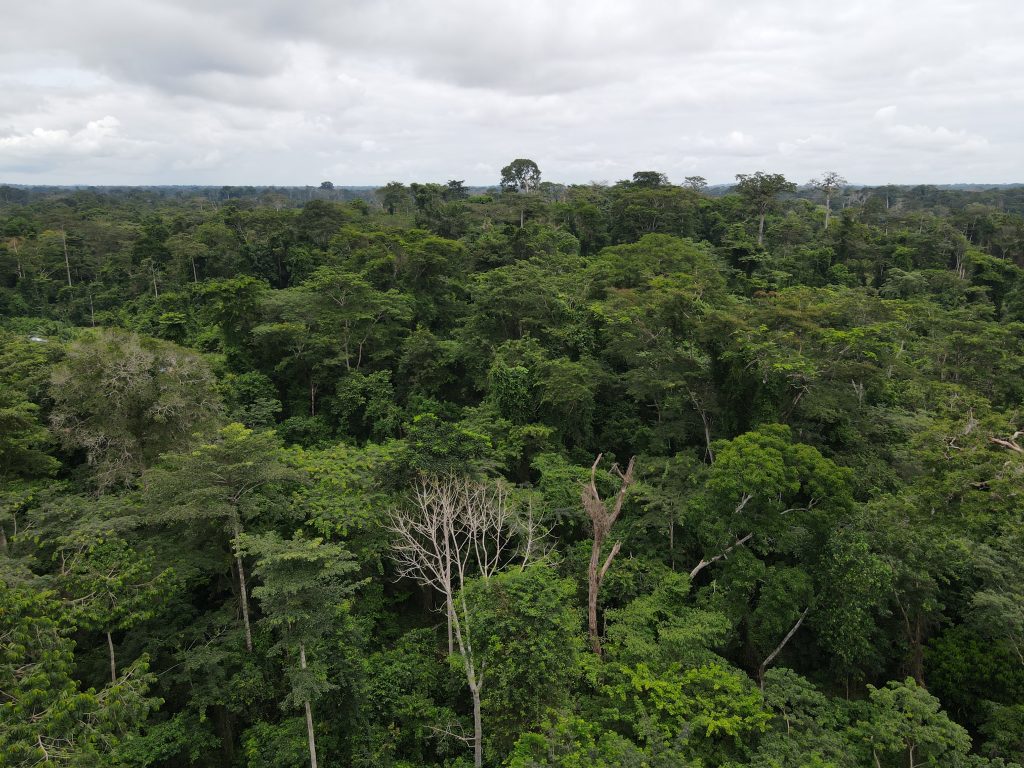
A drone picture of the Kwa Proposed Protected Area in Grand Gedeh County. The DayLight/Samuel T. Jabba

This is the second time local people have lied about their involvement with Kwa. Earlier this year, The DayLight published evidence that cocoa farmers in Grand Gedeh County misinformed President Boakai, leading to a government inquest. The farmers claimed they had not given their consent for Kwa formation. Turns out, like in the Lower Sanquin case, signatories of the presidential letter had signed official documents for Kwa. The findings from the government inquest have not been published. 

But in interviews in four adjacent Kwa communities in Grand Gedeh, townspeople expressed support for the proposed park.

“From the beginning, we said no because the forest is where we can get our living,” said Cephus Krah, Town Chief of Kumah Town in Tchien District. “But after they taught us about the importance of the forest, we signed the document without anybody forcing us.”
US$5.4 Million Grebo-Krahn Park Project Restarts

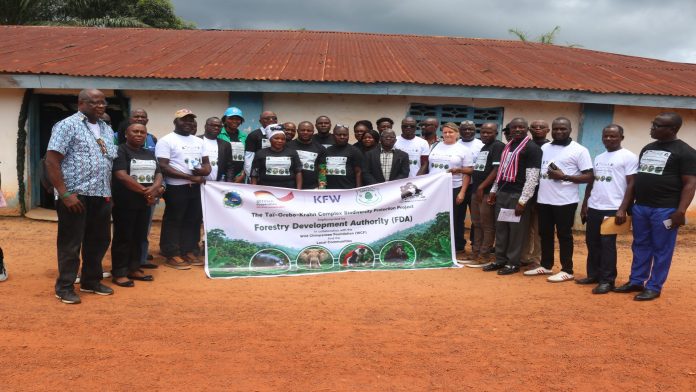
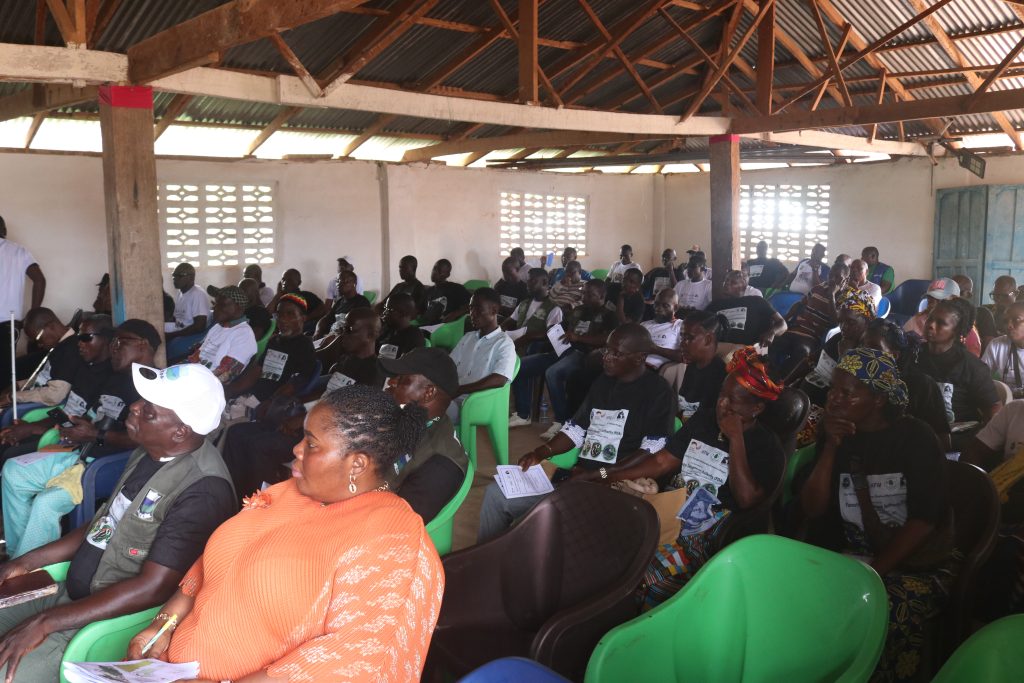
Top: Participants at the Grebo-Krahn project relaunch in Ziah City. The DayLight/Esau J. Farr, Sr.


By Esau J. Farr, Sr.

ZIAH CITY, Grand Gedeh County – The Forestry Development Authority (FDA) has relaunched a multipurpose project for the Grebo-Krahn National Park. The 4.7 million Euros (US$5.4m) project is called the Tai-Grebo-Krahn Complex Biodiversity Protection Project, meant to manage the park.

The German government is funding the project through the Wild Chimpanzee Foundation (WCF) in Liberia, a conservation NGO. The scheme was approved in 2017 by the German Development Bank (KfW) valued at 6 million Euros. 

“We hope that this project can finally address some of the issues that have been coming from the park since its establishment nine years ago,” said Wild Chimpanzee Foundation’s Country Director, Dr. Annika Hillers, at the project’s relaunch in Ziah City, Grand Gedeh County. “It will bring a lot of relief to FDA, the partners, and most of all, the development of local community members.”

The three-year plan focuses on communities’ benefits. It targets roads to connect communities around the park, and offices for the FDA to support regular monitoring. It intends to train over 300 people, employ locals, and introduce animal farming and local savings clubs.

The project also targets the construction of schools, medical facilities and hand pumps, and 150 solar street lights for communities adjacent to the park.

The FDA’s Deputy Managing Director for Community, Conservation and Carbon, Nora Bowier, encouraged locals to own it.

“You need to own it because if it succeeds, we all succeed, and if it fails, we all fail,” Bowier said. “We listened to all your concerns and interests and we are going to look into them to try and address them to the degree we can.” 

Thomas Yaya Nimely, the Senator of Grand Gedeh County, said locals were willing to help the government protect the forest.  

“Our concern is that our citizens have been keeping this forest for generations and as you have come for it, we want to know what benefits this project will bring to them?”

History and biodiversity

The Grebo-Krahn National Park was established in 2017 through a partnership of the FDA and Wild Chimpanzee Foundation. Its establishment was part of the government’s efforts to preserve a portion of its forest in line with the Paris Agreement.

The 97,136-hectare forest runs from Grand Gedeh through River Gee into the Tai-Grebo area near the Ivorian border. The area hosts several wildlife species,  including forest elephants, chimpanzees and the pygmy hippopotamus.

Additionally, it has 300 known animal species and 270 plant species, highlighting its environmental significance. The region has also been designated as an Important Bird Area (IBA) by BirdLife International, the world’s leading global partnership dedicated to the conservation of birds and their habitats.

An environmental and social impact assessment (ESIA) is expected soon, after which road construction will begin.  

Two Protected Forests Near Establishment

Group pic Gt
Group pic Gt

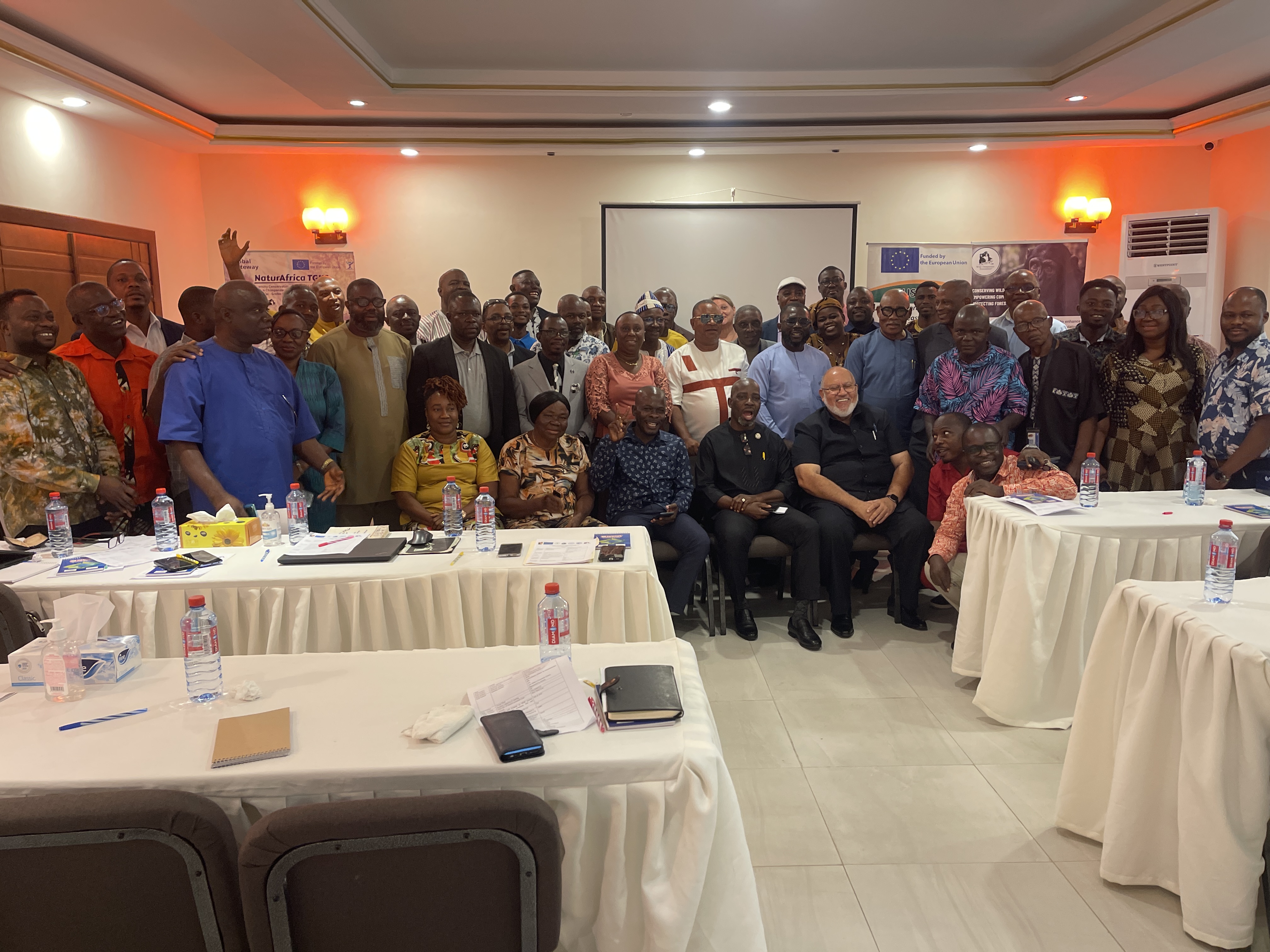
Top: Stakeholders at the Proposed Kwa Gazettement forum in Monrovia. The DayLight/Esau J. Farr


By Esau J. Farr


MONROVIA – Forestry actors agreed to establish the Kwa and Wonegizi Protected Areas in Liberia, and expect them to become reality soon.

Officials held two public engagement forums in Monrovia to gather stakeholders’ input for Kwa and Wonegizi’s gazettement. Scores of conservationists, forest campaigners, and governmental agencies participated in the events.

“Today, we have come with a package to put this portion of the Kwa into protection for the future of our people,”  said Rudolph Merab, the FDA Managing Director, at the Kwa event. “We appreciate the efforts of all who helped reach this far.”

Pygmy hippo

Kwa and Wonegizi safeguard critical swathes of Liberia’s remaining portion of the Upper Guinean forests. They are home to endangered species and are part of the country’s commitments to preserve 30 percent of its forests.

The Kwa Proposed Protected Area covers River Cess, Sinoe and Grand Gedeh Counties, extending some 236,246 hectares. Its establishment began in 2016. The FDA partners with the Wild Chimpanzee Foundation, based in the Mano River basin, and the US-based Rainforest Trust to establish the area.

Kwa supports Liberia’s second-largest known population of critically endangered western chimpanzees, endangered pygmy hippopotamuses, and critically endangered slender-snouted crocodiles.

Dr. Annika Hillers, the Country Director of Wild Chimpanzee Foundation, told the Kwa ceremony reveled in the progress.

“We need to talk about what is best for the country and not what is best for an individual. We hope that for the best of Liberia, the proposed Kwa National Park will become a reality as soon as possible,” added Dr. Hillers.

Meerab
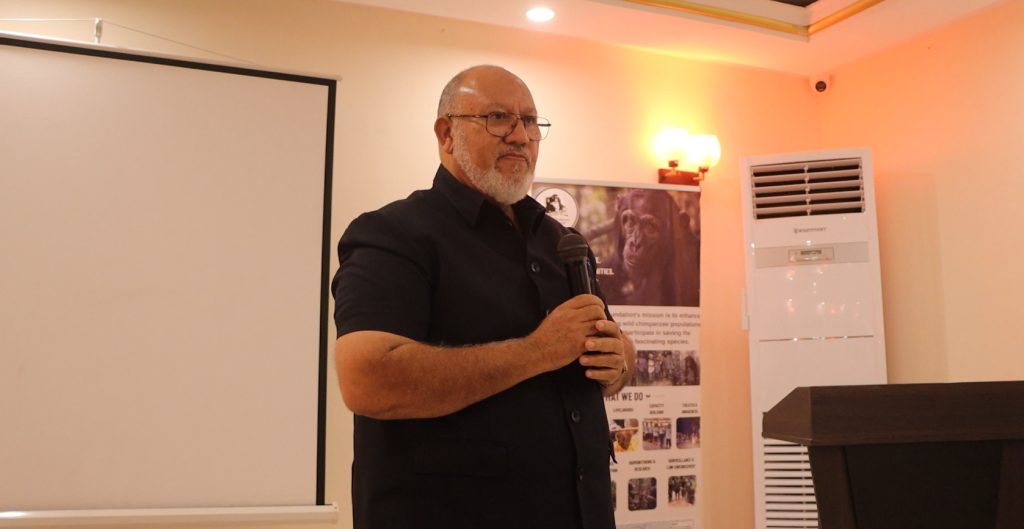
FDA Managing Director, Rudolph J. Merab, Sr. The DayLight/Samuel Jabba

Zebra duiker

The Wonegizi Proposed Protected Area covers 27,645 hectares in Lofa County’s Ziama Clan. Started in 2013, the FDA works with Fauna & Flora (FFI), a UK-based NGO, to establish Wonegizi. Located along the Liberian-Guinean border, it is an important transboundary forest landscape with Guinea’s Biosphere Reserve.

Full of rocky terrain and lowland rainforests, Wonegizi is home to forest elephants, pygmy hippopotamuses, and the rare zebra duiker. It allows large mammals to migrate safely between the two countries, maintaining a range of diverse species across regional highlands.

The formation of Wonegizi is also meant to prepare communities for carbon trade with an estimated US$2.5 million community benefit annually, according to FFI.

“I am very pleased that we have come to this stage finally. It took a long process,” said Dr. Mary Molokwu-Odozi, FFI’s country director. “It will now be a smooth process going forward.”

Efforts to establish Kwa and Wonegizi have experienced challenges.

Kwa’s establishment has been stalled due to competing mining interests and agricultural activities.  Between 2002 and 2025, Kwa lost 64,358 hectares or roughly 27 percent of its original size, leaving its current area at 171,020 hectares.

In June this year, citizens from Grand Gedeh’s Gbarzon District accused the FDA of illegally extending Kwa’s boundaries into farmlands and destroying their crops. President Joseph Boakai ordered an investigation into the matter.

Senator Augustine Chea of Sinoe County, Chairperson of the Senate Committee on Judiciary, called for caution.

“Consulting us is the right thing to do, but we must do this against the background that there are people who reside on the land, who have customary rights to the land,” said Chea. “Conservation is good, but survival is more important than conservation.”

Ancestral land deed

Meanwhile, Wonegizi’s establishment was delayed due to adjacent communities’ efforts to obtain ancestral land deeds. The communities finally obtained their deeds last year and earlier this year, thrusting the process forward.

Stakeholders also raised qualms about the human-elephant crisis in the region. In the last decade, elephants have raided towns and farms in the northwest in search of food. This has caused people to migrate to new areas.

“The elephant issue must be looked at as we don’t intend to harm them. Each and everyone’s interest must be protected in the process,” said Lavelah Massaquoi, the Superintendent of Lofa County.

The gazettement packages of the forest areas are expected to be presented to the Legislature for enactment. Once passed into law, they will be sent to the President for approval.

“We have done a lot, and we are now at the last stage of their establishment,” said Merab. “When we have finally passed the act that creates these areas, we will hope that you will support and ensure that it is not encroached upon.”

Cocoa Farmers Ask Gov’t to Push Proposed Park Behind      

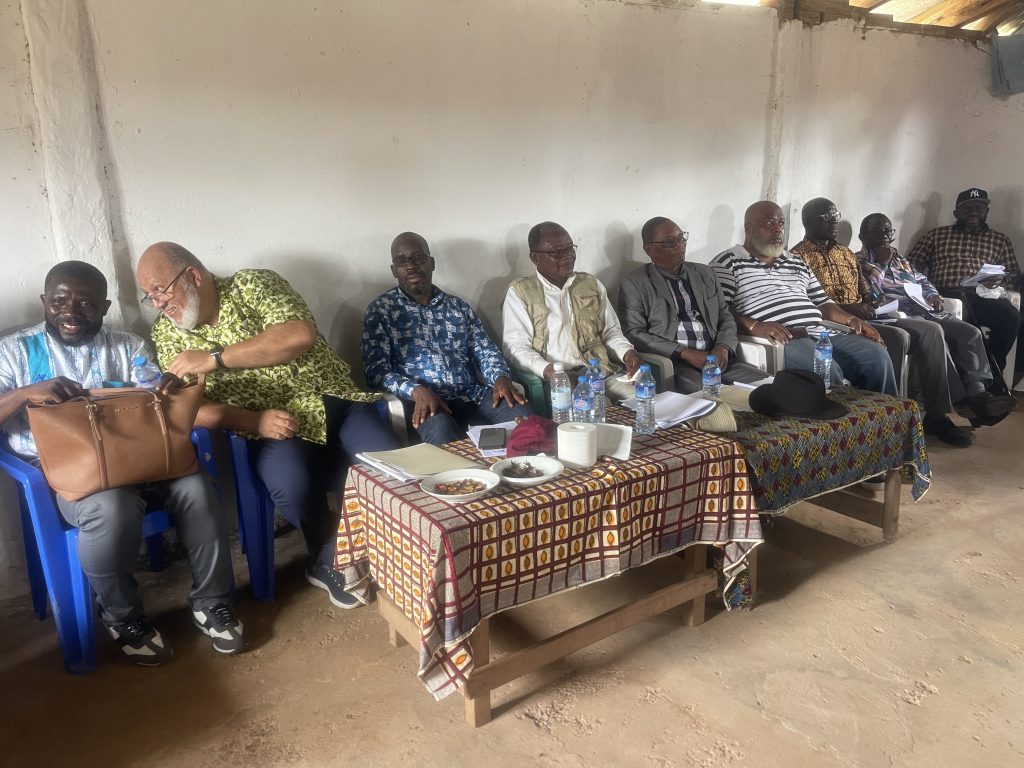
Elders and chiefs at a meeting in Gaye Town to discuss the boundaries of the Kwa Proposed Protected Area in Grand Gedeh
Chiefs and elders meet for the Kwa Proposed Protected Area

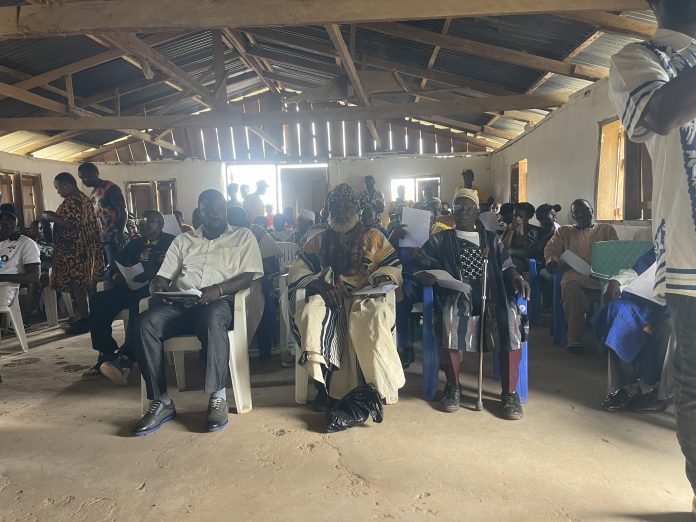
Top: Some participants at the meeting in Gaye Town. The DayLight/Esau J. Farr


By Esau J. Farr


GAYE TOWN – Cocoa farmers in Grand Gedeh County have requested that boundaries between the Kwa Proposed Protected Area and their communities be extended.

The communities lie between 3.8 and 19 kilometers from Kwa, which covers 172,200 hectares across Grand Gedeh, River Cess and Sinoe. However, they want the boundary lines to be 10 kilometers further away so they can access more farmlands.

“We can guarantee you that when this boundary line is passed, you don’t need to pay people to protect the park. We ourselves will protect the forest,” said Abednego Zweh, Chairman of Grand Gedeh’s farmers. Zweh spoke at a recent meeting to resolve a dispute with the Forestry Development Authority (FDA) and partners in Gaye Town, Gbarzon District.

“If our request is not honored by the President, we will still appeal,” he added.

The meeting was part of an investigation President Joseph Boakai ordered last month following the farmers’ appeal for his intervention.  

In their letter to President Boakai, the farmers claimed that they did not consent to the proposed park’s boundaries. They accused authorities of abusing their rights, allegations authorities deny.   

IMG 8393
FDA boss Rudolph Merab chats with Grand Gedeh lawmaker Jacob Debee. Lawmaker Jeremiah Sokan and Thomas Yaya and other county authorities at the meeting. The DayLight/Esau J. Farr

The farmers said they participated in meetings, but were unaware of any boundary arrangements.

Clement Tweh, the program manager of Wild Chimpanzee Foundation—an NGO that works with the FDA to establish Kwa—dismissed those claims. Tweh said the farmers signed consent and boundary documents.

“We don’t want a handful of individuals who have farms and are not the actual representatives of the communities to benefit, rather than the entire community,” said Tweh. The DayLight independently reviewed the documents to verify his claims.

‘Let the boundaries remain’

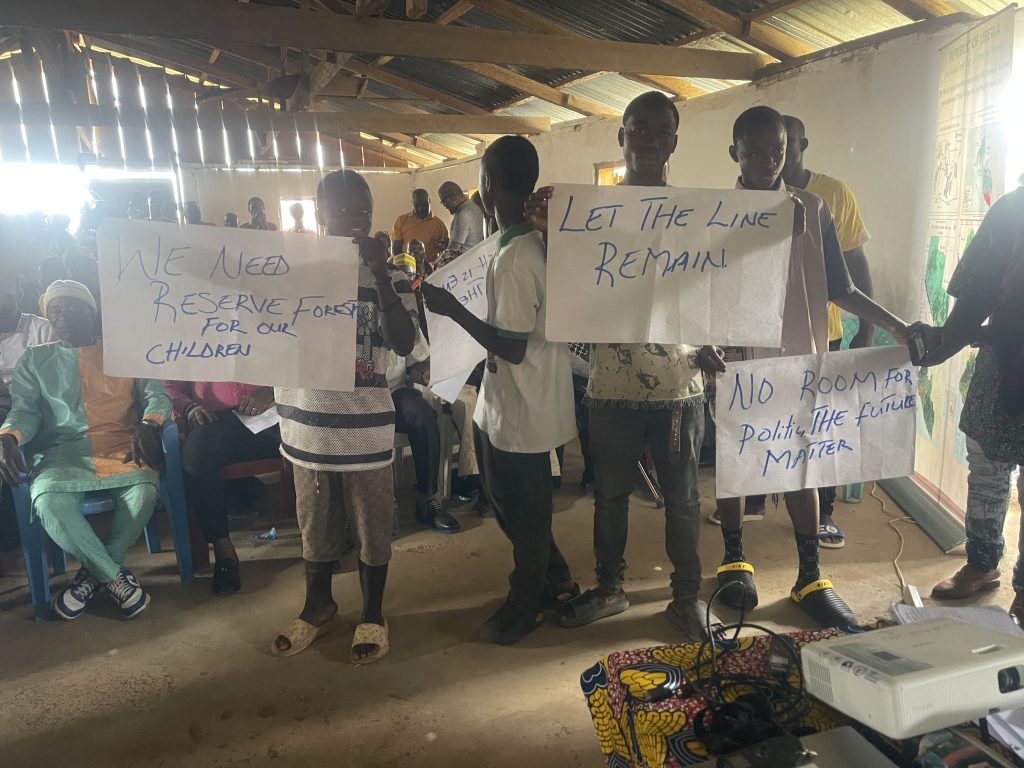
Interestingly, a group of concerned youths of Gbarzon District disagreed with the farmers. Led by Leo Wilson Jahyee, the youths carried placards, brandishing inscriptions: “Let the boundaries remain,” “We need reserved forests for our children,” and “Enough is enough.”

“We believe that forests should be managed, be cared for and the boundary line should remain,” Jahyee said.

The group accused the farmers of wanting to expand their cocoa farms with the help of Burkinabe migrants they host. Several of the farmers The DayLight interviewed had at least two Burkinabe migrants. About 140,000 Burkinabe migrants are in Grand Gedeh and River Gee, according to the Liberia Refugee, Repatriation and Resettlement Commission (LRRRC). 

IMG 8412
Members of the concerned youths of Gbao District at the Gaye Town meeting. The DayLight/Esau J. Farr

Cocoa farming is fast depleting Grand Gedeh’s forest. Local farmers have encroached on logging concessions, community forests, and the proposed park. From 2002 to last year, Gbarzon lost 46,000 hectares, or 14 percent of its primary forest, according to the Global Forest Watch, an app that tracks deforestation.

Following presentations from the opposing sides, the FDA Managing Director Rudolph Merab told locals they would hear from him following a meeting with President Boakai.

“I could have concluded [this matter] right now and made a decision, but unfortunately, I cannot do that because you have also written the President,” said Merab. “I cannot make a decision without consulting him.”

At the end of the meeting, the farmers agreed not to extend their farms until they hear from the FDA.  Meanwhile, the regulator has mandated forest rangers to halt all operations in the disputed areas, pending the President’s decision.