Home Tags Ministry of Mines and Energy

Tag: Ministry of Mines and Energy

Montserrado Authorities Approve Illegal Mining Operations in Todee

WhatsApp Image 2023 04 13 at 11.14.09

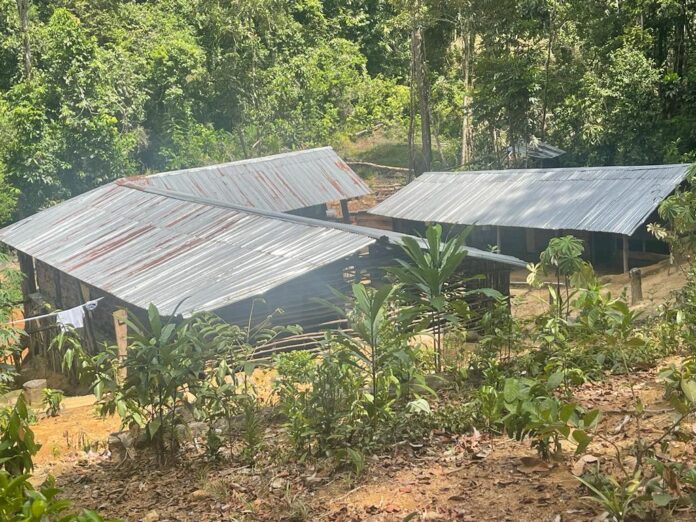
Top: Urban and Rural Services Inc. Current Campsite at the Kponneh Mountain in Todee District


By Esau J. Farr


TODEE – Representative Lawrence Morris of Montserrado District Number One, and County Superintendent Florence Brandy have signed an illegal memorandum of understanding authorizing a company to mine gold in the mineral-potential district of Todee.  

Morris and Brandy signed the MoU on February 1, 2023, and approved the MoU between the three clans of Todee and Urban and Rural Services Inc. though the company did not have a license or a business registration.

Statutory Superintendent John Tucker, chiefs, and other local leaders signed the illegal document. A Chinese national Wn Xue Cheng signed for Urban and Rural Services Inc.  The MoU is written on the official letterhead of the House of Representatives.

The document grants Urban and Rural Services the right to mine gold in the Kponneh Mountain for five years beginning February 2023 and ending 2028.  

As part of the MoU, the company is expected to construct ten handpumps in the three clans within Todee during the first year of its operation.

The company also agreed to mend bridges in the area and recondition clinics annually for use by the locals. In addition, the company is expected to also install 50 solar lights in major towns.

“Whereas, Urban and Rural Services Inc. agrees that an amount of one thousand United States (US$1,000) dollars per annual must be used for the educational sector of Todee Statutory District to improve the learning condition of schools in the district,” the MoU says.

The document allotted L$100,000 to the district monthly, with 50 percent of that amount for the Ding Clan, which hosts the Kponneh Mountain.

For all of that, Urban will mine gold in the area from 2023 to 2028.

Owned by a Liberian businessman named Prince Nah Williams, Urban and Rural Services Inc. was founded in 2018, according to its article of incorporation at the Liberia Business Registry. It held six gold prospecting licenses in Todee, Lofa and River Cess, all of which have expired, according to records of the Ministry of Mines and Energy. The ministry’s records show Urban prospected for gold in Todee, but the two licenses it held for the area expired in 2019. All of its other licenses expired in 2021.

Mining without a license violates the Minerals and Mining Law while running an unregistered business breaks the Business Association Law. The former violation carries a US$10,000 fine, a 12-month prison term, or both.
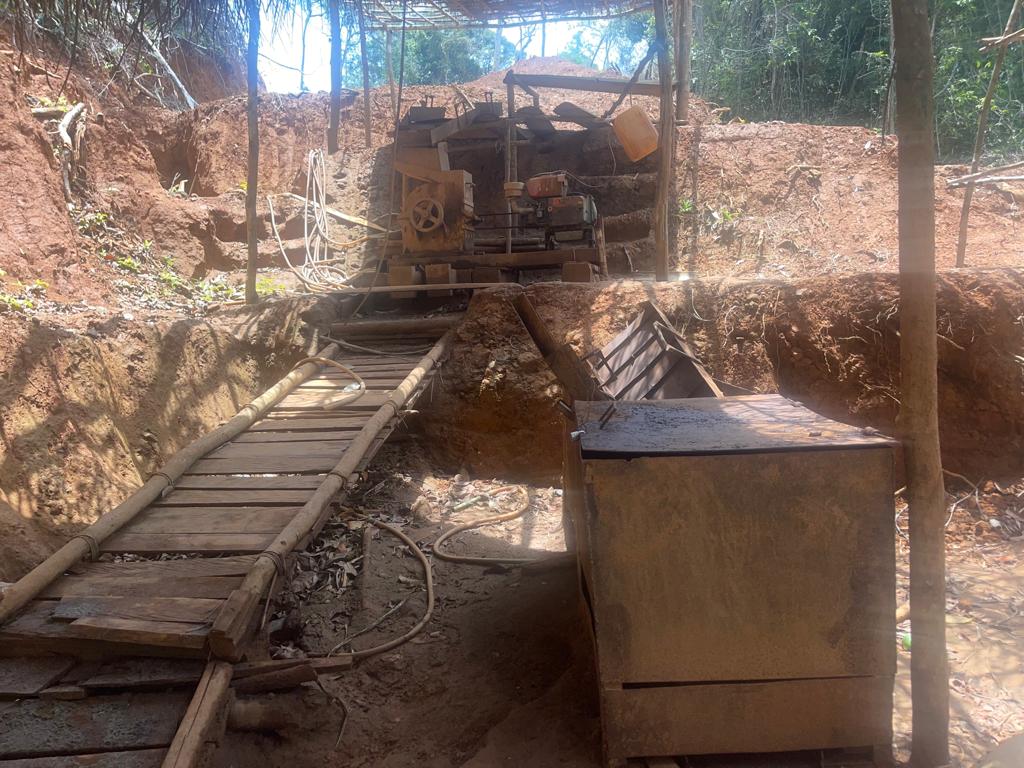
Urban’s mining machine in Todee the company used during its time of prospecting. The DayLight/Esau J. Farr

Its work also violates the Environmental Protection and Management Law of Liberia due to the failure of the company to seek environmental approval. Mohammed Sirleaf, Urban’s liaison officer, said a team from Environmental Protection Agency (EPA) had visited Urban’s worksite and cautioned them. Violators of the law face up to 10 years of imprisonment, a US$25,000 fine, or both.

Sirleaf conceded its operations are illegal. He said they were in the process of acquiring the right to mine in Todee through the acquisition of a valid mining license.

“Recently, we had a guest from the Ministry of Mine and Energy—I think a Regional Agent—and he advised us to have a legal license to avoid future embarrassment with authorities,” Sirleaf said.

Some residents are aware of the illegality of the document.

Bendu Kotoe, a women’s leader in Ding Clan refused to sign it. “The mining license they are supposed to bring, we have not seen it yet. So, we don’t agree for them to work,” Kotoe said.  

Paramount Kanakour regretted signing the document upon speaking to The DayLight. “For me, I am not aware of this and I am not in the mining sector. I don’t know the criteria for getting a mining license. So, if they are saying they don’t have the rightful documents, the government can take its course [of action],” he said.
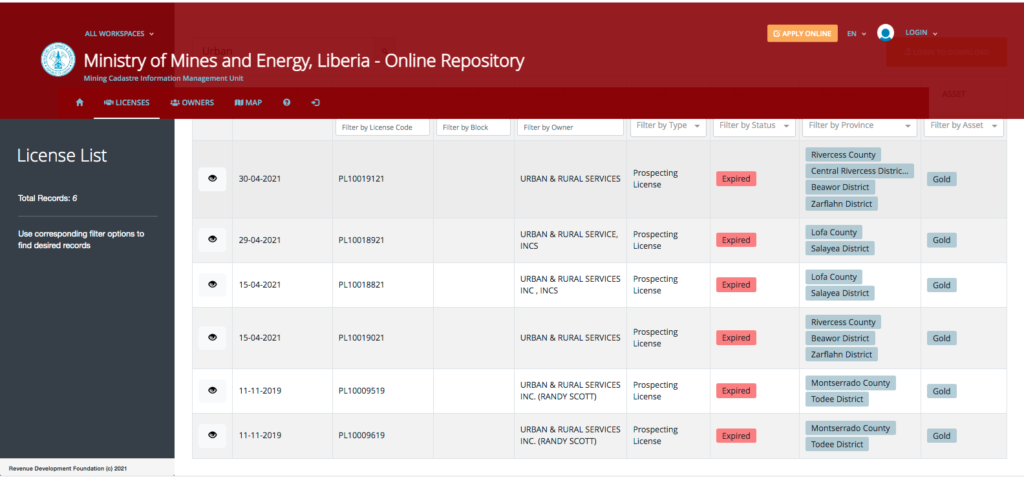
A screenshot of records of the Ministry of Mines and Energy shows that Urban and Rural Services Inc. does not have any active mining licenses.

“We have a committee set up to look into such matters,” he added.

When contacted, Brandy claimed she only attested to the illegal MoU. “I am not the one who signed the MoU. You are a journalist, do your investigation and see who all signed it and who attested to it,” Brandy told this paper in a telephone interview.

Contrary to her claim, Brandy actually signed the document. In fact, it was Representative Morris who attested to it.

Brandy also claimed the MoU was meant to only get Todee’s consent for Urban to operate in the area. However, DayLight’s visit to the area showed that the company has already started its operations. This reporter saw mining equipment paving roads in the area and mineworkers building a camp.

Moreover, Urban has already started paying host communities. Sirleaf said the company had already paid the L$100,000 for February, the beginning of the agreement. The Paramount Chief Kanakour confirmed the payment. The Land Rights Act recognizes rural communities’ right to consent to projects on their lands but does not require payment for that consent.

Representative Morris, in whose district Todee falls, said he attested to the document because he did not know Urban’s licenses had expired. Later in the interview, he said he had thought the MoU was for exploration, not for mining. His statement is not backed by facts, as the MoU clearly authorizes Urban to “carry out gold mining activities.”

On using the letterhead of the National Legislature for the MoU, Morris said he did that on purpose.

“We used my official legislative letterhead because I want to take responsibility for anything coming out of the MoU,” Rep. Morris said in the interview.

Funding for this story was provided by the Green Livelihood Alliance (GLA 2.0) through the Sustainable Development Institute (SDI). The DayLight maintained complete editorial independence over the story’s content.
Lawmaker Campaigning Against Miners ‘Unaware’ Of His Company’s Illegal Mine

DJI 0028 scaled
DJI 0028 scaled

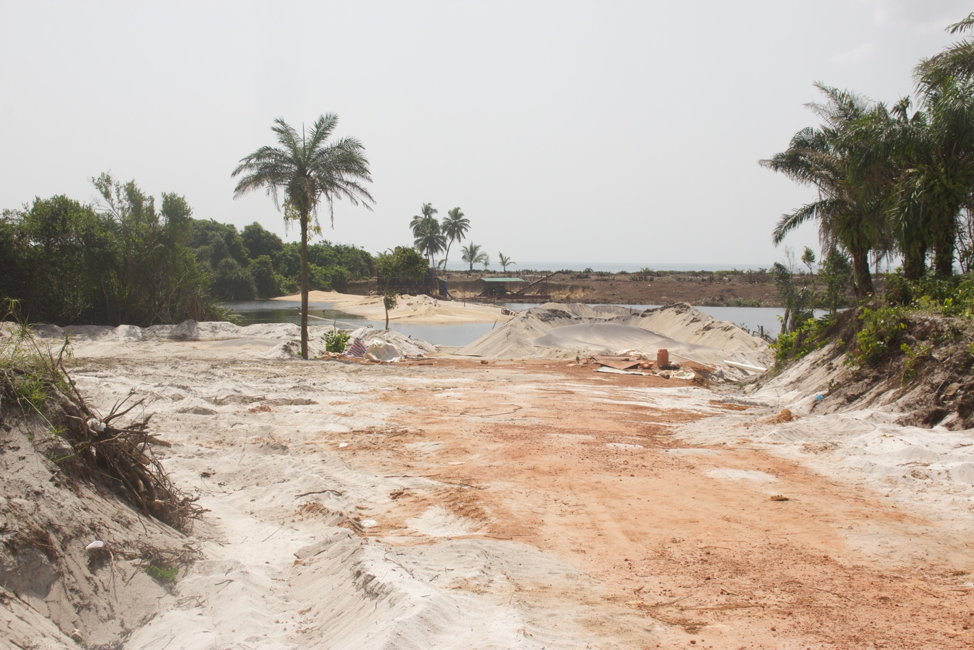
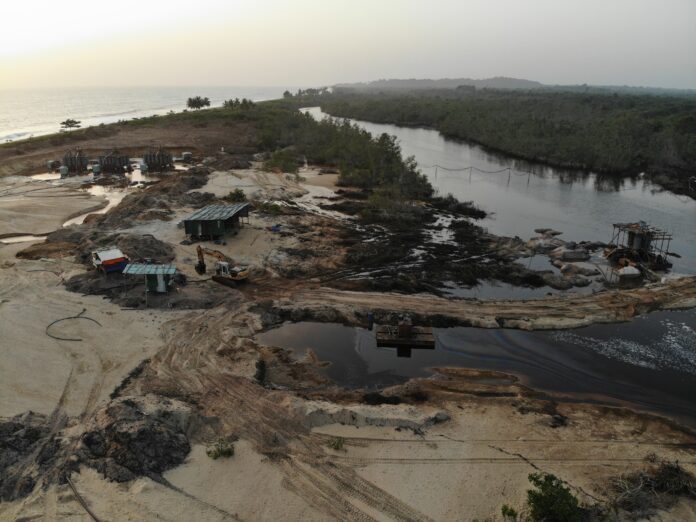
Top: A drone shot of a zircon sand mine in Greenville, Sinoe. The DayLight/Derick Snyder


By James Harding Giahyue and Gerald C. Koinyeneh


MONROVIA; GREENVILLE – In late January, Representative Tibelrosa Tarponweh of Margibi County District Number One accused  Liberia Mineral Export Inc. of violating a suspension of its mining operations in Marshall, Margibi County.

“This is causing [a] serious environmental hazard for our people,” Tarponweh told members of the House of Representatives at the time, requesting the body summoned the Minister of Mines and Energy Gesler Murray. “What we want is our people must be protected, irrespective of our individual financial interests. This company is operating illegally.” The House’s joint committee on mines, energy and environment, and judiciary is investigating the matter.  

But an investigation by The DayLight found Tarponweh, too, co-owns a mining company with a Chinese national in Sinoe County. The lawmaker holds 15 percent shares in Jatoken Mining Inc., according to the company’s article of incorporation at the Liberia Business Registry. Tarponweh is also the firm’s registered agent, an individual who serves as a point of contact. Jianjun Huang, a Chinese national, holds the remaining 85 percent of the company’s shares.

Named after Tarponweh’s hometown in River Gee, Jatoken runs a semi-industrial-scare or a class B mine in the Sanquian District, records of the Ministry of Mines and Energy show. It also holds a gold dealership license and has held other licenses after Tarponweh became a lawmaker in 2017.

Interestingly, Jotoken mines zircon sand, the same mineral the Liberia Mineral Export is extracting in Margibi, which drew Tarponweh’s criticism. Moreover, Jatoken’s mine falls within Liberia Mineral Export’s 151-square-kilometer gold exploration license area, stretching from Butaw all the way to Sanquain along Bafful Bay. Both firms are two of at least four mining zircon sand, a black mineral used in the ceramics and electronics industries. STT Heavy Mineral Resources Ltd and Tetra Mineral Resources Limited complete the quadruple, based on the ministry’s online, public records.

Tarponweh’s ownership of the active company violates Liberian laws. The Minerals and Mining Law of 2000 bars lawmakers from holding shares in companies actively mining. The Liberian Constitution and the Code of Conduct for Public Officials also prohibit such a conflict of interest.

Tarponweh and Jianjun established Jatoken in May 2014, about the same time Tarponweh famously advocated for the rights of communities adjacent to a facility where Ebola victims were being cremated. That helped spur his ascendency to the House of Representatives, defeating 20 other candidates in a tight Margibi District Number Two race in 2017.

In an interview, Tarponweh claimed he did not know Jatoken was still operating after his election to the National Legislature.  

“Your enquiry has opened up another investigation: I have just established that Mr. Jianjun Huang, who has 85 percent shares has been operating the company without my knowledge,” Tarponweh told The DayLight.

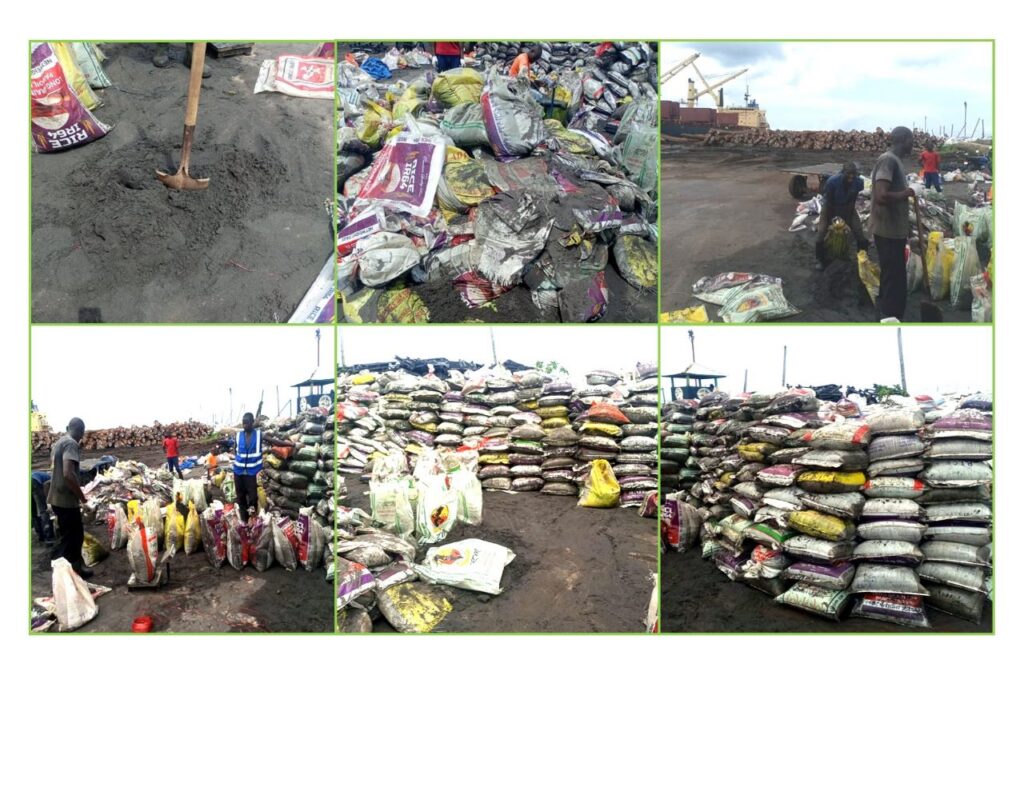
A collage of pictures showing Jatoken bagging zircon sand at the Port of Buchanan, Grand Bassa County. The DayLight/Johnson Buchanan

The ministry said Jatoken filed a new article of incorporation that removed Tarponweh as its shareholder just after he became a lawmaker. The document and the tax payment records show Tarponweh was replaced by Abdullah Mohammed on July 3, 2019.

“They brought a board resolution amending the shares distribution and their article of incorporation. They brought that with their business registration certificate,” said Assistant Minister for Mines Emmanuel Swen in a phone interview.  

“With that, Tarponweh shares were transferred to another person. That shareholder resolution that they brought, Tarponweh name is on it with his signature affixed,” Swen added.

Tarponweh denies he signed any paper, accusing Jianjun of forging his signature.  “My lawyer has taken charge of the situation. The action of Jianjun Huang is criminal. My name has been used to generate thousands of dollars,” Tarponweh said.

Swen said the Ministry of Mines would investigate if the Margibi legislator lodged a complaint. “If Tarponweh is not the one who signed, there is still a room,” Swen told The DayLight when asked about Tarponweh’s accusation. “He must [inform the ministry] that… his signature was forged. Then the ministry can act.”

‘Loopholes’

Jatoken did not register the change to its legal documents at the Liberia Business Registry, based on the Business Association Act. The law requires firms to enroll their legal documents within the registry and get a business registration certificate. It helps the government combat everything from conflict of interest and money laundering to tax evasion and terrorist financing.

Apart from the 2019 illegal amendment, Jatoken amended its article of incorporation once more on September 29, 2021, according to its tax payment record. Again, it did not file that change with the business registry. The Ministries of Mines and Foreign Affairs did not grant The DayLight’s request for a copy of that document.

Swen conceded that the ministry could have averted the  Jotoken scandal had they checked with the Liberia Business Registry before honoring changes to Jatoken’s legal documents. The mining law requires the Ministry of Mines and Energy to verify the validity of firms’ documents before granting them mining rights.   

“We have not been contacting the Liberia Business Registry to further investigate these documents,” Swen added. “We learn from some things that happened. You know the governance process is such that as you encounter one thing, you put into place measures to close the loopholes.”

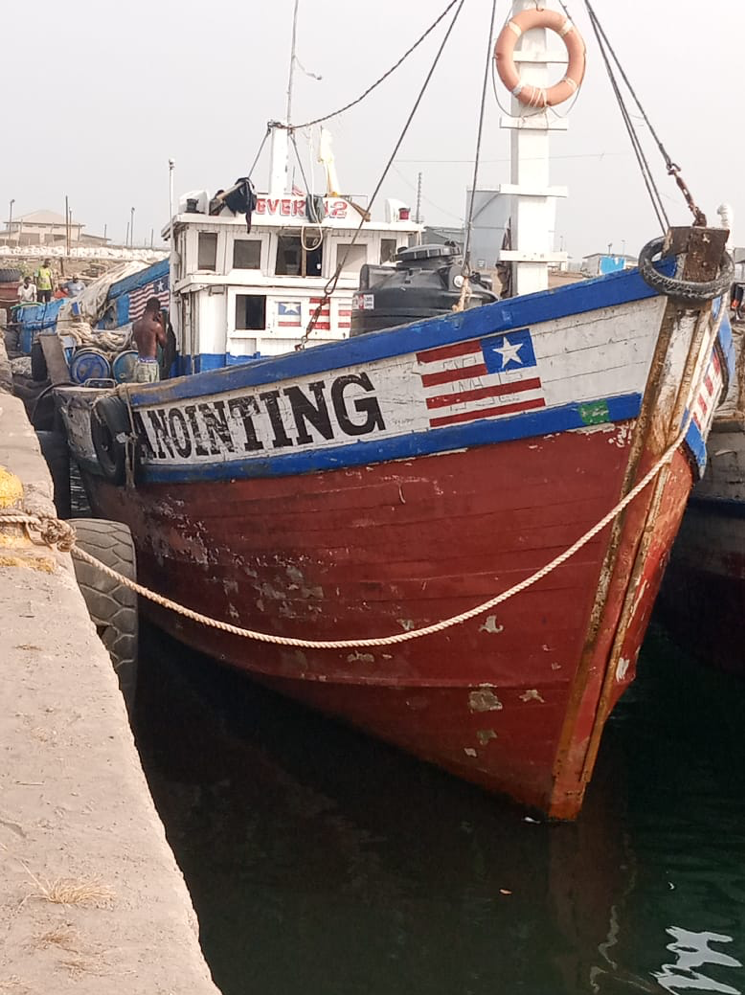
“Anointing” is one of the boats that transport Jatoken’s zircon sand from Sinoe to the Port of Buchanan. The DayLight/Johnson Buchanan

Signature forged or not, the ministry awarded Jatoken a class B license on September 18, 2018, according to official records. That was nine months into Tarponweh’s legislative term and one year seven months before Jatoken unlawfully made changes to its shareholding. The mining law requires government officials with shares in companies to surrender their stakes or place them in a blind trust before assuming office. A blind trust controls public shares to avoid conflicts of interest.

Moreover, in his interview with The DayLight, Tarponweh claimed Jatoken was not mining zircon sand before he became a lawmaker. That claim is not backed by facts. Jatoken obtained a zircon sand prospecting license in 2015, the ministry’s official records show. The ministry awarded it a class B mining license for the mineral the following year and later archived it.

But Tarponweh’s shares are not Jatoken’s only eligibility issues. Foreign nationals must reside in Liberia and obtain resident and work permits in order to hold majority shares in a class B company, according to the mining law. Jianjun, Jatoken’s majority shareholder, has never obtained a resident or a work permit, the company’s tax payment records show. None of Jatoken’s foreign workers or representatives has obtained a work permit in nearly 10 years of the company’s existence. By law, the ministry should check companies’ owners,  staff’s work and resident statuses, and financial history among other things, before awarding class B licenses.

It was unclear how much volume of zircon sand Jatoken has produced. However, between 2020 and 2022 the company paid just US$48,000 in mining-related fees, Liberia Revenue Authority (LRA) records show.  

Our reporter who visited Jatoken’s mine in January saw a trail of equipment, including earthmovers and wheelbarrows. Sandbars and holes and mounds of zircon sand adorned the area. Workers bagged the mineral and transported it to Buchanan, Grand Bassa via boats. Some of the boats that transport the mineral are “Anointing,” “God Knows” and “Iron State.”

Photographs taken at the Port of Buchanan show men uploading 25-kilogram bags with zircon sand. One port source said workers pack 50 bags of the mineral in a single container. Another source said workers transport scores of containers with the mineral to the Freeport of Monrovia weekly.

Jatoken did not return questions for comments on this story. We contacted three of the company’s representatives between February 26 and early this week. Earlier this month, a female representative promised to comment once she returned to Monrovia from Sinoe. She stopped responding to calls and WhatsApp messages ever since.

[Mark Newa and Johnson Buchanan contributed to this story]

Funding for the story was provided by the Green Livelihood Alliance (GLA 2.0) through the Sustainable Development Institute (SDI). The DayLight maintained complete editorial independence over the story’s content.
Sinoe Residents Protest Against Chinese Miners’ Operation

IMG 1259 scaled
IMG 1259 scaled


By James Harding Giahyue


DU-WOLEE, Sinoe County – Villagers in a township in Sinoe County’s Kpayan District last week blocked the entrance of a company mining sand in that area, claiming not to have taken part in a memorandum of understanding with their community.

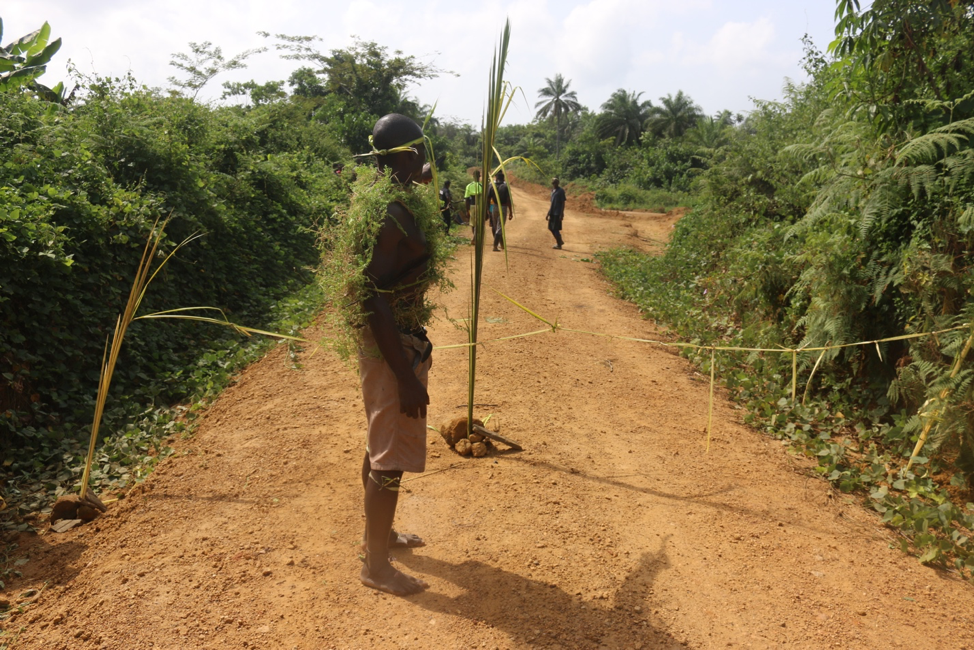
The protestors, some dressed in warlike traditional outfits, and set up roadblocks, chanted battle cries in the Du-Wolee township, demanding their concerns about jobs and other benefits be addressed.

“We are stopping them because there is no understanding between them and us,” said Daddy Nyanswah, the spokesperson for the protestors, in a town hall meeting. “The MoU they even signed, community people don’t get one. It’s between [them] and the Commissioner.

“They have been for over four months now, and calling them to meet they will not come so for their own bogus MoU they agree they have,” Nyanswah added.  

“They told the community that before the operation we will come to you people and employ 25 persons for the first phase. Today they’re doing their own thing they started the operation,” a furious Nyanswah said.

Darius Nagbe, the Commissioner of Du-Wolee township denied the villages did not participate in the signing of the agreement, dubbing Nyanswah and other protestors “detractors.”  

“That information is far from the truth, it’s from the belly of the devil,” Nagbe told The DayLight in an interview in Blue Barracks, where the protest was taking place. “Everybody came from all angles, they all assembled here and the MoU was signed.”

Nagbe’s comments were backed by Lawrence Kwame Frank, an interpreter with the Chinese-Liberian-owned. DayLight has requested a copy of the agreement.

But a video on Nagbe’s mobile phone shows people of the township signing a document, with officials of the county, including Nagbe.

Glorious Mining Company Inc. has a five-year semi-industrial scale license to mine sand on 25 acres on Du-Wolee’s beachfront. This reporter visited the firm’s mine and witnessed Liberian and Asian workers erecting camp houses and setting up equipment. Huge sandbars could be seen at a number of locations, an indication mining was taking place.

Glorious Mining Company Inc. Has a five-year sand mining license in Kpayan District, Sinoe County. The DayLight/James Harding Giahyue

It was unclear whether the company was mining sand or zircon sand, a mineral used in the electronics and ceramics industries. Its equipment looks like those of a zircon-sand mining operation, while its license says sand.

The license also shows that the company was only awarded the rights to mine in that area on 21st December, just under two weeks before the protest. However, the company had been working there six months earlier, according to residents and Frank.

Frank said the Glorious was only testing its equipment and would begin actual employment soon as it promised in the MoU.

“The employment we talking about I am working after the workers’ employment,” Frank said as two Chinese men by his side. “Employment is a process.  If I prepare I have to send it to labor they will see it before I print it out. I have more than 200 employment forms in my house.

“We been here for six months, we just building our residence, we will not be working here and we are in Greenville. So building our residence and the equipment we will be using to do the work,” he added.   

News of the protest reached the police in Greenville, Sinoe’s capital less than one kilometer away. The police then brokered a peace talk between the protestors and the company, ending the protest.

“We are here for peace,” said Charles Daniel Nyegbah, a traditional leader, dressed in palm leaves and grass and posted at the barricade. “I am here for peace am not here for bloodshed.”

A tribesman stands at a roadblock set up in protest against the operation of Glorious Mining Company in Du-Wolee, Sinoe County. The DayLight/James Harding Giahyue  

Funding for this story was provided by the Green Livelihood Alliance (GLA 2.0) through the Community Rights and Corporate Governance Program of the Sustainable Development Institute (SDI). The DayLight maintained complete editorial independence over the story’s content.

‘I Used to Push Drugs on Mines’

WhatsApp Image 2021 05 28 at 7.01.55 PM 2

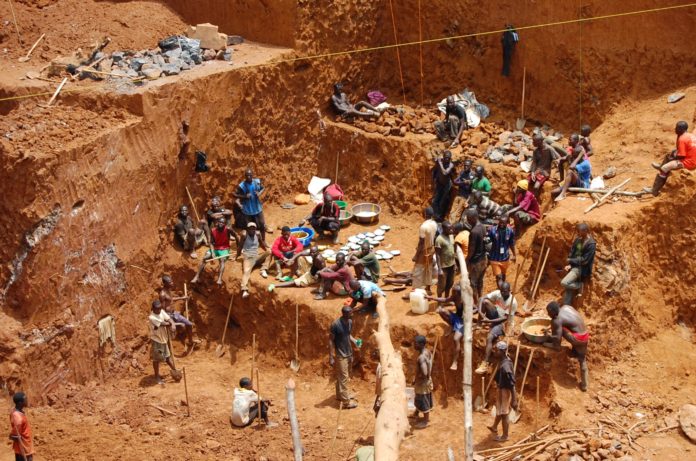
Top: Miners at a goldmine in Vambo, Grand Bassa County. The DayLight/ K.K.


By Emmanuel Sherman


MONROVIA – Johnny John’s (not his real name for security reasons) pregnant girlfriend was close to labor, so he had to intensify his daily hustle. Unemployed and the sole breadwinner for his two-person family at the time, life was an uphill climb for the 25-year-old.  But all of that changed when he met this Nigerian drug smuggler.  

“He called me and said, ‘My man I sell drugs.  We can operate and you can get something for yourself so when your girl gives birth you get some money,’” John tells The DayLight on a car bound for Compound Number One, Grand Bassa County.

“So, myself, I started it.”

Nigerians are infamous for drug smuggling in Liberia. In 2018, for instance, 10 out of 13 drug trafficking cases involved a Nigerian, according to the Liberia Drug Enforcement Agency (DEA). Nearly a dozen Nigerians have been arrested or prosecuted between 2009 and this year, according to our analysis of several news stories and reports within that period.

John was a little bit nervous on his first mission. He knew the risk involved in this illegal transaction. The police would arrest him if he was caught and he could spend some time in jail.

“I was scared. I started it in Duport road, down Duport road…there is a ghetto there,” John says.

But his fears soon vanished. All of his drugs or “parcels,” as he calls them, were sold. Duport Road was the best place for a starter. The infamous slum is a hub for illicit drugs and criminal activities.

John’s debut was amazing as he pushed L$20,000 worth of heroin and received a L$4,000 commission from his Nigerian boss. His boss knew that he had become fearless in the operation and was excited about it.

That night his girlfriend was happy about the money he took home but she did not know how he got it.  He kept it a secret.    

John would go on to have several other successful missions after his inaugural operation on Duport Road. There were three on the Old Road, five in the Gobachop market, and countless times in the Red-Light area. Now it was time to venture outside of Monrovia, into the goldfields, the main market of his Nigerian boss. 

John started with a goldmine called “Philadelphia” in Grand Gedeh County. It would lead him to other mines across the country such as at Sand Beach in River Cess, “New York” in River Gee, and Kinjor in Grand Cape Mount. If the open ghettoes in Paynesville offered him an opportunity, the canopy of the forest presented a perfect hideout.

Crossing checkpoints were John’s new worry. In the Paynesville area, he did not have to cross them. However, he was prepared for it. His boss had connections that proved useful in a number of instances.

The checkpoint between Nimba and Grand Gedeh was always a tough nut to crack. The officer often asked the passengers to disembark the vehicle and checked their loads. One time, he nearly got caught. An Officer of the Liberia Drug Enforcement Agency (LDEA) asked for the owner of the bag of rice he was carrying. John thought that was the end, but he managed to compose himself.

“I told him I was carrying it up the mine for my people,” he told The DayLight, revealing he often camouflaged the banned substance in legitimate goods.   

“We stuffed them in bags of rice, fufu. The rice is something to eat, but sometimes I gave it out. I just want my market to land in the place. I only care for the market.”

Once he crossed all the checkpoints on the route to a particular destination took a motorcycle taxi, something that is predominantly used for transport in the rural parts of the country. The drivers are famed for riding in rough terrains. That profile makes it gel well with the bush routes leading to goldfield and diamond creeks across the country.  

John’s sales justified his risk, fetching him between  LD$200,000 or LD$300,000 worth of drugs.   

“Drug is not something for credit. As soon as you give it to a person; the person gives you your money,” he tells me.

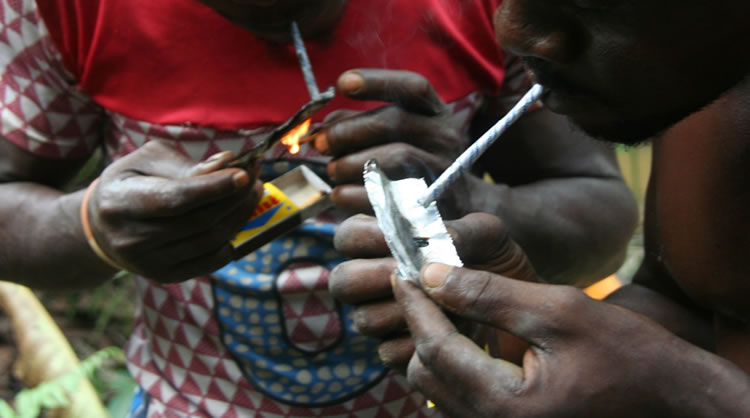
Drug users smoke heroin at a goldmine in Kaquekpo, Sinoe County in 2017. New Narratives/James Harding Giahyue

Individual miners made John’s clients list but mine owners were his biggest business partners. Artisanal mineworkers say heroin stimulates them. Known among drug pushers and users as “tar,” heroine is a very addictive drug, responsible for the huge number of disadvantaged youths or “zogos.”

“If I don’t take it, I can’t work,” said one drug user at a goldmine in Kaquekpo, Sinoe County in 2017. It can make me do the gold work perfectly, 24 hours, day and night, no resting.”  

Mine owners encourage drug dealers on their claims in a bid to enhance productivity. A 2016 USAID-funded report by the Foundation Against Illicit Drugs and Child Abuse found that mine owners and mine workers even exchange gold for illicit drugs.

John’s favorite goldmine was kinjor in Grand Cape Mount, a region that has a huge potential for gold, and is home to many artisanal goldfields. It is renowned for hosting the New Liberty Goldmines, Liberia’s first industrial gold project. On one operation, he sold half of a million Liberian dollars.

“My phone used to ring like [Minister of Finance and Development Planning] Samuel Tweah,” John says, bursting into a huge laughter.

At that point, Johns’s family status had well improved. He was no longer worried about “how to start his day.” His newborn daughter was now three years old and was now at one the best schools in Congo Town. Her mother, his girlfriend was doing a lucrative business. He gave out money easily and threw parties almost regularly.

John’s lavish lifestyle did not go unnoticed. His relatives and friends became concerned. The news finally hit them that he was one of the most prolific drug pushers. Occasional visits to his house by notorious drug users made things even worse for him and open recognition by zogos was too much of a coincidence. His relatives advised him and he heeded.  

“I get my children. I don’t want them to hold me accountable” [for destroying other people’s children’s future],” Johns says. “I feel guilty, but I don’t have the financial support to assist the people whose lives I helped destroy.”