Home Tags Liberia

Tag: Liberia

No Top Posts for Landowners At GVL

GVL worker 1 scaled
GVL worker 1 scaled

Top: A GVL fieldworker at work in 2023.The DayLight/James Harding Giahyue


By Esau J. Farr


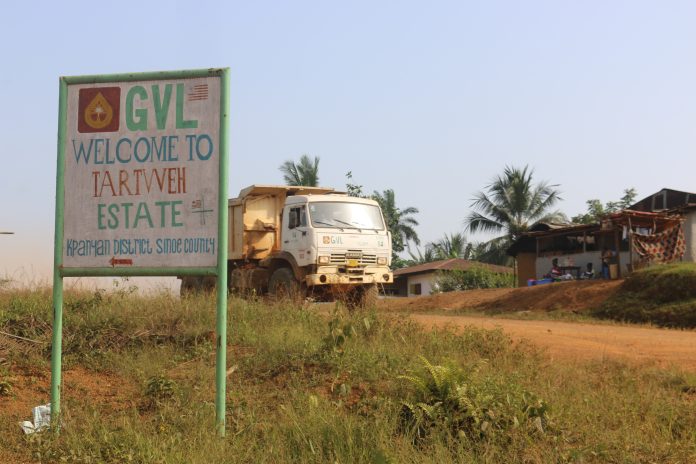
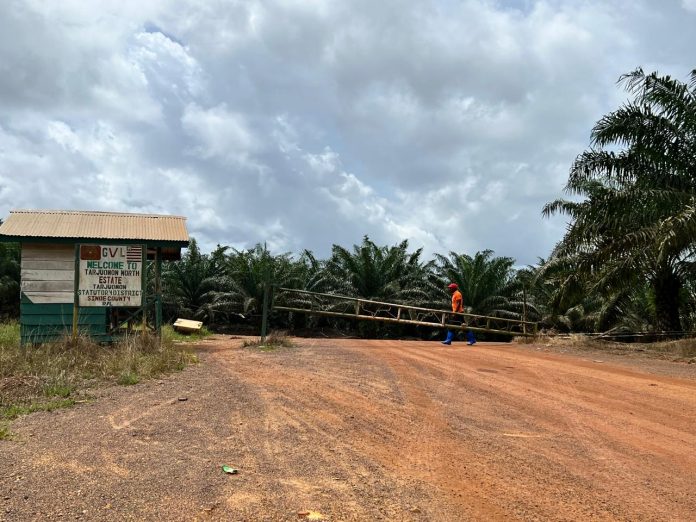
TARTWEH-DRAPOH, Sinoe County – During a visit to Indonesia in 2015, then-Vice President Joseph Boakai urged Golden Veroleum Liberia to employ qualified Liberians in senior managerial positions. GVL welcomed Boakai’s comments while outlining its assumed employment history.

Nearly 10 years on, and Boakai at the helm of Liberia’s leadership, GVL is yet to fulfill that promise, including to Tartweh-Drapoh, one of its landowning, affected communities.

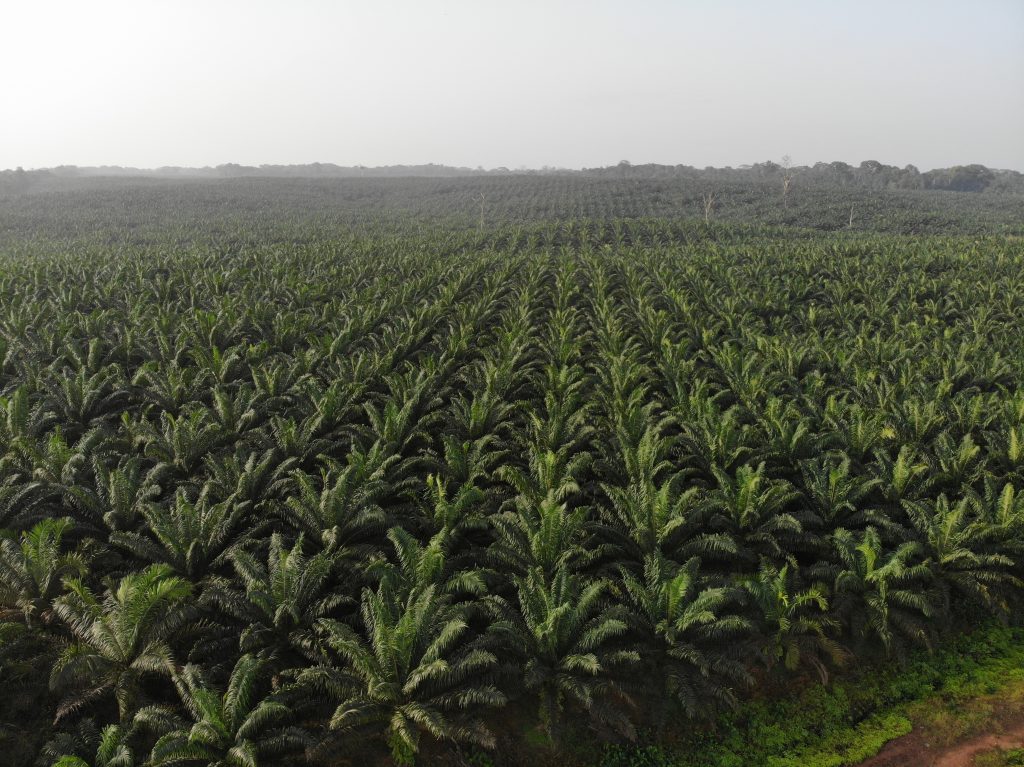
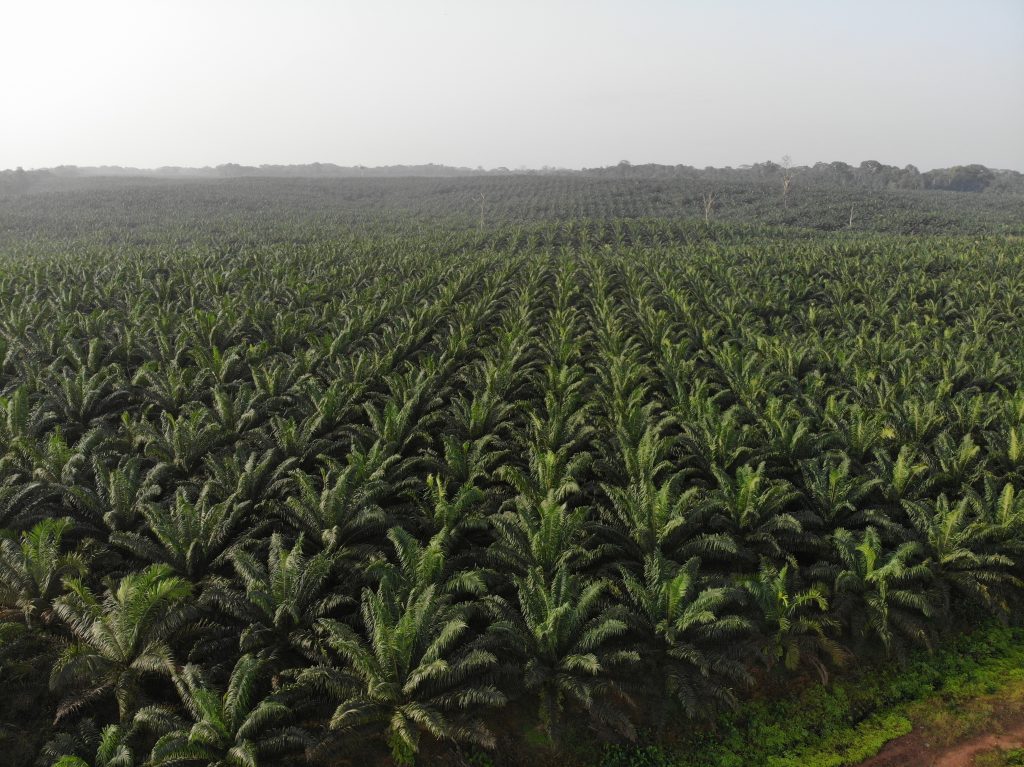
In 2014, Tartweh-Drapoh Chiefdom signed an MoU with GVL for 8,011 hectares of farmland in the Kpanyan District. The MoU was part of the GVL’s 65-year concession agreement with Liberia, covering 220,000 hectares in southeastern and southcentral Liberia. The agreement requires GVL to train and hire citizens of the landowning communities for top-level employment.

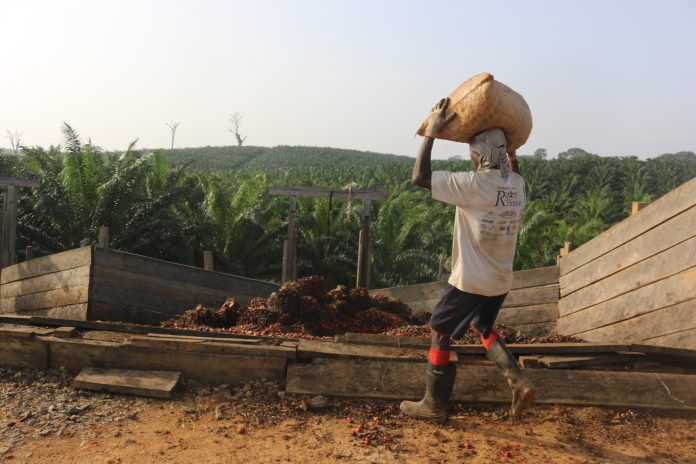
But GVL has failed to live up to the terms of the MoU. Tartweh-Drapoh citizens are only employed as fieldworkers, some of them university graduates.

This led to a protest in May last year. Residents stopped work at the plantation and prevented all GVL’s vehicles from plying routes in the chiefdom.

GVL then scheduled a meeting with citizens to hear their concerns. The parties signed a resolution in which GVL agreed to hire Tartweh-Drapoh citizens in senior positions in a month, among other things.

One document shows that the chiefdom submitted 10 names for as many senior managerial positions as possible. Some of the posts include human resource officer, finance officer, transport manager, safety officer, assistant manager and chief of security.

Two days later, Tartweh-Drapoh submitted five names for the human resource officer job upon the request of GVL.
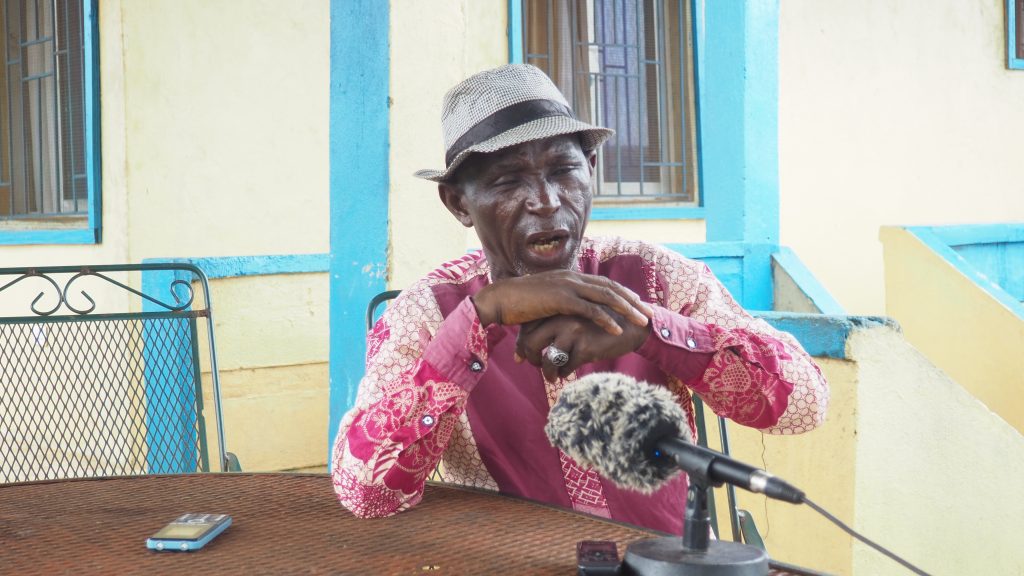
Nunu Broh, chairman, Tartweh Agricultural Committee. The DayLight/James Harding Giahyue

Gbarngo Quenah, a sustainability officer, requested individuals to apply and present qualification documents. In some cases, university graduates had to present high school papers, which—The DayLight has seen evidence—was done.

However, since then, none of the applicants have been hired, though GVL had said it would fast-track their employment. Earlier this month, GVL failed to open a clinic meant to be staffed by Tartweh-Drapoh residents per the resolution.  

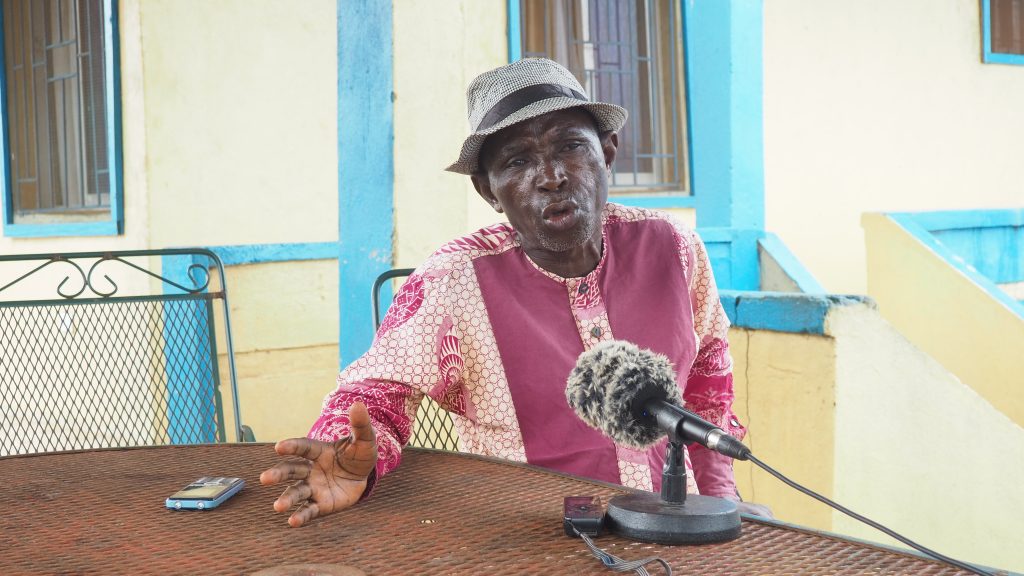
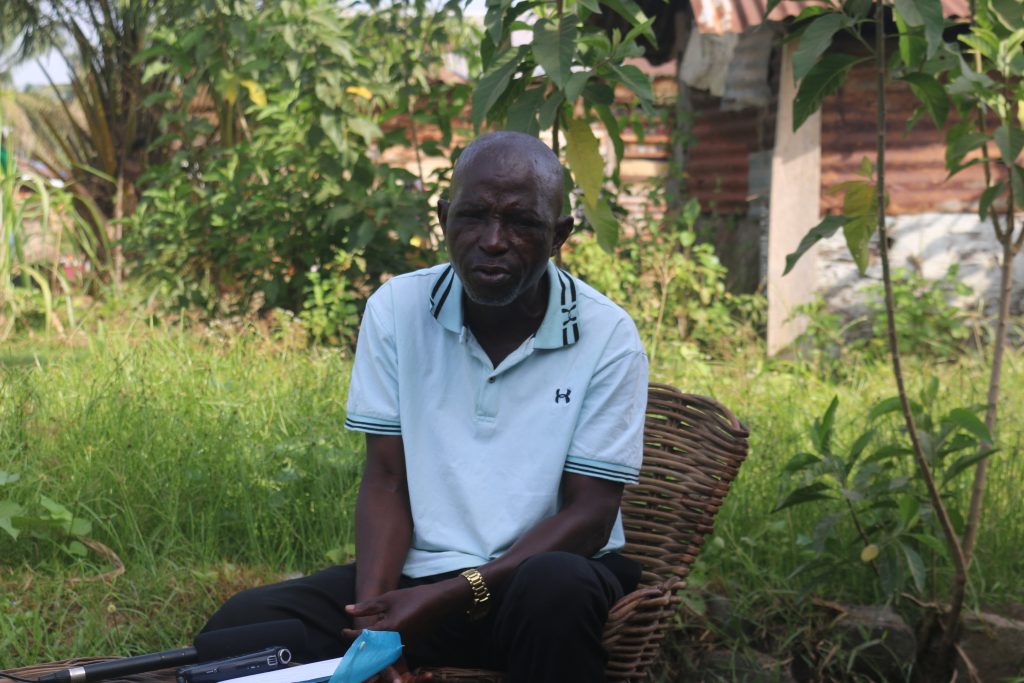
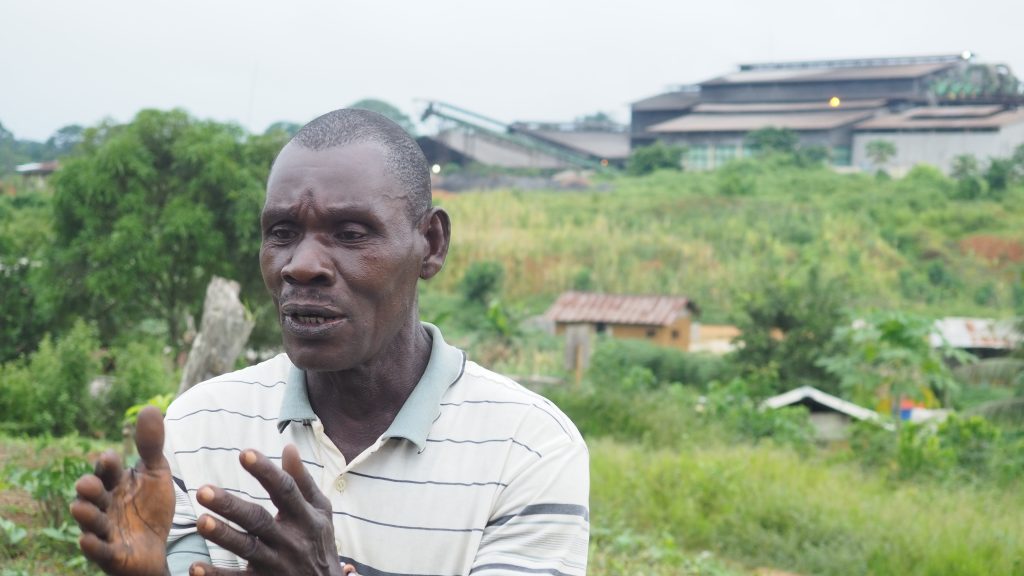
“I feel bad nobody has been hired by GVL,” said Nunu Broh, Chairman of the Tratweh-Drapoh agricultural committee. “Anytime they (GVL) go to management meeting, there can be nobody to represent the community.”

‘Abuse to education’

The DayLight interviewed two Tartweh-Drapoh graduates who, evidence shows, GVL employed as fieldworkers.
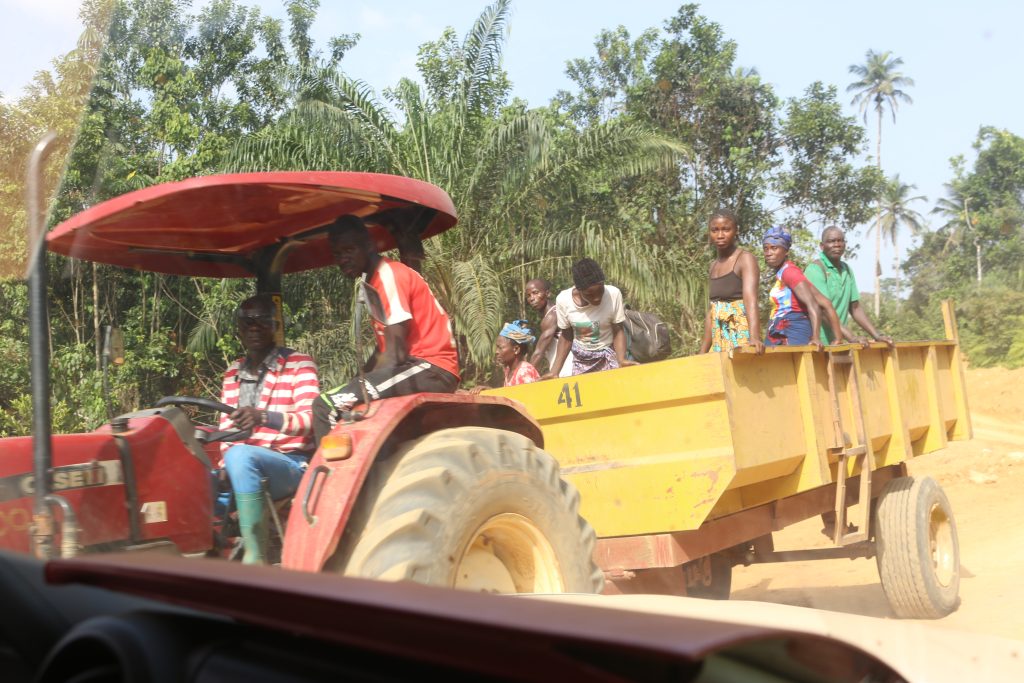
Some GVL fieldworkers in Grand Kru in 2023. The DayLight/James Harding Giahyue

One of the graduate fieldworkers, who preferred anonymity due to fear of reprisal, said over a year his job was to clear thick, combative bushes to plant palm trees.

Lawrence Doe, the other graduate fieldworker, performed the same task for about six weeks in 2020. A 2018 general agriculture alumnus of the University of Liberia, Doe had been advised by the elders of Tartweh-Drapoh to accept the job to get a supervisor post. But that never happened, and he left and found another job.

“And for me, knowing myself, I said it was an abuse to education,” Doe said.

“I felt it was useless for me to leave my home in Sinoe to go Monrovia and get a degree, come back and GVL gave me a cutlass to brush,” Doe added. Broh and Odune Dumbar, a prominent Tartweh-Dropoh citizen, corroborated his and the other man’s story.

In an email response to The DayLight’s queries, GVL claims that the Tartweh-Drapoh MoU does not guarantee residents top posts.

But that response contradicts the MoU. The document gives the chiefdom first preference when senior positions are vacant. It says, “In the case, GVL has vacancies for… junior and senior managerial posts in the concession area, the qualified citizens of the communities shall be considered for said employment…”
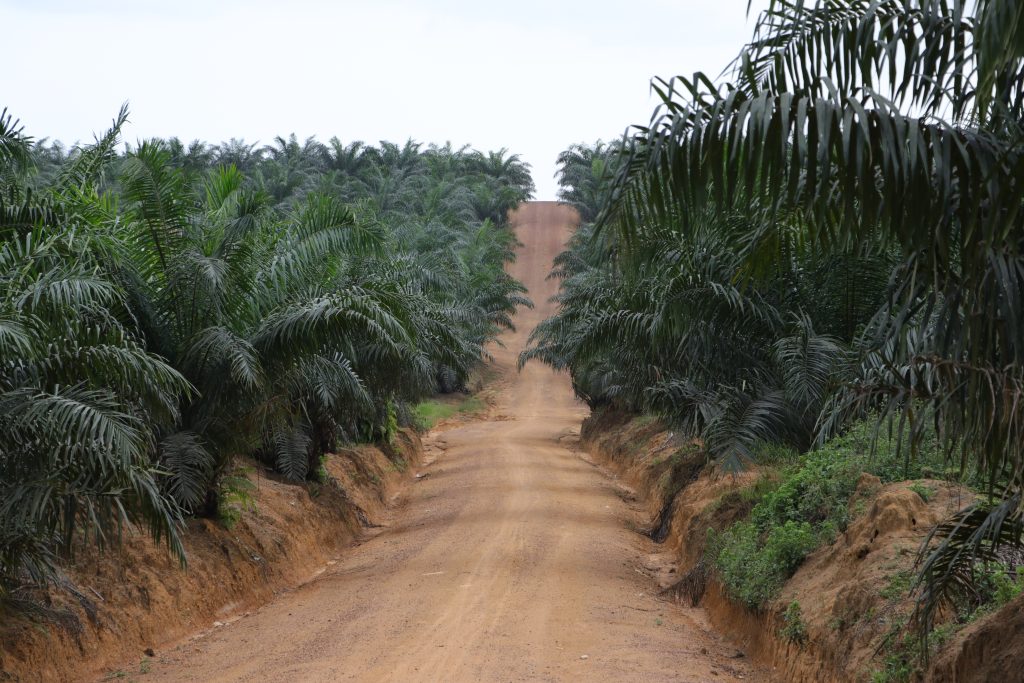
GVL has a concession with the Liberian government covering 220,000 hectares of land in Sinoe, Grand Kru, Maryland, River Gee and River Cesss. New Narratives/Harry Browne

Furthermore, there is evidence of such vacancies in Tartweh-Drapoh.     In 2020, GVL laid off nearly 450 staff, including  28 in the chiefdom, who have not been reinstated or replaced. And the communication exchanges related to last year’s resolution prove vacancies exist.

Also, in the email, GVL claims it has senior managers from Tartweh-Drapoh. “Some are currently serving in key decision-making positions, ranging from the human resource, agronomy, transport, community affairs, health, etc.,” the company said without presenting evidence.

Like in the case of the MoU, the evidence does not support GVL’s employment comments. Again, the resolution-related exchanges show that there are vacancies in all those areas.

Quenah, the sustainability officer with oversight of the chiefdom, confirmed that in a communication in May last year. “We acknowledge your communication… submitting to the sustainability five [Tartweh-Drapoh] sons for the position of [Human Resource] officer,” her letter read.

Tartweh residents said they would hold a meeting to discuss the chiefdom’s next course of action. Meanwhile, President Boakai did not mention jobs on his visit to Indonesia for the Indonesia-Africa Forum earlier this month, rather investment in Liberia.


Green Livelihoods Alliance provided funding for this story. The DayLight maintained editorial independence over the story’s content.
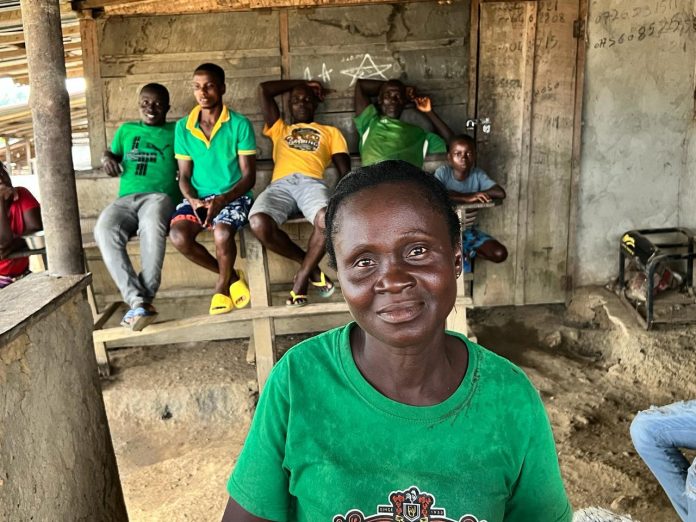
‘I am Happy’: Widow Celebrates Community Land Rights

WhatsApp Image 2024 08 26 at 16.58.28

Top: Theresa Wleh, Chairlady of the Diyenkpo community sitting with a smile and children in the back. The Daylight/Matenneh Keita


By Emmanuel Sherman


DIYENKPO, Sinoe County – Theresa Wleh lives with her four children in the home of her late husband. Not just that house, Wleh farms on the plot of her late husband’s farmland, and she is fully recognized by her in-laws.

“I am happy,” Wleh tells The DayLight in an interview in Diyenkpo, a Sinoe town on the border with Grand Kru. It is the headquarters of the Lower Bokon Clan located in the Jaedae District.

“The reason that I am happy is since [my husband died], I am still sitting down here. When you want to move me, my kids are here,” Wleh adds.  

Wleh knows that things have not always been that way. Under a decade ago, women had no right to own community land or participate in ancestral land matters.  Generations of ill-fated customs and traditions discriminated against womenfolk, often leaving them to their male relatives’ mercy. On the other hand, powerful chiefs and elders, who were the custodians of lands, decided on matters without women’s consent.

All that changed in 2018 when Liberia created the Land Rights Act, which granted women customary land ownership. The new law also mandates women’s participation in community land governance.  

“I am happy for the government of Liberia to give women the right to own their land and have their deed. The land deed is important to us mothers and our children because when we leave tomorrow…, it is for your child or children,” Wleh says.

‘I used to feel bad’

Together with women’s landownership, the new law recognizes community land rights, based on local customs and folkways. It is the main highlight of the law, turning around decades of marginalization of rural people.  

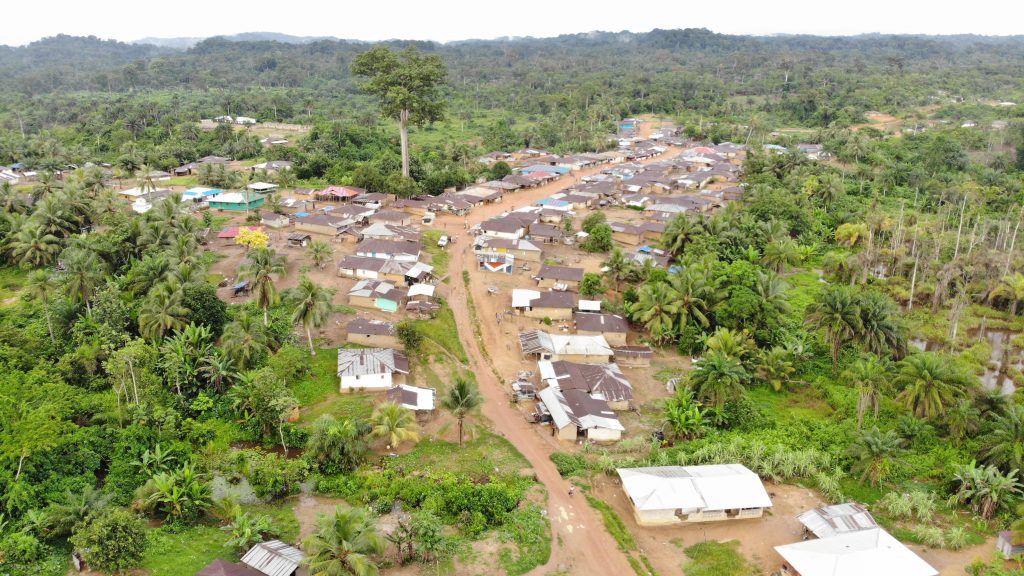
While communities own ancestral lands by law, they should go through legal requirements to get a deed. Lower Bokon is at the boundary-harmonization stage of those requirements, having identified as a landowning clan, created a land body and mapped its assumed 7,283-hectare landmass. Several communities have obtained customary deeds, including Zolowee, Gbassa and Zor-Yolowee in Nimba.

But Lower Bokon has to resolve a boundary dispute with Neeklakpo, a town in Grand Kru, for the Land Authority to present its deed.

An elevated view of the Lower Bokon Clan, which covers an assumed 7,283 hectares of land in Sinoe’s Jaedae District. The DayLight/Derick Snyder

The Land Authority is working with other government agencies to resolve the dispute, according to Dr. Mahmoud Solomon, the Acting Commissioner for Land Administration. Solomon said the regulator was comparing data from those agencies, including the National Legislature, to determine the border points.

“We will soon resume to have it resolved amicably,” Solomon says in an interview at his Ashmun Street office. Bokon is one of the dozens of communities whose lands the Land Authority is formalizing as part of a US$3.45 million project funded by the International Land and Forest Tenure Facility in Sweden.

Wleh cannot wait for the disagreement to be solved. She wants to witness the resolution as it is in the interest of the community. But she does not allow the impasse to spoil her party.

“I am happy for us to reach this level. During our forefathers’ time, they were blind to the system. I used to feel bad when people came to use the land. At the time we never knew anything,” Wleh recalls. “Whatever they wanted to do was what they would do here.

“If we have our land deed, it will be good for us. Nobody will come and say, ‘This place is mine.’ As long as I have my deed and you are coming on my land, there will be an agreement between us,” she says.   

Wleh might be a bit cocky but her comments are not unfounded.

Lower Bokon is situated in a mining region, with little or no benefits to affected communities. Hummingbird, a British company, has operated there since 2019, according to official records. The records show that the Ministry of Mines and Energy has awarded 127 licenses in the region since 2013, predominantly for small-scale mining. Of that number 17 are active licenses.

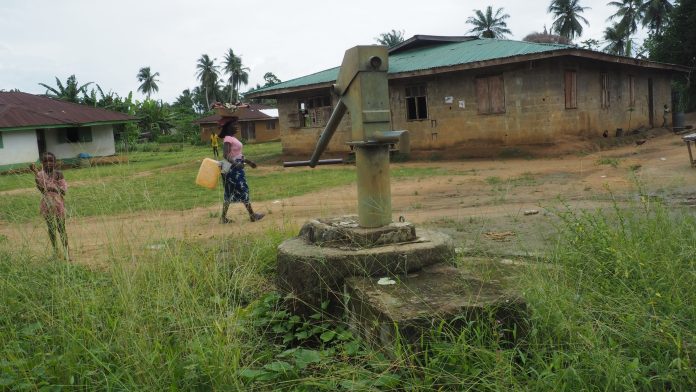
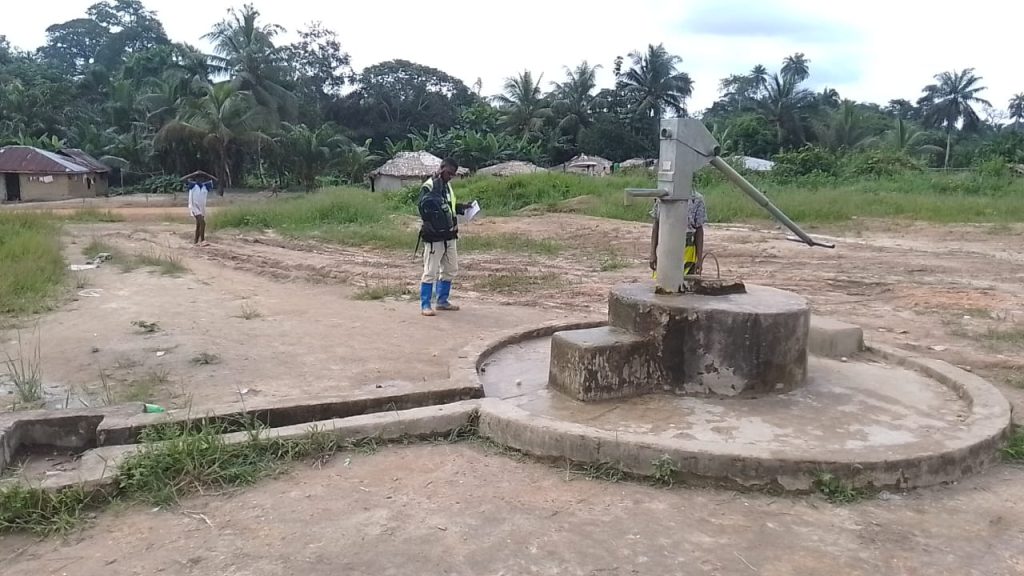
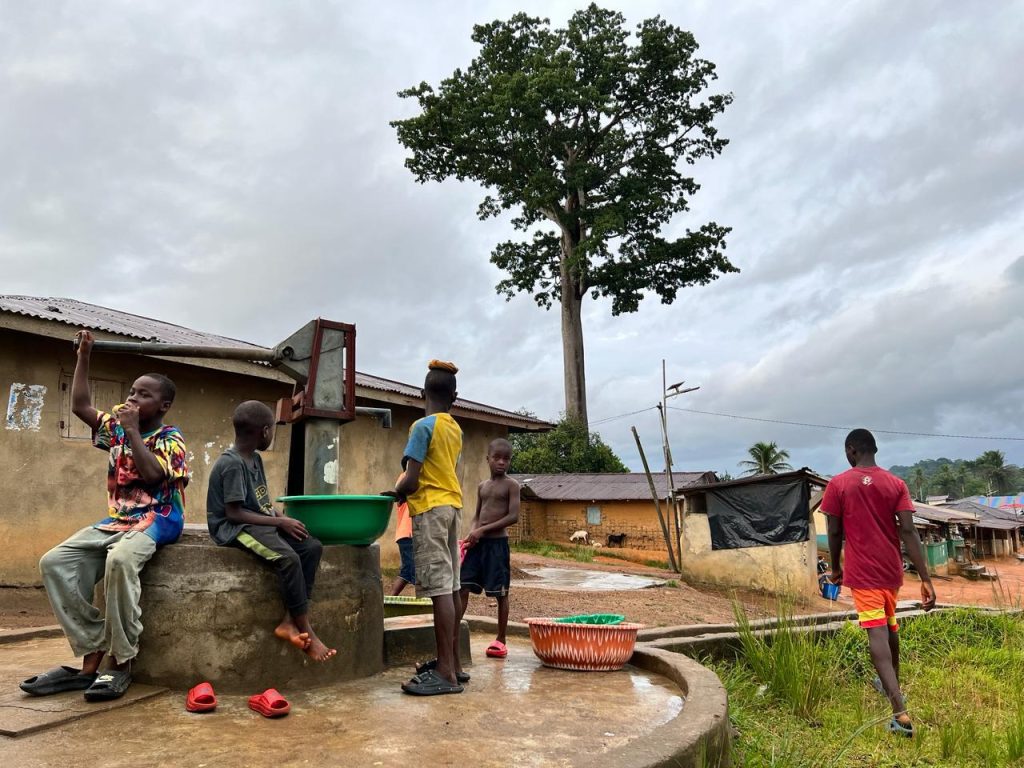
Children fetch water at a hand pump in Diyenkpo, the headquarters of the Lower Bokon Clan in Jaedae District, Sinoe County. The Daylight/ Matenneh Keita

Despite these activities, the clan lacks a lot of necessities for its estimated 5,000 people. It lacks clinics, paved roads, and adequate water sources. Wleh and other Diyenkpo residents go to Karquekpo, the largest town in the region, for medication. The miners do not pay the clan anything.

The Land Rights Act empowers communities to buck that trend. With a deed, locals can enter into agreements with companies as parties to the investment, not just affected communities. They have the right to consent to or reject investment proposals.

“The kids we are having now, we want them to go to school so, that tomorrow we will benefit from them,” Wleh says. “When you come into our community and we tell you this is what we want and you cannot deliver, pack up your bag and leave.”  

GVL Palm Oil Mill Pollutes Town

DJI 0154 1 scaled
DJI 0154 1 scaled

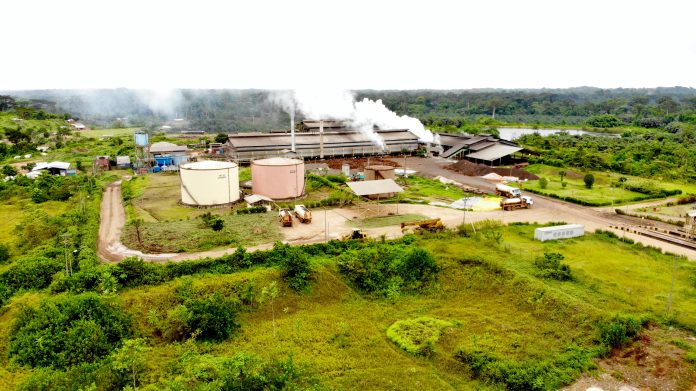
Top: Smoke billows from the chimneys of GVL’s palm oil mill in Tarjuwon, Sinoe County in June 2024. The DayLight/Derick Snyder


By Esau J. Farr and Derick Snyder


WIEH TOWN, Sinoe County – For nearly 10 years, residents of Wieh Town have endured a pattern of pollution associated with a Golden Veroleum Liberia (GVL) palm oil mill.

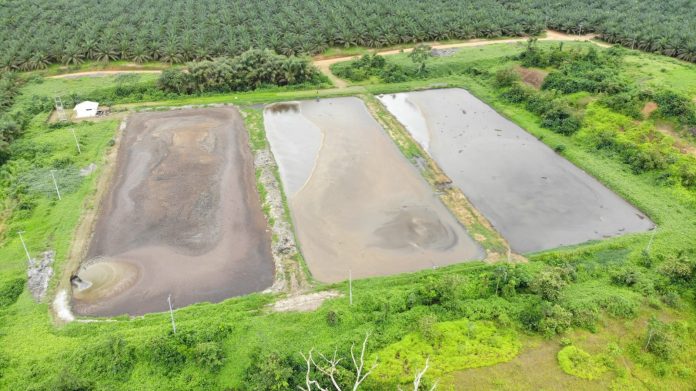
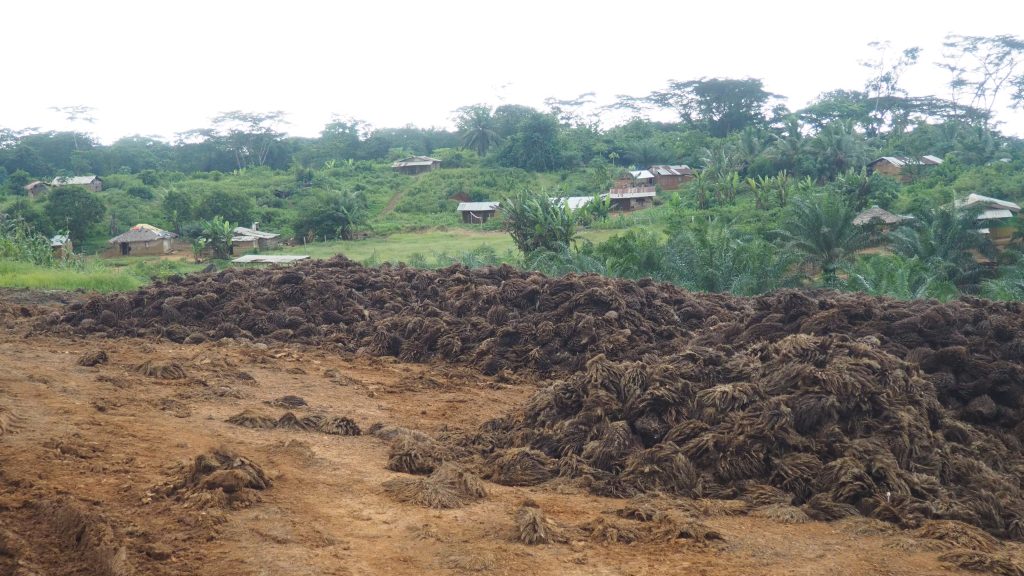
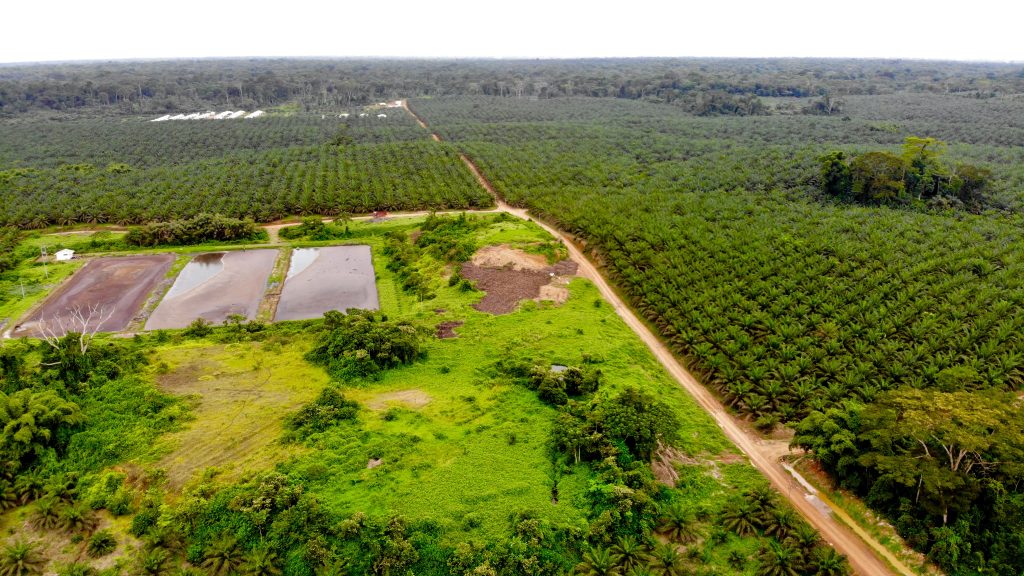
The hillside neighborhood in the Tarjuwon District of Sinoe is in the middle of palm wastes produced by the giant-sized mill. At the front of the town stands the mill itself. On the left are three large ponds of the mill-generated effluent or wastewater. On the right and rear are thousands of palm bunches whose nuts the facility turns into crude palm oil.

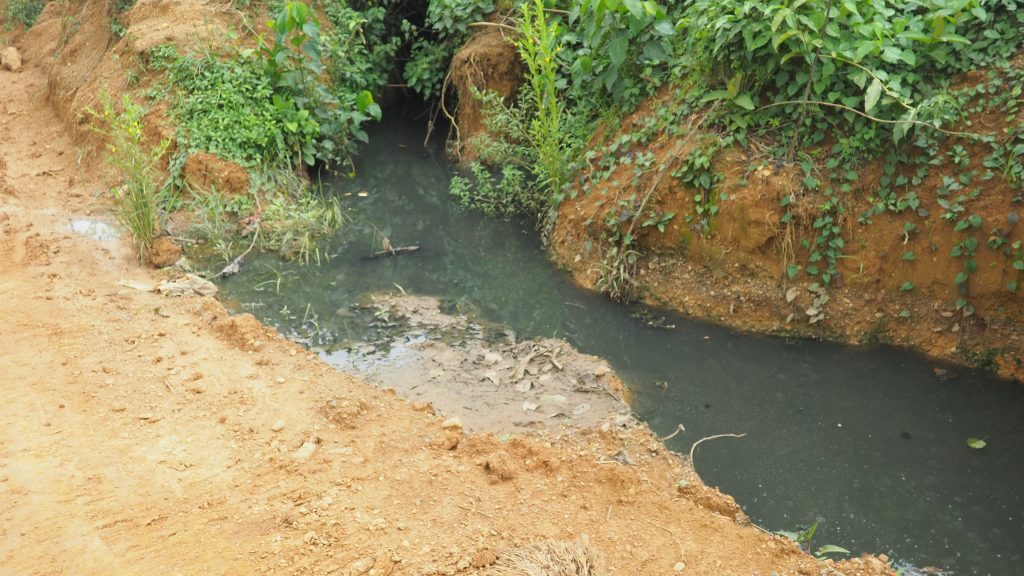
The smoke from the mill fogs the town, according to locals. The wastewater from the facility pollutes creeks residents once used for drinking, turning a large stream green. The ponds holding wastewater ooze a foul odor like a septic tank. Swarms of flies buzz across the community, attracted by the empty palm husks whose foul odor overwhelms locals.

“No more safe drinking water for us here,” said Levi Jarteh, General Town Chief of Lower Kulu Clan, where Wieh Town is located. “The chemical GVL is using is going into the creeks polluting them and because of that, we no longer use them to drink.”

Jarteh’s and other townspeople’s comments are largely consistent with GVL’s recent environmental audit report, documenting pollution of the mill’s operations. Water samples tested positive for excessive phosphate levels, a chemical compound that can cause human kidney disease. The tests, cited in the report, also show illegal levels of substances and particles.

GVL started to build the mill in 2015 and completed it a year later. It can process 80 metric tons of palm nut bunches per hour but produces 40 metric tons per hour. Two huge 2,000-metric-ton tanks and a smaller one are the facility’s most vivid components with a network of chimneys. Between 2020 and 2021 GVL exported 37,534 metric tons of crude palm oil valued at over 31.7 million, according to the Liberia Extractive Industries Transparency Initiative (LEITI), citing the latest available company data.

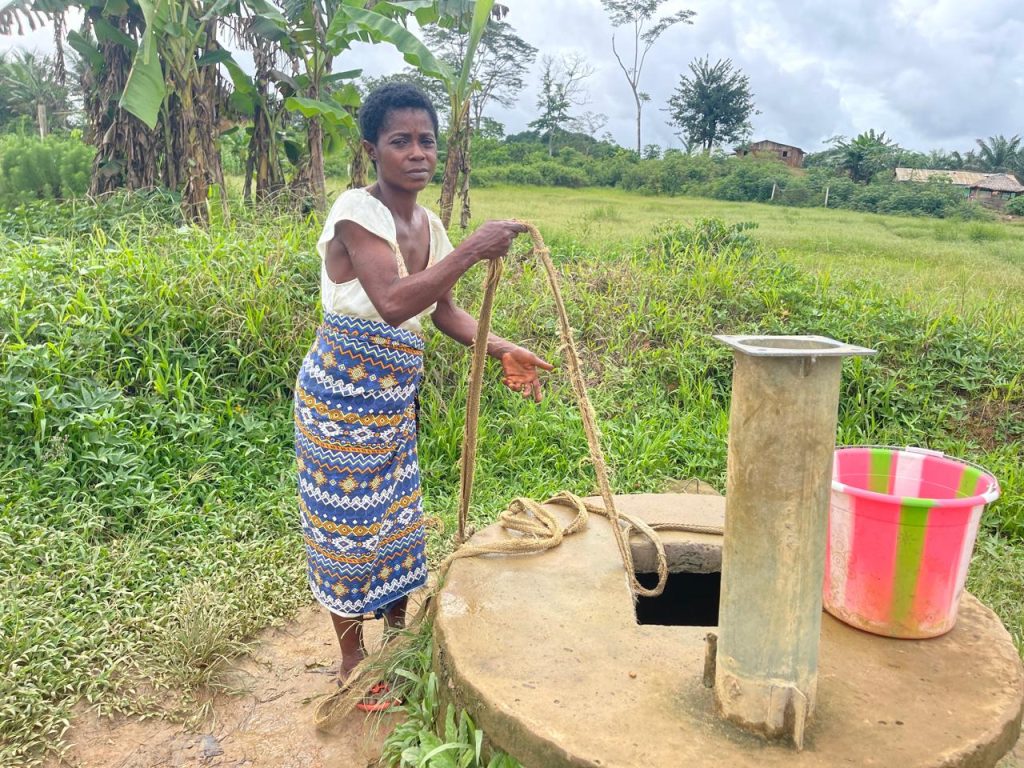
Ophelia Kumon, a resident of Wieh Town, uses a bucket attached to a rope to draw water from the well of an unfinished hand pump in Wieh Town. The DayLight/Esau J. Farr

But behind the mill’s glamorous profile lies a history of landgrab and violence. In 2013, GVL did not get the Lower Kulu Clan’s consent before developing its plantation and constructing the mill. 

So, Lower Kulu filed a complaint with the Roundtable on Sustainable Palm Oil (RSPO), the body that writes the rulebook for the global oil palm industry. GVL is a member of the RSPO through its parent company, the Singapore-listed Golden Agri Resources through the US-based Verdant Fund LP.

Three large ponds of wastewater pollute the air and water in Wieh Town. The DayLight/Derick Snyder

The RSPO ruled in favor of the locals, ordering GVL to halt works on the mill until it signed an MoU with Tarjuwon, this time including Wieh Town and other Lower Kulu communities.

GVL’s appeal of the decision was denied. Subsequently, it quit the certification scheme and reentered shortly.  It violated that order by continuing to construct the mill, clearing additional forests and building new homes for its workers.

The Liberian government has taken no actions against the company, despite its agreement requiring it to comply with the RSPO’s rules. The former Director General of the National Bureau of Concessions, Edwin Dennis, said he was unaware of RSPO’s decisions against GVL.

Buzzing flies

The land grab, which has left an everlasting scar on Lower Kulu communities, is compounded by the pollution from the mill. GVL uses the husks and wastewater for organic fertilizer. A plant breaks down the palm wastes with water and chemicals and then applies a mixture to the palm trees. However, rainwater mixed with wastewater and most likely runoff from palm husks enters watercourses, the audit found.

This outcome is a stark contrast to the past. Palloh Hill, where the mill stands, was believed to host the spirits of the ancestors of Lower Kulu. People consulted the hill for a good harvest and other things. Similarly, Sleni Creek was believed to give women children in addition to being the source of water in the vicinity. Now both landmarks are being used as part of GVL’s irrigation system, supplying water to palm nurseries.

Amid these issues, GVL has failed to provide hand pumps for the people here. It has been over three years since GVL began to build it, according to locals. This violates GVL’s environmental permit and MoU with Tarjuwon, which requires the company to build hand pumps in affected communities with over 150 people.

“Since GVL could not complete the hand pump… and we did not have any water to wash with or drink, we decided to use it as a well, instead of hand pump,” said Ophelia Kumon, a resident of Wieh Town. She spoke at the unfinished hand pump just a stone throw from the back of the mill. She and other residents use a bucket attached to a rope to draw water from the well.

Levi Jarteh is the General Town Chief of the Lower Kulu Clan in Tarjuwon District, Sinoe County. The DayLight/James Harding Giahyue

But safe drinking water is not the only issue. Swarms of flies are also another nightmare for Wieh Town. Buzzing flies enter homes and sit on villagers’ foods threatening their health.  

Though the open wastewater attracts flies, the largest swarms of the insects are mainly attracted to the palm husks. They contain hydrogen, carbon, oxygen, nitrogen and sulfur, scientists say. While the other gases are odorless, sulfur smells like rotten eggs, apparently explaining why it attracts so many flies. The environmental audit found that wastewater was likely to emit a gas with a foul odor that was harmful to the people and the planet.

“We are really suffering here. The fly situation is now worse to the extent that you have to buy fly [repellent] to be on the safe side,” Jarteh said.

“The rain is coming and the flies will be on our food and we will have to eat it,” he added.

‘By the grace of God’

Smoke from the mill is yet another problem, according to residents. Townspeople said at times they did not recognize the person next to them.

“Sometimes when GVL puts the machine on, there is certain smoke that comes out which can spread over the whole town,” Robert Maye, a resident of Wieh Town said. “It smells so bad to the extent that if you don’t have strong resistance, you can’t live in this town. It is affecting us greatly.”

The DayLight could not independently verify that claim and another regarding noise pollution. However, elevated images shot by a drone show white smoke billowing persistently from the chimneys of the facility, something the audit uncovered. It also said the mill discharged thick, black smoke that lasted about five minutes.

GVL sidestepped direct questions The DayLight posed to it on the issues. However, in a press release after the newspaper published two investigations regarding the company’s operations, GVL claimed it took pollution and communities’ grievances seriously. 

GVL uses empty palm husks for fertilizer. However, residents backed by an environmental audit report say palm wastes pollute their environment. The DayLight/James Harding Giahyue

“We also ensure that water testing is done annually by an independent party as required by EPA regulations,” the release said. “Recent assessments conducted in 2023 and 2024 did not identify any issues.”

But the environmental audit report proves those claims are false and misleading. Like the pollution issue, the report found GVL did not address locals’ complaints, urging it to take urgent actions.

In Wieh Town, residents continue to brace themselves as their pollution war wages on.  

Jarteh said, “We are just surviving by the grace of God.”


The Green Livelihoods Alliance (GLA) provided the funding for this story. The DayLight maintained editorial independence over the story’s content.
Case Confirms Companies’ Link to Illegal Loggers

IMG 9955 scaled
IMG 9955 scaled

Top: In September 2022, The DayLight documented its first-ever evidence of kpokolo pictured.  Afterward, the newspaper published several other investigations, leading to a ban on that illegal logging activity. The DayLight/James Harding Giahyue


By James Harding Giahyue  


MONROVIA – Court documents in a case against four suspected timber smugglers have established reports of collusion between certain illegal loggers and legitimate forestry companies.

Four suspected timber smugglers who operated a sawmill at the Central Agriculture Research Institute (CARI) told the Ninth Judicial Circuit Court in Gbarnga they bought logs from Alpha Logging and Wood Company. The company operated a concession in Lofa and Gbarpolu, which it has abandoned.

The Forestry Development Authority (FDA) is seeking a prison term and US$25,000 for two Chinese men Chaolong and Guoping Zang, a Turkish national Mehmet Onder Erem and a Liberian Terrentius Tidiboh Collins (also known as Terrence Collins).

The FDA has petitioned the court to confiscate and auction thousands of timber the suspects left at the Central Agriculture Research Institute (CARI) in Suakoko, Bong County.

The accused men deny wrongdoing, arguing Alpha was a legal concessioner. They presented the sale contract showing Alpha selling 3,000 cubic meters of logs to a company for US$200,000 in 2021. It was unclear how the suspects were linked to the company in the sale contract.  

But the FDA counterargued that the transactions were done outside of Liberia’s timber-tracking system.

A court document shows Alpha Logging Company sold logs to kpokolo loggers, supporting reports of the link between concessioners and illegal logging. The DayLight/James Harding Giahyue

Arguments aside, the documents are likely the first evidence of the connection between kpokolo operatives and legitimate loggers. Kpokolo loggers produced boxlike timber to fit neatly into a container for smuggling. It has dampened the prospects of a forestry sector plagued by decades of illegal activities and mismanagement.

The documents corroborate previous reports about the collaboration. An April investigation by the DayLight, sparking the case, cited a resident of Zorzor who said he was aware of Alpha’s deal with the suspects. Likewise, a report by the US-based Forest Trends found that large-scale companies were involved in Kpokolo transactions, citing community sources and small-scale loggers.

The DayLight first happened upon kpokolo in September 2022. From then on, it would publish several investigations, exposing the illegality of the activities.

In February last year, the FDA said it had banned the activities, which have reemerged amid the lack of publicity on the ban.  


This story was a production of the Community of Forest and Environmental Journalists (CoFEJ).       

No GVL Clinic Despite Protest

IMG 1336 scaled
IMG 1336 scaled

Top: Tartweh-Drapoh is one of several communities affected by Golden Veroleum Liberia’s palm plantation. The DayLight/James Giahyue


By Emmanuel Sherman


  • Golden Veroleum Liberia (GVL) has failed to build a clinic for the Tartweh-Drapoh Chiefdom per a 2014 MoU, stemming from the company’s 2010 concession agreement with Liberia
  • GVL’s failure to live up to the MoU led to a protest in May last year, with the company and people signing a resolution for a temporary clinic
  • The temporary clinic was set up in October 2023 and interviews were conducted in April this year. Yet, the clinic has not started operations

TUBMANVILLE, Sinoe County – At the beginning of the last rainy season, the people of Tartweh-Drapoh Chiefdom staged a protest against Golden Veroleum Liberia (GVL). They prevented staff from going to work and stopped cars from plying local roads.

The protest followed several years of communications and negotiation between GVL and locals, over the former’s implementation of an MoU. Signed in 2014, the MoU obligates GVL to build roads, bridges, hand water pumps, schools and clinics. However, it did not live up to the document, prompting the protest.

“GVL does not like [roundtable] negotiation, they like violence,” said Nunu Broh, the chairman of the Tartweh-Drapoh Agriculture Committee, months before the strike. “GVL asked for our land and we gave it but now they are depriving us.”

GVL signed an MoU with Tartweh-Drapoh to develop a palm plantation covering 7,000 hectares of land in exchange for clinics, schools, hand pumps and other development. The Daylight/Derick Synder

Due to the intervention of the Liberian government, Broh and other locals called off the protest, with GVL signing a resolution to implement the MoU.

The new document called for GVL to establish a temporary clinic in Tartweh to cater to the communities, including GVL’s workers and dependents. But it would soon be another chapter in the GVL-Tartweh-Drapoh long story.

The document shows that over a year since the resolution the clinic has yet to open. It should have started within two weeks, in May. But four months now, the facility is yet to be opened.

Nunu Broh, the chairman of the Tartweh-Drapoh Agriculture Committee. The Daylight/James Giahyue

Shortly after the resolution, GVL transformed one of its managers’ camp houses near Tubmanville into a temporary clinic. The company sought applications from residents and conducted interviews but has not shortlisted successful applicants.

Currently, sick residents have to walk two or three hours to Kadaba in the neighboring Mantron Chiefdom for treatment.  The other option is at the government clinic in Tubmanville, Tartweh-Drapoh’s most populous community.  

“We want a clinic for our people. We don’t have to go to different people’s camps to get treatment,” said Broh in a mobile phone interview.

GVL signed the MoU with Tartweh-Drapoh for its 7,000 hectares of land in exchange for development. GVL had signed a concession agreement with the Liberian government in 2010 covering 220,000 hectares in Sinoe, Grand Kru, Maryland River Gee and River Cess.

The largest oil palm investment, GVL is arguably the most notorious postwar company in Liberia. Its 14 years have witnessed a string of land grabs, human rights abuses, and a pattern of environmental pollution and degradation.

Alphonso Kofi, GVL spokesman, claimed the Tartweh-Drapoh MoU obligated the company to support an existing clinic where GVL did not build one.


“The temporary clinic is set up now and ready for operation,” Kofi said in an email.

“Staff were selected from [the] interview conducted by the county health authorities. These staff are currently being processed by the [human resource] department, while the opening of the clinic is set for September 2, 2024,” Kofi added.

Kofi wrongly referenced the MoU. The Document requires GVL to construct, equip and staff the clinic. The services to this clinic will be free of charge to employees and their dependents, it says.

Also, Kofi’s date for the opening of the temporary clinic has not been officially announced. Rev. Armstrong Panteene, the secretary of the Tartweh Agriculture Committee, said he was unaware of the assumed opening date. Odune Dunbar, a member of the committee,  and Broh said the same. However, Broh said he received a text informing him of the 2nd September date.  

Kofi’s false claim about the MoU adds to the company’s lies in a recent press release, claiming it investigated and took community complaints seriously. But a routine environmental audit report contradicted the company. The report called on GVL to address the lapse urgently.


Green Livelihoods Alliance provided funding for this story. The DayLight maintained editorial independence over the story’s content.
Audit Uncovers Pollution Spree at Palm Oil Mill, Exposing GVL’s Lie

WhatsApp Image 2024 08 25 at 16.23.35

Top: An elevated view of a trio of mill effluent ponds an independent environmental audit found GVL does not take proper care of, sending foul odor across the landscape. The DayLight/ Derick Snyder


By Esau J. Farr


  • Golden Veroleum Liberia (GVL) improperly manages its wastes, causing water pollution, according to a recent environmental audit of its palm oil mill
  • Water contains an illegal level of phosphate, a chemical whose high concentration can lead to kidney diseases
  • The odor from palm waste and dust from speedy trucks pollute communities  
  • Poor working environment puts workers at risk, including inadequate safety gear, expired fire extinguishers, and poor storage of chemical  

MONROVIA – A palm oil mill operated by Golden Veroleum Liberia (GVL) in Sinoe County led to a pattern of pollution, violating the company’s environmental permit, an independent audit report found.  

The periodic audit by the Monrovia-based auditor Green Consultancy Inc. revealed mill wastes were improperly managed, the facility pollutes water sources, and it causes air pollution for adjacent communities.  

“GVL is not in full compliance with some of the Environmental Protection Agency (EPA) permit conditions and specifications,” the report said. These include not submitting quarterly and biannual environmental monitoring reports since the issuance of the Permit.” 

The findings mean GVL has violated the terms of its permit, a possible cause for revocation of the document, and the Environmental Protection and Management Law, a ground for punishment. The DayLight has reached out to the EPA concerning enforcement of the polluter-pays principle of the law.

The report is another chapter in GVL’s notoriety after it desecrated a sacred hill to construct the mill and encroached on local communities’ land to develop its plantation in 2013. GVL had signed a US$1.6 billion concession agreement with the Liberian government in 2010 for 65 years – covering 220,000 hectares in Sinoe, Maryland, Grand Kru, River Cess and River Gee.

GVL did not immediately respond to queries for comments on the report. However, the water quality test contradicts a recent GVL press release that the audit “did not identify any issues.”

‘Improper’ waste management

GVL performed poorest in managing chemicals and wastes from the mill, which produces 40 metric tons of crude palm oil per hour. The company abused wetlands and piled palm husks in open fields, risking a chemical-laced runoff into nearby watercourses, the report said.

A pile of empty palm husks at the back of Golden Veroleum Liberia’s palm oil mill in Tarjuwon, Sinoe County. The audit found watercourses were vulnerable to runoffs from the husks. The DayLight/James Harding Giahyue

Citing results of water quality tests from the University of Liberia Civil Engineering Laboratory, uncovered an illegal phosphate level. The chemical, found in palm husks, causes kidney disease in people and kills aquatic species, scientists say. Waterways around the mill were unclear, contained many undissolved particles, and had other issues.

‘Unbearable’ odor

GVL uses effluent from the palm oil milling process as fertilizer. The wastewater is treated with chemicals, stored in three large ponds and applied to the land as fertilizer. Palm husks serve the same purpose.

This technology is commonplace worldwide across the oil palm industry as an alternative to chemical fertilizers. However, among other noncompliance, GVL did not even barricade the ponds with caution tape to prevent trespassers. The ability of the wastewater to decompose substances was above the approved level due to irregular testing before application.

This, the audit revealed, can lead to the release of harmful gas, which oozes an “unbearable” odor. “The current level of [palm oil mill effluent] reported is likely to generate large quantities of methane gas that has ozone-depleting potential and is associated with health consequences,” the report said.

It added that GVL had not improved on that aspect of its operation since the last audit in 2019. (Depletion of the ozone layer, which protects the earth from the invisible sun-ray, causes global warming and then climate change.)  

Auditors heard complaints of speedy and uncovered GVL trucks carrying palm nuts and husks spreading dust and an “undesirable” odor in local communities. The report documented that GVL had retrogressed in handling such complaints. This finding further contradicts GVL’s claim in the press release to guarantee the investigation and address all communities’ grievances.

A polluted roadside pond in Tarjuwon District, Sinoe County. The DayLight/James Harding Giahyue

“The quarterly and biannual monitoring of the air quality to ensure acceptable standards as required by the Environmental Protection Agency are not being met,” the report said.

Substandard Safety Gear

GVL’s workplace was unsafe, according to the report.

Workers did not wear proper safety gear or personal protective equipment (PPE) in line with EPA standards.  In fact, GVL did not employ health and safety staff at the mill, and there was no training for staff.

Most of the fire extinguishers at the mill had expired, with noise above the approved level, wastewater spillage and clogged drainage at the facility.

“Ensure that workers are trained in environmental responsibility as well as operating and maintenance procedures of the mill, spill response, managing drains, etc.,” the report urged GVL.  

“Certificates should be issued to trainees after the process.”

Auditors observed barrels of hydrochloric acid—used to dissolve wastes from the mill but dangerous to humans—were exposed to workers at a treatment plant.

“No caution [tips] alerting movement of workers on floor tiles, improper maintenance (untidiness) of the facility, and caution signs not properly defined,” the report said.

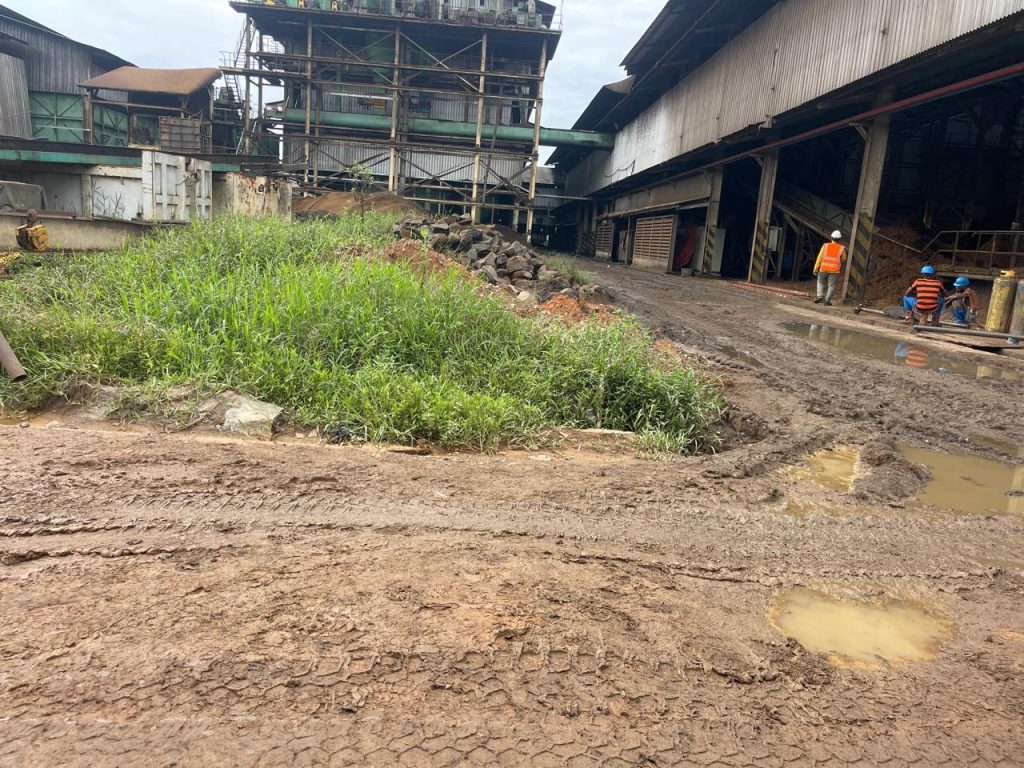
A view of GVL’s palm oil mill in Tarjuwon, Sinoe County, showing an untidy facility with bush and spillage. The DayLight/Esau J. Farr, Sr.

CORRECTION: This version of the story corrects the production rate of the mill from 40 metric tons of crude palm oil to 40 metric tons of fresh fruit bunches. Also, the noise at the mill was not above the approved level as initially reported. The noise was “generally within WHO permissible limits,” according to the report.

Green Livelihoods Alliance (GLA) provided funding for this story. The DayLight maintained editorial independence over the story’s content.
GVL Falters on Required Hand Pumps for Communities

P1010148 scaled
P1010148 scaled

Top: A spoiled hand pump in Tubmanville, Tartweh-Drapoh, constructed by an unnamed NGO. The DayLight/James Harding Giahyue


By Emmanuel Sherman


TARTWEH-DRAPOH, Sinoe County – Golden Veroleum Liberia (GVL) has failed to build hand pumps in landowning communities adjacent to its palm plantation, violating an MoU with locals, a DayLight investigation found.

In 2014, GVL signed an MoU with Tartweh-Drapoh. Per the MoU, GVL is obligated to erect hand pumps in towns and villages with 25 to 150 people. The provision is meant to prevent locals from drinking contaminated water, occasioned by the company’s palm plantation.

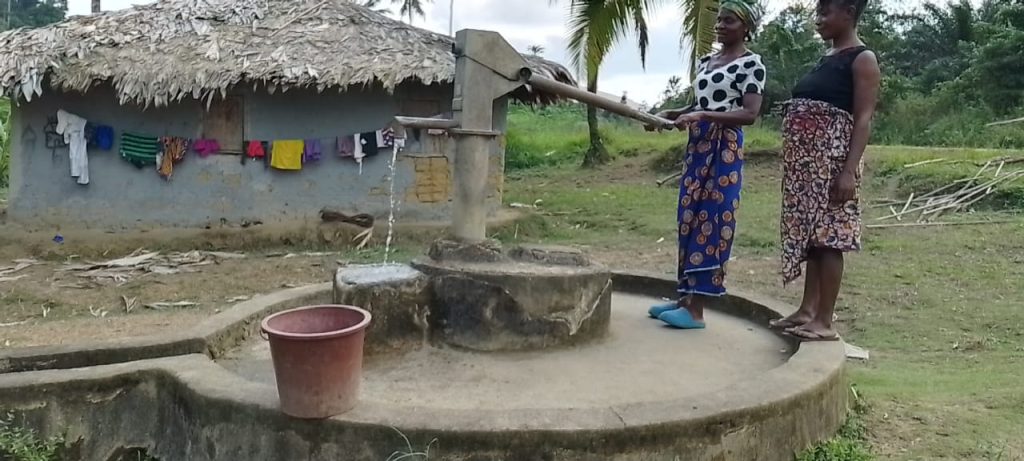
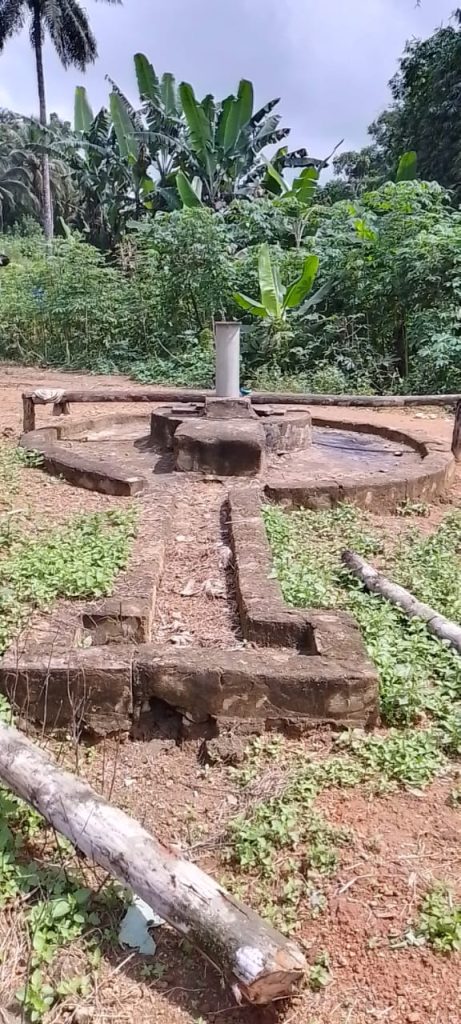
Documents, broken-down hand pumps and interviews show that GVL did not construct hand pumps in most affected communities. It largely rehabilitated boreholes in some towns, all of which have broken for several years now. Most of the pumps were constructed by NGOs.

“We told them in the MoU we wanted hand pumps,” said Nunu Broh, chairman of the Tartweh Agriculture Committee, a local group representing the interests of locals. “We can’t see [any] changes, we have not gotten any signs,” Broh added.  

GVL sidestepped specific questions The DayLight posed, self-proclaiming a commitment to the communities. GVL had refused to grant the newspaper’s request for the MoUs. Alphonso Kofi, GVL’s spokesperson, claimed it had to consult communities, despite the Freedom of Information Act guaranteeing public access to such documents, and transparency being a global oil palm industry’s principle. (The documents are listed on the company’s website but cannot be downloaded.)

Liberia’s largest oil Palm company, GVL signed a 65-year agreement with the country in 2010, covering 220, 000 hectares of land in Sinoe, Grand Kru, and Maryland, River Cess and River Gee. The deal is worth US$1.6 Billion. In its 14 years of operations, GVL has been the subject of national and international reports, documenting its land grab, human rights abuses and water pollution.

‘No changes’

In Tubmanville, the most populous community in Tartweh-Drapoh with 2,000 people, GVL rehabilitated three hand pumps but only one is functional.  Reporters photographed the two spoiled hand pumps, one by the roadside, overtaken by rust and bush.

Residents told The Daylight the situation worsened during the dry season when the water table drops, leaving them to depend on creeks. Reporters followed residents to fetch water at a creek about a 15-minute walk through a rocky hillside.

“We have been telling GVL we don’t have a hand pump,” said Comfort Bledee, a longtime resident of Tubmanville. She had made those same remarks one year seven months ago in an earlier interview.

“No changes, nothing,” Bledee added.   

Nunu Broh, the chairman Tartweh-Drapoh Agriculture committee in an interview with The DayLight in 2023. The DayLight/James Giahyue

Parleh Town’s 60 people might have dwarfed Tubmanville’s population but that does not spare them from the water problem. The pump in the small town—built by the German Agro Action (GAA) in 2009—works only during the rainy season.

To demonstrate the facility’s seasonal use, Philomena Quejue, the town’s chairlady, pumped several times before water came out, despite being the middle of the rainy season. Quejue said water shortage was a nightmare during the dry season and that they resorted to likely contaminated creeks. 

The situations in Saywon Town, Kekpekan Town and Jukpadro are worse.

Home to 90 people, GVL did not build any of Saywon Town’s three hand pumps, residents said. Two of the facilities no longer work.

Philomena Quejue, the chairlady of Parleh Town pumps water from a borehole-well constructed in 2009 by the German Agro Action. Picture credit: Anonymous

A lone hand pump in Kekpekan Town built by the Catholic Relief Service (CRS) in 2000 has two issues: broken down and close to a graveyard.  Per the MoU, GVL is required to build at least one hand pump in the town. However, people now use the creek due to the absence of the facility.

“We are asking GVL to come and fix our hand pump for us,” said Catherine Tarpeh, a townsperson. The DayLight photographed the skeleton of the pump, with its head and handle missing. A long stick was crossed over its well, indicating abandonment.

“We don’t like the creek water because… people can pollute it,” added Elijah Tarpeh, chairman of Kekpekan Town and Catherine Tarpeh’s husband.

A spoiled hand pump in Kekpekan Town, near a graveyard. Picture credit: Anonymous

Similarly, GVL failed to build a hand water pump in Jukpadro Town, which has 125 inhabitants. The only one the town has was built by CRS 14 years ago but has spoiled, according to the community.  

“We have been engaging and appealing to GVL for another hand pump,” said Jared Toe, a resident. “GVL tells us the town is small they cannot construct a hand pump there.”

‘Total breakdown’

Unlike Jukpadro and the other towns, GVL erected a hand pump each in Netenet Town and Wotto Town. However, those pumps are not working. 

In Netenet, 125 inhabitants residents are drinking from creeks. The DayLight reporter photographed the spoiled pump, with the handle missing and a portion of its concrete foundation eroded. 

Patricia Chelley, chairlady of Netenet Town, stands by a hand water pump GVL constructed hand pump in Netenet Town. Picture credit: Anonymous

“We can tell [GVL], and they can send people but it can’t be good,” said Uttere Jerboe, a townsperson.

“The creek gets dirty from the roadwork GVL is doing so the water quality gets bad,” said Patricia Chelly, chairlady of Netenet Town, as she stood by the ruined hand pump. “GVL did not treat us well, the Tartweh people.”

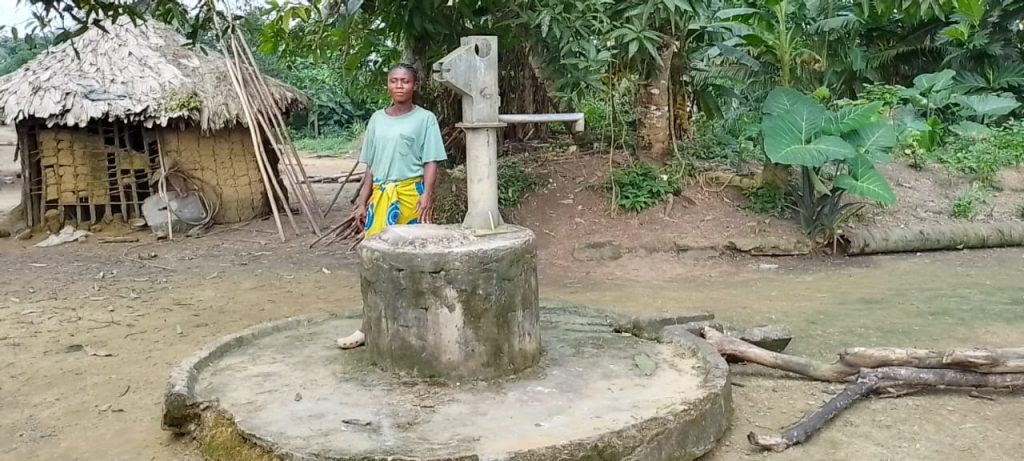
GVL constructed the hand pump in Wotto Town in 2019 with 150 inhabitants. However, the only pump has broken down and has not been repaired, residents said.  

Patricia Koon, a resident of Wotto Town stands by a broken-down GVL hand pump. Picture credit: Anonymous

James Otto, a lead campaigner at the Margibi-based Sustainable Development Institute (SDI), blames GVL.  Otto said GVL was skipping mandatory, quarterly meetings. “Those quarterly meetings have not been held,” said Otto. “Those are important spaces where the communities and the company can now discuss issues and find redress to them.”

Though it dodged The DayLight’s queries, GVL issued a press release following a pair of investigations the newspaper published earlier this month. In the release, GVL claimed it constructed 40 hand pumps and rehabilitated 70 others in Sinoe communities in the last decade. It even built pumps in areas below the MoU-set, population threshold without presenting any evidence.

Nevertheless, GVL concedes that some of the hand pumps require repair. “This is an ongoing process,” the press release read.. “GVL is negotiating revised MoUs with communities, which will include improvements to this process in the future.”


Green Livelihoods Alliance provided funding for this story. The DayLight maintained editorial independence over the story’s content.
Concessions Boss Unaware Oil Palm Watchdog Rebuked GVL

IMG 1406 scaled
IMG 1406 scaled

Top: GVL workers in Butaw, Sinoe County in 2023. The DayLight/James Harding Giahyue


By Esau J. Farr


MONROVIA – The Director General of the National Bureau of Concessions (NBC) Edwin Dennis says he is unaware the watchdog of the global oil palm industry found Golden Veroleum Liberia (GVL) liable for land grab,  one of the landmark moments in Liberia’s postwar natural resource history.

In 2018, the Malaysia-headquartered RSPO established that GVL had planted on farmlands in Sinoe and Grand Kru without adjacent communities’ consent, desecrating sacred sites. The communities had filed a complaint against GVL five years earlier.

The RSPO then ordered GVL to seek the communities’ approval and participation in remapping its concession areas, activities the NBC was created to monitor and regulate.

“I haven’t seen the [Roundtable on Sustainable Palm Oil’s] report and I haven’t spoken to GVL on the RSPO’s report,” said Dennis in an interview. The interview was part of a DayLight series on the company, the largest in the country.

“We were not furnished copies of those reports from the RSPO,” Dennis added, though the document is available online.

Dennis, however, said the NBC was working to create memoranda of agreement, instead of the MoUs. This would help the institution enforce concession agreements.

But time may not be in Dennis’ favor as he said his tenure would end this week. He was appointed in March 2020 by then-President George Weah after the resignation of Gregory Coleman, the current Inspector General of the Liberia National Police.  

FDA Seeks Prison Term for Suspected Timber Traffickers

Terrentius Collins 2

Top: Terrence Collins, also known as Terrentius Tidiboh Collins, is one of four suspected timber smugglers.  Picture credit: LinkedIn/Terrentius Collins 


By James Harding Giahyue


GBARNGA – The Forestry Development Authority (FDA) is seeking penalties for four suspected timber smugglers who operated at the Central Agriculture Research Institute (CARI) in a lawsuit at the Ninth Judicial Circuit Court in Gbarnga, Bong County. The court has seized thousands of timber abandoned at the facility and impounded the machines the suspects used.

FDA petitioned the Ninth Judicial Circuit Court in Gbarnga, Bong County to imprison two Chinese nationals Chaolong Zang and Guoping Zang, a Turkish man Mehmet Onder Erem, and their Liberian alleged accomplice Terrence Collins. The agency seeks a 12-month term for the men if convicted, court documents filed this and last month show.

The lawsuit seeks a US$25,000 fine for the men as well as a forfeiture of machines and a vehicle used in their operations.

It accuses the men of conspiring and disregarding the law to “engage in logging activities, including the illegal harvesting, purchasing, transporting and processing of timber…” It adds that they “established a mini sawmill on the premises of… CARI…, where timber was being processed and smuggled out of Liberia…”

The lawsuit also seeks the forfeiture of a vehicle recently used by the suspects to transfer some of the timber to another location. Police in Gbarnga had arrested Jonah Jackson, the driver of one of the suspects, for transferring the wood to his house in Suakoko, police records show.

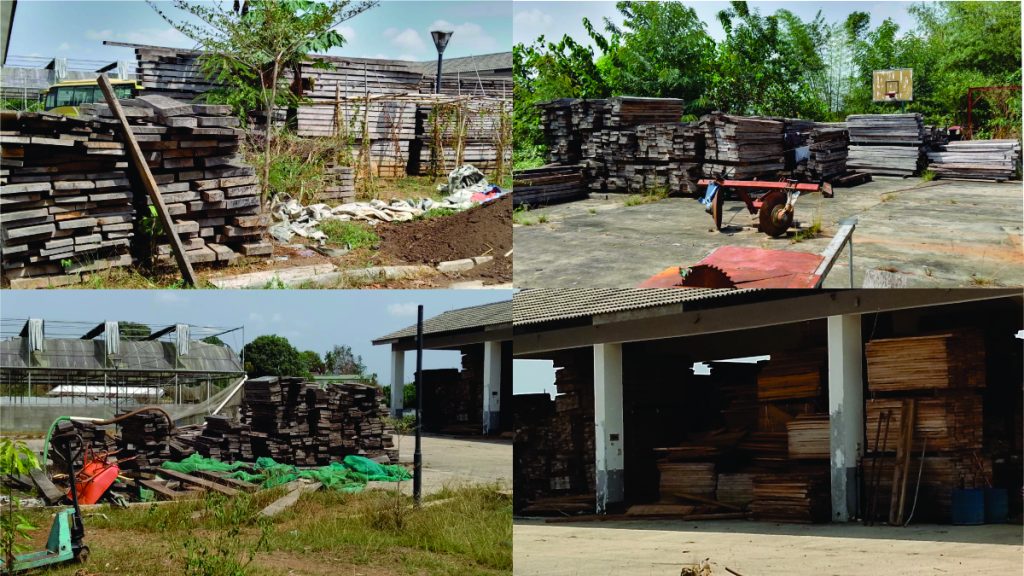
A collage showing allegedly illegally harvested timber at the Central Agriculture Research Institute (CARI). The DayLight/Rebazar D. Forte

“On Wednesday, July 17, 2024, Mr. Zang sent me for the wood to take it from the CARI compound and carry it to my place in Suakoko for safekeeping,” Jackson wrote in a police affidavit.

“On Sunday, July 21, 2024, we continued to haul the balance. But surprisingly, while we got on the compound, we saw the CARI security and the OIC, and they called the police to arrest us.”

The court has impounded all machines and vehicles and imposed a stay on the timber until it determines the FDA’s petition. If granted, it will be the first time the agency has enforced the Regulation on Confiscated Logs, Timber and Timber Products since it was formulated in 2017. Previous attempts in Bomi, Gbarpolu and Monrovia in 2022 proved futile.

The lawsuit comes barely a month after the FDA abruptly aborted an initial attempt to petition the court. An April investigation by The DayLight had exposed the suspected syndicate, showing photographs and documents of the allegedly illegal operation.

Board Resolution

The men deny any wrongdoing, saying they would not have exported the timber without the FDA’s approval. They are asking Judge Cornelius Wennah to dismiss the case for “lack of legal capacity to sue” them.

Their lawyer Nathaniel K. Innis, Sr. argued that two prosecution resolutions by the board of directors of the FDA had expired.   One of the resolutions, signed in 2022, calls on the FDA to prosecute alleged forestry offenders. The other, signed in 2017, endorsed the confiscation regulation being used in the trial.  

“It behooves the current Managing Director Hon. J. Rudolph Merab, Sr. to have filed a petition against the [four men] with a board resolution…,” the petition read.

Jonah Jackson, a driver of one of the suspects, transferred some of the allegedly illegally harvested timber to his house in Suakoko, Bong County. The DayLight/Anonymous

Innis also argued that the suspects legally purchased logs from Alpha Logging and Wood Processing Company, which abandoned its concession in Lofa and Gbarpolu Counties. Therefore, Innis further argues, that the men could not forfeit the vehicles or machines and that the FDA had no right to confiscate the wood in question.

In Innis’ motion for dismissal, FDA lawyer Cllr. Yanquoi Dolo counterargued that it has the authority to enforce forestry legal frameworks and that the board resolution, which Innis hinged his argument, was a matter of corporate governance. Dolo argued the 2022 resolution was still valid and should be used to prosecute the suspects.

Dolo further argued that the men’s operations were illegal as the FDA did not permit them. He added that their transactions with Alpha Logging were not recorded in the FDA’s timber-tracking system.

The next hearing of the case has not been scheduled.


[Additional reporting by a Bong-based journalist]

This was a production of the Community of Forest and Environmental Journalists of Liberia (CoFEJ).

Over Land Grab, GVL Defies Watchdog with Impunity

WhatsApp Image 2024 08 13 at 13.55.10 1

Top: A guard at a Golden Veroleum Liberia gate in Lower Kulu Clan in the Tarjuwon District, Sinoe County. The DayLight/Matenneh Keita


By Esau J. Farr


WIEH TOWN – Before the Ebola epidemic in 2013, Levi Jarteh joined other townspeople from Tarjuwon to file a complaint against Golden Veroleum Liberia (GVL) with the  Roundtable on Sustainable Palm Oil (RSPO), the watchdog of the global oil palm industry.

They accused GVL of encroaching on their land and destroying sacred places. The Palloh Hill, believed by locals to host spirits that granted good harvest, gave way for the mill. The Slinee Creek, where women sought children, made way for an irrigation system for palm nurseries.

Five years after their complaint, the RSPO found GVL liable for land grab. It ordered GVL to stop work in that area until it signed a new memorandum of understanding (MoU) with Tarjuwon, including the Lower Kulu Clan, where Jarteh was born. The rebuke called for GVL to remap its plantation in the disputed area. The RSPO gave GVL a three-month deadline to implement the order.

“Any deviation from the above-mentioned milestones and timelines by GVL will be viewed adversely and may lead to consideration of suspension and eventual termination of membership,” the RSPO said.

GVL’s appeal of the decisions was rejected and left the RSPO, only to rejoin about a year later. GVL is a member of RSPO through its parent company, Golden Agri-Resources (GAR), a Singaporean multinational, one of the world’s largest oil palm firms.

But, more than six years after that ruling, GVL has not signed a new MoU with Tarjuwon. Instead, the company has defied the RSPO by constructing the mill, planting in some areas and building houses in others. It has not been punished as the global watchdog had warned.

The first of those violations happened just three months after the RSPO’s order. Satellite images published in a report by the Sustainable Development Institute (SDI), an NGO based in Margibi,  show GVL cleared additional farmland in Lower Kulu.

Then in 2019 evidence gathered by Blogbo-Teh, a local advocacy group, and RSPO confirmed that GVL cultivated additional land in Lower Kulu and continued to construct the mill.  

GVL admitted to the violation, saying, “It took what it believed was a precautionary approach and interpreted the order to apply to the whole of the Lower Kulu area.” RSPO reordered GVL to complete the mapping of its plantation bordering the Upper and Lower Kulu “without any further delay.”

Again in 2022, Blogbo-Teh filed another complaint with evidence that  GVL continued to develop the mill, houses and palm nurseries.  Blogbo-Teh rued GVL’s “snail-pace” implementation of the RSPO’s orders, saying, ‘Justice delayed is justice denied.’”

Levi Jarteh, the General Town Chief of Wieh Town, was one of the townspeople who filed a complaint with the Roundtable on Sustainable Palm Oil (RSPO) in 2013. The DayLight/James Giahyue

“It is unfortunate that duty bearers who have responsibilities and have signed international treaties, conventions and laws in our country do not have the willpower to do the right thing,” Simpson Snoh, the chairman of Blogbo-Teh, told The DayLight. Blogbo-Teh, which means “round land business” in the Kru language. Blogbo is a section within Lower Kulu.

“We are advocating for justice to be done per RSPO’s principles,” Snoh added.

GVL confirmed Blogbo-Teh’s findings, saying it carried out “minor works” at the mill site, repaired machines, established a nursery and replaced dead palms. The RSPO is reviewing that complaint. The DayLight has emailed the certification scheme for comments and will update this story once a response is obtained.

‘No more farmland’

Just as the years have witnessed an array of credible complaints of violation, so too have efforts to map GVL’s plantation in Tarjuwon.

In 2018, when the RSPO made the decision, Earthworm Foundation, a Switzerland-based nonprofit was appointed by RSPO to map Tarjuwon. However, Blogbo-Teh questioned the group’s independence, as it had worked for GVL before.

Subsequently, Proforest, a UK-based NGO, was appointed to conduct the mapping.  But it came at the time the Liberia Institute for Statistics and Geo-Information Services (LISGIS) was about to conduct  Liberia’s fourth census. So, Proforest supported LISGIS to carry out the national duty and submitted the report to the RSPO in November 2021.

But LISGIS’ map established clan boundaries, and not the size of GVL’s plantation in Lower Kulu,  the crust of the matter.

“We want to know the total hectare of land and how many hectares of land is occupied by GVL or will be occupied by GVL before any MoU can be signed,” added Simpson Toby, an ex-chairman of Blogbo-Teh.

Golden Veroleum has a 65-year concession with the Liberian government to develop 220,000 hectares of land in Maryland, Grand Kru and Sinoe. The DayLight/Derick Snyder

“No more farmland [for us] because the palm bush is around us,” said Jarteh, the General Town Chief of the Lower Kulu Clan. “We have to travel beyond the palm plantation before we make farm and that distance is a [three-hour walk].”

The RSPO announced it would schedule a meeting with Proforest on the mapping report, whose draft the watchdog said it had received.

GVL dodged questions The DayLight emailed to it. However, it said in a periodic report to the RSPO that it would begin negotiation with Tarjuwon if the watchdog recommended that. The company has only reported for the first quarter of this year so far.

Meanwhile, locals of Lower Kulu say they are open to a negotiation with GVL. They want similar benefits that GVL-affected communities are entitled to, as they are excluded from the current MoU.

GVL’s current MoU calls for the payment of US$5 per hectare of developed land and gives citizens priority for jobs in affected communities. The agreement gives citizens access to healthcare services, schools and scholarships, especially employees and dependents. It also contains infrastructural development, including the construction of roads and bridges.

GVL, Liberia’s largest oil palm company, signed a 65-year agreement with the Liberian government covering 220,000 hectares of land in Sinoe, Grand Kru, and Maryland in a deal worth US$1.6 billion.

Ophelia Kumon, a resident of Wieh Town said, “Since they took the land, they should provide us safe drinking water, school for our children and job opportunities for the citizens here.”


Green Livelihoods Alliance (GLA) provided funding for this story. The DayLight maintained editorial independence over the story’s content.