Home Tags Kisvan Timber Corporation

Tag: Kisvan Timber Corporation

Logging Firm Breaking Promises to Community

Logging Company Breaks Promises to Community
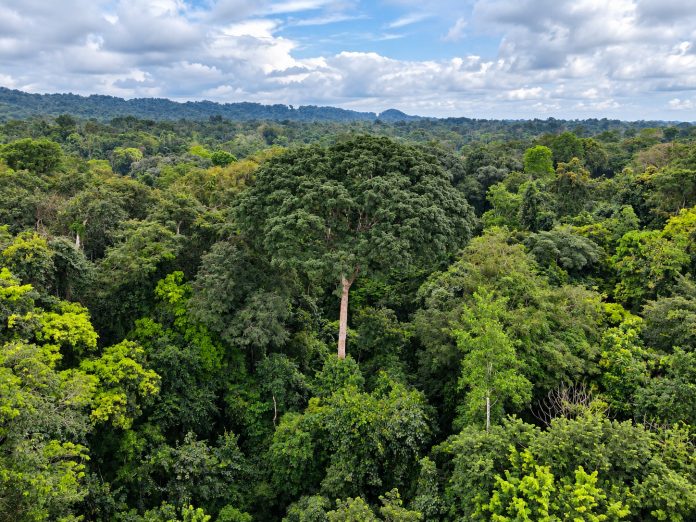
A drone shot of a portion of the Marbon Community Forest in Gola Konneh, Grand Cape Mount County

Top: An aerial view of the Marbon Community Forest from Meskina Town. The DayLight/Samuel T. Jabba


By Samuel Jabba and Philip Quwebin


JAWAJEH, Grand Cape Mount County – On one Monday in March 2022, the Marbon Community Forest signed a logging contract with Kisvan Timber Corporation, an Indian-owned firm. The agreement allows Kisvan to operate the 18,680-hectare forest in exchange for development in local communities. Established in 2021, it is the first contract for Marbon Community Forest in Gola Konneh District, Grand Cape Mount.

Now, four years into the contract, Kisvan is failing to deliver on its obligations. By now, Kisvan should have undertaken 45 projects across communities, including schools, hand pumps and roads. It has yet to fulfill those promises, according to townspeople.

“Some of the things we agreed to do in one year have passed, some of the things we agreed to do in two years have passed, and even in three years have passed,” said Mohammed Daramie, Marbon’s chief officer. An official monthly report published last February confirmed Daramie and the townspeople’s claims.  

It was unclear how much Kisvan owes Marbon, as neither Daramie nor Kisvan responded to queries about payments. However, a review of the contract, official records and the interviews with townspeople provides a clue.

Members of Marbon’s community assembly—the highest decision-making body in community forestry—said they received L$100,000 (US$588) since Kisvan began its operations. They heard that Kisvan paid money into Marbon’s account but had not seen any receipts.

The revelation is a far cry from the contract, which requires  Kisvan to pay Marbon US$219,210 each year in training, healthcare, land rental fees, and forest monitoring, according to The DayLight’s analysis of the contract.

Daramie confirmed payments were made but did not say the amount. He promised to share payment documents but did not turn out at his office the next day and did not return calls or text messages.

Regardless, official records show that Kisvan exported at least 4,730 cubic meters of timber between 2024 and this August. That is an additional US$14,190 to Marbon, per the contract, bringing the total to roughly US$233,400.

In addition to payment issues, Kisvan did not respond to other questions for comment. Beginning in September, reporters contacted the companies’ executives via letters, WhatsApp messages, and texts, but got no replies. However, last year, Van Ngo, Kisvan’s CEO, blamed the global timber market for the company’s struggle to pay its debt.

The Forestry Development Authority (FDA), too, did not respond to inquiries about approving Kisvan’s exports while the firm is indebted to the Marbon. Forestry Regulation on Forest Fees bars a company from exporting when it owes the government or a community.

The official monthly report urges the FDA to be “more operational” in paying communities. It suggests the agency requires companies to upload receipts to communities in LiberTrace, the system that tracks timber before export.

‘Liars’

Reporters visited six of Marbon’s 36 landowning communities to find out more about contractual projects.
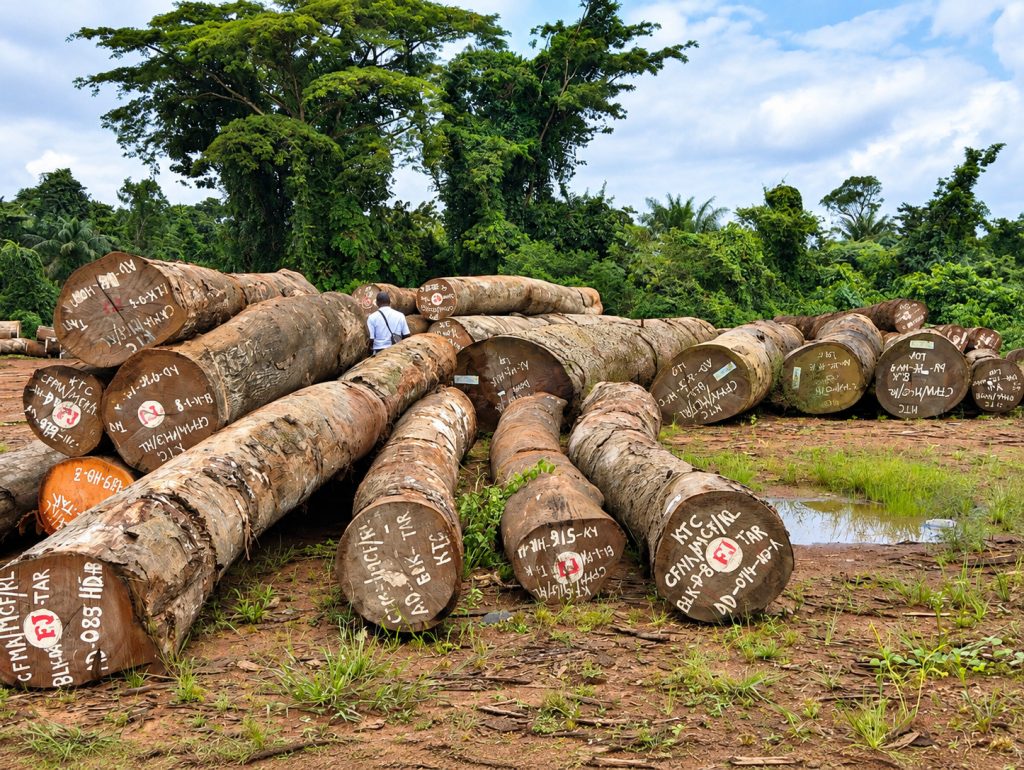
An FDA worker inspects logs at the Kisvan log yard in Jawajeh Town. The DayLight/Samuel T. Jabba

In Jawajeh, which hosts Kisvan headquarters, the contract’s failure lay bare. The town is supposed to have four hand pumps, four toilets, and a school, according to a community assembly member who represents the town. However, it is not the case. There are no Kisvan-built water facilities here, and people defecate in a nearby creek.

“One thing I know about Kisvan is that they are liars. No latrine, no safe drinking water, and no school. Every time we call to meet with them, Kisvan will always come with stories,” said Memah Kemokai, chairperson of Jawajeh Town.

“We are suffering, while we are surrounded by riches.”

Daramie acknowledged that Kisvan failed on some of its contract terms. However, he said that Marbon’s resolution did not capture Jawajeh,  adding that the town’s representative did not present a proposal. Per the contract, Kisvan should construct two roads by 2023, a school by 2024, and eight hand pumps each year up to 2027. Nevertheless, communities can also decide to build other schools from the land rental and harvesting fees Kisvan pays.

The situation in Jawajeh is the same as in Meskina. A more populous and larger town, and closest to the forest, Meskina does not have any schools, in addition to lacking hand pumps and toilets. The closest school from here is in Kinjor, a famous mining town, about an hour away on a motorbike.

“We’re supposed to get some of our benefits by now, but there’s nothing yet,” said Alex Kamara, a Meskina resident.

No roads

Hand pumps, toilets and schools aside, roads are Marbon’s biggest problem. The worst stretch of the road is in Macca, the headquarters of the Darblo Clan, which hosts the forest. The contract requires Kisvan to maintain all roads in the area.

Yet no roads have been paved. A major bridge on the road leading to Macca is broken. Reporters saw motorcycle-taxi drivers pushing their vehicles across the water, while townspeople either jumped over culverts or stepped in the water to cross. The motorcycle-taxi driver carrying reporters fell into the water at the broken bridge.

Jenneh Brown, a large town next to Macca and home to a Kisvan log yard, faces the same obstacles. Thick, red mud makes the road leading to the town nearly impassable.

Women wash at a broken bridge between the Jenneh Brown Town and Macca, Grand Cape Mount County. The DayLight/Samuel T. Jabba

“Kisvan promised to construct the road from Jenneh Brown to Sinje Town and Marbon Wanga, but they failed to do the road rehabilitation,” said Zinah Boakai, a community assembly member. “I’m disappointed with the projects.”

Marbon is not Kisvan’s first struggle with a logging contract. Kisvan had similar circumstances with the Central Morweh Community Forest in River Cess County, where it did not complete several projects and delayed payments.

Ultimately, Kisvan and Central Morweh terminated the contract by mutual consent.  After the termination, the River Cess community opted to conserve the forest, while Kisvan signed a new deal with the Bondi Mandingo Community Forest in Gbarpolu County to add to Marbon.


[Additional reporting by Philip Quwebin]

This story was produced with support from Informed Earth.
Locals Sign New Logging Contracts After Old One Failed

Locals Sign New Contract after Old One Failed
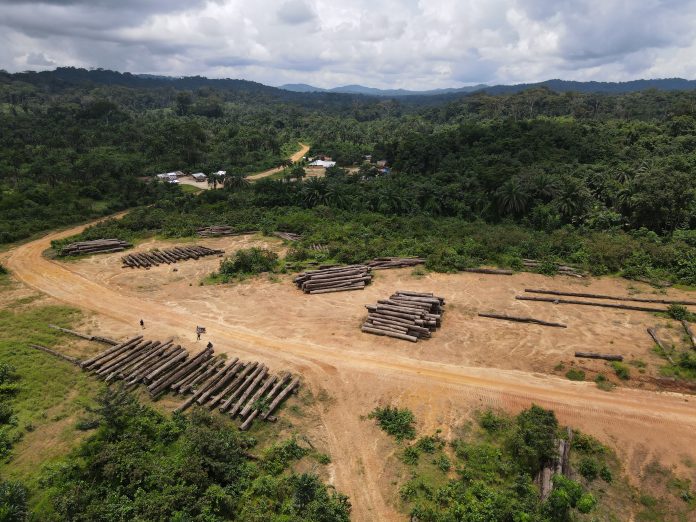
Abandoned logs by a roadside in Gbarpolu County.

Top: An aerial view showing several abandoned logs near Timber Village in the middle of the Bondi Mandingo Forest. The DayLight/Samuel Jabba


By Samuel T. Jabba


This is the first of a two-part series on a logging contract and a mining license in a community forest in Gbarpolu County.

GBARQUOITA – A community in Gbarpolu County has agreed to a new logging contract, reopening the forest to timber extraction after a previous contract ended unsuccessfully.  

Bondi Mandingo Community Forest, which covers 37,222 hectares in the Bopolu District, signed the seven-year deal with the Kisvan Timber Corporation on July 24. To meet expectations, community leaders have ensured this contract delivers real benefits this time.

“I think it is a good agreement. We had a similar issue before in the community, but what got me involved with this is that this one is time-bound,” says Mark Dennis, Bondi Mandingo’s chief officer. The first agreement did not have that. This time, it will not be a ‘sell and pay,’ where you will carry the wood before returning to the communities to pay benefits.”

The new agreement includes US$25,590 in annual land rent, US$3 per cubic meter in harvesting fees—one of the highest in the industry—and a US$7,000 healthcare fee. The company must provide education support, forest-protection funding, offices for community leadership, road rehabilitation, and a sawmill.

Dennis says representatives from six affected communities support the contract. It initially sought a conservation deal, but negotiations broke down midway, fixing the community’s attention back on logging.

Bondi Mandingo’s first contract was with Indo Africa, one of several companies owned by a Singaporean family. Indo Africa Plantations Liberia Incorporated owed the community US$400,212 and failed to fulfill its promises of roads, schools, and jobs, according to court filings. A Bopolu court sided with community leaders and terminated the contract last month.

“In the first contract, we did not realize our benefits, and the logs were exported out of here secretly. Nothing we received in return. We still stand to benefit from that money,” says Dennis.

Indo Africa left behind some 10,000 cubic meters of logs. The woods lay scattered in the forest and on the roadsides in Gbarquoita, a major town in that area. Reporters counted about 500 abandoned logs, mostly expensive species. Having signed the contract, Kisvan will take ownership of the abandoned logs, subject to regulatory requirements.

“We were angry because we went into the bush and saw the number of logs the company left in the forest. So, we had no other option,” says Fatu David, the chairlady of Gbarquoita Town.

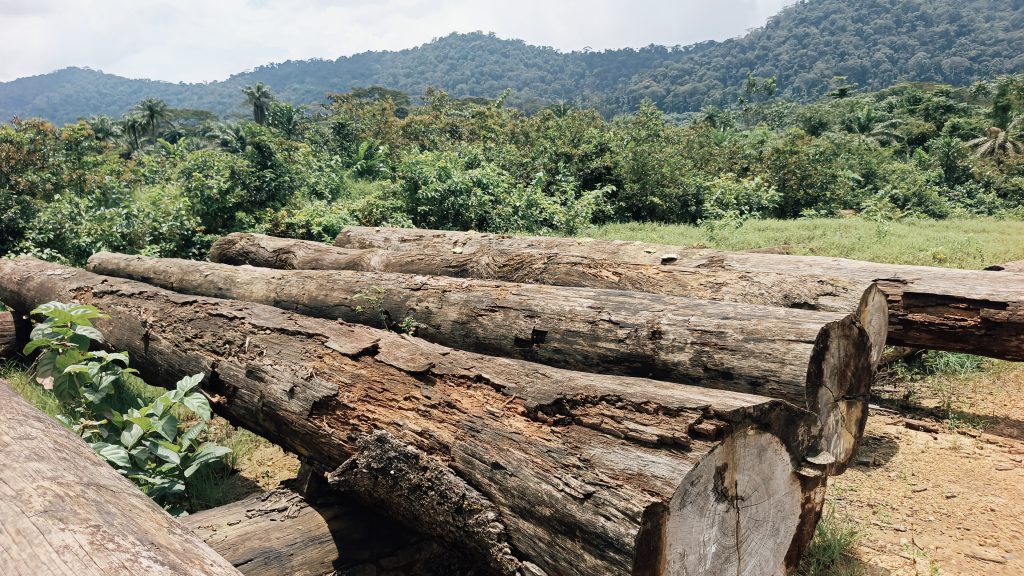
Logs Indo Africa abandoned in the Bondi Mandingo Forest. The DayLight/Samuel Jabba

Also, under the contract, KISVAN must pay harvesting fees into the community account before export, replacing the previous practice in which timber allegedly left before benefits were paid. It sets deadlines, including completing the Bopolu–Gbarquoita road by next March. Community members are entitled to mid-level positions in the company and take legal action if deadlines are violated.

“This was discussed in the agreement, so that we can have eyes inside. If anything happens, we will be informed. We have also started reviewing the documents that the government gave them,” explains Dennis.

“So, we are monitoring them.”

Kisvan has another logging contract with the Marbon Community Forest in Grand Cape Mount County, a problem with which Bondi Mandingo is all too familiar. A Singaporean family that owns Indo Africa had contracts with three other community forests, apart from Bondi Mandingo. All but one of the contracts ended in court, with devastating consequences to local people. Kisvan has had issues with its previous contracts, too.  In 2021, it signed a logging contract with the Central Morweh Community Forest in River Cess County to operate 19,091 hectares of forest. The contract, however, ended prematurely, following a series of payment and project challenges.

Kisvan denies any wrongdoing regarding Central Morweh but did not respond to queries for comment in this story. Dennis, meanwhile, is confident that the Bondi Mandingo-Kisvan contract will deliver. “Not hundred percent. I trust at least 80 percent of what they have promised because they are humans,” says Dennis. “People can make promises, and at times, they may not fulfill their promises.”

Mark Dennis, Chief Officer of the Bondi Mandingo Authorized Community Forest, Bopolu District, Gbarpolu County

Miners and loggers in one forest

Pressure from miners also influenced Bondi Mandingo’s decision. A Chinese Liberian firm, J.M. Mining Company, holds a gold-exploration license that overlaps the community forest. Reporters saw earthmovers, several open pits, and a camp house of several Asian men.

Under the Mineral and Mining Law, an exploration license lasts three years and can be extended by another two. After the extension, the license could evolve into a 25-year agreement with the Liberian government. This means J.M. Mining could exploit the forest throughout Kisvan’s contract lifespan, which is a forestry offense.

“Their exploration has been going on for two years now. They are doing it in the Kpo Mountain area, and we are afraid that they will give the loggers problems,” said Stanford David, General Town Chief of the Bondi Clan.

The Ministry of Mines and Energy calms the community’s fear in a statement.

“The Ministry of Mines and Energy awards exploration licenses in community forests, because the Ministry believes that exploration is a research license and hence exploration and logging can co-exist or take place in the same forest,” reads a statement.

J.M. Mining denies any wrongdoing and supports the ministry’s view. 

“The issue of having logging and mining operations in the same space at the same time will be handled,” says Hilary Simmons, a J.M. Mining manager. “All these come down to simple understanding; I think there won’t be any conflict here.”


This story was produced with support from Internews’ Earth Journalism Network.