25.1 C
Monrovia
Sunday, February 8, 2026
Home Tags Joseph Boakai

Tag: Joseph Boakai

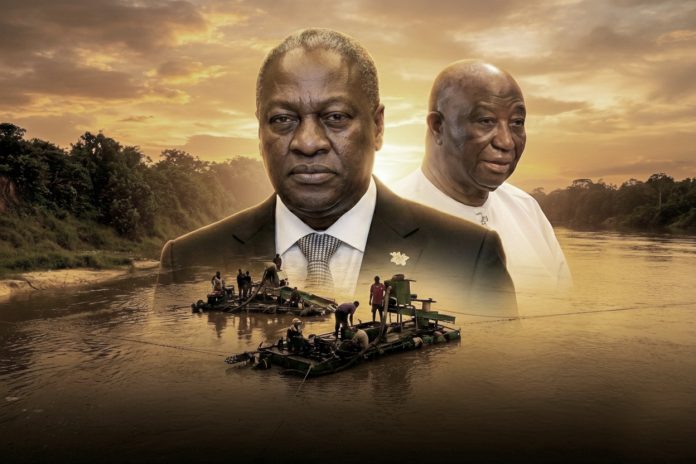
Liberia Permits Dredge Mining while Ghana Outlaws It

Top: Illustration by Michael Harijgens for The DayLight


By Emmanuel Sherman


MONROVIA – Liberia has introduced a permit for gold and diamond dredging, lifting a ban on the mining method associated with pollution. Meanwhile, that is exactly the opposite of what has been done in Ghana, where it has been outlawed.

Both countries’ actions come at a time of a new report by the United Nations Office on Drugs and Crime that illegal mining poses a serious global threat. The report found that criminal gangs were seeking to gain control of gold mines in Sub-Saharan Africa, Latin America, the Caribbean, and Southeast Asia.  

Last year, Liberia introduced a permit for dredging to increase mining revenue. Small-scale gold and diamond miners can now pay US$1,500 for a dredge permit, and medium-scale miners US$10,000. The permit lifts the 2019 ban, aimed at reforming Liberia’s artisanal mining subsector. So far, no permit has been issued.

Ghana, on the other hand, repealed a law last December to protect its forests and waterways from dredging and other forms of illicit mining. The 2022 law had allowed mining in protected forest reserves, exposing 89 percent of Ghana’s forest reserves to mining.

The repeal followed demonstrations that called for a state of emergency to combat dredging, or as Ghanaians call it, galamsey—a play on “gather them and sell.” 

President John Mahama, who made fighting galamsey a campaign promise, had encouraged demonstrators to push the government to act. “I am determined. Let us win this galamsey fight together,” President Mahama said.

One of Ghana’s biggest environmental issues is galamsey, which dates back to pre-colonial times when rural communities were involved in gold-winning practices. It allowed gold won by locals to be used to sustain trade across the goldfields, which later developed into an organized criminal network that spiraled out of control.
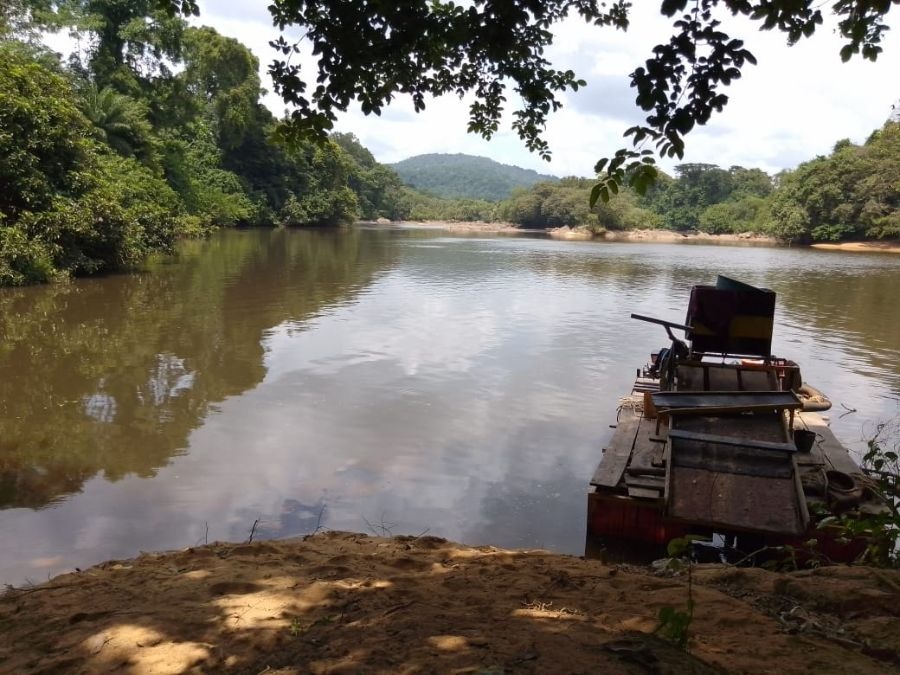
A dredging machine on the banks of the St. John River, Grand Bassa County, 2024. The DayLight/Emmanuel Sherman

Galamsey, the illegal mining trade, has a severe toll on Ghana, which led to the destruction of over 4,700 hectares of land across seven regions, causing deforestation and degradation. The Pra River, once a vibrant ecosystem, has been polluted with toxic chemicals like mercury.  Israel Derick Apeti, an artist- activist, used some of the polluted water to paint, highlighting the crisis.

George Manful, a former official of Ghana’s Environmental Protection Agency, intimated that mercury remains in waterways for 1,000 years. “We are slowly poisoning ourselves with undrinkable water,” Manful told the BBC.

Like Ghana,  dredge mining has polluted Liberia’s watercourses, posing a health hazard to rural dwellers and threatening their livelihoods. It also has huge negative impacts on aquatic species, experts say.

“When rivers are dredged, the nesting grounds are destroyed, and fish migrate,” said Eugene Shannon, an environmentalist and an ex-Minister of Mines and Energy, who set up the previous fee structure that did not include dredging permits.

Last year, the Environmental Protection Agency of Liberia warned illegal miners about the overuse of mercury in Liberian waters.

“When we mine gold using mercury, the mercury spreads in the water. The fish live in the water and get their food. The mercury enters the fish. When we eat fish, mercury enters our bodies,” said Dr. Emmanuel Yarkpawolo, Executive Director of the Environmental Protection Agency of Liberia.

“This can cause damage to our kidneys, cause deafness, cause blindness, and cause women to give birth to children with all kinds of brain problems.”
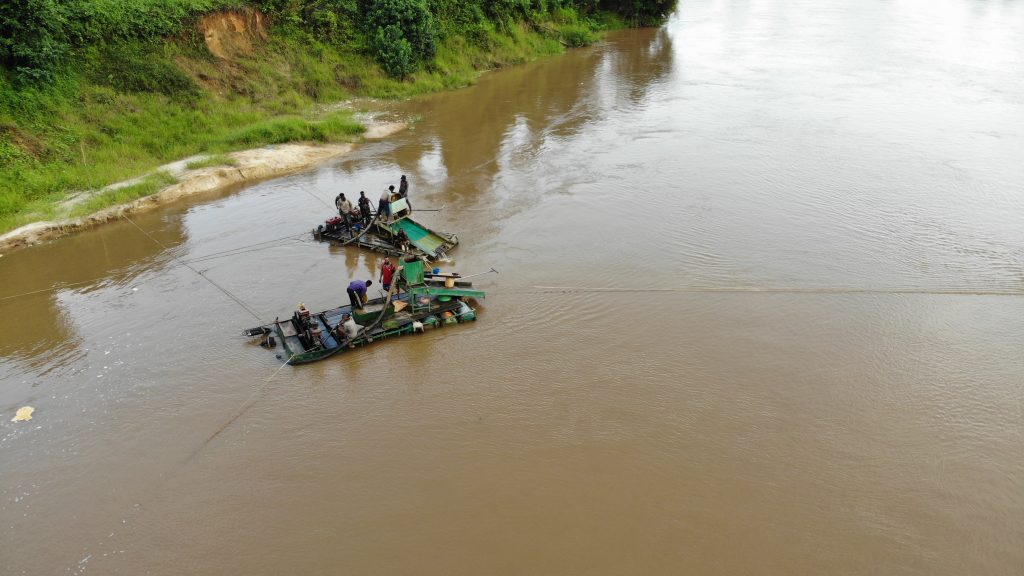
A drone shot of two dredges on the River Dugbeh in Sinoe County in 2024. The DayLight/Derick Snyder

Two months after Yarkpawolo’s speech, Liberia ratified the Minamata Convention on Mercury, which protects people and the environment from the chemical.

‘Dangerous’ level

Mining is one of the key drivers of Liberia’s economy. The sector generated over US$121.49 million in 2023 or nearly 85 percent of total revenue, according to the Liberia Extractive Industries Transparency Initiative. Mining also contributed about 80 percent of all exports. The International Monetary Fund estimates that the Liberian economy will grow by 5.4 percent this year, up from  4.6 percent last year, thanks to the mining industry.

But illegal mining has been a problem for Liberia due to a weak regulatory system, according to a 2021 report by the General Auditing Commission. About 90 percent of gold from Liberia’s artisanal and small-scale mining sector is believed to be smuggled out of the country each year, according to the Organization of Economic Cooperation and Development. That amounts to a US$455 million loss as of 2011. 

Liberia has, however, convicted no one for smuggling or illicit mining.   A US$48.8 million case involving Randy Scott, a Liberian miner, and several Chinese nationals, the biggest in Liberia’s mining history, was dropped mysteriously. The men had been accused of economic sabotage, tax evasion, criminal conspiracy, environmental degradation, and encroachment.

Like Liberia, mining is also a pillar of the Ghanaian economy. Ghana is Africa’s largest and the world’s sixth-highest producer of gold, which is at an all-time high of US$4,670 per ounce as of Monday. Last year, Ghana generated over US$10 billion from small-scale gold export. Its GDP grew by 5.7 percent in 2024, with mining largely responsible for the growth.

But, unlike Liberia, Ghana has taken measures to combat dredging. Apart from repealing that law recently, over 850 people are facing prosecution currently for galamsey. Authorities said 76 galamseyers, including 18 foreign nationals, have been convicted of illegal mining since August 2021. Thousands of Chinese have been deported in a crackdown on illegal miners. The country intends to imprison 10 Chinese arrested for illegal gold trade if convicted.

“We are moving heaven and earth so that they dance to the music of the Ghanaian law,” said Prince Kwame Minkah, spokesman for the Ghana Gold Board.
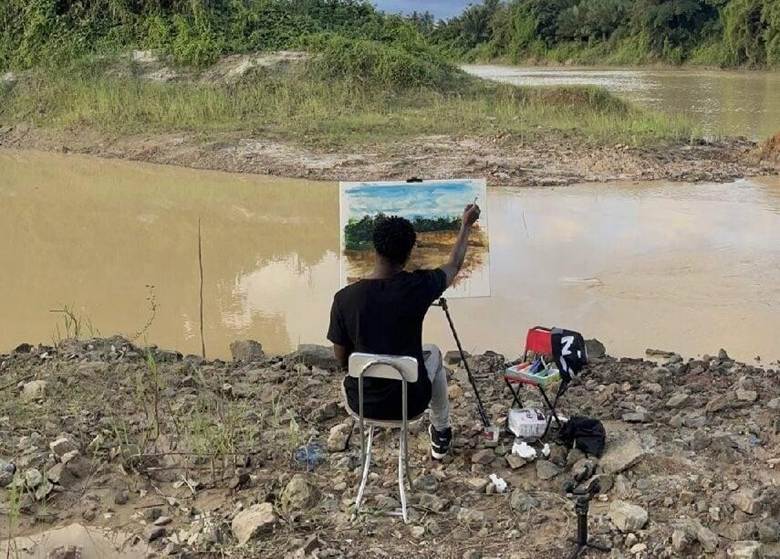
Israel Derrick Apeti, known as Eni Art on social media, paints draw public attention to the plight of galamsey in Ghana. Picture credit: The Africa Report

In response to The DayLight’s queries, the Liberian Ministry of Mines and Energy justified that the permit was an alternative to the dredging ban that had proved “difficult to control.” The ministry stated that it had a system to monitor dredge permit holders.   

“The fees will not only increase revenue collection for the government. [It] will help enhance enforcement activities in the mining sector, while the Ministry continues to collaborate with the Environmental Protection Agency on curbing harms to the environment from mining activities,” said the ministry.

Emmanuel Swen, Liberia’s ex-Assistant Minister for Mines, who had helped ban dredging, said permitting dredging was all about the money, and not people or the environment.  

“The issue is not about the contribution the use of dredge makes to revenue generation, which seems to be the ministry’s concern,” said Swen. “It is about the adverse environmental footprints that the permit in itself does not address.”

Liberia’s position on dredging mining mirrors Ghana’s initial stance on it, which proved counterproductive.  In 1989, Ghana legalized the use of mercury to formalize its small-scale mining subsector. The decision helped spur an increase in gold exports, but a state-backed study found mining has driven mercury pollution to a “dangerous” level.


Integrity Watch Liberia provided funding for this story. The DayLight maintained complete editorial independence over its content.
Boakai’s Justice Minister Pick is A Serial Illegal Logger

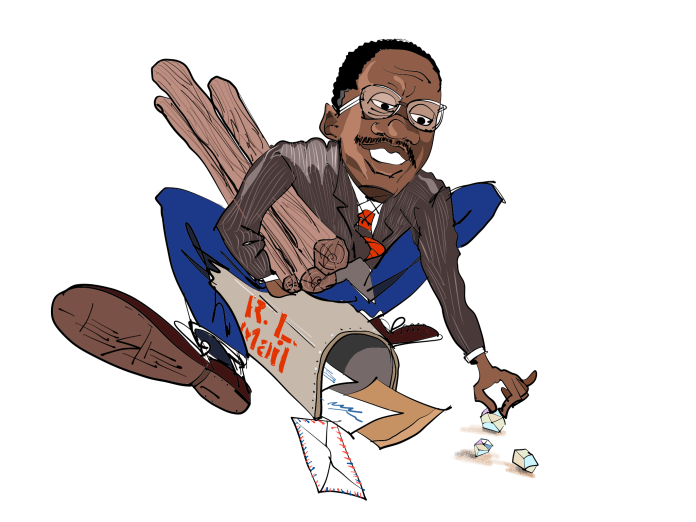
Top: This cartoon depicts Minister of Justice-designate Cooper Kruah in a conflict of interest when he served as Minister of Posts and Telecommunications. Then Minister Kruah retained his shares in the Universal Forestry Corporation, which ran a forestry contract and held several mining licenses between 2018 and 2023. Illustration by Leslie Lomeh for The DayLight.


By James Harding Giahyue


  • MONROVIA – Minister of Justice-designate Cooper Kruah is a repeated forestry offender, with his company involved in illegal logging operations dating back to the Liberian Civil War era.
  • Kruah’s Universal Forestry Corporation (UFC) was debarred from forestry in 2006, based on the United Nations Security Council’s recommendation
  • UFC crept its way back into the sector—with assistance from forestry authorities—and continued its illegal activities
  • UFC was involved in the infamous Private Use Permit Scandal in which it illegally received two permits at the detriment of local communities
  • Later, UFC signed an agreement with a community forest in Nimba. Then the Minister of Posts and Telecommunications, Kruah remained one of its shareholders—a violation of the Code of Conduct for Public Officials and forestry’s legal instruments
  • Kruah presented a fake document, which misspells his son’s name, to cover up his conflict of interest
  • UFC persisted with its offenses, abusing the rights of local people, conducting illegal harvesting and transport

MONROVIA – Cllr. Cooper Kruah, the Minister of Justice-designate, has a long history of being a forestry offender. His nomination contradicts the role of the Attorney General and undermines President Joseph Boakai’s expressed quest for accountability and the rule of law.

In his Inaugural Address, President Boakai promised to fight corruption and restore Liberia’s lost image in the comity of nations. Boakai restated that in his first State of the Nation Address.

Last month, Boakai appointed Kruah, a stalwart of the Movement for Democracy and Reconstruction whose support was instrumental in the Unity Party’s victory in last year’s elections.

Kruah is expected to appear before the Liberian Senate for confirmation. If confirmed, his job would be to prosecute individuals for alleged wrongdoings, sign concessions for Liberia and conduct oversight of several government offices.

But desk research, based on official records, United Nations reports and previous investigations by The DayLight reveals that Kruah may not be the right person for the post. It shows Kruah has broken forestry laws repeatedly with impunity, making no efforts to atone for his wrongdoings.

Kruah has refused to grant The DayLight an interview in each of the two times the newspaper contacted him. He preferred not to be recorded on the matter, which goes against The DayLight’s editorial policy.

Wartime logging

Kruah established Universal Forestry Corporation (UFC) in 1986, holding 25 percent of the company’s shares, according to its article of incorporation at the Liberia Business Registry. One Peter Goankeh held 25 percent while the remaining 50 was outstanding.

UFC was active in the early 1990s and early 2000s when Liberia became known for “conflict timber” or “logs of war.” Warring factions traded timber for weapons in two civil wars that killed an estimated 250,000 people.

The trade violated several United Nations arms embargoes on Liberia, leaving the Security Council to impose sanctions on Liberian timber.  To lift the sanctions, the Liberian government at the time submitted itself to reform led by the UN and national and international civil society organizations.

Following a review of forestry concessions in 2005, the administration canceled all logging contracts, including UFC’s. The review found that UFC was not compliant with the industry’s laws and that its contract was not even ratified by the Legislature.

As part of the reform agenda, UFC and 69 other companies were expelled from doing logging business in Liberia. That move was further carved in the 2007 Regulation on Bidder Qualifications, which partially debars individuals associated with wartime companies from forestry activities.

An Illegal Return

In 2007, UFC amended its legal documents to add new shareholders. Kruah retained five percent shares in the company and the others were distributed among four other people, including former presidential advisor Edward Slangar and two non-Liberians: Jin S. Kyung and B.J. Kim.

In 2007 and 2008, UFC signed two illegal MoUs with Geetroh in Sinoe and Rock Cess in River Cess for logging rights, respectively, according to a 2018 Global Witness report. The communities had not gotten their community forestry status when the MoUs were signed. A 2009 law gives communities the right to enter into contracts with loggers upon the approval of the FDA.

Three years later, Kruah hustled his way back into the sector. The Forestry Development Authority (FDA) ignored UFC’s wartime activities and its qualification regulation. UFC acquired two private use permits and logging rights granted for private lands.

But a two-year investigation by Global Witness, the Sustainable Development Institute and Save My Future Foundation found UFC and other companies were illegally awarded the permits. It became known as the Private Use Permit (PUP) Scandal.

A government-backed inquest uncovered a lot of irregularities with UFC’s PUPs. It found that UFC did not follow any legal processes, did not obtain an environmental permit and that fraudulent persons had posed to be the landowners of its contract areas.

It also found that UFC made payments into a personal bank account, its Grand Bassa PUP area was larger than the actual land size and the one in Sinoe was issued for communal, not private land.

A UN Security Council report revealed that UFC’s Sinoe permit covered the same area as Atlantic Resources, another company.

For the second time in its history, UFC’s permits were canceled alongside 62 others. The Managing Director of the FDA Moses Wogbeh was dismissed and prosecuted for his involvement in the scandal. A moratorium on the issuance of PUPs remains in force to this day.

Conflict of Interest

There is no public record of UFC’s activities after the PUP Scandal. However, UFC returned in 2020 with an agreement with the Sehzueplay Community Forest.

Kruah was the Minister of Posts and Telecommunications while serving as a shareholder and secretary of UFC’s board of directors when the agreement was signed.

That violated the National Forestry Reform Law of Liberia and the Code of Conduct for Public Officials. Both laws prohibit a government official from conducting logging activities. The violations were the subject of an investigative series by The DayLight in 2022.

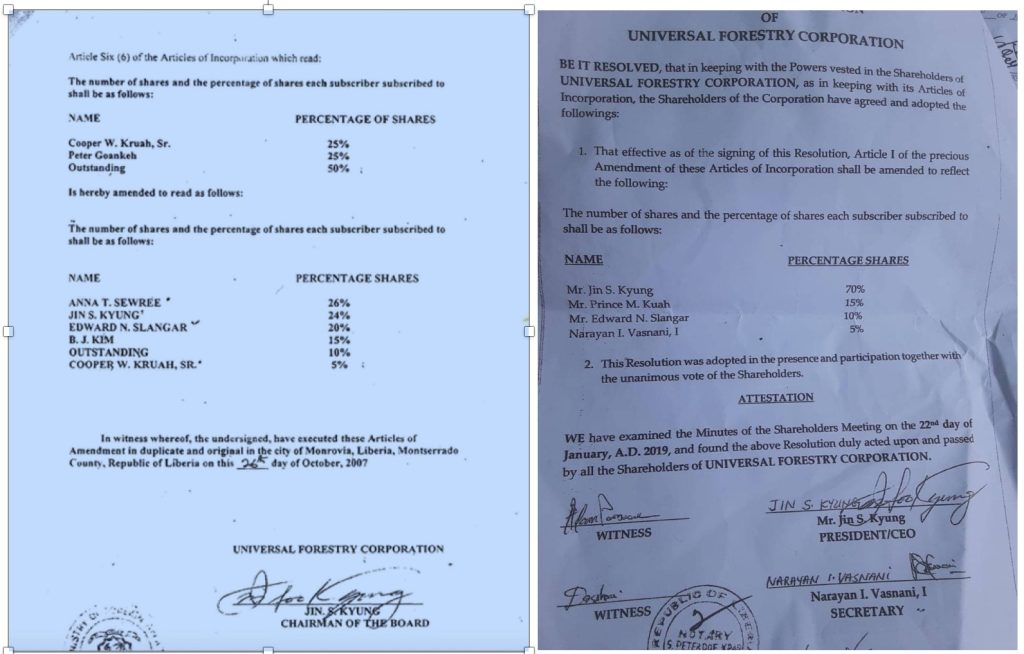
Kruah tried to cover up his conflict of interest but ended up committing more wrongdoings. A 2019 document he claimed to be UFC’s amended article of incorporation was not recorded at the business registry as required by law. Also, UFC’s tax history at the Liberia Revenue Authority (LRA) did not show it paid taxes for the amendment. UFC’s legal document at the business registry still carries Kruah and his five percent shares.

On the left is the real article of incorporation of Universal Forestry Corporation (UFC). On the right is the fake one Justice Minister-designate Cooper Kruah presented in 2022.  

Moreover, the content of UFC’s so-called amended article cemented the evidence of the document’s fakeness. The document misspelled the name of Kruah’s son. Instead of “Prince M. Kruah,” it read “Prince M. Kuah.”

Then FDA Managing Director Mike Doryen promised to act but failed to do so. Penalties for forgery in forestry are a fine between US$10,000 and three times the funds Kruah received from UFC, or a prison term of up to 12 months.

But Kruah did not know, or he ignored the fact that he would not have resolved his conflict of interest by transferring his shares to his son. The forestry reform law mandates him to relinquish, or turn over his shares to a blind trust or a person outside of his control.

Illegal harvesting

UFC carried out illegal logging and transport under his shareholdership. An August 2021 industry report found that UFC conducted “massive” illegal harvesting in and around the Sehzueplay Community Forest.

The report revealed that UFC was illegally transporting logs from Nimba to an illegitimate sawmill in Buchanan, Grand Bassa. Investigators suspected that UFC smuggled logs it had felled outside of Sehzueplay to the sawmill.

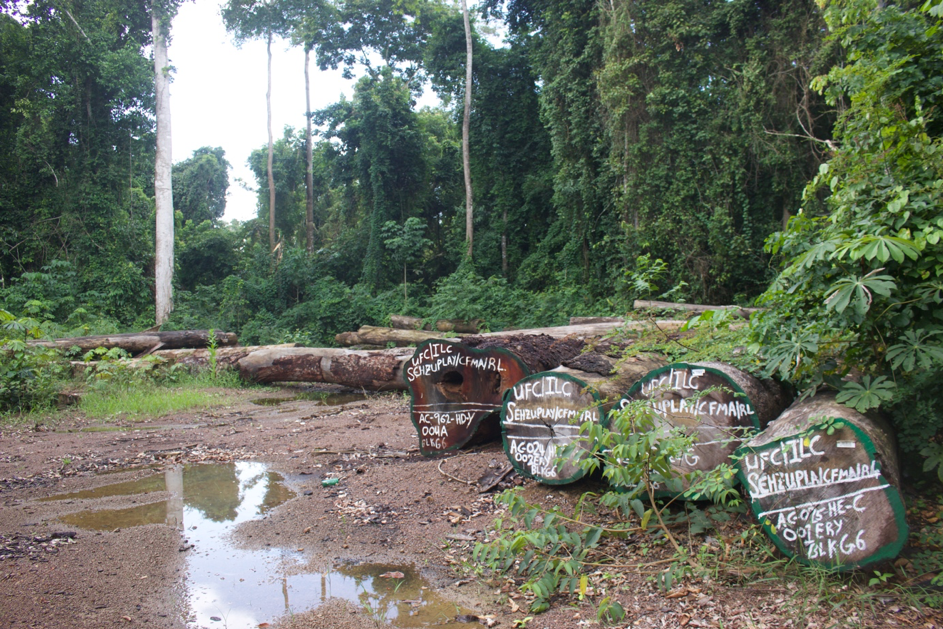
The DayLight had visited the forest and photographed some of the illegal logs mentioned in that report. It obtained a ranger’s memo to Kyung, UFC manager, informing him about the illegal felling.

“During our recent visit to your concession area, we discovered that you were doing illegal [felling]. You are fallen [trees] without being awarded a [harvesting] certificate,” the memo read, signed by Steve Kromah, the ranger responsible for forest contracts in the Tappita area.

The illegal harvesting was not UFC’s only offense. It unilaterally entered a subcontract with a logging firm. Sehzueplay or the FDA was not aware of the subcontract UFC signed with Ihsaan Logs Company (ILC), a forestry violation.

ILC is ineligible to conduct logging as Mohammed Paasewe, its co-owner, was still paying back funds he embezzled from the Liberian government when he served as Superintendent of Grand Cape Mount County.

The logs The DayLight photographed brandished, “UFC/ILC,” a reference to the unapproved subcontract.

Turns out, towns and villages that own the forest became the biggest victims. As of March 2022, UFC owed locals—and the government—US$155,000, the second-highest in the industry. It had yet to carry out a host of mandatory development projects there. That situation has not changed.

UFC illegally harvested logs in and out of the Sehzueplay Community Forest in Tappita District, Nimba County. The DayLight/James Harding Giahyue

Podcasts