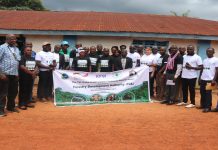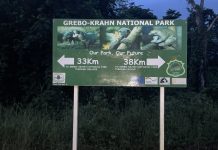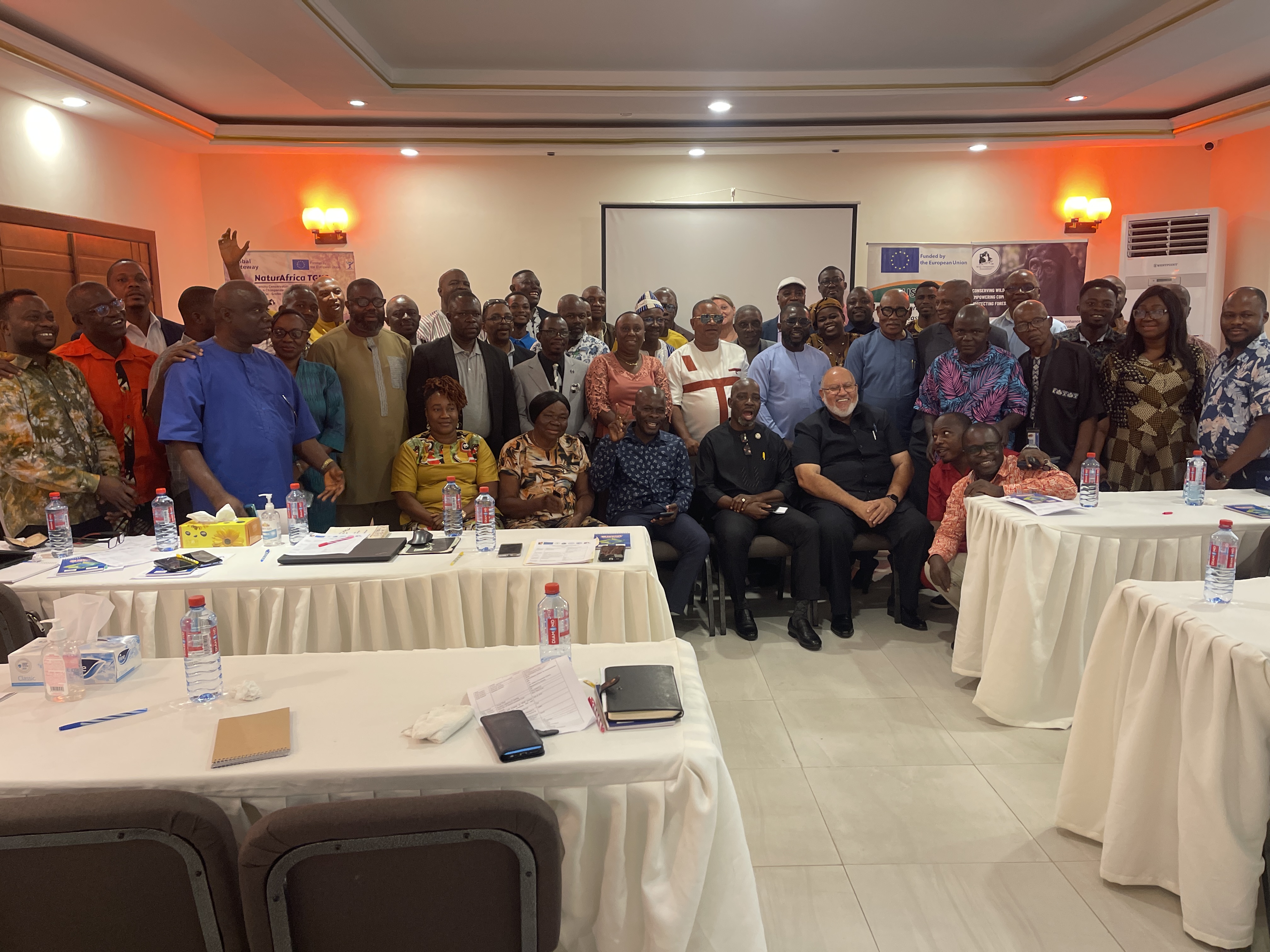
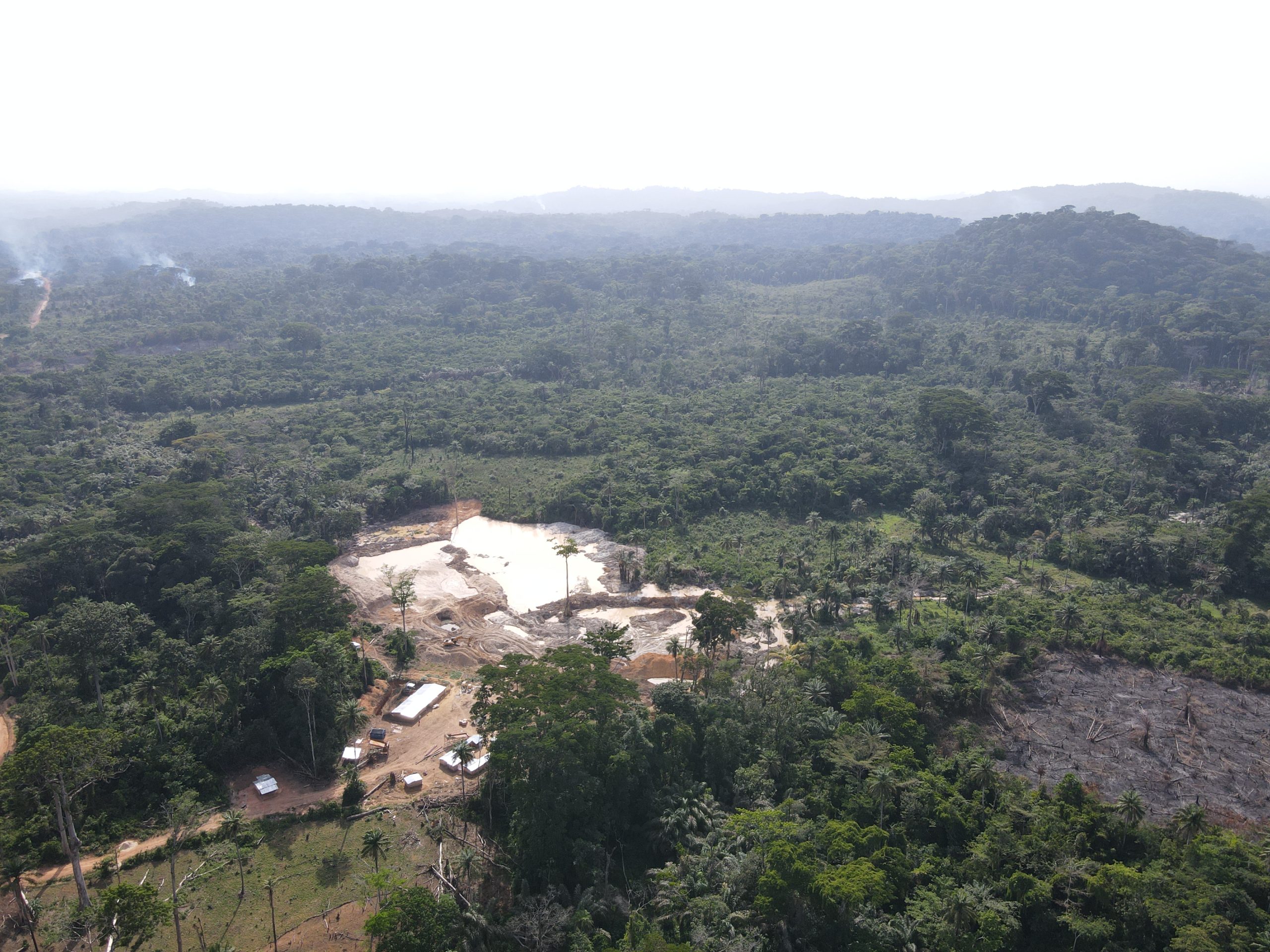
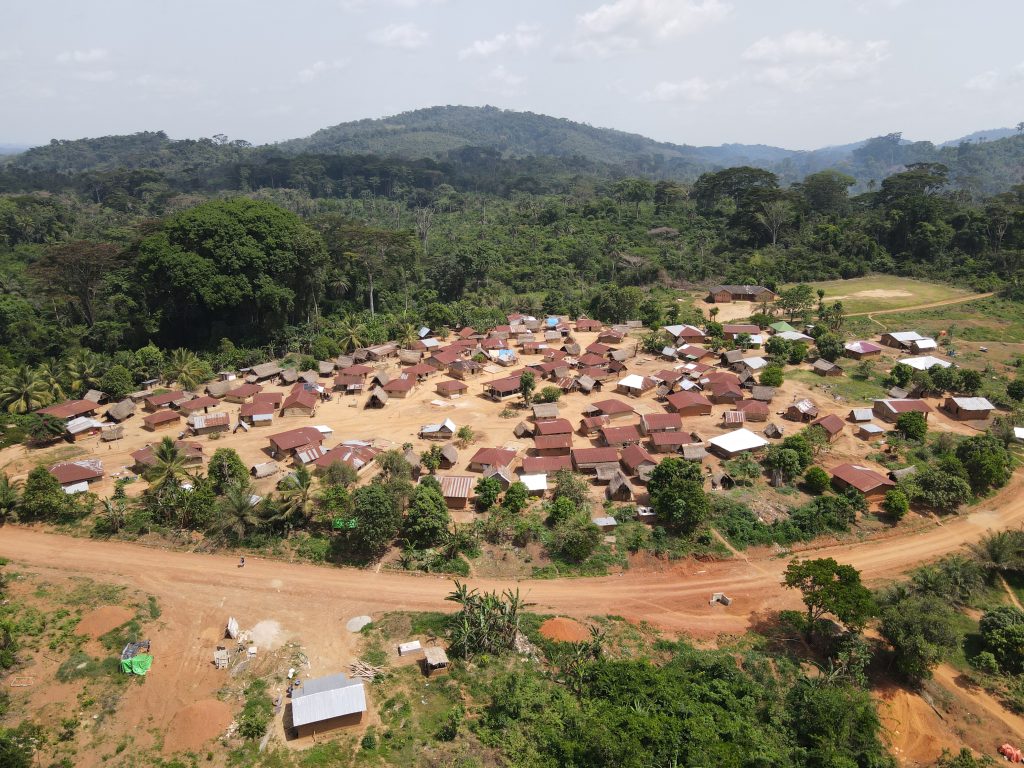
Top: A drone shot of a gold mine inside the Proposed Wologizi Protected Area outside Betiba Town, in the Voinjama District of Lofa County. The DayLight/Samuel Jabba
By Varney Kamara
BETIBA – In 2015, the Government of Liberia began the process to create the Wologizi Proposed Protected Area, located in Lofa County’s Voinjama District. The move prevented locals from hunting, farming, or building homes in the forest.
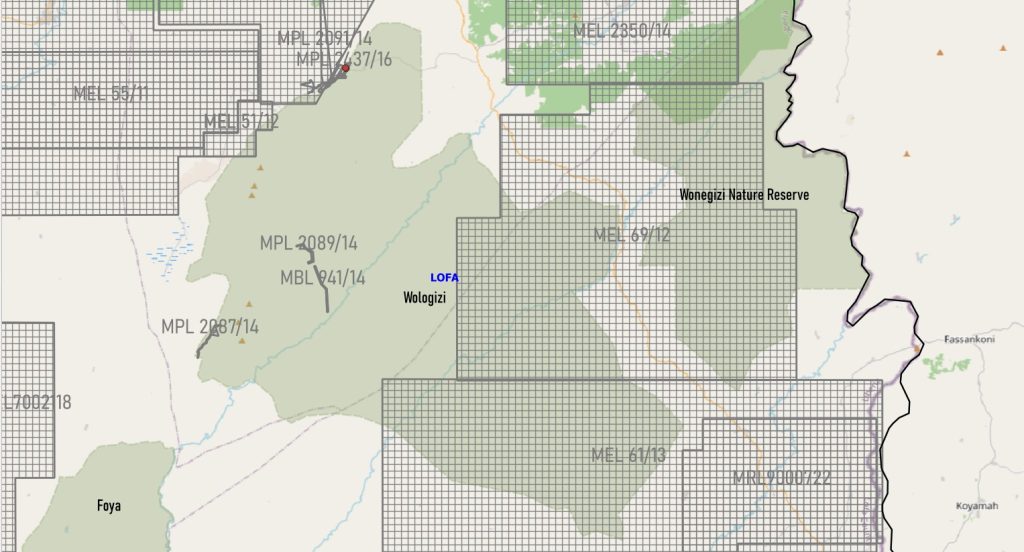
That rule changed last May when miners arrived here with mining licenses to operate in the wooded area adjacent to the Wologizi Mountain. Beginning in 2022, the Ministry of Mines and Energy has awarded five licenses, some of which overlap the Wologizi Proposed Protected Area. These licenses not only undermine conservation efforts in the area but also endanger lives and destroy the environment.
“They are digging everywhere and damaging the waters,” said Yassa Sumo, chairperson of the land leadership of Kpakaza Clan, where the proposed park sits. “We are trying hard to protect our forest, but mining in this area is giving us a hard time.”
“Everyone here was farming and making gardens, when the Chinese came, gold boys took over the community,” said James Akoi, Town Chief of Betiba, in an interview with The DayLight.
There are two companies in the area, which is in the Voinjama District. Hong Sheng Mining Company, a Chinese-owned firm, has had two licenses: a gold exploration license and a now-expired prospecting license. Sprout Global Mining Ventures, Inc. has three active licenses: two prospecting licenses and a class B or medium-scale license for gold.
Satellite imagery and the Ministry of Mines’ records show these mining licenses—and a host of others—overlap the proposed Wologizi park. This evidence corroborates a recent report that found mining licenses overlapped more than 2 million hectares of forest across Liberia.
The mining activities inside the Wologizi are having a devastating toll on the proposed park. Using heavy earthmovers, miners are cutting down trees, polluting rivers locals use for drinking, and destroying the environment.
Wologizi forest is among several places the Liberian government has designated as a proposed protected area. Measuring 99,538 hectares, it is an important ecosystem that is home to various endangered species, including monkeys and chimpanzees.
Late last year, the Forestry Development Authority, French NGO GRET, and Fauna & Flora International, a UK-based NGO, launched a US$9 million project to create a protected area corridor spanning 130,000 hectares along the Wonegizi-Wologizi landscape. It is part of Liberia’s climate commitment to protect 1.5 million hectares of forestlands and halve deforestation by 2030.
The FDA did not respond to queries for comment on the matter.
Hassan Kroroma, a Sprout executive, and Gao Feng, a Hong Sheng representative, declined to comment on the issue. However, Richard Manuba, the ministry’s spokesman, said that a company was encroaching on another’s area.
“The ministry has issued a closure order in that particular area,” Manuba said on Okay FM. He did not provide any further details on the alleged encroachment.
Consent, conflicting interests
Betiba was unaware that the licenses were issued, according to residents. Obtaining locals’ consent is a fundamental right under Liberia’s Land Rights Act, which recognizes customary land ownership. The law grants communities the right to have a say in decisions regarding their ancestral territories.
“When they came to the community, they said the government sent them to mine here,” said Sumo, the community land leader. “They did not have any prior discussion with us.”
Sonie Supo, a Betiba elder, supports mining in the Wologizi area. Supo demands compensation to keep the forest standing.
We cannot have all this forest standing while people are suffering. We are poor farmers. We need help to make our living,” Supo said. “If the government wants us to protect the forest and doesn’t allow people to make farms or do mining in there, let them give us US50,000.”
Just as views are mixed in Betiba, so are laws conflicting regarding mining in a proposed protected area. The Wildlife Protected Area Management Law and the National Forestry Reform Law bar mining with a medium-scale license in a proposed protected area. However, the Minerals and Mining Law—the oldest in the Mano River sub-region—does not recognize a proposed protected area.
The draft Mineral and Mining Law of 2023 recognizes a proposed protected area, but its establishment has been stalled upon the inception of the Boakai administration.
Responding to the overlap, Alwell Aloysius Carr, the Director of Mines, said a lack of coordination among government institutions was responsible for the problem.
“The challenges are that the Ministry of Mines has budgetary constraints. We rely on our agents to feed us with information,” Carr said.
“But equally so, with respect to this information, we will not take it lightly. We will ensure that it is swiftly investigated.”
The story was a production of the Community of Forest and Environmental Journalists of Liberia (CoFEJ).