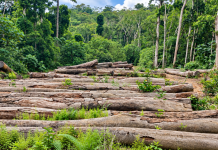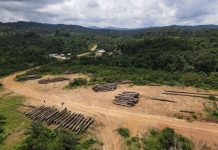
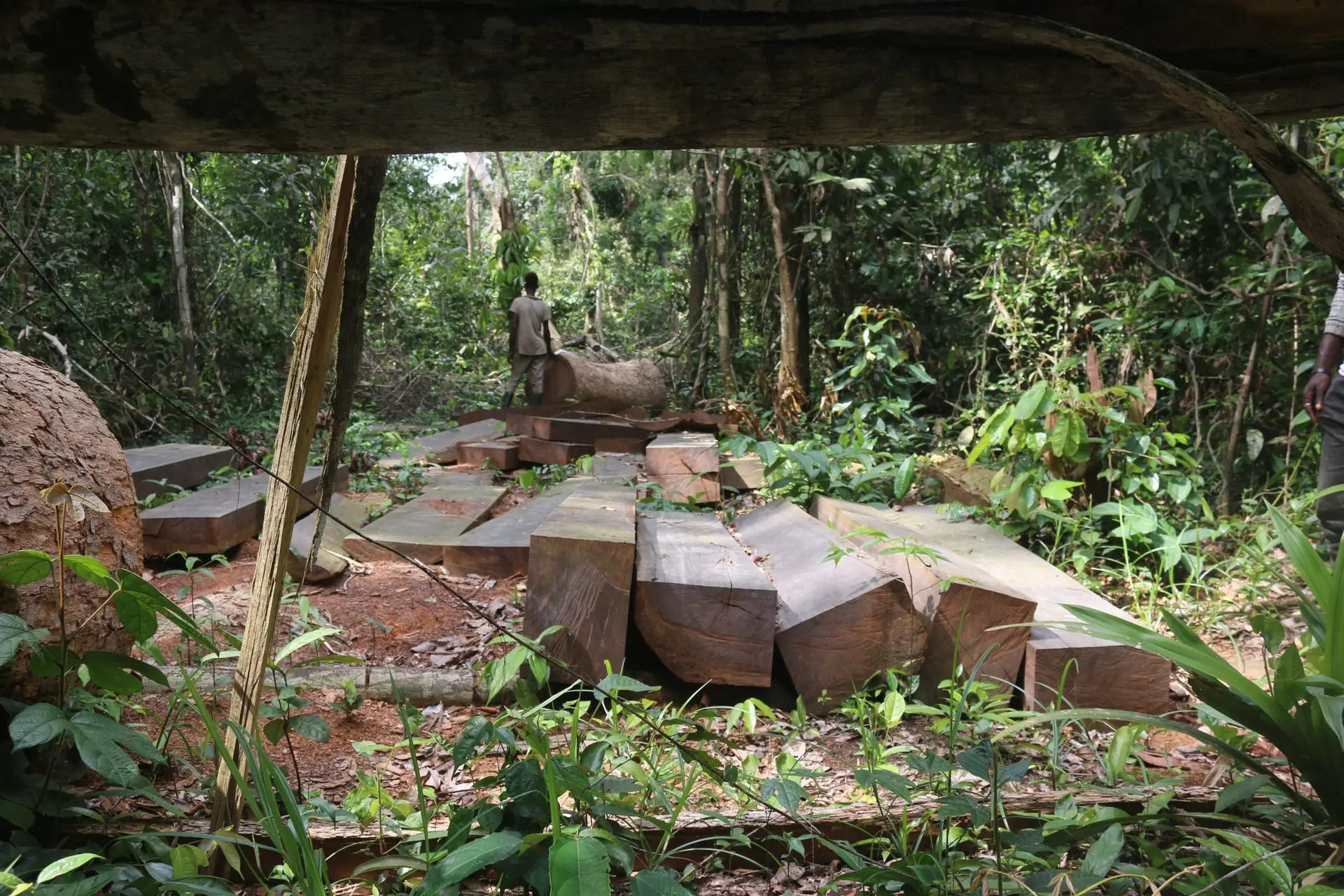
Top: Kpokolo harvested by businesswoman Binta Bility in Compound Number One, Grand Bassa County, in 2022. The DayLight/James Harding Giahyue
ByJames Harding Giahyue
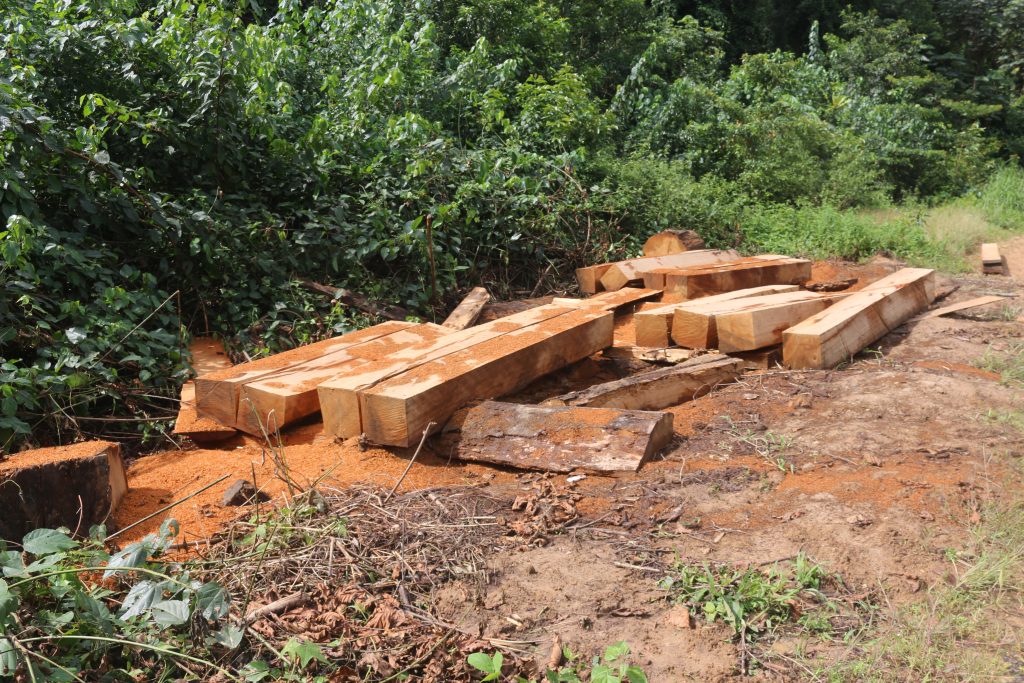
MONROVIA – On September 29, 2022, Emmanuel Sherman, The DayLight’s Editor-at-large, and I set off on a logging investigation in Compound Two, Grand Bassa County. While on our way, we saw several suspicious timber blocks by the roadside in Boyah Town and decided to investigate.
Our investigation found that Joe Jarvis Boyeah, a townsman after whose family the town is named, ran the kpokolo operation. Boyeah worked for Othello Teah, a regular caller on radio talk shows in Buchanan. Teah had been hired by Chanda Cole, the owner of one of Buchanan’s oldest businesses, the Cole Joe Wood Workshop.
The story that exposed the Boyeah Town syndicate was one of several DayLight investigations that led the government to “ban” kpokolo, though it was never a legal trade. The so-called ban might have marked the end—at least on paper—of the trade. However, each investigation untangled the criminal world of Kpokolo—how it prospered private individuals and public officials, costing the Liberian government millions.
“We have ordered all our checkpoint staff members to stop the issuance of waybills for all sawn timbers with a thickness above two inches because this is the dimensional range of thickness that is prone to illegal exportation,” said Edward Kamara, FDA’s manager for forest marketing and revenue forecast, in February 2023. Kamara was responding to a DayLight email about the spiraling of kpokolo countrywide, saying the regulator had issued “tens” of kpokolo permits.
“It had been observed that most of the timber arrested for attempting to illegally export consisted of these dimensions. Therefore, it is the chainsaw milling block wood… that is banned…,” Kamara added. The ban was officially announced at an annual meeting of forestry actors four months after Kamara’s passive disclosure.
Kpokolo started somewhere in the 2000s, based on local people and actors in the illegal trade. The term means “thick and heavy” in the Kpelle language. Logs are shaped into blocks to fit neatly into containers, and then are shipped to Asia, especially China and Vietnam.
By 2022—the year the ban was imposed—Kpokolo had peaked. Illicit operators ran advertisements on social media, and kpokolo had well been normalized. The Associated Press reported that 70 percent of Liberia’s timber exports were likely illegal, citing a diplomatic document. A 2023 report by the US-based Forest Trends found that kpokolo was a growing threat to Liberia’s forests, undermining the country’s climate change mitigation efforts.
“Flora crimes, particularly illegal logging and timber trafficking, are a significant criminal market in Liberia. Illegal practices like chainsaw milling large blocks of timber for export, known locally as kpokolo, further contribute to the scale of the trade,” reads the 2025 Global Crime Index. The annual report by organizations, including Interpol, chronicles the state of organized crime across the world.
Kpokolo has contributed to the toll that forestry activities have on Liberia’s rainforest, the largest in the West African region. In 2022, Liberia recorded the tenth-largest forest loss in the world, according to Global Forest Watch, an online tool that tracks deforestation in real time. The country lost 23 percent of its primary forest that year alone.
Leaked videos, pictures
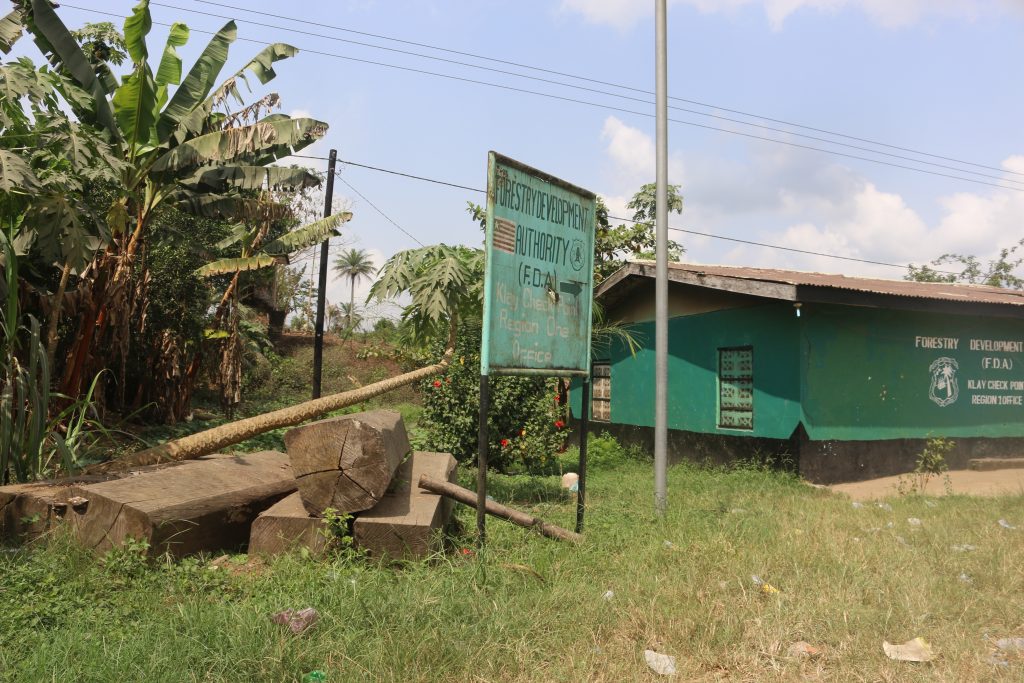
Before the Boyeah Town investigation, The DayLight exposed Varney Marshall, a ranger with the Forestry Development Authority (FDA) at the Klay checkpoint, Bomi County. The newspaper published videos and pictures from a WhatsApp conversation between Marshall and an illegal logger.
The evidence exposed a reel of the ranger’s illegal operations: kpokolo being cut, large ones packed into a container, a picture of Marshall’s equipped operatives, and a proud Marshall himself posing for a picture. He was eventually dismissed following the publication. However, the story showed that Kpokolo involved officials—not just loggers—a fact the newspaper would later further establish.
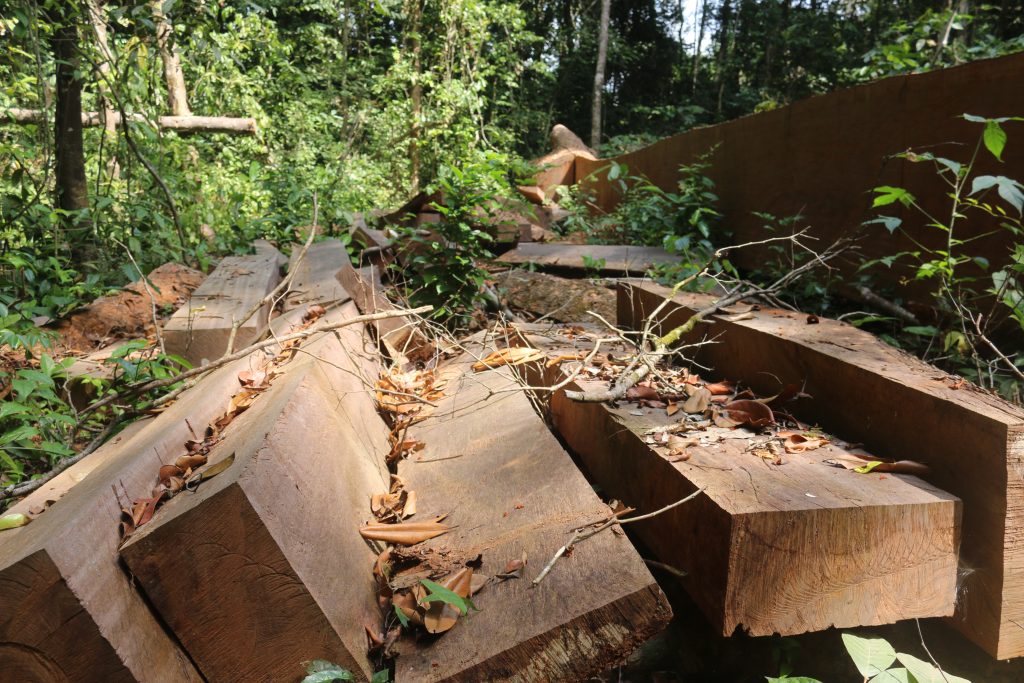
After the Marshall leaks, The DayLight investigated Binta Bility, a businesswoman, in Compound One, Grand Bassa. The investigation dug out that she ran a kpokolo camp in Zoegar Town with 17 accomplices, including townspeople.
The DayLight applied old-fashioned forensic techniques seen often in crime documentaries. We showed the businesswoman’s pictures to townspeople for identification, and we interviewed a man whose number was taken from the wall of the makeshift camp in the forest, near the Worr River.
About two months after the publication, Binta Bility, who denied she ran the operations, somersaulted and admitted her wrongdoing, and vowed to do things lawfully. However, that confession came after police in Bahn, Nimba County, seized a consignment of kpokolo she was transporting a month earlier.
Binta Bility might have been organized; however, a cartel of two Turks, two Chinese, and their Liberian accomplice push criminal timber trafficking, perhaps to the highest known level. With the aid of at least 33 local people, China Turkish Liberia Industries (CTL) transformed a portion of the Central Agriculture Research Institute (CARI) into a kpokolo factory.
Videos and pictures The DayLight obtained show large pieces of boxlike timber and various machines used between 2019 and 2021. They were the most illegal timber and equipment the newspaper had ever seen at a single location.
“They got over there with a different plan,” said Dr. James Dolo, then-Officer in Charge of CARI. “They said they wanted land to set up some demo and start some production… but those guys came, and they started bringing logs in overnight.”
In the end, the Forestry Development Authority sued the syndicate’s ringleaders. Though the trial has yet to start, the syndicate claimed they bought logs from Alpha Logging and Wood Processing Company, which operated in Lofa County. In all, the CARI investigation further proved that large-scale logging companies were involved in the illicit trade, not just small ones as previously perceived.
Collusion
Another investigation into a Turkish company pinpointed the collusion between kpokolo operators and government officials. The unravelling of the crimes of Marshall, the now-dismissed FDA ranger, provided a clue; this investigation uncovered the whole story.
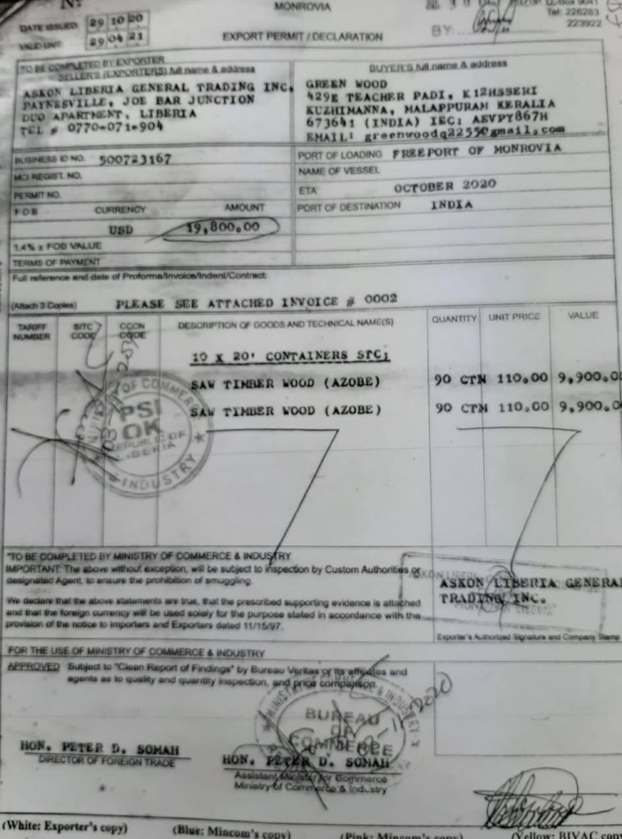
The 2023 publication established that Askon Liberia General Trading Inc., run by a Turkish family—Hasan, Umit, and Yeter Uzan—illegally operated between Ganta and Sanniquellie, Nimba County. The Uzans advertised their kpokolo business on social media and online business platforms.
In 2020, Askon exported two container trucks of timber to India for US$19,800 with the help of Peter Somah, then-Assistant Minister for Trade at the Ministry of Commerce and Industry. The export of timber occurred outside the legal system, known as LiberTrace.
The investigation led the FDA to blacklist Askon. Its executives, including Hasan Uzan, the majority shareholder, were arrested days later in Nimba and reportedly deported, ending the company’s years of illegal activities in the north-eastern countryside.
Askon proved the collusion between public officials and kpokolo operatives existed, but it was an investigation into a kpokolo kingpin that cemented that fact.
With 25 men and 30 chainsaws, Emmanuel Gongor’s operations spanned four of Nimba’s nine districts. People called the miner-turned-logger “Emmanuel the Investor” for his habit of conducting community projects such as bridges and roads.
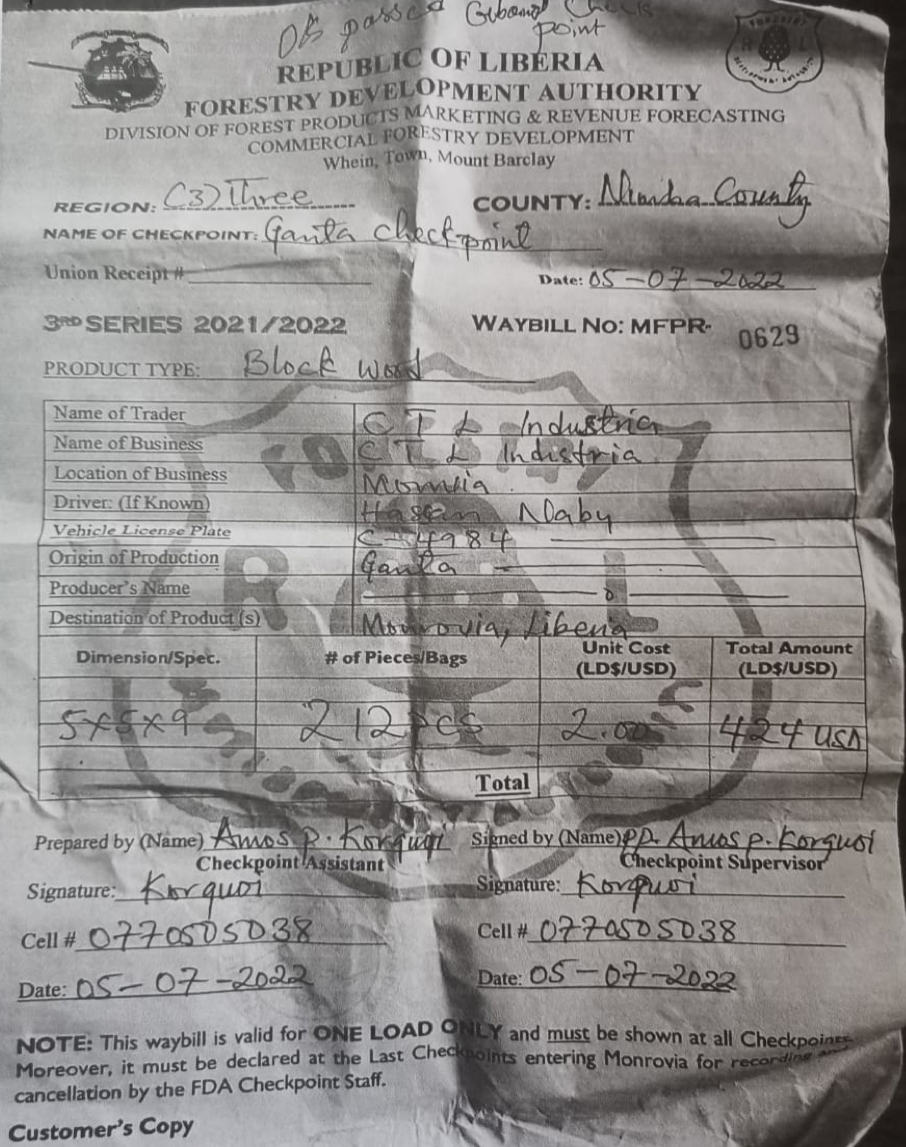
Documents and interviews with Gongor revealed that the FDA colluded with him for several years. During this time, he paid the agency tens of thousands of United States dollars in permit fees and waybills. One waybill showed that he paid the FDA US$424 for 212 pieces of kpokolo in May 2022, a few months before the ban.
The money Gongor paid the FDA did not go into the government’s consolidated account at the Central Bank of Liberia. Instead, it was paid into accounts at commercial banks, controlled by the FDA’s top management, a legal breach.
“The FDA agents are always informed when we are going to bring wood from the bush,” Gongor told The DayLight in 2023. “We make more money for forestry.”
Gongor’s kpokolo reign came to an end late 2022, barely a month before our explosive interview with him. Police seized 80 pieces of kpokolo from him at a checkpoint in Bahn, Nimba, ending an hour-long car chase.
The Gongor and Askon stories uncovered collusion among officials and Kpokolo businesspeople. However, a landmark investigation last April unearthed other individuals’ roles in the crime.
The April publication dug into a trove of documents to expose Ben Wesseh, a veteran customs broker, who smuggled timber for over a decade. The evidence showed that Wesseh, alongside his daughter, Benetta Wesseh, forged documents from the FDA and the Ministry of Agriculture to facilitate his crime.
The newspaper obtained recordings and screenshots of a WhatsApp chat between Mr. Wesseh and a client. The documents revealed Wesseh charged the client US$325 for two FDA documents and US$75 for a phytosanitary certificate, issued to certify that the consignment was pest-free. These revelations corroborated other evidence from an undercover investigation in Totoquelleh, Gbarpolu County, in 2024, as kpokolo resurfaced.
A police probe into Mr. Wesseh’s alleged crimes faltered. However, The DayLight investigation sparked reform of the Ministry of Agriculture’s phytosanitary department to prevent forgery of such a certificate.
But the samplings of the illegal trade remain.
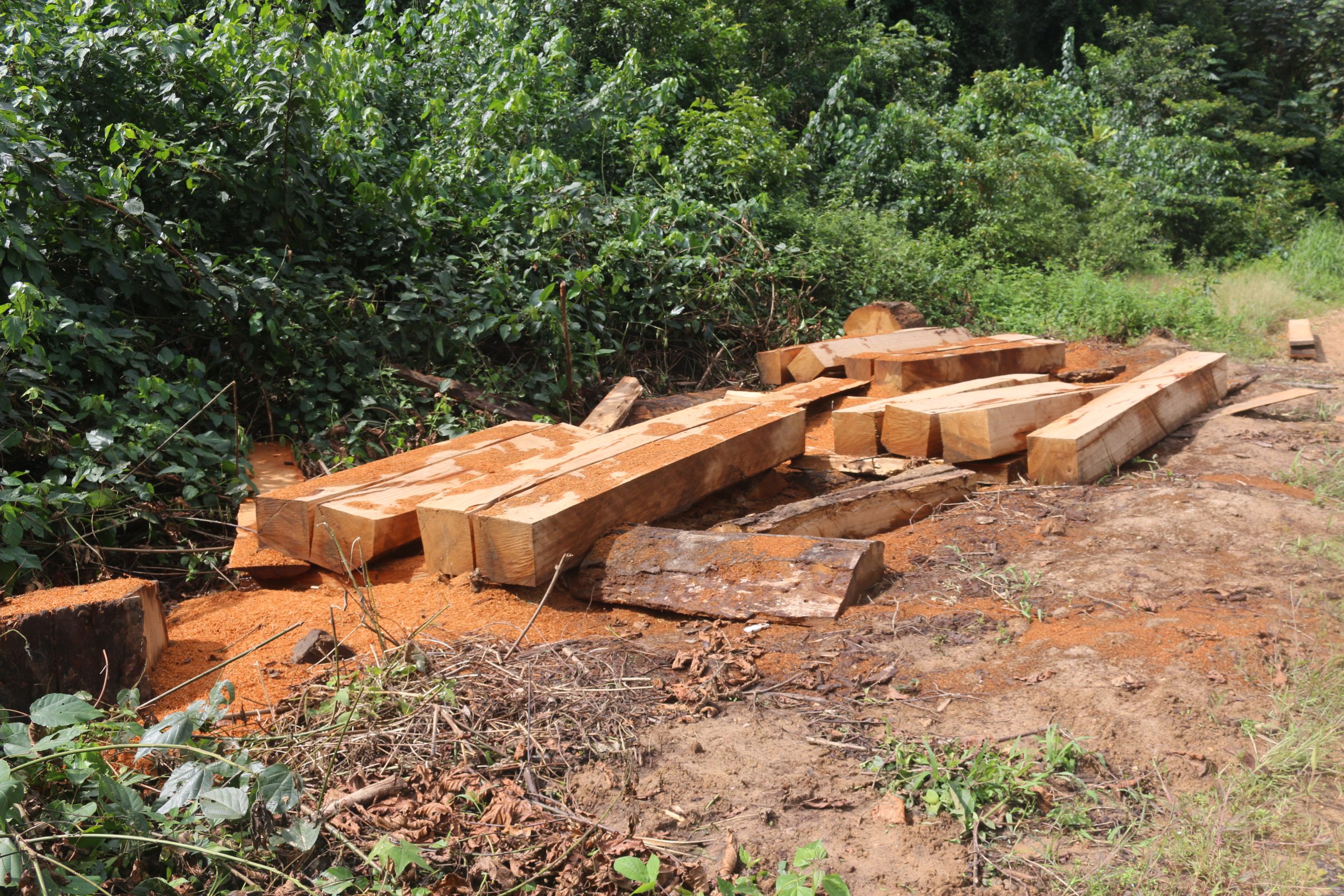
The first evidence of this came from Gbaryama, a town in Gbarpolu’s Gbarma District. There in March 2024, reporters photographed hundreds of freshly-sawn kpokolo. Reporters also documented logs in a nearby forest that illegal loggers had harvested to mill kpokolo. They gathered that smugglers had contracted local chainsaw millers to produce the wood they trucked at night.
“They can hide it and take it away at night; people can’t easily see them in the day,” Armah Dukuly, Gbaryama’s Town Chief. “We don’t get that power to stop them.”
The DayLight’s latest kpokolo investigation occurred last January. The subject was Libfor Forest Corporation, which ran an unlicensed sawmill in Caldwell. Since 2022, Libfor has exported 51 times, valued at US$71,447, according to data compiled by British export tracker Experian. In May 2024, it shipped 55,000 cubic meters of kpokolo, valued at US$22,000. The company brought in workers from Sierra Leone, from where it smuggled wood into Liberia, official documents revealed.
Four days after the publication, two executives of Libfor were jailed and later charged. Their case at the Bushrod Island Magisterial Court has yet to begin.
Kpokolo might not have gone away. Certainly, there is evidence that the ban—as the result of the investigations—has significantly minimized the illicit trade. The FDA no longer issues permits for it or approves its transport, something it did for over a decade. Kpokolo operatives have switched to other things, based on our recent interviews and observation, and social media advertisements of the trade have disappeared.
This story was a production of the Community of Forest and Environmental Journalists of Liberia (CoFEJ).