
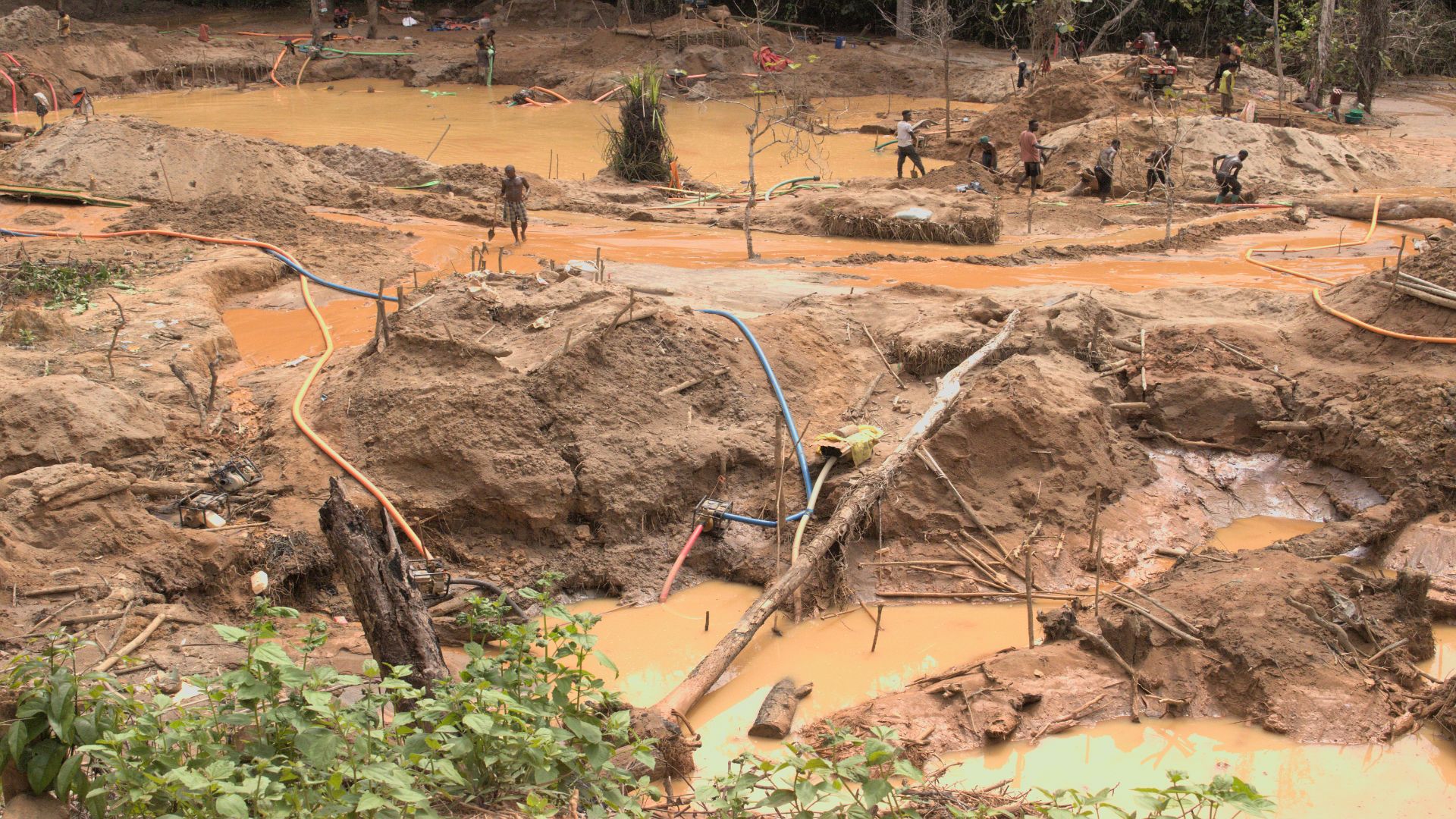
Top: An illegal mining site in the Salayea District of Lofa County. The DayLight/Samuel T. Jabba
By Varney Kamara
MONROVIA – For decades, Liberia’s Minerals and Mining Law, the oldest in the Mano River basin, has failed to bridge regulatory gaps, resulting in widespread illegal mining, environmental degradation, and mineral smuggling. This sickens local people and costs the Liberian government billions in extractive revenues, among other things. Moreover, the lack of transparency, weak enforcement, and inadequate benefit-sharing mechanisms have only compounded those issues.
Decade-long Efforts to solve this problem by enacting a new law have involved active coordination across government, civil society and the international community. The Law Reform Commission and campaigners are spearheading a comprehensive reform of the sector rather than specific amendments.
The proposed law aims to tackle issues affecting the industry, touching everything from environmental pollution to the protection of communities’ rights and to combating financial crimes. Here are seven highlights of the draft law you need to know:
Proposed Protected Areas and Local People Consent
The current mining law recognizes forest reserves. However, it does not recognize community forests and proposed protected areas. The Ministry of Mines and Energy issues licenses here under the constitutional supremacy that the state owns all minerals beneath the ground.
This is even though the National Wildlife Conservation and Protected Area Management Law does. The wildlife law protects parks and proposed ones. Proposed forest reserves are being reduced for mining activities, while mining licenses overlap proposed parks. These overlaps are undermining Liberia’s commitments to conservation and the rights of local communities.
Unlike the current law, the draft law bans mining in proposed protected areas. In the same vein, it outlaws mining in community forests without local people’s consent. This is respect for the Community Rights Law… and the Land Rights Act. The Community Rights Law created the community forestry, in which locals co-manage and share in forest resources alongside the government, while the Land Rights Act is revered as one of the best in Sub-Saharan Africa for recognizing ancestral land rights.
Reduction of Small and Medium-scale Licenses
Under the current legal framework, a small-scale or class ‘C’ license holder is entitled to up to four licenses that last for a year, covering 25 acres each.
The draft mining law, however, proposes a reduction in the number of licenses for small-scale miners from four to three, each covering 12.4 acres, or nearly half of the current size. The draft law also proposes two years for each license term, and a likely one-year extension.
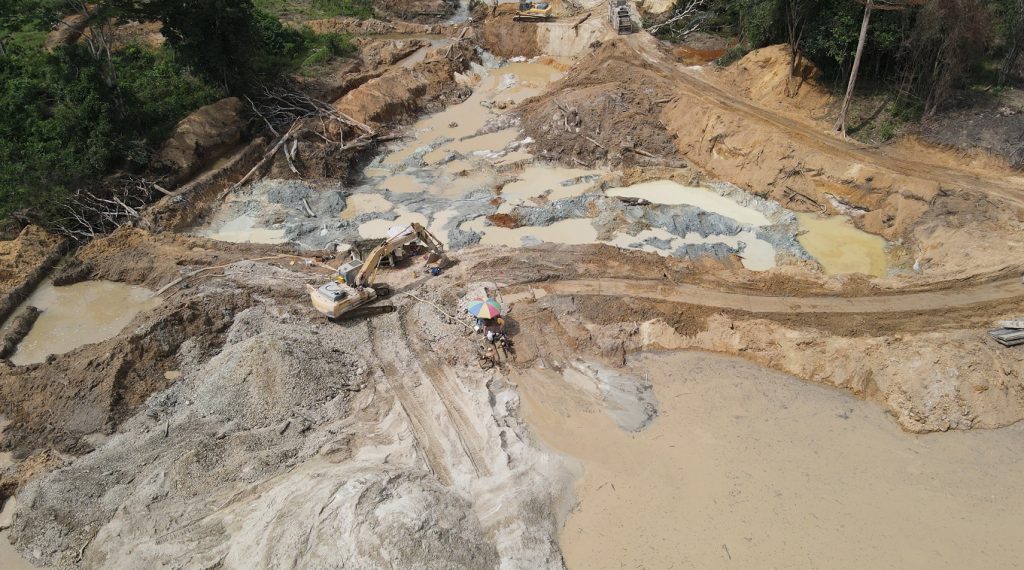
On the other hand, a medium-scale miner can hold as many licenses as they want, each for five years. It is silent on the size of the area, but can cover up to a hundred acres.
However, the draft mining law allows only medium-scale licenses and proposes a limit of 98 acres. (Not much of a change here, or is it?)
Experts see the intended changes as crucial in combating capacity issues and reducing the environmental footprint small and medium-scale miners leave behind.
Environmental Permit for Small-scale Mines
Under the existing law, the holders of artisanal and small-scale licenses are not required to obtain an environmental permit. The permit follows an assessment of the impact the mining would have on the environment and people. Only medium- and large-scale license holders are required to do that.
Thus, small-scale miners exploit this gap to violate environmental safety requirements. As a result, miners have polluted major watercourses across communities that locals rely on for drinking, carried out widespread deforestation, thus disrupting major livelihoods. The lack of proper oversight compounds the problem. As of Tuesday, 10,345 small-scale and 258 medium-scale licenses have been issued since online record-keeping.
Now, the draft law intends to reverse this course. It requires small-scale miners to demonstrate their technical and financial capacity to operate. If required by the Environmental Protection Agency, a small-scale miner shall conduct a report on their impact on the environment and people. This would restrain artisanal miners’ ability to wreak havoc on the environment and make them accountable the environmental standards and best practices.
Recognition of New Agencies
When the Minerals and Mining Law was enacted in 2000, extractive agencies such as the Environmental Protection Agency, the Liberia Land Authority, and the National Oil Company of Liberia were not established. They were created beginning two years after the mining law. At the time, the Ministry of Lands, Mines and Energy performed the roles and responsibilities of these agencies.
However, after their establishment, coordination among these sector agencies has been lacking, resulting in overlapping functions. This overlap has created duplication and resource scattering, among other challenges the sector faces.
Now, the draft mining law proposes the recognition of these new institutions and calls for coordination of mineral development among them. For instance, it recommends an “artisanal small-scale mining sector working group 90 days after the law comes into force. It names the EPA, the Corporate Development Agency, and the Ministries of Labor and Local Government as permanent members. The Minister of Mines would designate members of the group to advise the Ministry of Mines on licensing and small-scale operations.
Respect for International Transparency Rules
Since 2009, under the Liberia Extractive Industries Transparency Initiative, government agencies and companies must publish public payments. LEITI provides information on production, exports, and their beneficial owners, the people who own companies.
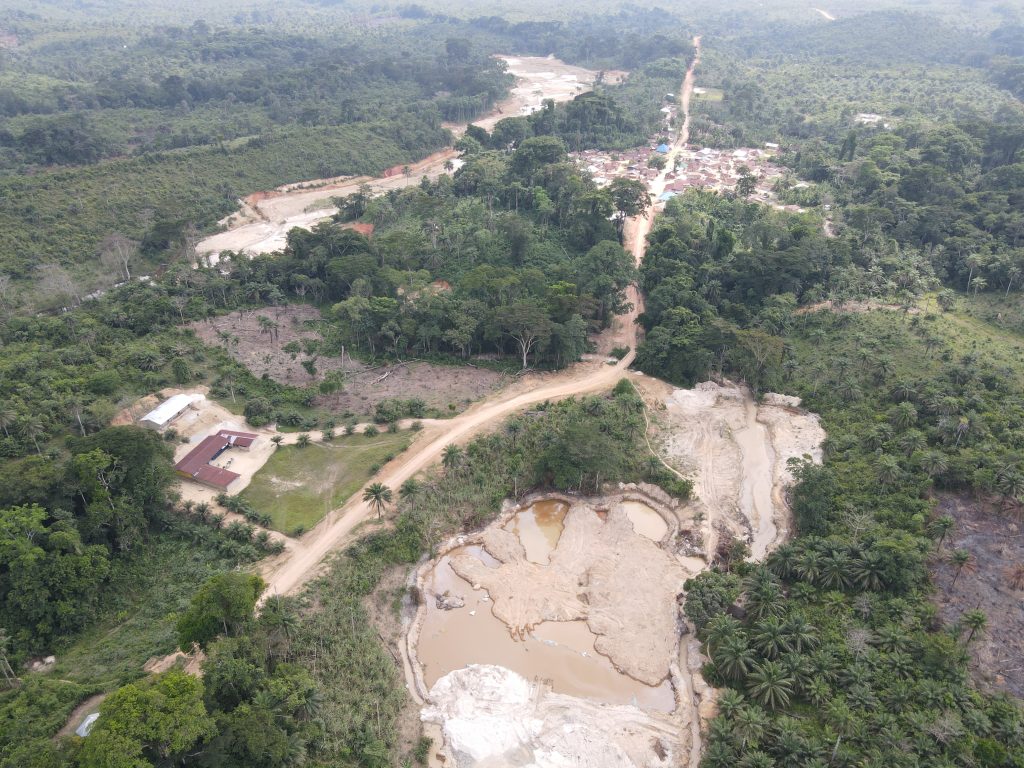
The measures demonstrate that Liberia’s extractive industries are transparent to attract loans and grants from the World Bank, International Monetary Fund, and other multilateral financial institutions.
However, the LEITI experiences recurring delays and noncompliance by government agencies and extractive companies. These issues have been exacerbated by weak enforcement, contractual and monitoring gaps, and illicit activities.
The draft mining law incorporates the LEITI law—created seven years after the current mining law—into the mining legal framework. It proposes full cooperation and requires license holders to comply with the LEITI rules.
“A holder shall disclose to the LEITI reconcilers and to the Minister on an accurate and timely basis and in the required manner all payments made to the State,” proposes the draft law.
The Kimberley Process
Kimberley Process Certification Scheme is an international trade certification scheme, established in 2003 to prevent the flow of “conflict diamonds.” It protects legitimate trade—ensuring that diamond markets remain clean. The process requires that a validated Kimberley Process Certificate be presented for every shipment of rough diamonds.
In May 2007, Liberia was officially admitted to the Kimberley Process. However, the current mining law was already in its seventh year when the diamond certification scheme arrived. Thus, Liberia has been enforcing the global Kimberley rules without domestic legislation.
To solve this problem, the draft law proposes that the Kimberley Process be incorporated into the country’s legal system.
Enforcement of Cultural Rights
Under the current mining law, mineral rights shall not be granted to cover areas including military bases, traditional bush schools, cemeteries, among others. It lists these places as excluded zones. However, it gives no clear protection for cultural relics. Not having a clear legal framework could lead to destruction.
The proposed mining law goes beyond the current law in preserving traditional knowledge, values, and practices that are passed down through generations. It proposes that cultural relics be protected through safe relocation. In instances where their removal would prove difficult, the draft law requires that the Ministers of Mines and Local Government be notified. In that case, mining activities around said artifacts shall be suspended until authorities decide.