28.5 C
Monrovia
Saturday, March 14, 2026
Home 2025 December

Monthly Archives: December 2025

Government Permits Dredging Despite Pollution Woes

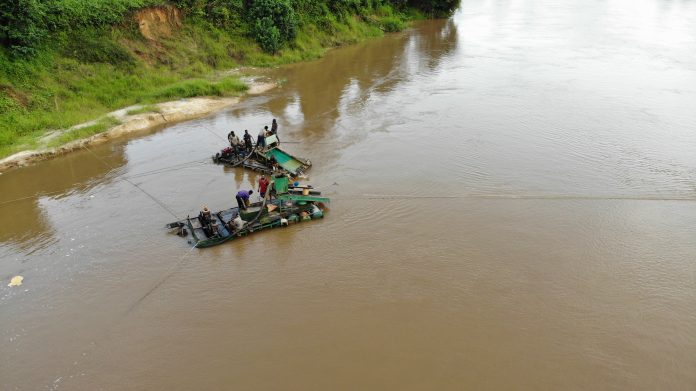
created by dji camera

Top: A drone picture of dredges on the River Gbeh in Sinoe County in 2024. The DayLight/Derick Snyder


By Emmanuel Sherman


MONROVIA – The Liberian government has introduced permits for dredging on the country’s watercourses, six years after the machine was banned due to its negative impacts on people and the environment.

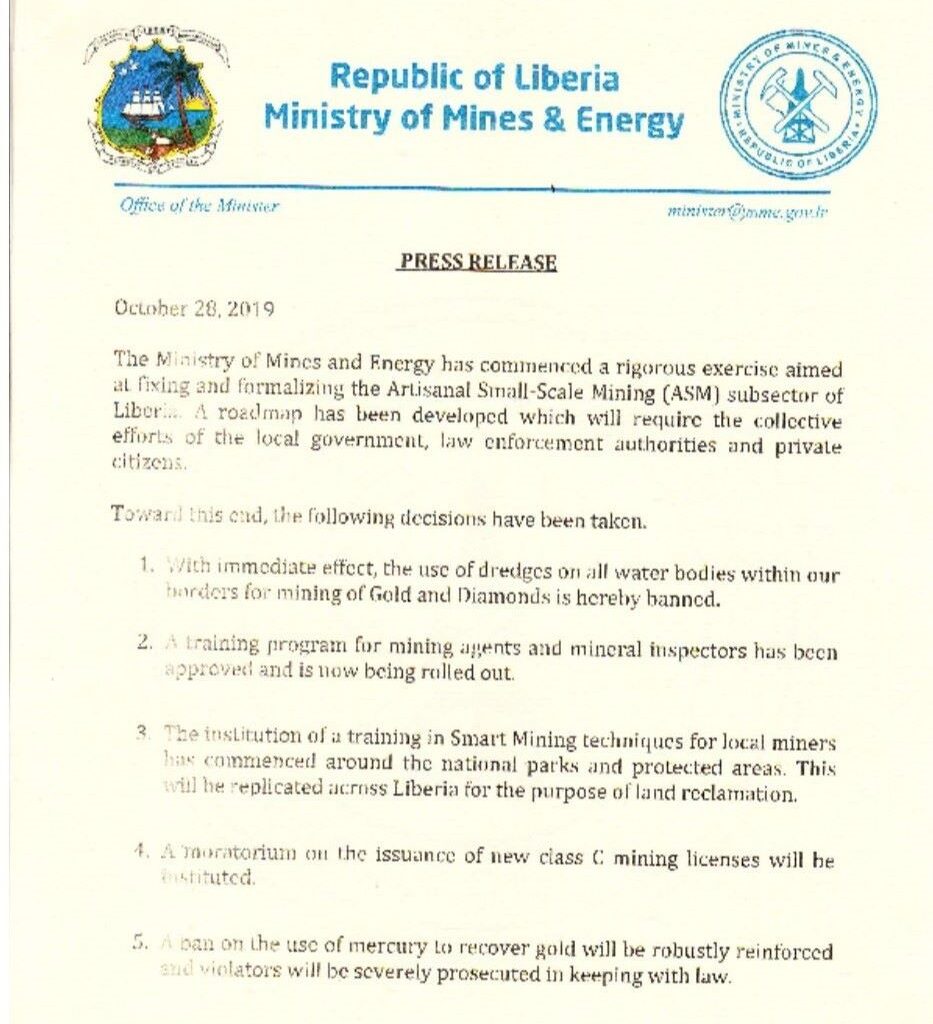
In 2019, the Ministry of Mines and Energy banned dredging for gold and diamonds as part of a reform of the artisanal mining subsector.

But based on a new fee structure published in June by the Ministries of Mines, and Finance and Development Planning, small-scale gold and diamond miners now pay US$1,500 for a dredging permit, and medium-scale miners US$10,000. The Ministry even introduced a permit for ocean sand dredging, which costs US$60,000.

Minister of Mines Matenokay Tingban did not respond to detailed queries despite weeks of engagement.

Ex-Minister of Mines Wilmot Paye, who introduced the permits four months before his dismissal, defended his actions. Paye said the permits were necessary to regulate dredging and position Liberia to maximize benefits from potential critical minerals in the ocean.

“Dredging, like excavator use, should only be used under a permit. That is why the turbidity of our rivers is disturbed,” Paye told The DayLight.

“Because of their unique nature and applications in mining operations involving riverbeds, the use of dredges must be controlled. In short, an operator should first obtain a permit to use a dredge. Before a permit is issued, as in all other instances, technical conditions must be satisfied.”

“The scramble for raw materials is taking humanity far beyond the earth’s crust,” Paye added.

The policing of dredging activities adds to the many problems the Ministry of Mines faces in regulating a sector plagued by illegal activities for decades. A 2021 GAC report found that it lacked a trained workforce, did not have tools for monitoring, and had decreased revenue. The country loses millions of United States dollars to illicit activities.

Liberia’s stance on dredging is the complete opposite of Ghana’s. Dredging has been one of Ghana’s biggest issues over the past decade, with demonstrators earlier this year calling for a state of emergency to fight “galamsey.”  Earlier this month, the country repealed a law to protect its forests from illicit extractions.

Social and health issues

In his turnover speech last month, Paye said the dredging of other permits he introduced would boost Liberia’s revenue generation.  Mining is one of the main drivers of Liberia’s economy.  The sector generated over US$121 million in 2023, according to the Liberia Extractive Industries Transparency Initiative. 

But Emmanuel Swen, an ex-Assistant Minister for Mines, who helped impose the ban on dredging in 2019, urged the government to reconsider its decision.

“I think the decision was informed by revenue generation, and not based on environmental and health considerations,” Swen told The DayLight. “It is not advisable to use dredges, especially those used by local miners, artisanal, and small-scale operators.

“I think it is something that should have been looked into further because it involves a lot, especially with respect to environmental implications,” Swen added.

Like Swen, environmentalists and campaigners are critical of dredging. Dredging pollutes water, destroys aquatic habitats, and threatens the tourism industry, according to environmentalists.  A dredge removes sediments from the bottom or banks of bodies of water, including rivers, lakes, and streams. It creates a vacuum to suck up and pump out the unwanted sediments and debris.

Dr. Eugene Shannon, an environmentalist and former Minister of Mines and Energy, further broke down the harmful implications associated with dredging.  

“When the sea and river beds are dredged, the nesting grounds are destroyed, and fish migrate,” Dr. Shannon said.   
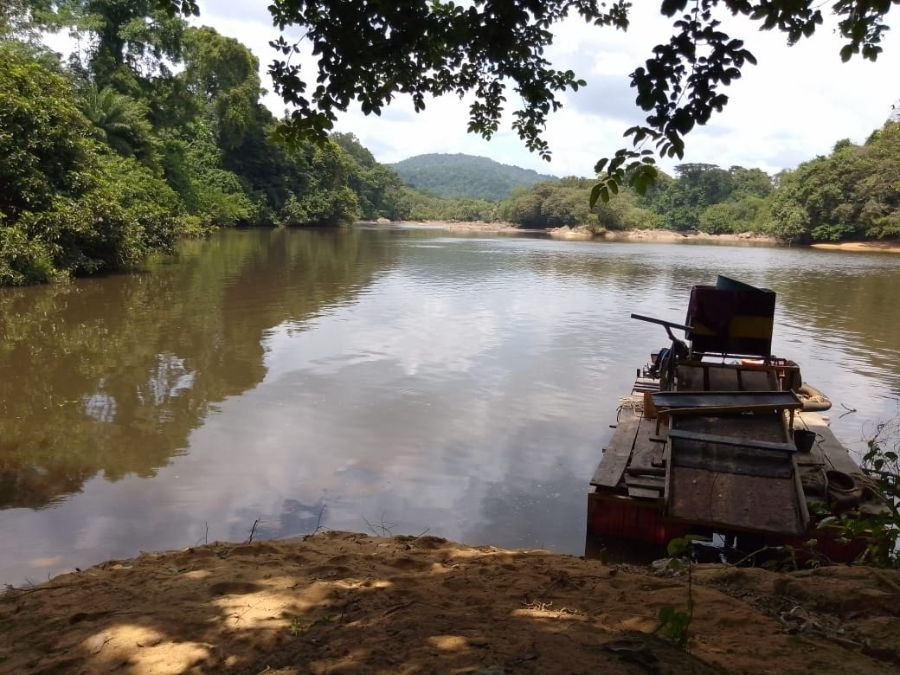
A dredging machine at the St. John River bank, Grand Bassa County, 2024. The Ministry of Mines and Energy permits the machines, which were banned in 2019 in an effort to reform the artisanal mining subsector. The DayLight/Emmanuel Sherman

“Ocean Sand mining is more erosive because of the…  destruction of the coastal reefs and the deep-sea bed nesting environment,” said Dr. Shannon.

The Federation of Miners Association of Liberia, the largest and most influential of such groups, said it had no clue that dredging had been legalized.

“As representatives in this sector, we were not consulted,” said  Abraham Gappie, the federation’s acting president. “It has great environmental, social, and health issues for the miners, the mining community, and even areas where people are not mining.”

Last year, the EPA warned about the overuse of mercury in Liberian waters related to dredges, which persisted nationwide even amid the ban.

Dr. Emmanuel Yarkpawolo, EPA’s Executive Director, told a Ministry of Information press briefing called for a collaboration among the EPA, county authorities, and local people.

“Unregulated, unsustainable, and unreported extraction of our natural resources in a crude manner that continues to destroy and degrade not only our land areas, but also major water bodies,” Yarkpawolo said.

Six months later, President Joseph Boakai imposed a moratorium to protect wetlands, waterways, and beaches against encroachment and pollution.


Integrity Watch Liberia provided the funding for this story. The DayLight maintained complete editorial independence over its content.
Illicit Miners Allegedly Threaten to Kill Residents

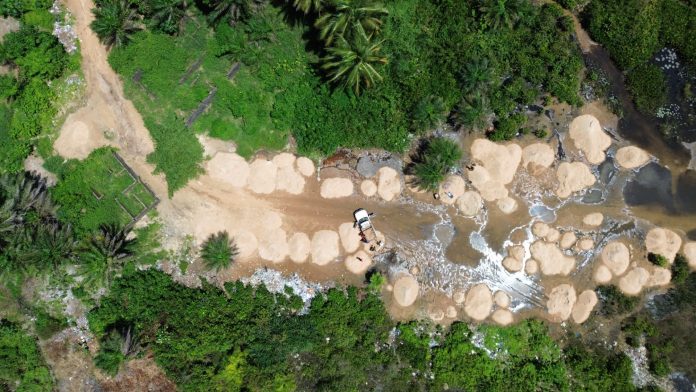
Top: A drone shot of illicit miners digging sand in a duct they created on a Gbengbar Town beach. The DayLight/Samuel T. Jabba


By Harry Browne and Samuel T. Jabba


GBENGBAR TOWN – Illicit sand miners have allegedly threatened to kill residents if they tried to remove them from a neighborhood along the Roberts International Airport highway.

Illegal sand mining resurfaced in the Seaview community, Gbengbar Town, after soldiers aided residents to stop the activities this May. But, this term, the miners are determined to stay—residents say—even if it means shedding blood.  

“They threatened to kill my husband, burn our home, and rape our daughters,” said Zeowheh Sumo, a resident. “They have threatened the lives of people, ‘anybody who does not respect themselves and bring people here to put an end to sand mining.” Victor Sumo, her husband and a lecturer at the University of Liberia, corroborated her accusation.  

The DayLight interviewed four more people who confirmed the miners’ threats against them. Garwool Baysah, who lives on the route to the illegal mine, found a charm at her doorstep one morning after quarrelling with the miners the previous day.

The miners deny threatening to harm anyone. They said they only returned insults residents rained at them. The allegations against them were a smear campaign meant to hide residents’ bad conduct and a lack of empathy.

“They only make up those stories to make us look bad. I already know we are fighting a war. If anything happens to you, they would accuse me of harming you. So, I will not have the mind to threaten you,” says Musu Fleming, a miner and single mother of six children.

The miners admit that their activities in Seaview are illegal, but blame poverty and unemployment.

“This is stealing we are doing here,” said Jacob Dolo, the ringleader of the illicit miners. “The hustle we are doing here is to send our children to school. We ourselves know the current situation of our country. There are no jobs, nothing,” added Dolo.

The illegal sand mine is located between the community and the beach. The miners have destroyed the mangroves and the marshes, and set a sand mine they call “Bloc 40.” Here, they transfer sand to a depository, using shovels and wheelbarrows through a duct they dug to the Atlantic Ocean.

While he spoke, other miners transported sand in wheelbarrows and uploaded it to pickup trucks. Drone had captured miners digging sand with shovels and their hands, and uploading it to the wheelbarrows.    

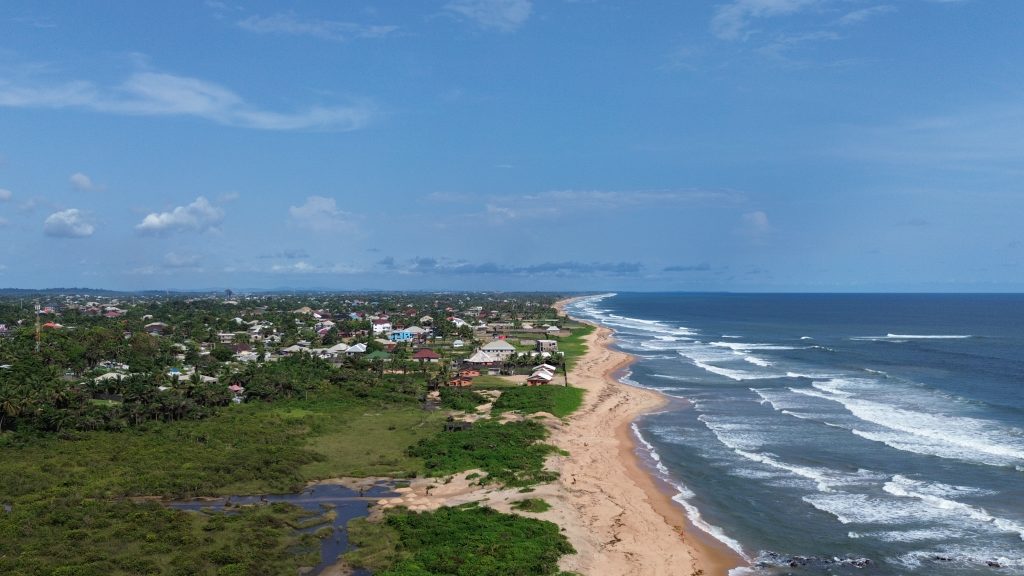
A drone shot of the Seaview community, where the illegal sand mining is taking place. The DayLight/Samuel T. Jabba
 

Beach sand mining is illegal in Liberia, after it was banned in 2012 to curb coastal erosion countrywide. In February, President Joseph Boakai signed an executive order to protect beaches, waterways, and wetlands. Despite these efforts, beach sand mining continues in communities countrywide.

For the last two decades or so, coastal erosion has rocked cities, with Monrovia, Buchanan, and Robertsport among some of the hardest-hit areas. A 2017 report found that a one-meter rise in sea levels will lead to US$250 million loss of land and infrastructure in these cities due to sand mining and climate change.

‘Not… much time’

Sand mining in Seaview began in the 2000s and peaked in the mid-2010s, according to residents. On May 28 this year, soldiers halted beach sand mining after large trucks started pouring into the community.

A video a resident captured the seizure of a pickup truck carrying sand from the area. A woman can be heard saying, “Tonight, we grabbed a pickup carrying sand. We’ve been telling them to stop taking sand from here, from undermining our homes.”

After the raid, the police erected a checkpoint to prevent trucks from transporting sand. However, residents took over after learning that the police were allegedly extorting money from drivers. Then mining stopped for about five months.

But the miners returned in early October, this time determined to stay. People come from near and far to purchase the mineral, widely used in construction.

The miners have even made some internal changes. Their number has increased, thanks to new colleagues from other communities and homeless people. They have a strict schedule to avoid crowdedness and confusion. They work from Monday to Saturday, and rest on Sunday.

These changes have led to or coincided with more pickup trucks arriving in the Seaview community. Reporters counted over a dozen vehicles on three visits to the community.

It is bad news for residents.

“Our houses are being undermined. Our properties are being damaged. We don’t sleep at night when you hear the sound,” said Juah Nimene, whose home has a beachfront. Nimene told The DayLight her parents lost their home to sea erosion in New Kru Town, and is afraid of the same fate.

Miners upload sand in a pickup truck at an illegal mine in the Seaview community on the Roberts International Airport highway. The DayLight/Harry Browne

The community fears that the situation is a ticking time bomb. Though no homes have been destroyed so far, drone footage shows the ocean is not far away.

Residents accused police officers of taking bribes from the miners. The local police depot declined an interview to respond to the accusation.

DayLight reporters witnessed two police officers arrive on a motorcycle on the beach. Reporters also saw a pickup truck with sand at the local depot that the police had impounded. Minutes later, the car was released with the sand inside.

The community leadership wrote to the Liberia National Police, the Ministry of Mines and Energy, and the Environmental Protection Agency.

“If the Environmental Protection Agency and the Liberia Maritime Authority come here, they would see that we do not have much time here,” said Sumo.

“If we managed to take the sand miners from here, maybe we could live here for the next 20 years. And if that does not happen, I don’t think that we would have up to 10 years here.”

The miners said they would not leave the area unless other miners left. Dolo, the ringleader, wrote to the community about this concern but got no reply. That angered them, and they returned to the beach.

Seaview dwellers accuse the Zone 8 police depot of taking bribes from illicit miners. The DayLight/Harry Browne

“I can’t sit while other people are working. What is the fairness in that? If both sides can be closed down, we can go to hustle at a different place. The same stealing I am doing is the same stealing they are doing,” Dolo said.

Drone pictures confirmed Dolo’s comments. Other illegal mining sites were scattered between the lagoon and a graveyard. A bricks repository, operated by another group of miners, was also captured.

Residents confirmed the miners wrote them the letter, but said it did not change their stance on the matter. They are calling on the government to enforce the ban on beach sand mining and to deploy inspectors in the community.

“That is the right thing to do, or else our properties would be at risk. The resources of the government would be at risk,” Mr Sumo told The DayLight.

“These are virgin beaches the government could use for other things. The ban should be enforced no matter what the excuses are.”


Integrity Watch Liberia provided funding for this story. The DayLight maintained complete editorial independence over the story’s content.

Podcasts