
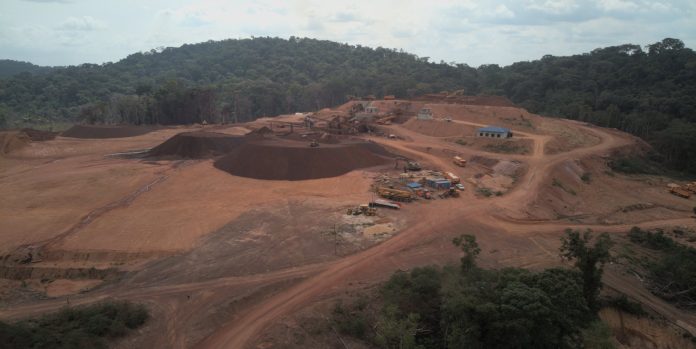
Top: A Bao Chico iron ore mine in Gbarpolu County in 2023. The DayLight/Derick Snyder
By Varney Kamara
The Liberia Extractive Industries Transparency Initiative (LEITI) 16th report highlights both progress and challenges across the country’s extractive sectors.
The report provides information on the mining, agriculture, forestry, and oil/gas sectors’ contribution to the Liberian economy. The annual report is meant to enhance natural resource governance, accountability and transparency.
Covering January 1 to December 31, 2023, the report provides details on payments, productions, exports, and other things. It was published last December, weeks before President Joseph Boakai’s recent State of the Nation Address.
In the address, President Boakai praised the extractive sectors’ contribution to Liberia’s 5.1 percent economic growth in 2023, largely driven by mining, citing the International Monetary Fund.
So, here are nine key takeaways from the LEITI’s 16th report on the performance of the extractive industries in 2023:
1. Extractive Industries Exported US$1.3 Billion Commodity
Liberia exported US$1.3 billion of extractive commodities in 2023. Major exports included gold, iron ore, diamonds, and round logs. The country exported 12,379 kilograms of gold, 4,002,474 metric tons of iron ore, and 56,838 carats of diamonds.
Artisanal and small-scale mining exports increased, with gold exports rising to 232 kilograms from 82 kilograms in 2022. Diamond exports rose slightly from 55,111 carats in 2022 to 56,838 carats in 2023, a 3.04 percent increase.
The forestry sector produced 661,958 cubic meters of round logs, but exported only 98,426 cubic meters.
Rubber, crude palm oil, and kernel oil sold US$188,463,190 million, representing 13.9 percent of all export earnings. Rubber represents 7.6 percent of the country’s total export receipts and 54.9 percent of agriculture exports, while 6.12 percent of the sector’s exports came from crude palm oil and kernel oil.
Key export destinations for artisanal minerals were Israel, Belgium, the United Arab Emirates, and Turkey. Israel imported diamonds valued at US$6.68 million (27.09 percent), while Belgium imported US$6.57 million (26.67 percent). The UAE and Turkey dominated gold imports, valued at US$4.46 million (18.09 percent) and US$2.29 million (9.27 percent), respectively.
2. Mining is the Largest Exporter
Mining accounted for US$1.16 billion, the most among the four extractive industries. Bea Mountain Mining Company and ArcelorMittal Liberia were the top exporters.
Bea Mountain exported 12,146 kilograms of gold, valued at US$653.6 million, representing 56.3 percent of extractive exports, up from 52.38 percent in 2022.
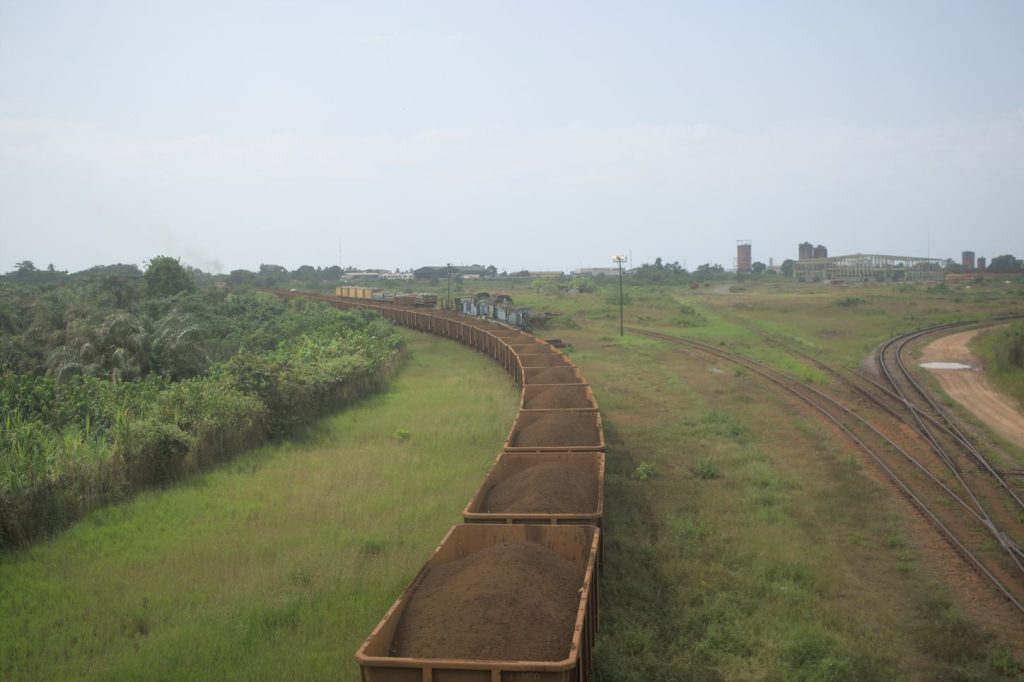
On the other hand, ArcelorMittal’s iron ore production declined from 471 metric tons in 2022 to 70 metric tons in 2023. Together, Bea Mountain and ArcelorMittal accounted for 93 percent of mining exports, up from 91 percent the previous year.
Gold accounted for 72 percent of mining exports, up from 40 percent in 2019, driven by higher global prices and increased production.
3. Forestry Is the Least Exporter
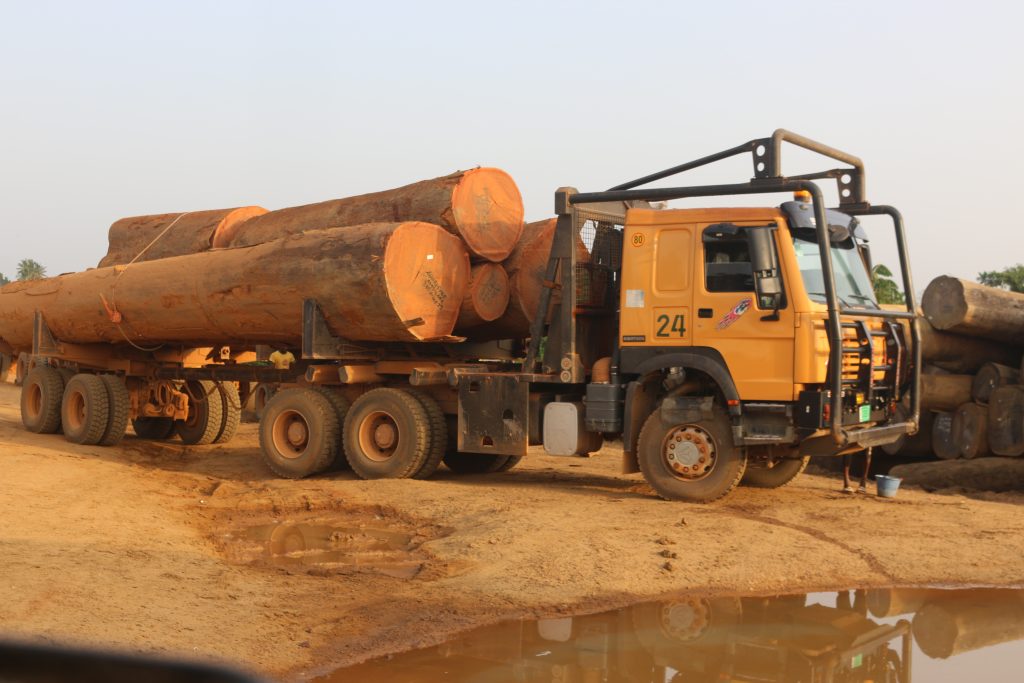
Forestry recorded the lowest export performance. Companies exported 98,426 cubic meters of logs, generating US$4.3 million in 2023, compared to 159,473 cubic meters valued at US$3.6 million in 2022. The report attributes the decline—over 38 percent in volume—to the closure of several forestry companies during the year.
Euro Liberia Logging exported 39,676 m3 of logs from 27,675 cubic meters, representing 30.3 percent, the highest in forestry. WESTNAF Limited followed, exporting 753 cubic meters in 2023 from 1,662 m3 in 2022, constituting 18.2 percent of exports.
Keshav Global Industries Ltd recorded the lowest export with 312 m3 of logs in 2023, representing 0.4 percent of exports, and recorded no exports in 2022.
Most logs were shipped to China, Bangladesh, and India, which together accounted for 93 percent of forestry exports.
4. Extractive Revenue Hit US$152.46 Million
Mining, agriculture, forestry, and oil/gas contributed US$152.46 million to the Liberian government’s revenue. This amount represents over a fifth of total revenue and over half of gross domestic product.
The 2023 contribution was a 14percent decline from US$182.35 million from July 2021 to December 2022.
The Liberia Revenue Authority collected 80.45 percent of the revenue. The National Port Authority, Forestry Development Authority, the Environmental Protection Agency, and social and environmental contributions accounted for the remaining.
5. Mining Contributed the Highest
Mining accounted for the largest share of extractive revenues, reinforcing its role as the backbone of the Liberian economy. It brought in US$121.49 million, a fall from US$140.61 million in 2022, representing 19.61 decline. Gold, iron ore, and diamond were the main contributors.
6. Oil/Gas: the Least Contributor
The oil and gas sector was the lowest contributor to overall extractive revenue, recording a minimal contribution of $0.55 million (US$550,000), constituting 0.36 percent of the overall extractive revenue.
No oil/gas licenses, production, exports, or agreements existed in 2023, with no records of active companies. However, the NOCAL collected the money from seismic data and contracting.
The amount contrasts with the 2011/2012 fiscal year, when the sector generated US$82.07 million, 14 percent of GDP at the time.
7. Agriculture: largest Employer
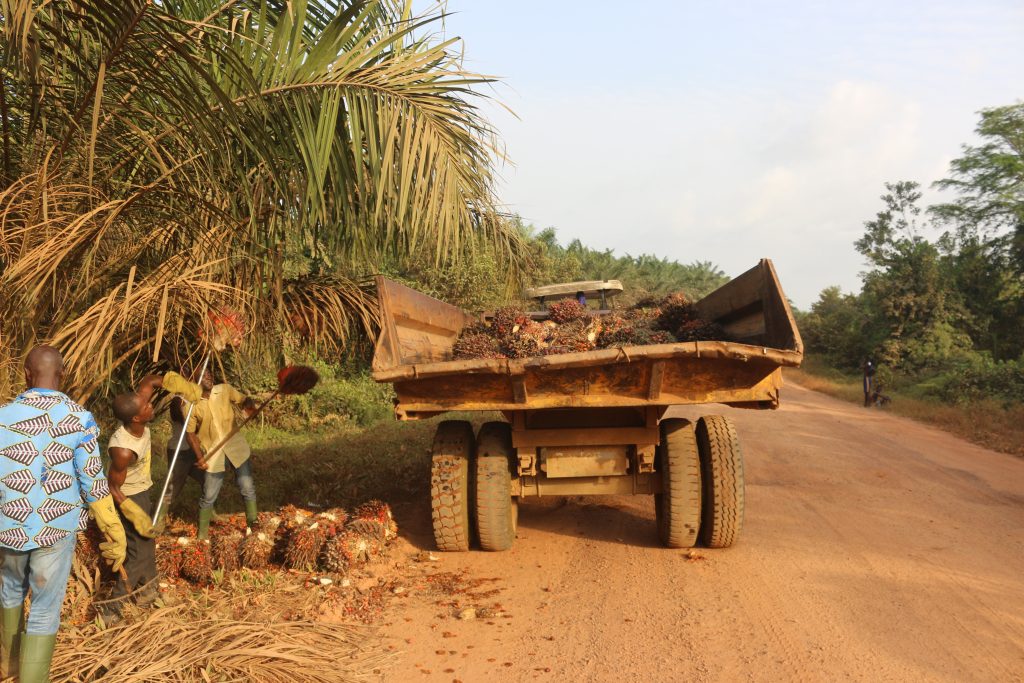
The extractive sector employed 12,333 people, representing 0.49 percent of Liberia’s labor force. Of this workforce, agriculture employed 9,302 workers, making it the largest employer among the extractive industries. Women accounted for 23 percent of agricultural employment, the highest female participation rate among extractive industries.
Meanwhile, mining employed 2,587 workers, while forestry employed 444, the least.
Firestone Natural Rubber concession, the world’s largest natural rubber producer, is the biggest private sector employer in Liberia.
8. ArcelorMittal Single-largest Taxpayer
ArcelorMittal Liberia was the single-largest tax payment, with US$60 million or 39.4 percent of all extractive revenue. Bea Mountain followed with US$37.6 million or 24.7 percent. Firestone (US$11.6 million or 7.6 percent), Western Cluster (US$10.2 or 6.8 percent), and China Union (US$9.6 million or 6.3 percent) were third, fourth, and fifth, respectively.
Additionally, ArcelorMittal paid US$17.5 million in “unidentified taxes” into the government central account. The LRA provided no details of the payment, the 16th LEITI report found.
9. Beneficial Ownership Regulation Formulated
The Beneficial Ownership Disclosure Regulation is one of the features of the report. It aims to combat illicit financial flows, including money laundering and tax evasion.
Enforced by the Liberia Business Registry, the regulation requires companies to disclose their ultimate beneficial owners, in line with amendments to the Business Association Act of 1976. The regulation is also consistent with Liberia’s Anti-Money Laundering Act, the National Forestry Reform Law, and the Code of Conduct for Public Officials.
This story is produced by The DayLight, with support from the Embassy of Ireland through Integrity Watch Liberia. The DayLight maintained editorial independence over its content, which does not reflect the position of the Embassy of Ireland or Integrity Watch Liberia.