
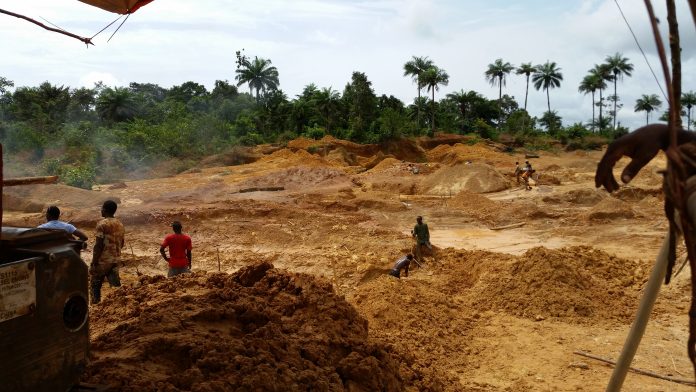
Top: Artisanal miners in Wayjue, Grand Cape Mount County, in 2019. Picture credit: James Giahyue
By Varney Kamara
MONROVIA – Gold is one of Liberia’s most valuable natural resources, yet much of it may be slipping quietly out of the country—untaxed and undocumented. New findings by SWISSAID, a Switzerland-based NGO that provides data on Africa’s mineral exports, suggest that gold smuggling from Liberia has reached alarming levels, potentially leading to billions of U.S. dollars loss for Liberia each year.
The report, published last May, is part of a larger research project on African gold flows. The information it provides was collected from state agencies, company reports, publications, civil and multilateral organizations, researchers, and open-access databases.
This explainer breaks down the report into five key things to understand about how Liberia’s gold is smuggled. It explains where it goes and why weak data, tax gaps, and informal mining continue to fuel the illegal trade.
So, here are five things to know about gold smuggling in Liberia:
1. Liberia Could be Losing US$1.4B to Gold Smuggling
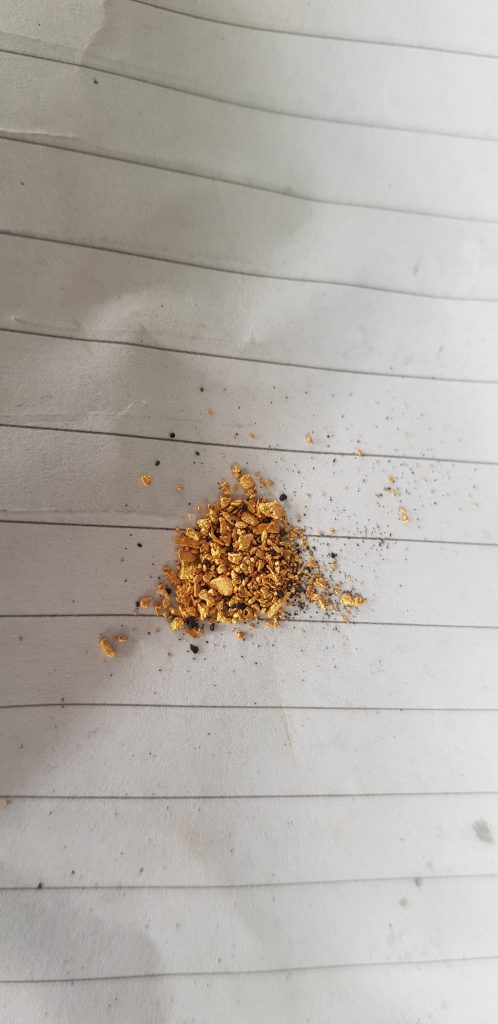
Liberia could be losing US$1.4 billion to gold smuggling annually, according to a DayLight calculation, based on the current price of gold on the world market. Smugglers could be illegally exporting nine tonnes of gold from Liberia through Guinea and Mali yearly.
2. Liberia’s Smuggled Gold Comes mainly from Artisanal Miners
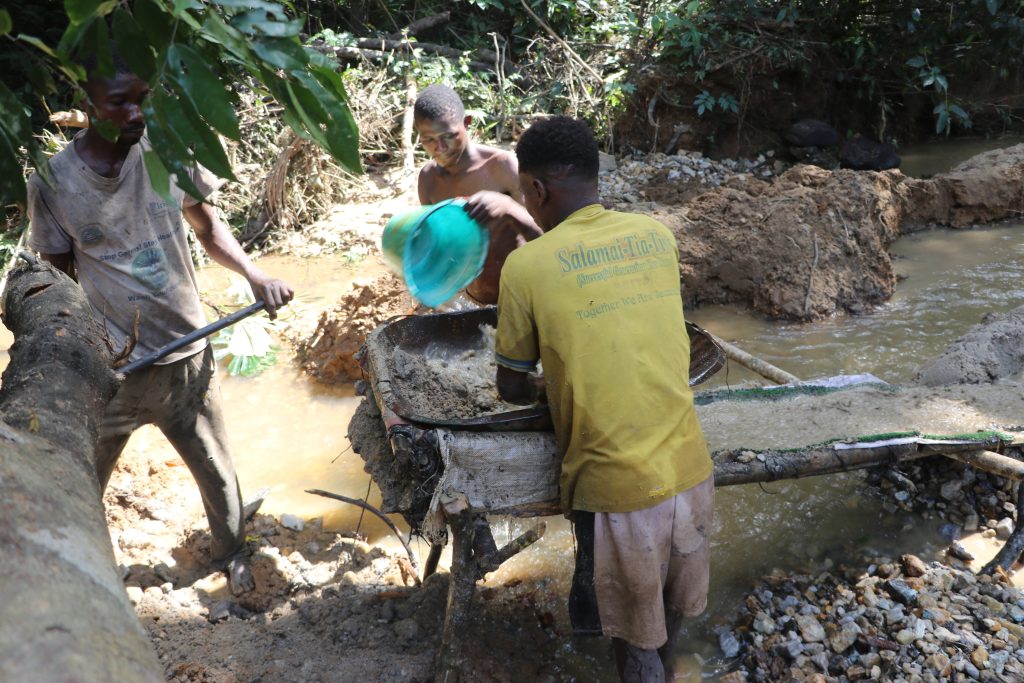
Liberia’s smuggled gold comes mainly from the artisanal and small-scale mining sector (ASM), a largely informal sector that undervalues and underreports the volumes of gold exported out of the country. All of Liberia’s industrial golds are shipped through official border records. However, a majority of the country’s rich yellow minerals produced in the artisanal sector is smuggled through neighboring countries, with no official data reflecting the actual volumes of gold extracted.
While it was asserted that gold is being smuggled into all of Liberia’s neighboring countries, it is a universal consensus that the mineral is mainly trafficked through Guinea before ending up in Mali. Switzerland, the United Arab Emirates, and Lebanon are the top three destinations outside of Africa. Liberian gold is also smuggled through airports, mainly to the UAE, and directly to Dubai, which is by far the main destination for all undeclared ASM gold from Africa.
3. Differences in Tax Rates and Loopholes
Differences in tax rates for exported gold, destinations, and variations in tax systems serve as the main loopholes or incentives for gold smuggling between Liberia and Guinea.
Liberia and Guinea have one percent lower royalty or export rates, compared to other countries in the sub-region, one of the main factors driving illicit gold flows across the region.
In an effort to maximize profits, foreign investors prefer to travel to Liberia and Guinea, which impose lower royalty rates on gold exports. These countries trade in United States dollars, a currency more accessible for international trade. Analysis showed that lower tax rates and access to U.S. dollars were the main smuggling patterns, according to the Global Initiative against Transnational Organized Crime.
In an effort to maximize profits, foreign investors prefer to travel to Liberia and Guinea, which impose lower royalty rates on gold exports. These countries are able to trade in United States dollars, a currency more accessible for international trade. SWISSAID’s analysis showed that lower tax rates and access to U.S. dollars were the main smuggling patterns.
To resolve this situation, interventions must be developed beyond mine sites, addressing cyclical financial flows influenced by power structures, and formalizing ASM efforts aligned with the government’s medium-term production goals, including standardizing regional tariff rates to combat smuggling, SWISSAID recommended.
4. Discrepancies in Stats
There are discrepancies between Liberian statistics and the Swiss statistics on imports of gold from Liberia.
Liberia’s data on gold production and exports, released by the Central Bank of Liberia in its annual reports, is inconsistent with that reported by the Liberian chapter of the Extractive Industries Transparency Initiative (LEITI).
This is surprising for both entities refer to the same sources, namely the Ministry of Mines and Energy. Second, Liberian authorities do not report trade data to the UN Comtrade, which provides export trade data globally. To resolve this issue, SWISSAID had to ask Liberia’s mining authorities to provide export figures that grouped countries of destination. Large discrepancies of data provided were observed, compelling SWISSAID to cast serious doubts over their credibility.
Official figures on gold production cover only part of the actual volumes of gold being extracted and traded. This is because artisanal and small-scale mining in Liberia, which has taken place on a larger scale in recent years, is highly informal. In 2018, large discrepancies were observed between the figures on gold exports published by the CBL and those on gold exports from Liberia, reported to the UN Comtrade by the authorities of the countries of destination.
SWISSAID noticed substantial inconsistencies in the official figures published by various Liberian entities. Gold export estimates are not updated. This suggests several tons of gold were smuggled out of the country yearly, and imported illegally into other countries, in particular the UAE.
5. Poor Data Complicates Analysis
Poor data situation complicates the analysis of gold flows in Liberia. Comparing figures on the imports of gold from Liberia reported by the authorities with those of the countries of destination to UN Comtrade or published by the London Bullion Market Association (LBMA), SWISSAID observed such large discrepancies with available data, which impacted the quality of its analysis and seriously hampered its ability to conclude. As a result, several questions remain unanswered.
This story is produced by The DayLight, with support from the Embassy of Ireland through Integrity Watch Liberia. The DayLight maintained editorial independence over its content, which does not reflect the position of the Embassy of Ireland or Integrity Watch Liberia.