
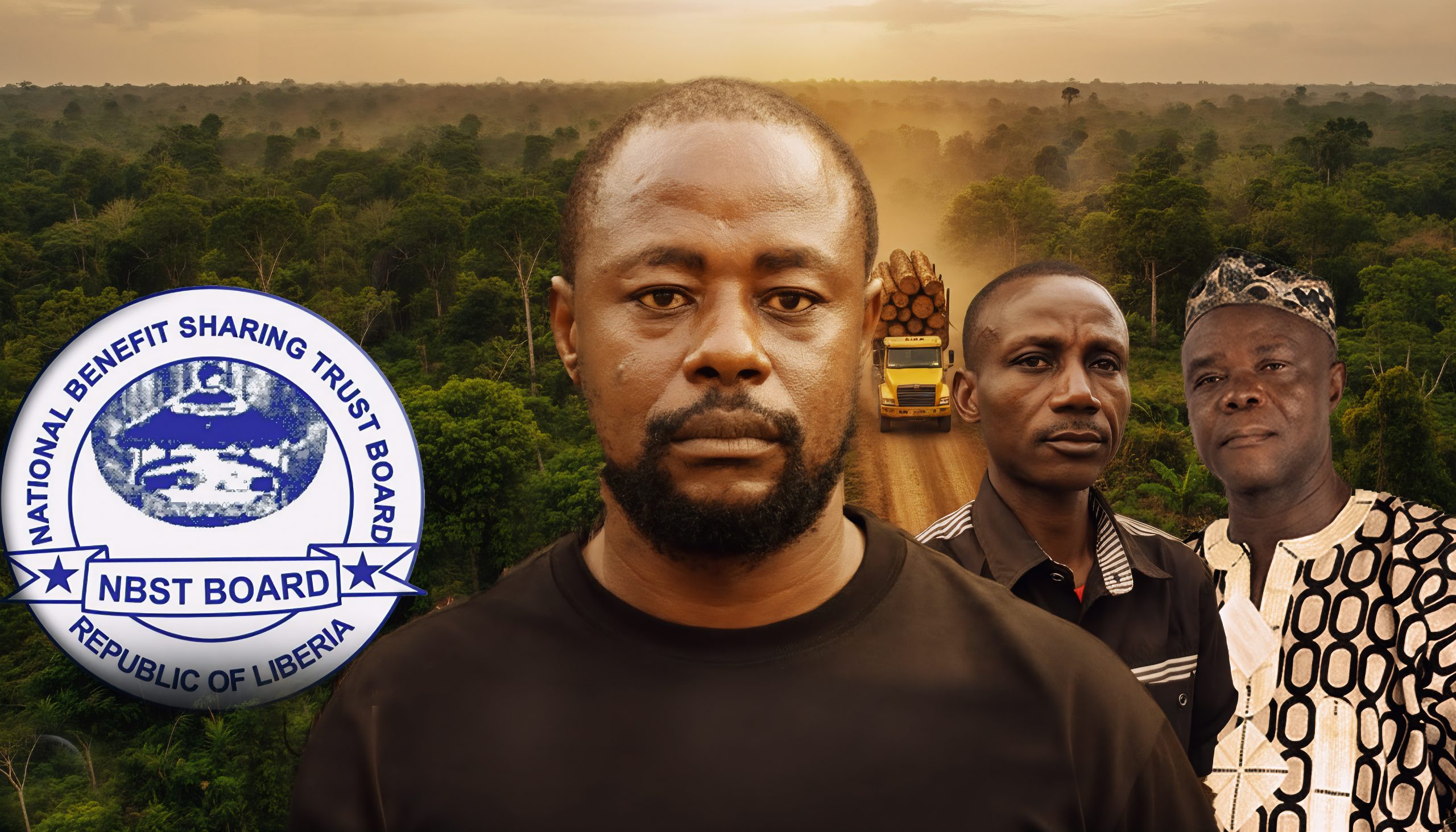
Top: A poster showing Roberto Kollie (left), St. Solomon Peters (center) and Edward Teah, the main characters in this investigation of the Benefit Sharing Trust Board. Illustration by Michael Harijgens for The DayLight
By Varney Kamara
- Roberto Kollie joined the National Benefit Sharing Trust Board in 2021, with a vision to help reform it. Accordingly, Kollie scrutinized the activities of the board’s executives without fear or favor.
- Last year, one executive alleged that he paid Kollie a bribe for certain payment; Kollie was subsequently suspended.
- The Forestry Development Authority investigated the matter and exonerated Kollie of the accusation. The FDA praised him for championing transparency and accountability.
- Nevertheless, the Board terminated Kollie’s contract, leading to a case now before the Ministry of Labor.
- The case, the FDA investigation, documents, recordings, and interviews The DayLight conducted shed light on corruption in the board and impunity in forestry.
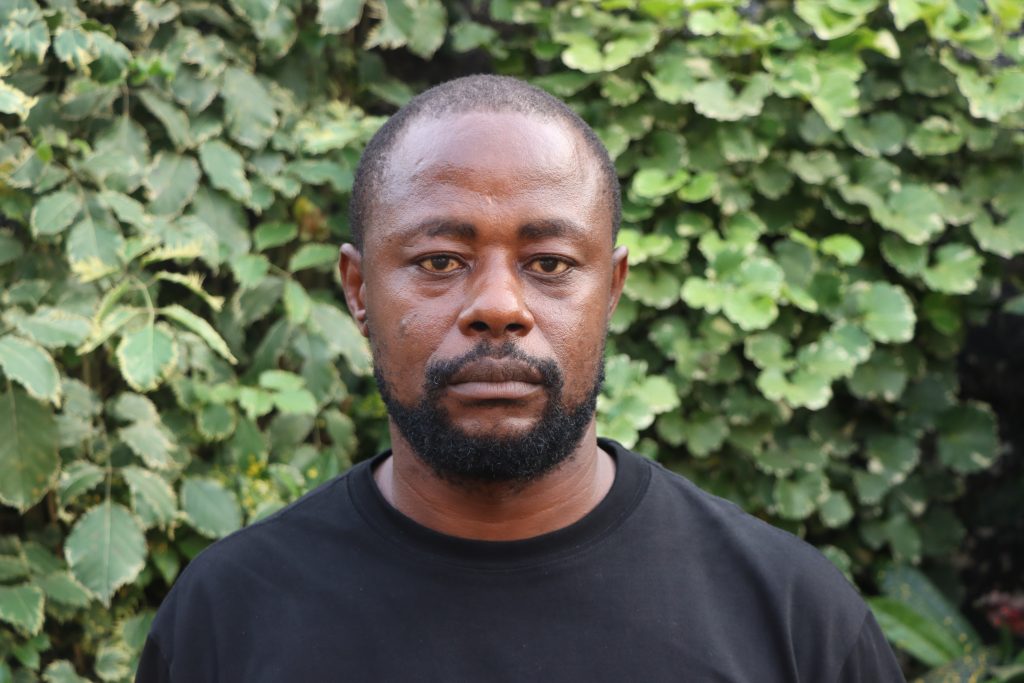
MONROVIA – In January 2021, Roberto Kollie was recruited as head of the secretariat of the National Benefit Sharing Trust Board, which regulates communities’ shares of logging resources. Kollie had just left his job as a human resource officer at a bank, and before that, an auditor with the Ministry of Finance and Development Planning.
The 41-year-old dreamed of guiding the board to uphold its core values of transparency and accountability and driving major reforms to benefit communities. Just months on the job, Kollie helped draft the board’s first budget, saving it from bankruptcy, according to a 2021 report.
“I had a vision to ensure that during my time at the board, we would make sure there was value for money, where funds delivered for projects would be properly accounted for,” Kollie said in an interview with The DayLight. “In that way, the board would be living up to its objectives, and that communities would benefit from a fair share of their natural resources.”
But his story was too good to be true. Last July, months before his fifth anniversary as head of secretariat, Kollie received shocking news: His contract had been terminated. It was the grand finale of an internal struggle that would shed light on corruption inside the board and the culture of impunity in forestry.
It all started on November 25, 2024, when Edward Teah, a local forest leader in Grand Gedeh County, requested L$702,494.61 (US$3,753 today) check from the board for his community leadership’s share of land rental that the International Consultant Capital (ICC) had paid the Liberian government.
In 2009, ICC signed a logging concession with the Liberian government, covering 266,910 hectares across River Cess, Nimba, and Grand Gedeh. Thirty percent of the land rental fees companies pay to the government goes to affected communities under the National Forestry Reform Law. Of that amount, community leaders are entitled to a tenth of land rental fees. It was that money that Teah had requested.
Kollie denied the request, based on an issue he discovered with Teah’s previous report. Kollie had noticed that Federick Soloe, a Sinoe County community leader, did not attend an event in Grand Gedeh for which he had received US$240.
A day after that encounter, Teah filed a complaint against Kollie with the board. He alleged that Kollie had not denied his request because of Soloe’s failure to attend the Grand Gedeh event. Instead, Kollie was demanding a bribe before issuing his check.
“I write to officially inform the board that Roberto Kollie is in the constant [habit] of holding my documents without turning [them] over to the rightful committee that has the authority to review [them],” Teah said in his complaint letter. “My… document was kept for more than one month because I didn’t promise him a share of the project cost.”
Kollie was suspended in January last year, two months after the complaint, and the board immediately asked the Forestry Development Authority (FDA) to investigate.
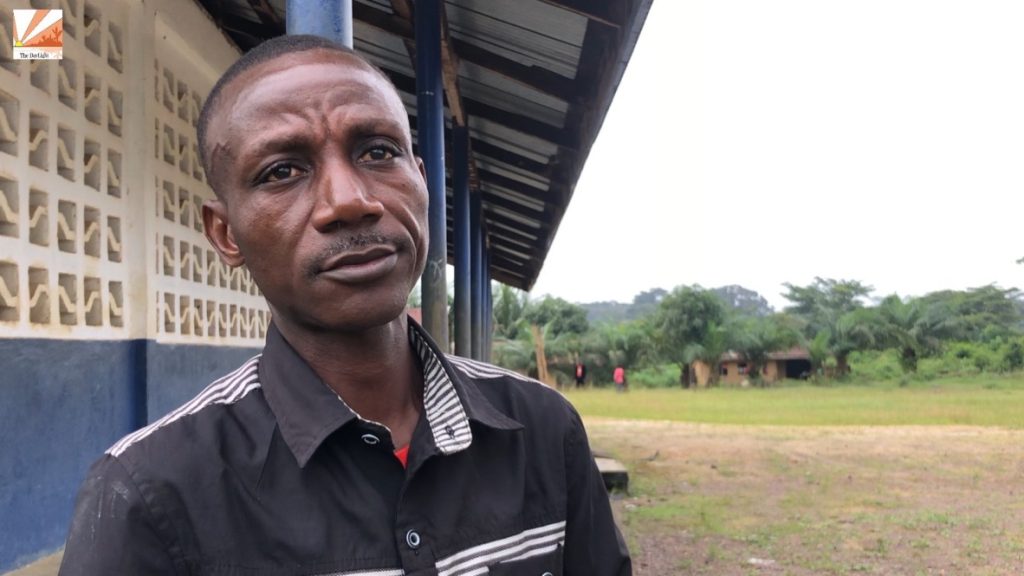
Teah told investigators that he allegedly gave Kollie US$600 as a kickback, which Kollie denies. Then Teah said Soloe had attended the dedication of a town hall in Dougee Town, Grand Gedeh County, refuting Kollie’s claim.
Soloe corroborated Teah’s testimony, claiming he had attended the event but arrived late. However, he told the FDA investigators that he only received US$150, corroborating Kollie’s claim.
Based on the evidence, the FDA cleared Kollie of all allegations, concluding a four-month investigation. The regulator instructed the board to reinstate Kollie. It found no evidence that he solicited US$600 or any kickbacks. There was no evidence of delayed check payments, and Soloe’s testimony justified Kollie’s doubt in questioning Teah.
“The committee determined that the query operates to enhance the integrity of the board as opposed to disrespecting its authorities,” the investigation report said. “The nature of evidence presented was mostly speculative.”
The investigators recommended that Kollie be reinstated. They further recommended that the board hold a retreat to review its roles and responsibilities and conduct an audit within three months.
Now exonerated, Kollie thought that his nightmare had ended. He could push forward with his reform agenda.
“I felt relieved that I was exonerated from allegations that had the propensity to damage my professional career and negative image on my family,” Kollie said. “I had hope that my return to work could pave the way for massive reform at the [board], given that many of the accountability issues that I flagged were captured in the investigation report.”
But Kollie’s nightmare was far from over. Instead of reinstating him, the board terminated his contract, saying that it had expired.
Conspiracy
Kollie suspected that Teah’s allegation against him was only a smokescreen because he had been a pain in the buttocks. In September 2024, Kollie and other officials of the board found out that the Dougee town hall project was incomplete, despite a report from the CFDC that the project was finished. Subsequently, the monitoring team compelled Teah, his accuser, to sign a commitment to complete the unfinished town hall within a specified period.
Kollie suspected the board was conspiring against him, too. In January last year, Solomon Peters, its chairman, presented a US$3,294 budget to celebrate the Ziadue and Teekpeh clans’ customary deed acquisition in River Cess. He advised the board against reviewing Peters’ budget for three reasons: One, Peters had not completed certain projects in River Cess, a requirement for him to get further payment. Two, the board’s window for budget submission had closed. And Ziadue and Teekpeh clans’ deed celebration was a land matter, not a forestry project.
The board ignored Kollie’s advice and approved Peters’ budget, though Kollie abstained from the process.
An email, seen by The DayLight, confirmed Kollie’s suspicion of the board’s plot to remove him. In the communication, Andrew Zelemen, a community forest union leader, with the highest representation on the board, discussed the conspiracy.
“I… realized that there is a plan to remove Mr. Kollie from the board due to his critical stance on some decisions that have been made by the chairperson of the board, who is also a [community forest] official,” the email read.
“These decisions, it is believed, often favored the communities, but sometimes did not align with best practices, and the secretariat, headed by Roberto, is always critical of these decisions.”
If Zelemen’s email was revealing, then text messages and WhatsApp conversations between Kollie and Peters in July and August were explosive.
On an evening last March, Peters met Kollie at a bar in 72nd, Paynesville, while the FDA investigation proceeded. In an audio recording obtained by The DayLight, Peters can be heard trying to reach a compromise with Kollie.
“If it is left with me, these issues that are going around will not come out among us anymore. I don’t like for it to come to my mind. That is the reason why I sent the texts that you, Andrew [Zelemen], and myself meet and discussed, so we can find means to solve it,” Peters suggested.
Kollie rejected the chairman of the board’s proposal and urged him to hold on until the investigation was completed. The allegations were too grave to be swept under the carpet, as they concerned his reputation. National and International partners had heard of the matter, and it would be good to see it finalized.
Teah, Kollie’s accuser, walked in and sat near Peters without saying anything. Shortly after that, Kollie left the bar, fearing incrimination. Teah did not respond to The DayLight’s queries.
But that was not the only Kollie-Peters encounter. On Thursday, July 31, at 11:50 pm last year, Peters engaged Kollie for a “friendly” conversation, according to a Facebook chat between the pair, obtained by The DayLight.
“What would be your top priority on a list of many with regard to the foregoing? What would you wish I could initiate in favor of your top priority?” Peters began.
“I’m saying this because I have had a series of discussions with many interested parties, finding an alternative approach to an amicable resolution, but I sometimes get quenched by certain actions and information,” Peters said. He appeared to reference the board’s refusal to reinstate Kollie, defying the FDA, a decision that forestry actors had criticized.
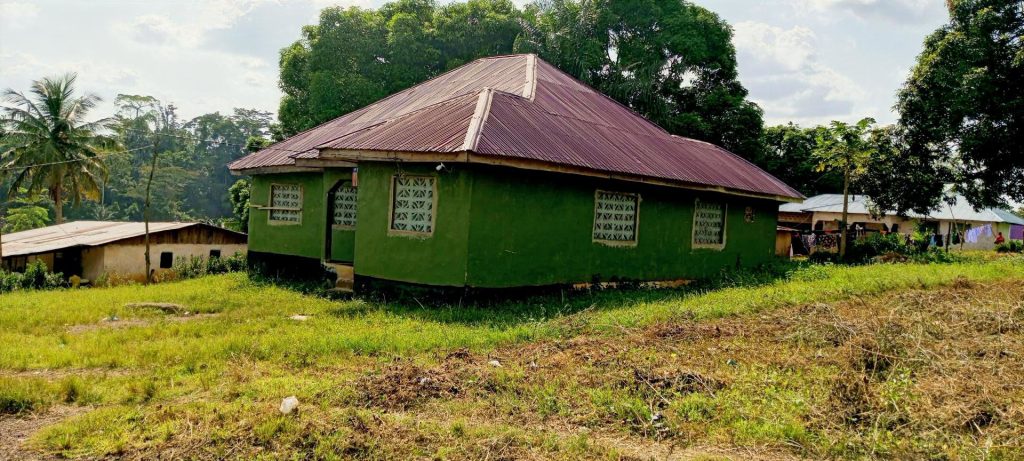
“I am not sure a fight can better address our situation,” Peters added.
Kollie replied, starting with pay and benefits.
“The first thing I would appreciate from you is if you consider that I am entitled to my May and June salary, including communication allowances for February to July.
“That is a very good beginning for a very good dialogue,” Kollie added.
“Rest assured,” Peters replied, ending that day’s chat.
The negotiation, it turns out, did not hold. Kollie filed a complaint with the Ministry of Labor for “unfair labor practice.” He seeks reinstatement and settlement of unpaid wages.
Kollie argues that his contract was continued, as the board paid him several months after January last year, when his contract was supposed to have expired.
Peters did not respond to detailed queries for his side of the story, citing the case before the ministry.
The story was a Community of Forest and Environmental Journalists of Liberia (CoFEJ) production.

Facebook Comments