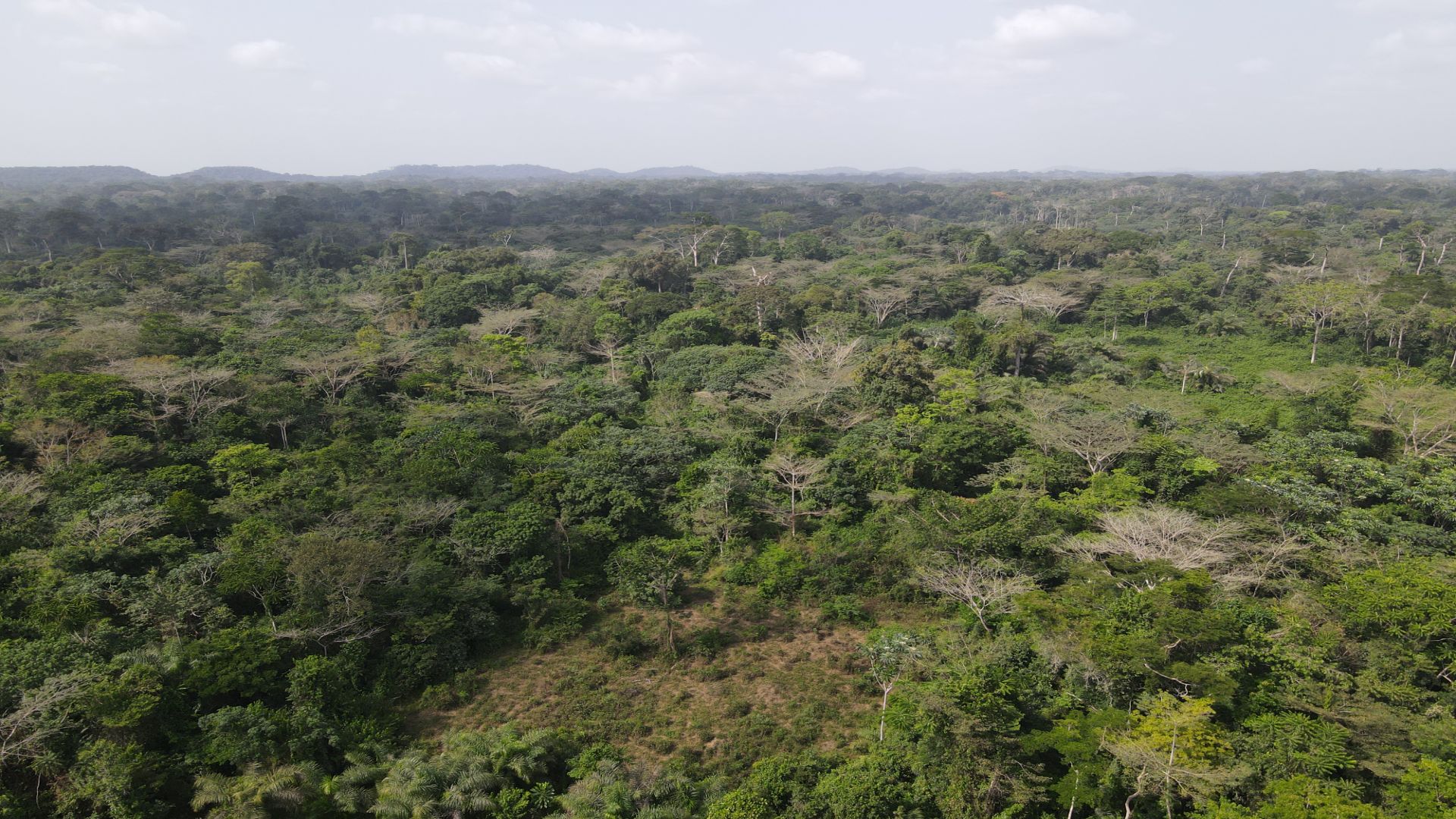
Top: A view of the Putu Pennoken forest with portions cultivated. The DayLight/Samuel Jabba
By Mark Neywon Mengonfia
PENNOKEN, Grand Gedeh – When the Putu Community Forest signed a logging agreement with Africa Wood and Lumber Company, residents hoped that the deal would bring jobs, development, and manage their forest. Instead, the Italian-owned company failed to deliver on its promises, and eventually deserted the contract.
Townspeople here are hosting scores of Burkinabé migrants for cocoa cultivation. Though it is illegal to farm in a community forest, locals use the failure of the logging contract to justify their encroachment.
“The company depleted the forest without benefits, but with the cocoa farming, in a few years, we will get benefits,” says Wullu Elijah, youth president in Pennoken, one of the towns that own the forest.
“Our parents hunted in this forest, took care of it from generation to generation; logging companies came and lied to people.”
Owned by an Italian businessman, Cesare Colombo, African Wood signed a seven-year contract with the Putu Community Forest in July 2019. The deal gave the company the right to harvest trees in a 21,337-hectare forest. The company agreed to pay the community US$22,603 annually for land rental and scholarships. It allocated funds for harvesting and development, but the amount is unspecified. The company also agreed to pave roads.
However, African Wood did not deliver as promised. It deserted the contract, abandoned hundreds of logs in the forest, and owes locals a substantial debt.
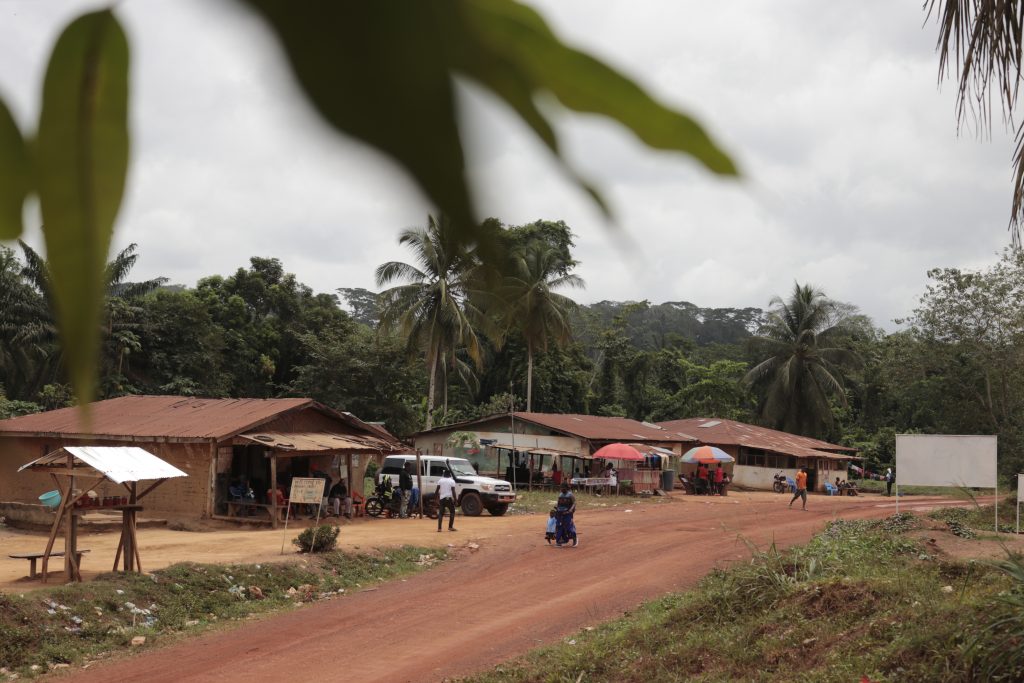
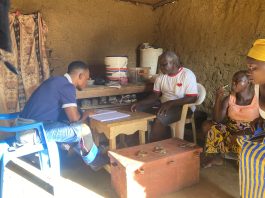
The failure of the logging contract influences the farmers’ rush for cocoa in Putu, according to residents and local leaders. Those who waited for support from families in Monrovia and abroad no longer tarry for such handouts, thanks to Burkinabé migrants, or Morsis, as locals call them. Across towns and villages, locals enter into a verbal agreement with the migrants. Burkinabés provide cash and labor, while their Putu landlords provide the land and home to stay. They use the profits generated from the cocoa cultivation to support families and their communities.
In forestry, it is illegal to farm in a community forest without the FDA’s authorization. Companies are under an obligation to harvest trees sustainably. However, that rule does not apply to the cocoa farmers. They cleared land stretching deep into the forest, using chemicals and setting trees ablaze to gradually fall.
In several places, large charred trunks lay on the ground afterward, while rows of newly planted cocoa seedlings now stand where towering trees and wildlife once thrived. Migrant farmers march along narrow paths and major highways, carrying cutlasses to or from the forest. Sometimes, up to 15, usually in pocket discussions.
Authorities say eight out of nine community forests are being cleared for cocoa cultivation, with massive encroachment on concessions and proposed protected areas. This is happening as Liberia lost 420,000 hectares of primary forest between 2002 and 2025, according to Global Forest Watch, an app that tracks deforestation. Grand Gedeh lost 72,000 hectares of primary forest, 11,000 hectares alone in the Konobo region where Putu lies.
“They are burning trees daily, and community dwellers themselves are involved,” says Beyan Woi, the FDA’s regional management officer for the southeast. “Most of [those] community forests that people wanted to do logging and conservation in are under threat by Burkinabés.”
There has been a series of arrests involving migrant farmers. Early last year, the FDA arrested dozens of Burkinabé nationals in the Konobo Community Forest for illegal farming and deforestation. Then in July of 2025, 31 more were jailed for alleged encroachment on a logging concession area. Two months earlier, authorities deported 60 for illegal entry and farming in a protected forest area. This June, authorities announced there were 140,000 Burkinabé migrants in Liberia.
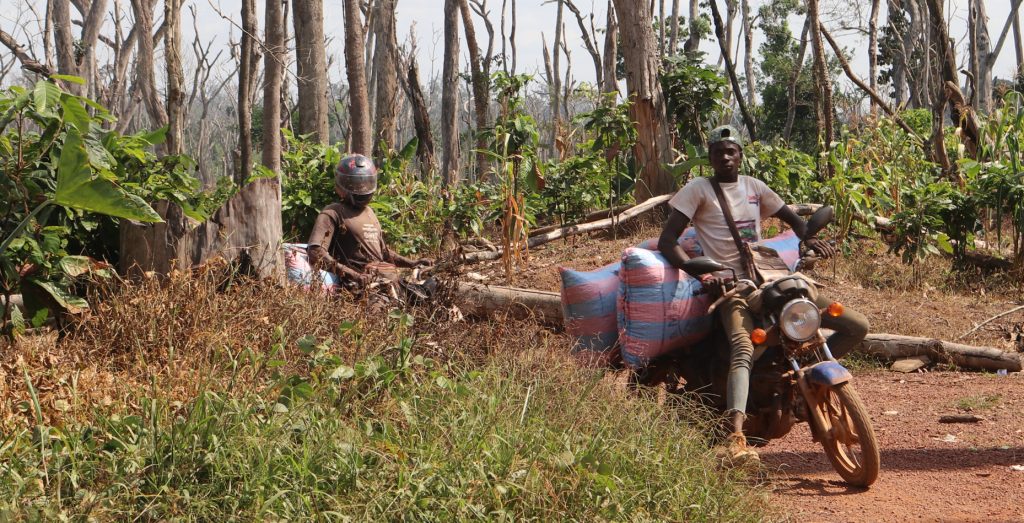
Residents are aware that their cocoa activities in the Putu Community Forest are illegal but cannot resist the cocoa benefits. Even those who upheld the law have now joined the bandwagon.
“I do not have a cocoa farm, but almost all of my family on our side here have cocoa farms,” says Patrick Rue, a community forest leader. Until now, Rue, a member of Putu’s community assembly, the highest-decision making body in community forestry, had advocated for the rule of law. He says the reality overwhelms him.
“I have decided to get a farm. I am convinced now because I have been fighting a one-man battle and it is not holding, so now I have decided to put in for Bukinabés,” he tells The DayLight.
Mr. Rue is not the only person who has flipped sides in this cocoa conflict. Farley Wilson, Putu Community Forest’s chief officer, is the unlikely newest.
Wilson says on many occasions he was tired of his efforts to save Putu Community Forest going to waste. He fears that he does not want to hold on until the opportunity disappears. He says he cannot sit and watch other residents cash out from encroaching on the forest while he protects it.
“If I don’t do anything, people will say, ‘Where were you?’”
This story was a production of the Community of Forest and Environmental Journalists of Liberia (CoFEJ).